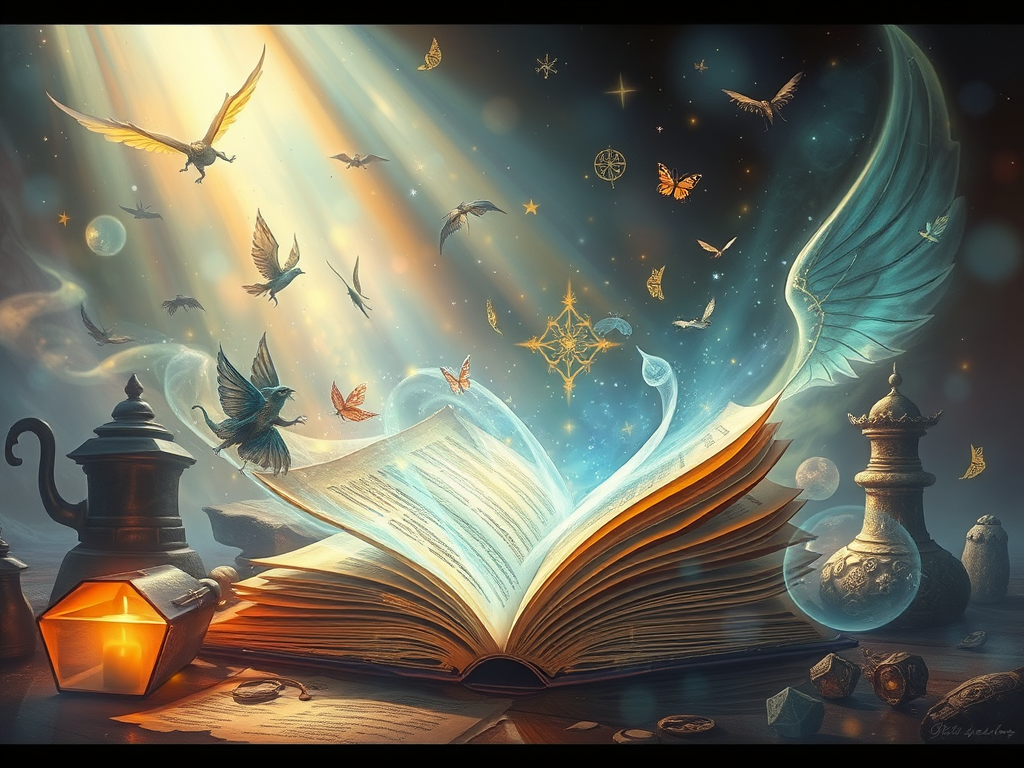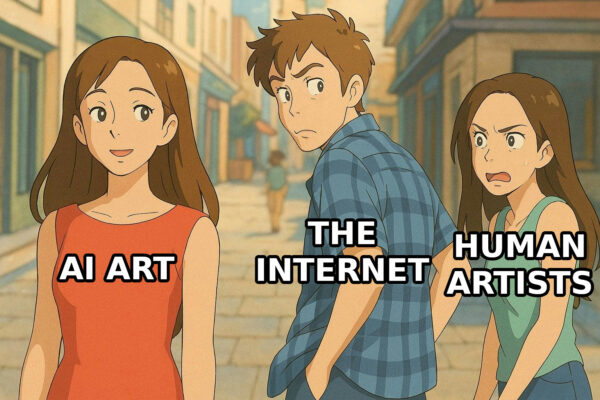
The debate over AI art in a single meme…
If Andrew Tate wrote a book about how to make your wife or girlfriend into your slave, would he be within his rights to demand that no woman reads that book without his consent?
Brandon Sanderson was inspired to become a fantasy writer when, as a child, he read Dragonsbane by Barbara Hambly. Sanderson is now worth some seven or eight figures, while Hambly, who is still alive and still writing, struggles to pay her bills*. Should Hambly be entitled to a portion of Sanderson’s earnings, for inspiring him to become a fantasy writer?
Every mother who has ever lived gives tremendously of herself to her children, even if only in the physical act of giving birth. Should mothers have a legal claim on their children, for monetary compensation for all of the sacrifices they make?
These might seem like crazy questions, but when you consider them in the context of the ethical arguments about AI art and AI writing, they really aren’t. They illustrate just a few of the unintended consequences of the regime that many disgruntled and resentful creators are arguing for, when really what they want is a world in which AI doesn’t exist.
One of the most difficult parts of being a creator is putting your work out into the world and letting it go. At that point, you really have little control over what it does and how it impacts the world. Many artists who labor in obscurity dream of making an impact on the world, not realizing that success—even artistic success—can be far more devastating and traumatic than obscurity. After all, just ask Rachel Zegler about that now.
I’m not saying that artists shouldn’t be paid for their work. Certainly they should be paid—and certainly there are valid ethical concerns with how AI is disrupting art and literature. But unhinged people who rant online about how AI is “stealing” artists’ work, or how it is “plagiarizing” writers’ books, simply because the LLM’s training data includes free online content (much of which was posted online by said artists and writers)—I don’t think those people really care about the ethical nuances of the debate. I think they just want to force us all to go back to a world where generative AI doesn’t exist.
Did David Weber steal from Star Trek when he wrote the first Honorverse novel? Did John Scalzi steal from Robert A. Heinlein and Joe Haldeman when he wrote Old Man’s War? Did Terry Brooks steal from Tolkien? How about George R.R. Martin?
Where exactly is the line between the “stealing” that should get you thrown in prison, and the “stealing” that people wink and nod at when they say that good artists copy and great artists steal? And how do we know that we’ve drawn the line in the right place? Would we have worse art, or better art if Star Wars had gone into the public domain in the 80s or 90s? Would artists be making less money, or more?
I don’t have the answers to these questions, but I ask them because I think they are worth considering. And I think that most of the artists who think they have the answers are really just acting out of fear.
Will AI outright replace artists and writers? Will it make it impossible for artists and writers to make a living? I remain skeptical, though I acknowledge that there are some ways in which AI art appears to be doing exactly that. For example, I’ve been playing around with OpenAI’s new image generator, making some cover mock-ups, and I’ve been very impressed. But I will still seek out James at GoOnWrite.com for my covers, because he has a much better eye for this sort of thing, and my sales data reflects that his covers sell more of my books than my own covers do.
Should writers and artists expect to be paid whenever their art is used to train an LLM? Aside from the impracticality of enforcing such a law, I don’t think that we should—at least, not for general training data. Fine tuning is a different matter. If an AI is going to be fine-tuned to write in my particular style, I think I have a right to be recompensed for that—and I’d be willing to license that right for a reasonable fee. Perhaps this is a path that artists could pursue as well. But demanding that every AI company pay every artist for training their LLMs is kind of like Barbara Hambly demanding that Brandon Sanderson pay her a portion of his earnings. Likewise, whenever artists or writers demand that their intellectual property is excluded from the training data, it smacks to me of the first question with Andrew Tate and his hypothetical book.
I will admit that I’m biased in favor of AI, since for the last two years I’ve been working to incorporate it into my own creative process. But I’ve been doing this out of a recognition that these things we call “writing” or “making art” is going to change because of these new technologies. In a world saturated with AI, will it still be possible to make a living as an artist or a writer? Yes, I believe it will, but at the same time, I believe that our conception of what it means to be an “artist” or a “writer” will almost certainly change. That’s why I’ve chosen to embrace these tools, rather than fight them—and why I think my fellow artists and writers should as well.
*At CONduit 2010 in Salt Lake City, Barbara Hambly was the guest of honor, and in her keynote address she talked about her struggles to pay her bills with writing. I assume that things haven’t changed much in the years since then, though I would be delighted to learn that I’m wrong.
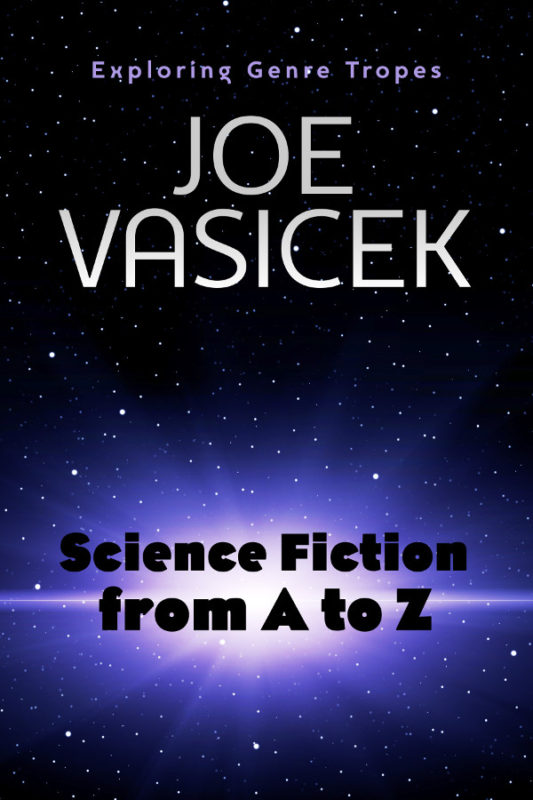
Several years ago, back when “the blogosphere” was still a thing, I participated in a 30-day blogging challenge, where I went through the alphabet talking about various aspects of science fiction. Not only was it a lot of fun, but I also made a book out of it, which I later revised and made into a reader magnet exclusively for my newsletter subscribers.
Well, it’s been a few years, and I’ve since decided that instead of being a science fiction writer who occasionally writes fantasy, I want to be a fantasy writer who occasionally writes science fiction. But in order to make that pivot, I need to change my newsletter magnet into something that isn’t explicitly about science fiction.
So what I plan to do is write a series of blog posts exploring the fantasy genre from A to Z. I probably won’t do it in less than thirty days, because 1) life with small children is pretty crazy, and 2) I want to put some serious thought into it. But I will probably have them all up by the summer, at which point I’ll turn it into an ebook and make it my new reader magnet for the newsletter, replacing Science Fiction from A to Z.
So that’s the plan. Are there any particular letters you’d like to see? I need to brainstorm ideas for the tropes and aspects of fantasy that I’d like to cover. I have a few ideas already, like “M is for Magic” and “E is for Epic,” but I’m open to more.
Just for fun, when I asked the wordpress AI assistant to come up with a featured image for this post, this is what it came up with:
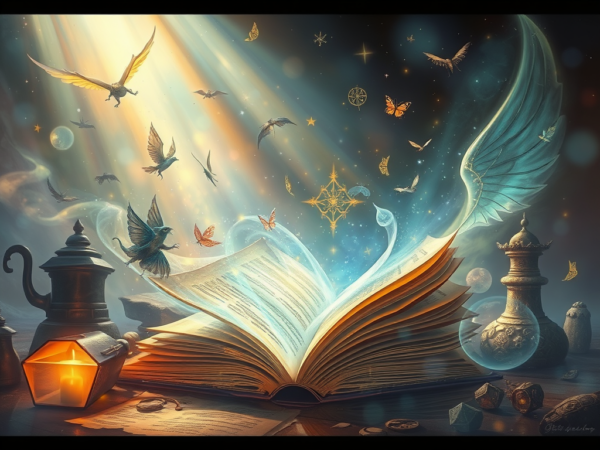
Not too bad, though if you look closely enough, it’s obviously AI art. But it should be fun to come up with a cover image for this one. I’ll do that first.
Really interesting take on the publishing industry. This is politically incorrect, but I think it’s related to the way that publishing has become dominated by liberal women. The Nonsense-Free Editor has a lot of great videos about that.
There are lots of great books in the indie publishing scene that are not “Potempkin villages,” as this BookTuber calls them… but how is one to find them? When we finally solve that question, there will be a resurgence of great writing and great art.

The Yiddish Policemen’s Union by Michael Chabon

Brasyl by Ian McDonald

Rollback by Robert J. Sawyer

The Last Colony by John Scalzi

Halting State by Charles Stross
Two thousand eight was the year that I took Brandon Sanderson’s writing class and decided to become a professional fiction author. It was also the year that I discovered David Gemmell and Robert Charles Wilson, two of my favorite authors. It was also the year that the world economy collapsed and Obama won the US election, so it was a very eventful year.
Unfortunately, it was not a very good year for science fiction & fantasy—or at least, not for the Hugo Awards. I didn’t read any of these books until just recently, but I have to admit, I didn’t like any of them.
Perhaps, if I were a liberal atheist Jew, I would have enjoyed The Yiddish Policeman’s Union (not a conservative orthodox Jew, mind you—if anything, I probably would have hated it more). It’s not that I have anything personal against Jews or Jewish culture. I quite enjoyed Fiddler on the Roof. But unlike Fiddler on the Roof, The Yiddish Policeman’s Union doesn’t have many points of commonality with the wider culture to make it accessible.
For example, even though the traditions of Anatevka are likely different from the traditions of whatever culture we call our own, most of us understand the concept of tradition as a governing force in our lives, and can therefore sing along with the song “Tradition” and understand how it affects the story. But the plot and worldbuilding points of The Yiddish Policeman’s Union were so quirky and uniquely Yiddish that I just found it difficult to connect with or even follow them all.
Honestly, it would be a bit like if I were to write an alternate history where the Mormons were driven from the continental US after the Utah Wars, and settled in Hawaii and the Polynesian islands, except the main character drinks Coca Cola and has a complicated relationship with his polygamous step-mother (because plural marriage was never renounced in this alternate universe) while his sister, a three-cow woman, dances in the Polynesian cultural center… if you’re a Latter-day Saint, you’re probably chuckling, but you’ve got to be scratching your head if you’re not. And to be fair, it’s not like I’d never write a book like that—after all, I’m still keeping Starship Lachoneus in my back pocket—but I wouldn’t try to market it to a general audience, or expect it to win any mainstream awards.
[SPOILER (highlight to read)]
The real kicker, though, was when I skipped to the end and learned that one of the book’s plot twists was that a side character got a secret abortion. That just pissed me off.
I’ve writte at length why I can’t stand John Scalzi and have DNFed him as an author. His first book, Old Man’s War, was good (though I would probably DNF it if I read it again now). Everything else I’ve ever read of his is just terrible. YMMV.
I’ve also DNFed Charles Stross as an author, mostly for nihilisim. If someone gives me a good reason to try Halting State, I’ll pick it up, otherwise I’m just going to skip it.
As for Brasyl, when I ran it by Orion (the ChatGPT persona I created to screen these books for woke and objectionable content), here is what I got:
Set in three intertwining timelines within Brazil—the past, present, and near future—Brasyl explores themes of identity, quantum mechanics, and cultural complexity. From an ambitious reality TV producer in modern Rio, to a rogue Jesuit priest in the 18th century, to a futuristic tech-savvy entrepreneur, the characters navigate moral dilemmas and existential challenges as their stories intersect in surprising ways. The novel combines speculative science with the vibrant, chaotic energy of Brazil.
Content Warnings:
Explicit Content: The novel contains scenes of violence, some of which are intense, and mature themes including sexual content. The explicitness aligns with the gritty, unflinching tone of the story’s portrayal of both human and cultural dynamics.
“Woke” Elements: McDonald incorporates themes of globalization, colonialism, and social inequality, reflecting a nuanced perspective on Brazil’s history and culture. The narrative celebrates diversity and critiques systemic injustices, which some readers may view as overtly progressive. However, these themes are intricately tied to the world-building and character arcs.
Overall Assessment:
Brasyl is a vivid, ambitious novel that combines speculative science with cultural and historical depth. While its explicit content and progressive themes may not suit all readers, those who enjoy richly layered storytelling with a strong sense of place will find it a rewarding and thought-provoking read.
It’s kind of on the border, but there’s enough in there to convince me that this isn’t the kind of book for me. The world is full of lots of great books out there; why should I spend any time on this one?
Which brings us to Rollback. I wanted to like this book, and indeed got about a hundred pages into it before I decided to DNF it. Partly, it was because I lost interest. Partly, it was because the writing was just too literal and logical—especially the sexy parts, which didn’t offend me (the characters are married) so much as they were just plain awkward. It’s not like I hated the book—indeed, I’d probably finish it if I tried it again as an audiobook—but I couldn’t give it my vote. If it weren’t for the other books on the ballot this year, I would have just abstained, but the others were bad enough for me to rank them under No Award.
On July 24th, 2024, eleven days after the (first) Trump assassination attempt, I posted the following prediction:
It hasn’t been 100 days yet, but enough has transpired that this prediction has certainly come true. Which brings my current prediction score to five out of eight. Not bad.
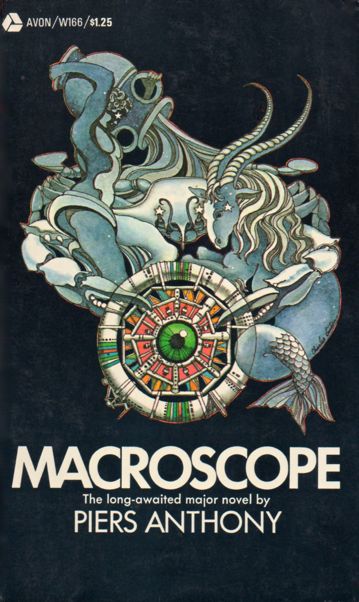
Macroscope by Piers Anthony
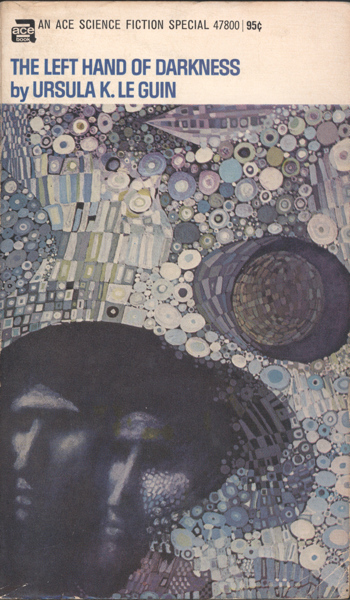
The Left Hand of Darkness by Ursula K. Le Guin
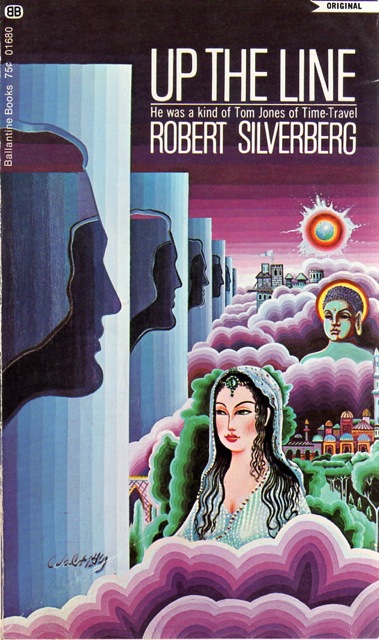
Up the Line by Robert Silverberg
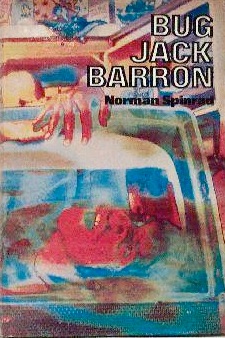
Bug Jack Barron by Norman Spinrad
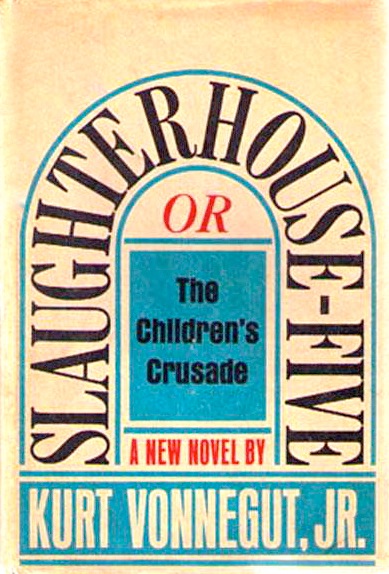
Slaughterhouse Five by Kurt Vonnegut, Jr.
Wow—I’d forgotten just how terrible book covers were in the 70s. I particularly had trouble finding an early edition cover for Bug Jack Barron that didn’t have psychadelic topless women plastered all over the front of it. The 70s was a weird time.
First, the good: Ursula K. Le Guin is one of the best science fiction writers of all time, and her novel The Left Hand of Darkness may be the greatest book she’s ever written. Personally, I was more impressed by The Dispossessed, but they’re both quite excellent. The thing I like most about Le Guin is that she genuinely follows her characters wherever they lead her, even (or especially) if their own beliefs and values contradict her own. This means that all of her books present a fully developed and well-rounded argument, which makes them ring true in a very deep and compelling sense.
On the surface, there are a lot of reasons for a conservative reader like myself to hate this book. It’s written by a left-wing atheist, it was published in the 70s, and it won the Nebual Award, the Hugo Award, and the Tiptree Award. Digging a little deeper, the core concept of the story is an exploration of gender issues, where biological sex is fluid and the characters may be male one month and female the next. And yet, Ursula K. Le Guin’s unwavering commitment to telling a truthful story keeps it from feeling “woke,” at least to me. Le Guin is one of the most clear-eyed and honest writers I have ever read, which is why none of the surface level stuff bothers me. It’s also what makes her books so timeless.
Now, for the bad—although “bad,” in this case, is more just a matter of personal taste, since I don’t much care for the literary genre (and yes, “literary” is a genre—just because your books aren’t commercial doesn’t make them superior to everything else). Slaughterhouse Five is written with such a heavy-handed style that I just couldn’t get into it. But since that’s more of a personal taste issue, I’d still put it on the ballot under No Award, and if it weren’t for the other three books, I wouldn’t have put No Award for this year.
But now, we come to the ugly, starting with Macroscope. I have to admit, I skipped this one on account of the author. I never grew up reading Piers Anthony, so when I finally got around to picking up his books, it was immediately clear to me that he’s a dirty old man. Which is a shame, because it’s clear that he knows how to write an entertaining story—it’s just that these stories all seem to be peppered with weird sex stuff, often bordering on rape fantasies. I have no idea if that’s true for Macroscope, but I’ve DNFed enough by this author that I don’t really care to find out.
I’ve also DNFed a lot of stuff by Robert Silverberg that was just too explicit for me, so I asked ChatGPT to screen Up the Line for me, and this is what it said:
The narrative features frank depictions of sexual relationships, including a controversial incestuous encounter resulting from a time-travel paradox. Silverberg uses this scenario to examine the moral implications of unrestricted access to history and personal indulgence.
Yeah… Silverberg’s exploration of incest sounds like exactly the kind of book I never want to read. Hard pass.
I also asked ChatGPT to screen Bug Jack Barron for me—though from the fact that so many editions of this book feature outright pornographic cover art, I suppose I didn’t have to go that far to know this would get a hard DNF. This is what ChatGPT said:
Sexual Content: The novel includes graphic depictions of sexual relationships, often tied to the characters’ moral complexities. The narrative explores Jack’s personal relationships with raw detail, including manipulative and transactional dynamics, as well as moments of stark intimacy.
Social Justice Themes: Issues of race, class, and exploitation are central to the narrative. Spinrad tackles these topics with a provocative, satirical approach, which might align with modern “woke” sensibilities despite the book’s 1960s origin.
Yeah, I’m gonna give this one a hard pass too. And given what I already know about 70s science fiction, I suspect that ChatGPT will be invaluable in screening the books from this decade.
Even though I’ve been using AI in my writing process for nearly two years now, I still feel like I have so much to learn. Everything is changing so fast, and these tools are becoming more and more breathtaking with each passing month. Just when you think you’ve got them mastered out, you break through to the next level and feel like a beginner all over again. It’s quite invigorating.
So apparently DOGE’s “what are five things you did at work last week” is now an ongoing weekly task, which I am heartily in favor of, at least until the Trump Administration’s reforms to the executive branch are complete. The best counter-argument for this policy that I’ve heard so far comes from Cal Newport, who points out that this sort of request is typical of an insecure and overbearing manager, but I don’t find that argument very convincing. Given the sheer amount of corruption and outright fraud that Elon Musk’s DOGE has already uncovered, I think there are very good reasons for the Trump Administration to be overbearing. Besides, it really shouldn’t be that hard to come up with five bullet points, as I will demonstrate now.
Last week, I:
Oh, the trauma. How can I possibly be expected to do this every week? And people say that writing isn’t a “real” job… in any case, I plan to make this a regular thing for as long as DOGE and Elon Musk continue to keep it going. Feel free to add your own five bullets in the comments!