Fantasy from A to Z: Q is for Quests

What is your quest in life? What is your driving goal, the thing that gets you up in the morning? What do you hope to accomplish before you go the way of all the Earth and depart this mortal coil?

Quests are huge in fantasy literature, because they resonate so much with our own lives. Most of us are not just merely existing, drifting aimlessly from one life event to another—or, if we are, there is something deep within us that yearns for greater meaning and purpose in our lives. Quest stories give us that sense of meaning and purpose.

I asked Grok to define “quest” in the context of fantasy literature, and this is what it told me:

In fantasy literature, a quest is a narrative framework where a protagonist or group embarks on a challenging journey to achieve a specific goal, often involving adventure, trials, and personal growth.

Grok then gave me a list of five things that all quest stories typically include:

  • a clear objective,
  • a journey,
  • challenges and trials,
  • some kind of character transformation, and
  • some kind of symbolic meaning.

One of the best-known examples of this is Frodo’s quest in Tolkien’s Lord of the Rings, which is actually a subversion of the traditional quest story, because instead of seeking to acquire the object of the quest (in this case, the ring of power), Frodo is seeking to destroy it. 

The objective is to take the ring to Mount Doom and drop it into the lava, because that is the only place where it can be destroyed. 

The journey takes Frodo far from his home in the Shire, across nearly the whole length of Middle Earth to the desolate lands of Mordor, where the Dark Lord is gathering his forces. 

Frodo faces all sorts of challenges and trials, from the attack of the ringwraiths at Weathertop to the near-death experience with Shelob the spider. But perhaps the greatest challenge comes from the ring itself, which is constantly tempting him to submit to the Dark Lord’s will.

The story transforms Frodo so completely that by the end, he finds that he cannot return to his former life in the Shire. He leaves Middle Earth for the Grey Havens and sails with the last of the elves to the Undying Realms beyond the western sea.

As for symbolic meaning, the whole book is rife with it, from Gandalf as the Christ figure to the ring as a metaphor for the temptation of absolute power.

But what does an epic story like this have to do with us? How and why does a quest story like this one resonate so deeply with us? After all, very few of us have been attacked by giant spiders, or had a murderous experience with a ghost-like entity from beyond the veil. So why do we resonate with the idea of a quest? 

I can only speak to my own experience, but this is how my own life has resembled something of a quest:

My objective, ever since my college days, has been to make it as a professional fiction writer.

The journey has been more of an internal one than an external one, though I have traveled a bit for conventions and the like. I also spent a year teaching English overseas, not only to make ends meet, but to gain the sort of life experience that I thought would lead to better writing. In fact, I’ve taken a lot of odd jobs along the way, all of which have given me experiences that I’ve later drawn on.

As for challenges and trials, it’s been an extremely difficult road, because the vast majority of aspiring writers never manage to make a living at it. I’ve made just about every mistake that it’s possible to make (except writing porn—though some people would argue that not writing porn is the greater mistake). Overall, I can say that pursuing this writing career has been one of the most difficult things I’ve ever done in my life.

Has it transformed me? Yes, it has—and I know this because one of the major things that attracted me to my wife was my passion for writing, and the diligence with which I have pursued it. If I’d taken the path of least resistance instead of pursuing this difficult quest, I probably would have ended up as a morbidly overweight slob, addicted to porn and video games—in other words, the kind of person my wife would have never given a second glance.

As for symbolic meaning, I’ll say this: when my first child was born and I held her in my arms for the first time, I had the distinct impression that “this is her story now.” As a writer, I’ve pored over lots of writing advice, and one of the best pieces of advice I’ve received is to remember that every character is a hero in their own story. So when I had this powerful experience of holding my child for the first time, is it any surprise that one of the lessons I’d learned from my quest to become a professional writer helped me to understand the deeper meaning of that moment?

Those are some of the ways that quest stories resonate with me. I’m sure it will be different in your own life, but the main points are likely all there—which is why the quest story has become such a powerful archetype.

Of course, not all fantasy books involve a quest of some kind. In recent years, “cozy fantasy” has become something of a thing, where the story is less of a quest than a low stakes, slice-of-life sort of tale. Perhaps the most successful example of this is Travis Baldree’s Legend and Lattes.

Why do those stories resonate so much? Frankly, I think it’s because so many of my fellow Millennials feel like they have failed to launch. We came of age during the Great Recession and the Global Financial Collapse, saddled with way too much student loan debt. With all of the bankruptcies, mass layoffs, hiring freezes, and delayed retirements, many of us struggled to find meaningful work. As a consequence, many of us were forced to move back in with our parents and put off major life decisions like buying a home, getting married, and starting a family. Far too many of us have sadly put off those decisions indefinitely. And things haven’t gotten much better in the decades since. Indeed, our Boomer parents have the dubious distinction of being the only generation in American history to enjoy more prosperity than every generation before and since.

But I do think that is changing with the rising generation. There are a few key ways in which Zoomers are the diametric opposites of Millennials, and one of them has to do with this hunger for stories about quests. Just compare Epic: The Musical to Legends and Lattes. The contrast is stark. So as Zoomers come into their own, I think this subgenre of cozy fantasy is going to fade. It may stick around for a while, but I don’t think it’s going to be more than a tiny niche.

After all, what is your driving goal in life? What is your own personal quest?
How I Would Vote: 2025 Hugo Awards

The Nominees

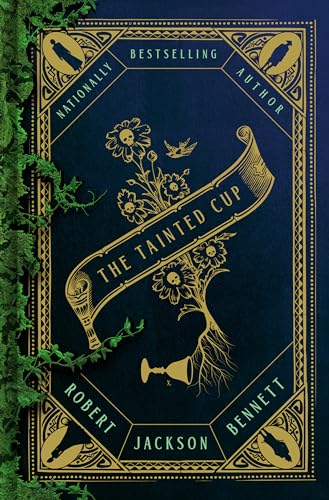
The Tainted Cup by Robert Jackson Bennett

The Ministry of Time by Kaliane Bradley

A Sorceress Comes to Call by T. Kingfisher

Alien Clay by Adrian Tchaikovsky

Service Model by Adrian Tchaikovsky

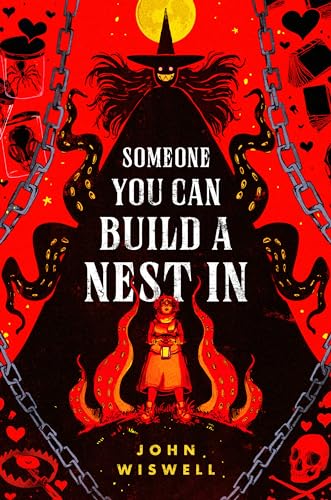
Someone You Can Build a Nest In by John Wiswell

The Actual Results

TO BE DETERMINED

How I Would Vote Now

  1. No Award
  2. Service Model by Adrian Tchaikovsky

Explanation

As if yesterday’s post wasn’t controversial enough, I’ve decided to jump feet-first into this particular tempest (though thankfully, it appears to be a tempest in an ever-shrinking teacup). And I suppose the thing that makes this particular post so interesting is that I could actually cast this vote, if I had no qualms about giving the clowns who run the Hugo Awards any of my hard-earned money. But I do have qualms, so I won’t give them my money, which still makes this a hypothetical exercise, even though I’m posting this three weeks before the 2025 Hugos are awarded.

To be perfectly honest, I have not read any of these books all of the way through. I’ve read enough of two of them to DNF them, and one of them enough (including the epilogue) to know that I will eventually read the whole thing. And I screened all of them first with AI, which told me enough to know that three of them were not worth reading at all.

First, Someone You Can Build a Nest In. According to ChatGPT (and frankly, the back cover description itself), this book is chock full of body horror, trauma, abuse, and sexual depravity. It is also quite possibly the wokest book on the ballot, which means that it probably has the best chance of actually winning. Which also means that you couldn’t pay me enough money to read it. So much for that.

The Ministry of Time also appears to be woke, with anti-colonial and LGBTQ themes. However, the thing that really turned me off were all of the content issues that ChatGPT listed, such as frequent strong language, lots of F-bombs, and several erotic “open-door” sex scenes. So yeah, I’ll give a pass on that one too.

It’s much the same story for The Tainted Cup. A few woke elements, a subtle M/M romance (which I’m sure plays into the “All True Love is LGBTQ Love” trope that I cannot abide), and a lot of explicit profanity, with some prostitution to round it out. Not interested.

I forget why I DNFed A Sorceress Comes to Call. All I remember was that when I tried to read it, I felt repelled from it like a magnet. Since that has been my experience with basically everything else that T. Kingfisher has written, I didn’t feel compelled to try again.

Which brings us to the two books by Tchaikovsky. I really enjoyed his Children of Time, though I didn’t really get into the sequel (just didn’t feel compelled by any of the characters). He is a good writer, and specifically a good science fiction writer, though his scientific materialism strikes me as outdated.

Alien Clay didn’t appeal much to me, though—honestly, I found it difficult to believe that a government that would expend so many resources to transport their prisoners halfway across the galaxy wouldn’t also spend the tiny fractional cost to make sure they all got there alive. So right from the start, it felt like a melodramatic parody of all the left’s fears about “fascism.” And skipping to the end, it basically turns out the way Halo would have ended if the Flood had won. So I decided to DNF it, even though it wasn’t the worst book I’ve ever DNFed. And also, I don’t think that any one author should have more than one book on the ballot in any given year. So that’s why I’d put it under No Award.

Service Model, though, is pretty good. The best way I can describe it is Murderbot meets Kafka. It’s sort of an absurdist comedy in a post-apocalyptic world where the humans have (mostly) vanished, and the robots are malfunctioning in hilarious (and sometimes disturbing) ways. Not my favorite kind of book, and it probably could be improved by ruthlessly editing it to half the length, but I was enjoying it right up to the point where someone else put the library copy on hold, and I had to return it without renewing it. Skipping to the epilogue, I found nothing particularly objectionable, so I will pick it up again, and will likely finish it.

Which is more than I can say of most Hugo-nominated books in the last ten years.

[ETA 23 Feb 2026: I’ve decided to DNF Service Model after all, not because of anything objectionable that I read, but because I just couldn’t bring myself to pick it up again and finish it. It just wasn’t compelling enough for me to want to finish it more than I want to pick up something new. I could be persuaded otherwise if I heard someone really gush about it, but right now, I’m just not going to bother.]

The key to understanding the Middle East (and possibly the world)

I just finished Douglass Murray’s latest book, On Democracies and Death Cults, and wow, is it an incredible book. Difficult to read, simply because of the grim nature of the subject, but a very powerful and very timely book.

My own thinking on Israel and the Middle East has changed a lot since the October 7th attacks. For the record, I studied Middle Eastern Studies and Arabic in college in the 00s, traveled throughout Jordan, Egypt, Israel, and Palestine / Judea & Samaria while I was pursuing my degree. I’ve kept up with geopolitical developments over the years, including during the Arab spring, and have helped some of my Arab friends navigate those developments.

The apocryphal Churchill quote that “if you’re not a liberal by your 20s, you have no heart, but if you’re not a conservative by your 50s, you have no brain” very much describes my own experience. I used to be very sympathetic toward the Palestinians, but after the October 7th attacks, my position has shifted almost 180 degrees.

The thing about the Middle East is that even though it’s complex, it’s not really that complicated. Within the Middle East, there are basically three kinds of people:

  • the Jews,
  • the people who want to kill the Jews, and
  • the people who really don’t care.

This dynamic has defined the politics of the region since at least the Babylonian sack of Jerusalem in 600 BC, and possibly quite longer. Possibly, in fact, since the very first Hebrews migrated to the region during the Bronze Age Collapse.

(As a side note, there has been a continuous Jewish presence in the Levant since our first historical records of the Jews. In other words, this is the one place in the world where the Jews are indigenous. Therefore, anyone who argues that the Jewish State of Israel is a “colonist” state is, in effect, arguing for the extermination of the Jews, because there is no other place in the world where the Jews can live and not be considered colonists. At the very least, they are laying the foundation for the ideological position that the Jews should always and everywhere be treated as subhuman.)

With the above dymanic in mind, there are only two configurations that possess any sort of inherent stability. The first is that the Jews are the people in charge of the region AND constitute the majority of the population. That way, even if all of the non-Jews fall into the kill-the-Jews camp, they are still not powerful enough to carry out their plans.

This was the state of affairs from the days of Ezra and Nehemiah basically to the Roman siege of Jerusalem. Following the Babylonian exile, the Jews returned to their homeland under the (mostly) benevolent rule of King Darius of Persia, who allowed them to rebuild the temple, which the Babylonians had destroyed. When Alexander took over the region and the Greeks began to Hellenize it, the Maccabees and other Jewish rulers still managed to hold their own.

But all of that changed when the Romans destroyed Jerusalem in 70 AD. They put down the Jewish revolt with utter ruthlessness, making a desert and calling it peace. They drove the main body of the Jews out of their ancestral homeland, making sure it would never be such a hotbed of rebellion again. They also renamed the region “Palestine,” after the ancestral enemies of the Jews, the Phillistines. The name “Palestine” was originally an insult to the conquered Jewish people, just like the name “Britain” (ie “land of the painted people”) was originally an insult to the conquered Celts. And just like the British came to own the term, the Jews also came to own the term “Palestine” until it was appropriated from them by the Levantine Arabs who wanted to kill all the Jews.

From 70 A.D. until the early 20th century, the Jews were a minority in their own homeland. And so long as their numbers didn’t get too large, things were relatively stable. Sure, there were plenty of people who still wanted to kill them all, but so long as the Jews mostly stayed out of sight, most of the non-Jews frankly didn’t care. It was only when their numbers began to grow that the I-don’t-care faction bled into the kill-them-all faction, leading to pogroms and mass rapes and all sorts of insane atrocities.

But then, in the 19th century, the Jews began to migrate back to the region in large numbers. This led to an inherently unstable configuration which persists to this day, where the Jews and non-Jews are roughly equal in number. The Jews formed the State of Israel with help from their Western patrons, who provided a degree of metastability. But the situation is not long-term stable, and hasn’t been for the last 150 years.

The Americans tried to solve this problem by bringing together the Jews and the people who want to kill the Jews—as if they could ever make peace. This was incredibly naive. So long as there are Jews, there will be people who want to kill them. Individuals may be persuaded to change their positions, but the ideologies of antisemitism are as persistent as the Jewish people themselves. The death cult will never be satisfied until all of the Jews are dead.

What October 7th showed us is that the three-way dynamic of the region is still very much in play, and that the kill-the-Jews faction is still far too strong. And given the way things are changing here in the United States, I suspect that the Jews have, at best, another generation before their Western patrons become unreliable, and the metastable nature of the current configuration begins to deteriorate.

The Abraham Accords are changing things in a very positive way. For once, instead of trying to get the Jews to make a deal with the people who want to kill them, we are moving away from that silly nonsense and cutting those people out of the equation by making a deal with everyone else (like we should have done in the beginning). And with the way that Iran was utterly defeated in the latest war, it looks like that might actually work. But even then I don’t think the situation is going to be long-term stable unless it ultimately leads to a mass resettlement of the Palestinians, because that’s the only thing (aside from the senseless massacre of millions of Israeli Jews) that puts us into a stable configuration.

I think the Israelis know this. And I think that Israel is going to get a lot more aggressive in the coming years, much to the consternation and perplexity of their friends here in the West who do not understand this three-way dynamic (or who think that the key to peace is for the Jews to play nice and not fight back, so that most of the non-Jews fall into the I-don’t-care camp).

Because here’s the thing that almost no one is talking about: the impetus for the October 7th massacre was the transportation of several red heifers to Israel from a ranch in Texas. In order to build the third Jewish temple, the land of the Temple Mount (where the Dome of the Rock and the Al-Aqsa Mosque currently stand) needs to be ritually cleansed by the ashes of a pure red heifer. The reason Hamas called their operation the “Al-Aqsa Flood” was to appeal to their Muslim brothers to defend the temple mount.

From what I understand, most Jews do not currently want to rebuild the temple, and the State of Israel itself has taken strong measures to suppress those who do. But every time the Jews have had a commanding presence in their own ancestral homeland, they have built or maintained a temple on the Temple Mount. So once they feel they’re strong enough, they will probably do it again. And when that happens (or as it is beginning to happen, perhaps even now), I think that this three-way dynamic will become much more of a global phenomenon.

“…Maria would be delighted.”

Those last words of Collins’ were still running through Hornblower’s mind. He would have to leave the Hotspur; he would have to say good-bye to Bush and all the others, and the prospect brought a sadness that quite took the edge off the elation that he felt. Of course he would have to leave her; Hotspur was too small to constitute a command for a post captain. He would have to wait for another command; as the junior captain on the list, he would probably receive the smallest and least important sixth-rate in the navy. But for all that he was a captain. Maria would be delighted.

C.S. Forester, Hornblower and the “Hotspur” (last line)

Mid-July Update

The heat of the summer is upon us, and our air conditioning is… struggling. Hopefully we get it fixed soon, because my wife really can’t stand the heat, and if she can’t sleep, neither can I.

Not much happening around here. We’re just plugging away, me at my writing, Piper at her thesis. She just finished her user study, so all she needs to do is write up the thesis itself and defend it. That’s currently the top priority in the household, so I’m doing my best to write around it.

I’ll be at Writers Cantina later this month, where I’ll be on a panel about AI and writing, and moderating a couple of other panels, including one with Larry Correia. That one should be fun. Writers Cantina is a fantastic little convention, started by a bunch of us local writers who occasionally get together at the IHOP up in American Fork. We started after Life, the Universe, and Everything went a little crazy in 2020, mandating vaccines at the very last minute and pulling all sorts of other woke shenanigans. Writers Cantina isn’t explicitly anti-woke, but it’s definitely not woke either. It is a lot of fun, though! Kind of like what LTUE was back in the 00’s, except without a dealer’s room, and the hallway is the main attraction. Oh, and lots of great snacks.

Other than that, there’s not much going on around here. We’re going up to Canada right after Writers Cantina, and as soon as we get back, we’re moving back to Orem. I am both looking forward and really not looking forward to that. Hopefully we can get everything moved over with a minimum of chaos (especially since my wife is starting her new job at the same time). And then we’re having a baby. Yay!

Fantasy from A to Z: M is for Magic

Magic! What would fantasy be without it? About the same place as science fiction if you took out the science. Speculative fiction is all about the sense of wonder that it makes you feel, and the main way that fantasy does that is through magic.

In Brandon Sanderson’s writing class (which he has generously made available to the public, by videotaping and podcasting his lectures), Sanderson divides magic into two broad types: hard magic and soft magic. And while some fantasy readers take issue with the way that Sanderson leans more toward hard magic in his own books, the division he draws between hard and soft magic is still quite useful.

Soft magic is the kind of magic that isn’t fully explained, and is mostly left up to the reader’s imagination. Magical things happen, and we don’t know how or why, but it helps to instill a feeling that the world is vast and wondrous. As such, soft magic is primarily used as a way to enhance the setting.

In Tolkien’s Lord of the Rings, a good example of this is the elves. We know that they are immortal and that they are far more glorious than most other races, but we never really know the full extent of their capabilities. Gandalf is another example of this. Just what was he doing with the Balrog, and how did defeating that ancient beast in a marathon spelunking-hiking-wrestling match? Who knows!

And that’s the biggest criticism of soft magic: if you don’t know how the magic works, how do you know that the heroes won’t just pull a rabbit out of their hat to save them at the last possible moment? Or summon the eagles, which amounts to the same thing. For that matter, if the eagles are so awesome, why don’t the heroes just fly on their backs all the way to Mount Doom? I mean, can you believe what it would have been like if they had to walk the entire way? Somebody might have died!

Hard magic, on the other hand, is the kind of magic where everything is explained. It’s not just magic, but a whole magic system, which operates by rules in the same way that our physical universe works according to rules. In essence, it is the fantasy inverse of Clarke’s third law, where any sufficiently explained magic is indistinguishable from science. The reader might not know all of the rules, but the writer does, and he drops enough hints throughout to make the reader confident that there are rules.

In Lord of the Rings, a good example of hard magic is the ring of power itself. What does it do? It makes you invisible if you put it on (though it makes you shine like a beacon to Sauron and his ringwraiths), and it tempts you with false promises of power, with the goal of leading you back into the clutches of Sauron. If Sauron ever gets the ring, it’s game over, because he will regain all of his powers. Oh, and it also stretches out your lifespan, at the cost of your quality of life (and quite possibly your sanity).

Because we know the rules the govern the magic of the one ring, we aren’t upset when Tolkien uses that magic to advance the plot of the book. Indeed, that is the biggest strength of hard magic: that it can be used in all sorts of interesting and creative ways to advance the plot.

“But hold on!” the advocates of soft magic will say. “If you reduce your magic into a fancy plot device, it kills the sense of wonder that comes with the best magic systems.” After all, there’s a reason why Tom Bombadil is in the book. There are two big things that happen when the hobbits make their detour to his house: first, Tom Bombadil puts on the ring and shows that it has absolutely no effect on him; and second, when Frodo puts on the ring and goes invisible, Tom Bombadil demonstrates that he can still see Frodo. 

It’s subtle, but it’s there—and believe it or not, it’s there for a reason. By demonstrating that there are higher or more powerful forces that can supersede the laws of magic surrounding the one ring, Tolkien preserves that sense of vastness and wonder that more rules-based magic systems tend to lose.

There is a rejoinder to that point, however. When hard magic is done well, it creates its own sense of wonder, more akin to what we feel when we’re playing a good video game. It’s the wonder that comes from imagining what it would be like to exercise the kind of magical powers that we see the characters exercise. Brandon Sanderson is a master of this, and my favorite example is from his novella The Emperor’s Soul. By the end of that book, I couldn’t help but daydream what I would do if I had my own set of soulstamps. One of them would make me an awesome writer, the other an awesome marketer, and the third an awesome publisher. How cool would that be? (Okay, maybe you have to be an indie author yourself to fully get it… but still!)

As you can probably guess, though, the best fantasy novels feature a blend of hard and soft magic—and Sanderson says as much in his lectures. There’s a reason why he draws from Lord of the Rings for examples of each, much as I’ve done here. And ultimately, it’s less of a binary and more of a spectrum. The important thing is to know when to lean more toward the soft side, and when to lean more to the hard side. The best authors can play to the strengths of both to capture that magical sense of wonder that makes fantasy such a pleasure to read.