When it comes to AI, there are a lot of crazy doomsday scenarios floating around out there—just like there are a lot of pie-in-the-sky, utopian visions of an AI-dominated future. But while nobody knows exactly what the future will bring, I think most of these projections are totally wrong. Instead, I think that AI will neither save us nor doom us—but it will completely change us.
With that in mind, I thought I would share this discussion of AI, which is one of the most grounded and realistic discussions of the subject that I’ve heard. It’s also one of the most insightful. We’ve created a technology that we barely understand, but it’s still just a new technology, not a savior or an antichrist. In a hundred years, when our great-grandchildren understand this technology and take it for granted, they will probably laugh at how we thought of it (assuming, of course, that Yudkowsky and Soares are wrong, and we aren’t all exterminated by a superintelligent AI).
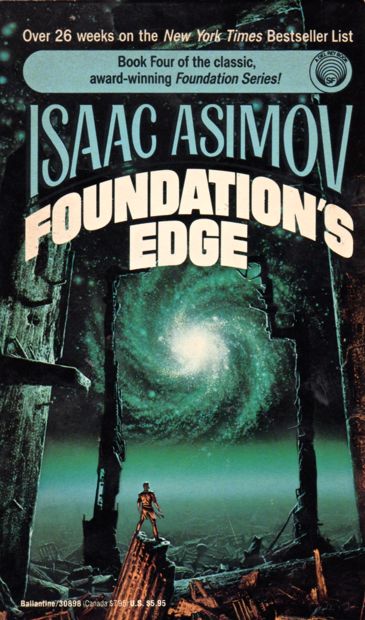
I haven’t read all of Asimov’s Foundation novels yet, but I’ve loved all of the ones that I’ve read, including Foundation’s Edge. Really fun. Lots of interesting ideas. Classic sci-fi. A must-read for sure.
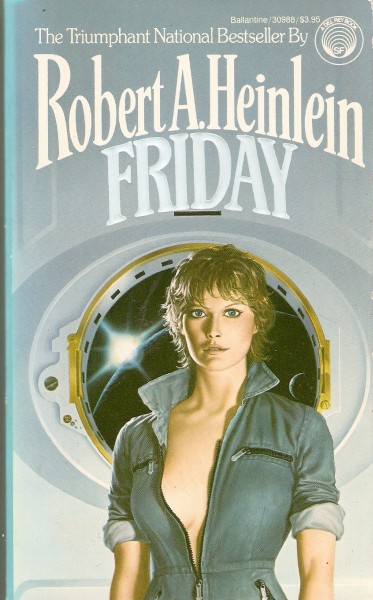
I’ve written before about my love-hate relationship with Heinlein. The long and short of it is that I’ve learned to avoid any of his books where he explores his free love ideas about sex and women. I’ve really enjoyed his juveniles, and books like Farnham’s Freehold and Starship Troopers. But if it’s got a partially (or fully) unclothed woman on the cover, it’s probably not for me.
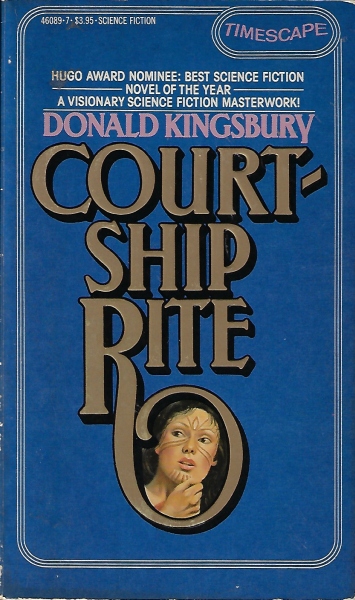
Courtship Rite was an easy skip, based on ChatGPT’s preview of the book. Here is what it said:
Courtship Rite by Donald Kingsbury is one of the most morally challenging and controversial works in classic science fiction. The most immediate concern is the sexual content: Kingsbury depicts a harsh, survival-driven society on the planet Geta where sexual practices are ritualized, non-monogamous, and culturally compulsory. Several scenes contain explicit adult sexual behavior—never pornographic in tone, but described in enough detail to be unmistakably explicit. These sexual rites are integral to the worldbuilding and cannot be skipped without losing the thread of the story.
Violence is also central to the novel, particularly the culture’s reliance on cannibalism as both a sacrament and a pragmatic necessity in a resource-scarce ecosystem. Cannibalism is discussed repeatedly and explicitly, sometimes in unsettling biological detail, and ritual combat, ordeal, poisoning, and execution also appear. Although the novel does not dwell on scenes of graphic torture or sadistic harm, the society it portrays practices ritual child sacrifice and cannibalism, and this is presented as a normalized element of Getan culture.
From the book description: Jo Walton remarked that Courtship Rite “is about a distant generation of colonists on a planet with no usable animals. This is the book with everything, where everything includes cannibalism, polyamory, evolution and getting tattoos so your skin will make more interesting leather when you’re dead.”
There are too many good books in the world for me to waste any of my life reading that.
I know a lot of people love Gene Wolfe’s Book of the New Sun series, but I tried the first book and just couldn’t get into it. The fantasy world was just too macabre for me, and the story never hooked me. I’ve also heard that his writing is an acquired taste, so maybe I should give it another chance. But if I were to cast my ballot now, I wouldn’t vote for it.
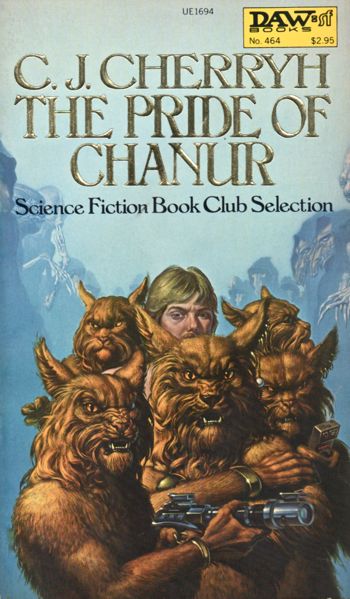
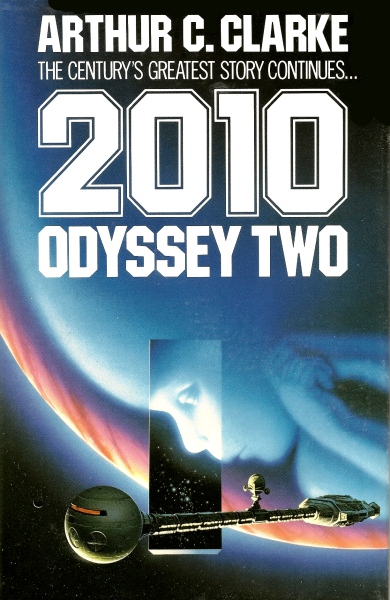
As for 2010: Odyssey Two and The Pride of Chanur, I DNFed both of those for basically the same reason: I got bored. The story and characters didn’t really hook me, the world building was interesting but not enough to keep me reading, and over time I just lost interest and gave up. They weren’t terrible books, just not particularly interesting or compelling. I might enjoy them in audio, though, so maybe I’ll give that a try.
If that seems a little harsh, I’d like to point out that No Award doesn’t appear anywhere on this ballot. For the Hugo Awards, that’s saying something. In general, the 80s was a pretty good decade for the Hugo Awards, so even though this particular year wasn’t a bullseye for me, I’d still rather read any of these books (even Courtship Rite) over most of the woke crap that gets nominated these days.
I’ve been listening to a lot of classical music lately, especially while writing. One of my favorite pieces so far is Scheherezade by Rimski-Korsakov. I especially like this version, for how the conductor and players start shouting like pirates in the buildup toward the end. My kids and I call it the “pirate music” when we’re listening in the car. Good stuff!
The Fermi Paradox is a classic problem in both science and science fiction. Put briefly, the paradox is this: if the natural conditions that led to the development of our human civilization are not unique, and it is reasonable to assume that alien civilizations more advanced than our own have developed elsewhere, then why haven’t they tried to contact us? In other words, if we aren’t alone in this universe, than where have all the aliens gone?
A number of possible solutions to this paradox have been proposed. Perhaps the aliens just don’t find us interesting enough to reach out. Perhaps we just don’t have the technology to contact them. Or perhaps there’s some sort of “great filter” that prevents alien civilizations from becoming spacefaring, or from becoming more advanced than our own. For example, perhaps when alien civilizations discover nuclear weapons, they destroy themselves in a spectacularly suicidal war.
All of these are interesting… but they’re also very naive. They assume that if aliens did try to contact us, everyone on Earth would know about it. But is that really the case?
If an alien civilization made contact with our own, who would be the first humans to learn about it, and who would be the last? Or in other words, if aliens made limited contact with a few humans, how likely would those humans be to share that information with the rest of us, and how likely would we believe them?
If aliens did make contact with us, it would almost certainly be limited in scope. To illustrate this, let’s break down their contact strategy based on hostile vs. peaceful intent, and whether or not they want to stay hidden:
Hostile Intent
Peaceful Intent
Stay Hidden
Infiltration mission: choose human targets selectively
Observation mission: gather data from distance
Come Out
Invasion mission: reduce human ability to organize and resist
Diplomatic mission: prioritize contact with human leadership
In each of these strategies, the aliens gain nothing by doing a massive flyby and showing themselves to all of us at once. Even in the case of an invasion mission, they’d probably only want to do that if 1) they had overwhelming force, and 2) they decided to run some sort of shock-and-awe campaign, like Independence Day. But what exactly would they gain from that? Even if they did have overwhelming force, why would they want to present a clear target when they already have the element of surprise?
Point is, in most of these scenarios, the aliens would either want to limit their activities to the fringes of human society, or to establish contact with the human leadership first. Therefore, the first humans to learn about these aliens are either going to be the kind of people the rest of us can easily dismiss, or our leaders, who have every incentive to keep the knowledge of these aliens hidden, as the disruption it would cause would threaten their own power.
Put simply, the solution to the Fermi Paradox may have less to do with the aliens and more to do with us. After all, if aliens really had made contact with humanity, what makes you think you would know?
Tim Alberino is a really fascinating guy. It’s like he watched Indiana Jones as a kid, and decided “that’s who I want to be when I grow up.” And then he did!
In this interview, he discusses Biblical giants that the US military may or may not have encountered in Afghanistan (it’s highly classified), Peruvian face peelers, and some other freaky stuff. Really interesting.
None of these books/authors are so terrible (or so woke) (except maybe for Kim Stanley Robinson) that I would have ranked them below “no award.” With that said, I just didn’t think any of these books were good enough for me to vote for.
Greg Bear’s Moving Mars is basically a sci-fi retelling of the 60s student protest movement on Mars. That’s the big draw. The more I learn about what was actually happening in the 60s, though, the more insufferable I find the hippies and their ideological descendants to be. Needless to say, I DNFed this one.
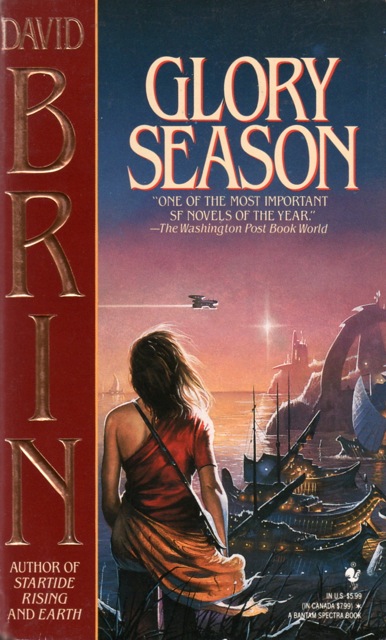
I skipped the book by David Brin, because he’s just such a dogmatic atheist. I tried his Uplift books and DNFed them for much the same reason. If you’re going to be so dogmatic in your religious views that you cannot build a fictional world where the opposite views might plausibly be true, I have no time for you. That’s equally true for theists as for atheists (unless, of course, the book falls into the religious fiction genre).
I tried Virtual Light, but DNFed it only a couple of pages in, due to some explicit violence against children. Now that I’m a father, I have a really low tolerance for that kind of stuff. I’ve also found Gibson to be a bit too dark and gritty for my taste. He seems to occupy the same literary niche as Neal Stephenson, and rub me wrong in much the same way.
It’s been so long since I DNFed Beggars in Spain that I’ve forgotten what my issue with it was. I found the basic premise to be quite interesting, and got about halfway through the book. Ultimately, though, I think I just got bored with it. But I might come back to this one. Of all the books on the Hugo ballot this year, this is the one I’m most willing to try again.
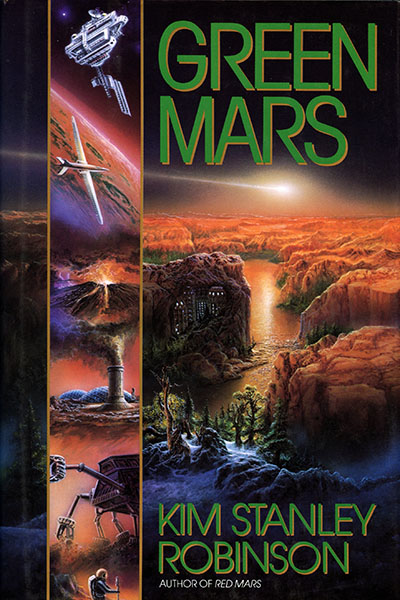
As for Green Mars, I just couldn’t get into it. Part of that is how insufferable I find KSR’s self-righteous liberal politics to be, but another part was the sexual content in the first few pages. I read Red Mars back in college, when my threshold for those kind of content issues was much lower, but I did come very close to DNFing it after the farm orgy scene. Also, Red Mars was a bit of a slog for my younger self, since I never really latched on to any of the characters. Same with Green Mars. Just a lot of people doing a lot of things, when it was clear that all the (crunchy liberal) author really cared about was the capital “I” Idea. Pass.