Playing with cover art

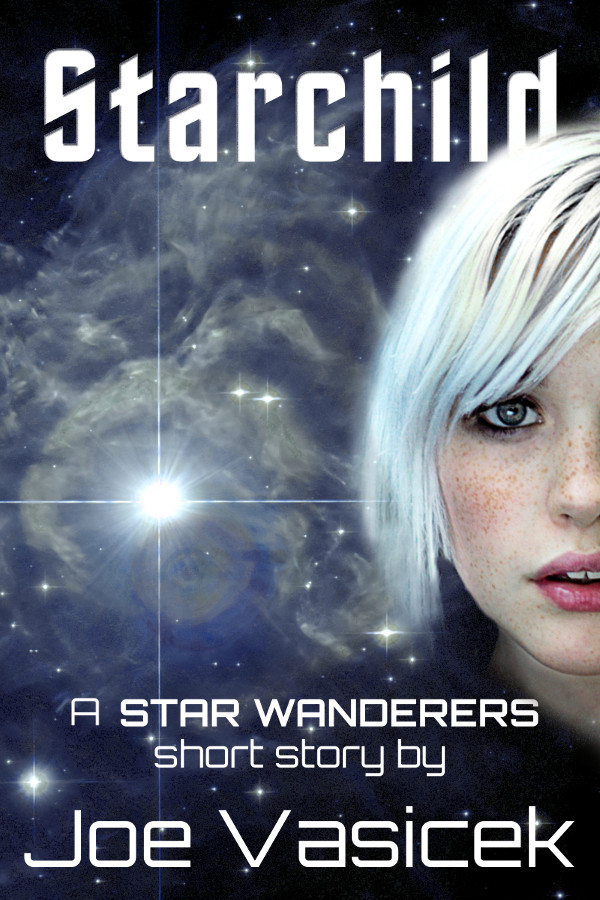
So last week, I was dinking around with some images, making a cover mock-up for a Star Wanderers short story that’s currently on submission to Orson Scott Card’s Intergalactic Medicine Show. This is what I came up with:

Starchild (cover)The model is Devon Jade, photographed by Aaron Tyree on Deviantart (CC BY 2.5). The background image is variable star RS Puppis, photographed by NASA (public domain).

The story itself is set in the same universe as Star Wanderers, around the same timeline. It’s very short, only 15 pages, and follows the coming of age and loss of innocence of a girl on an isolated space station in the Far Outworlds. It’s on submission to the major SF&F markets right now, but in a few months I anticipate that it will be available to self-publish. I think I blogged about it when I wrote the story last year.

So far, I’ve sent it out to Clarkesworld, Asimov’s, F&SF, Strange Horizons, IGMS, and Escape Pod. All of them except for IGMS have rejected it so far, which isn’t too unusual for short stories (you tend to accrue a LOT of rejections before anything gets published). After I hear back from IGMS, I’ll probably send it out to a couple more pro markets and a handful of semi-pro markets before I publish it myself.

I’ve got to be honest, I’m really really tempted just to put it out right now. But I want to give the magazines a try first. I can always self-publish it after I’ve exhausted all the markets, but once it’s self-published, none of the magazines will take it. Better to be patient and keep it on submission for now.

You can probably expect to see this story sometime early next year, either in a sci-fi magazine (fingers crossed), or on Amazon. When I do publish it, I’ll make it free for my email list subscribers.

What I’m up to these days

It’s been a while since I blogged about what I’m doing. In spite of the relative blog silence, I’ve actually been up to quite a lot behind the scenes here.

My career has had a lot of ups and downs lately, so for the past month or so I’ve been working to retool some things and reinvent some others. I’m experimenting a bit with different prices, especially for the Star Wanderers series, and trying to find more effective ways to market my books.

Now that I’ve set up my blog with a My Books page and individual pages for each of my books, complete with purchase links, book description, linked Goodreads reviews and everything, I’m in a good position to do some things that I couldn’t before. The most significant thing is that I can now put links to my books in the backs of other books. Without a dedicated page on my blog for each book, I couldn’t really do that, since Apple will take down your ebook if it has a link to Amazon, as well as Kobo, and Kobo probably will too… etc etc.

Screenshot from 2015-05-28 12:01:47

Point is, now I can put links to my books in the back-matter of each book, instead of just a teaser. So I’ve been going through and reformatting for that, which honestly isn’t too difficult, but it can be a little tedious. While I was at it, I made a dedicated page for my email list sign-up form, and put front-matter links in all my books for that.

After that’s finished, the plan is to release a second edition of Science Fiction from A to Z, this time with inline text links to the book pages for all of my books. Many of the chapters finish by saying “this is how I played with this trope in this book,” so adding the links should be a fairly organic and non-obtrusive way to do some marketing. And when the new version is out, I plan to give it away as an incentive to join my email list.

So that’s what I’ve been up to on the publishing end. On the writing end, I’m taking a bit of a break to work out some projects in my head before I put them down on paper. I want to shift away from science fiction for a while and work on some fantasy, starting some new series and building new universes. More on that in later posts.

Friends in Command (Sons of the Starfarers: Book IV) is set to release on July 1st, so in the lead-up to that, I’ll post a few excerpts. And I have some more ideas for the Self-Sufficient Writer series—just putting together some pictures for that. But for now, I need to get back to writing.

$.99 sale for TALES OF THE FAR OUTWORLDS

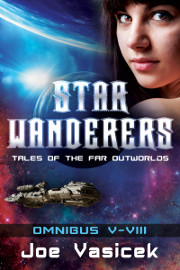
SW V-VIII (thumb)Hi guys! Just a quick announcement that Star Wanderers: Tales of the Far Outworlds (Omnibus V-VIII) is on a special $.99 for the week!

While this omnibus contains the last four parts of the series, they stand on their own a little bit better and can be read independently of the first four. My favorite book is probably Deliverance (Part VIII), which was a lot of fun to write. Also, Dreamweaver (Part V) is basically a retelling of Outworlder (Part I), but from Noemi’s point of view.

I’m also running a Goodreads giveaway for the print edition, which came out just a couple of months ago. The giveaway ends when the sale ends, at the end of the week. To enter the giveaway, click here.

In the meantime, you can pick up the ebook edition of Tales of the Far Outworlds basically everywhere for $.99 until Sunday. So check it out!

Nothing Found

$.99 sale and giveaway for THE JEREMIAH CHRONICLES!

Hey everyone! Just wanted to let you know that Star Wanderers: The Jeremiah Chronicles (Omnibus I-IV) is on sale for $.99 for the first week of March! In addition, I’m doing a Goodreads giveaway with two copies of the paperback. Check it out!

Goodreads Book Giveaway

Star Wanderers by Joe Vasicek

Star Wanderers

by Joe Vasicek

Giveaway ends March 08, 2015.

See the giveaway details
at Goodreads.

Enter to win

Nothing Found

It’s done!

Yesterday I finally finished the second draft of Friends in Command (Sons of the Starfarers: Book IV)! I know I’d said I was working on other projects, but those were intermittent—this was the main one I was focusing on. I still need to run it by my first readers, but I’m pretty sure this is the version that I’ll publish. If all goes well, you can expect to see this go up on pre-order before the end of March.

While working on the revisions for Friends in Command, I more or less plotted out the rest of the Sons of the Starfarers series in my head. There are going to be nine books total, most of them around 40,000 to 50,000 words (or 150 to 200 pages). It will probably take me between two and four months to write each of them, including sending them off to first readers and implementing their feedback. If my first readers come back with problems, though, it might take more like five or six months.

While I’m definitely committed to finishing up this series, I’m probably not going to work exclusively on Sons of the Starfarers. As much as I would like to wrap up this series and get it all out there, there are a lot of other projects calling out to me—projects that I’ve been putting off for far too long. Here are just a few of them:

STAR WANDERERS: CHILDREN OF THE STARRY SEA

Yes, I have another story in the Star Wanderers series to tell. This one is a full-length novel, though, and it takes place about sixteen years after the events of The Jeremiah Chronicles. It’ll be fun to bring back all the old characters, but this story is mostly about their children (hence the title). This WIP is still in the early outlining stages, but I have lots of ideas with where to take it. I’ll probably write it sometime over the summer, unless there’s enough demand for me to write it sooner.

THE SWORD KEEPER

This is my epic fantasy novel that I’ve been writing on and off for the past two and a half years. I put it on the back burner last summer after I got blocked, but just last month I figured out what I needed to change to get the story flowing again. I could probably finish this one in a month if I focused on it. Hopefully, this is the year that I’ll finally get this one finished and publish it.

QUEEN OF THE FALCONSTAR

This is the passion project that distracted me while I was working on Friends in Command. I wrote about three chapters, put it on the back burner, and then daydreamed the whole rest of the book. Needless to say, I’m eager to get back to this one. I think it has a lot of potential—Star Wanderers was an unplanned passion project just like this one.

KING WASHINGTON

This is a new project that I haven’t blogged about yet. I’m collaborating on it with a friend (the story was actually his idea), and we’ve spent the last two or three weeks plotting out the entire series. All that is done now, so all we have to do is figure out our collaboration style and write the thing. We’re doing it in season/episode format, with five seasons of 12 episodes each. The episodes are each going to run about 20k to 30k words, so once we have our workflow down we should be able to pump out an episode every four to six weeks.

Lots and lots of stuff to work on—that’s partially why I haven’t been blogging much in the last few weeks. I hope to change that soon, though. And even if I’m not quite so active online as I have been, don’t worry—I’m still writing!

The love languages of Star Wanderers

So I’ve been reading this really interesting book recently called The Five Love Languages. Maybe you’ve heard of it. The basic idea is that all expressions of human love and affection fall into five basic categories or languages, and that we’re all better at speaking or understanding one language than we are at the others. There’s actually an online test where you can figure out what your primary language is (mine is physical touch), and learn how to better speak the others.

As I was reading this book, I couldn’t help but think about the characters from my books, especially the Star Wanderers books. Just for fun, I decided to figure out what their primary love languages are. Just as a warning, there will be unmarked spoilers below.

Jeremiah

Jeremiah’s primary love language is definitely physical touch, and that’s probably why I was able to write him so well. For him (and for me), physical intimacy implies an emotional commitment, which is why at first he turns Noemi down (he doesn’t want to make a promise that he can’t keep). When they finally do get together, the language barrier isn’t so much of an issue for him because he gets all the love and affection he needs through physical touch.

Noemi

Noemi’s love language is quality time. For her, physical touch is more just a means to an end, which is why she’s okay with offering herself physically to Jeremiah before she really knows him. But at the various points in the series where it looks like he might leave her for a while, she freaks out a bit, even when she knows it’s only temporary. Because the Ariadne is so small, and she and Jeremiah are basically forced to live on top of each other, she’s able to bond very quickly with him because of all the time they spend together.

Mariya

Without a doubt, Mariya’s love language is acts of service. It’s not until Jeremiah saves her family by getting them a berth on the Hope of Oriana that she really starts to fall for him. She tries to express her love by offering to help translate between Jeremiah and Noemi, which has the added benefit of making them both dependent on her to some degree. When Lucca rescues her from the pirates, she starts to fall for him instead, which culminates after he helps her to save everyone else.

Lucca

I’m not sure what Lucca’s love language is exactly. I want to say it’s acts of service, because he also doesn’t really fall for Mariya until she saves him. At that point, she goes from being the pretty trophy he won in the contest with the pirates into an actual human being that he can love and respect. He also has a bit of quality time going on, since he really comes to love her after the time that they spend together.

Jakob

At first, I thought that Jakob’s love language would also be acts of service, because of how he slaves away to support his family and feels rebuffed when they don’t appreciate it. But then I remembered that his pride makes it hard for him to accept acts of service from others. After thinking about it some more, I think his primary love language is words of affirmation. Salome’s constant nagging really grates on him, and her harsh words nearly drive him to the brink of suicide. He’s too proud to admit that he needs to be told that he’s loved, but he really does.

Salome

Salome’s love language is almost certainly receiving gifts. When Jakob’s work at the Oriana Station dockyards take him away from her, she feels unloved because he isn’t giving her the gift of his presence. More importantly, when he sent both of their sons away on the Medea, she felt as if he had taken two of the most important things in her life away from her—the exact opposite of giving gifts. The fact that they’re so poor certainly doesn’t help things.

Just for fun, let’s do a few characters from Sons of the Starfarers as well!

Isaac

Isaac’s love language is probably physical touch. He feels like he has to be within an arm’s reach of Aaron at all times, which is one of the reasons that Aaron resents him. He’s also hyper-aware of Reva’s no nudity taboo, and is very careful not to touch her when she isn’t wearing any clothes. When she puts a hand on his shoulder, he has a minor breakdown, and when she gives him the henna tattoo, that’s also a big deal mainly because of how it involves physical touch.

Aaron

I’m pretty sure that Aaron’s love language is words of affirmation, though I haven’t fully thought it through yet. He misbehaves and acts irresponsible because of how Isaac constantly nags him, and when he’s surrounded by friends who give him verbal encouragement, he starts to shape up rather quickly.

Reva

I’m not sure what Reva’s love language is. It isn’t physical touch, and it isn’t words of affirmation—her father wasn’t very good with words, but she still knew that he loved her. It isn’t receiving gifts either, since she doesn’t think much of the clothes that Isaac buys for her. So just by process of elimination, her love language is probably either quality time or gifts of service. Of those two, I’m more inclined to say that quality time is the more important one, which should become obvious in Book V: Captives in Obscurity.

Mara

Mara’s love language is almost certainly words of affirmation. In the first chapter of Book IV: Friends in Command, she has a nightmare that should make that abundantly clear. She’s also closed herself off in a lot of ways, to the point where she’s no longer comfortable with giving or receiving any sort of affection. That’s why she can be so harsh when she’s criticizing Aaron—though, to be fair, she always strives to make her criticism constructive.

So there you have it! Six characters from Star Wanderers and four characters from Sons of the Starfarers, with all of their love languages worked out. For the characters I’m not so sure about, I should probably take the online test for them just to see how it ends up. That would be a fun project, but for now, I think my time would be better spent writing the next Sons of the Starfarers book.

Take care, and let me know what you think!
Thoughts on the danger of falling in love with your characters

As a writer, I spend so much time in the heads of my viewpoint characters that I can’t help but like them. So it sometimes comes as a surprise when readers get frustrated and want to slap my characters around.

To be fair, sometimes I do that on purpose. For example, in Stars of Blood and Glory, Princess Hikaru does some incredibly stupid and naive things that end up getting everyone else in a lot of trouble. There’s a reason for it, though: she’s been sheltered in the palace all her life and knows nothing of the outside universe. Over the course of the story, she comes to realize just how naive and sheltered she’s been, and has something of a transformation.

Jeremiah from Star Wanderers is another character that readers sometimes get frustrated with. He’s very passive and lacks a strong backbone, at least at the beginning of the series. I did try to make sure that each story in his viewpoint was driven by his choices, rather than the things that happen to him. But he isn’t your typical alpha male starship pilot—far from it.

With Jeremiah, I tried to lean towards writing an “everyman” rather than a “superman.” In a lot of ways, he was also a case study in human nature for me, since I’m not a passive person and in real life tend to get frustrated with passive people. When I dove into Jeremiah’s head, though, I found it almost impossible not to like him, even with all his flaws.

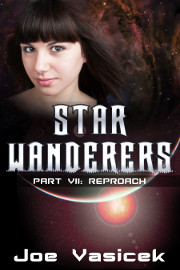
SW-VII (thumb)Another good example from Star Wanderers is Mariya. Some of my readers absolutely hate her. Given her role in the story, it’s not hard to see why: she basically tries to steal away the love interest from the main female protagonist of the series.

In her head, though, she’s not stealing—she’s sharing. Everything she does makes sense for her perspective, and when she realizes how much she’s hurt everyone, she feels genuine remorse and regret. As a character, she fascinated me so much that that was one of the main reasons I decided to write a book solely from her point of view.

To be fair, one of the other reasons readers get frustrated with her is because she’s an angsty teenager. Her life is either amazingly awesome or on the verge of falling apart (the latter being much more common). I can’t fault readers at all for getting frustrated with that—all I can do is hope that the payoff is greater than the pain.

Looking back on all this, I think that one of the potential traps of being a writer is falling in love with your characters more than your readers ever will. That’s not to say that you shouldn’t love your characters, but that you shouldn’t let that love make you blind to how your readers are going to respond to them.

It’s kind of like the central paradox in Orson Scott Card’s Ender’s Game: in order to know an enemy well enough to defeat them, you have to know them well enough to love them as well. But just when you can’t help but love them, you have to destroy them. It can be the same way with your characters: even when you know them well enough to love them in spite of their flaws and weaknesses, you still have to give the readers their moment of schadenfreude.

Of course, a lot of it ultimately comes down to skill. If you truly excel at bringing readers into the character’s head, then perhaps you can get them to love that character as much as you do. But it also depends on the reader. If the reader isn’t particularly interested in falling in love with a character (or in falling in love with that character), then your writing skill probably isn’t going to change that.

It’s interesting to think about, and something I’ll definitely keep in mind as I continue to write. In the meantime, if you have your own thoughts on the subject, please leave a comment—I’d very much like to hear it!

January Goodreads Giveaways!

Hey guys, just thought you might like to know that I’m running a couple of Goodreads giveaways this month! They are for two copies of Bringing Stella Home, and one set of the first four Star Wanderers books. Check it out!

Goodreads Book Giveaway

Bringing Stella Home by Joe Vasicek

Bringing Stella Home

by Joe Vasicek

Giveaway ends January 31, 2015.

See the giveaway details
at Goodreads.

Enter to win


Goodreads Book Giveaway


Star Wanderers by Joe Vasicek


Star Wanderers


by Joe Vasicek


Giveaway ends January 15, 2015.

See the giveaway details at Goodreads.


Enter to win


In addition, I’m currently working on typesetting and formatting the print versions of Star Wanderers: The Jeremiah Chronicles (Omnibus I-IV) and Star Wanderers: Tales of the Far Outworlds (Omnibus V-VIII). If all goes well, those should be up for sale by the end of the month.

That just about does it for now. Thanks for reading!

How going indie is like driving a manual (plus a cover reveal)

A couple of weeks ago, I got a new (to me) car. It’s a 2005 Ford Focus / Saleen: a two-door hatchback that drives like a racing car and gets about thirty miles per gallon (WA-A-AY better than the gas guzzler I was driving before). It’s also a manual transmission, which is perhaps the biggest difference between this and my previous car.

This is my first time driving stick shift, and I have to say, it is a lot of fun! When you drive a stick, each hand and each foot is doing something different. There’s a lot more to keep track of, and if you do things in the wrong order (like braking without engaging the clutch, or starting without giving it some gas), you run the risk of making the car stall or doing nasty things to your transmission. On the other hand, driving a manual gives you a much better feel for the engine and what it’s capable of. You can feel when you’re putting too much stress on it–or alternately, when you can push it a little further.

I usually like to walk everywhere, but ever since I got this car, I just want to drive it! It’s way more fun than driving an automatic, even with (or indeed, because of) the extra challenge. So today, while I was walking to BYU campus (alas, the parking situation there makes driving a major pain), I got to thinking about it, and I realized that driving a manual is a lot like being an indie author.

When you’re an indie, you have a lot more things to juggle, just like driving a manual. This gives you much greater control of your career, but it also makes it easier to stall or screw up. At the same time, because of that extra control, you’ve got a much better feel for the market, and probably a better connection with your readers. And for me at least, the extra challenge doesn’t make it less enjoyable, it actually makes me enjoy it more!

Nothing Found

This week, I had the first day where I sold 100+ books in a 24 hour period. That was pretty awesome! I’ve been running a $.99 sale for Star Wanderers: The Jeremiah Chronicles (Omnibus I-IV), and it got picked up by a couple of ebook sites that really pushed it in the right way. Now that I know how to run a sale like that, I hope to do it again, perhaps for Black Friday. And if you haven’t picked up this one yet, it’s on sale for $.99 through Friday.

Marketing and promotion is one of the harder parts about going indie for me, kind of like how finding the clutch point and starting without stalling is hard when you first drive a manual. The more that I practice, though, the better that I get at it, and the more I enjoy it.

Another area where I think I’ve more or less stalled is in my covers. When I put out the first few Gaia Nova novels, I spent a fair amount of money hiring out artists to do the illustrations, but I did the typography myself. On those earlier covers, it definitely shows. For my later books, I worked with a bunch of cover designers, and seeing their work made me realize that there’s definitely room for improvement on those earlier ones, especially for the print editions.

I’ve decided to redo the covers for those three novels (Bringing Stella Home, Desert Stars, and Stars of Blood and Glory), keeping the illustrations but changing the typography. I tried to find a cover designer to do it, but I wasn’t able to find one that did satisfactory work, and after playing around with them for a bit I think I can actually do them myself. I’ve got a lot more experience with covers and cover design now than I did when I was starting out, and I’ve learned a few photoshop tricks as well.

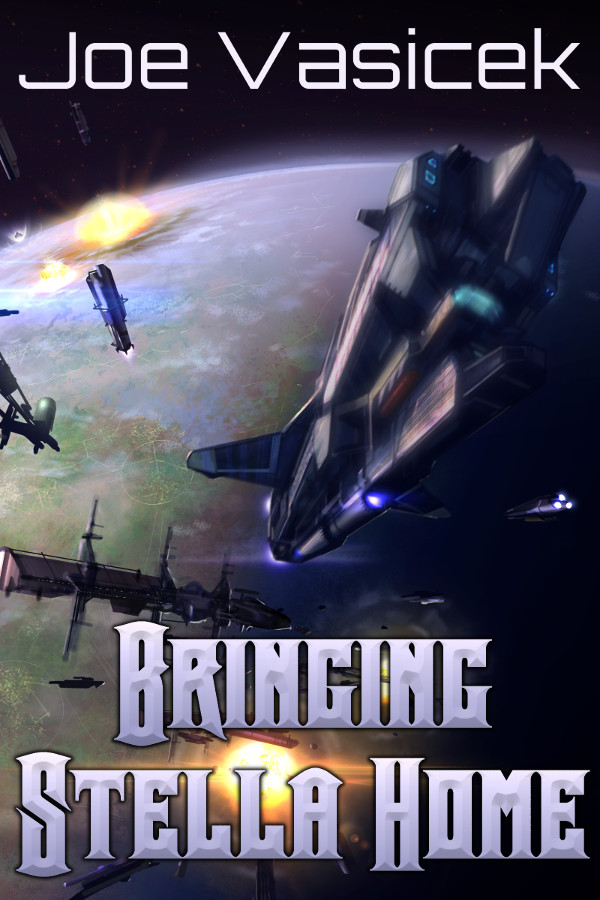
In any case, here is what I came up with for Bringing Stella Home:

BSH (cover)How do you like it? I rather like how it turned out, though I’ll admit I’m still learning. I did the new design just this morning, so I figure I ought to wait a couple of days and maybe seek out some feedback from professional designers before I go through with it.

I hope to have the new edition out before the end of the month. The content and story will all be the same, but the cover and metadata will be updated, and some minor errors such as typos will be fixed. I also hope to do the same thing with Desert Stars and Stars of Blood and Glory. Once the new editions are out, I’ll probably run some sales and giveaways with them, so definitely stay tuned!

As for my other projects, the next book in the Sons of the Starfarers series is out with my first readers, so it’s on track for a January release. My next WIP is The Sword Keeper, a fantasy novel I think I’ve mentioned before, and I hope to get that one knocked out in about a month or so. It’s already halfway finished, so the hard part is just ahead. There are also a couple of Gaia Nova novels that I’ve been meaning to get around to, and probably will before the end of the year.

That just about does it. Look out for more covers soon! I’m definitely having fun with the new ones. 😀

What readers want

I’ve been thinking a lot recently about what science fiction and fantasy readers want in the books they read. I’m in the middle of writing and publishing a series of novellas and short novels, so it’s definitely on my mind. After publishing twenty books and completing another novella series, I think I have a pretty good idea.

First and foremost, I think that readers want to have an experience. The exact nature of that experience depends on the genre, but for science fiction and fantasy readers, that experience needs to be out of this world. They want to be transported somewhere and feel that they’re immersed in the world of the story.

I think I’ve done a pretty decent job of this so far. I’ve gotten a lot of feedback from readers who say that they really enjoy the worlds that I’ve created. There’s always room for improvement, but so far, I think I’ve done a pretty good job transporting my readers to other worlds.

Second, readers want characters that they can connect with somehow. That usually means characters that they can relate to, though it can also include larger-than-life characters as long as they don’t feel fake. The characters are especially important for science fiction and fantasy, since they make everything else in the book feel real and authentic. Besides, when you’re visiting a new and unfamiliar place, it’s always good to have a friend.

I think that character is one of my strong points. I love getting into my characters’ heads and showing how they uniquely see the world around them. I also love showing how characters change and grow as they struggle to overcome their weaknesses. I’ve gotten a lot of positive feedback from readers on my characters, even in some of the more critical reviews, so that tells me I’m doing something right that so many readers can connect with them.

Third, readers (especially sf&f readers), want an adventure. They don’t just want an internal struggle as a character wrestles with difficult moral issues, or a transformative growth experience as a character faces a difficult challenge. Both of those can make a good story into a great story, and turn a reader into a fan, but more than that they want stuff to actually happen. They want the plot to move at an exciting pace–to get sucked into a story as they wonder what’s going to happen next.

With the series I’m writing now (Sons of the Starfarers), I’m trying to do just that. Star Wanderers (my other novella series) did pretty well, but I think the conflict was more personal and internal, or had more to do with the relationships between the characters than any sort of adventure that they were having together. There’s a place for that, but I think a lot of readers got bored midway through the series, or didn’t feel a compelling need to finish it. With Sons of the Starfarers, I’ve been careful to keep the action moving at a good clip with every book, and so far almost everyone who reads the second book goes on to the third book.

So those, I think, are the top three things that the majority of readers are looking for. But there’s something else that I don’t think I’ve been as good at, and it has to do with everything above.

I think that most readers, especially sf&f readers, are looking for longer books. They want everything above, but they want it in much bigger doses. The enjoyment they get out of a book doesn’t increase linearly with the page count, it increases exponentially. The longer the book, the deeper the immersion. The characters feel that much more real the longer they get to spend with them, and the adventure feels that much more thrilling.

As I’ve said before, I really enjoy writing novellas. But if my readers want something meatier, I’ll do what I can to satisfy them. I may love writing novellas, but I also love writing novels too. Since they generally take longer to write, with a lot more time between new releases, it’s more of a challenge to market them, but I have enough books out now that I can switch gears.

There are a couple of half-finished novel projects that I’ve had on the back burner for a while. I’ll keep working on Sons of the Starfarers until that series is complete, probably sometime next year, but I’ll also work on the novels in the meantime. Sons of the Starfarers will have nine books (three omnibus editions), and then it will be complete. After that, time to move on to longer books.