update post

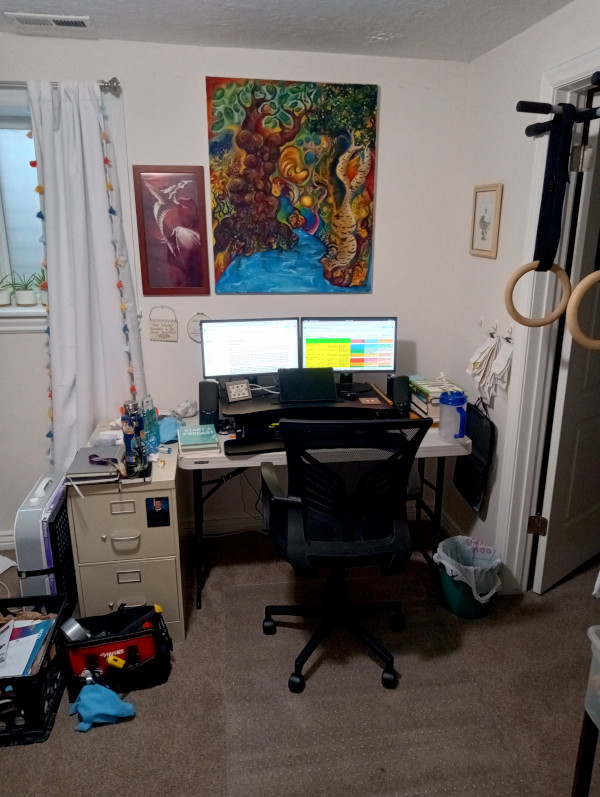
This is my current writing setup. The top of the filing cabinet already needs to be decluttered, but the rest is actually working out pretty well. The nice thing is that the computer can be raised into a standing desk, which works out really great for writing, since I tend to write better when I’m standing or pacing.

I am almost finished with the AI draft of The Soulbond and the Sling. It looks like it’s going to be about 140k words total, which is on the short end for an epic fantasy novel, but longer than anything else I’ve written (except for the first novel I ever finished, which shall never see the light of day).

The human draft will likely be longer than that, though. I’m going to add more details as I humanize it, which is easier to do just by writing it yourself than it is to get an AI to write it. Though parts of it will likely be shorter, since I’m sure there are places where I let the AI overwrite. Most of the skill in AI-assisted writing consists of knowing what to cut out, since generating words is the easy part.

I have also finished the outline for The Soulbond and the Lady, the second book in the Soulbound King series. It should clock in at about 20 chapters, 100 scenes, and 165k words. The next step is to fill out all the prompts and generate a rough AI draft, but because of how Sudowrite works, I don’t want to do that until the AI draft of The Soulbond and the Sling is complete (since it would require tweaking a bunch of the worldbuilding and character prompts). So that will probably wait until the end of the month.

In general, I have found that I tend to work best when I have two current WIPs: one human and one AI. This is because the two different kinds of writing exercise different parts of my brain, and I can rest the one part while I’m using the other. However, it only really works if both WIPs are in the same series. If I have to mentally switch from one universe to another, that adds friction that makes things difficult.

So the key is to pair up different WIPs together, such that I’ve always got both a human WIP and an AI WIP in the same series. With The Soulbound King, that’s not so difficult, because the AI draft of The Soulbond and the Sling is complete enough for me to start the human draft. And once the AI draft is complete, I can move on to the AI draft of book 2 while I finish up the human draft of book 1. It might become a problem if I finish one of the drafts well before the other, but that won’t be a problem for a while.

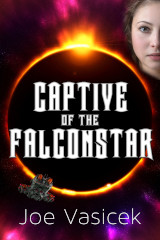
With the Falconstar Trilogy, that’s also not a huge problem. I will probably human-write a reader magnet while I work on the AI draft of Captive of the Falconstar, then humanize Captive while I work on the AI draft of Lord of the Falconstar.

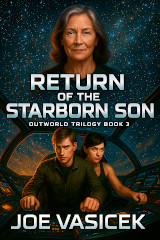
With Return of the Starborn Son, the last science fiction novel I plan to write for a while, it’s going to be more tricky because that is the last book in the trilogy, and I still haven’t generated the AI draft. What I’ll probably do is start work on the human draft after I’m about 15% done with the AI draft, and see if I can’t work on both simultaneously. That hasn’t worked as well for me in the past, since I actually prefer to write the human draft out of order, but if it starts to break down I’ll just hold off on the human draft until the AI draft is more complete.

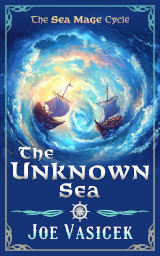
With the Sea Mage Cycle, I’ve currently just got one WIP in that series (The Unknown Sea), and it’s in the AI drafting stage. But it’s short enough that I can probably finish it in just a couple of weeks. At that point, I’ll take my wife out to dinner and have her pick out the next one I’ll write, then work on the AI draft for that one while I’m humanizing The Unknown Sea.

Which brings me to my J.M. Wight pen name. After a lot of thought and some careful deliberation, I’ve decided to put The Road to New Jerusalem on the back burner for now. I was going to try to finish that one in time for the Ark Press contest in October, but I don’t think this is the right time to work on that particular WIP. In the first place, it probably won’t win, and even if it did, that might actually be more of a liability, since it’s a near-future post-apocalyptice novel, and I’m currently trying to establish myself as a writer of epic fantasy.

From now until 2030, I plan to write epic fantasy almost exclusively. The only exceptions for that are the two sci-fi series (The Falconstar Trilogy and the Outworld Trilogy) that I haven’t yet finished. Also, I will probably write some zany space adventure-type stuff under my J.M. Wight pen name, more in the vein of my Gunslinger books (which I have republished under J.M. Wight). But aside from that, I plan to focus on writing fantasy—specifically, epic fantasy.

In my blog series Fantasy from A to Z, I wrote about how epic fantasy has fallen into decline in recent years, due to reader fatigue with big name authors like George R.R. Martin and Patrick Rothfuss failing to finish their series, and how this has put newer authors in a conundrum, because epic fantasy novels are way too big to rapid release, but most readers aren’t willing to start a new series until after it’s already been finished. I hope that my new AI-assisted writing method will help me to crack that particular nut, writing and releasing epic fantasy books fast enough to satisfy readers. Because even though there haven’t been a ton of new epic fantasy authors in recent years, I don’t think the reader demand for epic fantasy has gone down at all. There may still be an opportunity there for writers who can deliver.

That’s what I’m hoping, at least. So I’ll keep plugging away at The Soulbound King, and hopefully release the first all three books of the first trilogy around this time next year.

Back into writing!

So we are more or less moved into our new (old) house, though there is this overdue kid’s book from the library that somehow got lost during the move, and we haven’t been able to find it… but aside from that, we are more or less settled in. Our five year-old has started kindergarten, my wife is starting her new job, and by the time this post goes live, we will have acquired office chairs from the BYU surplus sale, so I won’t have to be standing all the time like I am as I write this.

I’ve already gotten back into writing my epic fantasy, The Soulbond and the Sling, and am making steady progress on it again. The AI draft is about 66% complete, and it’s good enough that if I were writing it under a secret AI-only pen name, I would feel comfortable publishing it as-is. But my personal standard of quality is higher than that, especially for epic fantasy, so after the AI draft is complete, I will rewrite the whole thing without any AI, to put it in my own voice (and will probably add a whole lot of other stuff to it too—you know, the kind of setting and character details you’d expect in a proper epic fantasy, giving it much more depth).

(Also, as a side note, I do not have a secret AI-only pen name… though I must admit, a part of me kind of wants to start one. With a little bit of market research to figure out the pulpiest genres where I could really excel… but no, with two (soon to be three) small kids and a wife who works full-time, there are only so many projects I can work on at a time.)

I’m also working on The Road to New Jerusalem for my J.M. Wight pen name, though that one has been going much more slow. I really have no idea how much market appeal this one is going to have, and doubt it will do much more than help me to flesh out the world for a potential series in the same universe (a post-apocalyptic Mormon polygamist romance, which also probably has limited market appeal). However, I feel impressed that this is a book I need to see through to the end, so my goal is to finish it before October, at which point I will probably focus on The Soulbound King.

Beyond that, I’m also working on two other novels that I hope to finish before the end of the year (or, more realistically, sometime early next year, since I’m sure the new baby will throw things off for a while. The first is The Unknown Sea, a Sea Mage Cycle book, which is going to be a lot of fun. The rough AI draft is already done, and I had a real blast writing it.

The other one is Captive of the Falconstar, the sequel to Queen of the Falconstar. The rough AI draft is also done for this one, but the revised AI draft is going to take a bit more work. Also, I need to redo the cover and blurb. But I’m really looking forward to getting this one out, and completing the trilogy, which has stood unfinished for nearly a decade now. Yes, I really need to finish these unfinished series, and fully intend to do so—not just with this one, but for all of them.

Over the next year, I hope to transition from being a science fiction writer who occasionally writes fantasy, to a fantasy writer who occasionally writes science fiction. My two big unfinished sci-fi series are the Falconstar Trilogy and the Outworld Trilogy. The plan right now is to finish Falconstar first, knocking out the last two books almost at the same time (the rough AI draft for Lord of the Falconstar is also complete), and then spend a little more time on Return of the Starborn Son to finish that trilogy strong. For a long time, Star Wanderers was my flagship series, so I want to do right by it. But I haven’t even outlined book 3 yet, so it’s going to be a while.

And when Return of the Starborn Son is done, I will probably release another volume of my author’s notes, since hey, why not? But that won’t be for a while—probably not until this time next year, at the absolute soonest. However, Return of the Starborn Son probably will come out before The Soulbond and the Sling, since for marketing reasons I don’t want to release an epic fantasy trilogy until all three books are ready to rapid release. And yes, I fully blame George R.R. Martin for conditioning epic fantasy readers not to try out a new series until it is complete. It is what it is.

So that’s the long-term plan. I will probably start a few new projects as well, including a relaunch of my Christopher Columbus stories, once I figure out what I want to do with that series. But for now, I’m just going to focus on The Road to New Jerusalem and The Soulbond and the Sling, until we are back into a new routine. BYU classes start on September 3rd, so it will probably be a little crazy until then. And the way things are shaping up, I half-expect they will induce my wife at the tail-end of September. So maybe we won’t actually get into a new routine until sometime next year. But either way, I’ll do my best to keep writing.

Five things I did at work last week

Last week was kind of crazy. My in-laws were gone for half of it, and we did a deep clean on the house before they came back. We also did a whole lot of Easter stuff as a family, which was fun, but it kept us very busy (hence the near total lack of blogging). And finally, our two year-old son who has zero pain tolerance came down with hayfever and barely slept at all, which was much less fun. But in between all that, I managed to:

  • write about 17k human words in Bloodfire Legacy, passing the 60% mark on that WIP,
  • touch up the prologue and chapter one of The Soulbond and the Sling, about 10k words or 5% of that WIP,
  • generate a cover for Return of the Starborn Son,
  • plan out the chapters (ie blog posts) for Fantasy from A to Z, and
  • wrote and scheduled this blog post. 😛

IT IS DONE

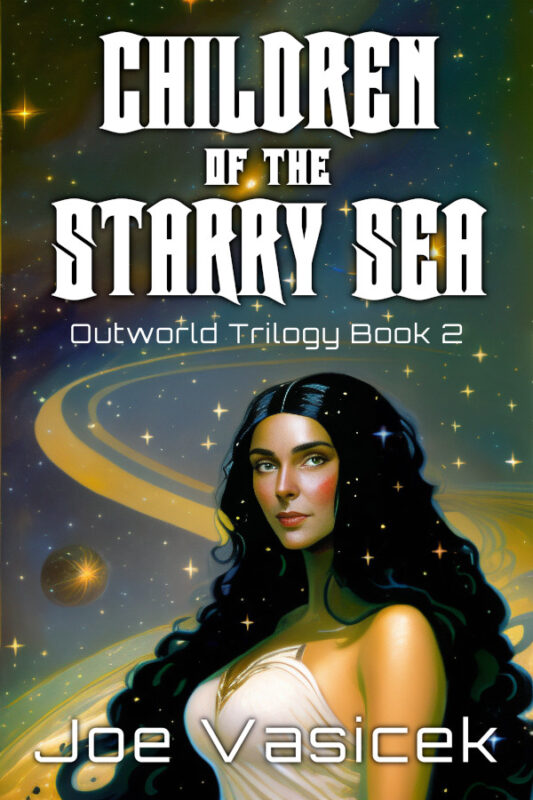
At long last, after more than a year, the rough draft of Children of the Starry Sea is now complete! It clocked in at just over 149k words, which makes it the longest book I have written since I started publishing (the first novel I ever finished was a 168k word train wreck that will never see the light of day. I wrote Genesis Earth next, and that was my first published novel).

I will probably pare it down to around 130k words, which will still make it my longest book when I publish it. Since I’ve been cycling through the revision drafts as I write, I will hopefully finish all the revisions within the next month and put it up for preorder shortly after that.

I am super excited, not only about this novel, but at the recent changes in my writing process that enabled me to finish it so quickly, and will hopefully help me to write a lot more books moving forward. Because of those changes, I’m confident that I can finish the third book in the trilogy (Return of the Starborn Son) before the end of the year, perhaps even before the end of the summer. It will be really fantastic to have this trilogy complete.

And after that? I’m not entirely sure. I currently have two other unfinished trilogies, and I hope to finish those soon, but I may also want to start a new one. If I can write at least three novels a year, I can finish a trilogy and start a new one every year going forward.

Anyway, I’m really excited that book two is done. Looking forward to writing the next one!

How I hacked my ADHD to triple my daily word count

Writing with ADHD can be tough. It’s easy to beat yourself up for being “undisciplined” or “lazy” when the greater problem is that you’re trying to work against your ADHD instead of finding ways to make it work for you. It’s like swimming against a rip current instead of swimming sideways to get out of it.

In the last month, I’ve made a really fantastic breathrough that I think will change the way I write from here on out. So far, it’s helped me to double or even triple my usual word count. The novel I’ve been wrestling with for more than a year now—the longest one I’ve written since I started indie publishing—now looks like it will be finished in just a few of weeks, when I expected it to take a couple of months. Needless to say, I’m really excited.

What changed? I found a way to make my ADHD work for me, rather than against me.

In my previous post, A reading hack for the ADHD addled brain, I explained how I exploited my ADHD to read more books. Basically, I did the same thing, but for writing. There was a lot that had to happen first, though, and the biggest of those was that I had to learn how to make and keep an outline.

Step 1: Learn how to outline properly

For years, I just sort of assumed that I was a discovery writer, probably because of the ADHD. Most of creativity has to do with finding novel or unexpected ways to combine two or more ideas, and when you have ADHD, your brain naturally jumps from idea to idea. That was why I always hated taking meds when I was a kid: I felt that it stifled my creativity. And since most of this idea jumping happened subconsciously, I assumed that outlining would also kill that process.

But after a few years of struggling as an indie author, I realized that my writing process was too slow. In order to succeed, I needed to publish more frequently, but in order to do that, I needed to produce more content regularly. Back then, I would usually write a novel from start to finish, laying it aside for a month or two if I ran into a serious block, and also after finishing each draft. A typical novel would go through two or three revision drafts, so it would literally take years before a +70k word novel was ready to publish.

I decided that the best way to shorten my writing process was to “cycle” through the book, combining all the drafts so that I was working on revisions while simultaneously writing the rough draft. In order to keep track of all that, I needed to keep an outline. So I tried out a few different methods and tweaked them until I came up with a method that worked well for me.

The thought of outlining can scare a lot of writers who consider themselves “pantsers” or “discover writers,” but the thing to keep in mind is that there is no one right way to keep an outline. In fact, there are probably as many ways to outline as there are writers. For some, a couple of quick sketches on the back of a napkin is enough, while for others, it turns into a massive story bible that’s just as long (or longer) than the actual book. But without trying out a lot of different methods, you’ll never figure out what works for you.

It took me a couple of years, but I eventually developed a method that worked really well for me. With it, I was able to write Edenfall and The Stars of Redemption, as well as the last two Gunslinger books, in much less time than it took for my other ones. I was also able to combine all eight of the Star Wanderers novellas into a novel—something I probably wouldn’t have been able to do very well without a solid outline to keep it straight.

But I still would run into blocks that would occasionally derail the project, at least for a little while. I ran into that a lot with my current WIP, Children of the Starry Sea. Sometimes, they were genuine story problems that I needed to work through. More often than not, though, the problem was one of momentum: I was having too many bad writing days interspersed with the good writing days, so that each day felt like I was starting from zero. After a while, that becomes difficult to keep up.

Step 2: Allow yourself to write out of order

When I came back from my second hiatus to work on Children of the Starry Sea, it was clear that my new method wasn’t working as well as I needed it to work. Children of the Starry Sea is much longer than anything I’ve published so far, and I found that I just wasn’t producing enough new words consistently to make my “cycling” process of revisions work.

Around this time, I remembered something I’d heard on a recent convention panel, where one of the authors shared how he collaborated with another author. Instead of going back and forth, he told his cowriter: “how about you just write all the odd chapters, and I’ll write the even chapters, and when we’re both done we’ll combine it all together and see how it turns out.” To their surprise, it actually turned out really well.

So with that in mind, I decided to experiment with skipping around my current WIP, rather than writing it in order from start to finish. If I woke up and felt like I wanted to write an action scene, I would pick one of the action scenes out of my outline and write that. If I felt like I wanted to write the ending, I would skip ahead and write that. If I felt like I wanted to write the next scene, I would go back to where I’d left off and write that.

The outline was the key. Without it, there’s no way I’d be able to keep everything straight and know where each part is supposed to go. The outline also had the added benefit of dividing the novel up into smaller chunks, making the overall project much less intimidating. The way to eat an elephant is to take one bite at a time, just like the way to climb a mountain is to take one step at a time. Same thing with novels.

That’s all well and good, you may be thinking, but what happens when you’ve written all the stuff that you want to write, and all that’s left is the stuff you didn’t want to write? Isn’t that a bit like eating your dessert first, and leaving your vegetables for last? Not really, because chances are that if you really don’t want to write a particular scene, the reader probably won’t want to read it either. So if you can find a way to rework your story so that scene becomes unnecessary, you’re probably better off doing that.

But I actually haven’t had that problem yet. The thing about ADHD is that it actually feels right to jump around all over the place like that. Just because I don’t want to write a particular scene on one day doesn’t mean that I won’t want to come back to it sometime later. And more often than not, writing a later scene actually makes things fall into place with the earlier scenes, and makes me more excited to write them.

It’s as if the project itself is a puzzle. Can you imagine trying to put a puzzle together in linear order, starting from the top left corner and moving to the bottom right? That would be pure torture! Instead, you pick up whatever pieces catch your eye, and try to fit them in with other, similar pieces, until the puzzle itself begins to take shape.

There a lot of disadvantages to writing with ADHD, but there are some areas where the ADHD can actually become a strength, if you learn to work with it instead of against it. I’ve already mentioned how it can help with creativity, since your mind is always bouncing around between different ideas. What I’ve learned in the last month is that writing out of order is another great way to harness ADHD as a strength, since something that leaps out from writing one scene can often lead to a breakthrough in another. Writing out of order gives your ADHD brain the space it needs to make those intuitive leaps, and harnesses the “oh, shiny!” toward something productive, rather than driving you to procrastinate.

Step 3: Start in the middle, not the beginning

For me, the hardest part of writing is getting started. That’s probably my ADHD: it’s always easier to get distracted than it is to settle down and do what you’re supposed to do. Once I’ve settled down, though, and gotten into a groove, I can usually stick with a task until it’s done. In fact, once you’re in something of a flow state, the ADHD can actually make you hyperfocus.

So if the hardest part of writing is getting started, how do you turn that from a weakness into a strength? By leaving the next scene(s) unfinished, so that the next time you sit down to write, the scene has already been started and you just need to figure out the next word. One word leads to the next, and before you know it, you’re in the groove again.

By far, this has been the biggest part of my breakthrough: realizing that I don’t have to write every scene from start to finish in one sitting. In fact, it’s better if I don’t. Instead, I’ll typically finish one or two scenes in the morning, then pick out three to four scenes in the afternoon and write the first couple hundred words or so, deliberately leaving them unfinished so that I have a variety of scenes to choose from the next day.

If the hardest part of writing is getting started, then the hardest part of getting started is feeling overwhelmed at how much you have to do. But if all I have to do is write a couple hundred words, that’s easy! It also works with my ADHD instead of against it, since I get to jump from scene to scene instead of getting bogged down.

With the way that I used to write, most of my “writing blocks” had less to do with the actual writing and more to do with working myself up to write. Many times, I found that if I just sat down and opened up my WIP without thinking too much about it first, the writing would come a lot easier. Starting in the middle is a great way to harness that, because you aren’t confronted with a blank page the moment you sit down. It takes a lot less effort to find the next word than it does to find the first word.

So with where things stand right now, I just need to start four new scenes every day this week and I’ll have every remaining scene in my novel WIP started by Saturday. From there, if I can finish two or three scenes a day, I can easily finish the rough draft stage of this novel WIP before the end of February—which will be amazing, since I’m only at the 65% mark right now, and historically that’s always the part where I find it most difficult to write.

I’m really looking forward to writing a whole novel from start to finish using this method. As soon as Children of the Starry Sea is finished, I’ll start outlining the sequel, Return of of the Starborn Son, and write it the same way. If things go well with my current WIP, I’ll be very optimistic about finishing the next one before the end of the year—perhaps even before the end of the summer.

I do expect things to get crazy around here soon, though. Our second child is due in the early spring, which means enduring a month or two of chronic sleep deprivation. I’ve gotten to be pretty comfortable with writing at 4AM, but we’re also getting a lot more uninterrupted sleep than we were when Princess Hiccup was a newborn. I anticipate that we’ll have at least a month where nothing gets productively done.

So it will be really fantastic if I can finish Children of the Starry Sea NOW, before the baby comes—and not just the rough draft, but the revisions too. Fortunately, I don’t think I’ll have too much difficulty with the revisions. I’ve already cycled through the first half of the book a couple of times, and it’s working pretty well. Also, revisions come a lot easier to me than writing new words. I’m not sure why that’s true, but it is.

And for the record, I don’t advocate jumping around all over the place while doing revisions. It’s probably best to do that part in sequential order, if nothing else than to make sure that all the scenes and chapters flow properly. I haven’t gotten to that part of this writing method yet, so it will be interesting to see how it goes. So far, the stuff I’ve cycled through actually seems to flow pretty well, but I need to take it from the beginning to really be sure.