State of the Vasicek 2015

I recently read a post over on Brandon Sanderson’s blog where he did an exhaustive recap on his writing and update on all of his WIPs, and called it State of the Sanderson. Since it’s the end of the year and I’m already looking back in order to make some new resolutions for 2016, it seems like a good opportunity to do something similar myself.

In 2015, I managed to publish five books, including two novels, a novelette, and two short stories:

In addition, I wrote a number of short stories that are currently on submission to the major markets, and will probably be published (by myself or in the magazines) sometime in 2016. These include:

  • Killing Mr. Wilson — Time Travel (950 words)
  • My Name Is For My Friends — Sword & Sorcery (2,000 words)
  • Utahraptors at Dawn — Cyberpunk (1,950 words)
  • Welcome to Condescension — Sci-fi Humor (750 words)
  • A Less Than Perfect Game — Sword & Sorcery (1,250 words)
  • Elusive Eden — LDS Science Fiction (2,200 words)
  • The Janus Anomaly — Space Opera (4,400 words)

All of these stories will get out eventually, though it may take a while. I’m putting them on submission to the short story magazines and anthologies that pay at least semi-professional rates, since none of them buy exclusive rights to the stories. Why rush to self-publish if I can get paid twice?

In a lot of ways, it was a pretty decent year. In other ways, I wish it had been more productive. I didn’t publish anything for the first six months, except for A Hill on Which to Die, which I later unpublished in order to take it out of Kindle Unlimited (the first and probably last time I will ever experiment with exclusivity). I made up for it later, but still.

Next year is going to be a lot more productive, I hope. I started a lot more projects this year than I finished, so in 2016 I plan to refocus on the writing and substantially increase my output.

As for writing projects, here is what I’m working on:

Major Projects

Sons of the Starfarers

There are five more books before this series is complete, and while I know more or less how the series is going to end, I’m still in the process of writing it. However, I’m making good enough progress to publish at least two more books in the series this year, possibly three or four.

Captives in Obscurity (Book V) is already written and ready to send off to the editor. Trouble is, cash is kind of tight right now and I probably won’t be able to send it off until after I’ve filed my taxes, which I hope to do early February (I always try to get a jump on tax season each year). For now, that means I’m looking for a launch in May.

Patriots in Retreat (Book VI) is my current WIP, and I hope to have the first draft finished before the end of January. A lot of stuff happens in this book—it’s kind of like the Empire Strikes Back episode, where crap hits the fan and things get real. Then again, Friends in Command (Book IV) was kind of like that too, and Captives in Obscurity has some really crazy developments… point is, I think you guys are going to like these books.

Haven’t outlined any of the other books in the series yet, but I’m a pantser so that’s normal. I do have a climactic ending that I’m working toward, which will tie in this series with all of my other books in the same universe. It’s going to be great to see it all come together, and I expect it will over the course of the next year!

STATUS: Book VI currently in progress.

Gunslinger to the Stars

I started this book in earnest a few months ago, then hit chapter 2 and realized I had a beginning and an end but no idea what to put in the middle. So I put the project on the back burner, letting the ideas percolate until I’m ready to pick it up again and go full throttle. With luck, that will happen very soon.

This is a really awesome project, and one of the ones I’m most excited about. I’ll post a few excerpts in the next few weeks to give you guys a taste, and I think you’re really going to like it!

STATUS: On the back burner, will resume again soon.

Queen of the Falconstar

A few of the readers who enjoyed my Star Wanderers books have mentioned that they wish Jeremiah, Noemi, and Mariya had ended up in a polygamous relationship. While I don’t think that would have worked for that particular story, in Queen of the Falconstar, it’s a major plot point. In addition, the book is an origin story for the Hameji, which should be a lot of fun for readers of my other books as well.

I’ve been working on this project off and on for the last year or so, and while I have a pretty good handle on the main storyline, I’m still a little iffy about how to proceed. It may have some promise as a hybrid between Space Opera and Sword and Planet (sword and starship? Is that even a thing?). The Princess of Mars books are on my reading list, so I’ll probably revisit this project after reading through some of those.

STATUS: On the back burner.

The Sword Keeper

I really need to finish this book. It’s already more than half written, and has some really fantastic potential. For the last three years, I’ve been working on it off and on, but 2016 will definitely be the year that I finish it (though it might still be a while before it’s published).

STATUS: On the back burner.

Secondary Projects

Starship Lachoneus

In spite of finishing the prologue and publishing it as “Worlds Without Number” under my J.M. Wight pen name, I haven’t yet made a serious attempt to write this book. The main reason is that it’s a passion project that I don’t expect to pay off very well or earn me much prestige. Still, when my career is at a point where I can afford more time for a passion project, I will probably pick it up.

STATUS: On the back burner.

The Genesis Earth Trilogy

Genesis Earth is a standalone book, but I realized soon after finishing it that I could easily turn it into a trilogy. Back in 2011, I even started writing the second book: Edenfall. But one thing led to another, and it got put on hold in favor of Star Wanderers.

The trilogy is still on hold, but if there is enough interest, I could certainly resume work on it. I made Genesis Earth free for the month of December, and it’s had a much stronger free run than I’d anticipated (especially with almost no advertising). Depending on the feedback I get from readers, I’ll finish this project sooner or later.

STATUS: On hold, may resume soon.

Mercenary Savior

This is a prequel to Bringing Stella Home that I’ve had kicking around in my head for the last two years. The interest in Heart of the Nebula has been surprisingly steady, even more than a month after publication. If either of those books starts to break out, then I will definitely pick up this project. Otherwise, I can’t justify making it a priority.

STATUS: On hold.

Empress of the Free Stars

Empress of the Free Stars is a sequel to Stars of Blood and Glory that I started back in 2013 but never got further than the prologue. Again, unless my Gaia Nova books start to break out, I can’t justify prioritizing this over my other WIPs.

STATUS: On hold.

Children of the Starry Sea

This one is a novelized sequel to Star Wanderers, with all of the major characters from that series. I know there’s some interest in this one, but for now I think my time would better be spent launching new series rather than returning to old ones. But in 2016, that may well change.

STATUS: On hold.

Lifewalker

This is a standalone I started back in 2013, and I even got several chapters into it before I put it on the back burner. Haven’t touched it since, so right now it’s really more on hold, but my Dad keeps bugging me to finish it (he read the first chapter and really liked it). So yeah. Someday.

I will say this, though: if the short story that’s derived from this book gets picked up by one of the magazines, I will definitely move it up in the writing queue.

STATUS: On hold.

A Brotherhood of Swords

This book is supposed to be a Sword & Sorcery prequel to The Sword Keeper, but since I already have plans for that book, this one is on hold. I did get a really good short story out of it, though.

STATUS: On hold.

That pretty much does it. This next year is going to be super, super busy, and hopefully productive as well. My goal for 2016 is to get back in the saddle, writing full-time again as soon as I can. There are other resolutions I plan to make as well, but those can wait until Thursday.

Genesis Earth re-release!

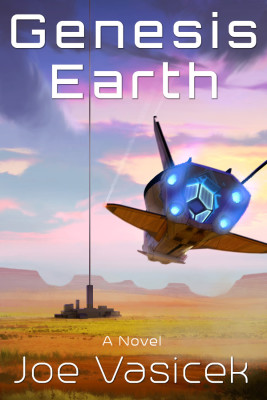
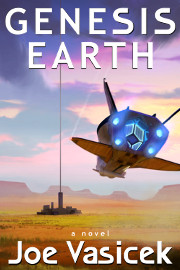
Genesis Earth (cover)A lot has changed since I published my first novel, Genesis Earth. I’ve put out a lot of other books, improved the way I formatted them, changed the links and metadata, and made a number of other changes under the proverbial hood. Throughout all this time, the files that I put together for that first novel have remained more or less unchanged.

Well, I’ve been gradually going through my backlist and updating those files, and last week I finally got around to updating Genesis Earth. The actual book content is unchanged, but it has a new cover, new blurb, better formatting, and links to my email list sign-up and other books now.

To celebrate the re-release, I’ve dropped the price down to $2.99 until the end of July. If you’ve read and enjoyed my other books but haven’t gotten to this one yet, now is a great time to pick it up. It’s a standalone novel, though at some point in the future, I’d like to expand it into a trilogy.

Thanks for reading!

CLICK HERE TO BUY GENESIS EARTH

THE ULTIMATE VOYAGE OF DISCOVERY ENDS WHEN YOU LEARN THE TRUTH ABOUT YOURSELF.

Michael Anderson never thought he would set foot on a world like Earth. Born and raised in a science colony on the farthest edge of the solar system, he only studied planets from afar. But when his parents build mankind’s first wormhole and discover a world emitting a mysterious artificial signal, Michael is the only qualified planetologist young enough to travel to the alien star.

He is not alone on this voyage of discovery. Terra, his sole mission partner, is no more an adult than he is. Soon after their arrival, however, she begins acting strangely—as if she’s keeping secrets from him. And her darkest secret is one that Michael already knows.

Twenty light-years from the nearest human being, they must learn to work together if they’re ever going to survive. And what they discover on the alien planet forces them to re-examine their deepest, most unquestioned beliefs about the universe—and about what it means to be human.

Thoughts on Clean Reader

cleanreaderIn case you haven’t heard, there’s a new app in the book world that is stirring up quite a bit of controversy. It’s called Clean Reader and it basically goes through an ebook and filters out the profanity, with settings for “clean,” “cleaner,” and “squeaky clean.” It was designed by the parents of a teenager who expressed dismay at finding profanity in an otherwise clean book.

The response from authors has been vociferous. Chuck Wendig (WARNING: Chuck uses so much profanity, he probably deserves a Clean Reader filter setting of his own) predictably came down hard against it, as well as Joanne Harris, the author of Chocolat. Over on KBoards, there’s an ongoing thread of indie authors slamming it as a denial of artistic expression, as a copyright violation, as malicious censorship—basically, the whole gamut. Interestingly, though, Cory Doctorow came out in defense of it.

Personally, this app reminds me a lot of CleanFlicks, a movie rental place here in Utah that edited out objectionable content such as sex, violence, and profanity. I watched the edited version of Zombieland while I was in college, and while I enjoyed it, it was… short. CleanFlicks did a lot of business, right up until the US Supreme Court shut it down.

While I can see why some writers would hate this app, I actually sympathize more with the readers. Living in Utah, I know a lot of people (some of them in my own family—hi Kate!) who are exactly the kind of people for whom Clean Reader was made. And much like Cory Doctorow, I think that their right to control their own reading experience trumps the writer’s right to freedom of expression.

The act of reading is fundamentally a collaborative experience. Until someone opens a book and reads it, that book is just symbols on a page, or bytes of data on a storage device. Meaning is only generated through the act of reading—in a very real sense, the story is created by the reader just as much as by the writer. As much as we writers like to think of ourselves as free to write whatever we want, without readers, that freedom counts for very little. And that’s exactly the way it should be.

A lot of writers are making fun of Clean Reader on the basis that the very premise is flawed—that filtering out profanity won’t do anything to clean a fundamentally dirty story. But while that’s true of some books, I do think there’s a middle ground where the app can give some value.

For example, my first novel Genesis Earth is a mostly clean science fiction adventure romance with a few tense moments where the characters use a mild level of profanity. As a writer, it didn’t feel right to have my characters say “darn” instead of “damn,” or “crap” instead of “shit.” Sanitizing the book on that level would have kicked most readers right out of the story. But if a reader who is sensitive to that use of language wants to read a filtered version of Genesis Earth, the story is not going to be fundamentally changed by filtering out those words.

Probably the biggest objection to Clean Reader is that it enforces or promotes a censorship regime that many writers find objectionable. Of course, most of the people who make that argument probably have no idea what “censorship” really entails, just like the people who throw out accusations like “socialist,” “sexist,” “racist,” etc. But putting that can of worms aside, is it right for people to use apps like this—say, parents of young children—to control what other people read?

I am a diehard libertarian, but I actually think that beneath a certain age, parents do have a right to censorship. As legal guardians of their children, parents have a right and a responsibility to raise them as they see fit. If you don’t allow parents to censor what their children are exposed to, then you’re basically saying that society as a whole should raise them, or (God forbid!) the government. I think that’s a horrible idea. Children should be raised by the people who are closest to them, and responsible parents/guardians should be free to raise their children as they (and only they) see fit.

So I’m actually rather supportive of the Clean Reader app. I personally wouldn’t use it, either for myself or for my children, but if other readers do then I have no objection to that. Writers should be free to write whatever they want, and readers should be free to read whatever they want, however they want to read it.

I love these trailers

Holy cow, I cannot get enough of this trailer for Civilization: Beyond Earth! It’s like something from a book I would write. There’s the classic Science Fiction story about leaving Earth to colonize the stars, but there’s also a deeply human element to it. And I love the religious element to it, how the colonists take the old religions of Earth with them to the new world. Awesome.

This definitely looks like a game I want to play. I grew up with Civilization 2, perhaps the most classic title in the series, and discovered Sid Meier’s Alpha Centauri in college. In a lot of ways, Alpha Centauri shaped my love for Science Fiction, and gave me many ideas that later influenced my stories. Genesis Earth is, in some very key ways, a response to the vision of humanity’s future presented in SMAC.

While on the subject of awesome trailers, it’s worth pointing out this one for the new Christopher Nolan film, Interstellar:

Again, this looks like a fantastic story–the kind of one that I’d love to tell just as much as I’d love to hear. And with all of our modern problems like climate change, resource depletion, wealth disparity, terrorism, and global war, it strikes frighteningly close to home. Are we as a species on the verge of driving ourselves extinct? What will we do if our home planet can no longer support us? Where could we go, and what could we hope for?

So much awesomeness. I really, really, REALLY want to see this movie and play this game! But even more, these trailers make me want to write an awesome story along those same lines. I’ve already written at least one novel that addresses these issues, and it’s definitely part of the background of the Gaia Nova universe, but I want to revisit these same issues again.

Maybe in Starship Lachoneus? Who knows?

X is for Expectations

What sort of expectations should or shouldn’t you have when you start self-publishing? What is plausible, and what is unrealistic?

Honestly, it’s probably a good idea to go into it with expectations that are fairly low. Most books don’t sell more than a handful of copies, and there’s no way to tell what will and will not take off (if there was, publishing would be a whole lot more lucrative). There’s nothing wrong with dreaming, but it will save yourself a lot of trouble and heartbreak (not to mention, money) if you go in expecting things to be kind of rough for the first few years.

When I started out with “Memoirs of a Snowflake” and a couple of other shorts, they didn’t hardly sell at all. Then I published Genesis Earth, and while I saw maybe 50 sales in the first three months, after that they fell off to single digits for the next two years (and yes, zero is a digit). I made my shorts free for a while, and they got tens of thousands of downloads, but that didn’t really translate into sales.

I didn’t expect to be a runaway bestseller right out of the gate, so I wasn’t too disappointed, but still it was kind of a blow. It was worse when Bringing Stella Home only got about ten sales in its first month before falling off to single digits just like Genesis Earth. I suppose things could have gone differently if I’d promoted a bit more aggressively, but that seemed like such a crap shoot that I channeled that energy into writing instead.

And it paid off eventually. When Star Wanderers took off, it generated some interest in all of my other books–not as much as I was expecting, but enough to bring them up to double digits every other month or so. My Star Wanderers books are all selling in the double and triple digits, and I couldn’t tell you why other than that the story just seems to strike the right chord with enough people. Those books would probably be doing better if I promoted them more, and since it looks considerably better than a crap shoot now, that’s something that I plan to be more aggressive about.

I think there’s an important difference between dreams and expectations. Dreams can suffer through setbacks considerably better, and help to maintain a sense of optimism that is perhaps one of the most important things an indie writer can have. Expectations, though, are much more practical and down to Earth, and can provide a useful yardstick for measuring progress. They can also provide an anchor in the face of uncertainty. Those are important things for an indie writer to have as well.

Expectations can be negative, though. If you don’t expect a book to do well, then perhaps you won’t put as much effort into it, sabotaging and self-rejecting your own work to the point where it really can’t do well. If you expect a book that hasn’t been selling at all to continue not to sell, you may lose sight of important opportunities to put it in front of the people who are most likely to fall in love with it.

Every genre is different, every book is different, and every writer is different. Because of this, no one can tell you exactly what to expect–including me. Like me, you might be stuck making nothing but pizza money for the first two years–or your books might take off fantastically well right from the start. There’s no way to know what will happen until you get your feet wet.

L is for Launch

How important is it to have a massive book launch whenever you release a new book?

I think the answer to this question varies from genre to genre. For the more mainstream genres where word of mouth is driven by general popularity, such as romance or thriller, it’s probably fairly important. For more niche genres like science fiction that are driven mostly by a dedicated core of fans, it’s not as crucial as you might think.

The reason most often cited for doing a big book launch is to try to get onto the rolling 30 day and 90 day new release lists on Amazon. When I published Genesis Earth back in 2011 before the publishing landscape flooded with indie books, I saw decent sales for the first 90 days, probably because that book was on the list. That happened more by accident than design, though, and it would be much harder to replicate now.

In general, I think that indies tend to overemphasize the importance of the new release lists. On forums like KBoards, I’ve even heard some writers go so far as to say a book is dead after the first 90 days. That runs contrary to my own experience–in fact, I doubt that it’s true even in the mainstream genres. Ebooks are forever, and there are all sorts of things that can give a book wings after months or even years from its initial launch.

That said, I do try to do a couple of things whenever I have a new release:

  1. Mention it on social media and here on my blog. I don’t generally send out those annoying “buy my book!” posts, but when I have a new book out, I figure it’s worth a mention since my readers are going to want to know.
  2. Send out an email to my mailing list. That’s the only reason why the list exists–to announce new releases. Typically, though, I wait until the book is up on multiple retail sites, so that I can include most if not all of the links.
  3. Put up the book on the sidebar of my blog. Ever since I got rid of all the typical blogging widgets (like calendars, tag clouds, archive lists etc) and dedicated the sidebar almost exclusively to my books, I’ve sent a small but steady trickle of traffic in that direction. The sidebar links aren’t comprehensive, but most of my books are up there.

That’s about it. As you can see, nothing too fancy. My book launches tend to be fairly quiet, and that works just fine for me.

At the same time, though, I kind of wonder what would happen if I tried for a more aggressive launch. When I was first starting out, it didn’t make much sense because I didn’t have much of a platform or very many books out. Now, though, I wonder if putting a bit more emphasis on a new release will yield measurable results.

When I release Brothers in Exile in May, I’m going to try out a couple of things to give it an initial boost. I already have it listed on Goodreads, and I’ll post a few short excerpts from it here on my blog in the days leading up to and immediately following its release. Beyond that, I don’t have any firm plans, but I would like to do a few guest posts and maybe run a couple of promos.

As you can probably tell, I’m not a huge expert on how to run a massive book launch. What I do know is that in some genres at least, you can succeed without going all out on them. Throwing a massive launch probably isn’t going to hurt you, but it’s not like that’s your only hope for ever breaking out.

C is for Cover Art

They say not to judge a book by its cover, but the truth is we all do. In fact, the cover probably sells a book more than the book blurb does. Whether in print or in digital format, it’s the first part of the book that readers see, and often makes the difference between “meh” and “hmm, what is this? I want to find out more!”

So how do you do cover art when you’re an indie? Is it better to make your own, or hire a designer? If you do hire a designer, how much can you expect to pay?

Honestly, when I started out, I think I invested a little too much into my covers. The first novel I published was Genesis Earth:

thumb (Genesis Earth)The cover art is gorgeous, and from an artistic view I’m very, very happy with it, but it took a long time for the book to earn that money back–far longer than the expense really justified. I would love it if all of my books could have awesome covers like this, but when you’re first starting, not every project justifies that sort of expense.

The thing to keep in mind when you do covers as an indie is that you can always change them. When you first start out and you don’t know how well a book is going to do, there’s nothing wrong with doing it on a shoestring budget and reinvesting those earnings later. There is a bit of a feedback loop, where a bad cover will hold a book back, but it’s not that hard to make a cover that’s not great, but acceptable.

Case in point, check out the first cover I did for Star Wanderers: Outworlder (Part I):

Star Wanderers I (thumb)The cost for this art was $0. I made it myself, using freeware fonts and public domain space art from NASA. It’s not nearly as gorgeous as the cover for Genesis Earth, but it says “space!” in a sci-fi sort of way, and that’s what I was going for. And even with a mediocre cover, this was the book that really started to take off.

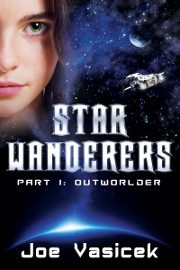
Of course, as soon as those books were earning enough, I made plans to reinvest that money in proper cover art. Here is the new cover for Outworlder:

SW-I alt (thumb)I’m working with a cover designer right now to redo all the other ones in the series along a similar vein. In the next couple of weeks, expect to see some cover reveals!

In general, I’ve found that there are three approaches to cover art: doing it completely yourself, hiring a cover designer to make an cover from stock art, and hiring an illustrator to paint an original illustration. The last is probably the most expensive, though it does depend on the illustrator–you can find good illustrators on sites like Deviantart whose rates are quite reasonable. But the quality varies a lot.

Besides the art itself, a key part of the cover is the typography. One thing I’ve learned from working with cover designers is that they can do amazing things just with the fonts and font effects for your title. That’s probably the biggest benefit of going with a cover designer as opposed to an illustrator.

In fact, if you can afford to commission an original illustration, you can probably find a cover designer who will give you a deal on the typography. It is something you can learn yourself, but the difference between you and a cover designer is often the difference between acceptable and awesome.

Like anything with self-publishing, cover design is something you can learn–perhaps something you can excel at–but you probably can’t excel at that and everything else at the same time. What I’ve found is that I’m okay at doing my own cover art, but not awesome. From here on out, I expect I’ll be hiring cover designers.

At the same time, my books are earning enough that I can justify that expense. If I were first starting out, I’d probably DIY it or barter with other writers who do their own covers. A cover isn’t static–you can always change it later.

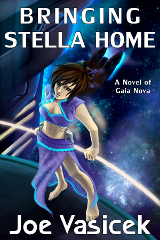
Case in point, check out the covers for Bringing Stella Home:

thumb (Bringing Stella Home)thumb 2 (Bringing Stella Home)

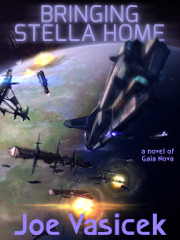
I got a good deal on the illustration for the first cover, but frankly, it’s not that great. The second cover was more expensive, but I’m much happier with it. What I’m probably going to do next is find a cover designer who can redo the title/author typography, since I did that myself and it kind of shows.

So that’s been my experience with cover art. It’s important to get it right, but you do have to work to find the best solution that works for your budget. Fortunately, when you’re an indie, your cover is something you can always upgrade.

Lindsey Stirling, Nichieri, Susan Boyle, and thoughts on discoverability and greatness

I saw a couple of things on Youtube that made me think recently about the importance of quality work, especially in the arts.

I’m a casual fan of Lindsey Stirling–I’ve watched most of her videos, put them on in the background from time to time, and get a kick out of following her career. For those of you unfamiliar with her, she’s a Youtube sensation who combines violin music, dance, and dubstep/electronica, often in some interesting and beautiful places. This is her most popular video, and probably her best work so far:

Her career is interesting because it follows a path very similar to a lot of self-published authors. She started by putting out videos on Youtube, built up a huge following that way, turned down a number of deals from traditional record labels and put out her first album herself. Now, she’s touring all over the world, collaborating with a bunch of other Youtube artists, and doing a lot of other amazing stuff completely independently.

The other day, I was really surprised that she was on America’s Got Talent back in 2010. Apparently, this was before she got really big, and the connections she made while on the show helped her find success later on:

Two things stood out to me from that video.  First, the judges were right–even though she was pushing herself, this was not her best work, and it showed in a way that was rather glaring. I hate to say that because I like so much of her stuff, but it’s really true–her performance fell short.

The second thing that stood out to me was her response to the criticism. It must have been incredibly painful to stand up there in front of everybody and get hammered like that, but she still managed to smile, be gracious, thank the judges, and focus on the positive without being confrontational. That takes class.

When I was in Georgia, I watched a lot of TV, especially on the Rustavi 2 channel. One of the most popular shows is Nichieri (ნიჭიერი), a talent competition show set up much like The X Factor or America’s Got Talent. Even though I didn’t really understand anything the people were saying, I could still really tell when a contestant did some truly amazing.

There’s something about greatness that makes you sit up and pay attention–something that makes it stand out on its own. It’s something timeless and stirring, something that drives you to keep coming back to it, or at least to remember it long after it’s passed. With poor quality stuff, like bad writing, clumsy performance, or the like, you tend to forget it (unless of course it’s a spectacular failure, which in a weird way gains a sort of greatness of its own to a certain extent). But good quality stuff sticks with you–indeed, it’s almost like it becomes a part of you. It certainly becomes part of the culture.

When it comes to talent shows like Nichieri, The X Factor, and America’s Got Talent, the greatest moment has to be Susan Boyle. Everything about it is just perfect, from the awkward, homely way she started out to how she blew everyone away with her stellar performance. She didn’t look like she had it, and she certainly didn’t act like she had it, but she did, and she knew it. She didn’t settle for anything less than her best, and she didn’t let anyone else put her down.

In a lot of my discussions with other indie writers, we talk a lot about discoverability. We’re all anxious to be read, to be heard, to be discovered–to get our shining moment. The thing is, though, that moment is not enough if you don’t have quality work. It’s not going to keep you down or “ruin” your career, necessarily–Lindsey Stirling has come a long way since her disappointing performance on America’s Got Talent. But that’s only because she produces quality work.

I think I need to spend a lot less time trying to boost my discoverability and a lot more into producing the best work that I possibly can. The thing to remember, though, is that quality is subjective and you can’t please everyone. As Lindsey later said, “A lot of people have told me along the way that my style and the music I do … is unmarketable. But the only reason I’m successful is because I have stayed true to myself.” You can’t compare yourself against others, either–you can only really compete against yourself.

How do you know when you’ve done your best? That can be a little tricky, partly because it’s a moving target. I think Genesis Earth and Bringing Stella Home represent my best work at the time, though when I look back at those books I see things that could be improved. I tend to think that Desert Stars is my best work to date, though I’m not so sure anymore. Do I only think that because I struggled so much and for so long with that book? Just because something is a joy to create doesn’t mean that it’s any less than something you toiled and suffered over.

Star Wanderers was both a gift story and an experiment. The novella format was new to me at the time, so I did a lot of learning on it. Outworlder, Dreamweaver, Homeworld, and Deliverance came to me in a white-hot creative heat, but Sacrifice and Reproach were a real struggle. Is there a discernible difference in quality between them? Not that I can tell. I do think that the later stories hold together better on their own, though. I didn’t really hit my stride with the novella format until I started branching off into other characters’ viewpoints.

This is all on my mind because my next big project, Sons of the Starfarers, is something that I really want to do right. I don’t just want to write it for the sake of putting it out there (though I recognize that writing quickly doesn’t always mean sacrificing quality). I don’t just want to put it out so that I can make my work more “discoverable,” though that’s certainly a motivation. I don’t even just want to do my best. I want to improve my writing and storytelling so much that this becomes the best thing that I’ve ever written.

At LTUE a few years back, Tracy Hickman said that as writers, it is important for us to believe that we have not yet written our best book. That’s so incredibly true. You have to always believe that you can do better, not to make you depressed when you look back, but to make you enthusiastic as you look forward. Imagine what would have happened if Lindsey Stirling thought that her performance on America’s Got Talent was the best that she’d ever do! Her career hadn’t even dawned yet.

I think it’s the same with me. I’ve gained a little exposure, suffered a few setbacks, and experienced a small measure of success, but the big stuff is yet to come. And even though I may not want to be the next Brandon Sanderson or Orson Scott Card in terms of popularity, I do need to shoot high in terms of quality. Before I work on my discoverability, I need to make sure that I’m putting out some truly amazing stuff. I need to shoot for greatness.

Trope Tuesday: Forbidden Zone

For the next few Trope Tuesday posts, I’m going to pick apart some of the tropes I’m playing with in my latest WIP, Sons of the Starfarers.  One of the things I love to do when brainstorming a new story is to use tvtropes like a menu, finding the tropes that best fit my story ideas and combining them with other tropes to get even more ideas.

It’s not often hard to spot the forbidden zone in a fantastical world.  Perhaps it has an ominous name (bonus points if it has the word “doom” in it), or perhaps there’s some sort of sign saying “do not enter.” Either way, this is definitely a place where no one goes, and no one is supposed to go.

Of course, you can pretty much guarantee that the main characters are going to go there.  It’s like the forbidden fruit: the very fact that it’s off limits makes it more alluring.  If genre blindness is in effect, someone will probably make the mistake of saying “what could possibly go wrong?

There are many reasons why the zone may be forbidden.  Perhaps it’s a death world, where the characters will soon find themselves running for their lives.  Perhaps it’s not quite so dangerous, but once you go, you can never come back.  Or perhaps all the warnings were lies, and the so-called forbidden zone is actually the place that the characters needed to get to all along.  If that’s the case, then the mentor was probably a broken pedestal or the Svengali.

In any case, the forbidden zone definitely lies in the realm of adventure.  Depending on how soon or how late in the story the characters go there, it may lie just on the other side of the threshold, at the bottom of the belly of the whale, or at the very heart of the character’s nadir.

The Mines of Moria, the Toxic Jungle, Area 51, the Elephant Graveyard, and the Fire Swamp are all classic examples.  In C.S. Lewis’s Space Trilogy, Earth itself is a forbidden zone to all the other inhabitants of the solar system, which is why it’s called the silent planet.

In real life, there are plenty of these as well.  Just look at the DMZ on the Korean Peninsula, or the fallout zone around Chernobyl.  When I was living in Georgia, Abkhazia was off limits to the TLG volunteers, meaning that if you went there (and the Ministry of Education found out about it) it was grounds for immediate firing.  Of course, that only encouraged some of my TLG friends to go there even more–remember the forbidden fruit?  Others waited until their contracts were over and practically made a tour of the many forbidden zones of the Caucasus, including Nagorny Karabakh, which one friend described as safer than Philadelphia.

I’ve toyed with this trope in my own work, but never too explicitly.  The best example is probably the alien ghost ship from Genesis Earth.  It’s not exactly forbidden, since there’s no one around to tell Mike not to go there, but Terra definitely doesn’t want him to go.  Earlier in the same book, she forbids him from entering her workspace in the observatory, which leads to some complications and a major reveal when he inevitably does.  In the Gaia Nova series, the Outer Reaches qualify as a forbidden zone, since the only people who live out there are murderous barbarians like the Hameji.

In my new series, Sons of the Starfarers, the first book starts out with a forbidden zone–a derelict space colony, where everyone has died of an unknown cause.  Since the nearest settlement is light-years away (and because Aaron is perhaps too curious for his own good), that’s where Isaac and Aaron go.  What they find there propels the rest of the book–and quite possibly the rest of the series.

Check back next week for more!

Trope Tuesday: Curiosity is a Crapshoot

curiosity
Is there life on Mars? NOT ANYMORE!

Is curiosity a bad thing?  Well, it depends how genre savvy you are.  It seemed to work out pretty well for Alice, but not quite so well for Pandora (or the rest of the ancient Greek world, for that matter).  Curious monkeys seem to come out all right, and their constantly curious counterparts also seem to do okay in the end, but anytime you run into schmuck bait you know that things aren’t going to turn out well.

The truth is, for just about every stock Aesop warning about the perils of being overly nosy, you can find another one exalting it as a virtue.  In fact, you could say that curiosity is a crapshoot.

But what is curiosity exactly?  The Merriam-Webster dictionary defines it as “desire to know,” and “interest leading to inquiry.” As you can imagine, there are situations where this could be good or bad.  Thus, what a story says about curiosity often changes depending on its genre.

For example, in most horror stories, curiosity and nosiness are usually bad, leading the protagonists to go places where they shouldn’t and uncover things that should never have been uncovered.  At the same time, a lack of curiosity can also be fatal … in fact, a lot of things can be fatal in a horror story.

In mythology and folklore, curiosity is often even worse.  From Pandora to Eve, Psyche to the proverbial cat, curiosity leads to Very Bad Things.  Perhaps this is because these kinds of stories are mostly tales of warning, passed on from generation to generation as a way to preserve our collective knowledge about the dangers of the world, rather than inspire us to go out and face them.

(As a side note, there are a few exceptions in the realm of folklore.  In the Bluebeard myth, curiosity killed off all of Bluebeard’s previous wives, but combined with cleverness, faith, and friendship, it saved the last one’s life.)

In fantasy, curiosity is often a mixed box bag.  For example, take the hobbits: most of them are perfectly content to live out their lives in the shire, but the few who are inquisitive enough to venture outside end up saving the world in a way that the elves, dwarves, and humans never could.  At the same time, it puts them through a great deal of pain, even after the world is saved–neither Bilbo nor Frodo are ever able to be content in the shire again.

Curiosity, in other words, is complicated.  It’s not just a quirk or a character flaw–it’s an underlying quality of the hero’s journey.  Without curiosity, either of the world around him or the internal struggles within, the hero would be content to live out an unremarkable life.  Certainly he wouldn’t have the capacity for the cleverness, guile, wisdom, and sensitivity that he needs in order to descend into the darkest dungeon, face his own nadir, and return with the elixir of life.  Curiosity may lead to sorrow, pain, or even death, but it also leads to adventure.

As a subgenre of fantasy, many of these issues carry over into the realm of science fiction.  And yet, as a genre unto itself, science fiction has a distinctly positive view of curiosity compared to other genres.  Science is nothing if not the primary process of human inquiry, where curiosity is not only a virtue but the virtue, one of the most important aspects of humanity.  Consider these words from Adam Steltzner, one of the leading engineers of the NASA Mars Curiosity mission:

Likewise, curiosity is a staple of science fiction.  In Star Trek, it’s the basis of the entire mission: “to explore strange new worlds, to seek out new life and new civilizations, to boldly go where no one has gone before.” In Doctor Who, it’s how the Doctor finds his companions.  In Babylon 5, it’s Delenn’s curiosity about the humans that ultimately saves all the alien races.  And in 2001: A Space Odyssey, it’s the gift from the black monolith that helps monkeys to turn bones into space stations (well, not literally, but you get the idea).

Curiosity isn’t a central theme in most of my books, but it is a major part of Genesis Earth.  If anything, that book is about the importance of balancing curiosity about our universe with curiosity about ourselves and what it means to be human.  In Star Wanderers, Noemi’s curiosity is a huge part of her story, helping her to turn around a horrible (not to mention awkward) situation.  In Desert Stars, curiosity is complicated; it leads Jalil far away from home and puts a schism between him and the girl who loves him, but it also leads him to discover the truth about who he is, giving him the strength to return.

In general, I suppose it all comes down not only to genre, but to the underlying worldview of the author of the story.  Since I have a very positive and enthusiastic view of curiosity, it usually works out for the best in the stories that I write. Then again, perhaps that’s why I’m drawn to science fiction … how about you?