There was almost a fairy quality to this place, he thought. The far look and the clear air and the feeling of detachment that touched almost on greatness of the spirit. As if this were a special place, one of those special places that each man must seek out for himself, and count himself as lucky if he ever found it, for there were those who sought and never found it. And worst of all, there were even those who never hunted for it.
Clifford D. Simak, Way Station
Author: Joe Vasicek
Joe Vasicek is the author of more than twenty science fiction books, including the Star Wanderers and Sons of the Starfarers series. As a young man, he studied Arabic and traveled across the Middle East and the Caucasus. He claims Utah as his home.
Unpublishing “Payday”
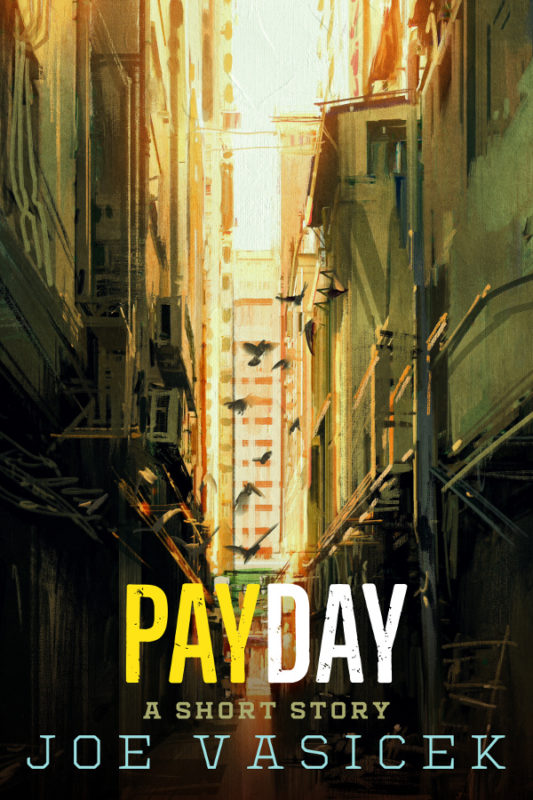
In the next few days, I’m going to unpublish my short story “Payday.” It will still be available in the collection In Times Such As These, but I think it’s about time that its run as a free short story single should come to a close.
(For those of you who may not be familiar with how I do things around here, I typically publish my short stories first as free singles, then bring them down when I have enough to bundle into a collection. I’m actually going to take down a bunch of my short story singles over the next couple of weeks as I get ready to publish the second batch of stories that will appear in my fourth collection, Beyond World’s End, sometime this spring.)
I originally wrote “Payday” back in 2017, in response to an anthology call sponsored by the Economic Security Project, an NGO whose stated goal is to bring about a universal basic income. My story (which obviously did not win the contest) showcases all of the dangers of a UBI, such as inflation, supply chain shortages, and the breakdown of local businesses and communities.
I self-published the story in March of 2020, just as the pandemic was getting started. At the time, I had no idea that my warnings and predictions would soon become so prescient. The stimulus checks and unemployment benefits weren’t exactly a UBI, but they were regarded by many as a stepping stone to enacting that policy, and what did they lead to? Inflation, supply chain shortages, and the breakdown of local businesses and communities.
In January 2021, I unpublished “Payday” so as to include it in the collection In Times Such As These the following month, but then the other shoe of the pandemic began to drop. The threat of rampant inflation, which the authorities claimed would be “transitory,” convinced me that this story was too timely to take down, so I put it back up as a free short story single, where it remains until today.
At this point, however, the story is less of a prescient look at a troubling possible future than an obvious, and perhaps too “on the nose” (I tend to get that criticism a lot) extrapolation of our present situation. For that reason, I don’t think it’s worthwhile to keep it up any longer. It had a very good run, garnering more than 5,000 downloads, which isn’t enough to have a significant impact on the national discussion, but is still greater than the circulation of most science fiction magazines and podcasts (including, most likely, the original anthology call).
“Payday” will still be available in my collection In Times Such As These, and I do still plan to keep it on submission to the traditional magazines as a reprint, but the free short story single will come down in the next couple of days. If you haven’t already picked up a copy, now is the time to do it.
P is for Parenthood
I’m currently in the process of writing the second edition of my newsletter exclusive, Science Fiction from A to Z, adding a bunch of new chapters and rewriting all of the old ones. For a blog post this week, I thought I’d share one of the new chapters. Let me know what you think!
I was going to make this section “P is for Pulp,” rounding out “G is for Golden Age,” “N is for New Wave,” “D is for Dark Age,” and “I is for Indie.” But I have to admit, I’m not as familiar with the pulp era of science fiction as I would like to be. I’ve read all of Robert E. Howard’s Conan and Solomon Kane stories, and Edgar Rice Burroughs’s A Princess of Mars (though not the rest of the Barsoom series, unfortunately. It’s on my TBR!) but that’s pretty much it. From what I understand, Jules Verne, H.G. Wells, and (of course) Mary Shelley all preceded this era, and I’m a little more familiar with them, but all I know about the pulp era is what I’ve heard from other sources, and I’d rather not regurgitate that without first exploring it myself.
Instead, I want to write about a major influence on every writer that gets almost no play whatsoever in public treatment of their work, but is arguably the single most important aspect of their lives: parenthood.
Becoming a parent really changes you. When I held my first child in my arms for the first time, a distinct thought came into my mind, almost like a voice: “this is her story now.” They say that we’re all the hero of our own story, and to a certain extent that’s true, but anyone who has brought a child into the world (or adopted a child as their own) has a much more complex and nuanced understanding and perspective. Even a terrible, abusive parent has still experienced what it’s like to become a link between the generations. That experience reshapes everything you do and are in ways that are impossible to appreciate until you’ve had it for yourself.
There is a subtle but distinct difference between books written by authors who have experienced parenthood vs. authors who are childless. I wasn’t as conscious of it until I became a parent myself, but even back in my days as a bachelor, I think I could still sense it, even though I didn’t know what it was. I suspect it’s why I’m a huge fan of David Gemmell, but not of George R.R. Martin, even though on the surface, they write the same kind of book. Both of them write dark and gritty fantasy, both of them are known for killing off major characters and doing horrible things to the ones who survive, and both of them are written quite well—in fact, on an artistic level, Martin is probably superior. But where Martin tends to obsess over themes of victimhood and victimization, Gemmell focuses more on heroism and what makes a hero. Gemmell had two children; Martin (so far as I can tell) has none.
In 2022, I made a new year’s resolution to read or DNF every novel that has won either a Hugo or a Nebula award. To prep for this resolution, I made a spreadsheet of all the novels, along with other pertinent information that interested me, such as each author’s gender, their approximate age when they won the award, and whether or not they have any children. I found some very interesting patterns. There were 110 novels in all, and fifty of them were written by authors who were childless (or at least did not have any mention of children in their author bios and/or Wikipedia entries). After 2015 and 2016 respectively, every Hugo and Nebula award-winning novelist (not counting the Retro-Hugos) has been childless—more specifically, childless women in their 40s and 50s, with one exception who is transgender (Charlie Jane Anders), one exception who is in her thirties (Arkady Martine), and one whose age I cannot determine (Sarah Pinsker). But all three of them are still childless, at least according to the internet.
Now, this is not to say that not having children makes you a terrible writer. In fact, it may actually make you a better writer, since you have more time and energy to devote to learning and improving the craft. But whether for good or ill, I do think that it gives you a handicap in terms of life experience. That handicap is going to influence both the subjects you choose to write about, and how you choose to write about them. I say this not just from my experience as a reader, but as a writer.
My wife and I married a little late, and by the time we had our first child, I’d already been writing professionally for about ten years. Up until that point, the reader I’d had in my mind was basically a younger version of myself. Bringing Stella Home is not a YA book, but a lot of my Amazon reviews assume that it is, probably because I was in college when I wrote it and was writing the sort of book that I wish I’d discovered back when I was in high school and reading things like Ender’s Game and Dune. After I’d experienced the real world and become sufficiently red-pilled, I wrote books like Gunslinger to the Stars for my naive college self. But since becoming a parent, my perspective has begun to change, and I find myself writing less for myself and more for my daughter—or rather, the kind of person I expect my daughter to grow up to be. I’m a lot more conscious of certain kinds of content, and while that doesn’t mean that I shy away from it, I do find myself asking: “What am I really trying to say here? What purpose does this really serve?”
The Genesis Earth Trilogy is a good example of this evolution in my own work. The first book, Genesis Earth, was my first published novel, and really was written for a young adult version of myself, which is why I chose to categorize it as YA science fiction. The whole story revolves around two young scientists on a mission to an alien planet, and how they come to discover just as much about each other as the planet they’ve been sent to explore. It took me ten years to write the next book, Edenfall, not because I didn’t know what would happen next, but because I didn’t feel like I was ready to write it. Then I got married, and that was the experience I needed to break through the block and finish the book—and it went in a much different direction than it would have, if I had written it while I was still single. But the conclusion to the trilogy, The Stars of Redemption, was the book that I wrote after my daughter was born, and that experience had a very profound impact not just on the story itself, but on the characters, the thematic elements, and the way the last book brought everything together from the first book to a meaningful conclusion. I know for a fact that I would not have been capable of writing such a book without the experience of becoming a father.
Help! I’m stuck in an abusive relationship (and so are you)!
Another excellent video by Chris Martenson. Watch it now, before the YouTube overlords take it down.
Perfect Spiral
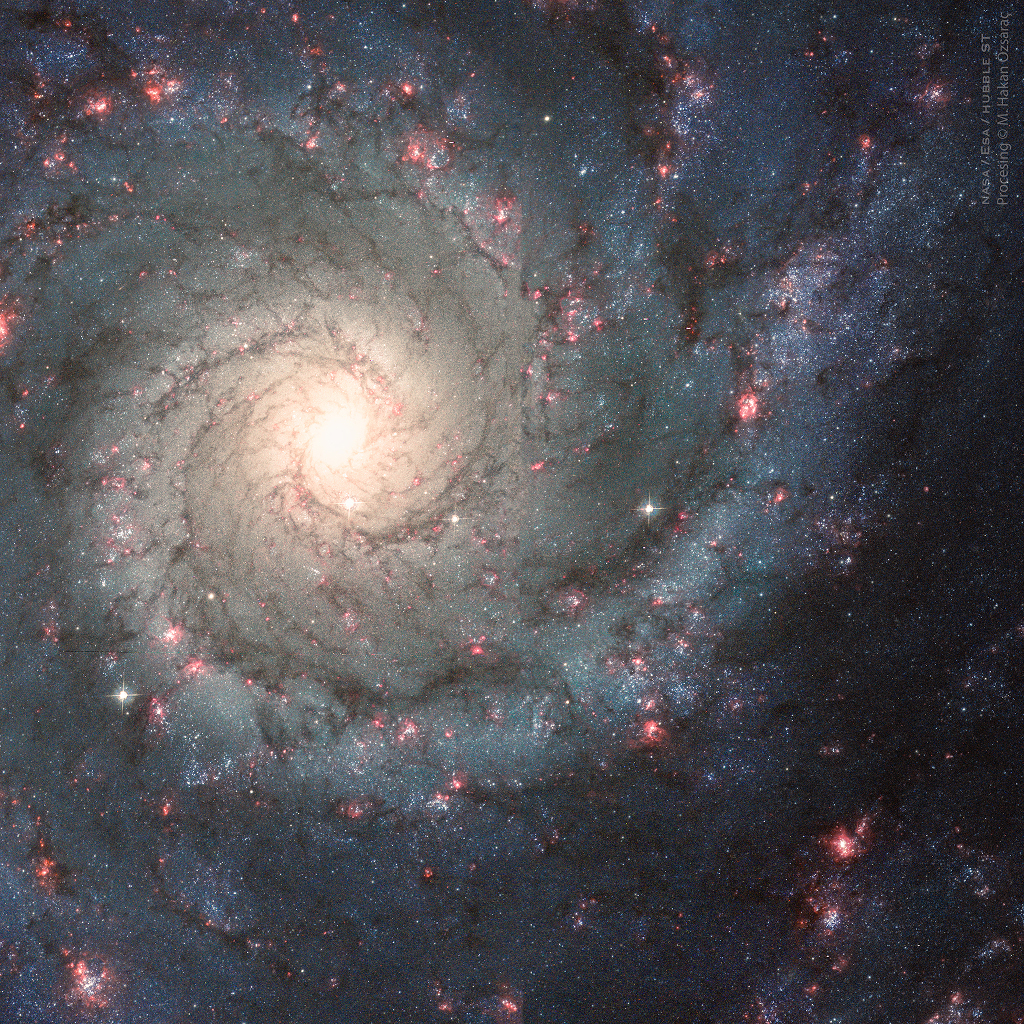
Saw this on Astronomy Picture of the Day a while ago, thought it was pretty awesome. Enjoy!
January Group Promotions
Check out these group promotions! All of the books are free when you sign up for the author’s email list. Get them soon, the promotions finish at the end of the month!
Book Funnel

Story Origin
Reading Resolution
My resolution last year was to read or DNF 100 books. I was doing pretty well on it through the summer, but then I stopped using Goodreads and lost count. (No particular reason, other than that I just fell out of using the site. It’s clunky and difficult to navigate, and after I started using my wife’s spreadsheet system for tracking my reading, I just didn’t feel like posting updates.) Counting children’s books, I definitely hit 100—probably more like 120—but without counting children’s books, it was probably closer to 80.
I do really want to keep up on my long-term goal to become a better reader—or to be more well-read, which amounts to the same thing. This last week, I’ve been giving that goal some serious thought, and I’ve decided on the following new year’s resolution for 2022:
Read or DNF every novel that has won a Hugo or a Nebula award, and acquire all of the good ones.
Ever since 2015, I’ve been pretty jaded about the Hugos (and the Nebulas, to a lesser extent). However, for a long time they were the most important and authoritative awards in science fiction, and by using it as a reading list, I hope to get a better sense of how the genre has evolved over the years, including how in recent years it has fallen to the woke insanity of our time.
There are 110 novels that have won either a Hugo or a Nebula award (or both). Of those, I’ve already read or DNFed 33 as of today, January 1st. I anticipate that I will DNF many of the rest, but I’ll give them all an honest try, and differentiate between hard DNFs (where I know I’ll never get back to reading it) and soft DNFs (where I intend to come back to it later). For purposes of this resolution, though, I’ll count both, since as a reader I believe in DNFing early and often.
As for acquiring them, that shouldn’t be too hard, and will help to build our family library, which is one of my long-term goals. Paperback Swap is great for acquiring used books, especially mass market paperbacks, which is actually my preferred format for most books (great for stuffing in a back pocket or tossing in a backpack, and you don’t mind it as much if someone borrows and never returns it). The added benefit of using Paperback Swap is that it will help me to get rid of some of the books I’ve acquired over the years that I’ll probably never read.
That’s actually a huge problem for me, and I was thinking about making another resolution to have read at least half of the fiction books that we own before the end of the year, but I think this reading resolution will help with that enough that I don’t need to make it more complicated. I’ve found that it’s generally better to set one resolution and focus on that, rather than setting so many that I’ll probably forget all of them by mid-March. Besides, having a bunch of unread books isn’t actually much of a problem, unless you don’t have a place to store them. We do.
While putting together the spreadsheet of all the Hugo and Nebula winning books, I discovered some very interesting things. One of them had to do with the age of each winner at the time they won the award. The average age was about 46, with Samuel Delany coming in as the youngest for Babel-17 in 1967 at age 25, and Ursula K. Le Guin as the oldest for Powers in 2009, at age 80. (Her first novel to win either award was The Left Hand of Darkness, in 1970 when she was 41.) The average age skewed younger in earlier decades; now, it’s closer to 50.
Another very interesting thing to look at is which authors have had children and which ones haven’t. Of the Hugo and Nebula award-winning novels that I’ve DNFed, almost all of them are from authors who are childless. That’s not too surprising when you consider how much it changes your perspective on the world to have or adopt a child. What’s really surprising to me is how many of these authors are childless, and how many of the childless authors are writing books for children. Since 2015 and 2016 respectively, none of the living authors who have won a Hugo or a Nebula award for best novel have had any children of their own—or if they have, it’s not public knowledge and the internet doesn’t know.
So anyways, that’s basically the long and short of it. I’ll keep track of this goal through the detailed spreadsheet I’ve set up for it, and post updates throughout the year. And when I’m done with the Hugos and Nebulas, I’ll probably move on to the Dragon Awards, which may actually be harder since 1) there are more than half a dozen sub-categories, 2) many of the winning novels are the umpteenth book in a long-running series, and 3) I probably won’t DNF as many of them.
What are your reading resolutions?
Post-Christmas Update
Christmas was great! My parents came over from Iowa on the train, and stayed with us for a few days. My wife’s brother also came down from the Salt Lake area. He has a bazillion board games, so we had a ton of fun playing with him.
Before I had kids, I never really got the point of Christmas. There were things about the season that I enjoyed well enough, but a lot of other things that I despised, and over time I developed a love-hate relationship with Christmas. I think I’ve blogged about it before. In any case, I used to think that it was due to the tension between commercialism vs. religion—Santa vs. the baby Jesus, or holiday vs. holy day, if you will—but now that I have children of my own, my perspective has changed. Christmas really is the perfect holiday for kids, and when you’re celebrating it for them and not just for yourself, the tension between the religious aspects and the commercial fades, and it all comes together in a really awesome way. Perhaps that’s why all of the best secular Christmas songs were written in the 40s and the 50s, in the earliest years of the post-war baby boom.
Anyways, those were some of my thoughts this year. It’s a lot more work to pull off Christmas with young children, but it’s also a lot more fun. It was also really fun to have other family visiting us, even if it was a bit stressful at times. But not too stressful, thankfully.
So we saw my parents off at the train this morning. The west-bound California Zephyr is running on time these days, which almost never happens with Amtrak (I have some of the worst train-travel horror stories you will ever hear—catch me at a convention and I’ll tell you how my girlfriend at the time broke up with me in the middle of a 60-hour train ride). Apparently, the supply chain crisis means that there are less freight trains, which makes for fewer delays. But the east-bound train leaves from California, the most dysfunctional state in the union, so it was running almost eight hours late. For us, though, that was actually kind of nice, because it meant that we got to sleep in.
In any case, the extended family is all gone now, and we’re slowly getting back to normal, though it probably won’t be until after the new year before we’re back to 100% again. If you sent me an email over the break, that’s why I haven’t sent a reply (although I am pretty horrible about replying to emails generally). I’ve got a BookBub Featured Deal running tomorrow that has me biting my nails, and a couple of other things to catch up on the publishing side of things.
Other than that, I hope to get back in the saddle with my writing pretty quickly. Should be able to pick up the WIP where I left off with it, and I’d like to pull out a couple of short stories from the outline too. Definitely need to get some more short stories into the production pipeline. I’ve got every month covered through May with new projects, though April’s story is appearing in Bards and Sages Quarterly and I’d like to line up a self-publishing project during that month too. But that shouldn’t be too hard.
I’ll leave off with this awesome rendition of I Saw Three Ships from the Tabernacle Choir at Temple Square. My dad was college buddies with the organist, Rick Elliott. Happy New Year!
$9.99 sale for Sons of the Starfarers series bundle. Merry Christmas!
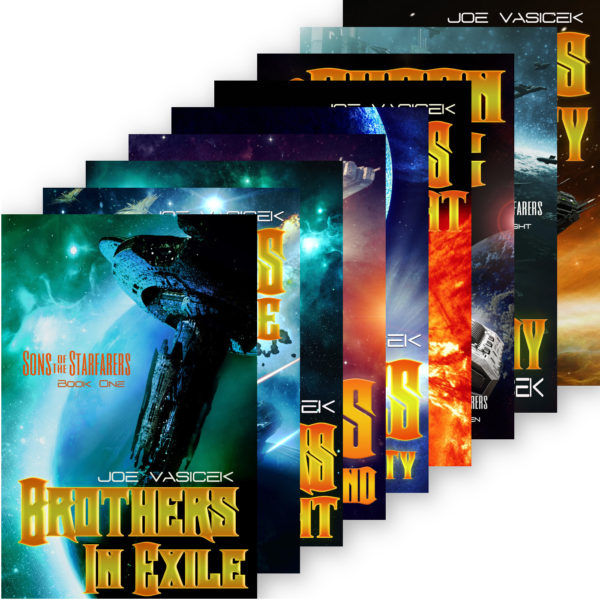
I’m currently running a sale for my Sons of the Starfarers series bundle, available only on my online author bookstore. From now to the end of December, you can get all nine books in my flagship series for just $9.99.
Merry Christmas!
4 AM Thoughts
Violence is not speech and speech is not violence. If you conflate the two, you will invariably use violence to quell the speech that you most need to hear. This is because the thing you need the most is usually in the place you least want to look.
With regards to Jordan Peterson.