Children of the Starry Sea cover reveal!

Behold!

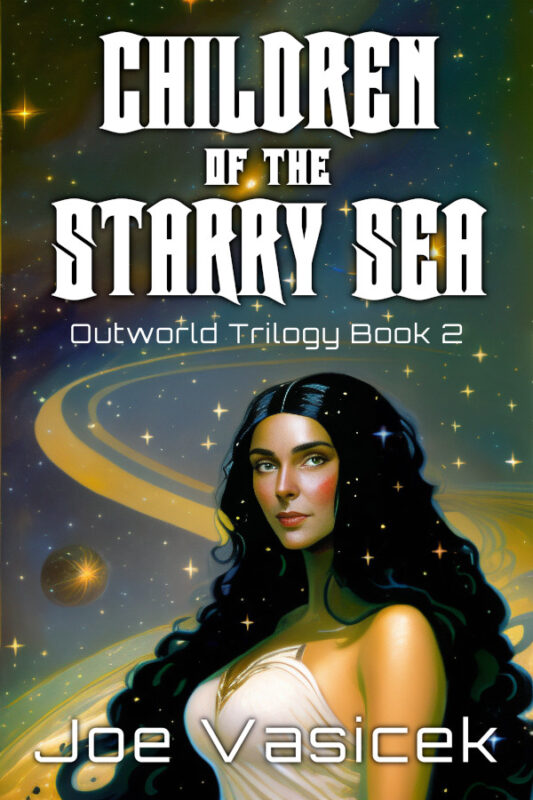
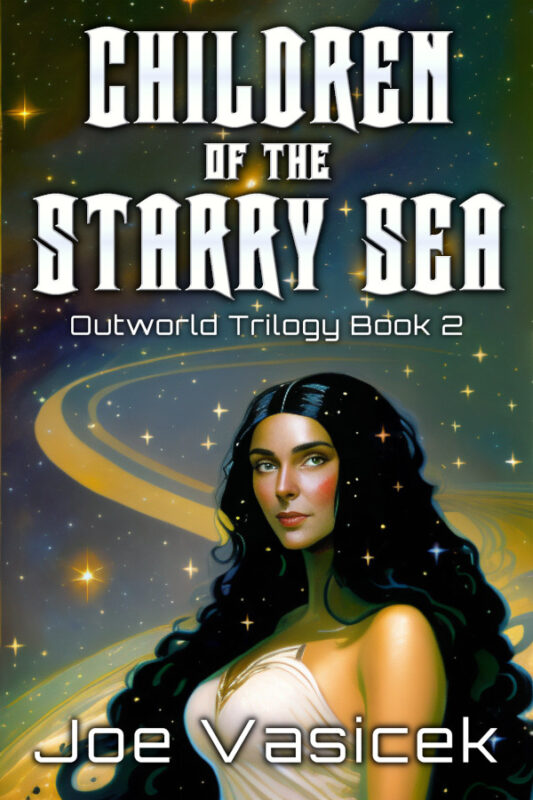
This is the ebook cover for Children of the Starry Sea, coming out sometime this summer! If it looks familiar, that’s because I kept the art from my earlier experiments with Stable Diffusion—the feedback was so positive, including from my writing group, that I decided to make only a few minor tweaks, such as the stars in her hair, and removing the weird watermelon-planet thing that was originally in the bottom left corner. Made a few minor changes to the typography too, though I decided to keep the fonts.

Also, you’ll be interested to know that I just finished the first revision pass of this WIP a few hours ago! I’ve been racing to finish it before the new baby comes, because it’s probably going to be touch-and-go after that. Now I just need to do two more revision passes, one to look for and clean up any issues that I may have missed, and another to trim it down by 10% and make sure the writing is all solid. After that, it’s off to the editor!

Children of the Starry Sea: Chapter 1 (excerpt)

Here is an excerpt from my forthcoming novel, Children of the Starry Sea. It’s a direct sequel to Star Wanderers and the second book in what is going to be a trilogy. It’s also the longest book I’ve written since I started publishing more than ten years ago.

The rough draft is already finished, and the first revision draft is almost finished. I’m going to do another two revision passes over the next month, one to fix any remaining story issues, and another to trim the word count by about 10%. After that, it’s off to the editor!

Here is the first chapter.

Worry and Bliss

Isaiah

Isaiah snuck carefully through the empty halls of New Jezreel, avoiding the main thoroughfare even though the planetside colony was mostly asleep at this hour. The atrium was still mostly dark, though the dawn was starting to lighten the perpetually overcast sky outside. In less than an hour, the daylights would come on, illuminating the darkened hallways.

He slowed as he reached the turnoff for the colony’s main hangar, then stopped to check the terminal beside the door, glancing nervously over his shoulder. The screen glowed in the darkness, and his fingers moved with urgency as he used his pilot’s clearance to unlock one of the landspeeders. If anyone had been in the colony’s flight control tower, they surely would have cancelled his request almost immediately. But the terminal took his ID at face value and cleared him without any question.

The sound of footsteps in the hallway turned his blood to ice. Even though they were still distant, he hurriedly exited the menu and slipped into the shadows. The screen continued to glow, however, illuminating the hall so brightly it made him cringe. It was glaringly obvious that someone had been using it, and if security happened to pass by, then—

“Boo!” came a young woman’s voice, making him jump.

“Salome!” he whispered fiercely. “Is that you?”

“Of course it’s me, silly! Who else did you think it was?”

He peered down the darkened hallway, but it was empty. There was no one else there but them. He sighed in relief.

“For a second there, I thought you were security.”

She giggled. “That’s hilarious. Did you think I was going to detain you?”

“No, but I’m sure they won’t be happy when they find out what we’ve done.”

“You worry too much. Did you get the landspeeder?”

“Yeah,” he said, palming the door open. As soon as they were on the other side, he palmed it shut, not taking his chances. Thankfully, the terminal screen went dim again just before the doors closed.

Salome was already halfway to the landspeeders, and he had to run to catch up to her. The colony’s main hangar was wide and cavernous, with a domed ceiling almost twenty meters high in the center. The lights were dim and reddish, but he and Salome were certainly showing up on the surveillance cameras, and if anyone from security was watching—

“Which one?” Salome asked, stopping at the row of landspeeders parked along the back wall. These ones were small, barely large enough to fit two people, but the engines were at least as long as Isaiah was tall, and much larger. At one time, their hulls had been bright and sleek, but years of long use had dulled them and given them dozens of dents and dings.

“Uh, just a sec,” said Isaiah, double-checking his wrist console. “There—that one.”

Salome’s eyes lit up as she ran to the one Isaiah had pointed out. Even in the dim lights, she was positively gorgeous. Her short black hair bobbed loosely around her shoulders, and her curvy, athletic figure stole Isaiah’s breath just like the landspeeder had stolen hers. But it was her eager enthusiasm for life that captured his heart more than anything else. Whenever he was around her, he felt that he could die happy if she only gave him a smile. And whenever he wasn’t around her, it felt like there was an emptiness in his life that she fit perfectly.

“Nice!” said Salome, brushing her fingertips admiringly against the hull. “Both engines are in really good shape. You chose a good one.”

Her praise all but melted Isaiah into a puddle. She slipped into the pilot’s seat and gave him a funny look.

“Well, don’t just stand there, silly! Don’t you want to take this bunny for a ride?”

You, or the speeder? his adolescent mind wondered. Blood rushed to his cheeks at the thought, but she didn’t seem to notice as he scrambled to the seat behind her. The glass dome slid into place overhead, and the engines began to rumble as Salome cycled them up.

“Do we have our breathing masks?” he asked as he rummaged through the tiny cockpit compartment that held their supplies.

“Sure,” Salome said absently. Her hands flew deftly across the controls, bringing them to life.

“There,” said Isaiah, finding two masks. “Filters are good, backup oxygen tanks are both full. We’ve only got two emergency flares, though. I don’t know why the last crew didn’t replenish them.”

“It’s all right,” said Salome. “We’re only going out for a joyride, not traversing half the planet.”

“But what about the pirate colony? If they catch us, then—”

“They’re not going to catch us,” she said, laughing dismissively. “They’re on the other side of the world, and besides, your dad has got eyes on them from orbit. Stop worrying!”

Isaiah took a deep breath. She was probably right—no, she was almost certainly right—but still, that “almost” held the potential for a whole world of hurt. The pirate colony had cut off communications nearly eighteen months ago, and no one knew exactly what they were up to, though thankfully, they didn’t have ground-to-orbit capabilities. Yet.

The first settlers had defeated and exiled the pirates to the wilderness just before Isaiah had been born, but his father, the station master of the colony’s main orbital, had always believed that they could come back at any moment. He watched them vigilantly from Zarmina Station, using the spy satellites they’d obtained from the Outworld Joint Defense Fleet.

But Salome clearly wasn’t worried—and besides, it was all out of their hands anyway. Let the administrators worry about the pirates. Right now, he was sharing a cozy cockpit with the most beautiful girl in a dozen parsecs, perhaps even the whole galaxy, and she was happy to have him there. How could life possibly get any better than that?

The engines rumbled, and the hoverjets lifted the speeder off the floor. Isaiah hastily scrolled through menus until he found the command to open the hangar airlock. He authorized it with his pilot’s ID, and the giant doors slid slowly open, like the vertical maw of an enormous beast. Salome gently brought them into the airlock, stopping where a large painted square marked the temporary parking area for incoming and outgoing craft. The massive doors closed slowly behind them.

“Here goes nothing!” Salome said excitedly as the outside doors cracked open. The overcast sky was just starting to turn blue-gray with the morning light, and the jungle trees stood out starkly in silhouette. She revved the engine impatiently, and Isaiah fought back the urge to tell her to wait until the doors were fully open.

As soon as they were, she whooped and gunned the engines, and the speeder leaped forward like a wild animal escaping its cage. Isaiah’s butt clenched as they cleared the partially opened doors with barely a meter to spare on either side. Then they nosed up over the treetops, and New Jezreel was suddenly behind them, with nothing but scattered settlements and wilderness up ahead.

“Yes!” said Salome, laughing as they sent ripples over the leafy jungle canopy like waves in their wake. They were a little too low for Isaiah’s comfort, but he put that out of his mind.

“What’s the plan?” he asked. “Where are we going?”

“Where do you want to go?” she asked back.

He took a deep breath. Somewhere we can talk, he thought but did not say. Joyriding was fun and all, but he didn’t want to spend all of his short time with her doing that.

“Up the canyon,” he said, pointing to the cliffs that rose sharply from the jungle about a dozen kilometers away.

“You got it!” she said, then whooped again as she accelerated hard enough to throw him against his seat. He took a deep breath before forcing himself to let go of his apprehensions—and not just the ones about the ride.

Salome

There was nothing Salome loved quite so much as the roar of a powerful engine behind her and a wide open world beckoning up ahead. Isaiah had opted for the canyon, and it was a good choice. She’d only been up there twice, and one of those times had been in a slow-moving zeppelin, so it didn’t really count.

“Hold on tight!” she said as the jungle gave way to the cliffs and the rocky gullies. She followed the nearly vertical rock face until it flattened out just before the river. Using one hand to flare the speeder’s airbrakes, she rolled hard to the right and used the sudden wind resistance to pitch the nose in the direction she wanted to turn. Her vision darkened as the engines checked her momentum, nearly making her black out.

“Look out!” Isaiah screamed. She’d underestimated the rate of their sudden altitude drop, and the broad surface of the river was rushing up toward them like a shimmering blacktop. She leveled off just as they struck the surface, and the force of the impact on the landspeeder’s flat underbelly was enough to knock the wind out of her lungs.

The hoverjets squealed in protest as the spray of water splashed across the domed cockpit window, and for a brief, heart-stopping moment, she feared that she’d submerged them. Thankfully, though, the speeder leaped back up into the air, water streaming in rivulets across the hull as they sped down the river, riding it like a road.

A heady rush of adrenaline made Salome laugh. These were the moments she lived for—the liberating thrills that she could never quite get under the manmade ceilings and artificial lights of New Jezreel.

“Holy crap, Salome!” Isaiah yelled. “Did you just wreck the speeder?”

“She’s still flying, isn’t she?”

“Yeah, but if any of the jets got flooded, we could have a—”

“They’re fine,” Salome insisted, though she checked the screen on her left just to be sure. The front right hoverjet had a minor warning indicator, but it didn’t sound too bad. From her work in the colony’s mechanic shop, she could tell if an engine was having problems almost before the diagnostics had finished running. She hadn’t flown them much outside of the holovid simulations, but she knew them inside and out, and could build one from scratch if she had to.

When Isaiah had asked her if she wanted to take one out for a spin, it was all that she could do in that moment not to throw her arms around him and squee. Not that she had any particular feelings for him—they’d been friends ever since childhood, mostly because of how close their parents were, and while things had changed after his family had moved up to Zarmina Station, they hadn’t changed like that. No, Isaiah was just a very good friend—especially with how he’d helped her take this landspeeder out for a ride. That was really awesome of him.

The speeder kicked up a massive spray of water as they skimmed over the mostly still surface. As they turned around a bend, Salome saw whitecaps up ahead, so she raised their altitude a couple of meters and gripped the flight controls with both hands.

“Waterfall up ahead!” said Isaiah, pointing to it over her shoulder.

“I see it,” said Salome. “Hang on!”

She skirted a couple of large boulders and drove straight toward the churning wall of water. At the last moment, she nosed up hard and gripped the throttle with one hand. Once they were vertical, she killed it. The speeder didn’t have any wings, so it went into a wonderfully thrilling backflip, its forward momentum carrying them up over the edge of the falls. This time, Salome timed the maneuver perfectly—all those hundreds of hours on the holovid simulators had really paid off. When the speeder righted itself and the hoverjets re-engaged, they blasted over the water without touching the surface. She throttled up the engines and whooped.

“I think I’m going to be sick,” Isaiah moaned.

“You’ll be fine,” Salome told him, though she eased up on the altitude controls to give them a bit more clearance. Hopefully that would make their ride a bit smoother. As much fun as she was having right now, it wouldn’t be worth it if she made Isaiah miserable.

Up ahead, the river narrowed into a sharp bend, and the slope on either side grew higher and steeper. In the early morning light, it was darker in the narrow defile, but the overcast sky cast enough diffuse light to fly by—barely. On the edge of her vision, a couple of floating algae pads drifted lazily above the jungle like miniature zeppelins. She’d have to keep an eye out for those in the canyon.

The jungle by the river was still as thick as down in the valley, but as the rapids increased, the number of large rocks and boulders did as well. Out of the corner of her eye, she even saw places where rock falls from the mountains had ripped out the old growth not too long ago. The slopes were mostly scree, but they soon rose to jagged, towering cliffs on either side. Salome considered leaving the river to head up one of the gullies and see how long the speeder could find purchase on those slopes, but for Isaiah’s sake she decided against it.

Then they hit the rapids. The river narrowed dramatically, the water churning over the countless boulders and smashed tree trunks as it had at the base of the waterfall. It took all of Salome’s concentration to keep from crashing, as the walls of both cliff and jungle closed in on either side. The shadows were deeper than she’d expected, there was no space to turn around.

The next several minutes passed in mere moments as every particle of her attention was focused on getting them through without killing them both in a spectacular crash. There was a rhythm to it that caught her in a trance—one that she hoped would never end.

Intuitively, she sensed that they were coming to another wall. She nosed up sharply before the waterfall came into view, and without thinking, she went into a barrel roll. Just before they stalled, almost a hundred meters above the canyon floor, she glimpsed a floating algae pad out the corner of her eye and brought the hoverjets around to push off of it. The maneuver gave her just enough forward momentum to clear the edge of the waterfall, kicking up a frightening amount of spray in the process. But the hoverjets held, the engines came to life again, and they blasted out from the waterfall’s edge over a wide mountain lake.

Salome became aware of someone screaming, and realized that it was her. She throttled down and flared the airbrakes, bringing the speeder to a gentle crawl.

“That was incredible!” she said, grinning from ear to ear as she turned around to see how Isaiah was doing.

“Yeah,” he said, his face pale and his arms shaking.

The cliffs weren’t quite so high this far up into the mountains, and the lake was wide and flat enough that it reflected the cloudy sky like a mirror. The sight all around them was incredible. A few lone trees were scattered here and there, but the beaches were mostly gravel and scree, rising sharply to the jagged ridge that surrounded them. On one side, a large cloud was spilling over onto the water, or perhaps rising off of it—it was difficult to tell. Then, through a sudden break in the clouds, the early morning sun shone in all its brilliant glory.

“Whoa,” said Salome, captivated by the natural beauty of the scene. A gaggle of enormous raptor-beasts chose that moment to take off from the farther shore, briefly eclipsing the sun before disappearing into another cloudbank.

“We’re—we’re alive,” said Isaiah, as if realizing it for the first time in his life. Salome, too, felt a strange new awareness sweep over her.

“You only live once,” she told him, laughing. “Come on. Where do you want to go next?”

He paused for a moment. Then, in a voice that was almost shy, he asked: “Can we stop and just talk for a while?”

“Sure.”

She nosed the speeder over to where an algae pad had deflated, over by the water’s edge. It provided a nice platform to park the speeder, as well as a soft place to climb out and maybe stretch their legs.

“Got your mask?” she asked as the speeder powered down.

“Uh, yeah, but—”

She cracked open the cockpit seal with one hand while holding her mask to her mouth with the other. Isaiah yelped in surprise as he scrambled to put his mask on. The air that flooded in was thick, humid, and surprisingly warm, though not quite as heavy as down in the valley. As the glass slid open, Salome finished strapping on her mask and climbed out.

The atmosphere was thick with oxygen—almost too much, really—but the carbon dioxide was even more concentrated, and needed to be scrubbed by the masks. There were other poisonous gases too, though this was more of a problem in the valleys than it was in the mountains. Thankfully, a halfway-decent filtration system was all they needed to breathe the native air.

Salome jumped down to the soft algae below and stretched, arcing her back. Isaiah soon jumped down next to her.

“It sure is beautiful up here, isn’t it?”

“Yeah,” she said, walking over to the edge of the water. She found a nice place and sat down with her legs stretched out. Isaiah hesitated, so she motioned for him to join her.

Isaiah

Isaiah’s knees still shook from the crazy joyride. He was grateful that they were sitting on the soft, deflated algae pad, though the masks were an annoying obstacle. He wanted to see Salome’s face, not just her eyes, though of course those were gorgeous. More than that, though, he wanted her to see his face—to really and truly be able to listen to what he had to tell her. He sighed.

“My dad’s been bringing up the whole star wandering thing,” he began. “Keeps telling me that I’m almost as old as he was when he became a star wanderer.”

“Ah,” Salome said knowingly. “So that’s what’s been on your mind.”

Not quite, he wanted to say. But if Salome rejected him, what would he do then? His father would expect him to leave on the Ariadne, never to return. That was the time-honored tradition of the Outworlds, and his father was a staunch traditionalist. But even if they did become a couple, would his father accept that as a reason to let him stay?

“It’s not that I’m scared of leaving,” he lied—or rather, stretched the truth. “Just… leaving forever? Never coming back? Doesn’t that seem a bit… extreme?”

“Yeah,” said Salome, leaning back on her hands with her slender legs crossed. “It’s a stupid tradition. Times are changing. In another generation or two, the Outworlds won’t even need star wanderers to keep from becoming too isolated.”

“I can understand why my father holds on so tightly to the old ways. If he hadn’t left home, he would have never my mother. That’s probably why he wants me to become a star wanderer.”

“But is that really what you want?” Salome asked.

Their eyes met, and Isaiah’s heart all but stopped. Was she asking him to stay for her? Perhaps, underneath that mask, she was waiting for him to confess that he didn’t want to leave her, that she was all he ever—

But then, she shrugged and glanced back out over the lake again. His shoulders slumped.

“Not really, no,” he told her honestly. “There’s just—there’s so much here to stay for. And it’s not like inbreeding is a problem. Right?”

“Of course not,” Salome said absently. The way she sat, with her back arched and her shoulders pulled back, really brought out all of her feminine curves. He always felt a little embarrassed when his thoughts started sliding in that direction, but at the same time, he couldn’t help but feel drawn to her.

It was amazing how much she’d changed since his family had moved up to Zarmina Station. Before, she was still just a childhood playmate that he got to visit whenever their mothers got together, which was almost every day. Now, he only got to see her whenever his work as a shuttle pilot brought him planetside, but those frequent absences had made her transformation over the last couple of years all the more incredible. She was no longer the precocious little girl who used to chase him around the underground parks and gardens, but a stunning young woman who had almost reached her prime.

“Have you ever thought about leaving for the stars?” he asked, surprising them both.

She gave him a funny look. “You mean, become a female star wanderer?”

“Or some other kind of starfarer,” he added quickly. “There are lots of people who travel the stars who aren’t just following the old ways.”

“Not in the Far Outworlds—at least, not yet. Out here, you’re either a star wanderer or a member of the Outworld Joint Defense Fleet—and I sure as hell am not leaving home for that.

“So what about being a female star wanderer, then?”

She thought about it for a moment, then shrugged. “I don’t know. It sounds like it would get kind of lonely.”

Not if we left together, Isaiah thought, his heart pounding eagerly.

“Still,” she added, “it would be an adventure. Perhaps even the adventure of the lifetime. My dad doesn’t talk about his star wandering days much, but I can tell sometimes that he misses it.”

“Yeah,” said Isaiah. “My dad too.”

“Do you ever wonder if you’ve got a brother or sister out there?”

He frowned. “What do you mean?”

“Like, if your dad had a starchild or two before he settled down with your mom. Star wanderers do that sometimes, you know.”

“Not my dad.”

“Are you sure?”

Hot blood rushed to Isaiah’s cheeks. Why were they even talking about this? In just a few hours, he’d be back up in orbit, facing his father, with Salome down on New Jezreel where he wouldn’t be able to talk with her for a while—not in person, anyway.

“I can’t imagine him doing something like that. It’s certainly not the kind of thing that I would do.”

“Why not?”

“Are you kidding? You think I’d really, uh, knock a girl up and, um…”

“Stars, Isaiah—are you blushing?”

She laughed, making him blush even deeper. Even so, her laugh wasn’t hurtful or unkind.

“Sorry,” she said, blushing a little herself. “I guess I never thought we’d be talking about this kind of thing.”

“Do you think your dad ever had a starchild?”

“Honestly, it wouldn’t surprise me. And if I became a starfarer, I might get the chance to meet them. After all, it’s a small universe outside of the Coreward Stars.”

They sat in silence for several moments. A thick cloud rolled over the lake, obscuring the highest peaks. Isaiah had the sensation that the algae pad was floating high up in the sky, drifting away with them to wherever the wind would carry it.

“At least it’s not like you have to leave tomorrow,” said Salome. “Some star wanderers don’t leave until they’re well into their twenties.”

“Try telling that to my father,” he muttered.

She gave him a funny look again. “Well, why don’t you?”

“Are you kidding?”

“No, I’m not.”

Isaiah shook his head. “You don’t understand. All my life, this thing has been hanging over my head. When I was born, it was already decided that I would leave home and become a star wanderer, just like my father.”

“That’s stupid. In another generation, those traditions are going to be dead anyway, so why should you be forced to keep them?”

“So you want me to stay?” he asked, his breath catching in his throat.

“If that’s what you want,” she said, looking back out over the water. “It’s your life, after all. You’re the one who has to decide what’s right for you.”

And what about us? he thought but did not say. He wasn’t sure he was ready to ask about that yet.

“I don’t know,” he said uncertainly. “My father would be so disappointed in me.”

“So what?”

He frowned. “Don’t you care what your parents think of you?”

“Well, yes, but—oh, I don’t know! Why do these traditions have to be so hard? It’s always the firstborn son—why not take volunteers instead, or only send out people who actually want to go?”

“Would you go in my place if you could?”

“Yes!” she answered immediately. “I mean, probably. Sure. Why not?”

Does that mean you would you go with me, too?

Of course, he didn’t actually ask her, since the very thought was absurd. The Ariadne was built for a crew of exactly one, and besides, Salome didn’t have the neural implants necessary to plug into the dream simulators. That had been a point of controversy among the first settlers, with some, like Isaiah’s parents, opting to implant all of their children, while others, like Mariya’s parents, opting their children out of it. In the cramped quarters of a starship like the Ariadne, the simulations were absolutely necessary to maintain your mental health. But on a habitable world like Zarmina, the dream worlds were a luxury, not a necessity.

Still, Isaiah’s parents had made some very long voyages together on the Ariadne, so it wasn’t impossible to take another person along. And so long as they both had each other, how much did it really matter that Salome didn’t have the implants and couldn’t plug into the simulations? Even with the implants, his father had struggled with loneliness until he’d met his mother. If wandering the stars together had worked so well for them, then perhaps…

No, he told himself, snapping back to the present. The last thing he needed was to lose himself in a daydream about his crush when Salome was right here.

“All right,” he said aloud. “I’ll talk with my father about it.”

“Good!” said Salome, smiling at him—though unfortunately, all he could see of her smile was in her eyes. Still, it was more than enough to take his breath away.

Should I ask her? he wondered. It sounds almost like she wants me to stay. And if that’s true…

“Isaiah? Is something wrong?”

He took a deep breath. “Salome—if I did stay, would you…”

“Would I what?” she asked curiously as his voice trailed off.

“Never mind,” he said quickly, deciding not to press the issue. “Let’s get back to New Jezreel before they think we’ve stolen this thing.”

She laughed as she climbed up the ladder back into the cockpit. “You worry too much, Isaiah!”

Perhaps I do, he thought cheerfully.

Salome

As the speeder lifted off, sending ripples across the mirror-like surface of the lake, Salome couldn’t help but feel that her friendship with Isaiah had changed in some significant but unknown way. That bothered her more than she cared to admit. She’d been looking forward to the ride back down the canyon, but now there was too much on her mind to fully enjoy it.

Still, she was glad that Isaiah trusted her enough to spill his guts to her like that. He really was a great friend—not at all like some of the other boys, who only seemed to want one thing from her. As if she would put herself out so easily. No, she was much choosier than that, which probably meant that she was going to end up with a star wanderer, since none of the other boys in the colony were all that impressive.

But right now, she didn’t care about any of that. She was too young to think about settling down and starting a family of her own. Besides, there were so many other things she wanted to do with her life, like fly across the planet on a landspeeder, or parachute jump from space, or build her own balloon house and circumnavigate the globe in that. Her dreams might sound crazy to some, but her father had once had dreams even crazier than her own, and if he’d never followed them, he never would have met her mother or come to Zarmina. Besides, what did she care if other people thought she was crazy?

She brought the speeder out over the water, tracing a wide arc back toward the outlet that led to the waterfall. Instead of following the river, however, she climbed over the rocks to the ridgeline that circled the lake. The clouds had briefly dissipated, at least on this part of the ridge, giving them a spectacular view of the mountains that sourrounded New Jezreel and the nearby settlements. The sky was still overcast, but the air itself was clear enough that they could see all the way out to the vast, world-encircling ocean more than fifty kilometers away.

“Wow,” said Isaiah. “You can see everything from here!”

That’s not even close to true, Salome thought silently. As incredible as the view was from here, it was only a tiny fraction of Zarmina’s grandeur—and an even smaller fraction of the Outworlds. Even if she lived a hundred lifetimes, she would never be able to see it all.

Could she become a star wanderer? The idea was so crazy that it made even her craziest dreams seem small by comparison. And yet, when she’d told Isaiah that she would go in his place if she could, she hadn’t been lying. A part of her even envied him for the chance to be a star wanderer and to see other worlds.

She nudged the flight stick, sending the speeder down the slope at a shallow angle. The jungle canopy was thick enough for the hoverjets to find purchase, as long as they kept to the more thickly forested parts. For Isaiah’s sake, she would take them down at a much more relaxing pace, enjoying the thrill of the view rather than the thrill of the ride.

“Hey,” said Isaiah from the seat behind her. “What was that?”

“What was what?” she asked, not bothering to look.

“That small break in the trees we just passed. It looked like there was smoke coming up through it—like from a gas-powered generator or something.”

“A generator?”

“Yeah. You think someone might be camping up here? We’re about a dozen klicks out from the outlying settlements, but science and exploration parties still come out this way, right?”

Salome laughed and shook her head. “Don’t be silly, Isaiah. Those teams don’t use gas-powered generators.”

“But the pirates do. Do you think—”

“No,” she said firmly, still piloting the speeder down the slope at a decent clip. “What you saw was probably just a cloud whisp. The pirates aren’t even on this continent, let alone this jungle. Let it go.”

“But—”

“I said, let it go,” she told him, then sighed. Whatever else was true, Isaiah always worried too much.

An unpopular truth

Women who refuse to have children and men who forsake their responsibilities as fathers will be the downfall of our civilization.

We all owe an incalculable debt to the generations that came before us, and the only way we can pay back any portion of that debt is to pay it forward. It’s not enough just to “make the world a better place”: we must, ourselves, become a link in that generational chain that connects humanity’s past with its future, binding the fathers to the children and the children to the fathers.

I recognize that there are women who cannot have children, or who do not have the opportunity to have a healthy family of their own. I also recognize that there are fathers who want to be present in their children’s lives, but are deprived of that opportunity by forces outside of their control. I’m not talking about those people.

I’m talking about the people who have every opportunity to raise a family, and deliberately choose not to. In their selfishness, those people are unwittingly depriving themselves of the fulness of the human experience. More importantly, their selfishness is destroying our culture, our society, and our civilization.

If the West falls, it will be because of childless women and absent fathers.

This scenario would fulfill Ezra’s Eagle

UPDATE (6 November 2024): I have written a new post with my post-election thoughts on the Ezra’s Eagle prophecy, as well as an in-depth analysis of the lost ten tribes and how they may (or may not) play into the apocryphal prophecy. Read about it here.

UPDATE (12 August 2024): I don’t know why Google has made this old blog post their #2 result for the search term “Ezra’s Eagle,” but if that’s what brought you here, you probably should check out this page first, taken from Michael B. Rush’s book A Remnant Shall Return. As far as I can tell, he’s the one who discovered this obscure apocryphal prophecy and how it (might) speak to our day. He’s also posted the complete audiobook on YouTube:

To be clear, I don’t necessarily agree with or endorse everything that Rush says. In fact, I’m not even sure if I believe in the Ezra’s Eagle prophecy anymore, or in Rush’s interpretation of it. But if that’s what you’re looking for, his book is the place to start.

UPDATE (21 July 2024): With everything that has happened in the past week, I have posted an update to this scenario, which could still play out very similarly to how I outlined it in this post. You can find that update here.

ORIGINAL POST (6 March 2023): For the last couple of months, I have been fascinated with the prophecy of Ezra’s Eagle as laid out by Michael B. Rush. I’m reading his book A Remnant Shall Return right now, and while some of the stuff sounds crazy to me (like the idea that the lost ten tribes will come down from space and save America from the Antichrist), I think he may be on to something with his interpretation of Ezra’s vision in chapters 11 and 12 of 2nd Esdras.

If you’re not familiar with Ezra’s Eagle, you can read this sample chapter from his book that explains it, or you can watch this video that he put out. Or you can read the chapters on your own and study the diagram in this video, which lays it out pretty well:

The TL;DR is that the prophet Ezra had a vision where he saw a three-headed eagle with twenty feathers, where each feather represents a different ruler who reigns for an appointed time. Some of the feathers are short, indicating a ruler whose time was cut unnaturally short.

The traditional interpretation of this vision is that the eagle represents the Roman Empire, but Michael B. Rush discovered that the sequence of rulers corresponds much closer to the United States, starting with President Hoover. Why Hoover? Because he was a founding member of the Council on Foreign Relations, a major deep state organ, and the eagle represents not the United States per se, but the American Empire ruled by the deep state.

This interpretation of Ezra’s Eagle probably reached its height, at least in conservative Latter-day Saint circles, around 2018 or 2019. Its proponents predicted that Trump, as the first of the four short feathers before the reign of the three eagle heads, would either be assassinated or removed from office by impeachment. Then the 2020 elections happened, and a lot of people said “well, it can’t be true, because Trump served out his complete term.”

…except did he? Laying aside the question of whether the 2020 election was stolen, it’s becoming increasingly apparent that the January 6th “insurrection” was, in fact, a color revolution perpetrated on American soil by our own intelligence agencies, with the intent of permanently removing Trump from power and installing a compliant puppet regime in Biden-Harris. That’s why there were so many federal agents and informants like Ray Epps urging the rioters to storm the Capitol, and that’s also why many of the Capitol police stood aside and let the rioters in—because the deep state wanted an “insurrection,” because it would provide the justification for everything that came after. Remember, General Milley reached out to his counterpart in the CCP before Trump finished his term. Also, Trump was impeached the second time and banned from social media before he finished his term.

In fact, the January 6th “insurrection” was an extremely ham-fisted and clumsy color revolution, as these things generally go. What the feds really needed was for the rioters to get violent, leaving dead bodies all over the place. Instead, most of the rioters were surprisingly well-behaved, stopping many of the more violent types among them from destroying property and staying out of the roped-off areas once they were inside. New footage revealed by Tucker Carlson shows that the “Qanon Shaman” was escorted around the Capitol by the police, as if he were on a tour. The only people who died in the Capitol that day were “insurrectionists.” Still, the deep state needed an “insurrection” to justify the crackdown, so that was the script they played, setting up the ridiculous show trials and repeating the lie incessantly on the legacy news media in the hopes that people would believe it—and many brainwashed blue-pill types actually did.

So personally, I find ample reason to believe that Trump was the first short feather, and the date that I would put as the cut-off point of his reign would be January 6th, 2020.

A Surprisingly Plausible Scenario

If Trump was indeed the first short feather mentioned in the prophecy, and Biden is the second short feather, the following verses are of special interest.

From 2 Esdras 11:

25 And I beheld, and, lo, the feathers that were under the wing thought to set up themselves and to have the rule.

26 And I beheld, and, lo, there was one set up, but shortly it appeared no more.

27 And the second was sooner away than the first.

28 And I beheld, and, lo, the two that remained thought also in themselves to reign:

29 And when they so thought, behold, there awaked one of the heads that were at rest, namely, it that was in the midst; for that was greater than the two other heads.

30 And then I saw that the two other heads were joined with it.

31 And, behold, the head was turned with them that were with it, and did eat up the two feathers under the wing that would have reigned.

32 But this head put the whole earth in fear, and bare rule in it over all those that dwelt upon the earth with much oppression; and it had the governance of the world more than all the wings that had been.

And from 2 Esdras 12:

24 And of those that dwell therein, with much oppression, above all those that were before them: therefore are they called the heads of the eagle.

25 For these are they that shall accomplish his wickedness, and that shall finish his last end.

26 And whereas thou sawest that the great head appeared no more, it signifieth that one of them shall die upon his bed, and yet with pain.

27 For the two that remain shall be slain with the sword.

28 For the sword of the one shall devour the other: but at the last shall he fall through the sword himself.

Now, here is the scenario that fulfills the prophecy:

Biden either does not run for president in 2024, or else he runs but loses the primary—an unprecedented political event, but we’ve had a lot of unprecedented events in the last few years, political and otherwise. Personally, I think it’s likely that Democrats will field Michelle Obama, and that she will rally so much support that she takes the nomination in a landslide.

Meanwhile, the Republican primaries come down to an ugly bruising between Trump and Desantis. By a narrow margin, Desantis wins and takes the nomination, but no one comes out of the fight smelling clean, and there’s a lot of bad feelings on the Republican side of the aisle, all of which combines to create an especially contentious election season, even more contentious than 2016 or 2020. If you thought Trump Derangement Syndrome was bad, wait ’til you see how the Democrats smear Desantis, and the unity and momentum they’ll have from a Michelle Obama run will make the Republican voters lose their minds as well.

Whoever the Republicans and Democrats choose to field, these will be the third and the fourth little feathers “who thought also in themselves to reign.”

Except they never will, because a major geopolitical crisis emerges with only weeks to go before the election. What sort of crisis? A Chinese invasion of Taiwan, for example, or a major escalation of the Russo-Ukraine war. Personally, I think the most likely crisis would be a complete collapse of the Ukrainian state, and victorious Russian forces rolling into Kiev.

The Biden administration is caught flat-footed by this crisis, and fails to formulate an effective response. At this point, a deep state triumvirate emerges from the shadows and reveals to the world the truth about Biden’s deteriorating health, proving indisputably that he is not fit to be president—and in the process, cutting his administration short “sooner away than the first.”

This triumvirate seizes power and suspends the constitution, declaring that the crisis is simply too great for our already divided country to face in its current state, especially with how contentious the elections have become. It will be just like how President W. Bush said that he had to destroy the free market in order to save it, except with our republic.

At this point, things get really bad. The wars in Ukraine and (possibly) Taiwan escalate and becomes truly global. Nuclear weapons are used. At some point, a second pandemic breaks out, this time with a much more deadly virus, and the leader of the triumvirate “shall die upon his bed, and yet with pain,” succumbing to the second pandemic. After his (or her) death, either the country falls into a civil war with the other two members of the triumvirate on opposing sides, or they both struggle internally for power, and both of them get assassinated. Things get really, really dark.

Then, if Michael B. Rush is right, the Antichrist comes to power.

Who are the members of the deep state triumvirate that suspends the constitution? My guess would be 1) someone from the military, such as General Milley, 2) someone with ties to the banks and the Federal Reserve system, such as Janet Yellen, and 3) someone in the State Department specifically over the Ukraine portfolio, such as Victoria Nuland. But this is just wild speculation on my part—though after Janet Yellen’s visit to Ukraine, I did start to think that Tom Luongo may be right about the deep state grooming her for the succession. My money’s on her for the first eagle head.

Granted, the longer this scenario plays out, the crazier it begins to sound. But we happen to live in very interesting times, where things that started as crazy conspiracy theories are increasingly turning out to be true.

I have no idea if the Ezra’s Eagle prophecy is true, but this scenario would qualify as a fulfillment. And laying aside the identities of the three eagle heads, it does seem increasingly plausible that Biden’s presidency gets cut short during a contentious election cycle, in which he is not the nominee for the Democrats. That’s what caught my attention in all of this.

I have a lot of other thoughts on this subject, but that’s all I’m going to share right now. What are your thoughts?

I will never apologize for refusing to use sensitivity readers.

The Roald Dahl and Ian Fleming estates have been in the news lately, after their publishers have worked with committees of “sensitivity readers” to rework their books in order to make them less offensive to woke sensibilities. The outcry was so great that Roald Dahl’s publishers agreed not to go through with their plan to sanitize his books, but to release the originals along with the censored versions (though I have heard conflicting stories indicating that the ebooks have been retroactively censored).

For many readers, this was their first time learning that “sensitivity readers” are a thing. While their outrage at the Orwellian rewriting of dead authors’ works is entirely justified, sadly, this is nothing new to the science fiction and fantasy field. Indeed, as Larry Correia and Steve Diamond pointed out in the latest episode of Writer Dojo, sensitivity readers have been a thing for at least a decade, and the most insidious examples of censorship are the ones we don’t see, when writers self-censor for fear of offending the outrage mobs.

For several decades now, science fiction and fantasy has skewed hard to the left, and the fact that there wasn’t a major outcry against these self-appointed Orwellian censors back in the 10s is a damning indictment of field as a whole. Why did it take until now, when the beloved works of Roald Dahl and Ian Fleming were threatened, for large numbers of people to speak out against this trend? Because all of the big names and major institutions in the SF&F field (or at least, the traditionally published side of it) tacitly approve of the censors and are quietly (and sometimes not so quietly) working to advance their politically correct agenda.

Back in the early 10s, when sensitivity readers were starting to become fashionable, I privately swore that I would never, under any circumstances, submit my work to any of these professional grievance mongers, nor internalize any of their rules to self-censor my work. If I was writing about another culture and needed to make sure I got things right, I would seek out feedback from a trusted friend who had personal experience with that culture (which is actually surprisingly easy here in Utah, thanks to how many of us have served missions in every corner of the Earth). I would not seek feedback from anyone whose paycheck depends on finding new and innovative ways to be offended.

The thing that’s sad, though, is how many writers have bent the knee to these cultural vandals, because they felt it was the only way to get their work out there. I happen to enjoy being a voice in the indie wilderness, but it’s not for everyone, and a lot of writers are self-censoring in order to keep their agents, or their publishing deals, or even just because they hope to have an agent or a publishing deal someday. It’s sad.

If I were feeling conspiratorial, I would point out that if my goal was to establish a neo-feudal, Orwellian police state, where religion was replaced with The Science, individuals were atomized away from their families, and the common folk were divided against each other by identitarian tribal distinctions in order to make them easier to govern, I would seek to capture the SF field before moving forward with my plans, so as to prevent a new 1984 or Brave New World from spoiling them. The pen is mightier than the sword, after all. If possible, I would subvert the SF field to actively advance my agenda, such as pushing the Marxist politics of envy, or the Malthusian economics of depopulation, or the post-modern rejection of any and all sexual mores and gender roles, so as to destroy the family as the fundamental unit of society. But none of that would really be necessary, so long as I made sure that nothing of any real truth or beauty came out of the field. All of the major awards would favor the ugliest lies that my propaganda machine put out into the world, and all of the professional organizations would pit authors and editors against each other according to their tribal identities, such as race or class or religion. Victimhood would be rewarded, and merit would be suppressed—and anyone in the field who dared to oppose this agenda would be harrassed relentlessly by my underlings, who would work to get them canceled from publishing deals and disinvited from major events.

In any case, I’m not going to be a part of that, even tangentially. Which is I I will never use sensitivity readers to review my work, nor apologize for refusing to bend the knee to the woke censors.

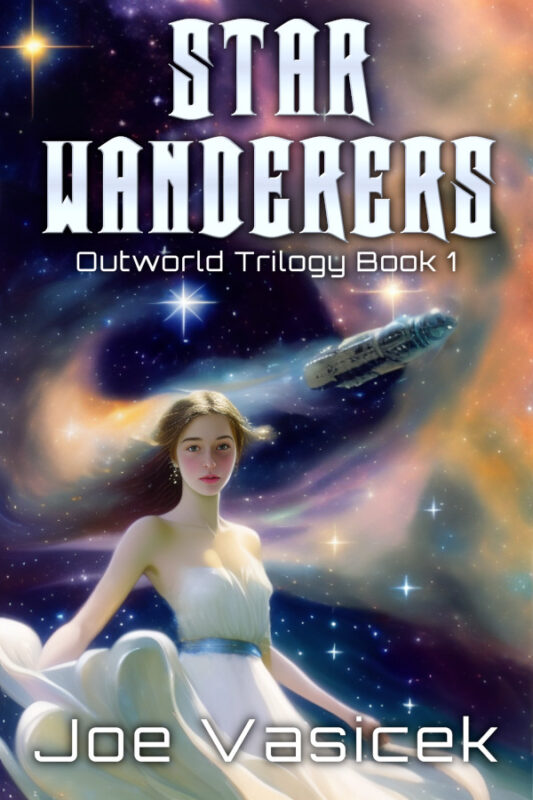
New Star Wanderers cover reveal!

Behold!

This is officially the new ebook cover for Star Wanderers. I’ve uploaded it to all platforms, though I haven’t updated the epub files yet. I’ll also update the paperbacks as soon as I have a chance, though that may take a while, especially with the new baby.

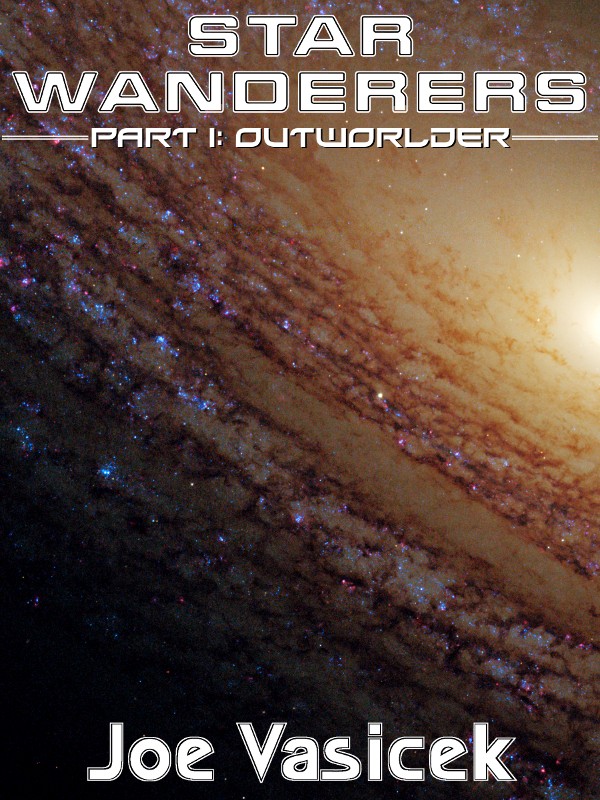
This image was AI generated using Stable Diffusion. It went through a lot of iterations, and can probably use some improvement, but this is the best I can do with the skills I currently have. Maybe a couple of years from now, after I’ve mastered the technology, I’ll make a new cover for this title. But I think this one is good enough to keep for a while.

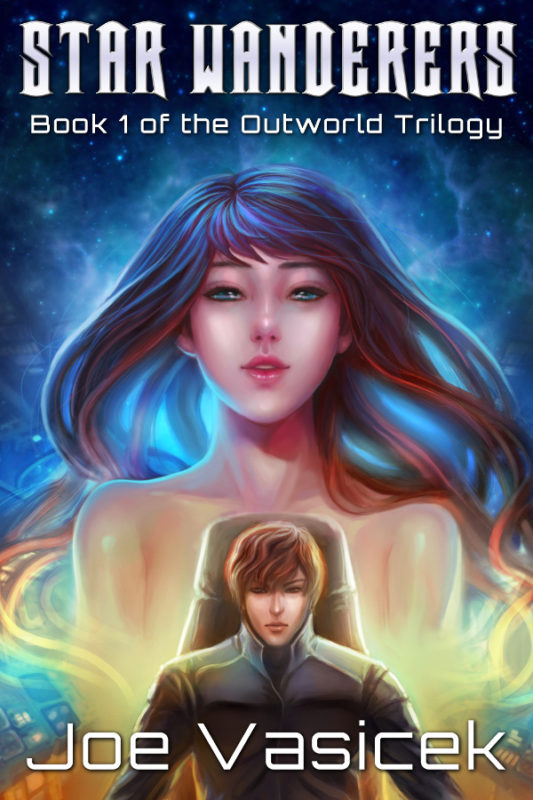
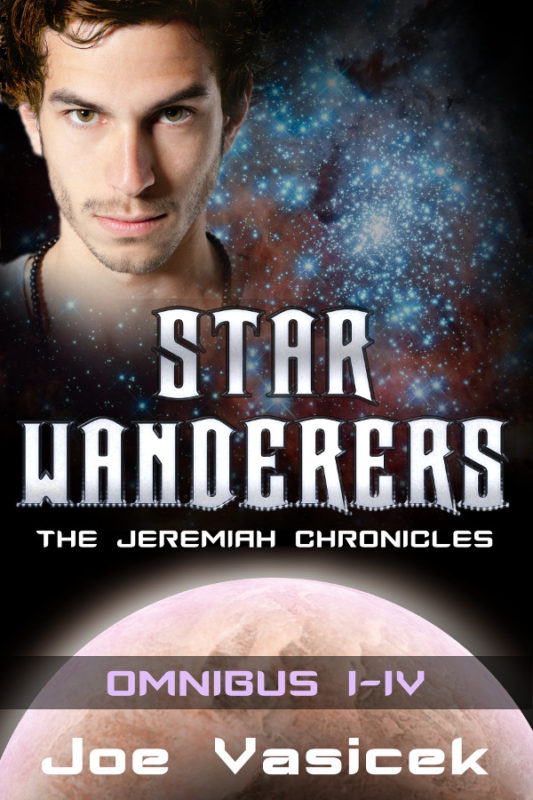
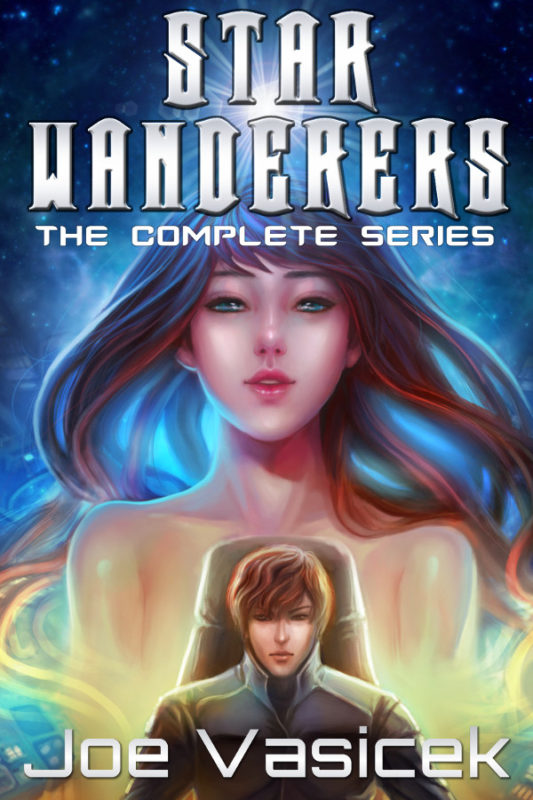
Just for fun, here are some of the old covers:

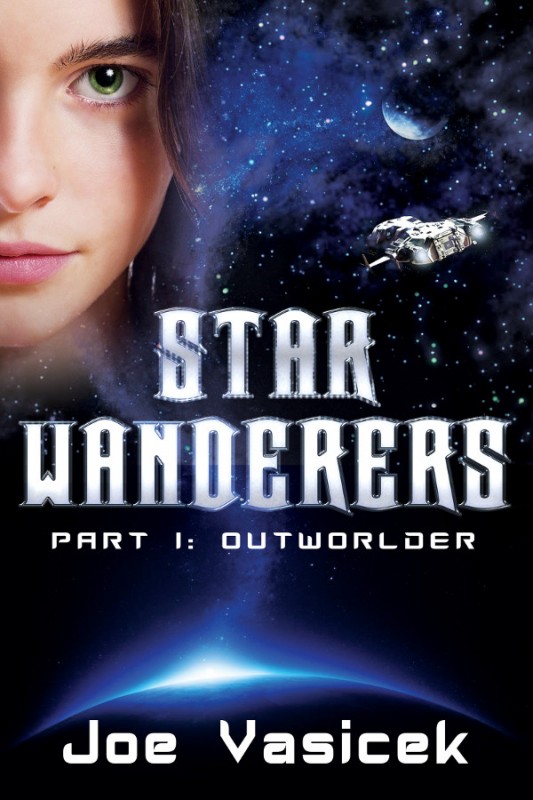
The original novel cover, which this latest one has replaced.

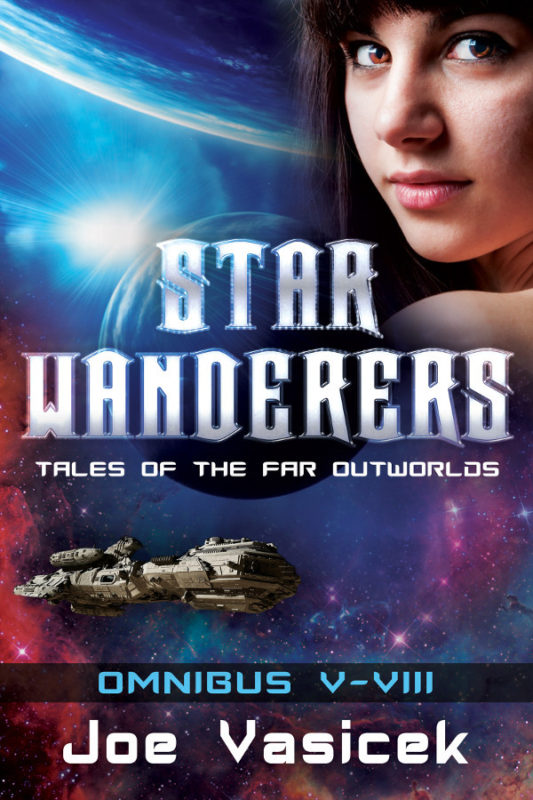
The second omnibus cover, from the novella series. The cover itself is by Libbie Grant, though the planet itself is a screenshot I took from Celestia.

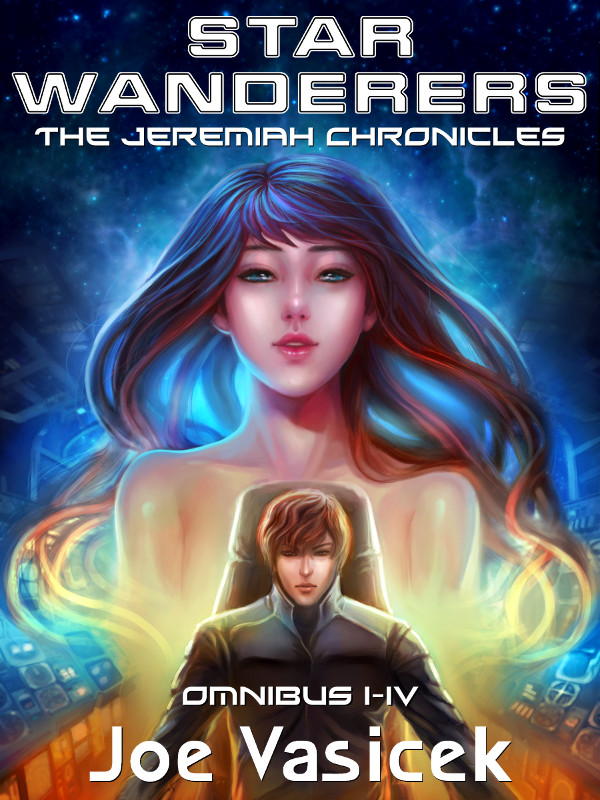
The art from the complete series omnibus, which replaced the first two omnibuses and was the immediate precursor to the novelization itself.

The original cover for the first omnibus. The art is by Ina Wong, who also did the current cover art for The Sword Keeper.

This is the original art for the second omnibus, by Derek Murphy.

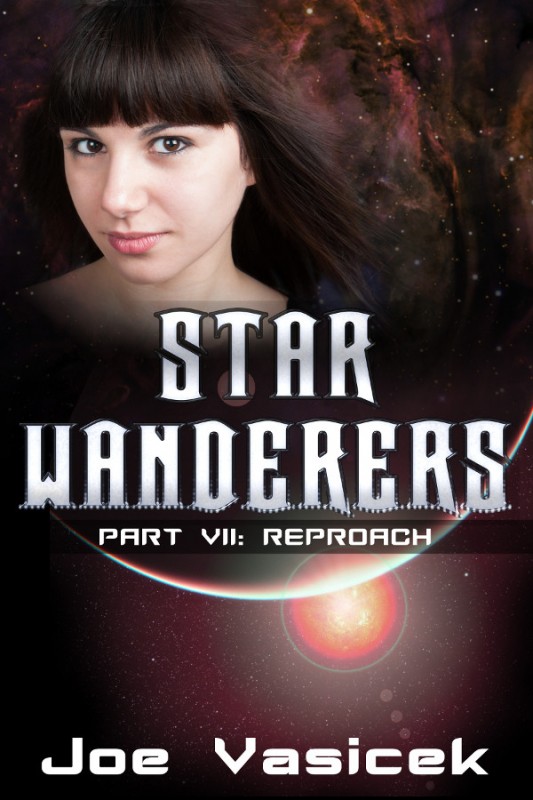
This is my personal favorite from the art by Libbie Grant. She did all eight novellas and both ominbus editions in this style.

This is the second cover for the original novelette. Derek saw my crappy self-made cover and offered to make me this one for free, so that he could showcase both of them in a before-and-after post on his blog. It worked out really well!

And this is the original ebook cover art for the first novelette that started it all. I had just launched Desert Stars, after draining my bank account to publish it since the kickstarter had failed (This was back in 2011, and I had no idea how to run a kickstarter—or how to profitably publish a book, for that matter). Since I didn’t want to spend another $900 to publish a full-length novel to the sound of crickets, I decided to turn my current WIP into a novella series, put them all out on a shoestring budget, and reinvest whatever money they earned into better editing and cover art.

The image is taken from NASA and is totally in the public domain, and I think the font is too, or at least it’s freeware of some kind. I put it together over the summer, when I was home from teaching English overseas in the Republic of Georgia. For this one, I think I used my desktop, but most of the other ones in this style were done on my tiny ASUS netbook with a screen the size of a postcard, in an old farmhouse in a tiny Georgian village at the foot of the Caucasus Mountains, which had no heating aside from the woodburning stove downstairs. The power would also frequently go out for hours at a time.

I wrote a bunch of the original novellas out there, in that tiny little Georgian village. And now, they’re all combined into one novel, which I’m turning into a trilogy right now! Just need to finish revising the second book, hopefully before that new baby comes. I should probably stop procrastinating.

Why I’m not worried about AI replacing writers

So machine learning artificial intelligence has really been blowing up this past month, probably because of ChatGPT and all of the fascinating things that people are doing with it. I’ve been getting into it myself, using it to help write or improve my book descriptions, and also experimenting with it for writing stories.

At this point, any original fiction that ChatGPT writes is about the same quality as something written by an overly eager six year-old (minus the grammar and spelling errors), but I can see how that could change in the future, especially on a language learning model that’s trained on, say, Project Gutenberg, or the complete bibliographies of a couple of hundred major SF&F writers. The technology isn’t quite there yet, but in a few years it could be.

But apparently, that hasn’t stopped hordes of amateur writers and/or warrior forum types from using ChatGPT to spam the major magazines with AI-written stories. In fact, Clarkesworld recently closed to submissions because they were getting flooded with “stories written, co-written, or assisted by AI.” Neil Clarke wrote an interesting blog post on this problem, saying that this is a major growing problem for all of the magazines and that they will probably have to change the way they do business to deal with it.

So will AI eventually become so good that it replaces writers altogether? I don’t think so, and here’s why.

Replacement vs. collaboration

The gap between an AI that can do 100% of what a fiction writer can do and an AI that can do 90% is actually much wider than the gap between an AI that can do 90% and an AI that can only do 50%. That’s because both the 90%-effective AI and the 50%-effective AI require collaboration with a human in order to do the job. Neither of them can fully replace the human, though a human-AI team may be able to do the work of many humans working alone.

If we ever get to the point where AI replaces storytellers completely, we have much bigger problems than a few out-of-work science fiction writers. Storytelling lies at the heart of what it means to be human: we call ourselves “homo sapiens,” but we really should call ourselves “homo narrans,” since story is how we make sense of everything in our world. If an AI can replace that, then we as a species have become obsolete.

But I don’t think we’re going to ever reach that point. My wife is currently getting a PhD in computer science—specifically in machine learning and language models—and she believes that there is an inherent tradeoff between intelligences that can specialize well, and intelligences that can generalize well. AIs are master specialists, but humans are master generalists. If we ever build an AI that’s a master generalist, we may find that it’s actually much less intelligent than an average human, because of the tradeoff.

But all of that is purely speculative at this point. Right now, we really only have AIs that can do about 20% of what a fiction writer can do. In the coming years, we may ramp that up to 50% or even 90%, but anything less than 100% is not going to fully replace me.

Tools, force multipliers, and the nature of writing

However, that doesn’t mean that the thing we currently call “writing” isn’t going to change in some pretty dramatic ways, much as how the internal combustion engine dramatically changed the thing we call “driving.” And with these changes, we may very well get to the point where the market just can’t support as many professional writers, and the vast majority of us have to find other lines of work.

Conversely, it may actually expand the market for “reading” and create new demand for “writers,” as “reading” becomes more interactive and “writing” turns into an AI-mediated collaboration with the “reader.” Kind of like a Choose Your Own Adventure that writes itself, based on the parameters set by the “writer.”

I have no idea, but the possibilities are fascinating, and the writers who are sure to lose are the ones who fail to confront the fact that their whole world is about to change—indeed, is already changing.

I think what it’s going to come down to is who owns the tools: not just who can use them, but who can modify them, personalize them, and use them to create original work. If copyright law decrees that the person who owns the AI also owns anything created with the AI’s assistance, that is going to be a major buzzkill… unless we get to the point where everyone can have their own personalized AI, which would be pretty cool. It would also solve a lot of the problems emerging from all of the super-woke filters that are getting slapped on ChatGPT.

Personally, I’m looking forward to the day where I can use an AI model to write fifty novels across a dozen pen names in a single year. What an incredible force multiplier that would be! But only if those novels are “mine,” whatever we determine that means.

So really, instead of arguing about whether AI will replace authors, what we really ought to be talking about are the aspects of writing and storytelling that drive us to create in the first place, and how those aspects can translate into a world where the nature of “writing” looks radically different than it does right now.

The “but I already know how it ends” problem

There is one problem that is unique to the written word, and it’s something that every writer has to confront when making the leap from amateur to professional (or even just from an amateur who dabbles in prose to an amateur who finishes what they start). The problem can best be summed up by this:

Why should I bother writing this story if I already know how it ends?

Unlike visual media such as TV, movies, video games, or illustrations, the art of the written word exists 100% in the reader’s head. These things we call “words” are really just symbols that convey thought from one mind to another, and have zero meaning outside of the head of the person reading. If you don’t believe me, try picking up a classic novel written in a foreign language that you don’t understand, and see how well you enjoy it.

But when we read, we like to be surprised on some level. There is something about the novelty of the story that appeals to us—indeed, that’s why we call them “novels.” The trouble is that the very act of creating a novel kills the novelty of it. At some point, you know how it’s going to end, and after that point the act of writing becomes a chore—or rather, it can be, unless you find something else about the process that fulfills you.

Some professional writers deliberately put off that moment for as long as they can, never figuring out their ending until it comes as surprise, even to them. Others look for fulfillment in something else, like the artfulness of their prose, or the dramatic suspense built up by their use of language. Still others just plow ahead, accepting this loss of novelty as a cost of doing business.

But however they choose to deal with it, every writer has to confront this problem in some manner before they make the leap from amateur to professional. And this is perhaps the biggest reason why I’m not too worried about AI replacing me as an author: because even an AI model that can do 90% of what I do will still require its human collaborator to address this problem.

Fanfiction and derivative works

Of course, the amateur vs. professional problem will affect some genres more than others: “write me a romance just like ____ where the male love interest has black hair instead and works in my office” is going to be just fine for a romance novel addict who just wants their happily-ever-after without any uncomfortable surprises. But we already have this: it’s called fanfiction.

Which is not to say that all fanfiction is formulaic and predictable. But the thing that sets fanfiction apart from original fiction are the things make it a derivative work: things like characters and settings that are already well-established, or a rehashing of storylines that were created by someone else.

This is an area where I think AI shows the most promise, and will turn out to be the most disruptive: not in creating original works, but in creating derivative works. Imagine if you could plug a novel into ChatGPT and tell it to rewrite the ending so that the girl ends up with your favorite character, or your favorite villain wins in the end. ChatGPT can’t do that very well right now, but I don’t think we’re far from building an AI language learning model that can—especially if it’s trained on actual books, instead of online content.

What I foresee is a world where AI blurs the line between fanfiction and original fiction so much that it becomes normal to read a bunch of these derivative works after you’ve read the original. Indeed, it may become a game to see who can make the most popular derivative work, and the popularity of some of them may very well exceed the popularity of the original.

Or it might become normal to run everything you read through an AI filter that removes offensive language, or the sex scenes that you were going to skip anyway (or conversely, an AI filter that adds offensive language and sex scenes). Taken to an extreme, this could lead to some really dystopian outcomes that further divide our already polarized world. We’ll have to see how it shakes out.

But all of this derivative content is only possible if there’s original content to derive it from. And while AI may lower the barrier of entry somewhat to creating original content (or not, since there really aren’t any barriers to entry right now, aside from the time and practice it takes to become proficient at your craft), the problem of “but I already know how it ends” will keep most dabblers and amateurs in the realm of creating derivative works, not original ones.

The act of “writing” and “reading” may change dramatically based on the force-multiplying effect of these tools. We may even get to a point where “writing” and “reading,” as most of us understand it, bear little resemblance to how we understand it today. But unless our very humanity becomes obsolete, I’m confident that I will still be able to carve out a place for myself as a writer.

Can this video possibly be more Georgian?

All it needs is a couple of old men playing backgammon on a folding table by the side of the road… although that’s something you see more of in the town, not the village.

For goodness’ sakes, it even has a rooster crowing at the end!

IT IS DONE

At long last, after more than a year, the rough draft of Children of the Starry Sea is now complete! It clocked in at just over 149k words, which makes it the longest book I have written since I started publishing (the first novel I ever finished was a 168k word train wreck that will never see the light of day. I wrote Genesis Earth next, and that was my first published novel).

I will probably pare it down to around 130k words, which will still make it my longest book when I publish it. Since I’ve been cycling through the revision drafts as I write, I will hopefully finish all the revisions within the next month and put it up for preorder shortly after that.

I am super excited, not only about this novel, but at the recent changes in my writing process that enabled me to finish it so quickly, and will hopefully help me to write a lot more books moving forward. Because of those changes, I’m confident that I can finish the third book in the trilogy (Return of the Starborn Son) before the end of the year, perhaps even before the end of the summer. It will be really fantastic to have this trilogy complete.

And after that? I’m not entirely sure. I currently have two other unfinished trilogies, and I hope to finish those soon, but I may also want to start a new one. If I can write at least three novels a year, I can finish a trilogy and start a new one every year going forward.

Anyway, I’m really excited that book two is done. Looking forward to writing the next one!