Joe Vasicek is the author of more than twenty science fiction books, including the Star Wanderers and Sons of the Starfarers series. As a young man, he studied Arabic and traveled across the Middle East and the Caucasus. He claims Utah as his home.
4. The Democrats will nominate Harris for President.
By this point, the coronation of Kamala Harris should be official. Without winning a single primary vote in either 2020 or 2024, she has been elected selected to be the Democrat Party’s nominee… for the sake of “our democracy.” Some pigs are more equal than others, I guess.
This may be hard to remember, but at the time I made this prediction, it wasn’t at all clear that Harris would be the nominee. Three days had passed since Biden had (allegedly) issued his letter, announcing that he was withdrawing from the election—much to the surprise of his campaign staff. In a second letter, he had endorsed Kamala Harris as the nominee, but the Obamas had notably NOT endorsed her at this point, and the ultimate outcome of the DNC coup was still in doubt.
By now, of course, the party has locked ranks, with the propaganda wing mainstream media working 24/7 to manufacture consent and portray Kamala Harris as some sort of messianic figure. Which also means that it’s been over a month since Harris has given an actual press conference or answered any unscripted questions.
Just remember: whenever they say “our democracy,” they’re talking about THEIR democracy, not yours. As with pigs, some decmoracies are more equal than others.
So the Daily Wire recently put out an interesting article about the current trend of chronically single young adults who want to get married but have had zero luck, especially with today’s online dating scene. From what I can tell, online dating is like a post-apocalyptic wasteland right now—which is a huge problem, because ever since the pandemic, online dating has come to replace almost every other form of getting out there and finding prospective romantic partners.
So since I graduated from the online dating scene after a period of chronic singlehood, and am now happily married, I thought I was qualified to share some of my thoughts on the subjects in the comments on the article. And since I thought some of my readers here might find it interesting, I’ve decided to cross-post my comment. Here it is:
I was chronically single until I met my wife at age 34. We met online and got married just before the pandemic. Some thoughts:
1. It sucks to be rejected, but if marriage is really what you’re looking for, you’ve got to embrace the suck. You’ll never find “the one” if you’re trying to please everyone. Know what you’re looking for, and when you write up your dating profile, share the things about you that will drive everyone else away. My profile had an explicit declaration of faith, because that was what I was looking for–and I found my wife on the third or fourth match, in part because that declaration was explicit enough to drive everyone else away.
2. The only way to stop wasting time is to embrace Jordan Peterson’s 8th rule of life. You grew up in an online world where almost everything you saw was a lie. Embrace total honesty, no matter how much it hurts. On our second date, I asked my future wife what she wanted to do with her life. She embraced total honesty and told me she wanted to be a wife and a mother more than anything else, even though she had no idea how I would respond to that. We were married less than a year later.
3. Have enough faith to trust God’s timing. My wife and I were actually enrolled in the same college class a decade before we met online. If we had dated each other then, it wouldn’t have worked out. We both needed to grow a bit first (quite a bit, in my case). Everything in this world has been prepared in the wisdom of Him who knows all things. Do your part to bring your life in line with Him, and all things will work together for your good.
4. Stop making everything about yourself. Selfishness is the root cause of every divorce, which also makes it one of the biggest deterrents to marriage and relationships. You grew up in an age of unbridled narcissism, exploited by Big Tech and social media to leverage your loneliness for corporate profits. When you think you may have found the right one (and you’re not in a codependent or abusive relationship), make it all about them. He who seeks his life shall lose it, and he who loses his life, for God’s sake, shall find it. I will never forget the impression I received when I first held my daughter: “this is her story now, not yours.”
It seems like most of the internet is talking about the hilariously bad breakdancing performance given by Australia at the Paris Olympics. Apparently, the “athlete” in question is actually a university professor named Rachael Gunn who specializes in breakdancing studies, or some such nonsense, and the main reasons she got the nod to compete are 1) the Australian breakdancing scene is woefully small, 2) she’s (allegedly) an LGBTQ+ woman, with all the right political opinions, and 3) her husband was on the committe that made the decision to qualify her. Taking advantage of those three factors, she’s apparently made a name for herself in Australia, even winning some local competitions—because who would dare criticize such a stunning and brave LGBTQ+ woman? So of course, she went on to compete on the international scene… and made such a mockery of herself and her sport that the judges awarded her straight zeroes, and the Olympics committee pulled breakdancing from the 2028 Los Angelos Olympics. Wah wah.
While this story is rightly hilarious, and proves the eternal truth that wokeness ruins everything, I can’t help but notice the parallels between the state of Australian breakdancing, that someone so inept and untalented could leverage a “studies” degree to dominate it, and the current state of science fiction. Specifically, this is the comment that made me think about this, which is worth reading in full:
So I looked into this. I thought maybe I should feel sorry for the woman, athletes can choke, and maybe it was cruel for people to be making fun of her. Alternatively, I thought it may be possible she was led up the garden path, told she was good break dancer when she wasn’t, and… https://t.co/YQHA0K05wr
Rachael represents so much of what is totally lecherous about cultural studies academics. Pick a subject area that will be under-studied in your context, so you can rise through the ranks quickly (how many break dancing academics will there be in Australia?), and wreak absolute havoc in lives of the people you want to study. There is no limit to the sheer disrespect they will dole out, purely for self-advancement.
Now, I don’t think science fiction was ruined in quite the same way, ie by being dominated and colonized by academia through “studies” degrees. Science fiction was probably too large to be overtaken that way. However, the pattern is still similar, and from what I can tell, it goes something like this:
Step 1: Take over the institutions in the field that are primarily responsible for determining and evaluating excellence.
In Australia, the breakdancing field was small enough that academia was able to dominate and (for lack of a better word) colonize it, becoming the arbiters of excellence within that art. It certainly helped that the professor who had carved out this academic niche for herself was married to one of the judges in the committee that was tasked with determining excellence. This created an incestuous (and ultimately nepotistic) relationship between academia and the judging panels.
In science fiction, something similar happened with SFWA and the Hugo and Nebula awards. I’ve written before about how SFWA ruined science fiction, so I won’t repeat all that here. But the basic gist of it is this: as science fiction became more established, the organizations and publications that talked about science fiction became more authoritative on the subject of the genre than the actual writers themselves. Because of this, achieving recognition for excellence became less about creating works of actual merit, and more about gaining the approval of the people who had built their careers talking about science fiction, rather than actually creating it. And the best way to gain their approval was to join those institutions yourself, rising up in the pecking order until everyone else was beneath you.
This basically describes the career trajectories of John Scalzi and Mary Robinette Kowal, two insanely woke authors who leveraged their tenure as SFWA president for award nominations. Both of them seem to have spent at least as much time and effort talking about science fiction as they have in actually creating it: Scalzi through his blog, which he leveraged to get his first book deal, and MRK through both her blog and the Writing Excuses podcast.
Step 2: Purge those institutions until they are ideologically pure.
This step is critical. So long as the instutitions are focused on merit, the only way to climb the ranks is by creating something of merit. But once the institution has become ideologically possessed, with all of those who reject the dominant ideology being purged from positions of power, then merit no longer matters, and the way to the top becomes clear. Those who are the most ideologically pure, as demonstrated by their virtue signalling, will rise to the top. This has the added benefit of quelling all merit-based criticism, since those beneath you fear having their own ideological purity called into question.
From what I can tell, this is how Rachael Gunn rose to prominence in the Australian breakdancing scene. After all, once academia had colonized the field, who would dare question the merits of such a stunning and brave LGBTQ+ woman? In a similar manner, Scalzi and MRK rose to the top of SFWA by virtue signaling their own ideological purity and intersectional victimhood status, squelching any criticism by labeling their critics racist, sexist, bigots, homophobic, etc.
Step 3: Redefine excellence in your own image.
In the Australian breakdancing scene, this was accomplished through the combination of Rachael Gunn’s academic work and her husband’s position in the committee that qualified the Olympic competitors. And while it probably isn’t quite so blatantly nepotistic in the science fiction world, the pattern still holds true when you look at what the Hugos and Nebulas have become. This was what the Sad Puppies controversy was actually about, and because the Puppies lost, the Hugo and Nebula awards have been insufferably woke ever since:
Step 4: Use the captured institutions to purge the field of potential rivals.
The final step in this projection is to squash all of those people who represent a threat to your domination, because they have merit and you do not. Ignoring her perhaps overly generous assessment of Australian breakdancing, this is what Hannah Berrelli is talking about when she mentions all the “hundreds of Australian athletes who will have dedicated their entire lives to athletic excellence” whose blood, sweat, and tears were overshadowed and rendered irrelevant by Rachael Gunn’s Olympic stunt.
In science fiction, we see this in the fact that David Weber has never been nominated for a Hugo or a Nebula, or that Jim Butcher’s sole Hugo nomination lost to No Award. Both of these men are far better writers than the majority of award-winning authors, especially in our current era. You could make a solid argument that Dan Simmons or Orson Scott Card were superior, but Scalzi? Jemisin? Kingfisher?
And what about all of the new and relatively unknown authors? At least Weber and Butcher already have large followings, which they have rightfully earned through their merit. But when merit is no longer the determining factor in recognizing excellence within the field, what chance do talented up-and-coming authors have if they aren’t willing to play the ideological purity games? Answer: not a hell of a lot.
So while you laugh at how ridiculous Australia’s breakdancing performance was at the Olympics, understand that the same dynamic has been playing out in modern science fiction for years. And honestly, the results are no less ridiculous.
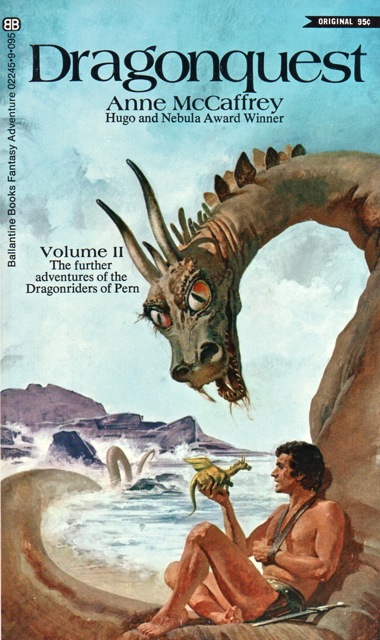
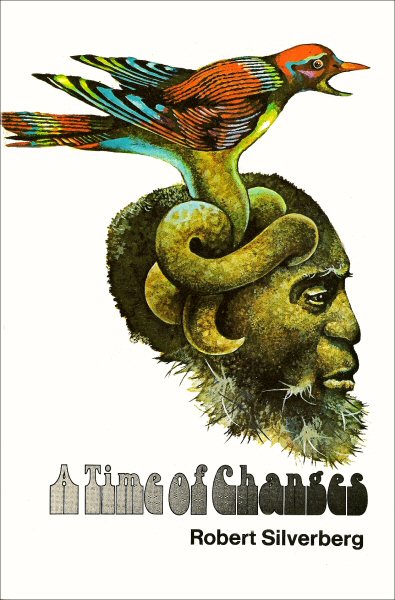
Cover art was so terrible in the 70s. Those are all the original edition covers for each book. They’ve all been reworked in later years, and most of them got a significant upgrade.
The Lathe of Heaven isn’t Ursula K. Le Guin’s greatest work, but I did find it to be decently good. The ending was a little too pat, but the set up was good, and the story itself was quite intriguing. In some ways, I feel that it would have worked better as a movie, maybe an animated feature by Studio Ghibli. It definitely had that kind of a dreamlike feel.
The rest of these books are not that great, to be honest. To Your Scattered Bodies Go and A Time of Changes were too pervy for me, with Farmer indulging in some really weird and disturbing treatment of children, and Silverberg indulging in pages and pages of navel gazing, all written very beautifully and signifying almost nothing, which is typical of Silverberg.
Jack of Shadows was confusing: I got about two thirds of the way in before I realized that I had no idea what was happening, and I didn’t really like any of the characters. I wonder if the real reason this book got nominated was because so many people enjoyed Nine Princes in Amber, the first Chronicles of Amber book, which came out in 1970 and was actually quite excellent. But he was writing and publishing the Chronicles of Amber all through this time period, and none of them ever got nominated for a Hugo, which seems really strange to me. With Zelazny, the only books I’ve found that I enjoyed are his Chronicles of Amber, and everything else is a huge miss for me. It’s weird.
As for Dragonquest, I know that the Dragonriders of Pern books have lots of fans, and I don’t find anything too objectionable with them (aside from the naively libertine Boomer attitudes toward sex, which is par for the course for this era and for Anne McCaffrey in general), but I just couldn’t get into this book. I read the first Dragonriders of Pern book in college, when I wasn’t nearly so cynical, and I thought it was okay, but it wasn’t compelling enough to go out and read the rest of the series immediately, and over the years I literally forgot everything that happened in that first book. So I read a synopsis before picking up book 2, and I just have to say that the dragons are way, way, way too OP. Seriously, they can teleport instantly through space AND time? That’s just too much. So I went into Dragonflight without feeling any real sense of peril, and right away, the novel turned into a giant soap opera about the various dragons and dragonriders: who had feelings for who, who was sleeping with who, etc etc. So after a couple of chapters, I just got bored and checked out.
So the only one of these books that I can positively vote for is The Lathe of Heaven, even though I think it pales next to Le Guin’s other work. But I wouldn’t actually put any of these books beneath No Award, since most of it is probably just a matter of my own personal taste. The perviness of To Your Scattered Bodies Go almost makes me want to put it below No Award: there’s a lot of graphic nudity, a lot of innuendo, and some innuendo / torture porn directed toward children, which was why I DNFed it. But it doesn’t cross over into outright pornography, and it’s not ideologically possessed in the way that most of the stuff coming out today tends to be. Also, the premise is pretty interesting: it’s in the execution where it all falls apart.
The 70s was a really weird time for science fiction. I wonder how many of the Worldcon attendees in 1972 were high on drugs—or whether some of these artists weren’t off their gourds when they wrote some of this stuff. I’ve heard stories about some of the orgies that Asimov used to hold in his con suite. It was a very different time.
I enjoyed The Aeronaut’s Windlass. It was a fun steampunk adventure, sort of like a mashup between Horatio Hornblower and the Bioshock games. It’s also very unlike most books to be nominated for the Hugo, probably because it was nominated by the Sad Puppies. After this year, the people who run the Hugo Awards rewrote the rules to allow them to disallow “slate voting,” which was how they disqualified the majority of ballots in the 2023 Hugo Awards, including almost all of the ballots cast by Chinese fans. But guys, it’s the Puppies who were totally the racists.
All of the other books were pretty terrible, in my opinion. I’ve already written about The Fifth Season at length, so I won’t go into that rant here. I’ve also written at length about Ann Leckie’s obsession with fake transgender pronouns, and since Ancillary Mercy is basically just another book about pronouns, I won’t waste any more time on that subject.
I wanted to like Uprooted, since I loved Spinning Silver so much, but both times I tried to read it, I ended up DNFing it midway through. Partly that’s because the fantasy retelling of Beauty and the Beast was not as interesting to me, but there was also a scene where the main character and her mentor randomly started making out after casting a spell together, with a graphic description of digital penetration. The whole thing came so totally out of the blue that it threw me out of the book, and I had no desire to finish it after that.
I’m also really conflicted about Seveneves. I’m not a huge fan of Neal Stephenson generally, especially after the neon orgy scene at the end of Diamond Age, and Seveneves is loooong… like, over 800 pages long. Which would be fie, if Stephenson had the economy of words of a true master like Louis L’Amour, but Stephenson really doesn’t. Around 100 pages or so, I skipped to the last chapter and read a spoiler-filled synopsis just to see if it was worth pressing on, and I decided that it really wasn’t, because 1) it’s apparently never explained why or how the moon exploded, and 2) the Hillary Clinton analog becomes absolutely insufferable, and I really didn’t want to slog through four hundred pages of that. Seveneves has an interesting premise, but if you cut out half the words it would be a better book.
2011 was the only year in which I actually attended Worldcon and voted in the Hugos. This was, of course, before the Sad Puppies and before I became totally disillusioned with the awards. I have to confess that I didn’t actually read any of the novels, though I did get the free ebooks in the voter packet and tried to read a couple of them. Mostly, I voted based on whether I recognized the author’s name, and whether or not the book descriptions appealed to me. I remember that I voted for Blackout and All Clear in the top slot, but I don’t remember how the rest of the ballot shook out.
If I had to do it again, I would still put Blackout and All Clear at the top of the ballot (which are two separate books, though they form a duology and were published in the same year, which is why they appear together). However, I ended up DNFing all of the other books, and because Feed and The Hundred Thousand Kingdoms struck me as being horrible enough to warrant a No Award vote, I couldn’t merely abstain from voting positively for any of the others.
But first, Blackout and All Clear is a delightful time travel story from Connie Willis’s Oxford University Time Travelers series. Unlike The Doomsday Book, the story is quite a lot of fun with an upbeat and hopeful ending, and unlike To Say Nothing of the Dog, the time travelers find themselves in some very real peril when their time machine breaks down. The first book was okay, but the second book was fantastic, and wrapped things up very nicely. A fun and uplifting read.
I DNFed Feed for a number of reasons, but the main reason was that I couldn’t stand the sexual innuendo between the brother and sister. Yes, I know that technically they’re supposed to be step-brother and step-sister, and yes, I know that meaningless and gratuitous sex is supposed to be a trope of zombie fiction, but still. Yuck. I could be wrong about this, but the vibe I got was that the author is addicted to pornography, and that’s just not a mind I want to spend any time with. Also, the world makes no sense: the zombie apocalypse has brought our country to a state of collapse, but 1) basic infrastructure like electricity and internet still operates without any problems, and 2) bloggers need to get a permit from the federal government in order to blog? Sorry, but I just can’t buy any of it.
I don’t remember much from The Hundred Thousand Kingdoms, since it’s been several years since I first tried to read it, but I think the main reason I DNFed this one was because all of the characters struck me as being terrible people, and I frankly didn’t care what happened to any of them. For the same reason, I didn’t read A Song of Ice and Fire past book one (though there were other reasons I DNFed that series, most of them content related). And I think there were some content-related issues in this one too, which is also why I would place it under No Award, as opposed to merely abstaining.
I really wanted to like Cryoburn, since I enjoyed many of the other Vorkosigan Saga books, especially Young Miles and Barrayar. But this one takes place when Miles is middle-aged, and powerful enough that he’s not really threatened at all. Instead, we follow the story of a misfit street urchin who’s trying to earn his freedom, or something like that, and I frankly didn’t find his story or his character all that interesting or compelling. About four or five hours into the audiobook, I just got bored of it, which I wasn’t expecting at all.
The Vorkosigan Saga is different from most other series, in that all of the books are basically standalones linked only by the recurring characters, and the fact that Bujold has written it completely out of order, basically dropping books randomly into the chronology however it suits her fancy. The latest book, Gentleman Jole and the Red Queen, was such a disappointment to my wife that the way she described it to me made me feel totally disillusioned. I haven’t gotten around to reading it yet, so I can’t say for sure that it’s terrible, but it definitely took the series in a direction I wish it had never gone. I suppose that the lesson from all this is that it’s possible to draw out a series way too far, especially a non-linear one. The early Vorkosigan books are great… the later ones, not so much (and by “earlier,” I mean the ones that Bujold wrote earlier, not necessarily the earlier ones in the chronology).
As for The Dervish House, it was fine. Very pretty and well written, I guess. It just wasn’t for me. I got bored about a hundred pages in and dropped it. I suppose I could be convinced to give it another shot, but from what I can tell, it’s not really my kind of book.
There will not be a second assassination attempt against President Trump before the election. The original plan was to assassinate Trump before the Republican convention, in order to coronate Nikki Haley and guarantee that the proxy war with Russia would continue. With Vance now pegged as the heir apparent, removing Trump via assassination would be a much greater liability to those plans. This prediction expires November 5th, 2024 (remember, remember, the fifth of November!)
The FBI and DHS will continue to stonewall the investigation into the assassination attempt until something even more explosive dominates the news cycle. This will not prevent the alternative media and “citizen’s investigations” from continuing, but it will prevent them from reaching the normies. If they need to fabricate something to blow up the news cycle, they will do it. This prediction will expire August 31st, 2024.
Biden will be removed from office via the 25th amendment, and Harris will become the 47th President. At this point, I just don’t think that they can prevent this from happening. This may be the thing that gives them the cover they need to memory-hole the investigation. This prediction expires January 20th, 2025.
The Democrats will nominate Harris for President. I have no idea who she will pick for VP, but I don’t think it matters, because
Harris will lose badly and Trump will win the 2024 election in an electoral landslide. I think the Democrats have resigned themselves to a second Trump term, which is why they want to run Harris against him, since it’s the best way to get rid of her. At this point, they are playing for 2028, not 2024. Prediction 4 expires August 22nd, 2024. Prediction 5 expires November 5th, 2024.
Before Trump becomes president, NATO will become entangled in a direct war with Russia. This is the ultimate poison pill for the globalists/neocons. By getting us into a direct war, they will force Trump’s hand and make it impossible for him to negotiate any sort of peace with Putin. This prediction expires January 20th, 2025.
The war with Russia will not go nuclear, if only because Russia no longer has a functioning nuclear arsenal. However, it will be as scary as hell, because we will probably call their bluff. This prediction expires January 20th, 2025.
There will be a major shakedown of the administrative state in the first 100 days of Trump’s second term. Several national figures who were thought to be untouchable will be removed from power. This prediction expires April 30th, 2025.
In the first year of Trump’s second term in office, at least one of the following three things will happen:
A second global pandemic,
A domestic terrorist attack on the scale of 9/11, or
A major banking collapse and/or sovereign debt crisis that destroys the global economy. More poison pills that the deep state will try to use to sabotage Trump’s second term. I don’t know which one(s) they’re going to use, but I don’t think they’re going to stop with Russia. This prediction expires December 31st, 2025.
At some point in the next four years, the Federal Reserve will roll out a CBDC and will use a major crisis to force us to adopt it. I don’t know if they will succeed in this, but they certainly will try. I also don’t know how Trump will react to this, but if he makes Jamie Dimon his Treasury Secretary, I’m not very optimistic that he will stop it. This prediction expires January 20th, 2029.
As tempting as it is to run out the script for Ezra’s Eagle, which has proved surprisingly durable up to this point, I don’t believe it will actually play out the way Michael B. Rush has interpreted it. Even if it is a true prophecy, it may be that Ezra foresaw a possible future, not the future that will actually happen. There’s a reason why the book of 2nd Esdras is in the apocrypha.
Since each of these predictions has an expiration date, I will write another blog post at each of them to see how ridiculously wrong my predictions were. As a gentle reminder, I am a science fiction writer, which means that I tell lies for a living. Don’t hold my feet to the fire too much for any of these, as I’ll be shocked if I got more than 50% of them right.
With everything going on, I can’t help but wonder if/how this all plays into the Ezra’s Eagle prophecy, which I’m not entirely sure I believe, but which makes for a really fascinating (and terrifying) scenario moving forward. If you haven’t heard of the Ezra’s Eagle prophecy, check out my previous post on the subject, which for the last couple of months has been getting more views than any other post on my blog.
In any case, there is a very simple way that Ezra’s Eagle could play out, and it’s not only plausible, but it may actually be probable. Here’s how it goes down:
Trump wins the election, giving him +270 votes in the electoral college.
Congress passes a resolution declaring Trump to be an insurrectionist.
On January 6th 2025, Congress refuses to ratify the election because Trump is an insurrectionist. But since the Democratic ticket has less than 270 votes in the electoral college, the election gets thrown to the House of Representatives.
The House of Representatives is under no obligation to elect either Trump or Harris (or whoever ends up getting the Democratic nomination). In fact, they can elect whoever they want—even someone who wasn’t involved in the primaries at all.
The House selects a dark horse candidate for president, who turns out to be the first eagle’s head in the prophecy.
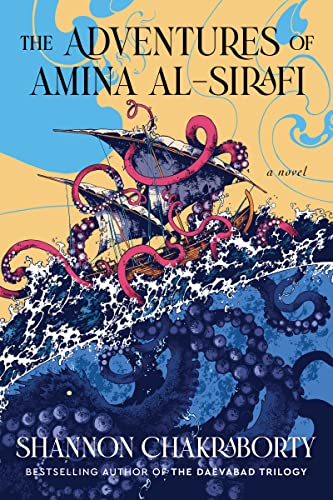
The Adventures of Amina al-Sirafi by Shannon Chakraborty
The Saint of Bright Doors by Vajra Chandrasekera
Translation State by Ann Leckie
Starter Villain by John Scalzi
Some Desperate Glory by Emily Tesh
Witch King by Martha Wells
The Actual Results
(To be determined…)
How I Would Vote
No Award
Explanation
For reasons that should be obvious after last week’s rant, I will not be voting in the actual Hugo Awards this year, principally because there’s no way in hell that I’m going to let these snobby wokescold blowhards have any of my money. But if I were going to vote in the 2024 Hugos, this is what my ballot would look like.
I did not even attempt to read Starter Villain by John Scalzi, because I knew that I would hate it, since 1) it was written by John Scalzi, the most insufferable former SFWA president (an impressive achievement), and 2) Daniel Greene did such a brutal takedown of the novel that I felt no need to read it afterward. But all of the other books I picked up and started, even though I ended up DNFing them all for various reasons.
The one that I feel most conflicted about is Some Desperate Glory by Emily Tesh, a debut novel. It didn’t hook me hard enough to push on past the red flags, but it did have an interesting start that made me want to read more. However, there were a lot of signs that this was the sort of book that I would throw across the room in disgust (“strong” female characters, fascist caricatures, anti-natalist Malthusian vibes (though I may be wrong about that), etc). Even after I read a spoiler-filled online synopsis, though, I still couldn’t tell if that would be the case. The thing that ultimately convinced me to DNF it, though, was the blurb that called it a “queer coming of age story.” A synonymous phrase for that would be “sexual grooming of a minor,” which I have absolutely no desire to read.
The one that I feel least conflicted about is Translation State by Ann Leckie. To demonstrate why, here is everything I read right up to the moment when I decided to DNF it:
Enae
Athtur House, Saeniss Polity
The last stragglers in the funeral procession were barely out the ghost door before the mason bots unfolded their long legs and reached for the pile of stones they’d removed from the wall so painstakingly the day before. Enae hadn’t looked back to see the door being sealed up, but sie could hear it
Yet another novel from Ann Leckie where the fake transgender pronouns are the most interesting and compelling thing about her characters, and also the basis for the entire book. Hard DNF.
The Adventures of Amina al-Sirafi had an interesting start, but like Some Desperate Glory, there were enough red flags to make me reluctant to keep reading, so I read a spoiler-filled synopsis and discovered that one of the characters who is central to the plot decides that she’s a boy instead of a girl, and socially transitions her gender as a major plot point. Which means that Chakraborty, a liberal white woman who converted to Islam, is writing less for a Muslim readership (which could have actually been interesting) and more for a woke white liberal woman readership, which is probably how this book got nominated for the Hugo in the first place. These days, if there are no lesbians, it’s gotta be trannies. Hard pass.
The Saint of Bright Doors is a textbook case of two tropes that I cannot abide in contemporary science fiction: “a profane and vulgar childhood” and “all true love is LGBTQ love.” In real life, childhood innocence is something that should be sacred and pure, but in fiction that purity is often sullied deliberately for purposes of plot and character development. Which is fine if it happens occasionally, or with a nod to the tragedy of it—if all of our characters had perfect lives, there would be no conflict worth writing about. But these days, it seems like every child in every book has a screwed up childhood, to the point where the authors seem to treat it with casual indifference. As for “all true love is LGBTQ love,” homosexual relationships are so overrepresented in fiction these days that the moment it’s casually dropped that the main character has a gay lover, my guard immediately goes up. Call me a homophobe if you want to. I don’t really care.
Witch King frankly just bored me. There was nothing about the main character that I found interesting or compelling, which is a shame, because Murderbot from Martha Wells’s series of the same name is one of the most interesting and compelling characters I’ve read in recent years. Also, there was just too much worldbuilding information dropped in the first couple of chapters, before I was really hooked to the story, that I found it difficult to follow. I had the same problem with Wells’s early fantasy novels, where it felt too much like work just to read them. If I’m going to do the work to get invested in a complex fantasy world, I want to know that there’s going to be a payoff at the end, and if the initial hook is weak, I have very little faith that the author can pull it off. Granted, Wells did pull off a satisfying ending with her murderbot novel, Network Effect, but the last two installments in the Murderbot series have disappointed me.
So who is actually going to win the Hugo Award this year?
Probably not Scalzi, because he’s a straight white male.
Vajra Chandrasekera has a much stronger position, given that 1) he’s brown, 2) he edited Strange Horizons for several years when it was a contender for the Hugos, and 3) The Saint of Bright Doors won the Nebula Award last year. However, his LGBTQ characters are of the vanilla variety, which works against him, and he’s not openly LGBTQ on any of his bios.
Martha Wells can probably pull a lot of votes from her Murderbot fans, but she’s also straight and white, which works against her.
Ann Leckie is also white, but she’s really inovative with those fake transgender pronouns, which gives her an edge… I suppose it depends on whether our current transgender moment is waxing or waning. And even if it is waning in the culture generally, science fiction has been so thoroughly captured by the wokescolds that it may still be enough to push her over the top.
S.A. Chakraborty is a straight white woman, which works against her, but she’s also a convert to Islam, which may give her an edge if she can play to the anti-semitic pro-Palestinian hysteria that’s the Current Thing right now. Even that might be a bit of a stretch, though, and I don’t see anything else that gives her an edge.
As for Emily Tesh, she’s more or less the dark horse in this race: an author so new that she doesn’t have a Wikipedia page yet, and she’s already won the Astounding Award and a World Fantasy Award. If her bio declared that she’s a lesbian, I would bet that she’s the favorite, since Arkady Martine pulled the same dark horse trick in 2019. But if she’s just another straight white woman, that dampens her odds considerably.
My prediction is that the Hugo will go to Vajra Chandrasekera for The Saint of Bright Doors, just because it’s already won the Nebula, and the same people who vote for the Nebulas also vote for the Hugos—even more so as the Hugos become increasingly irrelevant. Also, he’s the only non-white author on the ballot, and there’s probably going to be a lot of virtue signalling angst after the obvious racism that happened with the Hugos last year.
But the book with the best cover art is definitely Some Desperate Glory, followed closely by The Adventures of Amina al-Sirafi. The other covers are either mediocre or garbage (especially Translation State, which looks like 70s diarrhea).