I was not expecting this to be as good as it was:
Seriously, this video nearly brought me to tears… and it’s not even past midnight yet! But I really should get to bed.
Joe Vasicek is the author of more than twenty science fiction books, including the Star Wanderers and Sons of the Starfarers series. As a young man, he studied Arabic and traveled across the Middle East and the Caucasus. He claims Utah as his home.
I was not expecting this to be as good as it was:
Seriously, this video nearly brought me to tears… and it’s not even past midnight yet! But I really should get to bed.
Another post from my books blog, this one on the first book in the Hornblower series. Check it out!
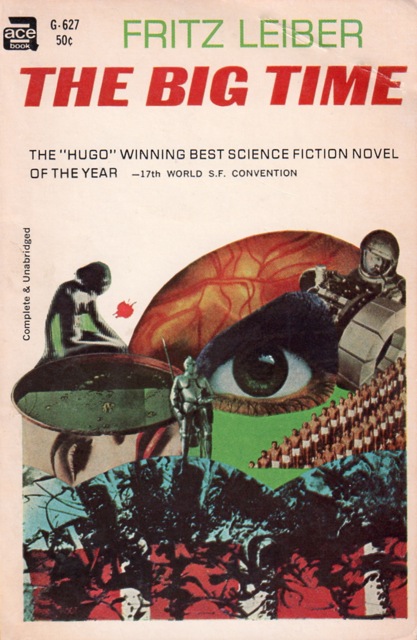
The Big Time by Fritz Leiber.
The Big Time has a lot of things in it that I normally would like. It’s a time travel story that bucks the popular convention of the butterfly effect—the idea that small changes in the past lead to big changes in the future. Instead, Leiber’s view of time travel is much closer to Connie Willis’s, in that the continuum itself tends to seek a stable equilibrium, negating the effect of small changes. But unlike Willis’s books, the time travelers aren’t just a bunch of cloistered academics looking to be passive observers of history. Instead, there’s a full-on time war between two monolithic factions, each of which has screwed so much with the timeline that they hardly know who they are anymore.
So what’s so bad about it that I feel it didn’t earn my vote? I’ve tried twice to read this book, and I’ve DNFed it both times because I just can’t get over the fact that it’s about a bunch of comfort women—with everything that term implies—servicing the time warriors of their particular faction. In WWII, “comfort women” was a euphemistic term for civilian sex slaves taken captive by the Japanese Imperial Army. That’s basically what’s happening here, except it’s played straight, with no ick factor, or even really an acknowledgment that an ick factor might exist. And that’s what turns me off—not just the ick factor itself, but the way that the author treats it as something normal and blase—progressive, even. After all, every good time soldier needs a “sex therapist.” </sarc>
Usually when older science fiction turns me off, it has something to do with the sexual content. So many scifi writers in the 50s, 60s, and 70s had these almost utopian visions of a free love future, or at least a very optimistic view of the sexual revolution. They never imagined that we might become even more prudish than the Victorians, or that incels would be a thing, or that we’d be facing a loneliness epidemic, a population collapse, and both a war on men and a war on women because, in large part, of how the Boomers tore down all the boundaries around sex and sexuality—which is to say nothing of how so many people can’t even define what a woman is these days.
These scifi writers were supposed to be our visionaries, but they were so totally blinded by their own carnal lusts that they failed to predict the second- and third-order effects of the kind of free love future they were writing about. That’s not exactly the case with The Big Time, but it falls into that same trap, along with most of Fritz Leiber’s work that I’ve read. However, it wasn’t so bad that I’d vote No Award over this book. Rather, it was more of a background element that rubbed me the wrong way, to the point where I just couldn’t finish the book.
If you haven’t checked out my book blog yet, go give it a look! The latest post has more of my thoughts on Zelazny’s excellent Chronicles of Amber series, and short vs. long fantasy in general.
My further thoughts on Roger Zelazny and the Chronicles of Amber. Check it out on my book blog!

Saw this, had to share it. The way that tail billows out of the nucleus like some sort of celestial contrail is truly breathtaking.
Apparently this comet will be visible with the naked eye during the upcoming solar eclipse!

Piranesi by Susanna Clarke
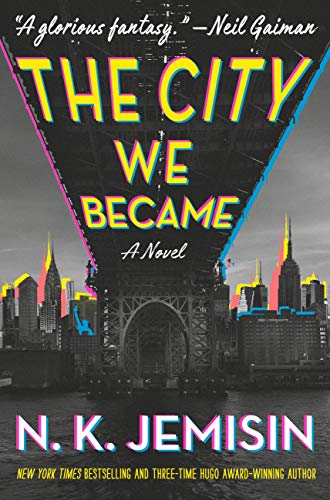
The City We Became by N.K. Jemisin

The Relentless Moon by Mary Robinette Kowal

Harrow the Ninth by Tamsyn Muir
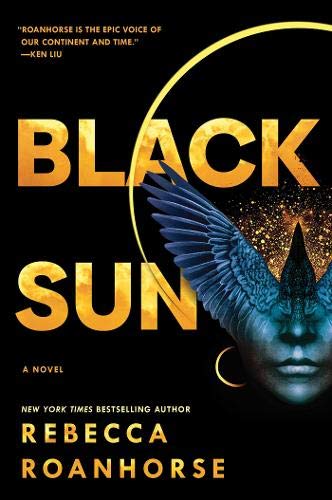
Black Sun by Rebecca Roanhorse
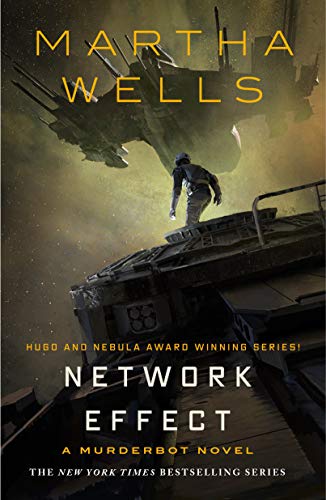
Network Effect by Martha Wells
Network Effect was pretty good. In fact, it’s my favorite Murderbot book. There was a little bit of wokery, mostly in the form of the polyamorous relationships of the humans, but that didn’t bother me as much because part of the point of the Murderbot books is that the humans are (for the most part) aggravatingly dumb and slow, so the polyamory kind of blended into the rest of the nonsense that muderbot constantly has to deal with. But I can see how it would bother some readers.
I DNFed all the other books, but I didn’t want to lump Piranesi in with all the others because it just wasn’t my kind of book. All the other ones had woke themes or tropes or other issues that turned me off immensely. I DNFed the first Lady Astronauts book when it turned into a story about the brave little woman that could and her band of misfit minorities fighting back against Captain Patriarchy. The City We Became dropped half a dozen f-bombs in the first chapter, and I think it had a gay rape scene too. Also, I have no love whatsoever for New York City. As for Black Sun and Harrow the Ninth, they both suffer from the trope that I call “death is chic.” At best, it’s an aesthetic that turns me off, and at worst it’s just a cover for outright nihilism and a pro-death, anti-life worldview that undergirds everything that I hate about our current culture.
As a side note, I just want to say that when it comes to book blurbs, Neil Gaiman is one of the best contrarian indicators for my own personal tastes that I’ve found. He may have blurbed a book or two that I actually enjoyed, but for every book or author that I can remember, if he gave them praise, I not only didn’t like it, but actively hated it. He may actually be a better indicator for me than the Hugo Award itself, since I actually enjoyed the book that won this year—but I cannot think of a single book that Neil Gaiman blurbed that I didn’t despise.
I read a lot of writing books, and this was one I really enjoyed. Go check it out on my writing blog!
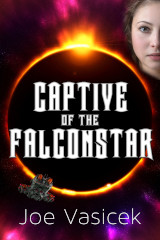
I’ve been experimenting a lot with AI-assisted writing, and I think I’m starting to produce some decently good work with it. Of course, in six months I’ll probably look back on what I’m producing now and feel utterly embarrassed by how bad it is, but still, it’s measurably better than the stuff I was producing six months ago.
Here is an excerpt from chapter 5 of my current WIP, Captive of the Falconstar. This scene is taken from the AI revised draft, and is 100% AI generated. It contains some mild spoilers, but nothing too major for the book or the series.
In the next draft, I will make a bunch of human revisions based on my notes, such as later events I need to forshadow, worldbuilding elements that I need to fix, or adjustments to the character’s motivations and growth arc—in other words, things that the AI doesn’t do as well. And in the draft after that, I’ll throw everything out and rewrite the scene completely from scratch, using the previous AI draft as little more than a guide or reference.
In other words, this AI generated version of the chapter is merely supposed to simulate the version of this chapter that I will actually write. It’s not intended to replace my own writing, or to be revised into the final published version. It’s a crappy first draft, in other words, and the reason I’m generating it with AI is so that I can iron out any potential wrinkles with the overall story arc, and fix them before they grow into huge creative blocks for me later on in the writing process. Generating the crappy first draft with AI is great, because 1) it’s super fast, and 2) it sucks up less of my mental energy, allowing me to focus on the broader story issues and not lose sight of the forest for the trees.
Anyhow, here is the AI version of scene 5.6 (Zenoba) before performing any human revisions. My process was that I generated three or four different versions of the chapter using Sudowrite, stitched together the parts I wanted to keep, and used Sudowrite’s AI revision tools to touch it up. Enjoy!
Zenoba moved through the austere corridors of the Falconstar, her gait measured but her mind a turbulent sea. She navigated the ship with an urgency that belied her usual composure, her thoughts a tempest of strategy and emotion. Her hands, usually so steady, now betrayed her with their tremble as she approached the door to Lady Nari’s quarters.
She hesitated at the entrance to Lady Nari’s quarters, steeling herself for the confrontation ahead.
“Enter,” came the matriarch’s voice from within, a command more than an invitation.
The door slid open with a soft hiss, and Zenoba stepped inside, her tall frame stiff with determination. The room was dimly lit, the walls adorned with tapestries depicting the Valdamar clan’s storied past. Lady Nari sat on a plush chair, her silver hair reflecting the light from the hologram projector that cast ghostly images of distant stars across the ceiling.
“Lady Nari,” Zenoba began, her voice steady despite the turmoil within, “I come seeking counsel.”
“Sit, Zenoba.” Lady Nari gestured to a seat opposite her, her brown eyes locking onto Zenoba’s with an intensity that could bend steel. “You refer to the marriage alliance with the Naimal clan, I presume?”
“News has reached me of Khasan’s intent to take another wife,” Zenoba said, each word measured, betraying none of the desperation clawing at her insides.
“Indeed,” Lady Nari said, finally turning to face her daughter-in-law. Her eyes held the wisdom of years and the unyielding strength of the matriarch she was. “It is a favorable alliance for our clan.”
“Is it truly wise?” Zenoba asked, desperation seeping into her tone. “Khasan already has a loyal wife who bears his child. This could divide our clan and create conflict within our own ranks.”
“Conflict?” Lady Nari scoffed. “Polygamous marriages have been part of our traditions for centuries. You knew this when you married my son.”
Zenoba clenched her fists, her nails digging into her palms. “Yes, I am aware of our traditions, but I never imagined that Khasan would consider such a move without even consulting me. I cannot help but feel betrayed.”
“Betrayed?” Lady Nari’s voice hardened, her eyes narrowing. “You are not the one making sacrifices for the good of our people. You should know your place and humbly submit to your husband’s decisions.”
Zenoba was taken aback by the harshness of the woman’s words. She had always looked up to her as a mother figure and expected support, not rejection. As she processed the sting of her words, Zenoba couldn’t deny that her own pride and fear were also at play. She didn’t want to lose Khasan’s love, but she also didn’t want to give in to tradition and loyalty without a fight. It was a constant inner battle between what was expected of her and what she truly wanted for herself.
Zenoba took a breath, willing her voice not to falter. “But it undermines my position, and what of the child I carry? Their future could be jeopardized by this—”
“Your position?” Lady Nari’s tone was reproachful. “Or your pride? You speak as if you are the only one affected by this. You forget your place, Zenoba.”
“Forgive me, but my place—as you say—is at Khasan’s side, in command of the Falconstar. If he were to marry again—”
“Then you will welcome Lady Tsarnai as you should,” Lady Nari interjected, her rebuke sharp. “Khasan’s choice honors the Valdamar name. It secures our future.”
As Zenoba stood before Lady Nari, the coldness of the room seemed to seep into her bones. Her pleading eyes searched for any sign of compassion in the ruler’s face, but found only a stern and unyielding expression. It was as if Lady Nari had been molded from the ice that covered the outer systems.
“Is this truly what he desires?” Zenoba’s voice trembled with emotion as she pleaded for understanding.
Lady Nari’s gaze remained unflinching. “His heart belongs to you, but his duty is to our clan. Your duty is to support him as his queen and make decisions for the benefit of our people.”
As the words hit Zenoba, she felt her whole body stiffen in shock. For so long, she had believed that her cleverness and manipulation would secure her future, but now, that certainty was crumbling beneath her feet. The once unbreakable bond between herself and her husband now seemed fragile and uncertain. She couldn’t help but feel a pang of fear as she realized that perhaps her control wasn’t as absolute as she thought it was.
“Khasan knows what must be done for the greater good,” Lady Nari continued, her gaze unwavering. “This alliance with the Naimal clan will secure our future. It is bigger than any one person’s pride or fear.”
Pride or fear—the words echoed in Zenoba’s mind. Was it pride that made her want to hold her place at Khasan’s side, or fear of being replaced, diminished? She swallowed hard, the contemplative silence stretching between them.
“Consider this a lesson in humility,” Lady Nari concluded, her voice softening just slightly. “A true leader knows when to yield for the greater good.”
Zenoba rose, her movements automatic. “I understand,” she lied, her voice hollow. She did not look back as she left Lady Nari’s quarters, the weight of the older woman’s expectations pressing down on her like the gravity of a collapsed star.
As she turned to leave, her mind was already racing, plotting her next move in the intricate dance of power that surrounded them. But beneath the veneer of calculation, there lay a fissure in her resolve, a vulnerability she dared not show.
As the door clicked shut, Lady Zenoba Valdamar, queen of the Falconstar, was left alone with her inner turmoil. In the silence and stillness of the corridor, she couldn’t help but doubt herself and her abilities. A lone tear escaped her eye before she quickly wiped it away, reminding herself that weakness was not an option in the days ahead. She needed to be cunning and resilient, but she couldn’t shake off the fear and uncertainty that consumed her.