Slogging along

So I’m working part time now, making ends meet as I get ready to finish up the year and go abroad for a while.  This time, I’m only doing about 20-30 hours per week, so it’s much easier to balance writing with everything.  Minecraft is still a distraction, but I think I’m finding a good balance.

Star Wanderers is coming along, but I made the mistake last week of reading some of the critical feedback on the first part while working on the second.  Not that the feedback is bad–it’s quite good, actually, and very helpful–but taking criticism on a work in progress put me into a temporary slump.  I think I’m most of the way out of it now, but progress is more sporadic than I’d want it to be.

However, I just started revising Into the Nebulous Deep today, and I’m very excited about that.  Into the Nebulous Deep is a direct sequel to Bringing Stella Home, featuring James, Lars, and the Colony five years after the events of the first novel.  I haven’t looked at it since May, but lately I’ve been thinking a lot about it, so I think it’s time to dust it off and work on it again.

It definitely needs a new title, though; “Into the Nebulous Deep” is much too convoluted.  Anyone have any ideas?  I’m thinking something like “Heart of the Nebula” or “Into the Deep,” but neither of those have quite the right zing.

Even though I finished the first draft almost six months ago, no one has read this one yet.  It had some pretty big issues that I felt I needed to fix before sending it out to first readers, but I wanted to give it some time to settle before reworking it.

As if that’s not enough, I’m also working on getting Journey to Jordan up and published.  This book is more of a travel journal, so I’m self-editing it, but it’ll probably take a couple weeks before it’s up and ready.  I was going to publish it under a pseudonym, but now I think I’ll just keep it under my own name.  I’m not sure whether I should change the names of people mentioned in the book; I never say anything libelous about anyone, but if that’s the standard MO for works of non-fiction, then maybe I ought to do it.  In any case, my goal is to have it out over Thanksgiving break.

Other than that, not too much to report on.  I’m bringing back my travel blog in anticipation of going abroad, but I haven’t said anything particularly interesting other than “I’m back!”

Oh, and I’m reading Khalil Gibran’s The Prophet and thoroughly enjoying it.  I don’t generally like poetry, but Poe and Gibran–I could read them all day.

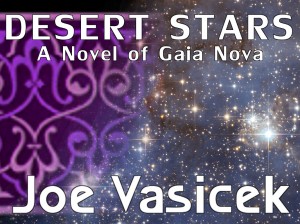
Desert Stars sample chapters now available!

I just formatted the prologue and first three chapters of Desert Stars in epub, mobi, pdf, etc.  You can download them for free with the following links:

Download EPUB

Download MOBI

Download PDF

Download MS Word

Download html

Download .prc

The samples are taken from the current manuscript, so the editing might be a little rough in spots.  The novel is finished, however, and has been through several rounds of revisions; all I need is to run it by my editor and commission cover art.

The basic premise is a little bit like The Jungle Book meets Dune.  The main character, Jalil Najmi, crash landed on Gaia Nova as a boy and was raised by desert tribesmen.  All he wants is to find out who he is and where he’s from, but the sheikh, his adopted father, wants to keep Jalil from leaving because he has no other sons to inherit the camp.

Jalil’s only connection with his birth family is a datachip from his mother, and he believes the only way to unlock it is to go to the Temple of a Thousand Suns, the ancient shrine on the other side of the planet dedicated to the memory of Earth.  When he sets out for the pilgrimage, however, his father conspires to send one of his daughters with Jalil with orders to seduce him.  Since Jalil has a deep sense of honor, his father knows that he’ll return and marry her out of shame.

The only trouble is that Mira, the sheikh’s daughter, actually has feelings for Jalil and doesn’t want to hurt him.  At the same time, she can’t bear the thought of leaving home, and her parents have threatened to disown her if she doesn’t convince Jalil to return.  Thus the pilgrimage becomes a race against time, even as they travel through the strange cultures and ancient domed arcologies of humanity’s oldest world.

That’s the basic storyline.  The short pitch, so far as I’ve worked it out, is this:

A tale of adventure and romance on the fringes of an interstellar empire that has forgotten its holiest legend: the story of Earth.

I sincerely believe that this novel represents my best work yet.  I started it in 2008 and have been working on it off and on ever since.  It was heavily inspired by the time I spent in the Middle East as part of the 2008 BYU-Jordan study abroad, and represents a fusion of Middle Eastern culture and science fiction, a little like Dune.

My goal is to publish it before Christmas, and to do that I’ll need to raise the money by the end of November.  So if any of this sounds at all interesting, please download the sample chapters, visit the project’s kickstarter page, and tell a friend about it.

Thanks so much!

Tradition!

We have some pretty weird traditions in my family.  One of them is that we watch The Ten Commandments every Thanksgiving.  Another is that my mother tells everyone “rabbit rabbit!” on the first of every month.  Yet another: whenever anyone opens a bucket of fresh butter, everyone nearby screams bloody murder and scrambles to be the first one to break it.

The biggest tradition of them all, however, is that whenever it’s someone’s birthday, everyone else rushes to be the first to wish them a happy birthday–or at least to get one of the first slots.  For mine, my youngest sister called me at midnight to get the coveted number one spot.

So anyways, today is my sister Kate‘s birthday.  I called her at 11:35 pm MST (GMT-6), which is half an hour past midnight where she lives.  Of course, she didn’t answer her phone (she never does!) so I called her husband and asked him to wake her up so I could talk with her. “It’ll only take a second,” I said.

Well, he did…AND SHE SAID I WAS NUMBER TWO!!!

All I can say is she married smart.

#$@! !#$@# $%@^ !@#!

That is all.

Announcing the Desert Stars Kickstarter campaign!

In order to help pay for some of the production costs of my next ebook, Desert Stars, I’m running a kickstarter campaign.  The goal is to raise $600 by December 1st, and to publish the novel by Christmas.

For those who contribute to the campaign, here’s what I’m offering:

  • $10 or more: A copy of the finished ebook in all formats, with your name listed under “special thanks” at the front.
  • $15 or more: The above, plus a high resolution image of the cover art as a desktop background.
  • $25 or more: The above, plus your choice of every ebook I’ve published in 2011 (including the forthcoming Journey to Jordan) OR every ebook I will publish in 2012.
  • $50 or more: The above, plus a character named after you in a future work and a complimentary copy of that work.
  • $100 or more: The above, plus a short story up to 1,500 words that is exclusively yours to share as you see fit.

This is my first time running anything like this, so I’m a little bit nervous, but I’m also excited at the same time!  At the very least, it’ll be an interesting experiment.  The goal is fairly modest, but it’ll cover the editing costs, with a little bit left over to go towards cover art.  I’ll pay for the rest.

This weekend, I’ll put out the first few chapters on Smashwords so that you can read a sample.  If you want to read the prologue, you can find it here.

In the meantime, please help spread the word!  Tweet it, like it, share it, tell a friend about it, blog about it–every little bit helps!  And if you can contribute a little towards the project, that would be awesome as well.

Thanks so much!  I’m really looking forward to publishing this book!

Trope Tuesday: Recycled IN SPACE!

Or, as my friends at Leading Edge would say, IN SPAAACE!!!

The basic idea behind this trope is that setting a story in space makes it cool and different.  The tvtropes article focuses mainly on how this trope is used in children’s cartoons, but it actually goes much wider.  In fact, most space stories are actually based on stories from other genres, or even from history.

For example, Asimov’s Federation series is based on Edward Gibbon’s Decline and Fall of the Roman Empire, David Drake’s Lieutenant Leary series is based on Patrick Obrian’s Master and Commander series, and Frank Herbert’s Dune is based on the rise of Islam.  Westerns are especially prone to get the space treatment (Firefly, anyone?), which is where we get “wagon train to the stars.”

At its worst, this trope is nothing more than a pointless gimmick.  At its best, however, it can produce some extremely good work.  The key, as always, is to work within the limitations of the setting.

One of the best examples of this is Dune.  Frank Herbert didn’t merely lift 7th century Arabia into space and call it Arrakis; he created a distinctly alien world with its own history, culture, biology, and role within the galactic empire.  For example, Herbert solved the FTL problem by linking interstellar travel to the spice, tying his space-Arabs to the politics and economics of the rest of the galaxy.

Interestingly, your space physics don’t have to be perfect for this trope to work; they just have to be believable.  For things like artificial gravity and faster than light travel, most people will accept a little hand-waving, provided that you do it well.  The important thing, as always, is the story.

Minecraft!

I have a confession to make…I bought minecraft a week ago, and I’ve been playing it almost non-stop ever since.  It is such a fun, addicting game!

The goal is…well, there is no goal, and that’s kind of the point.  You start out in this vast open wilderness full of resources, and you gather them together and build stuff while trying to survive the monsters that spawn in the night.  It’s like a world made of legos–there’s no limit to what you can do!

I got it so that I could play with my brother in law, but since then I’ve learned that a whole bunch of my other friends play too.  I’ve got a pretty awesome world that I want to share with them, since multiplayer is probably a lot more fun than single player anyway.  I call it New Cappadocia, and it’s basically a vast underground city that runs from the top of a mountain down to the bedrock.

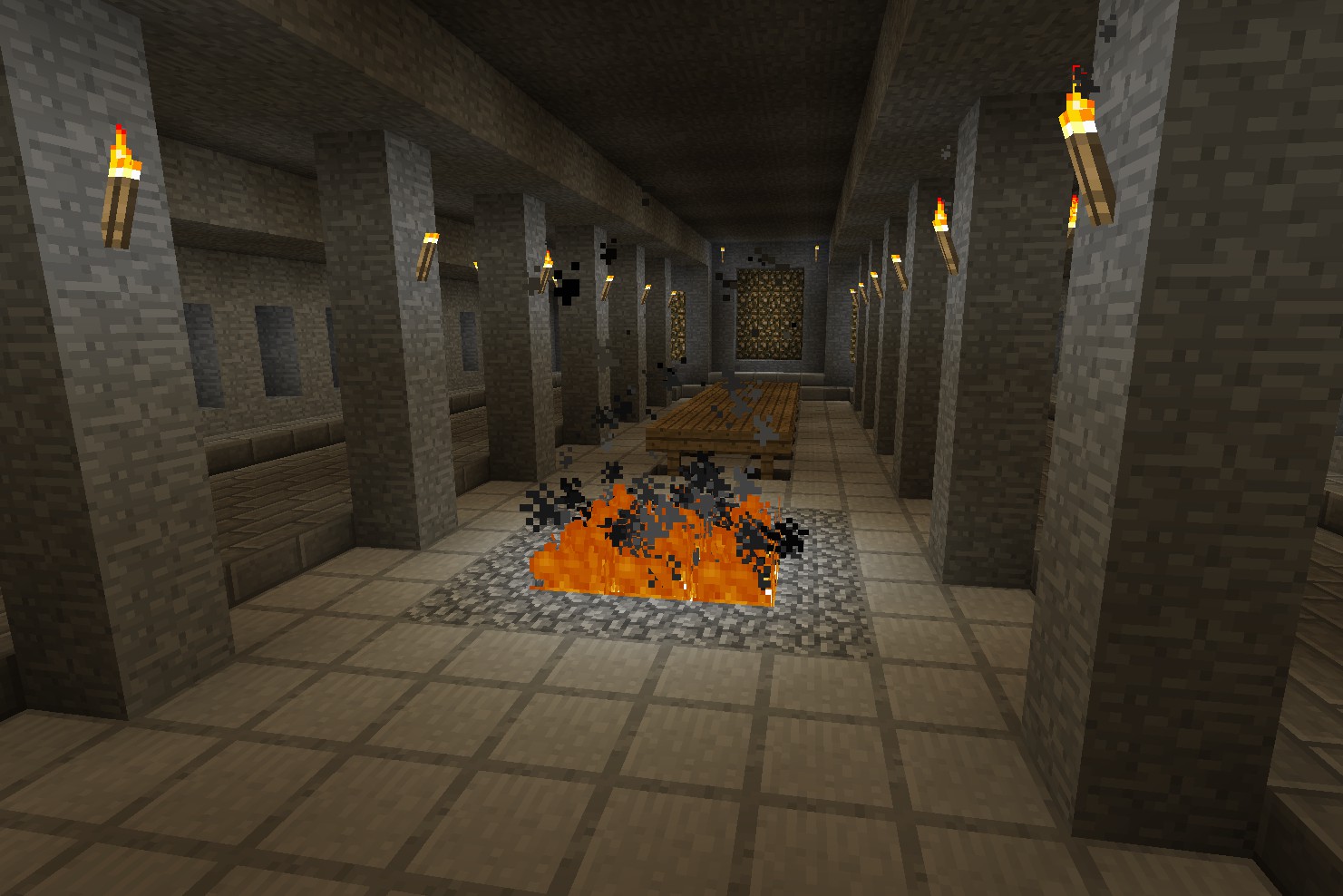
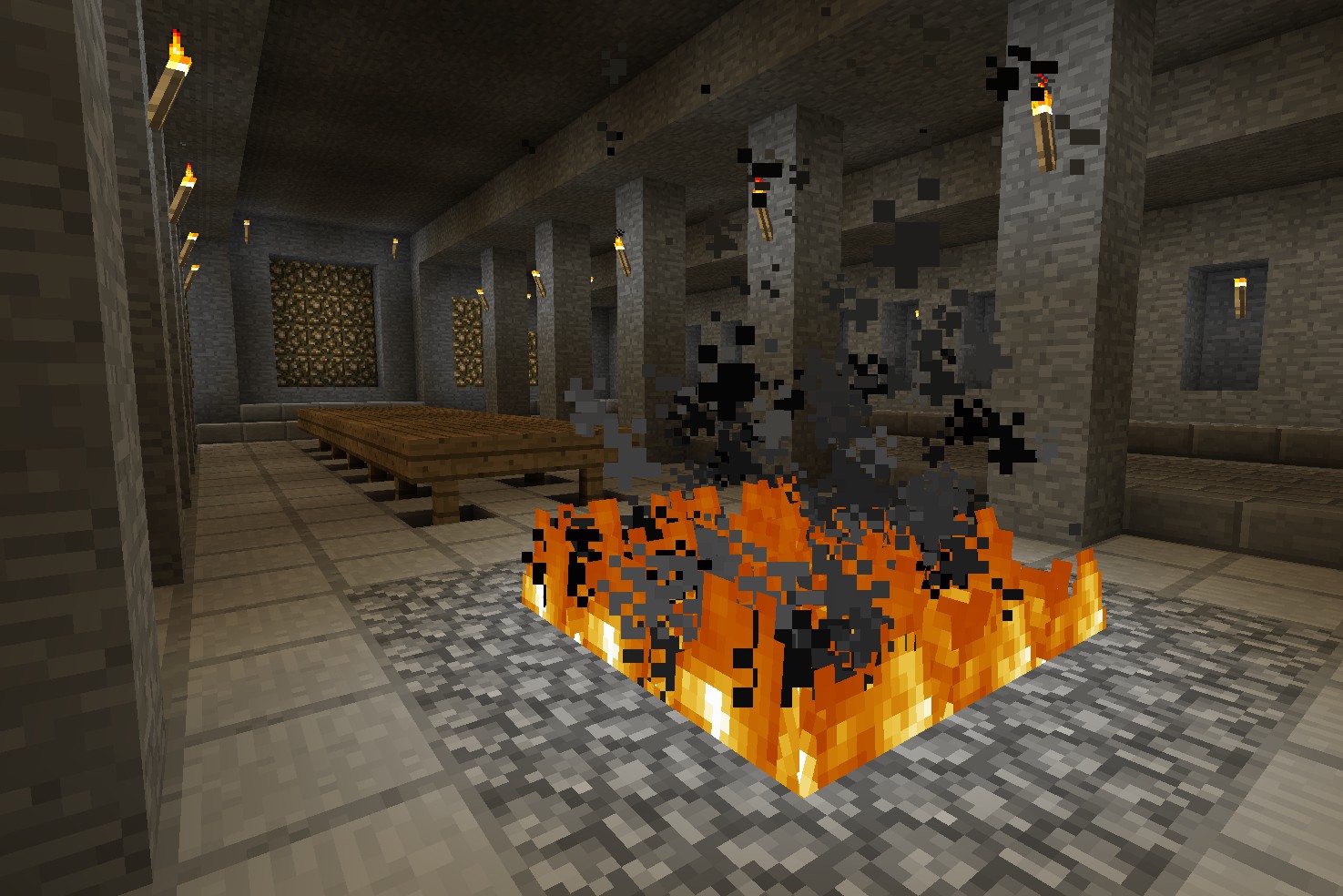
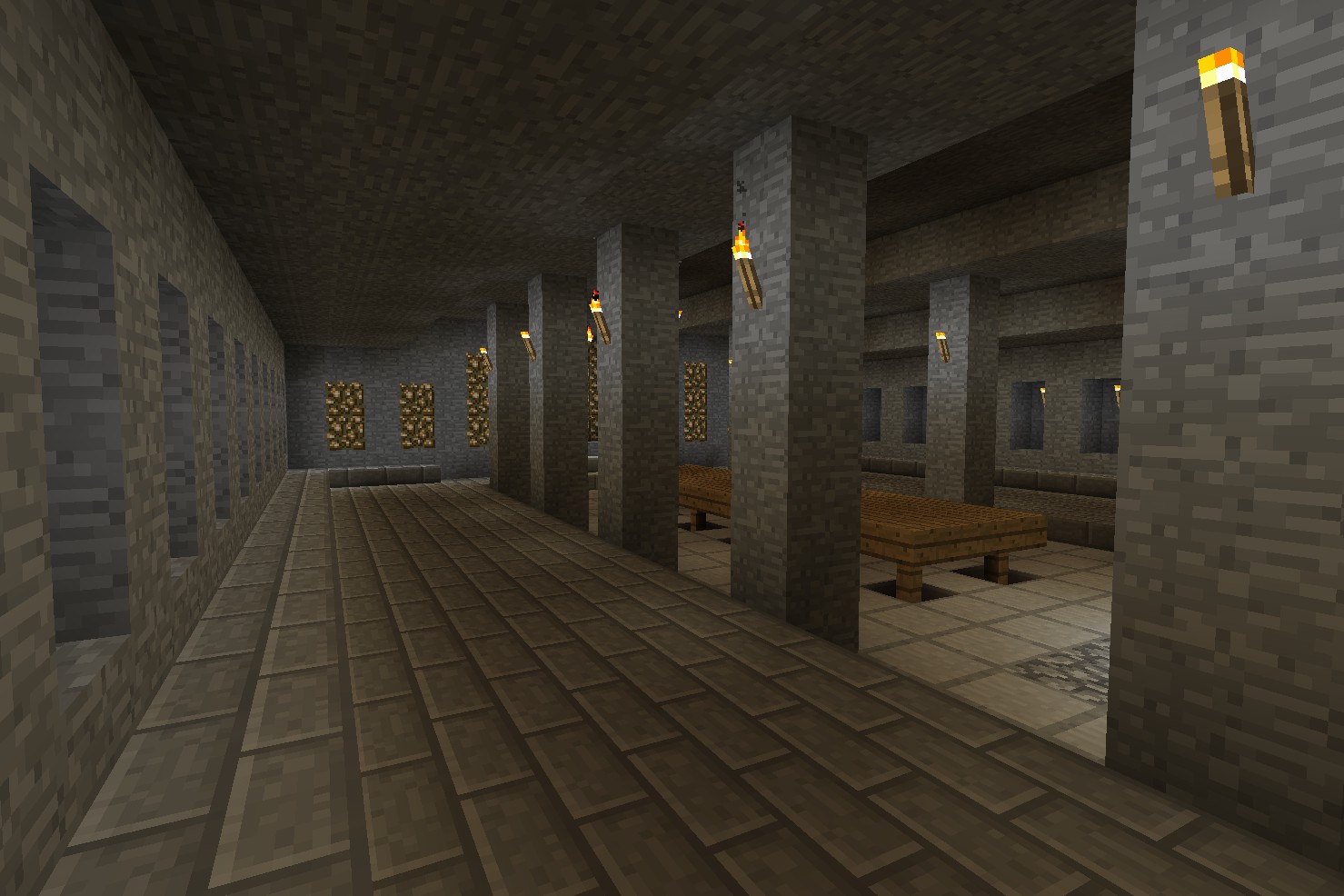
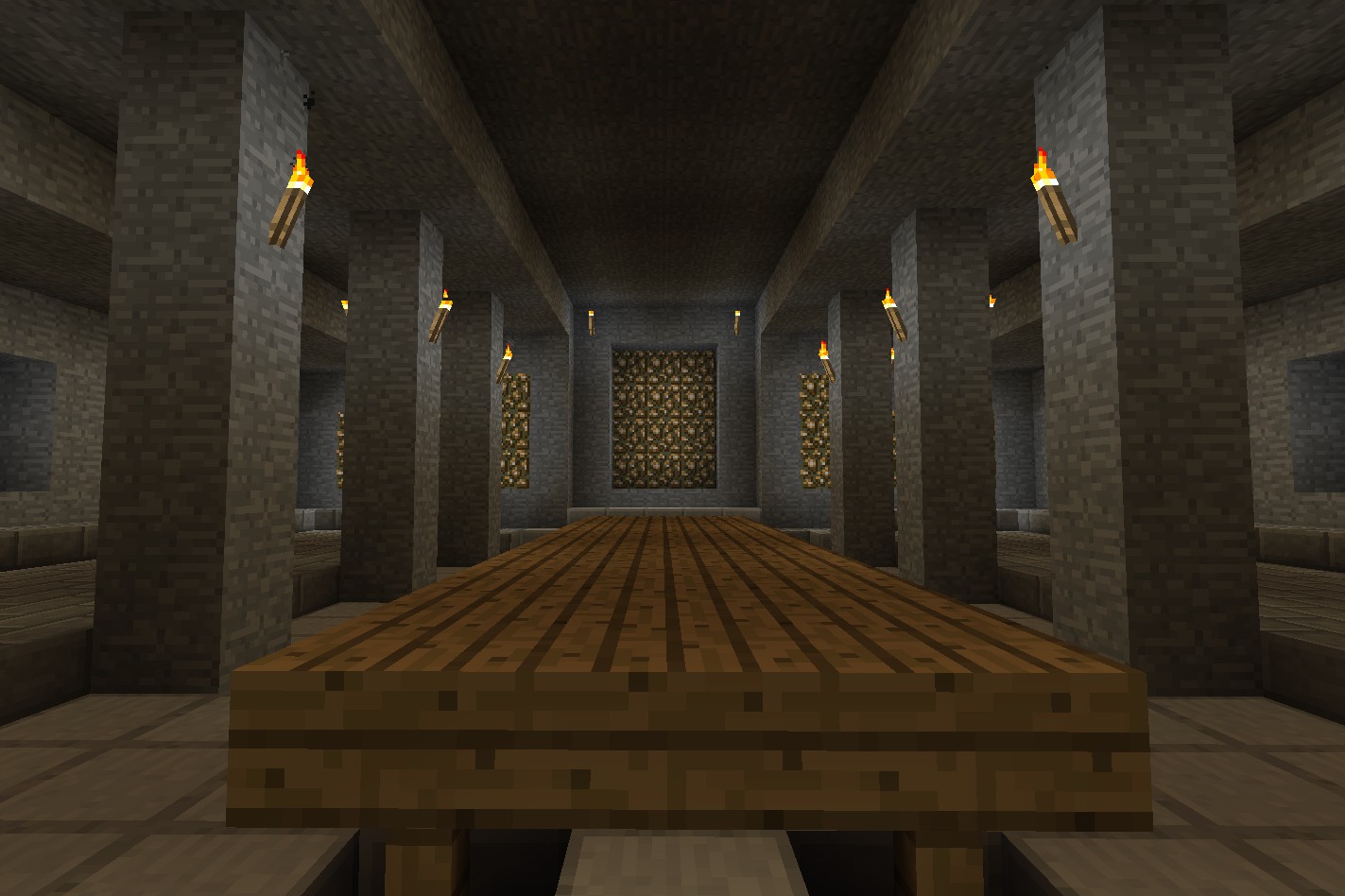
Anyhow, I just finished up the main hall.  Here are some pics:

The view from the entrance.
The hearth.
One of the wings--not sure whether to build anything here or just leave it as is.
The feasting table. Get me a tankard of ale, serving wench!

So yeah…needless to say, my productivity has taken a major hit.  Fortunately, the novelty of the game has started to wear off; I managed about 2k words in Star Wanderers on Saturday, and I’ve all but got the kickstarter campaign for Desert Stars ready to launch.  Last week was upside down, but this week I think I’ll be able to strike some balance.  Famous last words, right?

Anyhow, if I did throw this up on a server, who would be interested in playing?  I don’t want to make it too public for fear that griefers would tear it apart, but I think it would be cool to open it up to friends.  My only rule would be that the physical structures have to look semi-plausible–no giant floating platforms with waterfalls that you swim up to get to the top (unless you can make it look believable).

Together, we could build something truly awesome!

Why I’m not a fan of writing groups

I was listening to a recent episode of I Should Be Writing today, and it got me thinking about writing groups and how my philosophy on them has changed.  Long story short, I used to love them, but now I’m not such a huge fan.

I should probably start out by mentioning that I lead a college writing group for two years, and I don’t regret the experience at all.  The Quark writing group was extremely helpful, both in terms of my own growth as a writer, and the connections it gave me with other writerly people.  I still keep in touch with many of them.

But now…I just don’t think writing groups are all that great.  In fact, I think that they often do more harm than good, not just for experienced writers, but for the beginner who lacks the confidence to strike out on their own.  Here’s why:

The group dynamic gives inexperienced critiquers a false sense of authority.

Most writing groups consist of writers who are at roughly the same level of expertise.  For beginners, this means that the people critiquing your story might not know any better than you whether the story is broken.  However, because of the dynamics of the whole thing (captive audience, desire to impress peers, etc), these people are likely to act as if they have more authority than they really do.

To be fair, I’ve had plenty of critique partners who have managed to be modest and down-to-Earth when offering their critiques.  However, I’ve also seen plenty of others get puffed up and offer some really dumb advice.

Beginning writers often naively look for someone to show them the answers–some mentor or authority figure whose every word is true, who will light the path and show them the way.  Put a bunch of them into a writing group together, and more often than not you’ll end up with the blind leading the blind.

The weekly submission process does not simulate the reading experience.

Logistically, most writing groups have to set a limit on the size and number of submissions.  For the Quark writing group, our limit was three submissions of four thousand words each.  It worked out fine for short stories, but most of us were writing novels, which meant that we had to workshop our books in little four thousand word chunks.

The problem is that nobody reads novels at that rate.  Either they get hooked and finish the thing, or they get bored and stop reading.  Therefore, while the feedback you receive might be good for helping out with craft issues, by the time the next week rolls around either everyone has forgotten what happened already, or they remember it wrong, or they were expecting something different and are ticked off because they have to wait another week.

After I revised Bringing Stella Home a couple of times (after–see below!), I workshopped it through a writing group I’d put together after leaving the Quark writing group.  I can’t tell you how many times I heard “why are we in James’s point of view this week?  I hate James!  I want to get back to Stella!” I got this comment so often, for a while I thought the book was really flawed.  However, when I got the feedback from my first readers, no one had this problem at all.

The reason?  They read the book the way it was actually meant to be read.

Workshopping a work in progress is the surest way to kill a book.

Committees might be good at doing some things, but they’re absolutely horrible at producing anything innovative or original.  Make no mistake: if you’re workshopping something you haven’t already finished and you follow most or all of the feedback you receive, you’re writing your book by committee.

Most writers agree that when you write your first draft, you should not revise anything until it’s done.  This is because the act of revision makes you so critical of your own work that it’s very easy to get discouraged or “fix” something that was actually a good idea.

Workshopping a work in progress does exactly the same thing: it puts you in a critical frame of mind that will literally kill your book.  Even if you manage to finish it, it won’t be nearly as good as it could have been because you’ve probably nipped all your best ideas in the bud, before they had time to grow and develop.

A truly great book does not appeal to everyone.

There’s a word for something that appeals to everyone equally, that runs about middle of the road and doesn’t upset anyone.  That word is “average.”

No truly great work is loved by everyone.  This isn’t just true of controversial stuff–it’s true of everything.  For every one of your favorite books, there’s a one-star review of it on the internet somewhere.  So if everyone tells you your book is good, that might not actually be the case.  In fact, it’s a much better sign when some people hate it and others can’t stop raving about it.

The trouble with writing groups is that the group dynamic can lead to a herd mentality, where everyone goes along with the first opinion that gets expressed.  Ever played Werewolf?  The same thing happens there.  One person throws out an accusation, the vote gets called, everyone starts looking around to see who is raising their hand and before you know it, all the hands are in the air.

So unless one of the seven or eight people in your writing group loves your work enough to stand up and defend it, chances are the feedback will err on the side of being too negative.  This makes it very difficult to tell whether your story actually sucks, or whether it’s just above average.

Writing groups teach you to write to rules, not for readers.

One of the dynamics of writing groups is that they encourage people to find and latch on to certain writing rules, where people can say “this story is broken because of x” or “this writing is flawed because of y.” Over time, this becomes so ingrained that people stop reading to see whether the story actually works and instead read to see whether the story follows the rules.

The truth, however, is that there are no hard and fast rules when it comes to writing.  For example, you’ve heard of “show, don’t tell”?  Yeah, go and read Ender’s Game.  The entire book is one giant tell–and it’s brilliant.  It was the first sf novel to win both the Hugo and the Nebula awards in the same year, and has remained a perennial bestseller ever since.

Nothing hit this home for me more when the cryo scene excerpt from Genesis Earth won first place in the 2009 Mayhew contest at BYU.  Parts of the scene lapse from first person past tense to second person present tense, and the members of my writing group pointed that out as a major no-no.  However, even though it broke the rules, it worked well enough to win an award.

To be fair, there are some things that writing groups are very good for.  They can be a good way to learn the basics of craft (ie “the rules”), and they do give you a sense of community that can be very encouraging when you’re just starting out.  However, the drawbacks are so great that I don’t think I’ll ever go back.

Personally, I’ve moved from writing groups to a core group of first readers whose feedback I value and whose opinions I trust.  I finish my project, send them the entire manuscript with a deadline in which to read it, and thank them graciously for whatever feedback I receive.  Most of them aren’t even writers, in fact–but all of them are readers.  Most of them don’t know who the others are, and none of them ever see any of the feedback from the others.

Criticism is good; if you want to grow as a writer, you should welcome criticism and constantly solicit it.  But I do believe it’s possible to grow out of a writing group–or to succeed without ever being a part of one at all.

Desert Stars 4.0 is finished!

And just in time; I start another job tomorrow.  So anyhow, here are the stats:

words: 99,000
chapters: 22
ms pages: 465
start date: 3 Oct 2011
end date: 25 Oct 2011

And the word splash:

Wordle: Desert Stars 4.0

Can you tell who the main characters are? 🙂

This might sound kind of cheesy, but this book has a very special place in my heart.  I started it immediately after the 2008 BYU Jordan study abroad program, though it took me until the summer of 2010 to finish it.  Even though it’s shorter than Bringing Stella Home, I think it’s much more immersive, with the world itself playing a much larger role as one of the characters.

I’m very satisfied with this draft.  I say this with everything I write, but I honestly believe that this is my best work to date.  It’s surprising to see just how much my writing has changed between drafts.  It seems to be getting better, though, so that’s very encouraging.

I haven’t launched the kickstarter campaign yet, but I hope to do that by the first of next month, so be sure to look out for that.  In the meantime, I thought it might be fun to share the prologue, to give you an idea of what the story is about.  Enjoy!

=============================================

Prologue

The boy felt scared, more scared than he had ever yet been in his young life. It was because of the strange noises in the bulkheads and the way the walls and floor shook, but mostly because everyone around him, even his parents, were scared, and he didn’t know why.

The lights in the hallway flickered as he wandered out of his cabin, and the whine of the engine rose higher and higher. It wasn’t especially loud, but didn’t sound right; the boy knew that much at least. On the other side of the ship, a door hissed as it slid open. The boy turned and saw his uncle and three of his cousins come running out of the bridge, eyes wide with fear.

She’s gonna blow,” shouted his uncle. “Let’s move!”

The boy stood rooted to the spot, his legs frozen in terror. He watched as his cousins ran to the emergency escape chutes–the ones his parents had adamantly told him never to play in–and dove through.

A groaning noise came through the bulkheads–the terrible sound of metal on metal. He closed his eyes and covered his ears with his hands, and the floor itself dropped out from under him. For a frighteningly disorienting moment, gravity vanished, leaving him floating weightless in the corridor. The taste of vomit filled his mouth and he screamed in fright, but without gravity he could only kick his legs uselessly beneath him.

The moment passed, and he fell to the hard tile floor. Tears of terror clouded his vision, and his arms and legs shook so bad he hardly noticed that the floor was shaking. The ship lurched, sending him sprawling on his hands and knees.

Hands grabbed him underneath his arms, lifting him up and carrying him away. He glanced up and recognized the face of his mother, pulling him towards the escape chutes.

Mommy,” he cried, “I’m scared.”

I know, dear,” she told him. “Mommy needs you to be extra brave right now.”

The boy nodded. Though his mother tried to sooth him, he could tell that she was just as frightened as he was. That terrified him more than even the loss of gravity.

Come on!” the boy’s father shouted, further down the corridor. “Any minute now, and–”

The lights flickered again, and an explosion sounded from deep within the bulkheads of the ship. A low hiss sounded behind them, and not from a door opening.

Oh God,” the boy’s mother cried. “Is that–”

As if in answer, a mighty wind howled throughout the ship, filling the boy’s ears with its roar. It whipped at his hair and tugged at his clothes, sucking him away like a monster from the bottom of a giant drain. Somehow, he knew that in only a few moments, they would all be dead.

Hands grabbed him, lifting him up toward the escape chute. He screamed, but the roar of the wind was so loud he could barely hear his own voice. His mother slipped something around his neck, and suddenly he was falling through the chute, into darkness.

He came to a stop in a snug little space, closed in on all sides like a glove for his body. A holoscreen lay in front of his face, with a pair of flight sticks and a miniature control board. The boy gripped the flight sticks with his hands and stared dumbly at the screen, barely able to process anything that was happening.

A distant puffing noise sounded through the ultra-soft walls, and then he was falling again–only this time, he couldn’t move his arms or legs. He was locked into position, cushioned on all sides and only able to use his hands.

Fighting back panic, he watched as the holoscreen flickered and came to life. It showed an image of space, the stars spinning wildly as noiseless flashes of light burst into being before fading into after-image amid the blackness of space. He squeezed the dual flight sticks and moved them like he was playing a computer game, but it was no use–he couldn’t equalize.

Mommy, the boy cried inwardly. Panic swept over him, and his hands and arms began to shake. He screamed, but in the tightly enclosed space, there was no one to hear him.

The glowing orb of a planet came into view, filling the screen with its brilliant light. The boy squinted as the display adjusted, showing a brown and yellow landscape framed by a curved horizon. It danced with the spinning stars, moving so quickly that everything was a blur.

A red light started blinking in the corner of the screen, and words flashed across the display. The boy didn’t know how to read, but he knew it was something bad. He tried again with the flight sticks, but that only sent him spinning in a new direction.

Without warning, the screen switched off, and the entire capsule filled with thick, pink foam. The boy gasped and tried to shield himself with his hands, but before he could cover his face it hardened around his body, freezing him into position.

The foam covered his mouth and face, but was just porous enough to allow him to breath–in short bursts, however, because his stomach was severely pinched. The spinning grew worse, until he wanted to throw up. As if from a great distance, he heard a muffled roar through the bulkheads. Everything around him grew increasingly warm, until he began to sweat. He tried to open his mouth to cry out, but his jaw was locked too tightly in place–he couldn’t move anything, not even a finger.

Mommy! he mentally screamed. Where are you?

As if in answer, something popped behind him. Inertia threw him forward, but the foam held him in place, so that all he felt was a tremor through his body. Gravity returned, so that he felt as if he were dangling upside down from his feet. Blood rushed to his head, and he swooned, redness clouding his vision.

Then, like a punch to his face, the shock of impact hit him, causing his bones to shudder. He spun even faster than before, but the foam still held him. It felt as if someone had turned him inside out, though–as if his stomach had swollen and turned to mush.

As the spinning gradually came to a stop, tears streamed from the boy’s eyes. The roaring had died down, leaving him encased in near-absolute silence. That frightened him almost more than the noise.

A sharp hiss filled his ears as the foam grew sticky and porous all around him. He thrashed against it, pulling his hands and arms free as it turned into a sticky, foul-smelling soup. Behind him, a hatch opened, and he struggled toward it, spitting to get the nasty taste out of his mouth.

He crawled out and rose to his feet, blinking in the harsh light of a foreign sun. The hot wind bit him as it blew in his face, stinging his face with sand. He raised a hand to his eye and looked around him at the alien landscape.

A lonely, rust-red desert extended in all directions, with nothing but sand and rock and distant craggy peaks to meet his eye. The sky shone a hazy yellow, completely unlike the clean white light of his family’s ship. A new fear passed through the boy–the fear of being alone.

As he stared at the land around him, he reached down to see what his mother had slipped around his neck. It was a pendant with a little black case at the end. He felt it between his fingers and knew somehow that he would never see her again.

Tears clouded his eyes, and he screamed and wailed for someone, anyone–but in the harsh desert waste, there was none to hear him.

=============================================

Good stuff. I can hardly wait to get it published!
Trope Tuesday: Pet the Dog

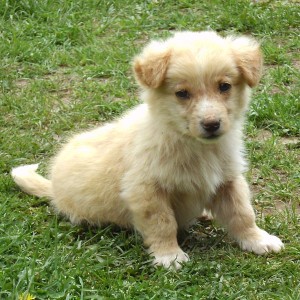
Awwwww!!

The basic principle behind this trope is that when you want your readers to feel some kind of sympathy toward a character, have them pet a puppy / puppy equivalent.  Often used to show who the good guy is, but can also be used to add depth to a villain.

I first learned about this trope in Brandon Sanderson’s English 318 class, where he taught it as a way to build immediate sympathy when introducing a major character.  A good example from his own work is Mistborn, where Kelsier’s first scene shows him giving the manor lord’s food to the skaa.  From that moment on, there’s never really any doubt that Kelsier is the good guy.

Although often used to introduce a good guy, this trope can also be used quite effectively in the middle of the story, especially in a gray and black world where it seems that everyone’s a bad guy.  A good example of this is Shadow from American Gods, who flips a coin with a hitchhiker to see who pays for dinner.  Even though he’s a thief and an ex-convict, he rigs the coin toss so that he can pay for her.  Through little gestures like this, Gaiman maintains rooting interest in his protagonist, even though everyone else in the novel is basically a jerk.

Another good example from a darker work is Angelo Osic from On My Way to Paradise.  On the very first page, a fugitive shows up at his pharmacy booth, asking him to grow her a new hand.  Even though he knows it’s dangerous, he takes her in and does what he can to help her.  Later on, this same character rips out a man’s testicles and guts him like a fish.  As repulsive as that is, however, I still keep rooting for him because I know that at his heart, he’s a good person.

Of course, when used most effectively, the pet-a-puppy moment has to grow naturally out of a person’s character.  Even though Shadow is an ex-con, he served his time and feels genuinely sorry for what he did.  Angelo Osic is a doctor, so it’s natural for him to try to help others; whenever he commits an act of violence, a part of his humanity dies, which becomes a major driving conflict throughout the book.

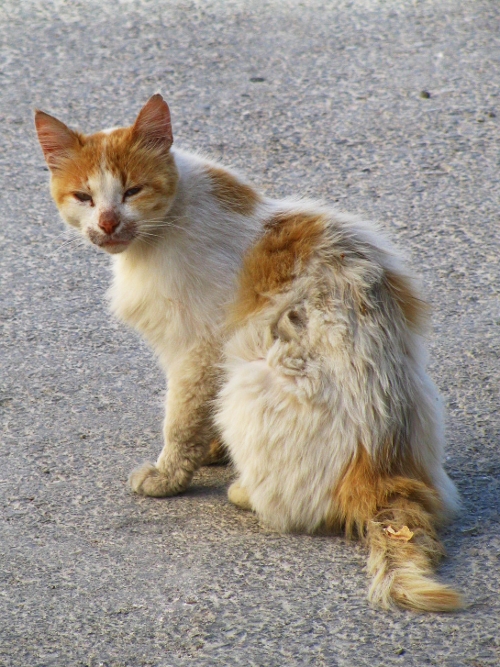
Don't. Touch. Me.

Finally, though this trope is often used to create rooting interest in a protagonist, it can also be used to add depth to a villain.  A prime example for this is Captain Nemo from 20,000 Leagues Under the Sea.  The first moment happens when he rescues the main characters after their ship sinks, but it happens many more times too, such as when Arronax finds him weeping over a picture of his family.  At the end of the book, even though we know that Nemo is the bad guy, we can’t help but feel a little sorry for him after he’s gone.

Puppy image courtesy Wikimedia.  Cat image taken by me.

Should I keep it free?

My first three ebooks have been available for free for several months, and I’m happy for all the attention they’ve received, but I’ve got mixed feelings now about keeping them free indefinitely.  Downloads have more or less bottomed out, and they aren’t really driving any interest in my other work, so part of me wonders if I shouldn’t just raise the price to $.99.

If I could, I would love to give away all my work for free.  However, I also want to make a living as a writer, so that isn’t really practical.  Granted, I don’t expect to make much selling these stories at $.99, but from a business side of things, I need to get at least some kind of recompense for my work.

What I really want to do is have the readers set the price for these stories, so that you can pay what you feel is fair.  If finances are tight or you just want to try me out, you can download them for free and that’s great.  If you’ve enjoyed my other work and want to support me, that’s great too.

Right now, Smashwords is the only place I know of that has that option.  If there aren’t any strident objections, I’m going to do that and make these stories $.99 at every other outlet.  I’ll keep them available for free at least until November, though, so if you haven’t already picked them up, feel free to do so now.

I also want to do this for the experiment: how does raising the price from free to $.99 affect sales?  I think the “free train” has more or less run its course, so it will be interesting and useful to see where the new equilibrium ends up.