Trope Tuesday: Sinister Surveillance

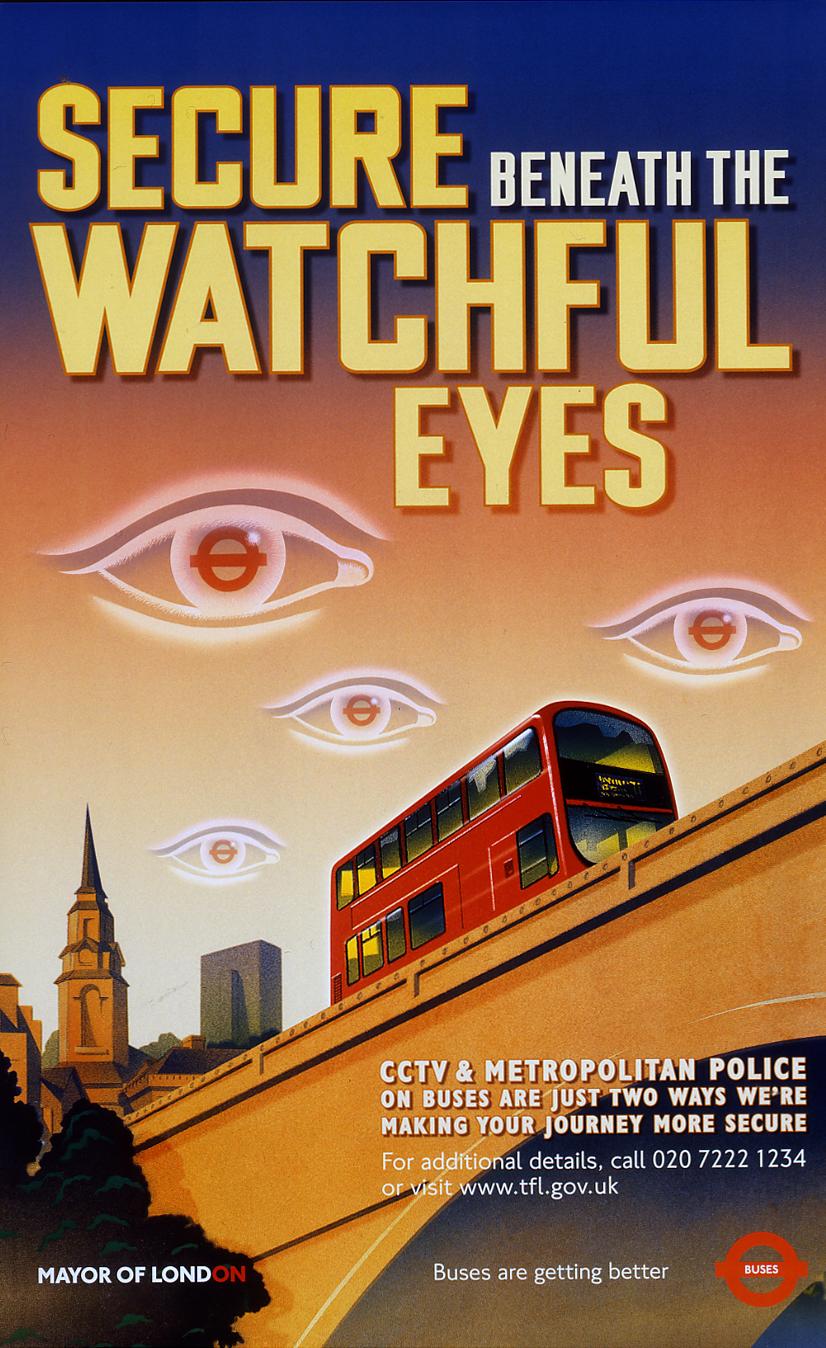
secure
This was actually a real poster.

Someone is watching you.  Their eyes are everywhereEverything you do, everything you say … it’s all being recorded in a giant database.  But don’t worry–you can trust the ones watching youThey have your best interests at heartThey’re only after the bad guys.  You won’t even know that they’re there.

Sinister Surveillance is a hallmark of Dystopia, as essential to the genre as the Crapsack World and the Police Brutality tropes.  Often, you’ll find all three in the same story together.  It’s closely related to Big Brother is Watching, where the government is so powerful, and reaches into so many aspects of everyday life, that they see and record everything you do.  Where Big Brother shapes every aspect of the society, however, down to the language of the citizens and the basic truths accepted as facts, Sinister Surveillance is more about the surveillance itself, and the ulterior motives behind it.

It’s not enough for the government to simply watch you, though.  Even more important in some ways is the idea that you don’t know what they can and can’t see.  The reason for this is the same reason why, in horror stories, we almost never see the monster until the very end–because our imagination makes things a lot scarier than they really are.  If we the bad guys know the limitations of our government surveillance, we they can safeguard our privacy and basic rights game the system.  We’re all afraid of the dark, not because of what’s actually there, but what could be.
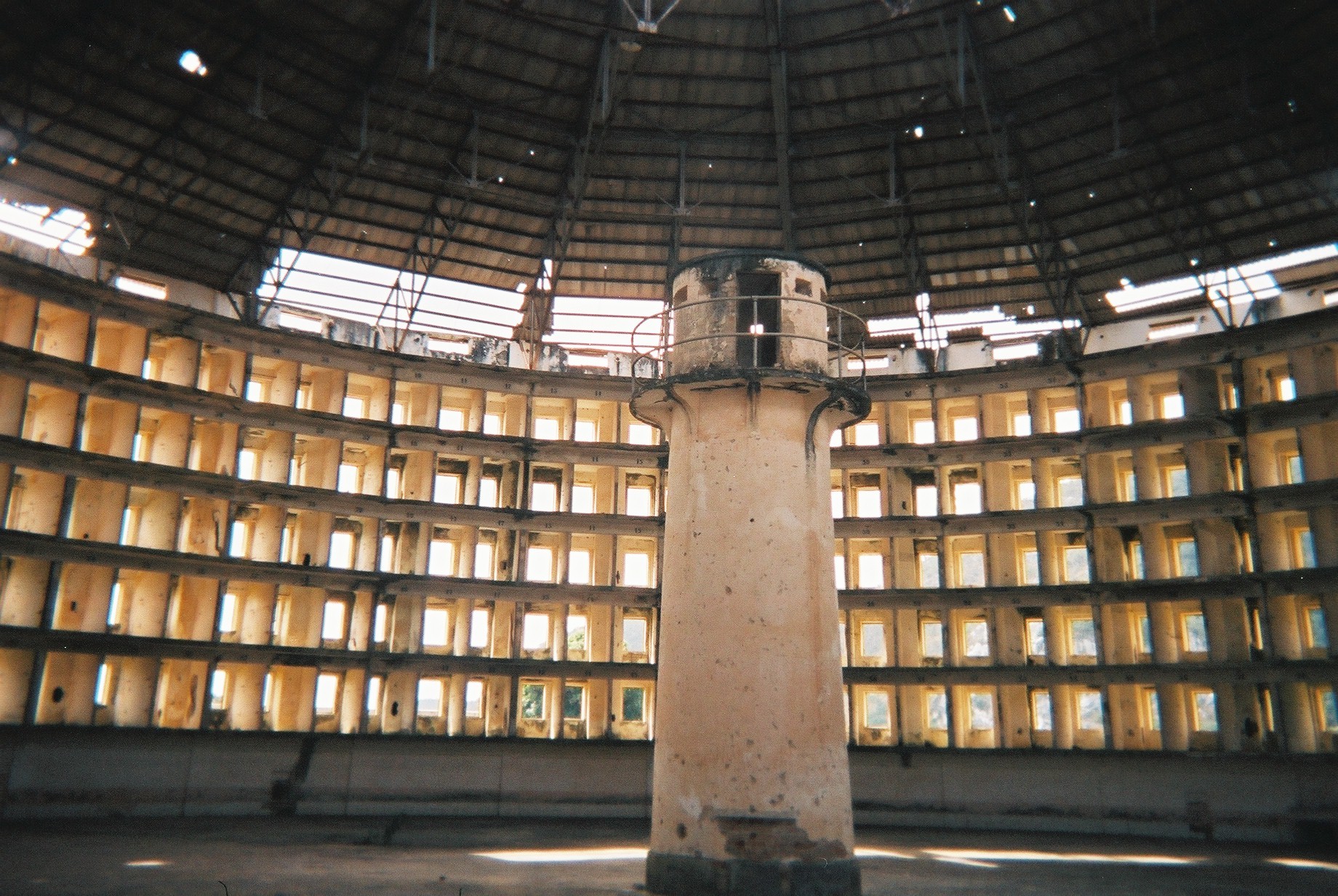
The concept behind all this goes back to the Panopticon, a hypothetical prison where the prisoners know that the guards are constantly watching them, but can’t actually see any of the guards themselves.  Proposed by the British philosopher Jeremy Bentham in the 1700s, the idea is to disempower the prisoners and empower the guards simply through the act of surveillance.  If everything you do can be seen, and you don’t know exactly who’s watching, that puts a tremendous amount of social pressure on you to conform.  As Michel Foucault put it:

The Panopticon creates a consciousness of permanent visibility as a form of power, where no bars, chains, and heavy locks are necessary for domination any more.

But if the prisoners are the citizens, and the guards are the government, how can such a system ever be democratic?  How can the citizens of such a society ever give their informed consent?  Well, that’s kind of the point.  The government in dystopian stories is rarely democratic–it’s usually a dictatorship of some kind, or a system that turns well-meaning people into Knights Templar, showing how even the best of us die like animals when the game is rigged.

As benevolent the intentions of the government may initially be, it is nonetheless true that power corrupts, and absolute power corrupts absolutely.  Just as the Panopticon takes power from the prisoners and concentrates it with the guards, so does universal surveillance grant dangerous amounts of power to the government–not because the act of surveillance is dangerous in itself, but because it brings out the worst in the people doing the surveillance.

In The Road to Serfdom, Freidrich Von Hayek pointed out that self-serving, ambitious, power-hungry people tend to rise in government a lot faster than people who have others’ best interests at heart, especially when so much power is concentrated in the government.  That’s one of the biggest dangers of surveillance–and in stories where Sinister Surveillance is in play, the government has already passed that point.

I wish I could say that this trope is limited mostly to the realm of fiction, but unfortunately, that does not appear to be the case.  These days, it’s impossible to talk about surveillance without getting political, even on a blog dedicated to books and writing.  Because everything these days is online, it’s easier now than ever before for our governments to watch us.  And if Edward Snowden’s claims are even partially correct, that’s exactly what they’re trying to do.  Even more worrying are the indicators that they’re trying to do it in secret, such as this recent letter from Senators Wyden and Udall.  The United States government has lied to us in the past about the extent of the PRISM surveillance program, and it would appear that they’re continuing to do just that.

Wherever you fall politically on PRISM or the Edward Snowden case, I think that Sinister Surveillance is a trope that we should all find profoundly disturbing.  When George Orwell took this trope to its extreme logical conclusions in 1984, he did so to prevent that horrific social order from ever coming to pass.  I wonder: only two or three generations after that book came out, have we forgotten its lessons already?  Or do we need a new retelling to remind us?  I fear that that retelling is taking place, not in the pages of a novel, but in real time on the major blogs and news sites.

I need to get out of Provo, but where to live next?

ProvoLogo_FullColor
… yeah, no thanks.  Not yet, anyway.

It’s been almost six months since I moved back out to Provo, and I don’t think I’ll be staying here much longer.  It’s a great place if you’re a Mormon college student in your early twenties, or married with kids and looking for a nice, quiet place to settle down, but for everything in between it’s just not the greatest.

So where am I going to go next?  Honestly, I don’t have a clue.  Probably somewhere in the United States, but I’m not ruling out the possibility of another overseas adventure.  In fact, that’s exactly the sort of thing that I’d love.

But I’ve got to be honest here: I came back to the States mostly to find a girl.  I don’t know about getting married or not–that’s like step twenty-five, while I’m still on step three–but I do know that next time I go overseas, I want to go with someone, preferably someone special.  That’s what I learned while I was living in the Caucasus mountains, that an adventure is like ten times better when you have someone to share it with.

I may be opening up a little bit in this post, and I don’t want to give the wrong impression to the people I know who read it.  It’s not that I’m uninterested in any of my female friends here, but so far, nothing has really worked out.  Some of that is because I’m not as interested as I thought I was, but the reverse is probably just as true.  Nothing wrong with that, and I still value all of my friendships.  And hey, you never know–things can always change.  But when you start to get sick of a place, that’s probably a good time to move on.

So what am I looking for?  Ideally, a place with a lot of Mormons in their late twenties / early thirties, most of them young professionals or recent graduates.  A place with a decent art scene, or that sort of vibe to it, where I can meet up with other artists / entrepreneurs like myself and be a part of that community.  I really want to live in a place with mountains–my sister is moving to a town just out of Des Moines, and omigosh just from looking it up on Google Earth I know I could never live there.  Barring that, I really love deserts, so I wouldn’t mind living in Arizona or New Mexico.

I’ve heard good things about Salt Lake City, so that’s pretty high on the list.  I’ve got a couple of friends up that way, and lots of family as well.  Other than that, I wonder if Saint George or Cedar City might be good places for a guy in my situation to live.  I really love Utah, so if I could find another place out here besides Provo, that would be ideal.  Moab, perhaps?  Seems like a tourist town more than anything.  Though if I could score a job at a hostel out there, that could be a lot of fun.

Texas is also fairly high on the list.  Beautiful place, Texas.  I’ve always loved driving through that country.  Lots of Mormons too, apparently, though where I’d want to go exactly, I have no idea.

One place I absolutely do not want to go is Washington DC.  I HATE that place, especially after my internship experience.  It’s a great place to visit, and the museums and cultural stuff are amazing, but I never want to live there again.

Other than that … I’ve got a couple of friends who suggested Portland, but I dunno.

And honestly, a not insignificant part of me wants to go somewhere crazy, like Mongolia or the Czech Republic, or even back to Georgia.  I’m making enough on my book sales right now that I could probably get a small apartment in Tbilisi and support myself entirely off of my ebook royalties alone.  Better yet, I could arrange a long-term boarding situation back in the village, or out in Kutaisi, or maybe even up in Svaneti … but that’s probably just me missing the place.  I miss it almost every day.

All I know for sure is that I absolutely cannot stay here in Provo much longer.  If I do, I’ll either go crazy or get old and fat and complacent, and I’m not sure which is worse.  I’ll stay here through the summer, just to save up some money, but when September comes around, I am getting out of here.

Trope Tuesday: The Last DJ

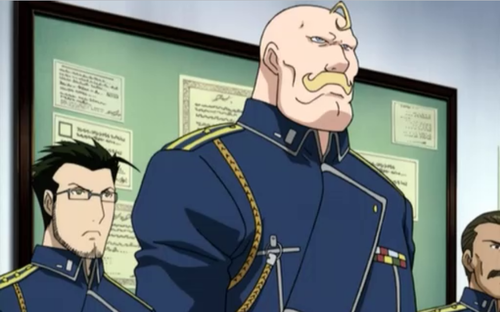
armstrongIn any vast bureaucracy, you’re bound to find obstructive bureaucrats and professional butt-kissers.  But if you look long and hard enough, usually somewhere towards the bottom, you may be lucky enough to find one of the Last DJs.

The Last DJ is a man with integrity, who often puts honor before reason and cannot be bought, no matter how much his superiors try.  Consequently, he usually ends up somewhere at the bottom of the organizational hierarchy, no matter how competent he may be.  In extreme cases, he may be reassigned to Antarctica.  Either way, do not expect to see him kicked upstairs–that’s for insufferably incompetent idiots who are promoted to an administrative post so everyone else can get back to the real work.  If anything, expect this guy to get thrown under the bus.

Depending on the story, he may be a brotherly mentor figure for the main character or play some other sort of supporting role.  However, don’t expect him to be much of a plot driver, unless the story is specifically about him.  Because of his refusal to suck up or play office politics, he’s rarely in a position to effect change or become a whistle-blower.

Over time, this character may turn into something of a sour knight, developing a thick skin of crusty cynicism to protect his idealistic heart from all the crap he continually has to put up with.  Like the Obi-wan, if he’s a mentor figure, he will probably die.  If he’s the hero, though, or part of the ragtag bunch of misfits, expect him to be vindicated, possibly in a crowning moment of awesome.  Rarely if ever will this guy be the villain–that’s the obstructive bureaucrat, whom this guy hates.

Lieutenant Armstrong from Fullmetal Alchemist is a good example of this trope.  He’s a good soldier who was passed up on all the promotions because he refused to go along with the war crimes done against the Ishvalan people.  His sister, who WAS reassigned to Antarctica (though probably by choice), is a whole other story.

Another good example of this trope is Lucius Fox from Batman Begins.  The interesting thing about this one is that he’s a mentor figure who actually survives.  This is probably because the story requires a lot of badassery from the hero, and Lucius is in no position to fill that role, so there’s no threat of him outshining Bruce Wayne.  This is also a good example of the last DJ getting vindicated in the end.

In my own work, the best example I can think of is Tiera from Desert Stars.  She’s fiercely stubborn with an uncompromising sense of honor, which results in her being stripped of her claim of inheritance due to her stepmother Shira’s wiles (although ‘stepmother’ isn’t quite the right word–how do you describe your father’s evil second wife, when he’s still married to your mother?).  I’ve got some interesting plans for a sequel where she’s the main character, but that book is still in the early conceptual stages.

In my own life, I’ve actually fulfilled this trope.  I don’t care to discuss the details of it publicly, but back when I was interning in Washington DC, I had a very negative experience that this trope describes perfectly.  It’s one of the reasons I hate Washington so much, and decided to become a global nomad who makes a difference on the ground, rather than pushing papers in someone else’s petty empire of personal influence.  It’s also one of the reasons why I started the Star Wanderers series–because I wanted to tell a story about people on the space-bound frontier, as far away from the galactic empire as possible.

I may not write many stories about vast bureaucracies or other hierarchical organizations, just because that doesn’t interest me, but whenever I do, you’ll probably see this guy pop up.  As someone who’s been there, I have a lot of sympathy for this character.  You’ll probably see him (or her) pop up in my work from time to time.

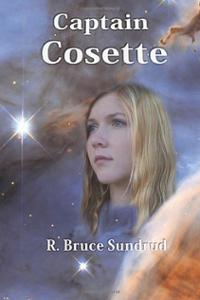
Captain Cosette by R. Bruce Sundrud

captain_cosetteSo I saw this book in my alsobots on Amazon a few months ago, and it looked interesting so I figured I’d give it a shot.  The cover is admittedly pretty bad, but it has two of my favorite things in the universe (space and girls), and besides, I’ll sample just about anything.  A few days later, I realized the sample folder on my Kindle was getting pretty big, so I decided to go through and clear some of it out.

Well, I ended up buying this one.  The beginning really hooked me, and the rest of the book did not disappoint.

Captain Cosette is basically a Cinderella story set in space, except instead of getting glass slippers and going to the dance, Cosette goes to war and becomes a knock-out starship pilot.  It’s military sci-fi with a lighter edge than Drake or Haldeman.  And it’s good.  I think I read from the 36% mark to the end without stopping.  Sundrud is really good at making you care about his characters and then putting them in peril.

One thing that I really enjoyed were all the pulpy Renee Chevalier books that Cosette always reads, which were really just tongue-in-cheek references to modern pop-culture phenomena like Twilight and Casablanca.  It broke the fourth wall at times, but I always found them hilarious, especially with some of the twists they add at the end.

Unlike some other sci-fi books that I’ve started recently and failed to finish, the science fictional elements here are not just window dressing–they really drive the plot.  I thought the teaching machine was particularly interesting, especially when it … well, I won’t give away any spoilers.  And of course, the lost colonies and border worlds were also fascinating.  Cosette comes from a backwards farming planet, and the way she thinks about things at first, you really get the sense that this has been her whole universe.  As she gradually comes to understand the geo- (astro?) politics of Union and Alliance, her awareness expands, and so does yours as the reader.  It’s very cool.

There are a couple of things I wish this book had done a little better.  The world is not nearly as immersive as I wanted it to be, and sometimes it feels like the characters are hurrying from place to place.  Also, sometimes the characters seemed to blend together a bit.  There was enough to differentiate them, but at times they sounded almost the same.  None of these issues took much away from my overall enjoyment of the book, however.  The story was solid.

So yeah, if you like the kind of stuff I like to write, you’re probably going to love this one.  At $2.99 for the ebook, you really can’t go wrong.  Even if you’re not a huge military sf fan, if you like Cinderella stories (and who doesn’t?), this one is definitely worth checking out.

What I’ve been up to recently

It’s been a while since I posted anything except Trope Tuesday posts, so I figure I should do a quick one here explaining what I’ve been up to recently.

As far as writing goes, I finished the first draft for Star Wanderers: Reproach (Part VII) about two weeks ago.  Since then, I’ve been bouncing around between Lifewalker and other projects, writing only about a thousand words a day (which is kind of low for me), but it looks like I’m going to go full steam ahead on Star Wanderers: Deliverance (Part VIII).  That’s the story that really excites me right now, and it’s practically writing itself.  I should (God-willing) finish the first draft sometime next week.

As for Star Wanderers: Benefactor (Part VI), I’ve gotten feedback from first readers and sent off the first chapter to Kindal Debenham’s writing group, where they workshopped the first chapter.  It’s going to require a bit of work, but I should be able to publish it before the end of July.  My goal right now is to publish something every two months, and Benefactor is at the top of the queue.

Life-wise, I’ve had a whole lot of weird expenses pop up recently, including a wisdom tooth that needs removing (??? I’m like 28!).  But between my new job and a marked increase in book royalties, I should be able to cover it without any problems.  The job I have right now is really nice–it pays twice minimum wage at only 20 hours per week, with a schedule that leaves the whole day open.  It’s perfect for writing (well, as perfect as any day job can be), and it’s quite physical so I should be in pretty good shape by the time I’m done.  I’ll probably keep it for a couple months, up until the end of the summer, and hopefully save up enough to move elsewhere in the country, or perhaps go back overseas.  Who knows?

About book royalties: my sales on Amazon have really gone up recently, which kind of astounds me.  I’m selling about 10-11 ebooks per day, which doesn’t sound like a lot, but it really adds up.  Throw in Amazon UK, Smashwords, and all the other retailers, and I’m perilously close to actually making a living at this thing.  I have no idea if the current trends will continue or if sales will suddenly fall off, but it looks like people are reading and enjoying my books, so I’ll definitely keep putting them out there.

Speaking of sales, I inadvertently tossed a rhetorical hand grenade over at KBoards by suggesting that perhaps the community over there focuses a little too much on sales as the primary measure of success.  Well, they didn’t quite run me out with pitchforks and torches, but the debate did stretch to eighteen pages, so one way or another I think I touched on a sore spot.  In the end, though, it turned out to be a fairly constructive discussion, and I think the KBoards community is a better place because of it.

Other than that, I’ve been spending far too much time on minecraft than I probably should.  I’m on a server now with my brother-in-law and some other friends, and I’m building a city in the sky, kind of like Zeal or Shevat.  It’s actually turning out really well, but I don’t want to post any pictures yet because it isn’t finished.  Later, though–definitely later.

That’s just about it.  I want to put in at least two thousand words today, and it’s already noon, so I’d better run.  See you later!

Trope Tuesday: Worthy Opponent

Sometimes, it’s not the Big Bad the heroes are fighting against, so much as an almost friendly opponent who is not so different from them after all. That’s what this trope is all about.

The Worthy Opponent is no mere redshirt or mook–quite often, in fact, he’s the Dragon of the opposing side–but unlike the Big Bad or the Evil Chancellor, he won’t stab his enemies in the back or willfully break the rules of war.  He keeps his word, fights like a gentleman, and may even have a soft spot for the hero.  He’ll duel to the death, but will hand the hero back his sword rather than hit him when he’s down.  If he’s in a position of command, he’ll most likely be a father to his men, and sorely regret the loss of life that he is forced to oversee.  When defeated, it’s not unusual to hear him say that it has been an honor.

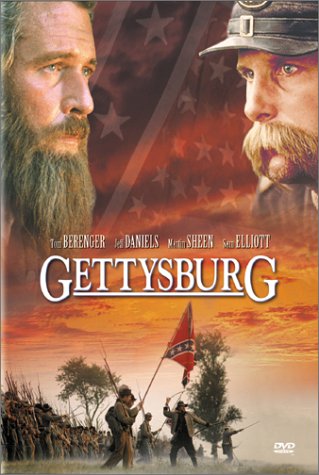
gettysburg-DVDcoverThis trope has been on my mind recently because I’ve been on something of a Civil War trip, watching and rewatching the movie Gettysburg.  It’s a fascinating movie, not the least because there are no clear bad guys.  In the battle of ideologies, I side solidly with the Union, but in the battle of men, I don’t know who to side for.

General Lee is one of my favorite characters, and certainly the commander for whom I have the most respect.  When General Longstreet is forced to order his men on the suicidal charge on the third day, I can’t help but cringe.  And perhaps the most touching moment of the whole movie is when the wounded General Armistead asks to see his old friend, General Hancock, only to learn that he has been shot as well:

BG Armistead: I would like … to see General Hancock. Can you tell me … where General Hancock may be found?

Lt. Chamberlain: I’m sorry, sir. The general’s down, he’s been hit.

BG Armistead: No! Not … both of us! Not … all of us! Please, God!

The main appeal to me of this movie, and in a more general sense of this entire trope, is the roll that honor plays in the characters’ interactions with each other.  Yes, they may be bitter enemies, and they may not hesitate to kill each other, but they aren’t fighting because they hate each other–they’re fighting because honor demands it.  And just like how the Fettered gains great strength through strict obedience to his personal code, so too does the Worthy Opponent gain both strength and respect by being a man of honor.

Obviously, this sort of antagonist makes it almost impossible to tell a story with black and white morality.  But with this trope, that’s kind of the point.  It exists to tell us that the enemy is not so different from us, and that not every bad guy is completely evil.  It doesn’t have to be used to set up an Aesop, though–when done well (as it was in Gettysburg), it’s satisfying enough on its own.

I played a lot with this trope in Stars of Blood and Glory.  In that book, Abaqa, a young Hameji warrior trying to build a name for himself, falls prisoner to Danica and her band of Tajji mercenaries, who he has been taught all his life to hate.  Gradually, though, they come to respect each other, to the point where … well, I won’t spoil it for you.  But it was definitely fun to write. 😀

I haven’t played a lot with this trope yet in other stories, but I definitely hope to in the future.  I’ve got another novel I’d like to write from Danica’s point of view, sort of a prequel novel to explore her and Roman’s origins, as well as the other Tajji mercenaries.  And then there’s Heart of the Nebula, which needs a major rewrite but has some elements of this trope in it.  So yeah, you can definitely expect to see more of this sort of thing from me in the future.

Thoughts on writing advice generally

I’m working a swing shift job at a bakery outlet right now, loading and unloading trucks for the next day’s shipment.  It’s a great job because 1) the pay is higher than most warehouse jobs, 2) it’s only 20 hours a week, 3) I’m the only guy there, so there’s lots of autonomy, and 4) I can listen to music and podcasts while I work.

Anyway, I was listening to a panel from this year’s LTUE last night, and at one point I actually got so mad with the panelists that I almost swore.  In particular, there was one panelist who doesn’t really have any books out or any publication credits to speak of, but she was constantly (CONSTANTLY) chiming in with writing rules and writing advice, to the point where she started clashing with some of the big name authors on the panel.

The reason that made me angry is because I’ve been on the receiving end of a lot of bad advice.  Not just advice about the craft of writing, which might be good individually but in the aggregate tends to feed your inner editor and kill your creative drive.  I’ve heard a lot of really bad career advice, both from established professionals who have no clue how the industry is changing, and (more frequently) from unwashed newbies who spend more time promoting their last book than writing their next one.  It’s gotten to the point where whenever anyone starts to give advice, I just roll my eyes and skim over whatever it is they’re trying to say.

This is not to say that I think I know everything and that now I can stop learning.  I have no illusions about that.  Just this past week, for example there was an excellent thread on the KBoards about cover design, with several designers chipping in with their insights.  I admit, I skimmed a lot of the stuff the writers were saying, but the designers I stopped and paid attention to.  There’s still a lot I have to learn when it comes to covers, as well as hiring the right kind of artists to do the job.

When it comes to the craft of writing, I’ve found that the best way to learn is to read a lot of really good books and pay attention to the things the authors do.  For example, Louis McMaster Bujold has some really colorful ways to describe her characters’ mannerisms, such as having Lord Vorkosigan simultaneously smile at one character and frown at another.  Jane Austen is a master of giving the one or two details that you need to feel like you know exactly what kind of a person each character is.  David Drake can write action sequences that really make you feel like you’re there in the character’s head, and Orson Scott Card’s dialog is peerless.

And as for career advice, honestly, the best approach I’ve found is to just say “screw you all–I’m doing it my way!” The industry has changed so much in the past three years that no one–absolutely no one–knows anything.

Four years ago, I snubbed my nose at self-publishers and would have been horrified to learn I’d become one.  Two years ago, I hated the term “self-publishing” and avoided it like the plague, using terms like “indie publishing” instead.  Now, I don’t really care.  I’m reaching readers, growing a fan-base, and making money, and that’s all that really matters.

Everyone seems to have an opinion, but the only way to have an informed opinion is to actually go out there and find out what works for you.  So basically, I treat everyone’s advice with contempt unless they can demonstrate unequivocally that it’s worked for them.  Even then, I pick and choose what I adopt for myself, based on what sits best with my own personal philosophy.  In the end, I learn a lot more by rolling up my sleeves and getting my hands dirty than I do from following someone else.

All of this has combined to make me really loathe to give any advice.  At Leading Edge, I’ve taken recently to reading ARCs and writing book reviews, rather than writing out those scathing story critiques like I used to.  I rarely comment on blogs or message board communities, and when I do, I always feel like I have to include a disclaimer that this is my opinion, or this is what’s worked for me, or this has been my experience (and therefore may not apply generally).  Sometimes, I see writers who are so caught up in stupid myths that I want to reach out and help them, but even then, I feel like there’s something restraining me.

The point is, if/when I succeed in this business, it will be in spite of the advice I’ve received, not because of it.  I’ll consider almost anything, but whether I actually follow it … yeah, don’t hold your breath.

Trope Tuesday: Schrödinger’s Gun

The world of a fictional universe isn’t fixed beyond what the author has revealed to the reader.

This is what happens when Schrödinger’s cat gets hold of Chekhov’s gun.  There are a whole lot of interesting and potentially useful plot points lying around, but the writers are pantsing it as they go, playing a game of Xanatos speed chess with the readers (or the gamers, as the case may be).  Consequently, the story doesn’t actually take shape until it’s been told.

As you can imagine, this trope only really works in a story medium where there’s some degree of interaction between the writer and the audience, such as video games and RPGs.  However, there are some classic examples in more fixed media, such as film and books.  The movie Clue is a good example, where the filmmakers made three separate endings, and secretly showed different ones in different theaters (the DVD has all three).  The Choose Your Own Adventure series is also a classic example.

With the changes brought about by digital media, there are all sorts of possibilities opening up right now for this kind of storytelling.  Besides the Choose Your Own Adventure type stories, there’s also the serial format, where a writer releases a chapter at a time.  This is what a lot of web comics eventually become, especially the ones like Girl Genius, Schlock Mercenary, and Freefall with a HUGE extended story arc.  The same kind of thing is happening in ebooks too, on a spectrum between straight-up serials and series of longer works.

As you can imagine, it can be quite a challenge to keep all the storylines straight.  That’s because the one rule with this trope is that you CANNOT retcon.  Until the story is told, anything can happen–but once it does, the Schrödinger wave equation breaks down, and all the possibilities drop to 0 or 1.  The story becomes fixed, and in all future installments, you have to work with it.

Another interesting thing about this type of storytelling is the possibility for ascended fanon, where fan-created stuff like fanfic or fanart actually gets co-opted into the canon of the story.  The flip side is that it encourages the fans to get together and analyze things so thoroughly that any surprising plot twists get predicted long before they actually happen.  Still, I suppose there’s a special kind of squee in finding out that your predictions were right.

The reason I’m interested in this trope is because I’m more or less doing it with my Star Wanderers series.  It’s not strictly a serial, since each novella is a complete self-contained story, but taken together they sketch out a much larger arc that I’m only starting to discover.  Parts I-IV made a complete story arc in itself, all told from Jeremiah’s point of view, but right now I’m revisiting those stories from the viewpoints of some of the other characters.  That, in turn, is seeding all sorts of other stories, with new characters and wider conflicts.

There are challenges, though.  Today I started Part VIII: Deliverance, (from Lucca and Mariya’s viewpoints) and I got stuck on the second paragraph.  The second freaking paragraph.  It starts in the Zarmina system, but what class of star is it?  Have I mentioned it in any of the previous stories?  Thank goodness for word search functionalities, otherwise I’d be ripping my hair out!

So yeah, I’m going to have to be a lot more diligent about making and keeping a world bible.  I’m usually a pantser, so outlines are kind of anathema to my creative process, but having a solid reference for the stuff that I’ve already written is quite helpful.  Currently, I’m using Wikidpad, which seems to be the perfect tool for this sort of thing.

Fortunately, the challenges are a lot more fun than discouraging.  I had a great time writing Dreamweaver, getting into Noemi’s head and revisiting that story from her point of view.  It sounds so cliché, but that story really did write itself.  I kept a window with Outworlder in the background, and whenever I needed to see what would happen next, I’d just go to it and read the next couple of paragraphs.  Benefactor and Reproach have been much the same way.

Eventually, I plan to branch out a lot further, with other interesting characters and situations.  I have no idea what those will be exactly, but that’s kind of the point.  Until you actually pull the trigger, Schrödinger’s gun can exist in any state, from a musket to an AK-47 to a rocket-propelled grenade.  Whatever form it ends up taking, the important thing is to make sure it goes off with a bang.

It’s finished! Now onto the next thing.

Well, over the weekend, I finished the first draft of Star Wanderers: Reproach (Part VII).  Technically, I finished it at 4:30 am on Saturday, but I’m counting that for the Friday May 31st deadline that I set when I started the project.  I was determined to finish the thing before I went to bed, and nearly pulled an all-nighter.  Still recovering.

Star Wanderers: Benefactor (Part VI) needs some work before I feel it’s ready to be published, but I’m not sure if that’s what I want to move on to next.  From a business standpoint, that would appear to be the most prudent decision, since my Star Wanderers books are selling fairly well and expanding the series while the momentum is still good is probably the surest way to capitalize on that.  However, from a creative standpoint, I think it might be better to give this draft some more time to mull around in the back of my head, like I did for Genesis Earth, Bringing Stella Home, and Desert Stars.

Also, I really want to finish the first draft of Lifewalker.  All of my friends and family who have read bits and pieces of it are raving for me to finish it–literally, every time I talk with my Dad, he asks me when it’s going to be done.  I really do enjoy the voice of the main character in that one, and I stopped it only to finish Reproach, not because it was giving me any troubles.  If I go ahead with that now, I can probably finish it by the end of the month, with time to start work on another project (possibly Benefactor).

It’s difficult for me to talk meaningfully about a project that only I and a couple of other people have seen, so here are the first few paragraphs from the current draft, just to give you a taste of it:

My given name is Isaac Jameson, but most people know me as the Lifewalker. It is a fitting title. I am a stranger and a wanderer; death has cheated me not once, but thrice. For more than three generations, I have wandered the Earth, watching men and women spring up as wheat, bear seed, and pass away with the autumn frost. Yet with each passing generation, I alone remain—with each new crop of humanity, death refuses to harvest me. Some would see this as a blessing, but it is not. It is a curse worse than the fever that steals an infant from its mother, or the blight that takes the mother from her newborn child. It is hard enough to say goodbye to those you have known and loved—those who have shared everything in their lives with you, holding nothing back. But to say goodbye to everyone you have ever known—to find yourself a stranger in your own homeland, a man washed up on the shores of time while the world spins wildly beneath you—yes, that is a fate that can make death seem like a mercy. But I digress.

I suppose I should start this volume with a brief description of the land of my birth. Far to the west, beyond the lakes of the north and the great river of the plains, a series of great, craggy mountain ranges cross the land. In the heart of these mountains, almost a year’s journey by wagon from the eastern coast, lies a great salty sea. It is a desolate and lifeless place, and so far as I can tell, always has been. I only visited it once, but saw no signs of habitation along its briny beaches, ancient or otherwise. However, only a few short miles to the east, the ruins of a once-great city still stands. Its rusting skyscrapers are not as tall or as numerous as those in Boss-town or Old Neyark, but there are enough to show that it was once a place of some importance, before the years of the Blight.

South of these ruins, and beyond the numerous villages and communes that thrive in its shadows, lies a wide mountain valley with a freshwater lake at its center. The lake is extremely shallow, and the reeds grow thick along its southern coasts. It is a good place for catfish and mussels, as well as heron and other waterfowl. The mountains rise sharply all around it, but more especially to the east, though none of them are quite high enough to boast a peak that is snow-capped year round. A monument to the letter Y can still been seen on the face of one of the nearer foothills, though the coloring has long since faded. The northeast border of the valley is guarded by a mountain that looks like a young maiden, sleeping on her back with a hand on her pregnant belly. Some say that the child she carries is the hope of the new world. A narrow river runs just south of this mountain to the lake, through the heart of the land of Provorem.

Just for fun, I posted a longer version on the minecraft server where I currently play.  It’s possible to make books inside of the game, and fill them with a couple thousand words of text.  I’ll probably do a couple more minecraft books with bits and pieces of Lifewalker, and possibly a couple of other projects as well.

At the same time, I’ve got an idea for another project, one that has the potential to turn into a series of heroic fantasy novellas, along the lines of Star Wanderers.  I talked it over with my brother-in-law over the weekend, and while the world and the characters still need fleshing out, I think the core idea is pretty solid.  Part of me wants to drop everything and work on that right now, but the other part feels like a deer in the headlights with a semi full of story ideas bearing down on me…

All good problems to have.  But don’t worry–if I don’t have anything new published before the end of this month, I’ll definitely have something by the end of July.  That’s my unofficial goal now: at least one new published something every two months.

Gotta write.  Later!

Sorry, no Trope Tuesday (again)

Yeah, sorry, no Trope Tuesday this week.  Third week missed in a row!  Not so good.  Thing is, I’m really focused on finishing Star Wanderers: Reproach (Part VII) right now, with a self-imposed deadline of May 31st. I figure that’s more important, and I really don’t want to break my momentum.

I’ve been vacillating a lot about this project.  Sometimes, I think it’s halfway decent, perhaps even good.  Other times, I wonder how the @#$! I came to be trapped in this story and why I’m wasting the best years of my life writing this crap.  The other Star Wanderers stories are selling decently well, but this one is so shite that it’s bound to kill the series and why am I writing this why why WHY??? 

And then I get the chains back on my inner editor and drag him down to the dungeon, where I keep him on a strict diet of bread crusts and rotten cheese.  No wonder he hates me.

I know those trope posts are a popular feature around here, so I’ll get back on top of them once this project is finished (which WILL be this week!  It WILL!!)  In the meantime, if you’re looking for a trope fix, you should check out Anita Sarkeesian’s latest Feminist Frequency video.  She does an awesome job deconstructing feminist video game tropes, in a much more meticulous and thoughtful manner than I have ever achieved here:

Part of me wants her to take my own stories and analyze them for feminist tropes.  The other part shudders in abject horror at what she might possibly find.

Whoops, looks like the inner editor just got loose again.  Better go hang out on the KBoards until I’ve got him back in the dungeon.

Later!