Marle2You know that innocent and beautiful fairy tale princess, with the tricked out dress and the power to summon woodland creatures?  The one with a tendency to get kidnapped, but who always ends up happily ever after with her prince charming?

Yeah, that’s not this princess.

A rebellious princess would just as soon puke if she were any of those things.  She hates being royalty–she’d rather be one of the common folk, or at least be out doing something (which is why she’s often involved in politics).  She hates all those frilly dresses and tends to wear her hair in a tomboyish ponytail.  Rather than wait for her white knight to save her, she’s much more likely to be an action girl in disguise, or at least something of a badass.  When she grows up, she may become a lady of war.  Invariably, she hates whatever marriage has been arranged for her and often scandalizes those of her class to marry for love (if she even marries at all).

As you might have already guessed, this trope is extremely common, not the least because the princess classic has largely been discredited (at least, outside of Disney).  There’s a lot of variation on it too, with some stories featuring the rebellious princess as the love interest, and others showcasing her as the hero.

George R.R. Martin (Song of Ice and Fire) deconstructs the trope with Arya, who eventually becomes something of a sociopath, and Brandon Sanderson (Elantris) subverts it with Sarene, who very much has the personality but uses her royal position to her advantage.  Frank Herbert (Dune) zigzags with Lady Jessica, who is undylingly loyal to the Atreides family but rebels against the Bene Gesserit.  As you might expect, J.R.R. Tolkien plays it straight, not once but twice: Éowyn in Lord of the Rings, and Lúthien in The Silmarillion.

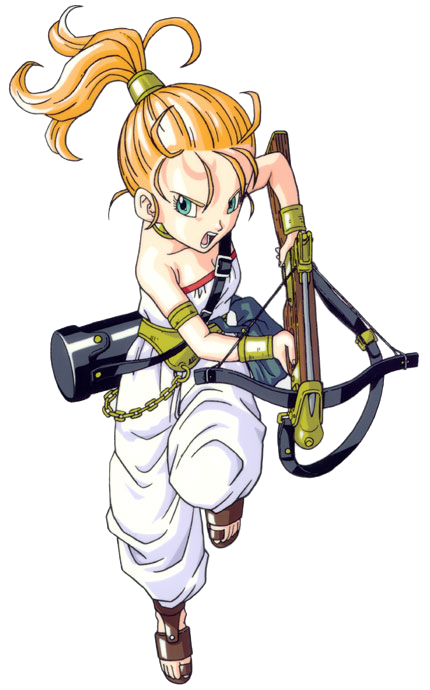
It transcends cultures, too.  In Crouching Tiger, Hidden Dragon, Jen might not technically be royalty, but she is the governor’s daughter and she does reject an arranged marriage to run away and become a wandering warrior.  And in classic RPGs, especially the old Japanese ones from Square, this trope is everywhere.  The princess in the picture above is Marle from Chrono Trigger, who fits this trope to a T.

So why is this trope so prevalent nowadays?  Probably because the modern feminist movement led us to discard most of our old-fashioned feminine ideals, as well as the characters who were held up as shining examples of them.  That, and rule of drama.  Everything ultimately comes down to rule of drama.

In my own work, Hikaru from Stars of Blood and Glory is an example of this trope, though she’s more of a president’s daughter than a hero or a love interest.  She does have her own story arc, though, and I’ve got a sequel in the works with her as the main character.  Scientists aren’t exactly royalty, but they do consider themselves elites in Genesis Earth, which means that Terra has echoes of this trope.  And in Heart of the Nebula (as-yet unpublished), I’ve got a character who isn’t exactly rebellious, but she does qualify as a badass princess (though the society in question is a perfect techno-democracy and not a monarchy).

Why do so many character combinations come in groups of three?  Unlike love triangles, where the combo is primarily a way to build conflict, the characters in power trios all build on each other in some way.  They might be foils for each other, but as complementary archetypes, they do far more to drive the story together than they ever would apart.

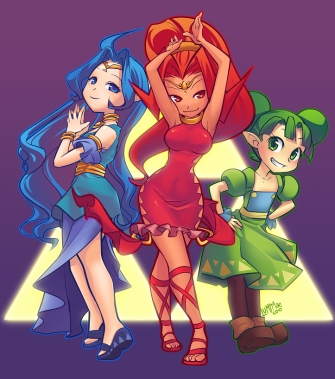
One of the most interesting all-female power trios is the Three Faces of Eve, which combines the archetypes of child, seductress, and wife:

The “child” (who does not have to be a child literally) will be seen as innocent, perhaps to the point of naïveté. The wife, the wiser, calmer aspect, someone around whom one could build a home life. The third, the seductress, is sexually experienced and independent.

Roughly speaking, the characters in the trio correspond to:

  • The Ingenue: A naive, innocent, childlike girl who is just setting out into the world.  In a Freudian Trio, this would be the Ego.
  • The Femme Fatale: A seductive, alluring, mysterious woman who is experienced in the ways of the world.  Unlike the Vamp, she may or may not use her feminine wiles for evil.  In a Freudian Trio, this would be the Id.
  • The Yamato Nadeshiko: A calm, steady, faithful wife, who provides the kind of marital stability and maternal strength that is ideal for settling down and raising a family.  In a Freudian Trio, this would be the Superego.

You’d be surprised to see how often this trope shows up, even in works of science fiction.  In Star Wars, Leia was the child in A New Hope, the wife/mother in Empire Strikes Back, and (what else?) the seductress in Return of the Jedi.  Just about every Star Trek series featured some alignment of these archetypes.

Squaresoft played with this trope a lot in their Final Fantasy series, which may be illustrative to examine in greater depth.  I’ve only played through FF IV, VI, VII, and Chrono Trigger, but each  of these titles features some interesting variations (warning: spoilers!).

Final Fantasy IV: Porom (child), Rydia (seductress), Rosa (wife).

Porom is pretty solidly the child, though Rydia starts out as this and later grows up into the seductress role.  She doesn’t get the guy in the end, though: that would be Rosa, who pretty much starts out with him as well.

In terms of story, the characters don’t really seem to build much on each other, though in terms of gameplay you definitely want to have Rydia and Rosa/Porom in your party (though not Rosa and Porom together–you only need one white mage, after all).

Final Fantasy VI: Relm (child) , Celes (seductress), Terra (wife).

This is my personal favorite in the series.  Unlike IV and VII, which both center around male protagonists, Final Fantasy VI revolves around Terra (world of balance) and Celes (world of ruin) as the central protagonists.  Because they also play a role in the power trio, their characters are quite complex, especially in the second half of the game.  Relm is arguably more of a Mary Sue, but her relation to the other characters, especially Shadow, also makes her role more complex and interesting.

In the end, the romantic subplot is fulfilled by Celes, not Terra, which was something of a surprise to me in my first playthrough.  It works really well, though, because of Celes’s heel face turn and subsequent reformation (in which Locke is arguably a Manic Pixie Dream Girl Spear Counterpart).  Does that also translate into a shift from seductress to wife as well?  I’m not sure, but I’d probably say no–after all, it’s Terra who takes on the mother role in the world of ruin.

Final Fantasy VII: Yuffie (child), Aeris (seductress), Tifa (wife).

The main twist with this one is that visually, you’d think Tifa is the seductress and Aeris is the wife.  In terms of story archetypes, however, it’s just the opposite: Tifa is the one whom Cloud depends on, the one who helps him work through his problems, while Aeris is the shifty, mysterious one.

Unlike IV, where Rosa and Cecil are set up from the very beginning, for a while it actually looks like Aeris and Cloud are going to end up together.  But then, in perhaps the most tragically gut-wrenching moment in all of video game history, Aeris dies (and doesn’t come back).  Since Yuffie is kind of, well, crazy, Tifa and Cloud are pretty much garanteed to get together after that point (and as for Sephiroth…I don’t even want to go there).

Chrono Trigger: Marle (child), Ayla (seductress), Lucca (wife).

Chrono Trigger is interesting because the girl who ends up with the guy in the end (Chrono) is actually the one who fulfills the child archetype, Marle.  It works, though, because of the childlike feel of the story.  Unlike FF VI and IV, Chrono Trigger is not a dark or an edgy tale–it’s heartwarming innocence at its best.  I always did feel that Lucca got the short end of the stick, though–but she did get a cameo in Xenogears, so perhaps the last laugh was hers after all.

Ah, Xenogears. <sigh>

Anyhow, long story short, the Three Faces of Eve power trio is a fascinating way to play with feminine archetypes.  Recently, I’ve become quite interested in it because it showed up quite inadvertently in my current project, Heart of the Nebula.  It’s funny how tropes can sneak up on you like that, especially some of the more archetypal ones.

Anyhow, in its current form the novel is a piece of trash, but now that I’ve recognized the potential to set up this particular power trio, I think I can really make it shine.  If you have any insights, please share–I’m very interested in this trope right now!

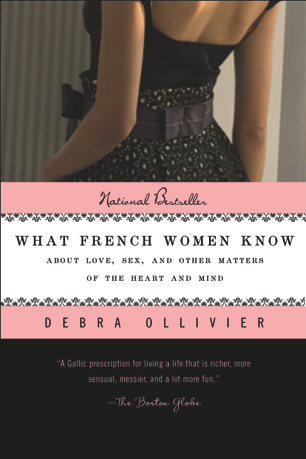
I have a confession to make: when I was at my sister Kate’s for Christmas, I saw this book on her shelf and stole borrowed it without permission.  I finished it just yesterday, and at the risk of embarrassing myself, I’m going to review it as my second book of this year.

This book presents a fascinating perspective on French lifestyle, attitudes, and culture.  Even though it’s geared more for women than for men, I enjoyed it in the same way I enjoyed Twilight–as an interesting anthropological experience.

It goes beyond that, though.  The picture Ollivier paints of French culture is fascinating in and of itself, if nothing else for the contrasts she points out between us (Americans) and them.  According to Ollivier, the key difference is that the French have a deep understanding of “the brevity of time and the immediacy of pleasure.” Ollivier follows this philosophy out to its logical conclusions to show that everything in French culture is an outgrowth of this–and it makes sense.

For a non-fiction book, the writing itself is quite entertaining, with constant pop culture references and a playful, humorous style.  It was a delight to read, and fairly easy as well.

However, I did get the feeling that it was a little too enthusiastic and non-critical to present a comprehensive or truly accurate picture of French culture.  Between the lines, Ollivier seems to be saying that if we Anglos would just be a little bit more like our “French sisters,” most of our problems (like our obsession with marriage, our frustrations with perfection, and our general lack of passion) would be solved.

I take issue with this: as much as we have to learn from the French, their culture has a lot of issues as well.  For example, I personally believe that Laïcité is fundamentally incompatible with a multicultural society, and leads to de facto state repression of legitimate religious expression in the public sphere (such as the wearing of the headscarf).

Also, whenever Ollivier described American culture, I always felt as if she was describing something completely alien to my own experience.  There might be a good reason for this, considering how for the past six years I’ve lived in Utah Valley, a bastion of Mormon culture so unlike the rest of the American mainstream.  However, it might also be that Ollivier exaggerates the worst excesses of this continent in order to more sharply contrast the subject matter of her book.

As a writer, though, I found this book inspiring–particularly as a writer of science fiction.  In my novels, I’m constantly inventing new cultures to populate the many worlds in my science fictional multiverse.  This book, with its clear and entertaining analysis of some very real-world cultural differences, gave me an excellent world-building prototype and a whole plethora (oh how I hate that word) bunch of new ideas for ways to enrich my stories.  In fact, this book gave me just what I needed to get through the block that had kept me from writing Star Wanderers, so if nothing else, there’s that.

So yeah, if you’re interested in world cultures or world-building cultures of your own, it’s worth your time to check out this book.  It’s perhaps not the most thorough or comprehensive book, but it is entertaining, and fairly insightful as well.  I mean, hey, if a science fiction geek like me enjoyed it, it’s got to be doing something right.

The Bechdel Test is a way to measure how prominently women figure in a story.  It mostly comes up in discussions of TV and film, but can also be applied to works of literature.  To pass the test, the story must have

  1. at least two named female characters
  2. who talk to each other
  3. about something other than men.

The surprising thing, as you can see in this discussion of the trope, is that so few stories actually pass this test. Even in literature, works like The Odyssey, Romeo & Juliet, and even War & Peace fail to pass or only barely pass this test.

Closely related to the Bechdel Test is the Smurfette Principle, where only one of the major characters is female–the token chick.  Stories that fail to pass the first part of the test fall into this category.

So why does this happen?  It may be because most writers are male, but that isn’t necessarily true of books and literature.  Novel writing, after all, was originally considered a womanly pursuit, and the English major was created in the so that women could have something to study while they were in college.  Not surprisingly, 19th century works by female writers like the Bronte sisters tend to pass…

…or do they?  It’s been a while since I read Jane Eyre or Pride and Prejudice, but the impression I got was that the women in those books spend only really talk with each other about men.  And when you look to contemporary writers like Dickens and Tolstoy, the trend holds.  After all, how many female characters are there in A Christmas Carol?  Do any of them ever even talk to each other?

This isn’t necessarily a measure of how good or bad a story is, or even of how feminist it is (Aliens, after all, technically passes), but it is a measure of how independent and well rounded the female characters really are.  If the story doesn’t pass, it’s a sign that the women only play a role in relation to the men, or that the male characters are the ones who advance the plot.

I don’t usually like to bring up my own stories in relation to these tropes, but I thought it would be useful to apply this test to my own books and see how they shape up.  As a writer, I think it’s a good idea to do this periodically, to make sure my work isn’t slipping into a rut.  So here we go:

Genesis Earth

Point 1: Yes, there are two named female characters: Terra and Stella.

Points 2 & 3: No, they never talk.  However, when you apply the reverse Bechdel test (two men who talk to each other about something other than women), Genesis Earth only barely passes.  Michael talks with Tom in the first chapter, mostly about Terra, and for the rest of the book he and Terra are alone.

Bringing Stella Home

Point 1: Yes, it passes.  Named female characters include: Stella McCoy, Danica Nova, Anya Sikorsky, Tamu, Lady Borta, Lady Zeline, Sergeant Maria.

Point 2: Yes; in most of Stella’s scenes, she’s talking with Tamu or Borta or one of the other Hameji women.  Also, since Danica is the captain of the Tajji Flame and Anya is the chief pilot, they interact quite a bit.

Point 3: Yes, but just barely.  In most of their scenes together, Stella and Tamu are talking about Qasar or the harem or sex.  There are a couple where they talk about each other and their past, but it all relates back to their captivity under the Hameji.  At one point later in the book, Anya goes AWOL and Danica has to talk her down, which is probably the scene that makes the book pass, but a hardcore feminist might argue that that conversation is indirectly about a man.  Still, I’m counting it.

Desert Stars

Point 1: Yes, there are plenty of women.  In fact, as you can see from this list of non-minor characters, there are almost as many women as there are men:

Female Male
Mira Jalil
Shira Sathi
Zayne Hamza
Tiera Rumiya
Lena Gregor
Surayya Kariym
Amina Ashraf
Rina Ibrahim
Sarah Lars
Michelle Nash
Mark
Will

Point 2: Yes, plenty of these women talk to each other.  Surayya and Amina are practically joined at the hip, Tiera, Shira, and Lena all have private conversations with Mira, and the only time Rina even talks is when she and Mira are alone.

Point 3: While most of the conversations between the female characters revolve around men and marriage, Tiera talks with Mira about honor, and Rina talks with Mira about leaving home.  Without spoiling too much, there are other conversations that have nothing to do with men, though they happen off-stage and only get reported second-hand.  Either way, I’d say this book passes.

None of this is to say that a good story must pass the Bechdel test.  Lawrence of Arabia, for example, doesn’t have a single female actress–not one single actress!–and it’s an amazing film.  As a counterpoint, I’m sure there are plenty of good stories out there (most of them probably anime or manga) that do not pass the reverse Bechdel test.

However, it is a good measure of female presence and how much the story is driven by men.  And as a lens through which to view the wider culture, it offers a surprising and somewhat disturbing perspective on male-domination in fiction.

I spent almost the whole day Saturday with family, but when I finally got around to working on Sholpan, I breezed through almost 10k words in only a couple hours.  Granted, it was mostly light revision and the material was fairly well polished to begin with, but still…it was just fun.

The best part of writing this novella has been rediscovering Stella’s story from Bringing Stella Home.  At first, I was a little worried that it might be a bit too shocking (and for some of my friends, it probably is), but there’s a lot of depth to the story, and the content, while definitely mature, is never gratuitous.

The story is basically about an innocent, sexually inexperienced young woman who struggles to keep her virtue and self-respect intact within the harem of the brutal space barbarians who have enslaved her.  While she starts from a position of almost total powerlessness, she finds ways to leverage herself without completely compromising her values.

I haven’t figure out the blurb yet, but that’s a pretty accurate description of the story.  It’s basically all of the scenes in Bringing Stella Home from Stella’s viewpoint, up through the first and second acts of the book.  In the third act, everything comes to a head, and…well, I won’t ruin it for you. ;)

I’ll probably finish Sholpan sometime later today.  My copy editor for Bringing Stella Home should be sending back the manuscript with his edits tonight, and I’ll spend the rest of the week going through and getting it ready for publication.  By Monday, it should be up!

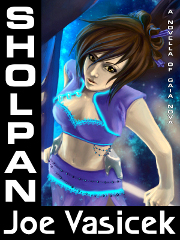
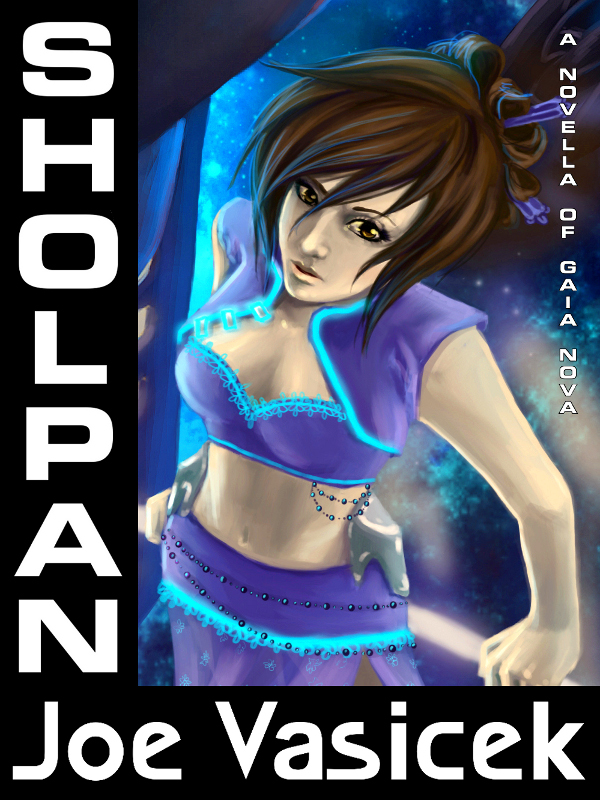
In the meantime, check this out: I was playing with the cover art yesterday afternoon, and came up with a cover for Sholpan.  What do you think?

The thumbnail:

…and the full sized image:

Man, this is so much fun!

The writing is a little sporadic these days, but it’s coming along.  I’ve broken out of my most recent block, and progress is coming along on WAFH…or at least it was, when I didn’t have a temp job sucking up most of my time during the day.

Still, can’t complain about work–and even though all the job interviews from a couple weeks ago seem to have lead nowhere, I’ve got a few new opportunities opening up that seem promising.  More on those later.

One of the more challenging aspects of WAFH is writing the main female protagonist, Mira Najmi.  Mira is something of a shy pushover, who gradually learns to stand up for herself and make her own independent decisions.

Because of this, I find it difficult to write from her point of view.  When she isn’t letting people walk all over her, she’s either homesick and depressed or following others without making any real decisions for herself.  And yet, in order for her growth arc to work, this is the point at which she needs to start out; her gradual change into a strong and independent woman is a major part of the book.

In short, how do I make a shy, self-effacing protagonist sympathetic and interesting while remaining true to her character?

(Before I go further, I should note that Mira does have strengths.  She has a caring, nurturing personality, and is sensitive to the needs of others.  She often notices the little things that go right over the male protagonist’s head.  Besides that, she’s basically a good person, with a pure heart and an aversion to causing hurt or injury.  Oh, and she’s stunningly beautiful–though in some ways, that’s more of a handicap than a strength.)

Thus far, my strategy has been to delve into her internal monologue when in her viewpoint and try to make her underlying motivations clear.  I suspect it goes beyond that, though.  The best thing I can probably do is make her relatable to the audience–to make her shy in ways that make the readers feel like she’s one of them.

But that’s difficult for me, because I’m not a very shy person and I don’t generally relate well with people who are.  So how can I get a better understanding of what it’s like?  Do you guys have anything that you can share with me that would help me to understand?  Any tips or techniques for writing similar characters?

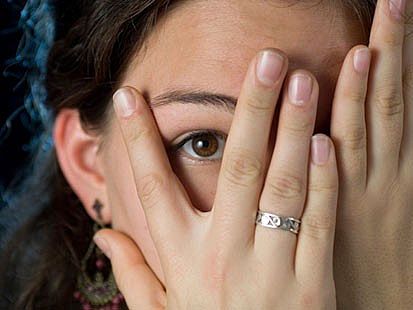
(image taken from http://webpages.scu.edu/ftp/lgrove/resign%20splashpage.htm)

14. July 2010 · 5 comments · Categories: Uncategorized · Tags: , , ,

They really are.  Yesterday while I was biking up to campus, a young woman (probably a college freshman) pulled out of a driveway to make a right turn and failed to look both ways before turning.  As a result, she struck my bike, bending my rim and forcing me to replace it.

I got her name  and phone number, spent about an hour (and $54) fixing the thing, and gave her a call.  She didn’t answer any of my calls that day, but she called up the next morning to tell me that she’d talked with a policeman, that I was at fault, and that therefore she wasn’t going to pay me anything.

Of course I was frustrated at all of this, seeing as 1) I was a PEDESTRIAN on the SIDEWALK, and therefore not at fault, and 2) she had failed to look both ways before turning into traffic.  What if I hadn’t braked?  What if she’d hit me full on?  I could have gotten seriously hurt due to her negligence!

So I told her “look, whether you pay me or not, will you promise me to look both ways before you enter traffic?” And her response–I kid you not–was “have you taken a defensive driving course?  If you had, you would know that drivers making a right turn aren’t required to look right before entering traffic.”

WTF.  Seriously?

Apart from the $54, which I figured she wasn’t going to pay for (jerk), this last comment profoundly bothered me.  I only came out of this with a damaged bike–what if the next guy isn’t so lucky?  So I sent her the following text:

As a driver, it is your responsibility to look both ways before turning.  I don’t want you to injure the next guy.

To which she replied with the following:

As a cyclist, it is your responsibility to be on the correct side of the road and to give the right-of-way to who it belongs to.  This mishap happened because of your own wrong doing- not mine. I’m choosing to look past the damage you’ve done to my car, which I could very easily require you to pay for (and it would cost much more than your rim that was “damaged” because you a)were on the wrong side of the road and b)failed to yield the right-of-way. That’s my way of being kind to a disrespectful person such as yourself (you hung up on me in mid-sentence). There is no reason to call or text message me anymore because the issue is over with. Any other text messages or calls I receive from will be considered harassment, and I will file charges against you.

A few things:

  1. As a pedestrian, the right-of-way was mine–that was what the Provo police told me when I called them today;
  2. While I shared some of the blame for riding on the wrong side of the road, she violated the law by failing to yield the right of way when crossing from private property onto a public street (again, taken from the officer I spoke with);
  3. I seriously doubt her car received any more damage than a few scratches, whereas I have the bent rim to prove that the “damages” to my bike were very real;
  4. I hung up on her mid-sentence because she kept pushing me to admit that I was at fault and that she was not in the wrong–instead of calling to apologize and work things out, she called to seek validation for shafting me.

What a jerk.  She’s lucky I’m not taking this to her insurance company and trying to resolve it with them.  While I’m sure that she fully deserves the rate hike and the stain on her record, I just don’t want to deal with the hassle.

The next time this happens, though (and I’m sure it will, because Utah drivers act as if pedestrians don’t exist), I’m going to call the police and resolve the issue with the law.  I no longer trust Utahans to be honest and forthright in settling issues like this civilly.  If you’re on the road and they can screw you, believe me, they will.

18. April 2009 · 3 comments · Categories: Uncategorized · Tags: , , , , ,

I had the coolest dream last night.

I dreamed that I was in some kind of a steampunk/regency universe–basically, everyone dressed up like the Victorian era and fought with fencing sabers.  I was contracted to go and fight the phantom of the opera, who for some reason was holed up in the JFSB (except, it wasn’t exactly the JFSB, just somewhat analogous). The phantom had a whole bunch of cronies and thugs, and I had to fight them in order to get to him.  Unfortunately, I lost, and his thugs disarmed me and took me prisoner.

Just then, my wife (future wife–I’m not married or engaged right now) came in to rescue me.  The dream panned out so that I was seeing it from her perspective (previously, it had been a sort of detached 3rd person).  She snuck up on the guy guarding the door and stabbed him in the back with a dagger.  Leaving him to die, she jumped into the JFSB where I was (you know the part underneath the big glass facade, three stories below the English department, where the spiral stairs are…except there were no spiral stairs in the dream, just some old dirty couches), and started this awesome swordfight.  She cut down a couple of guys, then attacked the guard holding me captive–and killed him by thrusting her sword through his throat.

It was pretty cool. :P Totally reminded me of Vin from Mistborn.  What a woman!

When I woke up from the dream, I wanted to go write some steampunk.  If/whenever I get around to writing a steampunk novel, I definitely want a strong female character who can do that kind of stuff.  Through the throat.  What a way to go!  Suffocate on your own blood while your opponent walks away, leaving you to die.  It’s bad enough getting stabbed in the stomach, but the throat–that takes style.  And improvisation.  Cool.