Guest post: Developing Characters in a Fantasy Setting

Nathan Major is a friend and fellow writing who, like me, has taken the epublishing route for his first novel, Paradise Seekers. I met him through our mutual friend Charlie at Brandon Sanderson’s English 318 class.  His book is pretty good; I’m only partway through it right now, but he’s playing with some interesting fantasy concepts and I’m definitely looking forward to seeing how he pulls it off.

I recently appeared on his blog with a guest post on how I develop my characters; for his appearance here, I decided to throw the question back at him.  Like a true fantasy author, he answered it with a multi-part epic that is probably only the first installment of a trilogy.  He makes some good points, though, and it’s definitely worth reading (and not just for the snarkiness, heh).

On a tangentially related note, I also appeared recently on Charlie’s blog with a post on ebook formatting and book DIY.  When you’re finished here, be sure to check it out!

And now, I give you Nathan Major…

================================================
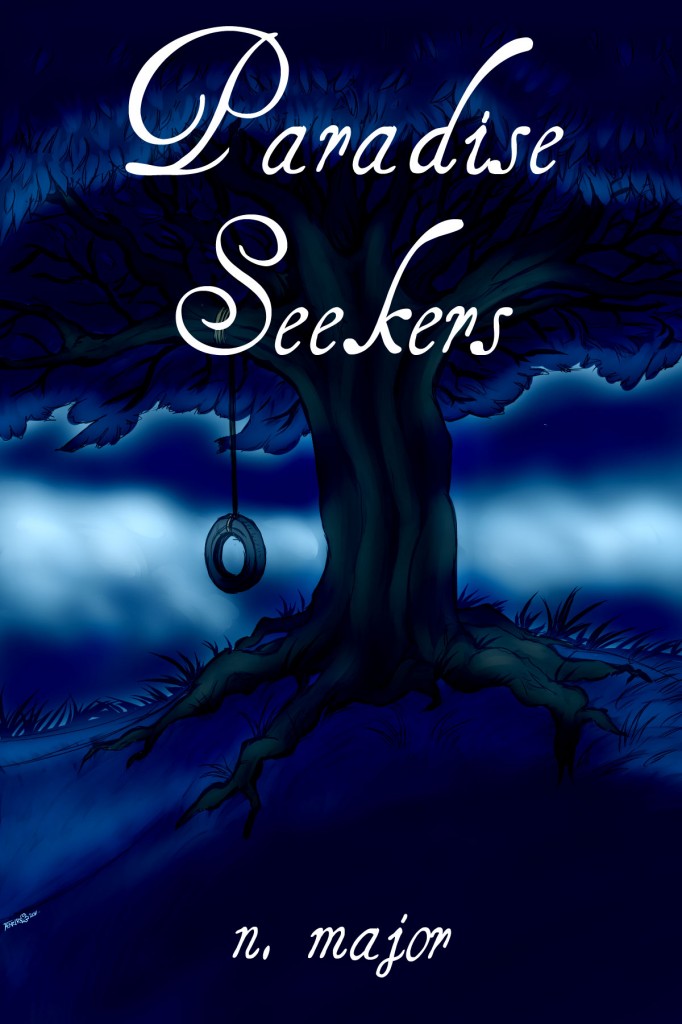
When you think of fantasy, what is the first thing that comes to your mind? Mystical worlds populated with elves, dwarfs, and other magical races? Kingdoms and castles, dark lords and noble heroes? Perhaps you entertain a world that is more supernatural and more interesting than our own, one that would allow you to escape to its enchanted forests and sweeping vistas.

The fantasy genre differs from other forms of fiction (except perhaps science fiction) in that the worlds they take place in tend to be the stars of the stories. Middle-earth and Prydain. Oz and Earthsea. And within these worlds, a classic clash of good vs evil is expected. The characters and story can often take a backseat, with many authors spending years of their lives crafting the perfect magic system, most precise system of fantastical government, and the means to make their elves the best damn elves you’ve ever seen.

This drives me crazy.

I’ve been reading fantasy my entire life, but it wasn’t until a few years ago that I got fed up with the whole thing. I loved The Hobbit and The Lord of the Rings, but as I dug deeper and picked up more modern fantasy, it all seemed to start blending together. Here is our noble hero, beating the odds to fight against a nameless, oft-hidden dark lord. Here is his spunky princess sidekick slash love interest, his old mentor who dies in act two, and the hardened warrior with a dark secret. While not all books contained these tropes, the main issue still persisted: I wasn’t seeing any new characters.

That was actually what drove me to writing. After reading through a particularly popular fantasy book that was also atrociously generic, I remember tossing the book on the couch and thinking, “I could do better than this!” So I set out to try my damnedest to write a fantasy novel that, yes, was in a fantastic worlds that we wish we could live in, but was populated by people just as interesting and well-developed as the world.

Since I’m severely ADHD, I’m going to break this up into a few key ideas that (hopefully) will get my point across. These aren’t just applicable to fantasy, but it’ll be my main focus.

1) Plan your characters first, before you plan the world.

Simple enough, right? When speaking with most other fantasy authors on the subject of brainstorming, the first things they say are, “Oh, I got the coolest idea for a magic system!” or “This world is going to be amazing…it’s made entirely out of White Chedder Cheese-its!” To which I say, “Ok, but what’s the story? And who are the people influenced by the story?” This is usually met with a, “I don’t know, I’ll figure it out later!” Then I defriend them on Facebook and pretend they never existed.

Ok, so the last part was an exaggeration. But the point still stands: you may have the greatest world ever devised, but so do map-makers, and theirs looks better. What is actually in the book is the plot and the characters, and the world is just what it takes place in. You might have the greatest appendix ever at the end explaining how the Haku-Bula Wolf Tribe’s language is actually a combination of grunts and Swedish, but that doesn’t matter to the average reader. Figure that stuff out after you’ve got a story, because it’s less important.

2) Don’t fall into cliches.

This is a hard one, as discovered by me when writing my third book, Where Gods and Mortals Dance. If you’ll excuse a moment of self-indulgence, when writing this book I had a female princess as the main character. She was a strong character, but due to circumstances beyond her control she was thrust into a situation that was almost impossible for her to fix. I remember trying to design her as strong but still fragile, as parts of her past haunted her and made her ability to rule difficult.

Then I took her to writing group, where the group was divided. Half said she was the, “generic, strong, masculine princess who takes charge,” and the other half felt she was the “weak, needy, spoiled princess” who has everything done for her.

It frustrated me, but also proved a point.

I was relying on two cliches and stereotypes to design my character. I drew from both in an attempt to be original, but that didn’t work. This happens all the time in fantasy. We have the old warrior, somehow inferior to our spunky young farmhand who picked up a weapon for the first time yesterday. We have a dark lord who never actually does any fighting or has any coherent plans, he just sort of sits on his throne of skulls and knives (which is probably black and on fire) and waits for farmhands to come and kill him.

Even in the most original novels, these cliches can become evident. They might not be as blatant as the ones said above, but keep them in mind when writing. Your book doesn’t have to star a teenager. It could star a forty-year-old man who wants to save the world. There doesn’t have to be a Dark Lord at all; the enemy could be something completely different. Stay the hell away from elves, dwarfs, or anything that Tolkien used. And taking Orcs, changing them slightly, and calling them “Orks” doesn’t count as being original, it counts as being a cop-out. Fight the cliché. Make your characters deep and unique.

3) Remember: Everyone is a hero in their own story

Sympathetic villains are a rarity in fantasy. Most of the time we have a group that is distinctly bad, and a group that is distinctly good. You can usually tell by how they live. If they live in trees, clouds, or anything that communes with nature: good. If they live in filth, a swamp, or basically anywhere that looks like it’s under the constant duress of a smoke-machine: evil. Usually bad-guy motives are just “they are bad and hate the good guys,” which is a freaking awful excuse. Oh, and don’t get me started on the “he’s insane, that’s why he wants to destroy the world!” villains. That’s the biggest cop-out of them all and if you use it I want to punch you in the face right now. You are cheapening your characters and your story to make things easier for you. Here’s a revelation: good books aren’t easy. It took Tolkien how long to craft the novel that essentially invented modern fantasy? I’m not saying you should take two decades to make your book, but you should at least have to take more than one sentence to describe your villain’s motives.

The best part about the above expression (which is probably my motto when it comes to developing characters) is that it changes the way you look at your book. Life isn’t black and white: it’s a whole lot of gray. You might see something in black and white, but if you were given a chance to enter someone else’s head, perhaps your view would switch entirely. Nothing is scarier than a completely sane, totally competent villain whose goals just so happen to be the exact opposite of our hero’s. In fact, it makes the reader uncomfortable, because many of them will no longer know who to root for. If you are doing it right, your villain’s motives and values should be just as convincing as the hero’s, which means the reader should be second-guessing their loyalties throughout the book. It makes for a hell of an engaging read, let me tell you.

But this little ditty isn’t just for main characters. Side characters also need to be their own heroes. Sam didn’t just tag along with Frodo because it was a fun thing to do. He knew what had to be done (probably even better than Frodo) and fulfilled that personal quest. Your side characters need to have their own motives and motivations, depth and personality. Don’t’ drag them to Mt. Doom with the only reason being “because the hero was heading that direction anyway.” They should be just as deep (or at least close to the level of depth) as your hero. Make them interesting, and your reader will love them even more.

4) For your characters to be successful, you must know them better than they know themselves

Wow, that’s a long one, and it is sort of off the theme of “broad, overgeneralizing statements” that these bullet points have been so far. At any rate, I’ll try and be brief with this one because it seems self-explanatory.

I have a friend author who, upon designing a character, takes an online “100 questions personality test.” While I’m not saying this is the “go-to” answer for everybody, it can be an extremely helpful tool in understanding a character better. What do they like to eat? What is their taste in women (or men)? If they magically appeared in our world and wanted to hang out, what would you do? These are questions that’ll maybe never be addressed in the story, but you should know these answers. If a character has a name and is in the book for more than a single chapter, you should know everything about them.

This can be hard work, especially if you like having a billion characters. But even if you just have one or two, you really need to be in their heads. Know them. Be them. Imagine them in other situations besides in your novel. And once you really understand what makes your spunky farmhand tick, then you’ll be able to write him in both a convincing and believable way.

5) Write characters you’d like to read about

Figured I’d end this on a simple one. It’s very easy when writing to get the rose-tinted glasses put on, and all of a sudden everything in your book seems perfect. Your characters are a little cliched, but whose aren’t? Your dark lord doesn’t really have a idiom, but he does have a badass axe carved from the ashen bones of the long-lost race of dragons. Who wouldn’t like this book?

Take a step back and think. And if you can’t think of yourself, think of me. A cynical, jaded red-head who writes fantasy only because most of the fantasy currently out there pisses him off. I am your audience. I am biased, blatant, and unbelievably good looking. What would I say?

If you know your characters (see #4!), and you know them well enough then this step shouldn’t be an issue. You’ll like them regardless, because any author gets attached to a character they know every aspect of. In my current novel, Effulgent Corruption, one of the viewpoint characters is complete scum. My initial development of him was a murderous, rampaging madman whose only reason for existence was to kill and destroy. However, as I dug deeper and began to understand the character, he became sympathetic. I realized the man’s goals, what emotional pains he’s been through, and what hurts him now. I knew who he relied on, and what parts of himself he hated.

He quickly became my favorite character.

This should happen with you. You should love your villains, and hope that, should this whole “world-saving hero” thing blow over, their goals will be accomplished. Your side characters should be entertaining and fun, people you’d want to hang out with, just like your hero does. You should know everybody and at least have a shred of sympathy for them. Then, you’ll have great characters.

This, of course, isn’t a complete guide to developing good fantasy characters. Hell, it isn’t really even a very specific one. But I’m almost 100% sure that, should you take these ideas to heart, you can beat the odds and write a fantasy novel that is as interesting in its ideas about elven politics as it is with its elaborate, three-dimensional characters. Fantasy as a genre deserves better, and you (yes, you!) can be the one to do it. So go forth, young author, and write the epic that will shake the Barnes and Nobles across the land!

Plus, it’ll increase your chances that I’ll actually read it, which is a perk in and of itself.

Copyright (c) 2011 by Nathan Major

Rocking the rewrite

I am well into the third draft of Worlds Away from Home, and oh man–it is so much fun! That might seem a bit counter-intuitive (revising = fun?), so let me explain my process.
In a first draft, I have a ton of ideas, but it’s hard for me to keep track of them all (and they also tend to change even as I write them).  I’ll cobble together a story out of them, but it’s a rough, misshapen story, with subplots that go nowhere, characters who seem schizophrenic, scenes set in the wrong point of view, and setting details that are inconsistent.  The main throughline is still there, but it’s buried under a ton of crap, sometimes so much that even I can’t see it.

In a second draft, I cut out the worst of the crap and try to dig out the core story elements.  I’ll cut entire chapters and subplots, throw out characters, rework the world, and fix as many of the glaring errors as I can.

Some writers call this a “triage edit,” and that’s as apt a term for it as any.  I’m not doing surgery yet; I’m applying the field dressings that will get the wounded from the battlefield to the operating table.

But the third draft, by far, is my favorite.  That’s when I take a hard look at the story and figure out how everything connects.  It’s like dumping out a new Lego set and opening up the instructions.  This is where I iron out the major character arcs, where I start to intertwine the subplots properly, where I get a sense of the book’s themes and figure out how to make it insightful and thought provoking.

Writing the third draft is absolutely glorious, and I love it.

Right now, I feel so immersed in the world of my novel, it makes me want to lock myself in a room and do nothing but write.  I have to force myself to go to bed, otherwise I’d be up until 4am writing.  Even with some of the major changes I need to make with this book, I wouldn’t be surprised if I average 4k or 5k words per day for the next two weeks (about all the time I have before I have to go back to work).

I finished the third draft of Genesis Earth in less than three weeks.  I finished the third draft of Bringing Stella Home in considerably more time than that, but that was partially because of other real-world stuff out of my control (like a nightmarish internship), but between that and the fourth draft, it was much the same thing.

So anyhow, I’m having an awesome time revising Worlds Away from Home, and the finished draft is going to be AWESOME.  And next to changing someone’s life with one of your books, that’s probably one of the best feelings you can have as a writer.

Man, writing is so much fun. 🙂

Getting back into things

So yesterday, I wrote through 4k words in WAFH 2.0 without even realizing it.  I didn’t feel very productive, because I only did about 500 words at a time before something came up and I got distracted, but by the end of the day, ended up accomplishing a lot.  That was a pleasant surprise.

In terms of my writing, I’ve been really out of things since Thanksgiving.  I finished Genesis Earth 5.0 right before the vacation and started outlining WAFH 2.0 immediately after, but…man, the rough draft REALLY sucks.  Like, sucks so bad I’ll have to completely throw out part III and start from scratch.

Fortunately, I think I’ve got a good idea what to do.  I’ve outlined about eighteen complete plots and subplots, so that’ll probably help out with keeping things tight.  The rough draft has a lot of shotgun writing, which means I have a lot of stuff to cut out–and now that I see where things are going, I know how to cut it.

One thing that worries me, however, is that I don’t have a strong driving reason to write this book–or maybe I do, but I just haven’t noticed it yet.  I’m hoping that’s the case, but I don’t yet know, and it’s really bugging me.

For Genesis Earth, it was the first line (“Earth was a ghost that haunted me”) and the cryo scene.  For Mercenary Savior, it was the ending, and the way it resonated with an old Western I saw as a kid.  With both projects, I got to a point of desperation somewhere between the first and second drafts where I wanted to throw everything out and never work on it again–but with both projects, that driving reason kept me going until I made it work.

With WAFH, however, I’m not sure what it is that’s driving me to write it.  For now, though, I’ll just press through until I find out.  I really hope I’m not just wasting my time writing this (because the rough draft sucks REALLY bad) but past experience has told me to ignore my own self-doubts at this phase.

Which reminds me: this week’s Writing Excuses podcast is really amazing.  I just listened to it an hour or two ago, and the advice this time around was exactly what I needed to hear.  Brandon’s advice in particular is very good: he basically says to stop worrying and enjoy what you’re doing.

So do I enjoy all of this?  In spite of all the angst I’ve spilled, I think I can say that I do.  When you’ve got a good story, and you know that it’s good, and you tell it in a way that moves someone else in a personally meaningful way–man, there’s nothing that compares to that.  I look back now on stuff I used to think was absolute drivel, and I’m amazed.  It takes persistence and drive and a little bit of crazy, but once you can get to that point, it makes everything you did to get there worth it.

The only thing now is to find out why WAFH is worth writing, and to hang onto those reasons at all costs until the story comes into its own.  Wish me luck!

What have you learned from reading science fiction?

While trolling around the new Facebook questions app, I came across this interesting question.  Unable to resist, I spent the next hour crafting my answer.

This is what I wrote:

Gosh, what HAVEN’T I learned from science fiction?

Because of science fiction, I do not fear the alien. I do not feel threatened by people of different places or cultures, but take great interest in learning from them. I look at them and love them, because I can see myself in them.

Because of science fiction, I can look out at the vast expanse of the universe and not despair because of my insignificance. I know my place within it, and can appreciate the wonders and endless possibilities all around me.

Because of science fiction, I can look at the world and know which questions to ask. I can see through the lies that society constantly feeds me, and know how to fight against them.

Because of science fiction, I can look to the future with hope. Having seen the best and the worst of all possible worlds, I know which paths to avoid and which paths to follow. With this knowledge I can inspire my fellow men, because I know that nothing is inevitable.

Because of science fiction, I have a deep and endearing love for the world in which I live. I know better what it means to be human, and knowing this helps me to take no human life for granted. I have a greater capacity to love those around me, and that is the most important thing of all.

Science fiction has enriched my life beyond measure. By constantly stretching the bounds of my imagination, science fiction has led me to more truth than any other literary genre–and not only led me to that truth, but helped me to incorporate it into all that I do. So long as I live, I will always be a reader and a writer of science fiction.

Answering this question reminded me of my interview with Shayne Bell a couple weeks ago.  In it, he talked about how rich and vibrant science fiction is as a literary genre, and how it deeply impacted his own life.  Listening to him speak, I couldn’t help but feel that I was in the presence of a great man.

I don’t think he’d be comfortable with me posting the full audio of that interview, but many of his comments will appear in the article I’m putting together for the December issue of Mormon Artist.  Between working full time and trying to finish the fourth draft of Mercenary Savior in time for World Fantasy, I haven’t had much time to work on it, but it’s going to be awesome.

What have YOU learned from science fiction?  How has it enriched your life?

Take me to Arabia

Recently, I’ve found myself nearly overwhelmed by the sudden urge to run away to the Middle East and go totally and irrevocably native.  It may pass, but I still want to go back there–really bad.
So I looked up BYU’s TESOL certification program, and figured I could apply in January, start fall of ’11, and be on my way to an Arabian adventure in ’12.

Or…I could bypass the whole certification thing altogether, but I’d probably get a crappier job.  Besides, the certification could lead to other things, like perhaps an actual stable day job.  Who knows?

Regardless, I should probably find some way to actually use my Arabic degree.  After all, why did I get it in the first place?  Better put it to use!

So why am I tripping out on Middle East stuff?  Interestingly enough, I think it has a lot to do with the current novel I’m writing, Worlds Away from Home. I started it in fall ’08, just after getting back from BYU’s 2008 Jordan study abroad program, and the influence is definitely very visible.

Sometimes it makes me cringe a little, though; the fictional culture is patterned after my understanding of and experiences with Arab culture, but…it’s very pseudo Arab, if that make sense.  Kind of like it looks Arab, but it feels more Western.  I don’t know–I guess what I’m saying is that it’s bad (or maybe I just think that because I’m in the middle of the rough draft, when everything I write is utter and absolute crap.  Blegh).

But the thing is, if I try to make the culture truly foreign, I’m worried it will be more of a barrier to the reader than a gateway.  In other words, it’s the classic science fiction problem of aliens: the more you succeed in making your aliens truly alien, the harder it is for the reader to understand or sympathize with them.

But then again, isn’t that why we read?  To be transported to different times and places, experience other people and cultures, and be exposed to new ideas?  To expand our minds and enrich our understanding?  If that’s the case, there’s got to be something good and healthy about immersing the reader in a totally foreign culture.

Unfortunately, that doesn’t make it any easier.

Oh well.  I’m up for the challenge.  In the meantime, I’ll keep reading T. E. Lawrence’s The Seven Pillars of Wisdom and continuously loop all my Arab pop.  Not familiar with Arabic music?  Here’s a really good one:

Track 5

(ps: I’d tell you who wrote/performs the song, but frankly I have no idea.  Unfortunately, copyright doesn’t really exist in the Middle East.  Oh well.  Enjoy!)

The need to change

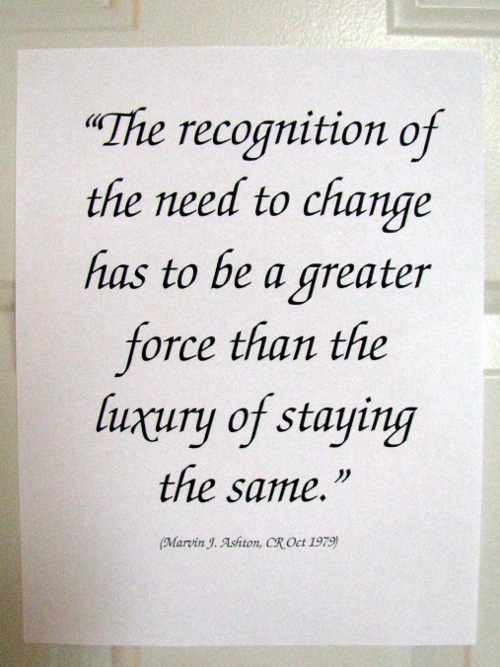
I picked up this sign at institute last Wednesday. The lesson was on our desires; specifically, how the thing that we truly desire deep down is often the thing that we get.

The main reason I posted this sign on the door was to motivate me to get a better job than my current one.  However, it applies to so many other things as well.

Take writing, for example: if I’m going to actually turn this writing thing into a full time career, I’ve got to bust my butt to make it happen.  Writing a paltry 250 words each day on a novel you’ve been working on for the past twenty years just isn’t going to cut it.

I got two form rejections today, and that made me realize that I need to be more serious about submitting my work.  So instead of working of working on Worlds Away From Home, I researched a slew of agents, rewrote my query letter for Genesis Earth, and sent out four carefully prepared and researched submissions.  I don’t want to spend any more time bouncing around from job to job than I have to–I want to break in and make this writing career take off.

So far, I’ve gotten approximately 14 rejections for Genesis Earth: ten form rejections, one personalized rejection, one rejection after the partial was requested, and two that I haven’t heard back on but have been out for so long they’ve probably been rejected.  Interestingly enough, rejection itself is not that hard for me to deal with: it’s building the motivation and nerve to submit to the next place that’s tough.

But I’ve got to do it.  I feel kind of like Hachimaki from the anime series Planetes, who quits his job without taking the severance package when he applies for the Jupiter mission.  If he has the safety net, he knows that he’ll get lazy, so breaks goes out on his own, even sleeping on the streets for a while during the initial tryouts.

I haven’t quite fallen that low yet–I’ve got an apartment, a bike, and a job, even if it’s only a subsistence level one.  But when it comes to long term careers, I’m putting everything into my writing right now–there isn’t anything else.

It’s still discouraging to get rejected, but I’m still very optimistic that things will work out.  Even if everyone rejects Genesis Earth, I’ll have Mercenary Savior ready to submit before the end of the year.  It’s just a matter of time–I just hope it happens soon.

In the meantime, here’s the opening sequence from Planetes.  Such an awesome series–I’d take a job with Debris Section in an instant!  Even garbage collecting is cool when it’s IN SPAAACE!!

When taking a break is not enough

So these past few days, I’ve been taking an unofficial break from writing.  After I finished Mercenary Savior 3.0, I didn’t feel that the time was quite right to start my next project.  Plus, I figured that after working so hard, I kind of deserved a break.
It’s been kind of weird, though.  In some ways, it’s kind of relaxing not to be writing every day, but in other ways, it’s unsettling.  I don’t feel like I’m recharging the well–I just feel like I’m being lazy. Writing is hard work, but it’s satisfying work, and I miss that sense of satisfaction.

I hope to get it back soon, though.  I’ve got a rough outline and a ton of ideas for my next project, and I kind of know where I want to start.  The trouble is, I still feel that something is missing, and I’m not sure what it is.  Maybe the best way to overcome that is to blog about my ideas and see what happens.

So for this next project, I want to recycle the story and characters from Hero in Exile, which I left unfinished back in winter of 2009 (right around the time when I finished Genesis Earth).  It takes place on Gaia Nova, a planet that is half desert/wilderness, half densely settled urban arcologies.  The main character is a boy named Jalil who became separated from his parents when their ship was destroyed in orbit; they threw him into an escape pod with his mother’s ID pendant, and he crashed into the desert.  A local tribe of Bedouin-type nomads took him in and raised him, but he’s always wanted to get back to his biological family and find out who he really is.

Things get complicated, though, because the sheikh of the tribe has no sons, and therefore wants to marry Jalil off to one of his daughters in order to keep the tribal holdings in the family.  He’s so desperate that he orders one of his daughters, Mira, to seduce Jalil by any means necessary.  Since chastity and virginity are highly valued within the tribal society, Mira feels very uncomfortable about doing this.  She has feelings for Jalil and would like to marry him, but not in that way.  At the same time, however, she doesn’t want to disobey her father.

The story starts right around the time when Jalil sets out in quest to find his biological family and learn of his true origins.  He decides that the best way to do this is to go on a pilgrimage to the Temple of a Thousand Suns, deep in the urban arcology side of the planet.  The sheikh of the tribe sends Mira with him, under the pretense that she’s making the pilgrimage.  The real reason she’s going, however, is to catch him in a moment of weakness and seduce him, thus forcing him through the stain on her honor to marry her and return to the tribe.

Jalil, however, is completely oblivious of all this.  He is totally naive to the ways of the world, and believes very strongly in honor, virtue, and other high moral ideals.  As he and Mira leave the desert and descend into the morally corrupt world of the arcologies, however, Jalil finds himself becoming more and more disillusioned.  He and Mira become closer and closer physically, yet further apart in the ways that really matter because of the poison of deception and manipulation that has come into their relationship.  Eventually, they both find themselves forced to make some defining decisions, just as everything they’ve known and believed is shattered and destroyed.

That’s the general idea, at least.  I suppose you could call it a romance where the main obstacle to them getting together is the intense pressure on them to have sex. It’s probably been done before, but hopefully my sci fi take on the idea will make things interesting.

I still feel like I have a lot of prewriting work to do, though.  I want to make Mira and Jalil both viewpoint characters, and to do that I need to have their backstories and motivations worked out very well.  With Jalil, I think I’m ready to start, but I’m not so sure about Mira.

Anyways, that’s where things stand.  Do you like the idea?  Don’t like it?  See something interesting that I haven’t seen?  Let me know–please let me know.

Oh, and I need a new title.  Hero in Exile is way too cheesy.

Space Pirates of CONduit

So this weekend I went to CONduit up in Salt Lake city.  It was a great experience! Lots of fun, lots of friends, and lots of excellent panels on writing.

The usual crowd was there: Dan Wells, Brandon Sanderson, L. E. Modessitt, Bob Defendi, Dan Willis, Paul Genesse, Julie Wright, John Brown, Larry Corriea, James Dashner, Eric James Stone, and tons of others.  Besides the bigger names, I saw a lot of other aspiring writers like myself who have yet to make it big–friends from World Fantasy and LTUE.  It was good to catch up and reconnect.

Friday had a number of excellent panels.  My personal favorite was A Writer’s Life, in which a number of relatively newer writers gave advice on breaking in and talked about what their lives are like now that they’re published.

At one point on the panel, a fearful aspiring writer asked the question: “when do you know when it’s time to quit and give up?”  The responses from the panelists were quite insightful.  Basically, the only way to know that you need to quit writing is if you can imagine your life without it.  If you can’t, you may feel that you’re writing currently sucks, but you’ve still got stories in you, and those stories need to find a voice.

There were a number of other gold nuggets on that panel.  Larry Corriea surprised me by saying that there is no such thing as an “outline writer” or a “discovery writer”–that these concepts simply describe writing tools, and that different projects require different tools.  Julie Wright said that if you are not enough without a publishing deal, you will never be enough with it.  John Brown (I think) said that writer’s block doesn’t exist: if you’re blocked, it means either something’s wrong with you or something’s wrong with the story.

Saturday had a number of excellent panels as well.  The guest of honor was Barbara Hambly, and she was a delight: witty, saucy, and full of interesting stories and great advice.  For her main address, she simply talked about how her life has changed in the past thirty years, but it was fascinating.

One of the more interesting things she said was that God places an angel with a flaming sword in front of every door in our lives that we shouldn’t take.  Sometimes, it seems that you’re simply staring down a corridor full of guarded doors–and sometimes, especially towards the end of life, it seems that you’re staring down a corridor and the angels are saluting you.  That made her tear up–she’s had a long, rough, yet interesting and vibrant life.

When asked to elaborate on the decline of the fantasy market in the past twenty years, she gave a very interesting response.  Today, instead of buying fantasy novels by the pound, fans are immersing themselves in MMORPGs like World of Warcraft.  Because it requires much less effort to play a game than to read a book, people are turning to games as a substitute.

Another fascinating panel was Riding the Rocket, in which a number of established authors discussed the career blast off and what to expect.  Lee Modessitt made the point that there are two basic approaches to writing: storytelling or writing excellent prose.  In order to be successful, a writer has to master both, but they generally start out better at one than the other.  The key is to know which one you’re weaker at and consciously work on it.

When asked about their greatest fear, the unanimous answer was that they’re terrified their next book will tank and that they’ll fade into obscurity–that they’ll be forced to go back to that dreaded day job.  The only way to deal with that, though, is to keep writing, keep working on your craft, and control the things you can while not fretting too much about the things you can’t.  If you do what you can, things will generally work out for the best.

There were a ton of other excellent panels, other nuggets of wisdom.  I recorded a number of panels, but I’ve decided not to post the mp3s publicly here: if you want them, just email me and I’ll send you a copy.

All in all, I’m very glad I came!  Besides all the panels and networking opportunities, it was just a lot of fun to hang out and talk science fiction and fantasy with a bunch of like minded people.  CONduit is an awesome convention–if you’re a local Utah writer and you have the chance to come, I definitely recommend it!

The time sink

Man, life is different outside of school.  So much time, so little structure.  I find that I either write a lot, or I get distracted on some side project and write almost nothing.

For example, my bike broke down last week.  Since that’s currently my only form of transportation besides walking, I spent a good amount of time this week fixing it.  In fact…I took it apart and completely rebuilt it on a new frame.  It was fun, educational, satisfying, and a good way to meet girls, but it took a lot of time away from writing.

Job hunting is another example.  I signed up with a temp agency this past week, but haven’t seen any work yet, so I’m still somewhat antsy.  It’s not easy watching money leave when you have no way to replenish it.  But when your mind is on getting a job, it’s very hard to think about anything else.

I dunno.  Maybe I’m just very bad at multitasking.  But tonight, for the first time in a few days, I put all that aside and completely submersed myself in the act of writing.  Boy, it sucked up a lot of time…but at the end, it felt so good.  So satisfying.

I need more of that, if I’m going to make this writing thing take off.  Got to outline a space for every necessary thing (including writing) and be careful about not overfilling that space.  Looking for work is good, but thinking about it so much that I don’t have time for other things, that’s not good.

In the meantime, I’ll try to find some balance and update this blog more often.  It’s my only active blog now, so I figure I should write more frequently.  One thing I want to do with this free time is read more; I read a George R. R. Martin book last week, and I’m finishing up Dave Wolverton’s On My Way To Paradise for the second time right now.  Expect some book reviews in the near future.

(hmm…I wonder if I could find a way to review books and get paid for it?)

Chomping at the bit

It’s 1:30 am where I am, and I just finished reading through the second draft of Bringing Stella Home and all of my first readers’ comments.  I don’t know how to describe what I’m feeling right now, but I am so ready to make this story shine!

First of all, the story itself is incredibly powerful, at least to me.  True, the current draft is full of problems (some of them so embarrassing I cringe just to think that I allowed other people to read it) but at its core, there is definitely something poignant and moving.  One of my first readers is on active duty right now in Afghanistan, and it actually inspired him to write a poem.

Of course, a reader can be “moved” in bad ways as well as good, and some of the feedback on the current draft’s problems brought out a side of my friends that I didn’t know even existed (yes, Kindal, I’m talking about you).  Seriously, reading those comments was like getting gutted and filleted with a rusty fishing knife.  If I’d had problems with my self esteem, I probably would have cried.

Oh well.  At least it wasn’t boring. 🙂

But harsh or not, the comments were all useful–surprisingly useful, actually.  In a story this big, it’s easy to miss things (even big things like character motivations), but after reading through all my reader comments, I feel confident that I’ve got a solid outline for the revision.

Some of the suggestions were pretty dang good, too.  Usually, I only adopt about half (or less) of the proscriptive comments my readers give me, but this time, I’ll probably end up taking quite a few more.  I don’t know if it’s because I was an idiot when I wrote the first draft or because my readers were getting into the story a lot more than usual, but the advice this time opened me up to all kinds of new ideas.

I probably can’t say much more without spoiling my own story, and I definitely don’t want to do that.  Let me just finish by saying that I believe this story may be the one that breaks me into publishing.  I hope this doesn’t sound conceited or arrogant, because I don’t mean it that way at all.  I just think that this story has some serious potential, and that if I treat it right, it will end up in print someday.

Inshallah, someday soon!

In the meantime, I’m going to put everything into revising this next draft–that is, everything short of secluding myself in a white room and starving myself (or graduating and not looking for a job, which is a more realistic possibility).  This story is calling to me–it needs to be told.  It needs to be fixed.  It needs to be polished and shared with other readers.

It needs a lot of work.  But now it’s 2:00 pm, and I’d better get to bed.  Another exciting day of photocopying newspaper clippings and compiling spreadsheets of data on press freedom in Turkey awaits me.  Excuse me if I sound too excited.