Thoughts after reading the Southern Reach Trilogy by Jeff VanderMeer

So I recently finished reading the Southern Reach Trilogy by Jeff VanderMeer, and I have a lot of thoughts on it. I’ll do my best to avoid major spoilers, but I’ll probably end up spoiling some of it, so I’ll mark those parts as best as I can.

Overall, I can say that it started out strong, but ended rather mixed. I really enjoyed the first book, with its creeping sense of escalating paranoia that kept me glued to the page right to the end. This book won the Nebula Award in 2014, which was how I discovered it, and I was pleasantly surprised to find a Hugo/Nebula award-winning book from the past decade that I actually enjoyed.

The second book had some good moments, but overall I felt that it suffered from second-book slump. Which is understandable. It did a decent job of setting things up for the third book, but it lacked that sense of creeping, paranoid danger that really drew me into the first book—or rather, the danger was dialed down to the point where it just felt creepy instead of gripping or suspenseful.

Also, even though it explained a lot more than the first book, I don’t feel like it explained enough. This is probably because the book is clearly written to be deconstructed using the kind of literary theories that English majors spend most of their time in college learning about. There’s a lot of vague symbolism and recurring motifs, which makes for some very obtuse reading. The quality of the writing somewhat makes up for that, but if the first book hadn’t captured my imagination so much, it definitely would have felt like a slog.

And then, the third book. In some ways, I really enjoyed it. In other ways, I feel like it suffered from all the same problems as the second book, with a frustrating number of loose ends. But if any more loose ends had been tied up, it probably would have felt a bit like the ending to Lost. Which makes me wonder if behind all the pretty writing and other literary tricks, there isn’t a whole lot of substance behind any of the books in this trilogy.

But the thing that really got to me was the trope where a character is LGBTQ for no other discernible reason than to make him sympathetic—as if all LGBTQ people are sympathetic or virtuous by default. [Minor Spoiler] This particular character is also the only Christian in the trilogy, which makes me wonder if VanderMeer believes that being a Christian automatically makes you villanous by default—especially given the eerie strangling fruit sermon in the first book. [/Minor Spoiler] I see this trope fairly often, especially in modern science fiction and fantasy, and it’s super frustrating because of how it ties in with all of the other grooming and gaslighting that comes along with the religion of woke. At least if it was preachy, there would be some sort of message to ponder and digest, hamfisted as it might be.

But the saddest thing is that I can’t tell if VanderMeer fell back on this trope because he actually believes it, or because he knows that his audience (which seems to be rich, woke English majors drowning in student debt) requires it. In other words, is he merely responding to his audience, or is he leading them? Probably some of both, with a little bit of “I’m a straight, white male, so I have to prove that I’m not a white supremacist” thrown in.

Don’t get me wrong. There was a lot about this trilogy that I liked, and literary deconstruction aside, it’s clear that VanderMeer can write. But after finishing the trilogy, I don’t think I’ll be picking this one up. Unfortunately.

P is for Parenthood

I’m currently in the process of writing the second edition of my newsletter exclusive, Science Fiction from A to Z, adding a bunch of new chapters and rewriting all of the old ones. For a blog post this week, I thought I’d share one of the new chapters. Let me know what you think!


I was going to make this section “P is for Pulp,” rounding out “G is for Golden Age,” “N is for New Wave,” “D is for Dark Age,” and “I is for Indie.” But I have to admit, I’m not as familiar with the pulp era of science fiction as I would like to be. I’ve read all of Robert E. Howard’s Conan and Solomon Kane stories, and Edgar Rice Burroughs’s A Princess of Mars (though not the rest of the Barsoom series, unfortunately. It’s on my TBR!) but that’s pretty much it. From what I understand, Jules Verne, H.G. Wells, and (of course) Mary Shelley all preceded this era, and I’m a little more familiar with them, but all I know about the pulp era is what I’ve heard from other sources, and I’d rather not regurgitate that without first exploring it myself.

Instead, I want to write about a major influence on every writer that gets almost no play whatsoever in public treatment of their work, but is arguably the single most important aspect of their lives: parenthood.

Becoming a parent really changes you. When I held my first child in my arms for the first time, a distinct thought came into my mind, almost like a voice: “this is her story now.” They say that we’re all the hero of our own story, and to a certain extent that’s true, but anyone who has brought a child into the world (or adopted a child as their own) has a much more complex and nuanced understanding and perspective. Even a terrible, abusive parent has still experienced what it’s like to become a link between the generations. That experience reshapes everything you do and are in ways that are impossible to appreciate until you’ve had it for yourself.

There is a subtle but distinct difference between books written by authors who have experienced parenthood vs. authors who are childless. I wasn’t as conscious of it until I became a parent myself, but even back in my days as a bachelor, I think I could still sense it, even though I didn’t know what it was. I suspect it’s why I’m a huge fan of David Gemmell, but not of George R.R. Martin, even though on the surface, they write the same kind of book. Both of them write dark and gritty fantasy, both of them are known for killing off major characters and doing horrible things to the ones who survive, and both of them are written quite well—in fact, on an artistic level, Martin is probably superior. But where Martin tends to obsess over themes of victimhood and victimization, Gemmell focuses more on heroism and what makes a hero. Gemmell had two children; Martin (so far as I can tell) has none.

In 2022, I made a new year’s resolution to read or DNF every novel that has won either a Hugo or a Nebula award. To prep for this resolution, I made a spreadsheet of all the novels, along with other pertinent information that interested me, such as each author’s gender, their approximate age when they won the award, and whether or not they have any children. I found some very interesting patterns. There were 110 novels in all, and fifty of them were written by authors who were childless (or at least did not have any mention of children in their author bios and/or Wikipedia entries). After 2015 and 2016 respectively, every Hugo and Nebula award-winning novelist (not counting the Retro-Hugos) has been childless—more specifically, childless women in their 40s and 50s, with one exception who is transgender (Charlie Jane Anders), one exception who is in her thirties (Arkady Martine), and one whose age I cannot determine (Sarah Pinsker). But all three of them are still childless, at least according to the internet.

Now, this is not to say that not having children makes you a terrible writer. In fact, it may actually make you a better writer, since you have more time and energy to devote to learning and improving the craft. But whether for good or ill, I do think that it gives you a handicap in terms of life experience. That handicap is going to influence both the subjects you choose to write about, and how you choose to write about them. I say this not just from my experience as a reader, but as a writer.

My wife and I married a little late, and by the time we had our first child, I’d already been writing professionally for about ten years. Up until that point, the reader I’d had in my mind was basically a younger version of myself. Bringing Stella Home is not a YA book, but a lot of my Amazon reviews assume that it is, probably because I was in college when I wrote it and was writing the sort of book that I wish I’d discovered back when I was in high school and reading things like Ender’s Game and Dune. After I’d experienced the real world and become sufficiently red-pilled, I wrote books like Gunslinger to the Stars for my naive college self. But since becoming a parent, my perspective has begun to change, and I find myself writing less for myself and more for my daughter—or rather, the kind of person I expect my daughter to grow up to be. I’m a lot more conscious of certain kinds of content, and while that doesn’t mean that I shy away from it, I do find myself asking: “What am I really trying to say here? What purpose does this really serve?”

The Genesis Earth Trilogy is a good example of this evolution in my own work. The first book, Genesis Earth, was my first published novel, and really was written for a young adult version of myself, which is why I chose to categorize it as YA science fiction. The whole story revolves around two young scientists on a mission to an alien planet, and how they come to discover just as much about each other as the planet they’ve been sent to explore. It took me ten years to write the next book, Edenfall, not because I didn’t know what would happen next, but because I didn’t feel like I was ready to write it. Then I got married, and that was the experience I needed to break through the block and finish the book—and it went in a much different direction than it would have, if I had written it while I was still single. But the conclusion to the trilogy, The Stars of Redemption, was the book that I wrote after my daughter was born, and that experience had a very profound impact not just on the story itself, but on the characters, the thematic elements, and the way the last book brought everything together from the first book to a meaningful conclusion. I know for a fact that I would not have been capable of writing such a book without the experience of becoming a father.

Post-Christmas Update

Christmas was great! My parents came over from Iowa on the train, and stayed with us for a few days. My wife’s brother also came down from the Salt Lake area. He has a bazillion board games, so we had a ton of fun playing with him.

Before I had kids, I never really got the point of Christmas. There were things about the season that I enjoyed well enough, but a lot of other things that I despised, and over time I developed a love-hate relationship with Christmas. I think I’ve blogged about it before. In any case, I used to think that it was due to the tension between commercialism vs. religion—Santa vs. the baby Jesus, or holiday vs. holy day, if you will—but now that I have children of my own, my perspective has changed. Christmas really is the perfect holiday for kids, and when you’re celebrating it for them and not just for yourself, the tension between the religious aspects and the commercial fades, and it all comes together in a really awesome way. Perhaps that’s why all of the best secular Christmas songs were written in the 40s and the 50s, in the earliest years of the post-war baby boom.

Anyways, those were some of my thoughts this year. It’s a lot more work to pull off Christmas with young children, but it’s also a lot more fun. It was also really fun to have other family visiting us, even if it was a bit stressful at times. But not too stressful, thankfully.

So we saw my parents off at the train this morning. The west-bound California Zephyr is running on time these days, which almost never happens with Amtrak (I have some of the worst train-travel horror stories you will ever hear—catch me at a convention and I’ll tell you how my girlfriend at the time broke up with me in the middle of a 60-hour train ride). Apparently, the supply chain crisis means that there are less freight trains, which makes for fewer delays. But the east-bound train leaves from California, the most dysfunctional state in the union, so it was running almost eight hours late. For us, though, that was actually kind of nice, because it meant that we got to sleep in.

In any case, the extended family is all gone now, and we’re slowly getting back to normal, though it probably won’t be until after the new year before we’re back to 100% again. If you sent me an email over the break, that’s why I haven’t sent a reply (although I am pretty horrible about replying to emails generally). I’ve got a BookBub Featured Deal running tomorrow that has me biting my nails, and a couple of other things to catch up on the publishing side of things.

Other than that, I hope to get back in the saddle with my writing pretty quickly. Should be able to pick up the WIP where I left off with it, and I’d like to pull out a couple of short stories from the outline too. Definitely need to get some more short stories into the production pipeline. I’ve got every month covered through May with new projects, though April’s story is appearing in Bards and Sages Quarterly and I’d like to line up a self-publishing project during that month too. But that shouldn’t be too hard.

I’ll leave off with this awesome rendition of I Saw Three Ships from the Tabernacle Choir at Temple Square. My dad was college buddies with the organist, Rick Elliott. Happy New Year!

4 AM Thoughts

Violence is not speech and speech is not violence. If you conflate the two, you will invariably use violence to quell the speech that you most need to hear. This is because the thing you need the most is usually in the place you least want to look.

With regards to Jordan Peterson.

This is why Meta is going to fail

So while Mrs. Vasicek and I were in the theater for the first time since the pandemic, watching the trailers before Dune, we saw this commercial for Facebook’s new Meta rebrand:

Since the theater was almost completely empty, we were already having fun by making snarky commentary. And when this commercial came on, it was a gold mine. So creepy. So disturbing. So “I really don’t want whatever the hell this is trying to sell me.”

But right before the end, Mrs. Vasicek nailed it and said: “it’s probably for Meta!” And then, bam! Meta’s new logo came on, and we both had a good laugh.

Seriously, though, ever since Zuckerberg announced that Facebook would be rebranding as Meta, I’ve been fascinated with it—not because I’m looking forward to it, but because it is so. So. Cringe. It’s like watching a train wreck in real time. History may prove me wrong about this, as plenty of things that were laughable when they started out proved to change the world, but I really do think that Meta is going to fail. Spectacularly.

I have so many thoughts about this. So many thoughts. But if I had to break it all down to one core idea, it would be this:

At some point in our lives, all of us will reach a point where something about ourselves comes into conflict with reality. At that point, we can make one of three choices: we can try to change reality, we can decide to ignore the conflict, or we can work on changing ourselves.

Part of becoming an adult is realizing that there are aspects of reality that you simply cannot change. We can choose our actions, but we cannot choose the consequences of our actions. To paraphrase Jordan Peterson, we realize that we should clean our rooms before we try to change the world.

Right now, the world is ruled by people who reject the notion that their actions have consequences, and believe that reality can be whatever they want. That is the main reason why everything is falling apart. But instead of recognizing this and changing course, our leaders are doubling down and demanding that we all bend the knee and fall into line with their false reality.

It’s not going to work.

Zuckerberg is one of those people. Facebook didn’t succeed because it invented social media, or did it better than anyone else: it succeeded because Zuckerberg realized that his end users were actually his product, and his consumers were the corporations and governments that wanted all their data. So he optimized Facebook to be as addictive as possible and got more than a billion people hooked on it.

At that point, Facebook was so ubiquitous that it was difficult to function in the real world without it. Those of us who tried to quit soon learned that Zuckerberg was holding our social connections hostage, and that we could expect to be cut off from our friends and family if we tried to leave.

But then the Trump years happened. Social media became toxic, and Facebook in particular became embroiled in scandal. Zuckerberg tried to thread the needle between the partisan divide, and all he managed to do was split the baby. Team blue hated Facebook for selling their data to companies like Cambridge Analytica, and team red hated Facebook for “fact checking” and shadowbanning them. Meanwhile, team “don’t talk to me about politics” became exhausted by the whole thing, and started to unplug in increasing numbers.

I think Zuckerberg needs Meta to be a success much, much more than any of us need or want Meta. This is pure speculation on my part as I don’t have any figures to back it up, but I suspect that Facebook peaked sometime in the last five years and has been declining at an ever sharper rate ever since. It’s probably not just Facebook, either, but all social media. They’re all toxic now.

But after all the goodwill that he’s burned, is Zuckerberg really the technological Moses who’s going to lead us all to the new promised land? And is the promised land really just a cheesy-looking version of Second Life with VR headsets?

The three things that Zoomers and Millennials crave more than anything are meaning, authenticity, and redemption. Those are also the three biggest things that Big Tech has been depriving us of. That’s not going to change until we get away from Silicon Valley culture.

Anyone who has started a family will tell you that the best way to find meaning, authenticity, and redemption in your life is to raise children. And yet, when Google designed their campus to have all the amenities necessary for their employees to live, work, and play there indefinitely, they somehow forgot to build any sort of playplace or daycare for children. That’s Silicon Valley culture: sexy and sterile, inclusive and censorious, flashy and vapid.

Second life failed because the people at the top tried to milk it too hard, and the users revolted. Facebook’s users are revolting for similar reasons, because manipulating us to have the right behavior is now Facebook’s product, and they’re milking us for all we’re worth. Is Meta going to be any different? Because it looks an awful lot to me like a farcically transparent attempt to build the Matrix. Can somebody please tell Zuckerberg that the Matrix was supposed to be a dystopia, and not an instruction manual?

Ultimately, though, I don’t think it’s going to matter much, because Meta is going to fail. Spectacularly. The deeper I look into it, the more it seems that the writing is on the wall. Of course, I could be wrong about Meta—spectacularly wrong, even—but I’m not betting on it. Because if I had to choose between plugging into Zuckerberg’s new Matrix and vacationing in Iceland, the choice would not be difficult:

DUNE!

So Mrs. Vasicek and I saw the new Dune movie in theaters last weekend, and let me just say, it was awesome in every sense of the word!

Speaking as someone who’s read the novel three times and fervently believes it to be the most perfect science fiction book ever written, this movie did not disappoint. Not only is it the best movie adaptation of the book, hands down, but it may be the best adaptation that it’s possible to make of the book. Denis Villeneuve has done for Dune what Peter Jackson did for Lord of the Rings. It’s incredible.

With all of that said, I’m not sure if the movie would make much sense to anyone who hasn’t already read the book first. Dune is really a story within a story within a story, and while the movie captures that aspect quite well, it also touches very, very lightly on the outlying stories, which could be confusing for someone who isn’t already familiar with the novel. Even in my first read, I didn’t fully appreciate the complexity: it took two rereads before I began to grasp the full significance of all of the moving parts.

At its heart, Dune is about the struggle of Paul Atreides (the Chosen One) to push back against his destiny, because he knows that his success will be far more devastating, for him and for the galaxy, than his failure. In that, it’s a brilliant subversion (in the truest sense) of the hero cycle. But all of that takes place within the story of the Bene Gesserit and their quest to create the Kwisatz Haderach, a super-human who can see the past, present, and future all at once. But the Bene Gesserit scheming is all happening within the political intrigue of the Great Houses and the Imperium, specifically with the feud between House Atreides (which presents the greatest threat to the emperor) and House Harkonnen—and all three stories converge on the planet Arrakis, amidst the struggle of the Fremen to terraform their desert world into a lush, green paradise when all of the powers of the galaxy want to exploit it for the spice that is so important for interstellar space travel.

For someone who is already familiar with all of that from the book, the movie hits on all of those nested stories perfectly, without getting bogged down or missing the most important story of all: Paul’s internal struggle with his own destiny. But for someone who is new to all of that, the movie might be really confusing. It will be really interesting to hear what my Dad thinks of it, because he’s never read the book and he plans to stream the movie over Thanksgiving break. I’ll report back when I hear his reaction.

Some people are criticizing the movie for ending at the wrong place, but I actually think it ended at the exact right spot: where Paul becomes one of the Fremen by killing his first man in a duel. It’s subtle, but the whole movie builds up perfectly to that moment, making Paul’s character arc the central driving story arc. For me, it didn’t feel at all like I’d only gotten half a movie, or that the director was drawing the story out to make it into a trilogy. It felt very natural to end the story there, and a great set-up for the sequel, which should wrap up Dune itself. The third movie will conclude Paul’s story by giving us Dune Messiah, which should be really interesting, since the first movie actually did a lot to set that up. If the second movie is as good as the first, then the third one may actually be better than the book.

It’s become very fashionable these days to cast a major character as an ethnic minority, which can be really annoying. However, I wasn’t all that bothered by the decision to cast Doctor Kynes as a black woman. It did some interesting things for the character that I thought worked really well for the story, and for Paul’s relationship with Kynes. So even though that was the movie taking license from the book, I felt like it was a really good call.

One criticism that I do tend to agree with is that the characters feel a lot more like archetypes than like real people. That’s fair, not only for the movie, but for the book. My wife says that’s the main reason why she didn’t like the book, because none of the characters felt “real” to her. But that focus on archetypes is something I really enjoyed about the book, so it wasn’t as big of a problem for me with the movie.

Another point of criticism that my wife had was that neither the movie nor the book have a whole lot of joy. That’s also fair: the movie does tend to hit the same emotional notes over and over, without much variation. The most humorous part was where the Reverend Mother tells Paul “farewell, young human. I hope you live,” which wasn’t actually meant as a joke (and Mrs. Vasicek and I are totally going to use that line on our own baby from now on).

But it really did hit the sense of wonder quite spectacularly, not just with the big things like the desert and the sandworms, but the fine details like the control systems of the ornithopters, or the grittiness of the stillsuits and the spice mining equipment. It really does stick with you long after you’ve watched the movie, and makes you want to watch it over and over.

All I can say more is that I’m really, really, really looking forward to the next one!

Navigating Woke SF, Part 4: Götterdämmerung

Governor Andrew Cuomo announced his resignation today, after his sexual harrassment scandal that has seen an overwhelming number of women come forward. As tempted as I am to dive into the politics of this story, I bring it up only to provide context for this:

Yeah, I’m cringing too.

For the last several years—arguably, since the Ferguson riots and President Obama’s pivot toward intersectionality, this country has been progressing steadily toward the woke moral panic that we now find ourselves living through. Unlike the Red Scare, to which it is comparable in both scope and severity, the threat posed by “white supremacists” and other villains of the intersectional left is as laughable and contrived as the term “Cuomo-sexual,” and will age just as badly.

To anyone who studies history, it is obvious that there’s going to be backlash against all the gaslighting and hypocrisy of the woke moral panic that is currently gripping our nation. All around us are signs that the tide is beginning to turn.

The first indication that caught my attention was the “woka-cola” scandal over critical race theory (CRT) in Coca Cola’s employee training. Instead of giving a token response, Coca Cola reversed the policy and fired the executive responsible for implementing the policy. The only reason a major coproration would do something like that is because the scandal was hitting their bottom line in a way that they could not ignore—and yet, there were no organized boycotts on the part of the conservative right. Just a lot of disenchanted consumers quietly saying to themselves: “I think I’ll get a Pepsi instead.”

There are other indications of a growing cultural backlash all throughout our society, from the Marvel Cinematic Universe to viral videos of parents standing up to CRT in their kids’ schools. All of the organizations pushing the woke moral panic are little more than establishment astro-turf backed by corporate money, while the organizations pushing back are genuine grassroots movements—and they’re winning. All of the ground gained by the left during their “long march through the institutions” is about to be lost in a single generation, perhaps even a single decade. Public trust of established institutions is plummeting, and with every glaring instance of “sophisticated” woke hypocrisy, people are rejecting the establishment narrative, just like in V for Vendetta. Bollocks!

So what does this have to do with science fiction? In the second part of this blog series, I pointed out the following:

Traditional sci-fi publishing has trended to the political left (sometimes to the extreme political left) of mainstream American culture since the New Wave era back in the 60s and 70s. It seems that the campus radicals took over much of the field, not to mention the fact that American traditional publishing has always been centered in New York. But until just the last few years, it was still possible for left and right to coexist in our pluralistic society. People of different political persuasions could agree to disagree amicably, and while there may have still been whisper campaigns and secret author blacklists, you could still expect to see a healthy mix of opinions and perspectives in most places that published short stories.

That is not true today. Certain subjects and opinions have been deemed verboten, while others have been exalted to the status of eternal truth, and any story that questions or challenges the politically correct narrative doesn’t have a chance in most of these markets. In other words, science fiction has gone woke.

If I’m right and a major backlash against the woke intersectional left is brewing, then many of today’s most recognized and award-winning publications and editors are going to fall, or at least become relegated to a position of cultural insignificance. Indeed, we had an indication back in 2017 that this was already starting to happen, when it came out that China Mike Glyer buys traffic from Chinese bots to artificially boost the stats for his Hugo award winning site, File 770.

I suspect that these woke institutions within the SF field will try to maintain the illusion of cultural relevance for as long as they possibly can, much as ex-Governor Cuomo did everything he could to maintain the illusion of his fitness to hold office (even publishing a book about his leadership during the pandemic—talk about gaslighting!) until his inner circle had abandoned him, the Biden administration had called on him to resign, calls had come for his arrest, and the New York state congress had a deadline in place to begin the impeachment proceedings.

When the illusions fade and the gaslighting can no longer be maintained, there is going to be a cultural götterdämmerung—a “turbulent ending of a regime or institution.” Or perhaps the götterdämmerung has already arrived, and it ends when the illusions can no longer be maintained. Either way, it seems that the smart move is to reject these woke SF markets—or, as they so arrogantly put it, to “self-reject”—in favor of going indie, going with the semi-pro markets, and otherwise building an audience that isn’t caught up in all this woke madness.

Navigating Woke SF, Part 1: Short Story Markets and Author Blacklists

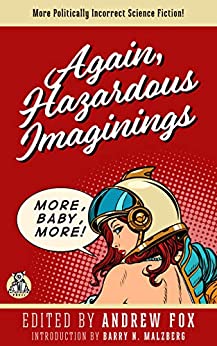
Last year, I had a short story published in the anthology Again, Hazardous Imaginings: More Politically Incorrect Science Fiction. Not only was it one of my highest paying short story sales to date, but it also made it onto the Tangent Online 2020 Recommended Reading List with a *** rating, their highest tier. Only 13 out of 293 stories on the list received that honor—and making the list at all was an accomplishment!

But a funny thing happened after the anthology came out: for a stretch of several months, I stopped receiving personalized rejections for my short story submissions, and instead got only form rejections. Normally when I write a cover letter for a short story submission, I mention the last three markets that I was published in. For example: “My stories have recently appeared in Again, Hazardous Imaginings; Twilight Tales LTUE Benefit Anthology, and Bards and Sages Quarterly (forthcoming).” In a typical month, I’ll get maybe a dozen or so form rejections and a couple of personalized rejections, depending on how many stories I have out on submission.

Back in March, I started to notice that I wasn’t getting any personalized rejections. Suspecting that my publication credit in Again, Hazardous Imaginings wasn’t helping me, I decided to change things up and only list my publication credits for stories listed in Locus Magazine’s Year In Review issue. My thinking was that all of the Hugo and Nebula eligible markets give their yearly reports in that issue, and since all of the editors want to acquire stories that are likely to win awards, a publication credit in one of those markets is more likely to get them to pay attention.

Lo and behold, I started getting personalized rejections again.

Just to make sure I wasn’t imagining things, I exported my data from The Submission Grinder and made a quick table of my submissions returned for each month going back to July 2019. Before “The Promise of King Washington” was accepted in February 2020, I was getting roughly one personalized rejection for every 5-8 form rejections. Then, for most of 2020, I went through a dry spell where I didn’t have many stories out on submission. Towards the end of the year, I got back in the saddle, and my personalized-to-form rejections ratio returned to what it had been earlier… but then Again, Hazardous Imaginings was published in December, and for the next three months, I received no personalized rejections at all. Then, around March-April, I stopped mentioning my publication credit in Again, Hazardous Imaginings… and I started getting personalized rejections again.

So what happened? Is there some sort of unofficial blacklist for stories published in Again, Hazardous Imaginings? Maybe, maybe not. I don’t know if any of the other authors in the anthology have had a similar experience, nor do I know for certain that mentioning the anthology in my publication credits caused this particular issue. It could be that I was submitting to higher paying markets at the beginning of 2021, and those markets just happen to be more stingy about personalized rejections. It could be that the pandemic has just sapped everyone’s energy.

But now that I’ve made this table, the one thing I cannot say is that the whole thing is just a figment of my imagination. There was a three-month period where I saw significantly fewer personalized rejections than usual, and it just so happened to coincide with the publication of the anthology Again, Hazardous Imaginings and my mentioning it as a publication credit in all of my cover letters.

It’s no big secret that most of the traditional short story markets in science fiction and fantasy trend somewhere between liberal and super woke. All you have to do to get a sense for this is subscribe to their podcasts or read their stories online. For most of 2020, I was subscribed to every science fiction podcast, and I frequently ended up skipping episodes because either the story was too woke, the author bio was little more than a checklist of intersectional victimhood groups, or the editor went off on some sort of political rant (typically of the “orange man bad” variety) that had little or nothing to do with the story. You can also get a good sense of the woke-ness by looking up these magazines’ submission guidelines and reading their diversity statements.

So for the last couple of months, I haven’t been listing Again, Hazardous Imaginings as a publication credit in any of my cover letters, and the response to my stories appears to have returned to the old normal… but it doesn’t sit right with me. Why should I have to hide that I was published in that anthology? Why shouldn’t I be proud of it? It did make Tangent Online’s recommended reading list with three stars, after all. Why should I waste my time submitting my stories to science fiction and fantasy markets that would see that publication credit as a black mark?

In other words, why not blacklist the blacklisters?

When an author decides not to submit their stories to a particular market, it’s often called a “self-rejection,” since the author has already decided that the story won’t be published before the editor gets a chance to consider it. But this is a little different. It’s not my own story that I’m rejecting, but the market as a whole. It’s making the conscious decision that if a magazine is too woke, I’m not going to have anything to do with it.

Here’s another way to think about it: why should I hold out for a year or longer, hoping to earn a couple of hundred bucks for it, when most of the markets that pay that well either aren’t interested in publishing the kind of politically incorrect stories that I tend to write, or aren’t going to publish an author like me who isn’t demonstrably woke enough? Even if I only end up selling it to a semi-pro market for less than fifty bucks, if it only takes a few months to make the sale because I’m not wasting time with the woke markets, does that make it worthwhile?

Or here’s yet another way to think about it: what other benefits do I get with my short story sales, besides how well it pays? If short stories are essentially advertisements for my other work, does it actually make sense to seek publication in the super woke markets, whose readers are mostly woke? Or does it make more sense to be published in the more conservative-leaning markets, with readers who are more likely to enjoy the other stuff that I write? And what about networking with similar-minded authors and editors? I made some really great connections through the anthology Again, Hazardous Imaginings, and even brought Andrew Fox, the editor, onto my newsletter for an interview. It was great!

All of this is happening as we’re starting to see an anti-woke cultural backlash gain momentum. Smarter people than me with a finger on the pulse of the culture say that the Snyder Cut is where the tide began to turn. The thing that tipped me off to it was the surprising waythat Coca-Cola walked back their critical race theory training after the “woke-a-cola” scandal. To my knowledge, there was no organized boycott, yet for a large corporation to backpedal so quickly tells me that they really took a hit to their bottom line.

In the coming months, I think we’re going to see a huge cultural shift against the woke moral panic that has gripped our nation for the last couple of years. That in itself is a subject for another post, but what it means for SF&F is that a lot of these woke awards and woke short story markets are well on their way to going broke. The few that endure will become niche markets for a very small audience that has completely divorced itself from the cultural mainstream—including the vast majority of SF&F readers.

Is it really worth hitching my wagon to such a horse? Or is it better to take a gamble on the up-and-coming markets that might not pay as much, but also aren’t carrying all the woke political baggage as magazines like Uncanny or Lightspeed?

Of course, if the answer to all of these questions is “yes, Joe—go for it!” the next big question is how to determine if a market is too woke? Because some of the markets have diversity statements that are fairly conservative-friendly, like “we welcome submissions from writers of all backgrounds!” and don’t use any of the woke value-signalling terms like “folx,” “latinx,” “QUILTBAG,” “indigenous,” “black bodies,” etc. In fact, I’m pretty sure that many of these markets only put out diversity statements to pacify the woke moral crusaders, in the same way that many boarded up stores and restaurants put up BLM signs hoping that the rioters sorry, the “peaceful protesters” would spare them.

One way to determine this is to look at which markets are chasing the wokest awards. The Hugos went woke in 2015, when “no award” swept the categories dominated by Sad Puppies nominees. That was really the moment when the fandom split, and the anti-woke readership abandoned the Hugos in disgust. The Rabid Puppies swept the 2016 nominations in what amounted to a hilarious sabotage operation (“Pounded in the Butt by Chuck Tingle’s Hugo,” hehe), but by 2017 that had all come to an end.

With that in mind, I went through all of the Hugo Awards to see which markets had either won an award or published a story that had won an award since 2015, and which markets had either been nominated or published stories that have been nominated since 2017. Here is what I found:

Hugo Winning Markets since 2015

  • Uncanny (5)
  • Lightspeed (1)

Markets with Hugo Winning Stories since 2015

  • Tor.com (5)
  • Apex (3)
  • Clarkesworld (2)
  • Lightspeed (1)
  • Uncanny (1)

Hugo Nominated Markets since 2017

  • Strange Horizons (5)
  • Beneath Ceaseless Skies (5)
  • Escape Pod (3)
  • Fireside (3)
  • FIYAH (3)
  • The Book Smugglers (2)
  • GigaNotoSaurus (1)
  • Cirsova (1)
  • Shimmer (1)
  • Podcastle (1)
  • Uncanny (1)

Markets with Hugo Nominated Stories since 2017

  • Tor.com (37)
  • Uncanny (18)
  • Clarkesworld (5)
  • Beneath Ceaseless Skies (3)
  • Fireside (2)
  • Lightspeed (2)
  • Asimov’s (1)
  • Strange Horizons (1)
  • Nightmare Magazine (1)
  • Diabolical Plots (1)

The counts for nominated markets/stories do not include the winners, but do include all of the nominations for 2021, even though the winners have not yet been decided.

I haven’t yet settled on a standard for deciding which markets are too woke for me to submit to. I suppose that’s something I’ll have to decide on a case-by-case basis, and for any who choose to follow my lead on this, it will have to be an individual decision. But I am rethinking the way I submit and publish my short stories, based on this experience. This post has already gone too long, and I still haven’t worked my new strategy out, but if you have any suggestions or ideas I’m interested to hear them.

So… what now? Where do we go from here?

For the last several months, I’ve struggled to put my thoughts together into something that I felt was appropriate for this blog. Even though I allow myself to be political here, I’m also keenly aware that I have many readers who might enjoy my books and yet disagree with my politics. I don’t want my politics to become a stumbling block or a litmus test for them, and yet, with all that’s happened since November 3rd (and indeed, is still happening), it’s been very difficult to figure out how to put those thoughts into words.

First there was the election. I expected voting irregularities, but not on such an incredible scale. Then, the Great National Gaslighting, which has been ongoing ever since. To be fair, there was also a great deal of conspiratorial nonsense spewed out by the Qanon folks on the Right, which only served to obfuscate and confuse the issue (for that reason, I tend to believe that Qanon was a psyop from the beginning).

And then, the mostly peaceful protest* at the Capitol changed everything.

I was disappointed by the storming of the Capitol, but not surprised. Disappointed, because tactically, it was the stupidest possible thing that the folks on Team Red could have done. It accomplished nothing of lasting political value, completely sabotaged the lawful and legitimate efforts to question the legitimacy of the election, and gave Team Blue all the ammunition they needed to close the Overton window on the election irregularities, weaponize the surveillance state against their political enemies, and bring the War on Terror to American shores.

I wasn’t surprised, though. From November 3rd to January 6th, the news cycle was filled with the sort of stuff that color revolutions are made of. The mostly peaceful protest* at the Capitol fit the script perfectly—almost too perfectly. Anyone who keeps an ear to conservative media could have told you that the MAGA folks weren’t going to simply bend the knee—not with all of the voting irregularities and other shenanigans.

(*And I use the phrase “mostly peaceful protest” deliberately—not to excuse the storming of the Capitol in any way, but to point out the hypocrisy and Orwellian doublethink of those who unironically used that phrase to describe the George Floyd riots over the summer, and who now call the riot at the Capitol “sedition” and “insurrection” perpetrated by “domestic terrorists.” 1984 was supposed to be a warning, not an instruction manual!)

And then, Big Tech cynically took advantage of the moment to crush Parler, silencing and deplatforming the conservatives who had migrated their from Twitter. “If you don’t like what we’re doing, build your own platform,” they said. So we did, and then… this.

You know, I’m actually not all that concerned about Joe Biden taking the White House and the Democrats controlling the House and Senate for at least the next two years. Am I happy with that arrangement? No, of course not—but on a certain level, the hyperbolic rhetoric on both the Right and on the Left is all just part of the same grift. Politics is what got us into this mess—it’s not what’s going to get us out of it.

But the crap that Big Tech is currently pulling? That stuff genuinely scares me, not the least because my livelihood depends on it. Without Amazon, there would be no indie publishing right now. So for AWS to take down Parler on woke ideological grounds, while flagrantly violating contract law and antitrust—and now, for the chief of that department to replace Jeff Bezos himself—yeah, that doesn’t bode well for authors like me.

I do have some hope for remedy in the courts, but not much. If we do get recourse through the law, it will take years or even decades to get it, and an ugly, uphill battle against corrupt, partisan judges in every level of the judicial system. Ultimately, I think the only thing that will take down Big Tech will be a majority of Americans simply refusing to use their services, deleting their social media accounts and getting smart about their personal data. But I don’t have much hope for that, either.

So what can we expect in the short to medium term? Where do we go from here?

First, if the storming of the Capitol genuinely surprised you, buckle up. When people feel that they have no recourse through peaceful, democratic means—that no one on the other side is listening to them, even as their way of life is being systematically destroyed—they turn to violence. But where the Left sees political violence as a dial that they can gradually turn up, the Right sees political violence as a switch that gets turned on. A lot of people on the Right are now thinking about flipping that switch.

It will start with a series of high-profile political assassinations. I do not condone or encourage this in any way, but I expect that many prominent Democrats will not survive the year. If the violence continues to escalate, we will see more unrest and chaos, ultimately culminating in either a mutiny of the nation’s armed forces, or the return of Donald Trump to the White House. Possibly both.

The “sanctuary state” phenomenon will expand dramatically as red state governors challenge the unconstitutional dictates of the Biden administration. To put it bluntly, red state America is going to become ungovernable. There will also be calls for secession, at first just to extract certain political concessions, but depending on how things go it could become a serious movement.

The migration from blue cities and states to red parts of the country will accelerate dramatically, and may turn violent. States like New York and California are trapped in a death spiral, where rising taxes are causing the rich to flee, which causes the politicians to raise taxes even more. The pandemic has made this much worse. I don’t think New York City is going to survive the coronapocalypse, and will go the way of New Orleans or possibly even Detroit. This will have interesting implications for the traditional side of the publishing industry, which is New York centric to a fault.

At some point in the next two years, I think the other shoe of the economic collapse is finally going to drop, and all of the cans we’ve been kicking since 2008 are going to hit the end of the road. In response, I expect the Biden (or at that point, probably the Harris) administration to make a hamfisted attempt at turning our Economic Impact Payments into some sort of permanent UBI, but it will either be too little, or it will lead to the sort of runaway hyperinflation that I wrote about in my short story “Payday.”

Ultimately, I see only three ways that all of this insanity ends:

1) A peaceful (if messy) divorce. Red states go their way, blue states go theirs, and the Great American Experiment comes to an end with a minimum of bloodshed. I consider this the least likely outcome, and not a very desireable one.

2) A civil war or revolution of some kind. We may already be in the opening phases of this, where the starting factions vie for position before the shooting begins in earnest. We may be reaching the end of the opening phase right now.

3) Everyday Americans from across the political divide join together to reconcile their differences and oppose the social and cultural forces driving us apart. I want to believe that this is the most likely outcome, but it requires that people leave their echo chambers and genuinely listen to those they see as the enemy, and I don’t think that’s going to happen unless something changes dramatically with Big Tech. It wasn’t just politics that got us into this mess: social media played a role in it, too.

What does all of this mean for our family and my writing? I’m trying to work that out right now. Even in a worst case scenario, I think that where we live here in Utah is a good place to weather the coming storm. And in a best case scenario, I would like to be a part of the reconciliation that brings this country back together. But in the meantime, I expect that I’m going to have to find alternative platforms to publish and sell my books, because the ban lists are coming, and it wouldn’t surprise me to learn that I’m already on one of those lists.

In the long term, though, I’m grimly optimistic that things will work out. I’m not quite sure how they will work out, but I know that the forces driving this chaos will ultimately be undone by their own pathologies. The important thing is to find the strength to get through this moment without falling into any of those pathologies yourself. Even with all of this talk of violence and civil war, I have hope that the Great American Experiment is more resilient than anyone gives it credit, and great faith in the goodness of the American people, regardless of political affiliation.

A letter to my 2019 self from my 2020 self

First off, before you read anything else in this letter, go and buy the following items:

  • A couple hundred N95 masks.
  • A box of 100 buckshot shells.
  • A Costco sized jar of vitamin C.
  • A Costco sized jar of vitamin D3 (50 micrograms).

Got that? Okay, good.

Second, don’t panic. You are (mostly) already prepared for what’s coming, and you’ve been expecting it for some time. And actually, things won’t be so bad for you, if you stay smart and take the proper precautions. Also, remember that the collapse isn’t evenly distributed, and everyone’s experience of it is different. You have positioned yourself and your family quite well to come out strong on the other side.

This is the year when the collapse—which has already begun, as you very well know—really begins to accelerate. Hemmingway said that bankruptcy happens in two ways: slowly, then quickly. Well, it’s about to get quick real soon. However, this is not the year when we finally hit the ground. Remember, it’s not the fall that kills you, it’s the sudden stop at the end.

Enjoy yourself at LTUE 2020 as much as you possibly can, because you won’t be going to any other conventions anytime soon. In fact, don’t even worry about making a 2020 conventions plan. And your goal to read every issue of Locus Magazine this year? Yeah, you won’t be going onto campus all that much, so don’t worry about it. Besides, the February issue where they do the 2019 roundup is really the only one worth reading.

You really need to cut back on the political podcasts. Remember how, in your Washington Seminar internship your senior year of college, you learned that you actually hate politics with a deep-seated passion? Yeah, you’re going to be reminded of that before the year is up. At most, you should spend about 1-2 hours per day listening to political stuff, and maybe (though probably not) another 1-2 hours on current events and culture. But really, you should spend most of your time reading books, especially science fiction and fantasy.

Your in-laws are much better at home renovations than you realize, and are willing to help out generously if you ask. Also, you will save an important friendship (and a lot of time and money) if you rely on them instead of hiring on your friend as a contractor. Then again, you’ll learn a lot from that experience as well, and it’s better to risk losing a friendship than to risk stirring up bad blood with your in-laws. Do with that as you will. I’ve probably said too much already.

You are not a libertarian: you are an anti-communist. The distinction is important. Keep listening to alternative media channels, especially Tom Luongo, Chris Martenson, Tim Pool, Eric Weinstein, and Viva & Barnes (who you haven’t discovered yet, but soon will). They may be wrong about a lot of things, and their track record for predictions isn’t spectacular, but their hearts are in the right place and listening to them with a critical mind will give you the proper perspective more than anything else.

Pay attention to the UFO story. I’m not sure what’s actually going on there, but it’s probably more important than anyone realizes.

You have over-estimated the control that the powers that be have over our lives, but you have under-estimated the degree of their stupidity. Seriously, it ranks right up there with all the fools who turned World War I into such a magnificent clusterfuck. Possibly worse. Don’t put your faith in Trump—he is, at best, a speedbump to these people. Read The Fourth Turning, it will teach you a lot.

With all of that said, though, don’t be afraid. There is no reason to fear, especially if you are prepared. And you are prepared—not perfectly, but better than you realize. Most importantly, don’t let the craziness of the outside world keep you from all of the good things going on with your family. You and Mrs. Vasicek are going to have an incredible year, in spite of all the insanity. You will both become parents for the first time, with all that that entails. You will experience a lot of challenges, but you will lay the foundations for that strong and happy family that you’ve both always wanted to have. Recognize your blessings and thank God for them every day, and you will all come out all right.

Good luck, and God bless!

Your 2020 self