Thoughts on the protests in Egypt

So unless you’re living under a rock, you know that there’s a revolution going on in Egypt right now.

Protesters have been demonstrating 24 hours in Tahrir square in Cairo for the past seven days, demanding that President Mubarak step down from power.  With police unable to contain the protests, the army has been called out, but seems to be taking a neutral role.

It’s hard to tell exactly what’s going on right now, but from what I can see, it doesn’t seem likely that Mubarak can hold onto power much longer.  In some places, it seems that the military has actually sided with the protesters, allowing them to stand on top of tanks and blocking the police with their armored vehicles.  Many of the looters include police officers, who apparently have read the writing on the wall.

If Mubarak does step down, the effects will be incredible.  Egypt is by far the most populous Arab country, and a major center for regional cultural trends.  Mubarak’s regime has also been one of the most authoritarian and repressive, and until now, his hold on power seemed as absolute as any Arab ruler.  If he falls, where will the next revolution happen?  Libya?  Syria?  Yemen?  Sudan?  Iran?

This wave of protests didn’t start in Egypt; it started in Tunisia, where a citizen’s self-immolation sparked massive unrest.  When the protests reached their apex, the military and police stepped down, forcing President Ben Ali to flee the country.  Tunisia had one of the most repressive regimes in the region, and the speed with which it collapsed was absolutely stunning–and no doubt an inspiration to the people of Egypt.

Some articles I’ve read suggest that the Iraq War and the fall of Saddam Hussein was a major cause of the current revolution, but I disagree.  Most of the Arabs I’ve talked to consider the US invasion of Iraq to be a disaster, and have nothing positive to say about anything that’s come of it.  The fate of Iraq is still very much in the air, and many people (myself included) don’t expect democracy to take root in that country without another dictator coming to power.

Instead, I think the root cause of this revolution is economic.  According to the UN, food prices across the world have risen 25%, and the global recession has led to widespread unemployment.  No doubt the people of Egypt have been feeling this, especially with the huge disparity between the rich and the poor.  What we’re seeing right now is a loosely organized, broad-based popular uprising, with people from all segments of society demanding that Mubarak step down.

I’ve got to be honest; I think these protests are very exciting.  The chaos and violence is definitely bad, but if it leads to a more just and democratic Egypt, I think that it’s definitely a good thing.  When I visited Egypt back in 2008, my first impression of Cairo was that the place was a post-apocalyptic wasteland of a city, with trash in the streets and police armed with machine guns.  The longer I stayed, the more I felt that the country was backward–and that a major source of the backwardness was the corrupt Mubarak regime.

I’m not an Egyptian, so I can’t say what’s best for the Egyptian people, but I hope and pray that they get what they are fighting for–a more just and democratic country.

Sick (blegh!), submitting, and thoughts on self-publishing

Sorry I haven’t been posting much recently; I came down with a nasty fever this week, and I’ve spent the last two days recovering.

It really sucks, because my two temp jobs just finished, and I was hoping to get into another writing routine.  The jobs were sucking up all my time, though it was definitely awesome to have money flowing in.

Anyhow, I caught Brandon Sanderson after his 318 class and asked him about submitting to agents while I’ve got my full ms out.  He said I shouldn’t do it; that it would look bad if I had to turn down another request because it’s already out.  So for now, I’m just going to sit on it and send out Genesis Earth to other agents.

Genesis Earth keeps getting turned down, but the vibe I get is that it’s more because of the agents’ tastes, not because of the poor quality of the book. So far, I’ve gotten one request for a full, one request for a partial, two personalized rejections, and several variations on “I don’t feel I’m the right agent.”

Even if all of the latter are just nice standard form rejections, that’s enough to tell me that Genesis Earth isn’t a crappy book.  So I’ve been thinking, if I run the rounds and fail to find an agent or a publisher, maybe I should take the plunge and publish it for $2.99 as an e-book on Amazon.

Speculation about e-publishing is rampant, and opinions are wildly mixed right now.  According to Joe Konrath, everyone (including new writers) should self publish their works–to wait even a day is to give up large amounts of potential earnings.  According to Dave Wolverton, however, new writers should definitely not self publish, but try to break in through traditional publishing with as big of a deal as they can possibly get.  Both authors have had huge self-publishing successes, so which is right?

Well, I read an interesting guest post by Lee Goldberg on Joe Konrath’s blog that takes the middle ground: start out with a traditional publishing deal, in order to build a name for yourself, but self-publish a couple of e-book lines shortly thereafter.

So far, that seems to make the most sense to me.  The science fiction and fantasy community is very tight-knit, and I don’t see myself becoming a major part of it through self-publishing alone.  At the same time, it’s very difficult to make a living through traditional publishing in these genres, so once I’ve built up something of a name and a fan-base, it would be good to start self-publishing a couple of e-book lines.

But then again, why not try it out now with Genesis Earth?  Well, a couple of reasons.  I’m worried that self-publishing would make me look bad when I submit my other stuff.  E-book sales tend to take a long time to build momentum, so even though the starting costs are low, the returns don’t start coming in until later–if they come at all.  And that’s the second thing I’m worried about–that my stuff will get buried under the flood of drivel that’s swamping Amazon and other e-publishers right now.

The main reason, though, is that I feel I need to do more research to figure out what’s going on.  Probably the most valuable thing I can do is get an e-reader and dive into the market from the consumer end, just to figure out how the system works.  Without some hands-on experience and a good working knowledge of the field, I’m probably not ready to take the leap.

In the meantime, I’ll keep trying to break in through the traditional route.  I might not make as much money as quickly this way, but I hopefully will build my name faster–and at this point, that’s more important to me than revenues.

You have no idea…

…how happy this makes me:

At some point this year, I want to put together an album of original 8-bit music. I don’t really care if it’s good or not, I just want to do it. Apparently, there’s a growing chip tune scene, mostly centered around New York and Tokyo. I saw this documentary the other day about it, and it looks really awesome.

The only thing is, I have no idea where to start. A lot of these guys use the actual NES and Game Boy hardware…yeah, I don’t think I’ve got the technical knowledge for that. But some kind of music editing program…are there any good freeware ones out there? I don’t have a lot of money to drop on this, though hopefully that’ll change soon…

Anyhow, this post is mostly to say that 8-bit music is awesome, and I want to start writing and composing it soon.  Expect to hear more about this in the future.

Some thoughts on the future

I went to the first class of English 318 yesterday, and the lecture got me to thinking about my mid- to long-term future as a writer.

Brandon spent most of the period organizing the class, which was made doubly difficult by the ridiculously small classroom size.  I swear, bureaucracies exist only to make life difficult.  This year, for the sole sake of screwing with everyone, they are trying to limit his class size to thirty people (twenty students, ten auditors), but that’s a whole other rant in and of itself.

Oh well–at least there’s still room on the floor.

Anyhow, after getting all the administrative stuff done, Brandon talked about the practicalities of being a writer.  He made the very interesting point that as a writer, it doesn’t matter where you live–moving further away from the city won’t negatively affect your earnings, unlike most jobs.  That means you can save a lot of money on a house if you’re willing to live 50 to 100 miles away from a major population center.

That got me to thinking: maybe, once my writing career starts taking off, I’ll move down to southern Utah for a while.  The country is absolutely gorgeous down there, and the people don’t seem hard to live with.  Small house with lots of space, maybe a garden, lots of outdoor stuff all over, plenty of privacy–sounds great!

So here’s a tentative map of the next few years:

present–fall 2011: Get a job, build some credit, get TEFL certified.  Keep writing, attend some cons (LTUE, Worldcon), develop new projects.

fall 2011–2012: Teach English abroad for a while (Korea, Japan, etc), build up some savings, have some adventures.  Keep writing and submitting.

2013–2014: Get a teaching job in the Middle East (gulf region), have some adventures down there, continue to build savings and gain experience.  Hopefully I’ll have broken in to publishing at this point; if not, keep on trying.

2015–2020: Come back to Utah (maybe Salt Lake), live off of savings for a while and really focus on building the writing career.  Attend cons and workshops, network, write like crazy (the adventures will probably give me lots of material), work on promotion if I’ve already got a publishing deal, etc.

2020–????: Hopefully, somewhere along the line I’ll meet my wife and get married.  Also by this time, my writing career will hopefully be earning me a living–enough, at least, to support a family.  With all these things in place, we’ll select a home out in southern Utah, settle down, and start having kids.

That’s one plan, at least.  When 2020 rolls around, I’ll probably laugh at my naive and short-sighted view of the future–but at least it’s something to work with.

Brandon did make the point that it’s not as hard to make a living as a science fiction & fantasy writer as most people say–which isn’t to say it’s easy, but it is possible.

According to Brandon, about 1,000 to 2,000 writers in sf&f are currently making a full-time living.  Most of them are mid listers–authors you probably haven’t heard of, but see their books occasionally in the stores.  If your books sell about 5,000 copies in hardcover over the first three years in print, your publisher won’t cut you–and with the way ebooks are changing things, new business models will certainly evolve, presenting a whole new host of challenges and opportunities.

Bottom line, this is something achievable, so long as I keep producing consistently and work hard to improve my craft.  I’m very optimistic about the long-term.

Now, all I need is to find a job…ugggggggh.

(image courtesy Postsecret)

The Obligatory New Year’s Post

So I guess I was lying when I said that my last post was the second to last post of the year.  Oh well–better late than never, I suppose.

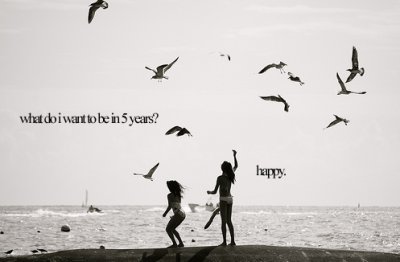
Last night at a party, I told someone that 2010 wasn’t that bad…but it was also the worst year of my life.  I suppose that’s true: I got kicked out of my Washington DC internship, almost failed all my classes, spent most of the year unemployed, and never quite achieved full financial independence.

At the same time, I made a bunch of new friends, started two novels and finished another, published an article about the BYU sf&f community that’s garnered some major attention, and generally had a fun time, in spite of the setbacks.

So really, what is there to complain about?  Not much.  Still, I’m glad it’s over.

As far as new year’s resolutions go, I’ve found that the best way to do them is to make one or two of them–otherwise, come February, you lose steam and none of them get done.

I’ve got a couple private resolutions, but here’s the big one I want to focus on:

Resolved: Read a minimum of one book per week.

I made this resolution back in 2008, but it only lasted until mid-March or so–not so much because I wasn’t reading, but because I didn’t understand how I read.

I’m not the kind of person who finishes every book they pick up; in fact, I only finish about 3/4s of them.  If I don’t think a book is good, I stop reading it.  Sometimes, even if a book isn’t bad, I end up putting it down just because I lose interest.  I’m also really picky; I don’t usually read any fiction that isn’t fantasy or science fiction, because the real world bores me.

At the same time, though, if I want to write well, I’ve got to be constantly reading.  And as I’ve written book reviews for this blog, I’ve found that reading widely has helped me to hone my craft.

So anyway, that’s my major resolution for this year.  Other things I would like to do:

1 ) get Army fit
2 ) live in another country
3 ) write a novel entirely in longhand, with actual pen and paper
4 ) get three new publications (two are already in the works)
5 ) fall in love with someone–and then make it grow into real love
6 ) get a MIDI keyboard and compose original 8-bit music
7 ) get a digital SLR and become an amateur astral photographer
8 ) get an agent
9 ) land a publishing deal
10) honestly, it’s just an honor to be read

Do these goals sound a little outlandish?  Sure…but who cares?  We’ve got a whole new year in front of us; anything can happen between now and December 31st!

Happy New Year!

The second to last post of the year

I’ve been figuring out what to say in my Obligatory New Year’s post–resolutions and all that.  Before I do that, though, I wanted to give an update on recent goings-on.

First, the writing: I’m making excellent headway in the latest draft of Mercenary Savior, and should be finished by the end of next week.  WAFH is coming along too, but at a much slower pace.  It’s hard to juggle a good book that only needs a polish with a crappy book that needs a complete overhaul, because the one that needs the most work looks so much worse in comparison.  Still, I’m making progress on both.

I just recently noticed, though, that I’ve spent the last two years working almost exclusively on Mercenary Savior.  Whenever I took a break to work on something else, it was never more than a month or two before I jumped into another major revision of that project.  I worry that that’s going to handicap me, especially as I reach the point of diminishing returns.  Mercenary Savior is an awesome novel, and I totally stand by it, but I worry…well, I worry too much.  Let’s just leave it at that.

Second: jobs!  To my surprise, a number of places have been calling me in for interviews and such.  My first pick would most likely be with the BYU Political Science Department, since I already know everyone there and would probably love it.  However, a number of other opportunities have been opening up, which means (inshallah) that I’ll probably be employed by the end of next month.  Woohoo!

In the mid- to long-term, though, I’m thinking very seriously about teaching abroad.  I interviewed today with a program that places people in South Korea, and that could be quite interesting.  If I choose to go through with it, I’d probably be shipping out in September, hopefully after completing a TEFL certification program.  After working there for a year or two, I could probably land a much more lucrative job in the Gulf, which could be an interesting experience.

Then again, I could stay here in Utah, where I’m much more likely to find a wife…

But you know what?  I’m starting to think that that’s a horrible reason to stay here in the bubble.  I don’t need to live in Utah to find the right girl (or, as my dad says, for the right girl to find me). She could be anywhere.

And as for all that stuff about the odds being better out here, I’m starting to think that’s a bunch of crap.  Yeah, there are a ton of young, available LDS women here in Utah–but there are also a ton of guys, and the competition has like a gazillion advantages on me.  I mean, come on, I’m a writer–what have I got on a Marriott School graduate?  Even a pizza can feed a family of four…

So maybe I should spend some serious time abroad, even if it does mean fewer dating opportunities.  In the meantime, I need to renew my passport and get a job.  And who knows what the future ultimately holds?  Maybe I’ll stick around.  Maybe…

The Obligatory Christmas Post

Just a quick post, because I figure I shouldn’t let Christmas go by this year without at least mentioning it in some way.

I’m not much of a Christmas person, and I think I get that from my Mom.  I still remember the year when she suggested we stop doing presents altogether.  That didn’t pass, of course, but as you can see in the photo, she successfully downsized the Christmas tree.  Even I would never stoop so low.

In a lot of ways, though, I sympathize with her.  The blatant commercialization of the holiday shocks and disgusts me.  I find nothing redeemable about the Santa myth, and will teach my children not to believe it.  Until Thanksgiving rolls around, I prefer to act as if Christmas doesn’t even exist.

But I’m not a Scrooge.  The holidays are for family and traditions–for being with and appreciating each other, making fond memories, and be quirky together in that special, unique way that makes family what it is (for better or for worse).

When celebrated well, it’s also a time to step back from the grindstone and recharge the spiritual underpinnings of one’s faith–kind of like a Sabbath for the year.  It’s getting increasingly difficult to balance that with all the secular noise, especially in this panicked, self-conscious economy–but hey, faith by definition is never easy.

Anyhow, I had a great Christmas, in spite of the fact that I didn’t go home.

Explanation: we have an arrangement worked out with my sisters’ in-laws, where we alternate Christmas and Thanksgiving.  This year, Thanksgiving was for the Vasiceks to get together, while Christmas was for the Challises and the Laws.

And anyway, home isn’t a place, it’s the people you’re with.  I spent Christmas with my sister here in Provo, and all her in-laws, and it was great.  I managed to get a small present for everyone, and it was a lot of fun watching them open theirs.  I didn’t get as many presents as perhaps I would have gotten at home, but I love everything I got and got more than I expected (an illustrated translation of One Thousand and One Nights, a novel by L.E. Modesitt Jr, and Daft Punk’s Alive 2007 album.  Oh, and some money from home–thanks Pop!).

We spent the day lazing around, watching Northern Exposure (which is actually a really good TV show–or was, back in the 80s when it aired), playing around with our presents, eating dinner, and doing other stuff.  The Laws tend to be laid back, and I like that.  I feel at home with them.

We ended the day by playing Apples to Apples, and let me say, it is a much different game playing it with old people (aka non college students).  The first round, I didn’t get a single card.  The second round, I got “weird” and “unhealthy.” The third round, I got “patriotic,” “shallow,” and a mildly suggestive one which I’ve since forgotten.  Steve should have chosen my card (“picking your nose”) when the word was “bold.” Connie skunked us all.

So yeah, that was Christmas.  I wasn’t expecting it to be super awesome, but it was.  Thanks to the Laws for letting me share the day with them!

And to finish off this Obligatory Christmas Post, here is an awesome Christmas video. Even though it’s not Christmas anymore, you need to watch it–now. You won’t regret it–or maybe you will, but in an awesome kind of way. Just watch it.

Getting back into things

So yesterday, I wrote through 4k words in WAFH 2.0 without even realizing it.  I didn’t feel very productive, because I only did about 500 words at a time before something came up and I got distracted, but by the end of the day, ended up accomplishing a lot.  That was a pleasant surprise.

In terms of my writing, I’ve been really out of things since Thanksgiving.  I finished Genesis Earth 5.0 right before the vacation and started outlining WAFH 2.0 immediately after, but…man, the rough draft REALLY sucks.  Like, sucks so bad I’ll have to completely throw out part III and start from scratch.

Fortunately, I think I’ve got a good idea what to do.  I’ve outlined about eighteen complete plots and subplots, so that’ll probably help out with keeping things tight.  The rough draft has a lot of shotgun writing, which means I have a lot of stuff to cut out–and now that I see where things are going, I know how to cut it.

One thing that worries me, however, is that I don’t have a strong driving reason to write this book–or maybe I do, but I just haven’t noticed it yet.  I’m hoping that’s the case, but I don’t yet know, and it’s really bugging me.

For Genesis Earth, it was the first line (“Earth was a ghost that haunted me”) and the cryo scene.  For Mercenary Savior, it was the ending, and the way it resonated with an old Western I saw as a kid.  With both projects, I got to a point of desperation somewhere between the first and second drafts where I wanted to throw everything out and never work on it again–but with both projects, that driving reason kept me going until I made it work.

With WAFH, however, I’m not sure what it is that’s driving me to write it.  For now, though, I’ll just press through until I find out.  I really hope I’m not just wasting my time writing this (because the rough draft sucks REALLY bad) but past experience has told me to ignore my own self-doubts at this phase.

Which reminds me: this week’s Writing Excuses podcast is really amazing.  I just listened to it an hour or two ago, and the advice this time around was exactly what I needed to hear.  Brandon’s advice in particular is very good: he basically says to stop worrying and enjoy what you’re doing.

So do I enjoy all of this?  In spite of all the angst I’ve spilled, I think I can say that I do.  When you’ve got a good story, and you know that it’s good, and you tell it in a way that moves someone else in a personally meaningful way–man, there’s nothing that compares to that.  I look back now on stuff I used to think was absolute drivel, and I’m amazed.  It takes persistence and drive and a little bit of crazy, but once you can get to that point, it makes everything you did to get there worth it.

The only thing now is to find out why WAFH is worth writing, and to hang onto those reasons at all costs until the story comes into its own.  Wish me luck!

Looking for a life experience

This week, I got hit by some good news and some bad news.

The good news was that I got a short term seasonal job, delivering phone books.  That should keep me solvent for the rest of the month, at least until I can find something slightly more permanent.

The bad news?  I heard back from the company with the wilderness job, and it turns out I didn’t get it.

So now I’ve got to figure out what to do with my life for the next  year.  My writing career, as always, is plan A, but that’s more of a mid- to long-term thing.  And honestly, that’s how I want it.

I feel that I need to do something big–to go on some kind of adventure.  I’ve been working hard to hone my craft, but I feel that I need to acquire some kind of significant life experience, not only to boost my writing, but just to grow as a person.  It’s tempting to look for a comfort zone and camp out in it, but I don’t think that would be the best thing for me to do right now.

Before I graduated, I decided not to go to graduate school yet for a few reasons.  First, I was sick of school, and felt that I needed a break. Second, I didn’t know what to go in for, and didn’t want to go to grad school just to postpone figuring things out.

Third, I wanted to get out of the cloistered halls of the university and gain some real world experience.  I’d spent my whole life up to that point in academia, and was sick and tired of being sheltered from the “real world.” I wanted to get out and see what things were really like on the other side of the ivy.

For the past eight months, I’ve been bouncing around in Utah, working odd jobs to get by.  It’s a different set of stresses and problems, and while I can’t say I’m unhappy, I certainly can’t say that I’m fulfilled.  Being unemployed is about as unfulfilling as you can get and still be breathing.

I could probably find and hold down a graveyard job until my writing career takes off, but somehow that doesn’t seem much better.  I don’t just need a job to facilitate my writing–I need a major life experience to broaden my perspective on things.  I was hoping the wilderness job would provide me with both of those, but unfortunately that’s no longer an option.

So what next?  Here’s an idea: maybe I could go abroad and teach English for a year.

I used to joke with all my friends that if I didn’t get the wilderness job, I’d probably leave the country and go on an adventure–but really, why not?  A chance to see the world, use the teaching and language learning skills from my degree, and acquire new skills that might come in handy later on.  Plus, when I come back, I’ll sure have a lot of interesting things to write about.

The big question in my mind is what I need to do to get ready.  I suppose the best thing would be a TEFL certificate–I could probably get one of those in a month or two through online classes.  But…is that really the best path?  And what is the best program to go through?  A couple of friends of mine who have taught English abroad for the past couple of years say you don’t need a certificate to get a job, but they were working with kids, not adults.  And for the English teaching jobs in the Middle East (especially the gulf), you really do need certification.

So I guess I still need to think it through.  Right now, my top three destinations would probably be Japan/Korea (for the earning potential), Saudi Arabia (for the Middle East experience), or the Czech Republic (for the chance to connect with my roots).

I don’t know, though.  I’ve still got to weigh the pros and cons.  I’ll probably do that in a later post–but for now, that’s what I’m thinking about.  And the more I think about it, the more attractive it becomes…

The technological singularity: a thing of the past?

One of the latest trends in science fiction is the concept of the technological singularity — the point in history at which technological advances occur so rapidly that we can no longer learn the new stuff fast enough to keep up with it.

I hear a lot of people talk about this at cons, and I’ve read/listened to quite a few stories about this concept.  Basically, these stories posit a world where science has become a new magic, and our world has been transformed beyond all intelligible recognition.

However, a recent post on the excellent Rocketpunk Manifesto blog made me wonder if we’ve already passed the point of singularity in our own society.  The post basically asserted that the period 1880 to 1930 saw so many sweeping technological advances that the world in 1930 would have been unrecognizable to a person from 1880, whereas our current society would still be intelligible to a person from 1930.

This made me wonder: how far into the singularity have we already come?  How much of our technological infrastructure has become so advanced that the common man lacks the capacity to comprehend it?

Think about it.  Fish around in your pockets and pull out your phone.  Do you understand how it works well enough to take it apart and put it together again?  To rebuild the device from parts?  Do you own the tools and machinery to construct the parts from which it is made?

How about the building in which you currently find yourself?  Do you possess the knowledge to build a comparable structure that performs the same functions?  That keeps you sheltered and provides the same light, heat, electricity, and internet connection that you now enjoy?

There was a time, not too long ago, when people would move out to the wilderness and homestead land by building their own homes from available natural resources.  If you needed to build your own house, as so many people used to do, could you do it?

How about your means of transportation?  If necessary, could you take apart your car and rebuild it again from the ground up?  Could you perform basic maintenance on it if you needed to?  How many of us can change our own oil–and how many of us are dependent on others for such a simple service?

Or what about the things we take most for granted–our understanding of the way the universe works.  Do you really understand the principles of physics?  Do you comprehend how electricity or magnetism really works, or are you still thinking in overly-simplified terms like electrons flowing through a circuit like water?  Even the most intelligent physicists can’t reconcile electromagnetism with Newtonian physics, so what makes you think you know so much?

How much of what we think we know is really just an illusion, meant to keep us pacified and docile?  To give us a false sense of security–that someone is in control, so we can rest easy?  Does anyone REALLY understand 100% how the economy works?  Do any of us know who or what is really in charge anymore?  Have we unwittingly handed over the reigns of control to some digital algorithm so basic to our newly networked way of life to be practically invisible?

Looking at how few of us are truly self-sufficient, and how much power we’ve ceded to forces beyond our control, our modern society seems so delicate and fragile.  Can anyone REALLY say that our society is not in danger of falling apart?  That our way of life is not an unnatural and unsustainable aberration?

Anyhow, those were some of my initial thoughts.  The more I compare the science fiction of the past with the reality of the present, the more predictions I see coming true in the most unexpected of ways.  The singularity may have less to do with uplinked consciousnesses and more to do with Google’s SEO algorithms than we are comfortable admitting.  And realistically, the light bulb may prove to be more revolutionary than anything Apple has ever or will ever produce.