The Self-Sufficient Writer: What I Learned by Leaving the Country

When I left the United States in 2012, I didn’t have self-reliance in mind. The plan was to break out of the cycle of poverty I’d been living in by starting a career teaching English overseas, bouncing around the world as a global nomad. If I landed a good paying ESL job somewhere like the Persian Gulf, I could come back to the States with a couple hundred thousand dollars and not have to worry about money for a long, long time. And even if I didn’t, I’d still get to see the world.

As a side note, there are quite a few people who do exactly that. While I was overseas, I met a lot of ex-pats who haven’t been back to their home country in years, traveling the world as global nomads picking up jobs wherever they can. While ESL can be something of a dead-end if it’s the only thing you pursue, there are tons of opportunities all over the world to teach English. In a lot of places, all you have to do to find work is show up.

After researching my options, I decided to volunteer with the Teach and Learn with Georgia program. The TLG program was set up by the Ministry of Education of the Republic of Georgia (formerly part of the Soviet Union) to put a native English speaker in every school in the country. I didn’t speak Georgian at all and I didn’t know anything about the country or the people, but they would take just about anybody and pay for my plane tickets up front. After getting a year of ESL experience, I could get a free ticket basically anywhere in the world—exactly the kind of launching pad that I’d been looking for.

That was the plan anyway. Like most plans, however, it fell apart and turned into something completely different. Instead of launching an ESL career, I learned that I really had no interest teaching English. I did, however, learn quite a lot about self-sufficiency.

Georgia is an interesting country. It’s got a population of about 5 million, with a little over a million people living in the capital and largest city, Tbilisi. The rest are basically scattered across the countryside in towns and villages. Kutais is the second largest city, but it’s really just a very big village with a quaint European town in the center. Yes, people live in fifty year-old communist-era apartments (“Krushchevkas”), but they still kept chickens and livestock in the yard, and usually had a grandparent or two still living in one of the outlying villages who tended to the family land.

For five months, I lived in the Avtokarkhana district in Kutaisi with a local family. After the summer, I spent another four months in Rokhi, a small village between Kutaisi and Vani, at a farmhouse owned by the math teacher at the village school.

I learned a lot of unexpected lessons from my time in Georgia, many of which I’m still parsing through. The two biggest ones that set me on a course of self-sufficiency are this:

Lesson 1: What a collapsed society looks like.

Contemporary Georgia is not a collapsed society. They’re actually growing pretty well, with a large influx of foreign investment and all sorts of recent improvements (including a new police force that makes it one of the safest countries to visit in all of Europe). But in the nineties, the country suffered a major socio-economic collapse, resulting in a civil war and the secession of three separatist regions: Adjara, Abkhazia, and South Ossetia.

All around me, I saw signs of that collapse. Most of the basic infrastructure was built during the communist era, and most of it was dilapidated or barely functional. In Kutaisi, we saved our plastic water bottles and kept them full for times when the water went out (which happened frequently in the summer). In the village, power outages happened almost daily, sometimes forcing me to go to bed at 7:00 pm just because it was too dark to do anything else.

Of course, there was a lot that had survived the collapse. In some places, people probably hardly noticed that a collapse had happened at all. A collapse does not hit all people equally, and there’s a very big difference between the collapse itself and people’s experience of it. The old women who grew up under communism had mostly fond memories of that time and wished that they could return to it. Everyone else’s attitude toward that was basically “hell, no!”

When I came back to the United States, something very strange and disturbing happened. I started to notice ways in which our own society is starting to slide toward the same state of collapse that the people in Georgia are currently pulling themselves out of. Our infrastructure is not as dilapidated as Georgia’s, but give it another ten years and it will be. In some sectors, most notably the state-run sectors like Amtrak, it already is.

We may have won the Cold War, but that doesn’t prove that our socio-economic system works. All it proved was that the Soviets collapsed faster. Our modern American society is not immune from collapse.

Lesson 2: What a home economy looks like.

According to the Merriam-Webster dictionary, an economy is “the process or system by which goods and services are produced, sold, and bought in a country or region.” A home economy, then, is the system by which goods and services are produced, sold, and bought within the home. If your home does not produce anything, you do not have a home economy.

As a volunteer, I received a 500 GEL (approximately $300) stipend each month from the Ministry of Education. This was actually more than the base salary for most Georgian school teachers at the time. Georgia is a poor country, but living expenses are certainly much higher than $300 a month—especially for a family. How, then, did school teachers manage to get by?

They had a home economy.

This was especially true in the village. We kept chickens, cows, sheep, and pigs, made our own cheese, grew our own grapes, made our own wine, etc etc. We had our own well, kept a large garden, went hunting when the weather was good, and baked most of our own bread. More than half of what we ate was easily produced right there on our own farm. And because we had a couple of fairly large vineyard, when grapes were in season, we loaded up the back of a truck and sold them at the market in Kutaisi.

For someone who grew up in a middle-class American suburb, this was absolutely fascinating. Most people here in the States do not have a home economy because they do not produce anything. They do not keep a garden, grow their own food, or do much of anything else that would be useful if the US dollar were suddenly to collapse. The only way most people can support themselves is to earn an income outside of the home—that, or go into debt. For almost half of the US population, an unexpected $400 expense would force them to either beg, borrow, or steal.

I have no idea what the personal finances looked like for the family I stayed with, but I know that if all of the outside income dried up, we would still have food on the table. Why? Because we grew it. We grew a lot of it, in fact—enough that we could probably barter for what we didn’t grow. It was hard work living that sort of lifestyle, but it brings a sense of security—real security—that you cannot get in any other way.

More than anything else I saw or experienced, this self-sufficient lifestyle had the greatest impact on me. By the time I was ready to come home, I was already thinking about how I would implement it in my own life. I had learned that true economic security comes not from the government, your job, or society at large, but from living in such a way that you can provide for your own needs and wants—from living a self-sufficient lifestyle. And that’s what I set out to do.
The Self-Sufficient Writer (Index)

Q is for Quitting the Day Job (or never having one to begin with)

Writing is one of those gigs where everyone expects you to have a day job, since common wisdom says that writers don’t make money. In traditional publishing, that may be generally true, but self-publishing is an entirely different game. It isn’t necessarily easy to make a living as an indie writer, but it is possible–much more possible than it is in the traditional industry.

I can’t speak authoritatively on when it’s right to quit the day job because I never really had one. I graduated in 2010, during the height of the “jobless recovery”–the soporific catchphrase invented by Washington policy wonks to describe the weird phenomenon where GDP was improving but unemployment was still in the crapper. For everyone outside of the Emerald City of Washington, we were still deep in the quagmire of the Great Recession.

I had just gotten back from an internship in the Emerald City that had severely disillusioned me to all things political. That rendered my degree in Political Science pretty much useless, and I found myself hitting the streets of Provo looking for something–anything–that would pay. I sold my body as a plasma donor, I sold my soul as a call center interviewer, and eventually I settled into that weird blend of mercenary prostitution that constitutes temp work. But even the temp jobs were scarce, and I found myself living from month to month, barely scraping enough to get by.

That’s when I learned about self-publishing. By this point, I already knew that I wanted to be a full-time writer. That was my plan A, and since it didn’t look like I’d ever land a steady day job, there was no plan B to fall back on. The stuff I was writing didn’t seem to be anything New York was interested in–not enough to pay a living wage, at least–so I jumped into self-publishing with both feet and never looked back.

When you first start out self-publishing, chances are that you’ll languish in obscurity for a while, barely selling enough books to make pizza money month to month. That was certainly the case with me. My economic situation wasn’t improving, so in 2012 I decided to go overseas and teach English in the Republic of Georgia.

GEORGIA | hyper – travel from Piotr Wancerz | Timelapse Media on Vimeo.

Besides temp work (which doesn’t really count), teaching English is the closest thing I’ve had to a day job. And while I loved the adventure of living in another country, the job itself wasn’t really all that fulfilling. It was really hard to balance writing with all the other stuff going on, even though the job took no more than 20 hours per week. It took up a lot of mental space, and that was enough to make writing really difficult.

So I came back to the States in 2013 and did my best to settle back in. Then, a weird thing started to happen. My books, which before had only earned pizza money, suddenly started earning grocery money. That soon grew to grocery and gas money, and before the end of the year, I was making rent money on top of that as well. My Star Wanderers books had started to take off, and even though they weren’t spectacular bestsellers, they pushed me up to the point where writing was my primary source of income.

Today it’s still touch and go, but I’m more or less making a living off of my books. I’m considering going overseas again, only this time, I’d live off of my royalties instead of getting an ESL job. Then again, there’s this girl I’ve been seeing, and she might keep me in this country for a while. If things work out, I have no idea how that would change things, but I imagine it would raise the making-a-living bar pretty substantially. With the way my book sales are growing, though, I’m confident that things will work out.

Back when I still planned on getting a day job, I thought that there would be some sort of magic threshold where, once I crossed it, I would make my entire living off of my writing career and would never work another job again. Instead, what I’ve found is that it’s more of a zone, where some (or perhaps even most) of your income is from book sales, but you still have to take on an occasional paying gig to make ends meet. There is no magic threshold at which you’ve “made it,” it’s more about just making it up as you go along.

All of this is made much, much easier by the fact that Amazon pays monthly royalties like clockwork. Barnes & Noble does too, and Smashwords and Kobo are also reliable, though a little less predictable as to when they’ll get their money to you (Smashwords seems to be holding onto my royalties until the end of this month, which is really annoying because usually they pay in the first week of each quarter). Since sales reports are instantaneous, I can look at how my books sold in March and know how much I’ll make in May.

It also helps that my earnings per book are significantly higher as an indie than they would be if I were signed with a traditional publisher. I don’t get an advance, but that’s okay because advances these days are pitiful anyway (seriously, $5,000 paid out over the course of two or three years? That’s less than I made as a volunteer ESL teacher in Georgia). And since I can publish as many books as I can write, I’ve been able to put out a lot more books as an indie, without the hassle of trying to run them past a committee of overworked editors in the bowels of some New York publishing house.

As for when it’s right to quit your day job, I have absolutely no idea because I never had one. But the fact that I (a nobody) am making it even without a day job says a lot. If you want to quit your day job and make a living as a writer, your chances of making it are a lot better if you take the indie route.

A Letter To My 2011 Self

Dear Joe,

Well, 2011 has been an eventful year, hasn’t it? It sure didn’t feel like it when you were down in the trenches, but now that it’s over, you’ve got to admit, you sure came a long way.

You’ve discovered a lot of things about yourself since January. In your quest for economic security, you’ve learned that you’d rather work for yourself as a freelancer than be anyone else’s employee. You took the plunge and self-published, something you thought you’d never do (and yes, it’s okay to call it ‘self-published’–the stigma will be dead in another year). You attended your first Wordcon, made a couple of cross-country road trips, worked a ton of crap-jobs just to make ends meet, and now you’re on your way out of the country to try your hand teaching English. It sure seems like a lot, doesn’t it? Just wait. Next year is going to be just as full of changes, though it won’t always seem like it at the time.

I know, I know–cut to the chase and give me some advice already. Well, looking back on what you’re going to go through in 2012, here’s what I have to tell you.

First, don’t stress out so much about the whole self-publishing thing. You’ll figure it out all right. No, I can’t say whether you’re going to hit the turning point before the end of the year. In fact, that’s not even a healthy way to look at it, so stop thinking about it that way. Follow the slow growth model, and don’t angst about sales or price points so much. Keep your butt in that chair, because writing new words is still the most important thing you can do.

Don’t beat up on yourself so much for failing to meet your ridiculously high goals. You’re going to write a novel in the next six weeks, and the rest of the year is going to be a struggle. Right now, you place too much emphasis on your daily word count. Relax a bit, and don’t be too hard on yourself. You’ve still got a lot to learn about your own creative process, so take the time to figure it out.

By the way, you totally rock the beard. Growing it out was a great idea, no matter what your sisters told you back in 2010.

About your upcoming excursion to Georgia, the best advice I can give you is to remember what Spencer told you back in 2008. Adventures are like stories–they each have a beginning, a middle, and an end. You’re going to experience all of that in the next year. No, you probably won’t write another travel journal. Most of your experiences are going to be too personal for that kind of thing anyway. You’re going to accomplish all of your goals, though, so don’t worry–things are going to be just fine.

The most important thing you can do is keep yourself grounded spiritually. I know, I know, that’s always the most important thing. Well, it’s especially true now. Where you’re headed, you’re not only going to be the only Mormon, but the first Mormon to live there. Sundays are going to be a struggle. Everyone is going to think you’re crazy because you don’t drink. You’re going to make wine, though, and that’s going to be an interesting story for your friends back in Utah. Just be sure to keep doing the things you know you should be doing, and everything will turn out all right.

You’re going to love teaching English. Oh, you won’t love everything about it, but it’s something you’re naturally good at, so don’t worry about that. Just try to listen to your Georgian co-teachers and be more considerate of them. And don’t worry about the language. You’ll pick it up pretty quick. Just realize that Georgian verbs are impossible to conjugate unless you’re a native speaker.

I could tell you what your biggest mistake is going to be, but I think it’ll be better if you go ahead and make it. Just be sure to hope for the best, even as you plan for the worst. Follow the path of least regret, and you’ll make some really awesome memories–not to mention some truly amazing friendships.

At this point, I’d tell you you’re on the right path, but that isn’t exactly true. There is no ‘right’ or ‘wrong’ path for you right now, but you’re on a good one, so keep it up and see it through to the end. You’ll be glad you did.

Take care!

Joe

This Week

I was listening to the latest episode of This American Life yesterday, and at the end of the podcast, Ira Glass mentioned that this week’s episode will be themed “this week”–in other words, things that all happened in just the last seven days.

Well, things haven’t been too eventful out here in Georgia, but I liked the idea for the theme, so I decided to write up something as if it would appear on the show.  Here it is:

Early Tuesday morning, before the sun rose, I woke up from a dream that I was in a faraway place somewhere on this planet. Then I opened my eyes and realized that I live in the Caucasus Mountains.

I’m an American teaching English in the Republic of Georgia, in a small village half an hour south of Kutaisi. I live in a farmhouse with a local family. The mother teaches math at the village school, her son teaches computer science and makes wine for a company based out of Tbilisi. My host mother’s sister in law also lives with us, and this week, she cooked the most delicious borscht I’ve eaten in my life. She told me she’d teach me how to make it, and I’m ecstatic.

We keep sheep, cows, chickens, pigs, a turkey, and grow about half of the food we eat. Last week, five of the chickens were eaten by a wolf, including a mother hen and three of her chicks. The last surviving chick has been struggling, so every day after school I take her out of the little cage where we’ve beek keeping her and feed her from my hand. She isn’t as afraid as she used to be, and seems to be getting stronger.

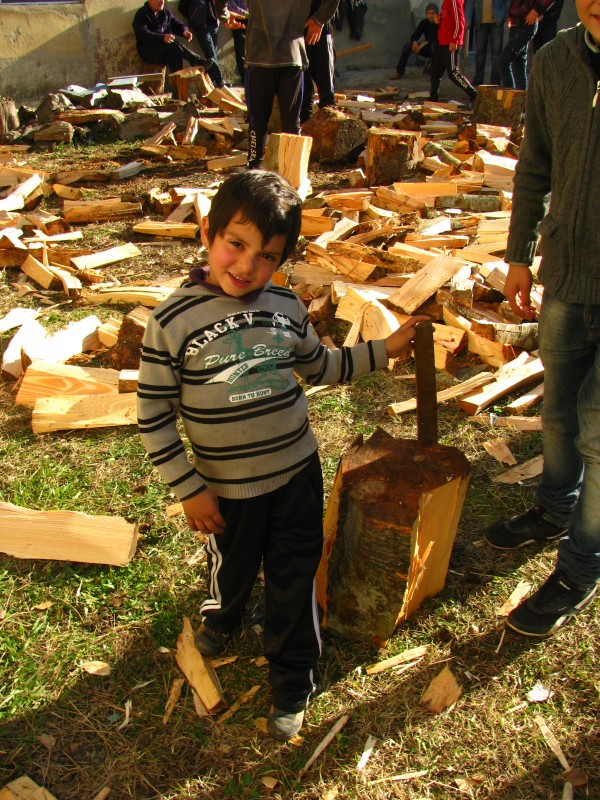
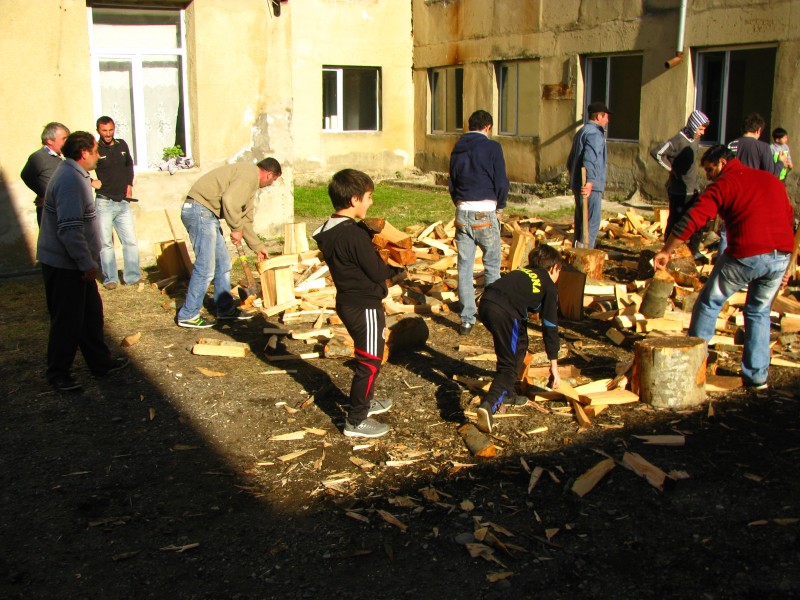
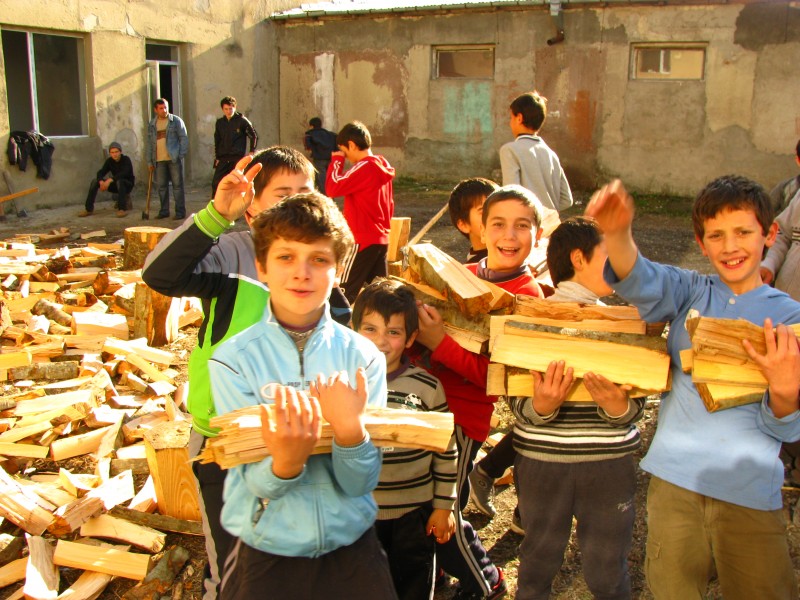
I teach grades I through VI at the village school, which amounts to about eighty kids. On Tuesday, we chopped wood for the winter. Each classroom has a small woodburning stove, and often smells like campfire smoke. It’s very warm, though–the teachers make sure of that, since cold leads to illness, and we can’t have that. The kids love learning, and I love teaching them. Every day after class, I say “goodbye,” and they run up screaming and laughing to give me high fives. I feel like a rockstar whenever I’m at school with them.

On Sunday, I went up to Kutaisi to use the internet. I use the internet maybe three times a week, sometimes four. The nearest place with reliable wifi is the McDonalds, and it takes half an hour and 1.5 lari to get there. On the way back, I chatted in the back of the marshrutka with some of the upper grade kids from my village. We sang songs by Michael Jackson, Justin Beiber, and Psy. Gangnam Style is very popular out here, and the kids think it’s hilarious when I do the dance for them at the village school.

It’s raining right now, which means that the power will probably go out soon. We have power outages almost every day, but they aren’t usually longer than one or two hours. Our water comes from a well, and our heat comes from the fireplace, where we also burn our garbage. When the rain lets up, I’ll help my host-brother cut down a few trees in the back and chop the wood.

Georgia is going through some difficult times politically right now, but we only hear about it through the TV. The country had its first peaceful democratic transition of power in October, and the new Prime Minister has been on a political witch hunt ever since. Some in the Western media find this disturbing, but my host-brother doesn’t think that Georgia has become less democratic because of it. We had a long conversation about politics on Monday night, which eventually turned into a discussion about the Israeli-Palestinian conflict, since the recent UN vote has also been in the news. He told me he’s pro-Palestinian because Israel’s occupation of Gaza and the West Bank sounds a lot like Russia’s occupation of Abkhazia and South Ossetia.

An expat friend of mine visited Abkhazia recently and posted the pictures on his blog on Tuesday. He called it an overpriced garbage dump, and from the pictures, you can definitely see why. Piles of trash in the courtyard of the biggest Orthodox church in Sokhumi, a derelict half-sunk ship rusting in the harbor, vines crawling up Soviet-era power lines that look about ready to fall over. And yet with Russia trying to keep Georgia from joining NATO, it looks like the status quo will remain in place for years to come.

Here in my village, though, that all seems far away. So do the economic problems back home, though they’re one of the reasons why I came out to Georgia in the firstplace. On Tuesday, I met up with a British friend of mine at McDonalds and we talked a bit about what we plan to do after we get home. He’s got a job lined up for him at the school where his mother works. I asked him if things are still tough in the UK, and he nodded. We didn’t have to say anything more than that to understand each other.

I don’t have a job lined up, but I’m actually not too worried. I’m a writer with a few science fiction stories self-published online, and on Tuesday I realized that I’ve earned as much money in the first four days of this month as I earned in the entire month of March earlier this year. It’s not enough to make a living yet–at least, not by US standards–but it’s growing.

On Sunday, I published another novelette, and on Wednesday, I went back to work on a fantasy novel that I started in October. The power hasn’t gone out yet, so I think I’ll get back to writing. It’s 3:32 PM and I have the rest of the day to myself, with maybe an hour to help my host brother cut down some trees. Life is good, especially out here in the Caucasus.

At this point, I should probably post some pictures:

Chopping wood at the school. A bunch of men from the village did the chopping, while the kids carried the wood back inside.
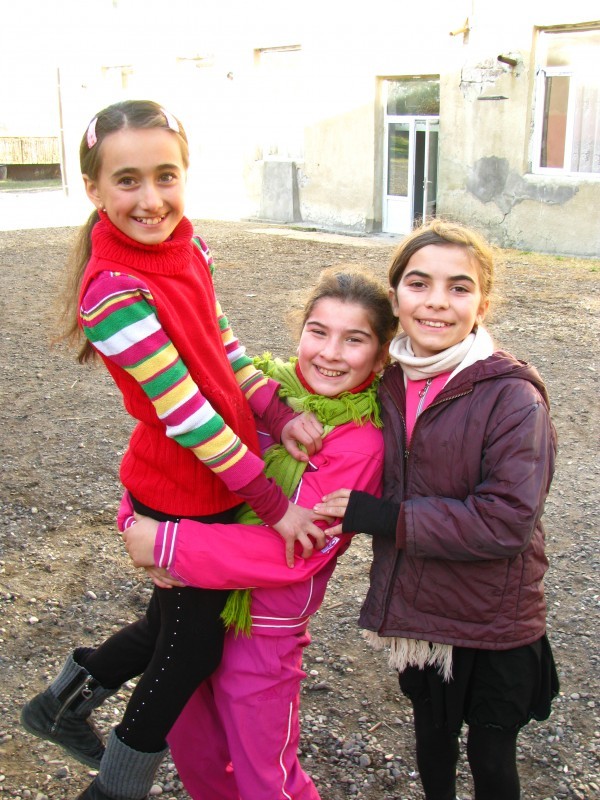
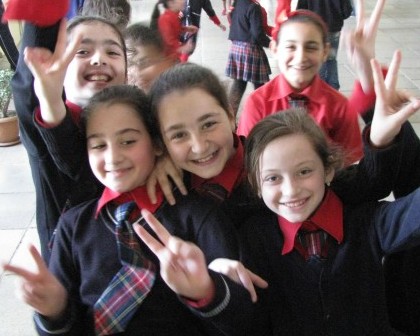
Some of my VI and IV grade students helping out.
One of the first graders. I swear, this kid is like my biggest fan.
Some of my V graders. These kids are great.

In other news, I decided to drop my other projects and go back to writing The Sword Keeper.  I think part of the problem I had before was that I was trying to go too fast, writing-wise and story-wise.  This is my first time writing a fantasy novel, and I can already tell that it’s going to be a lot longer than I’d thought it would be.

Also, I took the time to draw up a map of the fantasy world where it takes place, and oh my gosh that changed everything.  Maps are awesome.  When I have access to a decent scanner, I’ll have to put it up.

That’s all.  See you around!


Oh hey! Happy Thanksgiving!

Funny how holidays creep up on you when you’re in a foreign country.

We have Friday off here in Georgia, due to an Orthodox religious holiday.  I’ll probably head east and check out the Stalin museum, maybe Mtskheta and Qazbegi depending on the weather.  A friend of mine in Tbilisi said she’d get me a Svan hat, so if that works out, I’ll be sure to post pics.

In school today, we made the hand-traced turkeys from construction paper, with “I am thankful for…” on it.  I got to tell the kids the thanksgiving story, too.  I’m not sure how historically accurate it was, but they seemed to enjoy it.  They also enjoyed all the stickers I gave them for their finished projects.  The Nintendo stickers were the most popular.

So what am I thankful for this year?  Let’s see…

  • Delicious homemade Georgian food.  Beans, cheese, bread, potatoes, peppers, chicken, borscht–almost all of it grown right here in the village where I live.  It’s awesome.
  • My students.  Seriously, some of the awesomest kids I have ever known.  Every day when I get to teach them, I feel like a rockstar.  I’m going to miss them when the semester is over.
  • My friends and family.  Even though I’m literally on the other side of the world and hardly ever have internet, I’m glad that we still keep in touch.
  • My readers.  Seriously, it’s awesome that you guys are reading and enjoying my books.  I just wish I could put them out faster.
  • My first year of running a profitable business.  That’s right–with last month’s sales reports, I’m on track to run a modest profit for 2012.  Let’s hope that this growth continues well into the future!
  • The changing face of publishing.  Seriously, it is so awesome that for a very little upfront cost, a guy like me can sell his books across the world and find fans in places as far away as Singapore and the Czech Republic.  There are so many choices, so much freedom, that it’s staggering to see how different things were just a couple of years ago.  Kris Rusch said it much better than I did, so be sure to check out her most recent post on the subject.

There’s more, of course, but those are the big ones off the top of my head.

I know I missed Trope Tuesday again this week, but I wrote up a long post and then got dissatisfied with it just as I ran out of time.  We’re on the magic flight stage of the hero’s journey, but I’m having trouble finding a page on tvtropes that really fits it.  It’s not really a stage that I’m all that familiar with, either, so it’s going to be a bit of a challenge to figure it out.  But I will, don’t worry–hopefully next week.

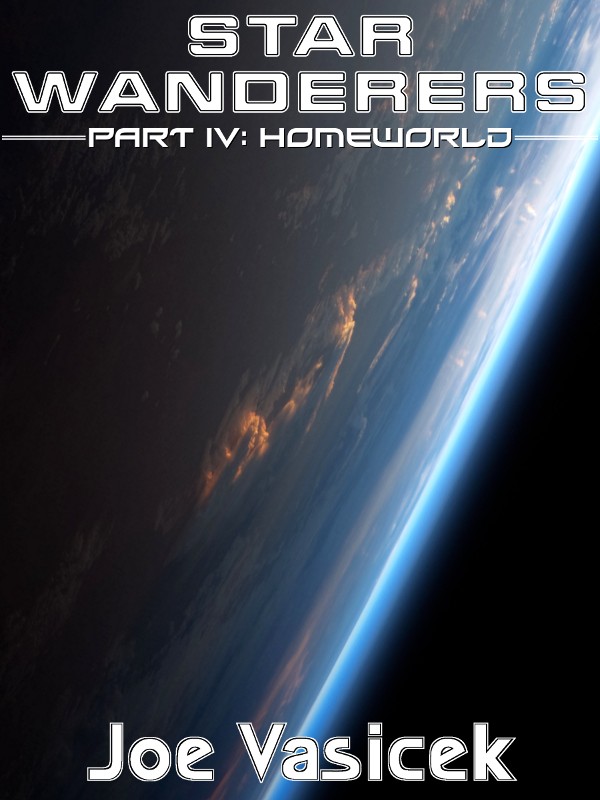
As far as Star Wanderers goes, I’m working on the final revisions for Homeworld (Part IV) right now.  It’s going really well so far, so I expect to be finished in a week or two.  After that, I just need to get it copy edited / proofread, and then it should be good to publish.

Just to tease you all, here’s the cover:

So yeah, definitely look out for that soon!

I’ve got to go, but I’ll post again when I get the chance.  Happy Thanksgiving, and I’ll see you around!

Still here, wherever that may be

Wow, it’s been forever since I’ve been active on this blog.  I guess living in the developing world will do that to you.

It’s not that I don’t have good internet access, it’s that the places where I can get it are often noisy and crowded, with a fair amount of cigarette smoke.  By the time I’ve checked my email, caught up on all the blogs I follow (or at least the interesting ones), and generally finished screwing around done everything else I need to do on the internet, I’m pretty wiped out.

I’ll try to write my future posts offline, like I did in Jordan, so all I have to do is copy and paste.  I can’t really do that with Trope Tuesday posts, but for everything else, it shouldn’t be a problem.

In any case, I’m still here–wherever “here” is.  Currently, it’s Tbilisi.  I came out for the weekend to pick  up a package from the USA…I was hoping to get the new kindle paperwhite, but instead got the case and adapter.  Turns out the actual device is shipping out next week–I’d say it’s a disappointment, but I’m actually just relieved to know that it wasn’t lost in the mail.

Things are going well out here in Georgia.  The village kids are a lot of fun to teach–I basically feel like a rockstar whenever I’m at the school.  It certainly helps that I give out stickers left and right every time someone actually does their homework.  Whenever I pull them out, the kids say “smiley!” and go crazy.

But yeah, even though I enjoy being out here, I figure it’s time for a change.  Like I mentioned in the last post, I’ve accomplished just about all my goals for coming out to Georgia, which mostly had to do with trying out a TEFL career and seeing if it’s a good fit.  I think it is, so I plan to go out again after a few months, but I want to come back to Utah for a while to see some old friends, spend time with family, and recharge before the next big excursion.  That’s the plan, anyway.

As far as the writing goes, things are going, but slower than I’d like.  I’m only in chapter two of The Sword Keeper, which is kind of frustrating, but I think I’ve overcome most of the hurdles and now it’s just a matter of buckling down and doing it.  I definitely think I can have this novel finished before the end of November, which would make it my second novel for the year (third, if you count Star Wanderers I-IV).

In terms of publishing, though, things are looking great.  I found someone to proofread Star Wanderers: Sacrifice, and she should be getting back in the next few days.  If all goes well, it’ll be up on Amazon and Smashwords by Monday the 29th.  Star Wanderers: Homeworld is also getting close–I just need to get the feedback from my first readers and figure out where to go from there.  If there aren’t any major issues, it should be up by the end of November.

I’m debating whether to splurge on the cover art for the omnibus, and if so, who to ask to do it.  This series have a very different feel from my Gaia Nova series, even though they both take place in the same universe.  Not sure what to do for the illustration, or who to ask to do it, but that’s still a few months down the road.

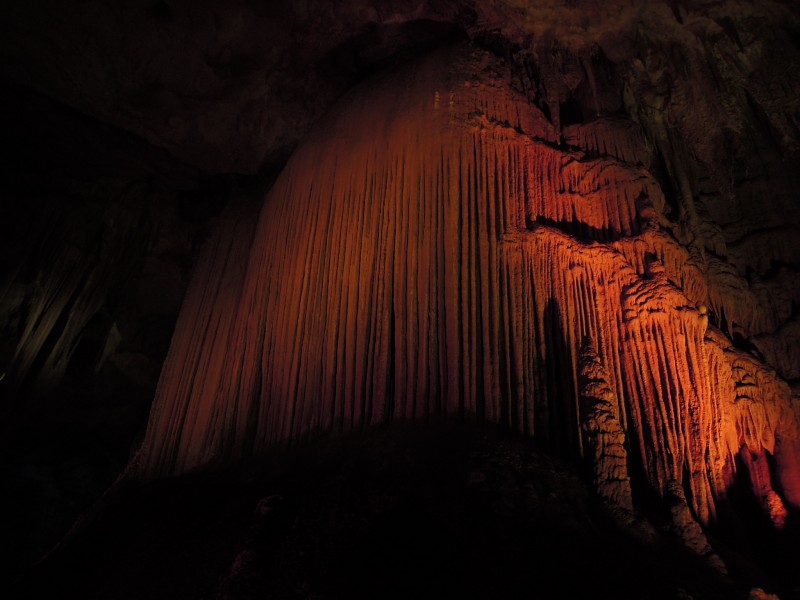
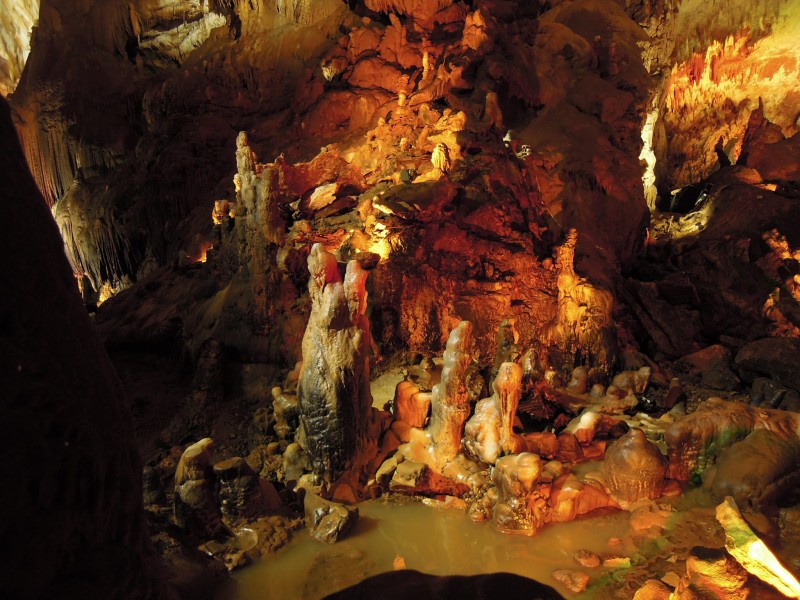
That’s about it for now.  I’ll end with a few shots that my friend took in Prometheus Cave, one of the coolest sites out here in Imereti province.  Imagine about a mile of caverns, brimming from floor to ceiling with formations like these:

Later!

Summer recap and new goals

So back in June I made a to do list of things I wanted to accomplish this summer.  I’ve only got a week left before I go overseas again, and I’m happy to say I’m on track to finish most of them.  A couple of them (such as doing a blog tour and submitting aggressively to book bloggers) I decided weren’t worth my time, and dropped them, but these are the major things I’ve accomplished:

  • Release print-on-demand editions of Genesis Earth, Bringing Stella Home, and Desert Stars through CreateSpace.
  • Redo cover art for Bringing Stella Home.
  • Redo blurb/description for all titles.
  • Put proper copyright page in all titles.
  • Publish all titles on Kobo Writing Life.
  • Find a better way to build an ebook and reformat all titles.
  • Finish the second draft of Stars of Blood and Glory.
  • Finish and publish parts I and II of Star Wanderers.

The only major thing I haven’t accomplished is figuring out how to sell ebooks directly from my website.  I figure I can set that up later, though, when I’ve got a large enough readership to justify it.  If it’s all online, I can probably do it from anywhere.

While I was vacationing with my family on Cape Cod, I had a chance to step back and take a long look at what I’m doing with my life, which helped me to set some new goals and get a renewed sense of direction.  I stopped tracking my daily writing word counts in July, which threw off my productivity a lot more than I thought it would.  After setting some long-term goals, though, I think I can find a better way to structure my writing.

In ten years (2022), I want to…

  • have 25+ published novels.
  • earn a solid middle-class income through my writing.
  • be married and have kids.
  • own a house.
  • live in the United States.

My lifetime goal is to publish 100+ novels, which is actually a lot more doable than it sounds.  It means writing a minimum of two novels a year, though, so I’m going to have to follow Heinlein’s rules a lot closer than I have been in the past.  That’s the trouble with keeping a daily word count: it made me look a lot more productive when I was in revisions, so I spent more time doing that than writing new work.

In three years (2015), I want to…

  • have at least 10 published novels.
  • make enough with my writing not to need another job.
  • be married or engaged.
  • have lived for at least three months in 3+ countries (not including USA).

I want to settle back down in the States eventually, but before that I want to get around and see the world a bit.  The absolute coolest thing would be to marry another world traveler and make enough on the writing to have a bunch of adventures together.  I’m not sure if I’ll find her in Georgia, but I’ll be sure to keep my eyes open.

As for short-term goals, I’m still trying to work them out.  Here’s what I have so far:

Quarterly Goals:

  • Start at least 2 new projects.
  • Finish at least 2 first drafts.
  • Publish at least 2 titles (print and ebook counts as two).

I think this is enough to stretch me while still being doable.  By my count, in the first quarter of this year I did 2-2-1, in the second quarter I did 2-2-0, and in the current quarter, I’m at 2-0-5 so far.  Of course, this includes all the Star Wanderers novelettes and novellas, which I hope to expand in the future.

I’m not going to count revisions as progress, except as part of the publishing stage.  Some stuff needs a lot of revision, other stuff, not so much.  What I really want to do is train myself to produce high quality work on the first or second write-through.  Of course, I’ll still use test readers to gauge my work before publishing anything.

Monthly Goals:

  • Finish at least 2 projects (first draft or revision).
  • Write at least 15k words of new material.

I can write a lot more than 15k words in a month, of course, but I figure this is a good starting point.  The key is that this is for new material.  When I looked back at my word counts, I found that months of revision would go by before I actually worked on something new.  I want to change that, but I still need to allow for longer projects that might require several weeks of revision (while emphasizing the need to produce new material, of course).

Weekly/Daily Goals:

  • Keep all project deadlines.
  • Start each day with writing.

I’ve found that if I don’t start off each day with writing, I keep putting it off until I’ve spent more time and energy angsting about it than actually doing it.  For a short period of time this summer, I put my butt in the chair and my hands on the keyboard first thing after waking up (even before getting dressed).  It was amazing how much of a difference that made.

Beyond that, I’m not really sure what other goals to set.  I want to plan things out on a project to project basis, but beyond that I haven’t yet figured out what kind of a daily structure I need to build.

It’s probably a good idea to keep things flexible at this point, though, since I have no idea what my schedule is going to be like once I’m in Georgia.  I do know a little bit about my next placement–more on that later–but for the first half of September, I’m going to be all over the place.  Ani, Tusheti, Kars, Akhaltsikhe, Tbilisi, Baghdati, and Istanbul–it’s going to be crazy!

For this next week, my goal is to finish the revisions for Star Wanderers: Sacrifice (Part III) and send that out to my beta readers.  I’ve been struggling with it all month, but I think I’ve got a pretty good idea of where I need to go with it.  I’m going to finish chapter 3 tomorrow, then rewrite chapters 4 and 5 from scratch.

After that…another Caucasian adventure! 🙂

If you’re thinking of self publishing, read this. All of it.

I just read a fascinating Q&A on Reddit with Hugh Howey, author of the self-published phenomenon Wool.  After six trancelike hours reading through all the comments, all I can say is “wow.”

Okay, I guess I can say a little more.  Yesterday, I listened to Brandon Sanderson’s lecture on self-publishing from his English 318 class this year.  While I agree with much of what he says, a lot of it is already out of date.  Probably the biggest thing is whether it’s still advantageous for indies to go with a traditional publisher after making a name for themselves.  In 2011, Amanda Hocking had some good reasons for going traditional.  In 2012, Hugh Howey has some very good reasons not to.

The other big thing, though, is this idea of author platform–that to be a successful indie, you have to find some way to drive large numbers of people to your books.  Well, not necessarily.  Hugh Howey was a nobody for three years, and the title that finally pushed him over the tipping point was the one he promoted the least.  To me, that shows:

  1. current sales are not a predictor of future sales, and
  2. a great book will grow into its audience independent of its author.

Granted, there may be a threshold that needs to be crossed before word-of-mouth really starts to kick in, but if a nobody with passable cover art and no author platform can cross it, that threshold isn’t very high–and that’s good news for all of us.

The way I see it, there are three big myths that writers struggle with in making the shift from traditional to indie publishing:

1) The flood of crap books will keep you from getting noticed

This grows out of the paradigm of limited shelf space–that the best way to get noticed is to have your book occupy more space relative to all the other books on the shelf.  This might be true in the brick and mortar world, but the rules are much different in the digital realm.

Think about it: how many new blogs are launched every single day?  Thousands, if not hundreds of thousands.  And yet people still find the good content amid the sea of crap.  On Youtube, an average of one hour of video content is uploaded every single second.  And yet there are still entertainers making a lot of money through their Youtube channels.

The rules in the digital realm are completely different from everything in the physical world.  Figuring that out requires a huge paradigm shift, one that even indie writers struggle with.

2) Publishing a book is an event that must be promoted

This grows out of the paradigm of velocity, or as Kris Rusch puts it, the “produce model” of publishing:

Every month publishing comes out with brand new product. Shelf space is limited in every single brick-and-mortar bookstore.  Big Publishing makes the bulk of its money during the first few months of a book’s existence.  So if a book sits on a bookstore’s shelf until the book sells and that sale takes six months to a  year, the bookstore and the publisher lose money.

Better to dump the old inventory on a monthly basis—for full credit for unsold items—than it is to have the inventory sit on the shelves and grow “stale.”

Of course, the flaw in this logic is that digital shelf space is unlimited, therefore books do not “spoil.” No matter how much time passes, an ebook can still be found in the same place.

Therefore, does it really make sense to make a big deal over an indie book release?  Maybe to jump start some word-of-mouth, but it’s not like your career is going to be harmed if you do nothing.  In fact, it might be better to hold off until you have a few more titles up, so that when you give the first one that push, readers will have something else to read once they’ve finished it.

3) To succeed you need to find a way to “break in”

This grows out of the gatekeeper paradigm, where the system is closed and the few entry points are guarded by a select group of taste makers whose job is to bestow legitimacy on those who meet the qualifications to get in.  It’s the concept of patronage, where success comes from being chosen by a wealthy benefactor, and it’s connected with the idea that you haven’t truly “arrived” until <fill in the blank>.

The flaw with this paradigm, of course, is that publishing is no longer a closed system.  The gates haven’t just been flung open, the walls themselves have been torn down.  The job of the taste makers is no longer to protect readers from the dross, but to lead them to the gems–which is honestly much closer to what it should have been in the first place.

So what does this mean for creators?  It means that there’s no longer a system to break into.  You don’t need to write better than everyone else, you just need to find (and keep) your 1,000 true fans.  Success isn’t bestowed upon you by some higher authority, it’s something that you discover on your own as you hone your craft and build your business.

Honestly, this is one that I still have a lot of trouble with.  When I left to teach English in Georgia, in the back of my mind I had this vague notion that I was going into a self-imposed exile, and wouldn’t come back or settle down until I’d “broken in.” Of course, this made me quite discouraged, because it felt like things were out of my control–or worse, that I’d somehow failed.

But listening to Brandon’s lecture and reading Howey’s Q&A session helped me to remember that it’s all still in my control.  I don’t need a benefactor, I just need a good plan, if that makes any sense.  So right now, I’m thinking things through and making the necessary revisions to that plan.  There probably won’t be any big ones–I still think I’m more or less on the right track–but it will be good to update my paradigm.

By the way, the title of this post applies to the Q&A with Hugh Howey, not to the post itself.  Though if you are thinking of self publishing, I hope it’s helped out in some way.

Also, I just finished part I of Wool, and it deserves every bit of praise that it’s got.  Expect to see a review of the omnibus shortly.

Last day of school

So today was the last day of school in Georgia, with all of the craziness that that entails.  It was kind of sad to say goodbye, even though I’ll probably be coming back to the same school in September.  In the meantime, I’m going to miss being a rockstar to all the 7-12 year olds and giving them high fives after class and in the hallways.

I haven’t posted much about my teaching experience, but it’s generally been positive, though not without its ups and downs.  I’ve met a lot of great people, taught a lot of great kids, and lived in a culture very different from my own.  I’m not sure how I’ve grown yet, or what I’ve learned from the experience, but it isn’t over–I’ll be back after the summer, for a least one more semester.

I asked to be placed in the same school again, though I’ll be changing homestay families.  If they can’t find another family in this district, I asked to be placed in a village near Kutaisi.  It’s impossible at this point to say what will happen, though, and things in this country tend to change without notice.

When I came to Georgia, my goals were to find out if I could balance teaching English with my writing career, to get some useful teaching experience, and to gain some cultural exposure that would enhance my writing.  On all three counts, I think I’ve had success.

My writing productivity has gone down  slightly since coming out here, but I think that has more to do with the homestay and finding a good, quiet place to write.  I’m still writing every day, just 1.5k words instead of 2.5k.  Teaching English isn’t the problem–in fact, it’s probably one of the best careers for aspiring writers, just so long as you know your creative process and have a modicum of self-discipline.  I’ll probably do another post on that later.

As far as teaching experience, I don’t know how much my time here in Georgia is going to help my resume, but it has helped me to have a bit more confidence when it comes to teaching.  I still feel like there’s a lot of room for professional improvement, though, and it’s going to be difficult to get that here.  I like Georgia, though, so I’ll be happy to come back.  If anything, I figure one year looks better on a resume than six months.

And as for cultural exposure, coming out here was definitely a good move.  Living in a developing country changes your perspective in a lot of interesting ways, and Georgia is so different from America that I’m sure I’ll be talking about it for years to come.  How all of this will affect my writing, I don’t exactly know, but I’m sure it will only enhance it.

So yeah, that’s been my experience so far.  The last day of school was kind of bittersweet, but I’m definitely looking forward to coming back!

Managing time and mental space in a foreign country

Some of you asked for a writing update, so I figure I might as well do a quick post on my current projects and where they are.  I’ve also been experimenting with my daily schedule a bit, so it would probably be good to blog about that as well.

Right now, the main project taking up all of my attention is the 3.0 draft of Heart of the Nebula.  It’s a direct sequel to Bringing Stella Home, and continues the story from James McCoy’s point of view, five years later.  I’m making a lot of changes, toning down the romantic subplot and emphasizing the more interesting social and ethical issues.  When I’m through, I think it will be completely different from the first couple of drafts, but in a way that’s truer to the spirit of the first book.

I’ve only been managing about 500 to 1,500 words per day, though, which is abysmally low compared to my usual word count.  Part of that is because I’m throwing out entire sections and drafting new ones from scratch, but the more significant part is that I don’t have as much mental space for writing as I did back in the States.

Basically, moving to a foreign country and starting a new career has taken a lot more out of me than I thought it would.  I teach 18 lessons per week, some with as many as 30 or 35 kids, across grades 1 through 12.  Culturally, everything is completely different too.  So far, the shock hasn’t been too bad–I really love it out here in Georgia–but it’s made the writing a little bit more difficult than I’d expected.

I have a lot of free time, though, so that’s not a problem: the problem is clearing my mind and keeping the creative juices fresh.  Here’s how I’m going to do it:

  1. Limit internet time.  As tempting as it is to turn to the familiarity of the internet, it’s a huge time-suck and doesn’t really do anything for the culture shock.  A much better thing for that would be to spend more time reading.  From now on, I’m going to limit myself to one internet session per day, no longer than 2 hours (more if there’s something I actually need to do).
  2. Get out more.  I get cabin fever very easily, and it’s only gotten worse now that I’m in a foreign culture.  Fortunately, there are tons of places to explore, and in my local neighborhood I’m kind of a celebrity (hey look, it’s the American!  Let’s chase him and shout ‘hello’!).  The prime time for this is the late afternoon, when everyone’s out and things are still open.  If I check the internet right after school and get out immediately after, I think that will help me better to focus.
  3. Get up early to write in the morning.  I tried this last week, and it was a great way to get focused and build more momentum.  Even if I only manage a couple hundred word, it gets me thinking about the story for the rest of the day, which makes it easier to pick up in the afternoon and evening.

So that’s the plan for now.  My goal is to finish Heart of the Nebula before the end of May, which is going to require a significant change of pace.  It should be pretty straightforward, though, and after this draft it shouldn’t need too many more revisions before it’s ready to publish.  If all goes well, I foresee a publishing date sometime in the fall or winter.

Do you have any other ideas for ways to manage creativity in a totally foreign culture?  If so, I’d love to hear it–that’s my biggest struggle right now.