The Self-Sufficient Writer: What I Learned by Leaving the Country

When I left the United States in 2012, I didn’t have self-reliance in mind. The plan was to break out of the cycle of poverty I’d been living in by starting a career teaching English overseas, bouncing around the world as a global nomad. If I landed a good paying ESL job somewhere like the Persian Gulf, I could come back to the States with a couple hundred thousand dollars and not have to worry about money for a long, long time. And even if I didn’t, I’d still get to see the world.

As a side note, there are quite a few people who do exactly that. While I was overseas, I met a lot of ex-pats who haven’t been back to their home country in years, traveling the world as global nomads picking up jobs wherever they can. While ESL can be something of a dead-end if it’s the only thing you pursue, there are tons of opportunities all over the world to teach English. In a lot of places, all you have to do to find work is show up.

After researching my options, I decided to volunteer with the Teach and Learn with Georgia program. The TLG program was set up by the Ministry of Education of the Republic of Georgia (formerly part of the Soviet Union) to put a native English speaker in every school in the country. I didn’t speak Georgian at all and I didn’t know anything about the country or the people, but they would take just about anybody and pay for my plane tickets up front. After getting a year of ESL experience, I could get a free ticket basically anywhere in the world—exactly the kind of launching pad that I’d been looking for.

That was the plan anyway. Like most plans, however, it fell apart and turned into something completely different. Instead of launching an ESL career, I learned that I really had no interest teaching English. I did, however, learn quite a lot about self-sufficiency.

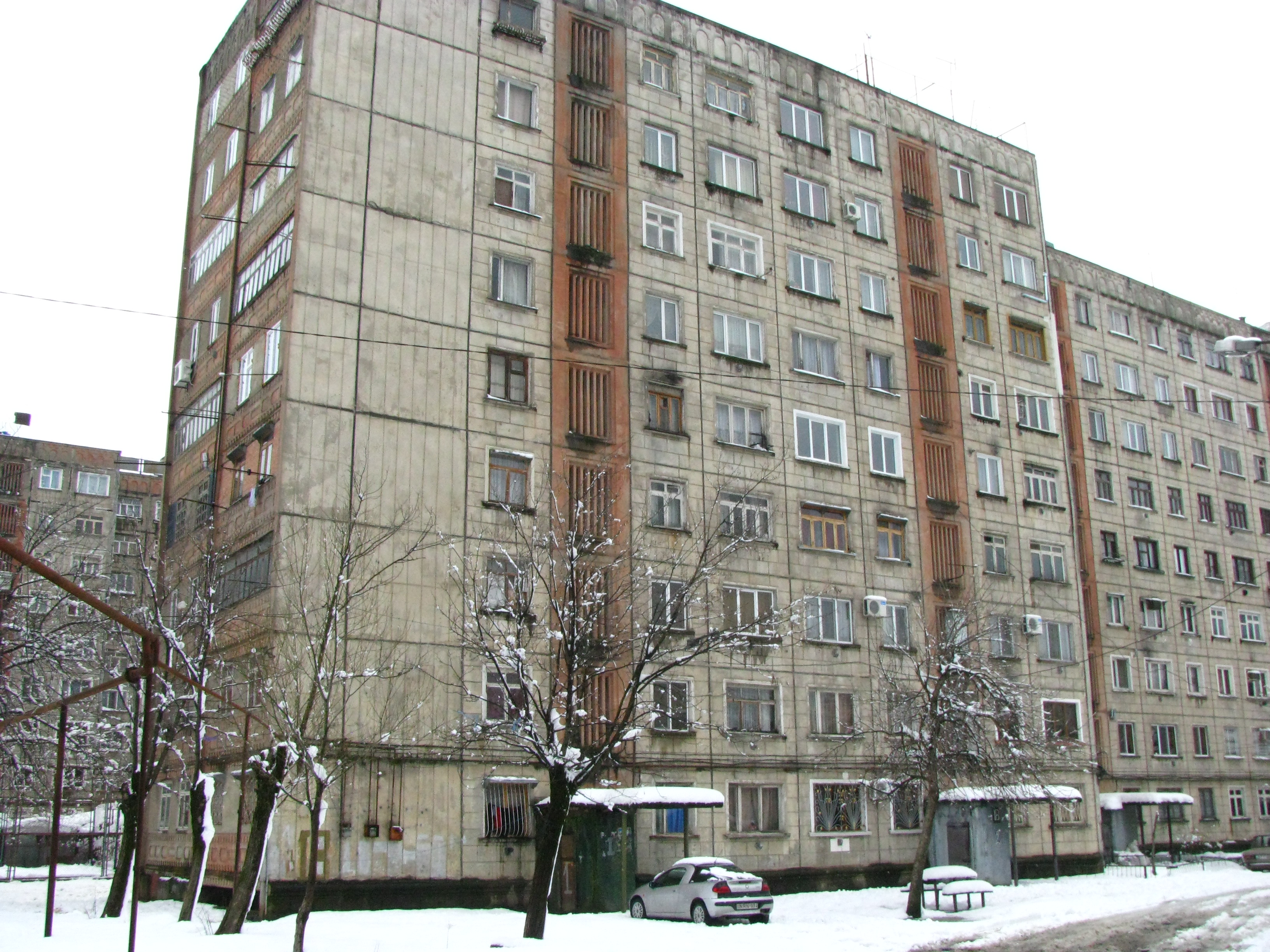
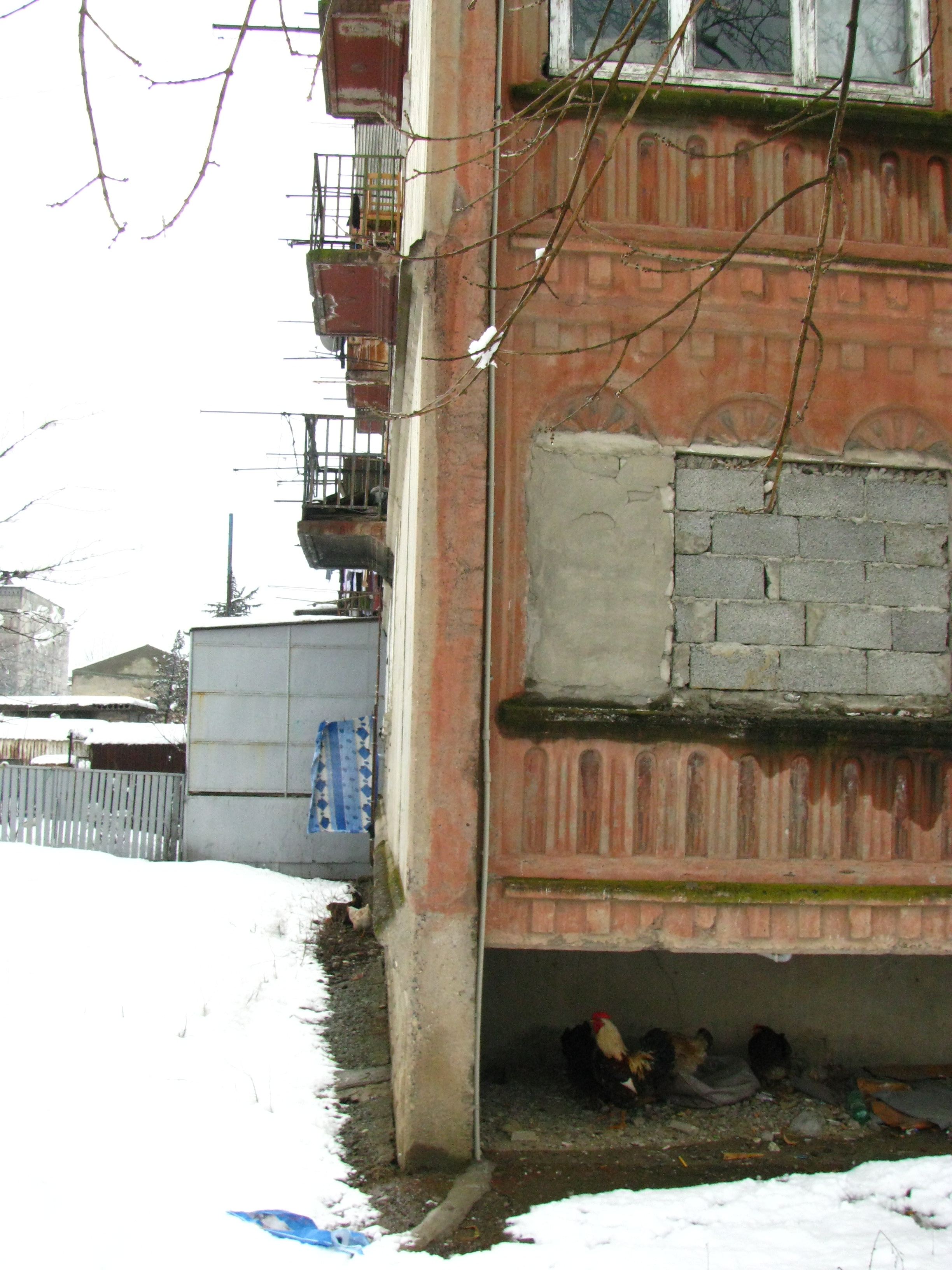
Georgia is an interesting country. It’s got a population of about 5 million, with a little over a million people living in the capital and largest city, Tbilisi. The rest are basically scattered across the countryside in towns and villages. Kutais is the second largest city, but it’s really just a very big village with a quaint European town in the center. Yes, people live in fifty year-old communist-era apartments (“Krushchevkas”), but they still kept chickens and livestock in the yard, and usually had a grandparent or two still living in one of the outlying villages who tended to the family land.

For five months, I lived in the Avtokarkhana district in Kutaisi with a local family. After the summer, I spent another four months in Rokhi, a small village between Kutaisi and Vani, at a farmhouse owned by the math teacher at the village school.

I learned a lot of unexpected lessons from my time in Georgia, many of which I’m still parsing through. The two biggest ones that set me on a course of self-sufficiency are this:

Lesson 1: What a collapsed society looks like.

Contemporary Georgia is not a collapsed society. They’re actually growing pretty well, with a large influx of foreign investment and all sorts of recent improvements (including a new police force that makes it one of the safest countries to visit in all of Europe). But in the nineties, the country suffered a major socio-economic collapse, resulting in a civil war and the secession of three separatist regions: Adjara, Abkhazia, and South Ossetia.

All around me, I saw signs of that collapse. Most of the basic infrastructure was built during the communist era, and most of it was dilapidated or barely functional. In Kutaisi, we saved our plastic water bottles and kept them full for times when the water went out (which happened frequently in the summer). In the village, power outages happened almost daily, sometimes forcing me to go to bed at 7:00 pm just because it was too dark to do anything else.

Of course, there was a lot that had survived the collapse. In some places, people probably hardly noticed that a collapse had happened at all. A collapse does not hit all people equally, and there’s a very big difference between the collapse itself and people’s experience of it. The old women who grew up under communism had mostly fond memories of that time and wished that they could return to it. Everyone else’s attitude toward that was basically “hell, no!”

When I came back to the United States, something very strange and disturbing happened. I started to notice ways in which our own society is starting to slide toward the same state of collapse that the people in Georgia are currently pulling themselves out of. Our infrastructure is not as dilapidated as Georgia’s, but give it another ten years and it will be. In some sectors, most notably the state-run sectors like Amtrak, it already is.

We may have won the Cold War, but that doesn’t prove that our socio-economic system works. All it proved was that the Soviets collapsed faster. Our modern American society is not immune from collapse.

Lesson 2: What a home economy looks like.

According to the Merriam-Webster dictionary, an economy is “the process or system by which goods and services are produced, sold, and bought in a country or region.” A home economy, then, is the system by which goods and services are produced, sold, and bought within the home. If your home does not produce anything, you do not have a home economy.

As a volunteer, I received a 500 GEL (approximately $300) stipend each month from the Ministry of Education. This was actually more than the base salary for most Georgian school teachers at the time. Georgia is a poor country, but living expenses are certainly much higher than $300 a month—especially for a family. How, then, did school teachers manage to get by?

They had a home economy.

This was especially true in the village. We kept chickens, cows, sheep, and pigs, made our own cheese, grew our own grapes, made our own wine, etc etc. We had our own well, kept a large garden, went hunting when the weather was good, and baked most of our own bread. More than half of what we ate was easily produced right there on our own farm. And because we had a couple of fairly large vineyard, when grapes were in season, we loaded up the back of a truck and sold them at the market in Kutaisi.

For someone who grew up in a middle-class American suburb, this was absolutely fascinating. Most people here in the States do not have a home economy because they do not produce anything. They do not keep a garden, grow their own food, or do much of anything else that would be useful if the US dollar were suddenly to collapse. The only way most people can support themselves is to earn an income outside of the home—that, or go into debt. For almost half of the US population, an unexpected $400 expense would force them to either beg, borrow, or steal.

I have no idea what the personal finances looked like for the family I stayed with, but I know that if all of the outside income dried up, we would still have food on the table. Why? Because we grew it. We grew a lot of it, in fact—enough that we could probably barter for what we didn’t grow. It was hard work living that sort of lifestyle, but it brings a sense of security—real security—that you cannot get in any other way.

More than anything else I saw or experienced, this self-sufficient lifestyle had the greatest impact on me. By the time I was ready to come home, I was already thinking about how I would implement it in my own life. I had learned that true economic security comes not from the government, your job, or society at large, but from living in such a way that you can provide for your own needs and wants—from living a self-sufficient lifestyle. And that’s what I set out to do.
The Self-Sufficient Writer (Index)

A Letter To My 2011 Self

Dear Joe,

Well, 2011 has been an eventful year, hasn’t it? It sure didn’t feel like it when you were down in the trenches, but now that it’s over, you’ve got to admit, you sure came a long way.

You’ve discovered a lot of things about yourself since January. In your quest for economic security, you’ve learned that you’d rather work for yourself as a freelancer than be anyone else’s employee. You took the plunge and self-published, something you thought you’d never do (and yes, it’s okay to call it ‘self-published’–the stigma will be dead in another year). You attended your first Wordcon, made a couple of cross-country road trips, worked a ton of crap-jobs just to make ends meet, and now you’re on your way out of the country to try your hand teaching English. It sure seems like a lot, doesn’t it? Just wait. Next year is going to be just as full of changes, though it won’t always seem like it at the time.

I know, I know–cut to the chase and give me some advice already. Well, looking back on what you’re going to go through in 2012, here’s what I have to tell you.

First, don’t stress out so much about the whole self-publishing thing. You’ll figure it out all right. No, I can’t say whether you’re going to hit the turning point before the end of the year. In fact, that’s not even a healthy way to look at it, so stop thinking about it that way. Follow the slow growth model, and don’t angst about sales or price points so much. Keep your butt in that chair, because writing new words is still the most important thing you can do.

Don’t beat up on yourself so much for failing to meet your ridiculously high goals. You’re going to write a novel in the next six weeks, and the rest of the year is going to be a struggle. Right now, you place too much emphasis on your daily word count. Relax a bit, and don’t be too hard on yourself. You’ve still got a lot to learn about your own creative process, so take the time to figure it out.

By the way, you totally rock the beard. Growing it out was a great idea, no matter what your sisters told you back in 2010.

About your upcoming excursion to Georgia, the best advice I can give you is to remember what Spencer told you back in 2008. Adventures are like stories–they each have a beginning, a middle, and an end. You’re going to experience all of that in the next year. No, you probably won’t write another travel journal. Most of your experiences are going to be too personal for that kind of thing anyway. You’re going to accomplish all of your goals, though, so don’t worry–things are going to be just fine.

The most important thing you can do is keep yourself grounded spiritually. I know, I know, that’s always the most important thing. Well, it’s especially true now. Where you’re headed, you’re not only going to be the only Mormon, but the first Mormon to live there. Sundays are going to be a struggle. Everyone is going to think you’re crazy because you don’t drink. You’re going to make wine, though, and that’s going to be an interesting story for your friends back in Utah. Just be sure to keep doing the things you know you should be doing, and everything will turn out all right.

You’re going to love teaching English. Oh, you won’t love everything about it, but it’s something you’re naturally good at, so don’t worry about that. Just try to listen to your Georgian co-teachers and be more considerate of them. And don’t worry about the language. You’ll pick it up pretty quick. Just realize that Georgian verbs are impossible to conjugate unless you’re a native speaker.

I could tell you what your biggest mistake is going to be, but I think it’ll be better if you go ahead and make it. Just be sure to hope for the best, even as you plan for the worst. Follow the path of least regret, and you’ll make some really awesome memories–not to mention some truly amazing friendships.

At this point, I’d tell you you’re on the right path, but that isn’t exactly true. There is no ‘right’ or ‘wrong’ path for you right now, but you’re on a good one, so keep it up and see it through to the end. You’ll be glad you did.

Take care!

Joe

This Week

I was listening to the latest episode of This American Life yesterday, and at the end of the podcast, Ira Glass mentioned that this week’s episode will be themed “this week”–in other words, things that all happened in just the last seven days.

Well, things haven’t been too eventful out here in Georgia, but I liked the idea for the theme, so I decided to write up something as if it would appear on the show.  Here it is:

Early Tuesday morning, before the sun rose, I woke up from a dream that I was in a faraway place somewhere on this planet. Then I opened my eyes and realized that I live in the Caucasus Mountains.

I’m an American teaching English in the Republic of Georgia, in a small village half an hour south of Kutaisi. I live in a farmhouse with a local family. The mother teaches math at the village school, her son teaches computer science and makes wine for a company based out of Tbilisi. My host mother’s sister in law also lives with us, and this week, she cooked the most delicious borscht I’ve eaten in my life. She told me she’d teach me how to make it, and I’m ecstatic.

We keep sheep, cows, chickens, pigs, a turkey, and grow about half of the food we eat. Last week, five of the chickens were eaten by a wolf, including a mother hen and three of her chicks. The last surviving chick has been struggling, so every day after school I take her out of the little cage where we’ve beek keeping her and feed her from my hand. She isn’t as afraid as she used to be, and seems to be getting stronger.

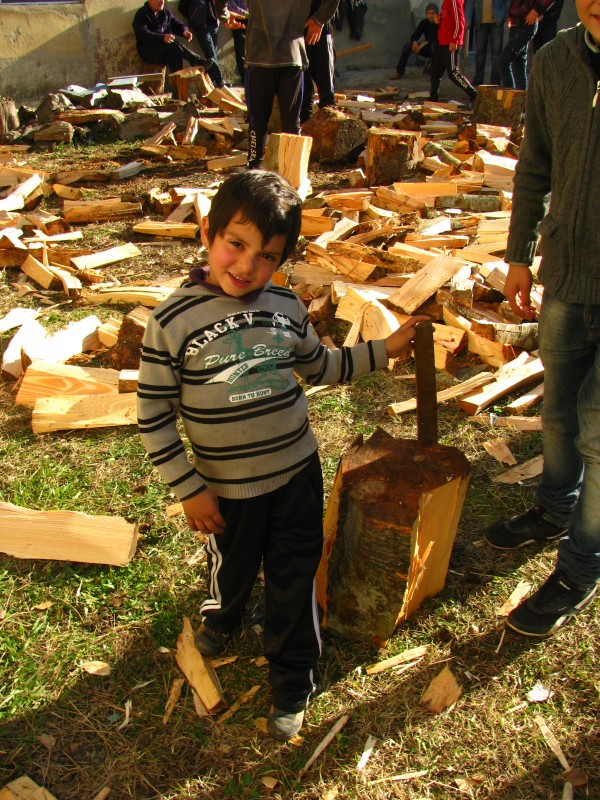
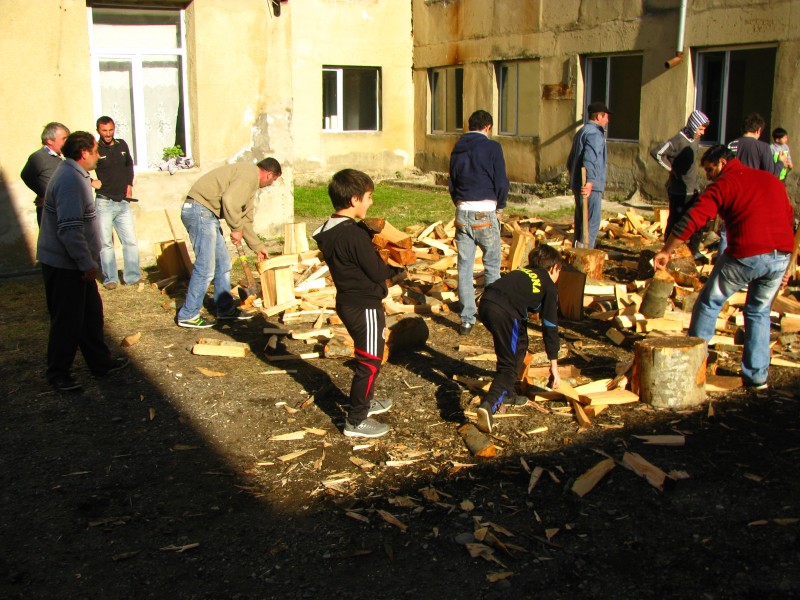
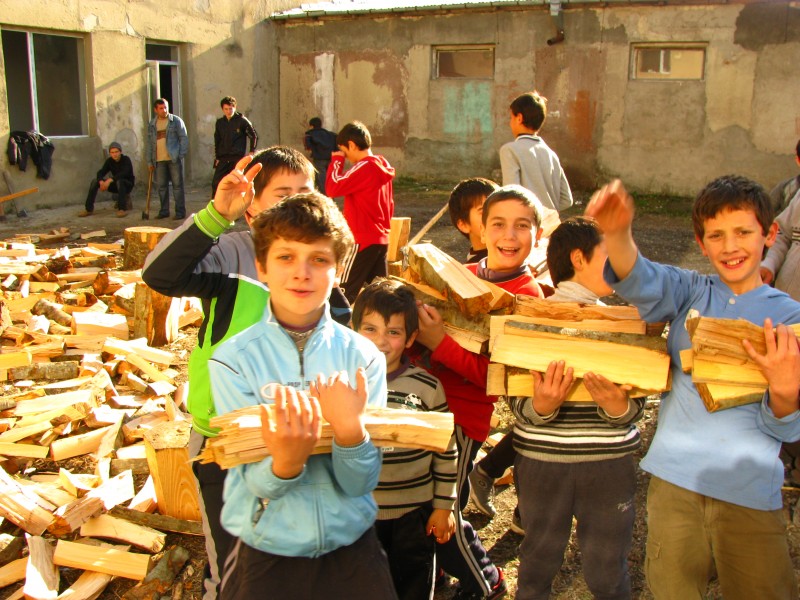
I teach grades I through VI at the village school, which amounts to about eighty kids. On Tuesday, we chopped wood for the winter. Each classroom has a small woodburning stove, and often smells like campfire smoke. It’s very warm, though–the teachers make sure of that, since cold leads to illness, and we can’t have that. The kids love learning, and I love teaching them. Every day after class, I say “goodbye,” and they run up screaming and laughing to give me high fives. I feel like a rockstar whenever I’m at school with them.

On Sunday, I went up to Kutaisi to use the internet. I use the internet maybe three times a week, sometimes four. The nearest place with reliable wifi is the McDonalds, and it takes half an hour and 1.5 lari to get there. On the way back, I chatted in the back of the marshrutka with some of the upper grade kids from my village. We sang songs by Michael Jackson, Justin Beiber, and Psy. Gangnam Style is very popular out here, and the kids think it’s hilarious when I do the dance for them at the village school.

It’s raining right now, which means that the power will probably go out soon. We have power outages almost every day, but they aren’t usually longer than one or two hours. Our water comes from a well, and our heat comes from the fireplace, where we also burn our garbage. When the rain lets up, I’ll help my host-brother cut down a few trees in the back and chop the wood.

Georgia is going through some difficult times politically right now, but we only hear about it through the TV. The country had its first peaceful democratic transition of power in October, and the new Prime Minister has been on a political witch hunt ever since. Some in the Western media find this disturbing, but my host-brother doesn’t think that Georgia has become less democratic because of it. We had a long conversation about politics on Monday night, which eventually turned into a discussion about the Israeli-Palestinian conflict, since the recent UN vote has also been in the news. He told me he’s pro-Palestinian because Israel’s occupation of Gaza and the West Bank sounds a lot like Russia’s occupation of Abkhazia and South Ossetia.

An expat friend of mine visited Abkhazia recently and posted the pictures on his blog on Tuesday. He called it an overpriced garbage dump, and from the pictures, you can definitely see why. Piles of trash in the courtyard of the biggest Orthodox church in Sokhumi, a derelict half-sunk ship rusting in the harbor, vines crawling up Soviet-era power lines that look about ready to fall over. And yet with Russia trying to keep Georgia from joining NATO, it looks like the status quo will remain in place for years to come.

Here in my village, though, that all seems far away. So do the economic problems back home, though they’re one of the reasons why I came out to Georgia in the firstplace. On Tuesday, I met up with a British friend of mine at McDonalds and we talked a bit about what we plan to do after we get home. He’s got a job lined up for him at the school where his mother works. I asked him if things are still tough in the UK, and he nodded. We didn’t have to say anything more than that to understand each other.

I don’t have a job lined up, but I’m actually not too worried. I’m a writer with a few science fiction stories self-published online, and on Tuesday I realized that I’ve earned as much money in the first four days of this month as I earned in the entire month of March earlier this year. It’s not enough to make a living yet–at least, not by US standards–but it’s growing.

On Sunday, I published another novelette, and on Wednesday, I went back to work on a fantasy novel that I started in October. The power hasn’t gone out yet, so I think I’ll get back to writing. It’s 3:32 PM and I have the rest of the day to myself, with maybe an hour to help my host brother cut down some trees. Life is good, especially out here in the Caucasus.

At this point, I should probably post some pictures:

Chopping wood at the school. A bunch of men from the village did the chopping, while the kids carried the wood back inside.
Some of my VI and IV grade students helping out.
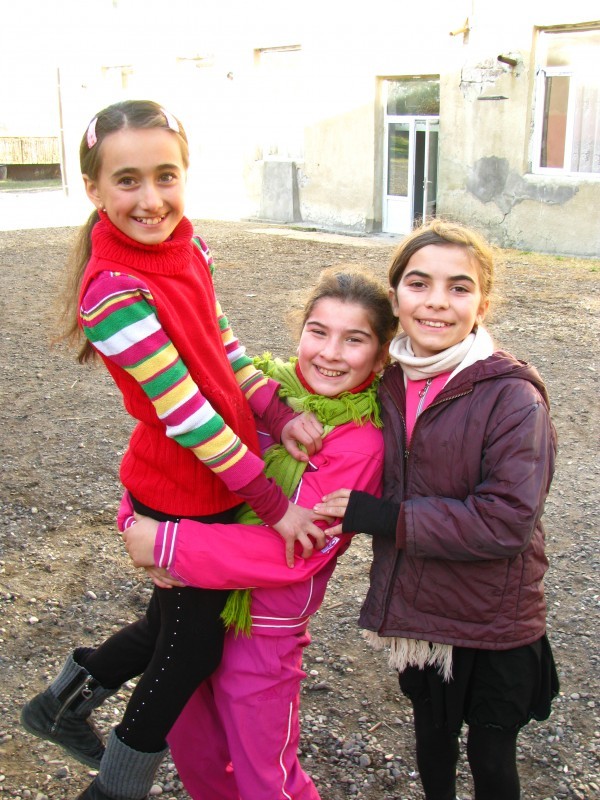
One of the first graders. I swear, this kid is like my biggest fan.
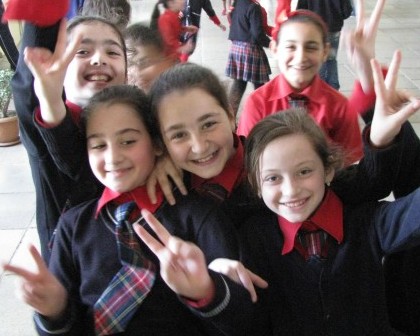
Some of my V graders. These kids are great.

In other news, I decided to drop my other projects and go back to writing The Sword Keeper.  I think part of the problem I had before was that I was trying to go too fast, writing-wise and story-wise.  This is my first time writing a fantasy novel, and I can already tell that it’s going to be a lot longer than I’d thought it would be.

Also, I took the time to draw up a map of the fantasy world where it takes place, and oh my gosh that changed everything.  Maps are awesome.  When I have access to a decent scanner, I’ll have to put it up.

That’s all.  See you around!


I cannot tell you…

…how much I’m looking forward to being back in Georgia.

My flight leaves from JFK on Saturday and arrives in Istanbul at about 6 am on Sunday.  The flight to Tbilisi doesn’t leave for another seven hours, so I plan to take the tram downtown and see some of the sights.  I’ll arrive in Tbilisi late that afternoon, spend the night at a hostel…

…and then take off the next morning for Kars, Turkey.  I plan to meet up with a friend there and go tour the ruins of Ani, ancient capital of Armenia.  I have no idea yet how I’m going to get there, but there should be some buses in Tbilisi or Akhaltsikhe, and from Kars you can charter a taxi.

So after all that, I’ll head out to Baghdati to meet my new host family!  For the fall semester, I’ve been assigned to the school in the village of Rokhi:


View Larger Map

It’s about an hour south of Kutaisi, right up against the Lesser Caucasus mountains, and it looks like an awesome place!  A couple of other TLGers have been there before me, and they tell me it’s really great.  It’s definitely going to be a change of pace, going from city to village, but it’s one I’m looking forward to.  There are only 300 students in the school (grades 1-12), so maybe I’ll learn all my students’ names this time.

The family I’ve been assigned to sounds a bit older, with a thirty year old son who works at the school.  It sounds a bit rustic, with Turkish toilets and no internet at home, but I’m looking forward to that, especially the no internet part.  Don’t worry, I plan to get out and blog regularly–I’m sure there are local internet cafes, plus Kutaisi isn’t that far and I know where to get internet there.

Getting out to church is going to be a bit tricky: I’ll probably go into Kutaisi on Saturday, take the noon train into Tbilisi (5 GEL) and spend the night at a hostel (15 GEL), or take the sleeper train (10 GEL) and show up in the morning.  Getting back shouldn’t be too difficult: the Baghdati marshrutka leaves from Didube at 16:00 (or so I hear), and from there it’s only about 6 or 7 kilometers.

I have no idea how long I’ll be in Georgia this time: my contract runs until the end of December but I may extend again, depending on what other options open up.  I’ve really fallen in love with Georgia since coming there, and may just choose to stay on another year.  The Caucasus is a really amazing place, full of hidden treasures and remote places.

Which reminds me: I’m bringing a tent and sleeping bag this time, to do some backpacking in Borjomi and Tusheti.  Packing them was tough: the airline restriction is 20 kg total of weight (44.1 lbs), and after a whole lot of work, I finally got it down to 42.5 lbs.  The disassembled backpack frame is going to have to go as a separate piece of luggage, since it was too big to fit in any bag, but it shouldn’t be too hard to reassemble it out in Georgia.

That’s about it.  I’ll leave you with this awesome Georgian song I found on youtube.  The dance troop is Erisioni, and they put on an amazing show that’s kind of like Riverdance, except for Georgia.  Let me tell you: when it comes to dance (folk or ballroom), I don’t think anyone in the world is as amazing as the Georgians.

Magaria!

Last day of school

So today was the last day of school in Georgia, with all of the craziness that that entails.  It was kind of sad to say goodbye, even though I’ll probably be coming back to the same school in September.  In the meantime, I’m going to miss being a rockstar to all the 7-12 year olds and giving them high fives after class and in the hallways.

I haven’t posted much about my teaching experience, but it’s generally been positive, though not without its ups and downs.  I’ve met a lot of great people, taught a lot of great kids, and lived in a culture very different from my own.  I’m not sure how I’ve grown yet, or what I’ve learned from the experience, but it isn’t over–I’ll be back after the summer, for a least one more semester.

I asked to be placed in the same school again, though I’ll be changing homestay families.  If they can’t find another family in this district, I asked to be placed in a village near Kutaisi.  It’s impossible at this point to say what will happen, though, and things in this country tend to change without notice.

When I came to Georgia, my goals were to find out if I could balance teaching English with my writing career, to get some useful teaching experience, and to gain some cultural exposure that would enhance my writing.  On all three counts, I think I’ve had success.

My writing productivity has gone down  slightly since coming out here, but I think that has more to do with the homestay and finding a good, quiet place to write.  I’m still writing every day, just 1.5k words instead of 2.5k.  Teaching English isn’t the problem–in fact, it’s probably one of the best careers for aspiring writers, just so long as you know your creative process and have a modicum of self-discipline.  I’ll probably do another post on that later.

As far as teaching experience, I don’t know how much my time here in Georgia is going to help my resume, but it has helped me to have a bit more confidence when it comes to teaching.  I still feel like there’s a lot of room for professional improvement, though, and it’s going to be difficult to get that here.  I like Georgia, though, so I’ll be happy to come back.  If anything, I figure one year looks better on a resume than six months.

And as for cultural exposure, coming out here was definitely a good move.  Living in a developing country changes your perspective in a lot of interesting ways, and Georgia is so different from America that I’m sure I’ll be talking about it for years to come.  How all of this will affect my writing, I don’t exactly know, but I’m sure it will only enhance it.

So yeah, that’s been my experience so far.  The last day of school was kind of bittersweet, but I’m definitely looking forward to coming back!

მოტაცება, or how to bag a wife–literally

მოტაცება (pronounced mot’atseba) is the Georgian word for bride kidnapping, as opposed to regular kidnapping, which takes a different word.  It’s an ancient practice in the Caucasus region that doesn’t happen as much as it used to, but still happens, especially in the rural areas.  Today, most Georgians condemn it, but there’s still a whole slew of lingering cultural subtexts that can be very difficult for a Westerner (like me) to understand and navigate.

The video clip at the top is from a Georgian comedy program (named,  aptly enough, “Comedy შაუ”), and does a pretty good job illustrating how mot’atseba works.  Of course, the genders have been reversed–50% of Georgian humor is cross-dressing, and the other 50% is cross-dressing with slapstick–but everything else is pretty accurate.  Like I said in a previous post, it’s like a weird game of capture-the-flag involving sex and arranged marriage, where the flag is the girl.

This is how it works: boy meets girl.  Boy decides to marry girl.  Boy gets his friends together and kidnaps the girl (with or without her consent), holding her captive overnight.  The next morning, boy contacts girl’s parents to ask for girl’s hand in marriage.

Since the girl has been held overnight, the implication is that she’s been raped (which may or may not be true).  Therefore, to avoid a scandal which could tarnish the family’s reputation, the parents will usually marry their daughter off as quickly as possible.  However, if the girl can escape, or the girl’s brothers can rescue her before nightfall, the crisis can be averted.

I first heard about mot’atseba from this post on Georgia On My Mind, back when I was looking into TLG about a year ago.  It disturbed me a little, but not enough to dissuade me from coming to Georgia.  A couple of weeks ago, however, I learned that that was how my host parents got married.

Here’s the thing, though: they both seem to remember it kind of fondly.  In fact, when my host mom saw the clip from Comedy შაუ, she couldn’t stop laughing.  Her mom lives with them now, and from time to time they go out to visit his family in the village, so it looks like everyone’s on pretty good terms.

So what the heck happened?

Here’s the story, as best as I can piece it together.  They were introduced by his sister, who was her coworker at the hospital.  After a month, he got together with some friends and took her without violence to his family’s house out in the village.  She was surprised and upset at first, of course, but her parents gave their consent, and so they were married the next day by a magistrate.  Now, they’ve got four kids–a huge family, by Georgian standards–and seem to be pretty happy together.

As a Westerner, it blows my mind that a strong, healthy family can come out of something as violent as an act of kidnapping.  Indeed, I have yet to be convinced that that’s a normal outcome. However, after asking around and doing some research, I’ve come to realize that mot’atseba isn’t a black and white issue: there are all sorts of cultural subtexts that make the issue much more complicated.

The key to understanding how all this works is the following proverb, which underscores the entire Georgian concept of gender roles and the differences between men and women:

If a woman says no, she means maybe.  If she says maybe, she means yes.  If she says yes, she is not a woman.

From this, two things follow:

1: Women are fickle, therefore men should be assertive.

As a man, I see this all the time.  All three of my co-teachers are women, and all of them constantly defer to me, even though they have far more professional experience than I do.  When I had some pretty serious differences over teaching methodologies with one of them, she suggested that I take over the next lesson and teach it without her interference, so that she could get a better idea that way.  This isn’t the case with the female volunteers–many of them complain about how hard it is to get anyone to take their suggestions seriously.

2: A woman can never say no.

If “no” is constantly interpreted as “maybe,” then it follows that no one (or at least, no man) is going to believe that a woman is even capable of saying “no.” This turns the whole concept of rape into a nebulous gray area, unlike the United States, where women have a lot more power at least in terms of the law.

This is not to say that in Georgian culture, women are doormats or property (even though that’s what some TLGers claim).  Women have a number of support networks, such as family, friends, and other women, and can use these networks to ward off unwanted attention.  When I asked my host sister if she’s worried that a mot’atseba would ever happen to her, she said no, because if it did, her three brothers would kick some serious ass.

On top of all this, Georgians have no real concept of casual dating.  If a girl and a guy are seeing each other, they’re either married or about to be married.  This shows up in the way they use Facebook and other social networks: instead of listing themselves as “in a relationship,” the girl will give her password to the guy she’s dating.  And they don’t just do it because the guy demands it–when my host sister was seeing someone, he asked her if she wanted to give her password to him, as if that was the natural next-step in their relationship.  From the way she told me, she seemed to be worried that she’d made a mistake by telling him no.  Of course, I told her she’d made the right decision!

Combine all of these together, and you should start to get a clearer picture of some of the subtext surrounding mot’atseba.

When I asked my first co-teacher about it, she said it was only an ancient practice and absolutely didn’t happen anymore.  When I brought up rape and asked if that was also a part of it, she was horrified and didn’t want to talk about it.  However, when I asked if it’s possible for a happy marriage to come of it, she kind of smiled a little and said that if the woman likes it, then why not?

My second co-teacher was much more straight with me.  Yes, it happens occasionally, though it was a lot more “fashionable” about twenty or thirty years ago.  No, it’s not romantic.  Yes, a lot of the marriages aren’t very happy, which is why so many of them end in divorce.  She told me that one of her friends from college was married through mot’atseba, and that she knows of at least one case in our school where an 8th grader was kidnapped and married.  However, under President Sakashvili, mot’atseba is now a serious crime, so it’s not as common as it used to be.

My third co-teacher’s answer was a lot sketchier.  The first time I asked about it was in passing, as she walked in on the conversation I was having with my first co-teacher.  When I asked her about rape, she laughed and said “well yes, of course it happens!” as if that wasn’t a big deal.  Later, however, she sat me down and said quite seriously that mot’atseba is a horrible thing, that it’s a criminal act, that it doesn’t happen anymore, etc etc.

However–and this was perhaps the most illuminating thing–she said that sometimes, when a guy and a girl are in love, but she’s being wishy-washy and non-committal, he’ll sweep her off her feet and carry her off.  In fact, that was what happened with her: her boyfriend wanted to marry her, but she kept putting it off, so one day he tricked her into getting in the car and told her “all right, enough is enough–we’re getting married this weekend.” And they did.

When I asked her if that was mot’atseba, she said no, but I think the subtext was similar.  A real man knows how to assert himself and take what he wants.  Since a real woman will never say yes, sometimes you just have to man up and tell her how it’s going to be.  And don’t worry if she says no at first–she only says that because she doesn’t really know what she wants yet.  She’ll come around eventually.

It sounds pretty horrible, but that seems to be how it works.  And really, there are gradations of it. Most Georgians will agree that it’s wrong for a guy to kidnap a girl he doesn’t know so that he can rape her and force her to marry him.  But if the guy and the girl know each other, and are already pretty serious (ie seeing each other at all), and he wants to speed things up–or, alternately, if she knows her parents would never say yes otherwise–that’s when everyone speaks of it with a wink and a nod.

And really, can we say that our culture’s problems are any less abhorrent?  What about teenage pregnancy?  Secret abortions?  Date rape?  At least with mot’atseba, the guy is trying to marry the girl, not just sleep with her and walk away.  If it’s just sex that the guy is after, there are a lot more easier ways to get it than risking a prison sentence.

So is it “wrong”?  I don’t know if it’s possible to say yes or no, except on a case by case basis.  My host sister knows a girl who was kidnapped at age 12 and had a baby the year after.  I’m pretty sure that’s wrong.  But when I told her what would happen to that guy in the states–that he would go on the registered sex offender list and spend the rest of his life ostracized and unable to find work–she thought that that was wrong too.  And as for my host parents, well, it seemed to work out well for them.

I don’t know.  But either way, it’s definitely an interesting anthropological experience.

Q1 2012, or what writer’s angst looks like

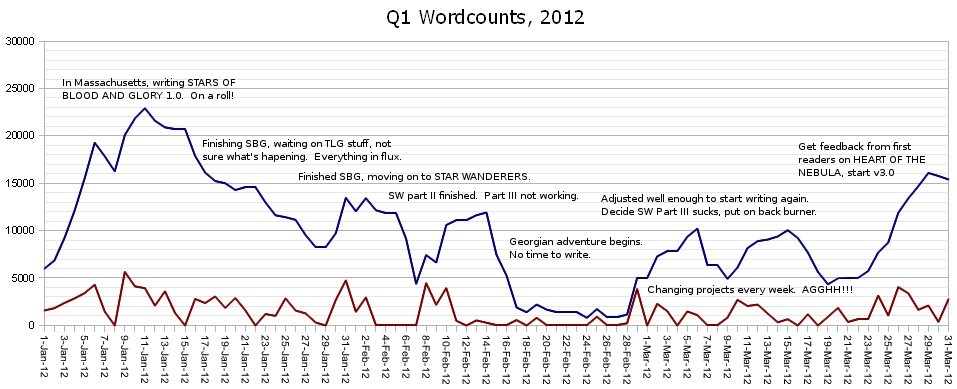
Actually, this last quarter wasn’t quite so bad as the title might make it seem.  For the first part, I was on roll, writing almost 25k new words a week.  But then I finished that project, started a new career, moved to the other side of the world…yeah, my writing took a hit.  Or at least, that’s how it feels.

In January, I was working on Stars of Blood and Glory, and was really on a roll.  The application process for TLG was still pending, but I pretty much knew I was getting in, and since I was staying with my parents until it went through, I didn’t have to worry much about money issues.  With lots of writing time, I finished SBG in about 6 weeks and published Journey to Jordan.  Life was good.

After Stars of Blood and Glory, I went back to Star Wanderers, finishing up Part II and starting Part III.  However, something felt wrong, and I didn’t really know what it was.  With my TLG departure date imminent, it was really hard to focus, and I wasn’t in much of a position to move on to anything else.  That’s when the angst began.

I flew out to Georgia on February 15th, did a week of training in Tbilisi, and then was whisked about 220 kilometers away to Kutaisi.  As a consequence, I didn’t get any real writing done for almost a month.  However, I didn’t have any major challenges navigating the new culture, and was soon settled pretty comfortably.

The trouble was, nothing was working.  Star Wanderers was broken, and I was too close to the project to fix it.  But after putting it on the back burner, I didn’t know what to do.  For most of March, I switched from one project to another.  Nothing seemed to stick, though, and by the end, I was getting pretty antsy.

What if I’d made a mistake to come to Georgia?  What if that was the reason nothing was working?  It sounds silly now, but that was what was going through my mind.  I still worry about it a little, but I think it has to do more with my creative process than anything here in Georgia.

I have a very non-linear way of writing first drafts.  After starting the revision for Heart of the Nebula and making some good progress on that, I got an idea for Star Wanderers and moved back to that.  At this point, I think the only way to get productive again is to finish that project, even if it sucks.  I’ve got a lot of great ideas for other stories, but until I can close the book on this one, I don’t think I’ll be able to make much progress.

So that’s where things stand right now.  All in all, it wasn’t a bad quarter, but I’ll be happy when I’ve actually finished something for a change.  Hopefully, that’ll only be a couple of weeks.  In the meantime, I’ll keep writing.

Staying in Georgia

So I’ve decided to stay here in Georgia for another semester.  Things are working out really well, I enjoy teaching English, and for the full experience I think it will be better to stay for a full year.

I’m not sure if I’ll stay in Kutaisi yet, though.  It’s a convenient place to live, but I have upwards of 30 kids in my classes, which can be a real challenge.  I’d kind of like to spend the next semester in a village or small town, where I can know all the kids by name.  Then again, I really like it here in Kutaisi, and I’m doing so much where I am that I’d kind of like to stay, just to see how things turn out.

Currently, I’m teaching grades 1-6, 9-10, and 12.  It sounds like a lot, but I’ve got great co-teachers who help out a ton.  I teach 18 class periods per week, which is enough to keep me busy but not so much that I feel overwhelmed.  My favorite grade to teach is probably 4th or 5th, where the kids know enough to surprise you but don’t have all the issues that come with teenagers.  There are different things I enjoy about each grade, though, so it’s good to have a mix.

The second semester doesn’t start until September, so that’ll give me a few months off to do whatever I like.  My current plan is to come home and work on getting print editions of my books out.  TLG will pay for my flight out and back, and my parents will let me stay at their place over the summer, so I think things will work out quite well.

As for what to do in December once this tour is finished–that’s an entirely different question.  I could probably leverage my experience here in Georgia to get a much higher paying job in Asia or the Persian Gulf, but all I’m really looking for is a job situation to tide me over until my writing career takes off.  That, and an awesome cultural experience.

What I’d REALLY like to do is find some remote desert village in the Middle East, where the locals will pay for room and board, my book royalties will pay the rest, the cultural experience will give me a chance to practice my Arabic, and my teaching skills will make a real difference in the local community.

Towards that end, I found this site called Workaway.  A friend of mine used it to get a short-term job in a Bedouin camp in Wadi Rum, and there are TONS of other opportunities listed just like it.  I freaked out a little when I saw it, because it looks AWESOME.  When I was in Jordan, I used to fantasize about spending some time in the desert with the Bedouin, so getting the chance to actually do that would be amazing!

TLG will pay for my flight home at the end of the second semester, but I can opt to go anywhere else, so long as the ticket price isn’t any more than Tbilisi to JFK.  Since this is the year my sister’s get together with their in-laws for Christmas, it might be better to go straight from Georgia to my next job at the end of December.

I was thinking about it as I walked around my neighborhood earlier today, and it made me wonder: why did I wait so long?  There are so many awesome opportunities overseas–if you don’t have any debt or anyone you need to support, you could spend years hopping from one random adventure to the next.  I could spend years doing that.  And with epublishing, all I really need is my netbook and periodic internet access to put up new books as I write them–everything else more or less takes care of itself.  It’s fantastic.

In any case, that’s the plan for now.  I’m taking the night train to Tbilisi tonight, so I’d better go get ready for that.  See you around!

Winter in Kutaisi

From what I hear from my friends, it’s been a pretty mild winter back in the States.  Here in Georgia, though, it’s been a much different story.

I think we’ve had only three sunny days since I arrived here in Kutaisi almost four weeks ago.  The natives tell me that this is highly unusual.  The temperature hovers right around 0 degrees Celsius, which means the snow is wet and melts extremely fast.  It’s pretty for a day or two, then it turns to rain again, and that means mud…lots and lots of mud.

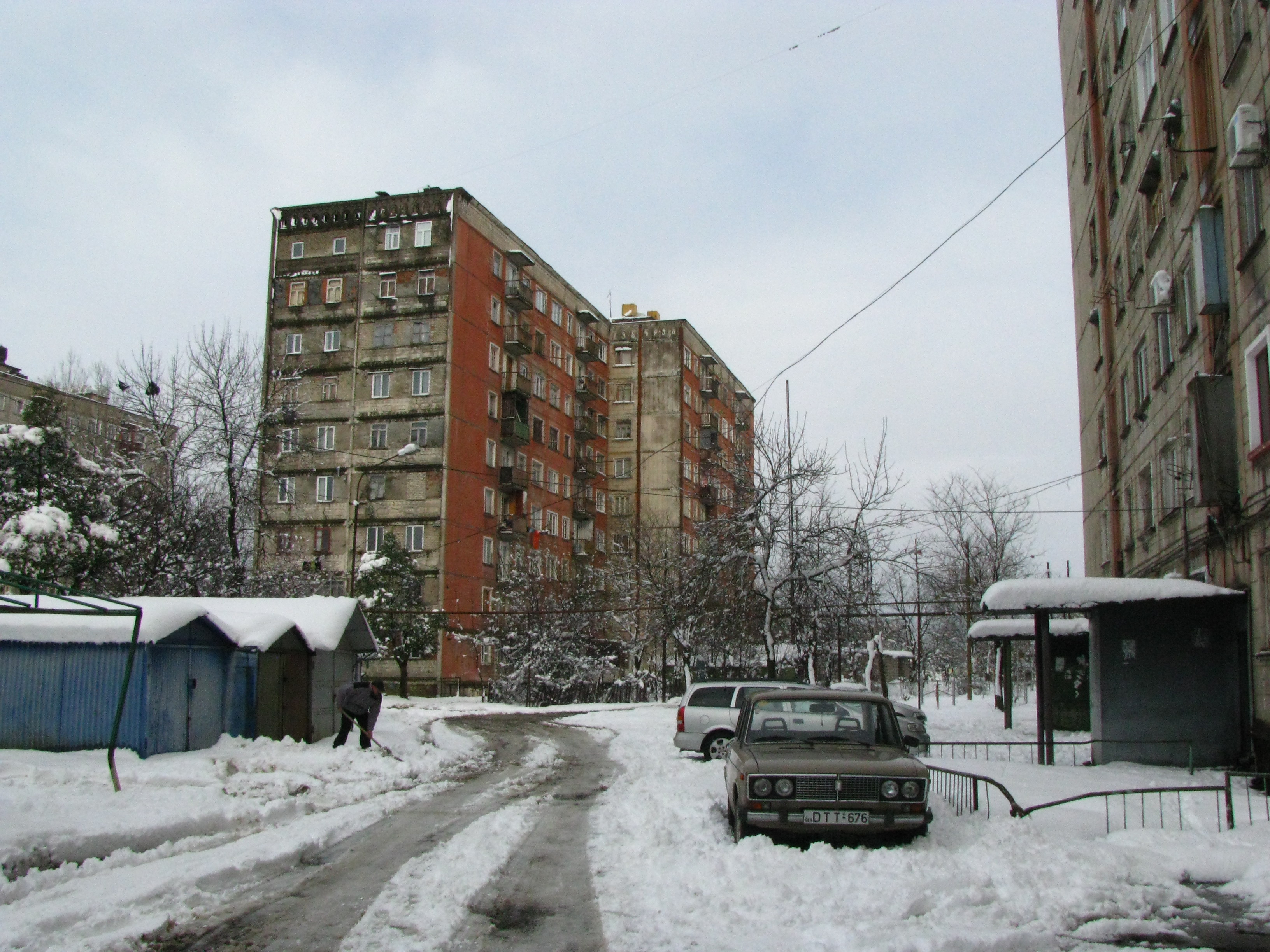
During a break in the snow, I ventured outside to take a few pictures of my neighborhood.  In a couple of weeks, the weather will hopefully be warmer and things will look a lot different, but still, I thought it would be good to give you guys an idea of what this place looks like.

My host family's apartment. We live on the second floor, which is good since there isn't an elevator.

I live in the Avtokarkhana settlement, near the old Soviet auto factory.  The apartments are about 50 years old, and haven’t been renovated much since then.  It’s a poor neighborhood, but it’s comfortable enough, with all of the basic amenities like water and heating.

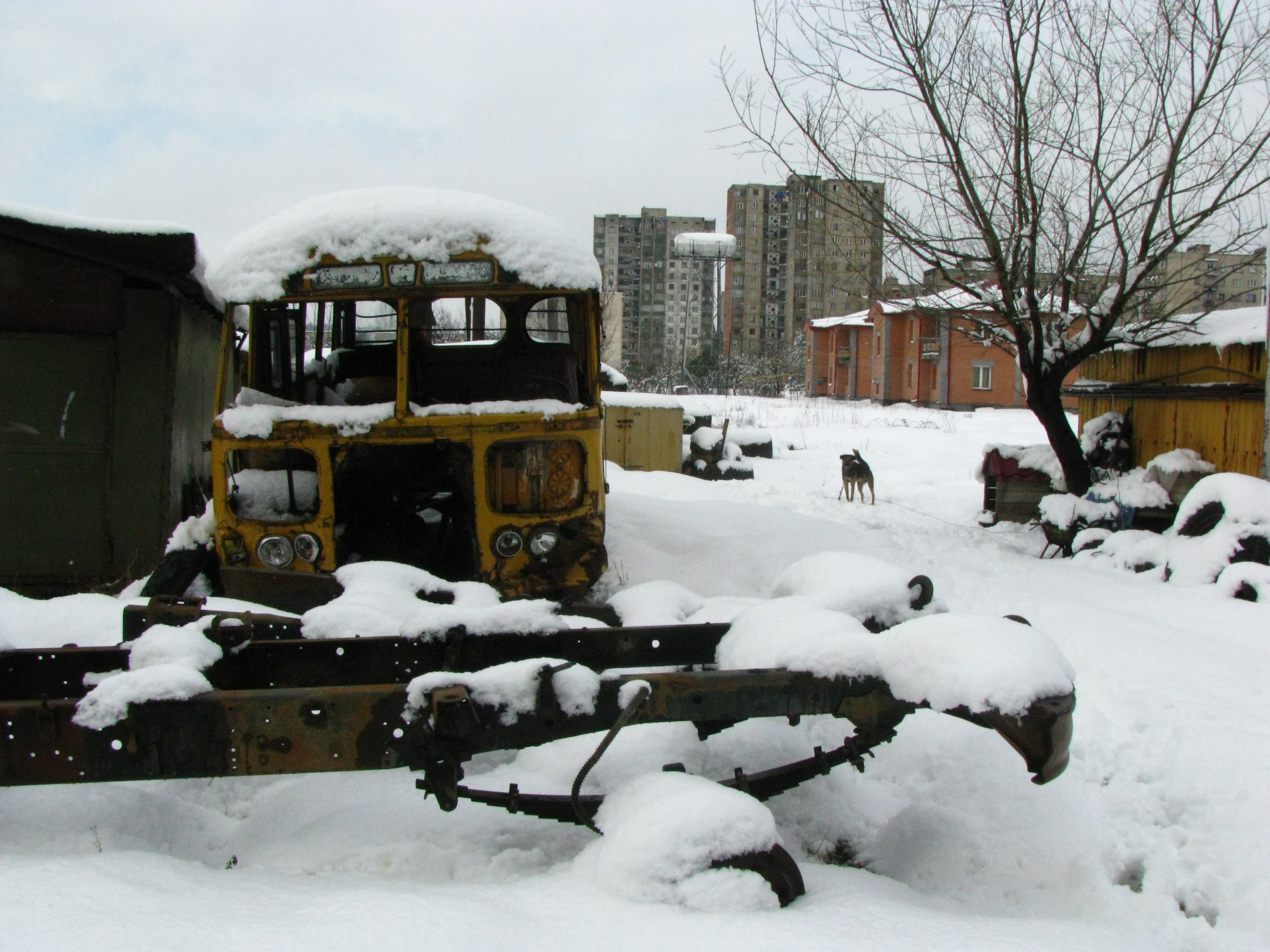
An abandoned bus along the road to my school. My host father has some choice words to describe his Russian-made vehicle.
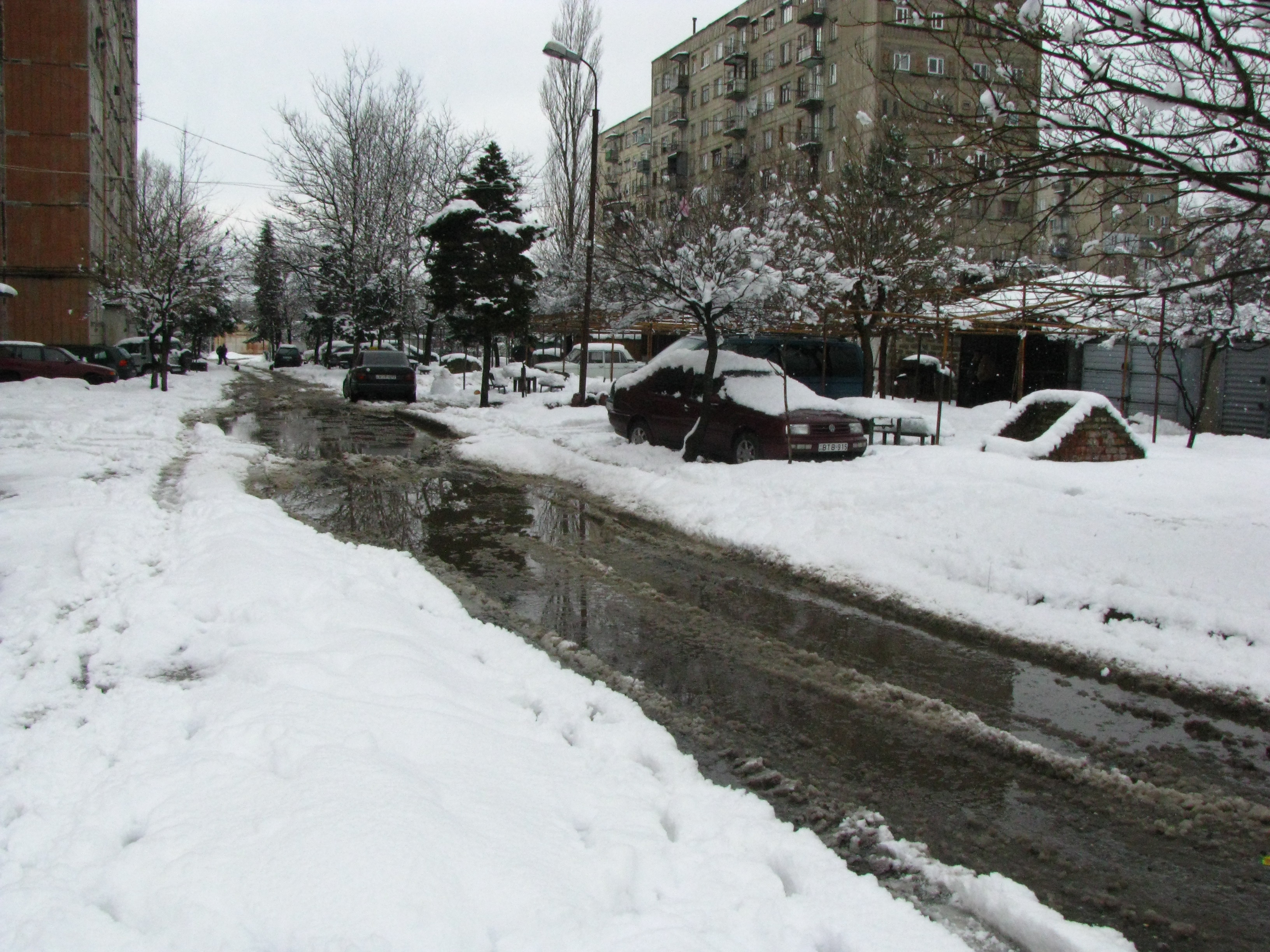
In Soviet Russia, puddle splash YOU!

The roads are pretty nasty; they haven’t been repaved in decades, and the potholes are so deep you practically need a raft to get across the street.  Most of the locals wear rubber boots during the rainy season, but I recently treated my boots with beeswax and that seems to be doing fairly well.  Besides, after a while, you figure out where the stepping stones are, and then it’s not so bad.

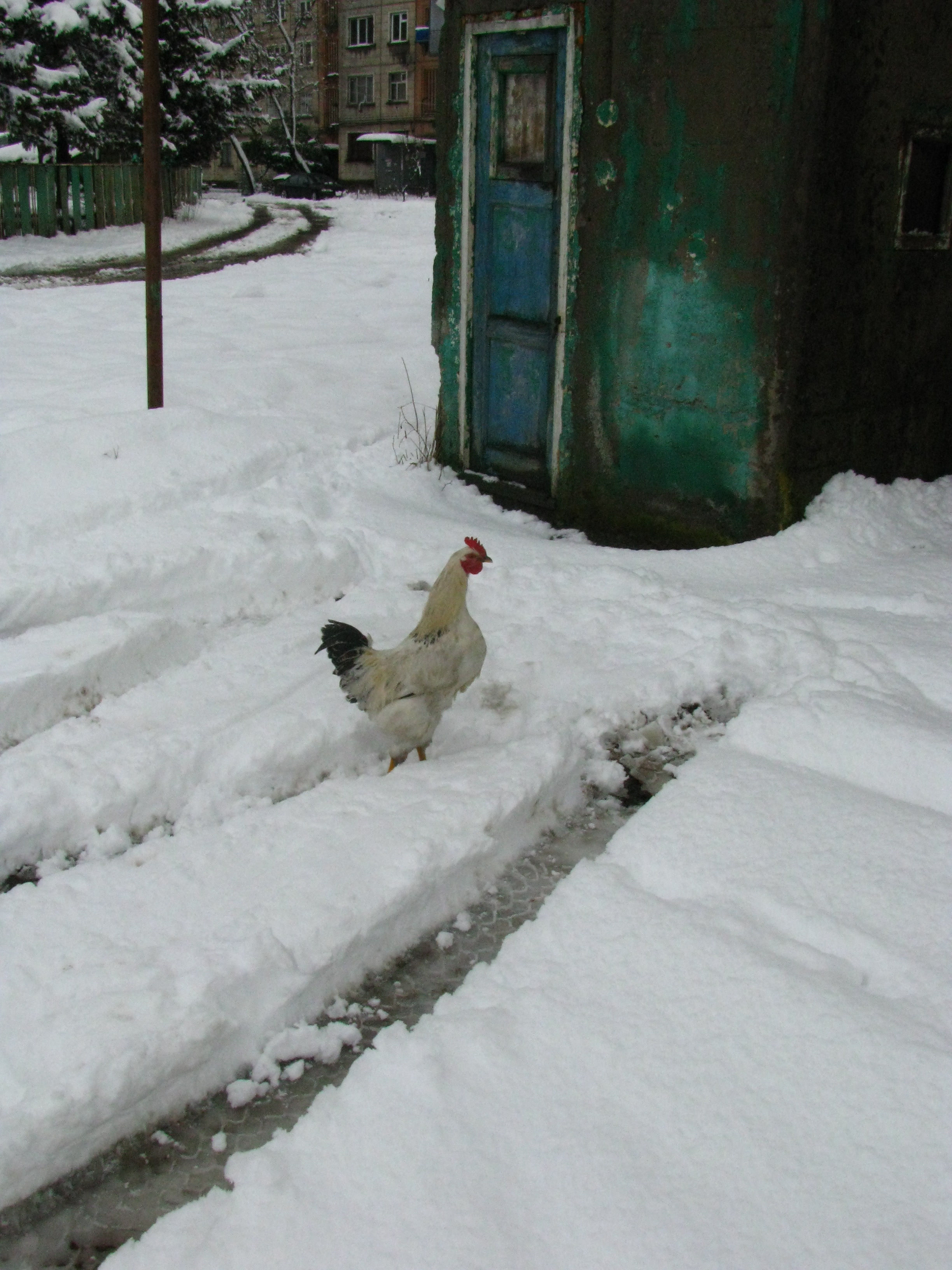
One of the local free-range chickens. There's a cow, too, but she was staying out of the snow.
Where the chickens go to keep warm. My host family laughed when I showed them this picture.

Even though Kutaisi is a fairly large city, I get the feeling that there’s still a few lingering elements of the village mentality.  How else would you explain all the free-range chickens that people still keep?  The school is within walking distance, as are the stores where we buy our bread, and even though the pharmacy is a short drive away, I could probably walk there in fifteen or twenty minutes.

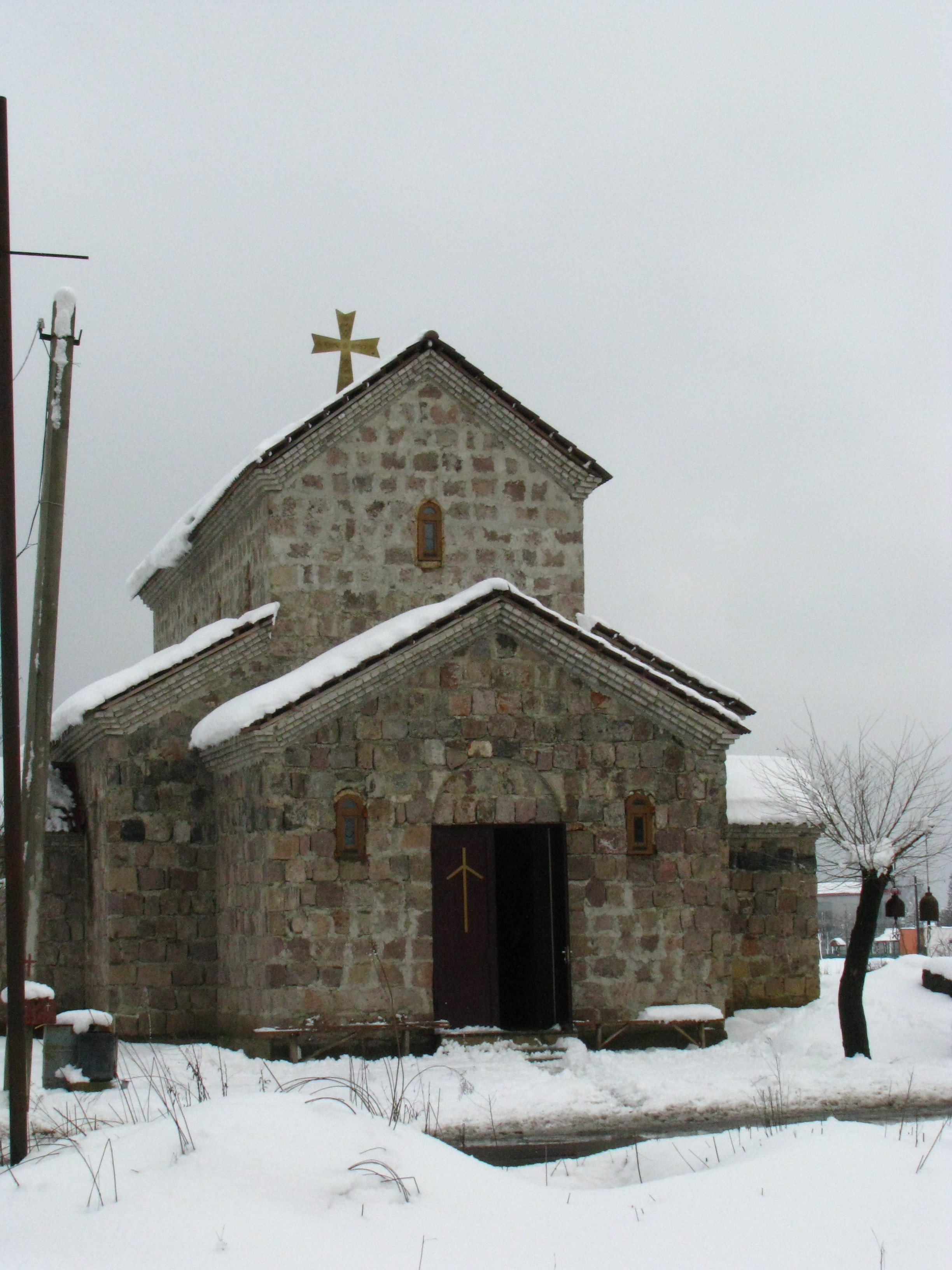
The local church. It seems pretty small, but Georgians don't really have weekly worship meetings like we do in the States.

Because of the snow, I haven’t gotten out much in the past few weeks.  I haven’t been stranded, though; there are about a dozen other TLG volunteers in the city, and we’ve had a few parties and get-togethers.  Kutaisi is a small city, as far as cities go, but there are plenty of interesting places if you know where to look, and even in the dead of winter, it’s still quite pretty.

The road I walk back from school every day.

So yeah, that’s what my neighborhood is like.  When the weather gets better, I’ll bring my camera to school and take some pictures of my school.  I should also take some pictures of my host family’s apartment, come to think of it.  What else do you guys want to see?

Getting settled in the land of the Kartulis

About three weeks have passed since I came to Georgia, and I’m starting to feel comfortably settled in this new place.  I like it a lot out here: my host family is great, I get along really well with everyone at the school where I work, the kids are so crazy eager to learn it’s awesome…really, I couldn’t ask for more.

Of all the places in Georgia where TLG volunteers are placed, Kutaisi seems like one of the best.  It’s the second largest city in the country, so it has access to several amenities such as markets, hospitals, restaurants, parks, and basically anything else you’d  expect in an urban center.  However, it’s about 200 km from Tbilisi and has very little exposure to the West, so culturally it’s very authentically Georgian.  It’s also much less crowded, and (in my opinion) much more beautiful.

My host family is great; I get along with them real well and already feel like a member of the family.   My youngest host brother, Kako, is 9 years old; I showed him Star Control II over the weekend, and he’s been addicted to it ever since.  We also play chess, and I’ve kind of taken him under my wing to teach him the basics of good strategy.  He’s getting steadily better!

Gura and Kati are the two teenage kids; they also speak English, so we’ve had some fun discussions.  Besides Facebook and her cell phone, Kati is really into books; I showed her my Kindle, and she wants me to help her persuade her father to get her one!  Gura is into Call of Duty and spends a lot of time hanging out with his friends; he lacks confidence when it comes to English, but he knows it better than he thinks he does.

The parents don’t speak much English, but they are really good people.  It’s a working class family; the dad works as a welder, and the mom is a nurse part-time and a home-maker full time.  They spend an amazing amount of time and energy on their kids, which is pretty typical for this part of the world.  They’re both non-smokers, and they’re very respectful of the fact that I don’t drink coffee, tea, or alcohol.  Some of the extended family keeps trying to push wine on me, but in the land known as the cradle of wine, that’s to be expected.

We basically spend all of our time in the family room when we aren’t sleeping; it’s where the heater is, so despite the relatively cramped space it’s the most comfortable room in the apartment.  Furniture consists of a couch, a computer desk and office chair, a bucket seat from an old van, a folding table, several small wooden chairs and a stool.  The TV isn’t quite a member of the family, but when the power isn’t out, it’s usually on.

The neighborhood is this bizarre mix of urban and rural elements.  The roads are super muddy and free-range chickens wander everywhere at will, but everyone lives in 9-story apartments that were built back in the Soviet days, when Kutaisi was a major center for the auto industry.  The school was built 50 years ago this year and has barely been renovated since, but it’s just starting to get some much-needed attention, with a computer center and a resource room for special needs students.  When the weather clears up, I’ll bring my camera to school and take some pictures so you can see what the classes are like.

I’ll have to do a post later on Georgian culture; there are some really bizarre and paradoxical juxtapositions, such as the way they mix religion and alcohol, or their strong belief in the nuclear family with their easy-going acceptance of bride-napping as a “Georgian tradition.” I have yet to really get a handle on all this stuff.  However, as a culture, they have a great respect for literature; when people ask my profession and I tell them I’m a writer, their eyes light up, and they show me a degree of deference that I never would have gotten back in the States.

Partly to have something to talk with them about, I’m reading War and Peace by Leo Tolstoy right now.  I just finished Book III, where Napoleon smashes the Russians and Austrians in the Battle of Three Emperors.  Everyone says that it’s the best novel ever written, and now that I’m in the thick of it, I’m starting to agree with them.  There’s a lot of really good storytelling here, as well as passion and depth.  I have the feeling that I’m going to be on a Russian literature trip for a while, though I should probably pick up some Rustaveli and Kurban Said as well.

As far as writing goes, I’ve had some difficulty settling down into a solid routine, not because of lack of time so much as trouble with my current WIPs.  Star Wanderers has more or less stalled; I ran into another wall midway through part III, and I’m still not quite sure how to get past it.  I’ve decided to take a break for a while, but I think my experiences here with the Georgian language are going to give me what I need to really make this novel come together.

In the meantime, I’m working on the 2.0 draft of Stars of Blood and Glory.  I’ve decided to try something new: revising not by chapter, but by viewpoint character.  Isolating each of the five viewpoints is helping me to see which ones work, and which ones are missing something.  I’ve also been using Dan Well’s 7-point outlining method, which is helping out a ton.

It feels like I could be writing more, but I’m not pushing myself too hard at this point.  I’m still adjusting to life in this totally new culture, and I’m also spending a lot of energy getting my TEFL career off on the right foot.  It’s paying off; I’m having a great time teaching, more than I thought I would.  Pretty soon, though, I’m going to start putting more energy into my writing.  I just hope that I’ll have enough mental space left over to really immerse myself and make it work.