A fascinating take on Brandon Sanderson’s Winds of Truth

Really interesting take on the publishing industry. This is politically incorrect, but I think it’s related to the way that publishing has become dominated by liberal women. The Nonsense-Free Editor has a lot of great videos about that.

There are lots of great books in the indie publishing scene that are not “Potempkin villages,” as this BookTuber calls them… but how is one to find them? When we finally solve that question, there will be a resurgence of great writing and great art.

Our world makes a lot more sense…

…when you realize that the internet is a factory for creating cults, and that social media and smart devices are force multipliers for this effect.

Before the internet, your “community” was a geographically bound group of people, who were diverse enough (that’s “diverse” with a lower-case d) to give you an interesting variety of perspectives and worldviews. Also, you typically interacted with each other while physically in person. If you said or did something extremely embarrassing, it typically didn’t get beyond your immediate circle of associates, or the people you decided to tell about it.

The internet changed everything by turning “community” into something that was bound by interests, hobbies, perspectives, or worldviews. Now, every person with a weird and perverse fetish, who before kept it hidden because they were the only person in their community who held it, now could find all the other people in the world who held the same weird and perverse fetish, and create a “community” around that thing. Same with crazy political views. Same with radical ideology.

At the same time, if you said or did something embarrassing, and it went viral, your embarrassing moment would be broadcast far beyond your immediate circle of associates, to people you had never before met—as well as to people whom you would never want to hear about it. This effect was multiplied by the development of social media, and it led people to self-censor and conform to whatever “community” they were a part of, in the fear of standing out and going viral.

At the same time, all these “communities” turned into echo chambers that warped the various members’ view of reality. And because anger and outrage are the things that are most likely to get spread on the internet (see the video above), these echo chambers starting to become paranoid and break off from the rest of the world, taking the dimmest and least charitable view of everyone who wasn’t a member of their “community.”

As these online communities came to take a more prominent place in the average person’s life than their own families and communities, then the average person’s sense of identity increasingly became caught up in whatever hobby, fetish, or ideology united the “community.” And because of how paranoid these communities became, they increasingly came to demand absolute and preeminent allegiance. Is this starting to sound like a cult yet?

But it goes deeper than that, because the devices through which we connect with these “communities” actually make us more physically isolated from each other, while giving us the illusion of a genuine connection. When you’re holding up your smart device to capture a fireworks show, you’re not actually enjoying the fireworks. And when you’re lying in your bed, posting updates on your social media or chatting with your friends, you are still, in reality, lying alone in your bed. Combine with the internet’s penchant to drive outrage, and you have the two key ingredients for a mass formation psychosis: a large group of atomized and isolated individuals suffering from free-floating anxiety.

Before the pandemic, (that’s the Covid-19 pandemic of 2020, for future readers who may be wondering “which one?”) I think that we lived in a world where the majority of our countrymen—the members of our “community” in the traditional sense—were not caught up in one of these cults. Either the majority of people weren’t caught up in one of these echo chambers, or the majority of echo chambers hadn’t yet reached cult-status, but people were still generally reasonable, on the whole. But with the pandemic, I think we passed through some sort of a threshold, to the point where now the best way to make sense of our world is to assume that the majority of people around you are trapped in some sort of a cult—which may literally be the case, considering the theory of mass formation psychosis.

So what does this mean for where the world is headed? Nothing good. I suppose that in an optimistic scenario, a critical mass of people manages to break themselves and their friends out of this mess, and go on to build a new society with proper safeguards in place to prevent this sort of mess from happening again. But I think it’s much more likely that this thing runs its course, and large swaths of our civilization drink the proverbial Kool-Aid.

Fortunately, there is a script that we can run, as individuals and (more importantly) as families, to get through this mess. It’s the same script that we use to get ourselves or our loved ones out of a dangerous cult. I’m not yet an expert on that script, but I know that it’s out there, because cults have been a thing for a very long time. But I’m pretty sure it involves putting your family first, getting off of social media, limiting the amount of time that you spend on your smart devices, and becoming more involved in your real “community”—the real-life one where you actually live.

Define “woke.”

Woke (WOHK): Adjective

Of or pertaining to the mass formation psychosis currently gripping the United States and most of the developed world. This mass formation psychosis is led by radical leftist ideologues and driven by social media addiction. Due to the collusion between major technology companies and the US government, there is also an element of state-sponsored propaganda and control.

The mass began to form in the late 2000s with the popularization of social media. As these technologies began to replace face-to-face human reactions, it created the pre-conditions of social isolation and free floating anxiety, in large part due to the addictive nature of the algorithms which promoted content most likely to induce outrage and anger in the end-user (see CGP Grey, “This Video Will Make You Angry”). Once these pre-conditions were in place, all that was necessary to create the psychosis was a target or series of events to focus the attention of the mass.

The 2010s were characterized by several of these focusing events, starting in 2012 with the shooting of Michael Brown and the subsequent riots in Ferguson, Missouri, and continuing with numerous mass shootings such as Orlando and Sandy Hook, several landmark Supreme Court decisions on gay rights such as United States V. Windsor and Obergerfel v. Hodges, and the rise of such controversial movements as Gamergate and the Sad/Rabid Puppies. The culminating event in the creation of this mass formation psychosis was the election in 2016 of Donald J. Trump as President of the United States.

Following Trump’s election, rogue elements of the bureaucracy, the administrative agencies, and the intelligence community (colloquially referred to as the “deep state”) successfully exploited this mass formation psychosis in an effort to hamstring the Trump administration and ultimately remove him from power. These deep state actors acted in collusion with the Silicon Valley technology companies that ran the social media platforms.

Because of the inherently left-leaning political bias of these Silicon Valley companies, this mass formation psychosis always had a leftist bent, and tended to promote radical leftist ideologues as its leaders. However, in any mass formation, the leaders are often just as caught up in the psychosis as the followers. This soon became manifest in the moral and rational incoherence of its leaders (see “What Is a Woman?”), and in the various internal contradictions of their own respective causes and beliefs. While “wokeism” is inherently political, it is not primarily characterized by a unified political ideology or movement.

The high water mark of the mass formation psychosis occured in 2020 during the covid-19 pandemic, during which it took on all of the defining characteristics of a cult (see “What is the Covid cult?”). The George Floyd riots were the major culminating event, but Trump’s ostensible defeat in the disputed 2020 elections and his subsequent removal from power in the January 6th color revolution removed the central focusing element necessary for the mass formation psychosis. Since then, the deep state and political establishment has attempted several times to find a new focusing element for the psychosis, with such issues as climate change or the Russo-Ukraine war, but thus far these efforts have proven unsuccessful (see: “I SUPPORT THE CURRENT THING!”)

At this time (March 2023), it is unclear how this mass formation psychosis will end. If Trump is re-elected in 2020, it may catch a second wind, or it may be replaced by the right-leaning mass formation psychosis characterized by Trumpism and the MAGA movement. It may fizzle out slowly, or it may be defeated by the growing demand for a religious revival in the United States. Alternately, it may prove to be the precursor of a much more dangerous mass formation psychosis, this time driven by AI and the outbreak of World War III. Regardless, the events of the next 12 to 18 months will determine which course our society will take.

Lessons from living without social media

In 2014, after being active on Facebook for eight years–the majority of my young adult life–I bit the bullet and deleted my account. I did it over the original Edward Snowden revelations, because I was genuinely disturbed with the connections between Facebook and the US intelligence community, and did not want to trust Zuckerberg or his company with any of my private data.

Very quickly, I learned just how difficult it was to function in today’s society outside of Facebook. Not only was I effectively cut off from all of my friends who were no longer living in close proximity to me, but I was also cut off from many of the social events among my current set of friends, because all of their activities were organized through Facebook. This made it almost impossible to meet new people, even through my existing social circles, so after a couple of years I bit the bullet again and made a new Facebook account.

To make a long story short, I got so disgusted with Facebook that I deleted my account again, then moved across the country where I was even more socially isolated and made a new account. With each iteration, I experienced with different rules, such as not friending anyone but family, not liking anything, turning off chat, etc. In 2018, I met my wife through an online dating app, married her in 2019, and promptly deleted both my dating profile and my third Facebook account.

In the interest of full disclosure, I have since created a fourth Facebook account, but only to access various writer groups like 20 Books to 50k and Wide for the Win. In the old days, we would organize on message board sites like KBoards, but now it’s all on Facebook, and if you’re not on Facebook, you’re basically cut off from the rest of the indie publishing world. I don’t like it, but that’s the way it is. So the way I use Facebook now, I only log in via an incognito browser, and I don’t post anything on my profile except the bare minimum of what Facebook requires. No friends. No likes. No news feed. I have, in fact, had my posts flagged for coming from a scam account, which I find almost as hilarious as the people the Facebook algorithm recommends to me as “friends.” Most of them don’t appear to speak English.

With Twitter, it was a totally different story. I created my account in 2009, got addicted to it for a while, then realized in 2016 that it was getting pretty toxic and deleted my account a couple of months before Trump was elected president. One of the top 10 best decisions of my life. I haven’t looked back since.

Right now, the only social media that I use consistently is my blog–and I’m not even super consistent with that. I do follow an eclectic mix of YouTube channels, but not via YouTube itself: instead, I plug in all the RSS feeds into a web-based aggregator. Helps me to avoid the YouTube recommendation algorithm, which can be super addictive. I used to be active on Goodreads, but I’m not anymore, just because I don’t want a bad review or a comment on somebody else’s book/review to spiral into something that could hurt my career. But even if writing wasn’t my career, I still wouldn’t use it to follow anyone except for a handful of close and trusted friends.

Living without social media for the last few years has given me an interesting, and perhaps somewhat unique, perspective on culture and society. In a lot of ways, it makes me feel like I’m on the outside looking in, which helps to write stories that are counter-cultural or otherwise serve as tales of warning. It’s also helped me to avoid a lot of the depression, anxiety, dysphoria, and outrage that characterize so much of today’s society.

On the other hand, it’s also been a real handicap when it comes to marketing my books. So in the next few months, I plan to expand my internet presence and experiment a bit with social media, joining some new communities and hopefully putting myself (and my books) in front of new people. But I don’t want to get dragged into all of the toxicity that’s out there, or to become addicted again.

So in the interest of avoiding all that, I thought it would be a good idea to take some time and write down some of the lessons I’ve learned from living without social media, specifically with what we (and by we, I mean I) can take from those lessons to use social media in a more healthy way.

Disable or block all mobile notifications, especially push notifications.

This was perhaps the biggest thing I noticed immediately after I deleted my Facebook and Twitter: the silence. No more buzzing phone. No more compulsion to pick up a device, or sit down at the computer and log back in. No more sense that I was tethered to my online persona, which I had to constantly maintain.

It was so incredibly liberating.

The closest thing I’d experienced before this was living in the Republic of Georgia, where the only way to get internet access was to walk to the village center, wait half an hour for an old VW bus to come through, ride that bus for another half hour to the nearest city, then walk to McDonalds and buy a cheeseburger or an ice cream so I could sit by the window and use the internet for a couple of hours. Honestly, I think that experience did a lot to prepare me to cut the cord, but it was still always there in the back of my mind, even when I was back in the village, helping out around the farm with chores.

With push notifications, though, that tether is right there in your pocket, and never very far from your mind. It’s like you exist in a quantum state, never fully present in the real world, and never fully disconnected from the online world either. It’s very addicting.

And honestly, why do you need any mobile notifications at all? Why can’t you leave everything on MyFaceTwit alone until the next time you’re ready to move on? Do you answer every phone call? Respond to every text in real time as you receive it? Why not take charge of your own social media usage and use it at your own leisure?

The first step to taking charge is to disable all push notifications, especially the ones on your phone. The only reason those exist is to make social media more addictive, and ensure that you’re never truly logged off. Don’t let them screw with you like that. Don’t let them turn you into a mere product to sell to advertisers. If you’re going to use social media, be mindful about it and use it on your own terms, not theirs. Disable all pubsh notifications.

Disable or block all likes and upvotes.

The other way that social media companies addict you to their platform is by means of the “like” or “upvote” button. This is especially true for content that you produce. An entire generation of young women (and also young men, to a lesser extent) is now being shredded by this, because they’ve been raised to believe that their personal worth and value as a human being is connected to how many likes and upvotes they get. It’s insidious.

This is also, I believe, a large part of why freedom of speech is in such danger. It’s much easier to convince the rising generation that speech is violence and violence is speech, because whenever they get a downvote or a nasty comment, they feel like their worth as a person is under attack.

When it comes to comment sections, I’m a little more torn on this, because upvotes and downvotes can be a valid contribution to the discussion at hand. However, it can also become addicting, and I admit that on some occasions I’ve fallen into the mob mentality and said things that, taken out of context, probably look pretty bad. So even when it comes to comments sections, it’s probably best to avoid getting caught up in the upvote game, and to be a lot more sparing in giving out upvotes–or just not contribute that way at all.

Do not consume via “news feeds” or endlessly scrolling content.

This one is huge, especially for me. It’s a major reason why I don’t generally go onto YouTube anymore: because I don’t want to get caught up in clicking through the recommended videos. That way leads to hours of lost sleep and groggy mornings filled with regret.

Instead, I try to find an RSS feed and plug it into an aggregator. That way, no matter the social media site, I only see the things that are posted by the creators I follow. I also have a lot more control over the content that I assume, because a lot of these sites will actually bury content that they think you might not want to watch (or that they think you shouldn’t want to watch). With an aggregator, I see everything that gets posted, and can shoose which content I want to consume and which content I want to skip.

This does mean that from time to time, I need to cut some of my RSS feeds from my aggregator. Otherwise, the firehose of content can be overwhelming. Also, you have to give yourself permission to skip stuff, even if it’s stuff that you genuinely want to see. This happens all of the time with podcasts for me: I feel like I’m constantly “behind” on the things I want to listen to.

But in order to make time for better things, you sometimes have to cut out the merely good. Just be mindful about it, and don’t let some news feed or algorithm do it for you.

Do not try to connect with everyone.

Before I deleted my first Facebook account, I went through a period where I was very disatisfied with my experience there. It seemed like a small handful of “friends” dominated every post and discussion. Invariably, these were “friends” with whom I shared only the most tenuous connection, for example that we’d been in a freshman college class together, or our moms had used to hang out all the time when we were five. These weren’t the people I wanted to stay in touch with 24/7, but they dominated all the feeds just because they posted so much more content than everyone else.

In 2012, I decided to experiment with deleting all but my closest friends, until I was down to the Dunbar number. What is the Dunbar number? It is the theoritical maximum size of a human society where everyone personally knows everyone else, and everyone knows how everyone else relates, individually, to everyone. It’s about 150-200.

As soon as I had my “friends” list down to about 200, I started to notice some changes. Instead of feeling like I had to ask “who is this person again?” with half of the things that got posted, I saw a lot more content from the people I genuinely cared about, and my Facebook experience improved dramatically. It was like I had taken the Marie Kondo approach to social media, which was difficult at the time, but actually made me feel much more meaningfully connected in the long run.

You can’t please everyone. You can’t write a book that everyone is going to like. Why should you try to get everyone to like you on social media? Cut out all of those connections that don’t actively bring you joy, and you’ll have a much more positive experience.

Avoid all outrage like the plague.

This is probably the biggest one of all. The reason social media is so toxic right now is because nothing is more addictive–and therefore, more likely to keep you engaging with someone else’s content or platform–than outrage. It doesn’t even matter if the outrage is righteous or not. If you are addicted to outrage, you are under someone else’s control, and are probably being exploited in order to sell advertising, or to push someone else’s agenda.

Ultimately, outrage leads to mass formation psychosis. Instead of feeling connected on a personal level with other people, you are connected to some sort of movement or leader, and possessed by an ideology. The end state of this is the tragic severing of even the most personal bonds, with brother taking up arm against brother, and father against son.

Outrage is poison, even when outrage is justified. Even Christ, when he overthrew the tables of the money changers, didn’t send his disciples to hunt them down, or go after their families. He chased them out of the temple, but He didn’t track them back to their homes. He gave them a sharp rebuke and let them go. Later, in His visit to the Americas, He taught that all contention is of the devil, and that His teaching was that such should be done away.

“Blessed are the peacemakers.” What a radical message. Be a peacemaker. Don’t succumb to outrage.
Did the internet ruin fandom?

Ever since I made a spreadsheet to track all the Hugo and Nebula award-winning books, I’ve noticed some interesting patterns. I’ve already blogged about how the genre seemed to transform after the creation of SFWA and the introduction of the Nebula Awards. That seems to mark the point where the left’s long march through the institutions began in our genre, though it may be coincidental as that is also when the New Wave began. Or the two events may be connected, which wouldn’t surprise me.

In any case, I’ve expanded that spreadsheet to include the Dragon Awards and the Goodreads Choice Awards for the fantasy and science fiction categories, and I’m now in the process of adding all the books from the Locus magazine’s readers’ poll, at least for science fiction and fantasy. From what I can tell, Locus basically sets which books will be considered for nomination with most of the older awards, creating what a cynical person might call a “master slate.” And since Locus has been insufferably woke for a very long time (I still read my local university library’s copy every month, though articles like this one make me question why), that goes a long way to explaining how the Hugos and Nebulas became so woke—though I’m still not sure if Locus is woke because its core readership (and primary revenue source), the New York publishing establishment, is woke, or if the organization was captured during the left’s long march through the institutions. Or if Locus has simply been woke from its inception.

But I’ve noticed other patterns, including some with the Goodread’s Choice Awards (which include a very public vote tally) that seem to indicate that the Hugos, the Nebulas, and the Locus readers’ poll are now of minimal cultural significance: a sideshow, if you will, or a very small clique that represents the genre’s past, not its future. Which is actually pretty obvious—you don’t need to assemble a spreadsheet of thousands of books to see that. But it’s an interesting pattern nonetheless, and it’s made me wonder if perhaps the rise of the internet—in particular, social media—killed fandom, at least as we traditionally understand it.

From what I can tell, SF&F fandom began in the 20s during the era of Hugo Gernsback’s “scientifiction” and the pulps. During the Golden Age of the 30s and 40s, fandom began to organize things Worldcon and the Hugos, but the genre was still very monolothic, with so few books and magazines being published each year that it was possible for a devoted fan to read all of them. In fact, the culture generally was very monolithic, with ABC, NBC, and CBS dominating television, the New York Times dominating the newspapers, and Life and the Saturday Evening Post dominating the magazines.

Because of the monolithic nature of the culture during this time, it was possible for a single figure to dominate and shape the field, like Walter Cronkite in journalism, or John W. Campbell Jr. in science fiction. But fandom was still mostly a localized affair, with geographical distance and the limitations of communications technology keeping fannish controversies from becoming too fractious or toxic—though not for lack of effort. But in a world without internet, where arguments happened either in person at conventions or the local club, or else evolved gradually in the pages of the various fanzines, none of the factions ever tried to split or go their own way. Granted, part of that was due to the monolithic nature of the genre—if they did split off, where would they go?—but there was still a sense that everyone in their small corner of fandom was a part of a far greater whole, even with all of their passionate and sometimes fractious opinions.

But as science fiction grew, it became less monolithic, if for no other reason than that it was no longer possible to read all of the books and magazines that were coming out. From what I can tell, the genre crossed that threshold sometime in the 60s. This was also when the New Wave pushed back against the standards set by Campbell and began producing some very experimental (and also more left-wing) work. But fandom didn’t totally fracture at this time. Instead, from what I can tell, the Locus reader’s poll emerged in order to filter out everything but the very best work for consideration for the awards.

In a world where everyone considers themselves to be part of the larger community of fandom, awards—even the relatively minor ones—carry a lot of weight. This remained true through the 70s and 80s as science fiction grew to the point where it truly went mainstream. In fact, the awards became even more important, because there was no longer any way for even the most devoted fan to read (or watch, or play) all of the new books and magazines (or movies, or shows, or games) that were coming out. New subgenres and subcultures of fandom began to emerge, but everyone still looked to the awards—particularly the Hugos and the Nebulas—as the standard of excellence.

But the publishers placed even more weight on the awards, because winning a Hugo, or getting on a New York Times bestseller list, often were key to propelling sales. So over time, the publishers gradually took over the awards, as well as the organizations and infrastructure that had been built around them. With the Nebulas, it isn’t hard to see how this happened, as SFWA allows publishers to be members (creating a very obvious conflict of interest that the leadership of that organization has chosen to ignore). With the Hugos, it probably happened through Locus, since the magazine depends so much on advertising for its financials. This became even more true as the subscriber base declined in the 90s, as it did for all of the major magazines in the field.

What caused the decline in subscribers? The internet, of course. Fans no longer depended on the ‘zines to stay in touch with the broader community, but began to organize into listservs, email chains, and message board forums instead. Later, blogs and social media continued this trend. Geographic distance became increasingly irrelevant, and fandom became less of something that you connected with through your local group of friends and more something that you connected with online as an atomized individual.

But ironically, the more interconnected fandom became via the internet, the more it began to fracture. All of those passionate opinions were no longer tempered by the boundaries of time and distance, and the snarkiest and most vitriolic or self-righteous opinions were often the ones that garnered the largest audience. This became even more true with the advent of social media, which relies on amplifying outrage to addict its users and maximize profits. Social media also encouraged the formation of echo chambers, where the various corners of fandom spent so much time talking to each other than they soon had little in common with the wider fandom. Geographical distance counted much less, but ideological distance counted for more—much more.

But did the internet ruin fandom, or save it? Or in other words, was this transformation a net loss or a net gain for fans of the genre? Because, on the creation side of things, I think the internet was very much a positive development. No longer did a creator have to rely on a small clique of ossified New York gatekeepers for their work to see the light of day, and the nature of online distribution meant that a quirky book written for a tiny but underserved subculture could find and grow an audience quite effectively, even without any mainstream appeal. Of course, this only accelerated the division of fandom, but it also meant that those subcultures—many of which had been underserved for decades—now had much more content tailored specifically for them.

In the 10s, the deepening divisions within fandom manifested in a fight for control of the major awards—specifically, the Hugos. That was whate the puppies were all about. But the fight became so toxic that the awards themselves became discredited, and the victory of the wrongfun brigade proved to be a Pyrrhic one. And because the culture is no longer monolithic, and fandom is no longer a single community united by a love for the same thing, the fall of the awards has given us a world where it matters much less that you’re a fan of science fiction and fantasy generally, and much more that you’re a fan of X author, or X game, or X thing.

Gone are the days when a single author, or editor, or influencer can reshape the culture in their own image. The wrongfun brigade is still trying to do that, but all they will ultimately accomplish is to destroy everything that they touch, including all of the legacy institutions that they now control. But this also means that we’ve lost that sense of being part of a larger, broader community. Of course, it’s fair to argue that that was always just an illusion, and that we’re all much better off now that there’s something literally for everybody. But I do think that’s come at a cost of increasing social isolation.

The pandemic has no doubt accelerated this. I wasn’t at Chicon or Dragoncon this past weekend, but I have friends that were, and I plan to meet up with them at FanX Salt Lake later this month. It will be interesting to get their take on all this. In the meantime, I will continue to fill out my book awards spreadsheet and look for interesting patterns.

Thinking about getting back on Twitter

So now that the world’s richest African-American—who has done more to save the world from the evil sun monster than everyone at COP 25 put together—has now bought Twitter and promised to bring back free speech to the platform, I am seriously considering whether I ought to make a new Twitter account and become active on social media again.

I deleted my Twitter account back in 2016, before the elections, and blogged about it (in less than 140 characters, of course) by saying “life is better without it.” And that’s true. Life is so much better without a Twitter addiction, and that’s the one thing that makes me reticent to get back on the platform.

There is no doubt that our current incarnation of Twitter, before the Elon Musk takeover, is a toxic dumpster fire of outrage and stupidity. But it is also the public square. Life without social media is a lot healthier in a lot of ways, but it does turn you into something of a hermit as far as the internet goes.

The thing is, I’m not very optimistic about Musk’s makeover of Twitter doing much to change the toxicity of the platform, because I think that toxicity has less to do with politics (though that certainly is a factor) and more to do with the dangers of social media addiction itself. In other words, I think our toxic politics is a symptom of social media toxicity, not a cause. The first half of The Social Dilemma really got this right, though the second half was mostly just bad propaganda about the threat of “misinformation” to “our democracy.”

So before I get back on Twitter again, I need to come up with some personal rules in order to keep it from becoming addictive, unhealthy, or toxic to my author brand. Back in 2010, Douglas Rushkoff came up with a sort of ten commandments for digital media, and that seems like a good place to start. His ten commandments are:

  1. Do not be always on
  2. Live in person
  3. You may always choose none of the above
  4. You are never completely right
  5. One size does not fit all
  6. Be yourself
  7. Do not sell your friends
  8. Tell the truth
  9. Share, don’t steal
  10. Program or be programmed

I probably ought to reread the book where he explains all of these commandments. It’s a quick read, with some good theory and a lot of practical wisdom. It is over a decade old, though, so I’m sure there’s a lot of stuff we’ve learned since then. Some of these rules probably don’t go far enough, while other may go too far.

In any case, I’m not going to get back onto Twitter until I have a plan, because the last thing I want is to get addicted to all of the toxic outrage and watch as my career (and possibly life) implodes because of it.

What personal rules do you follow when using social media?

2019-08-08 Newsletter Author’s Note

This author’s note originally appeared in the August 8th edition of my email newsletter. To subscribe to my newsletter, click here.

A couple of days ago, Mrs. Vasicek and I had an old friend of hers over for dinner. This friend was visiting from out of state, and Mrs. Vasicek made it clear that politics was a subject which we would have to avoid, or at least tread very lightly. Among other things, I’d have to drop my tailgate to make sure it didn’t make a bad first impression.

(One of these days, I’ll have to share a photo of my tailgate. I despise political correctness in all of its forms, so my tailgate has become something of a monument to the first amendment. Frequently at stop lights, people will take out their phones to snap a picture.)

The dinner went really well, and we had good conversations well into the evening. Surprisingly enough, this wasn’t because we outright avoided politics, but because when the issues came up, we were able to find common ground in spite of our obvious differences. In this way, we were able to connect in a much more genuine way than if we had avoided those difficult subjects entirely.

One of the things we talked about was the destructive influence of social media outrage. Our friend told us how the relationship between her father and her sister has been destroyed, because Facebook is the only way that they can connect with each other. Those interactions have become so politically toxic that they’ve lost all of the love that they once had for each other.

That’s sad, but it’s becoming an all-too-common occurance here in the United States. Some people believe that we’re on the verge of a second civil war. I don’t know what the future holds, but if it’s anything like the first civil war, I know that there will be honorable people on both sides. That’s the tragedy. I have ancestors who fought on both sides of the American civil war, and when people ask which side I think was right, I answer “the American side.”

I’m fascinated by Robert E. Lee and his decision to fight for the Confederacy, when Lincoln himself offered him command of the Army of the Potomac. He opposed both slavery and secession, yet his conscience couldn’t allow him to stand at the head of an invading army. Neither could it allow him to stand by idly while his friends and family were slaughtered—not when he was in a position to make a difference.

Did he make the right choice? I don’t know. However, I do believe that he tried his best to do so. I try to keep that in mind when I talk with people across the political divide. No matter how much we may disagree, it’s refreshing to meet people who are sincerely striving to do what’s right as best as they know how.

In these troubled times, when the public discourse is rapidly deteriorating and outrage is the social currency of the day, it’s important to recognize the good in people, no matter which side they line up on.

Algorithms, social media addictions, and the endless churn of content

In the last 5-6 years, I’ve noticed a shift in most of the media content that I consume. Content has proliferated at an unprecedented rate, and the churn—or the rate at which new content pushes out old content—has become one of the driving factors for those of us trying to make our careers in this way.

We see it on YouTube, where three or four adpocalypses have massacred various channels, and where copystrikes have become part of the game. YouTubers who don’t put up content every day, like Tim Pool or Pewdiepie, quickly lose views and subscribers even when they do put up new content.

We see it in video games, where companies like Paradox are now making the bulk of their money on DLCs, some of which make the vanilla version almost unplayable. Back in the 90s, a game was a game was a game. You could get expansion packs for some of them, but that was just bonus content, not a core part of the gaming experience, or the business model.

It’s a huge issue in journalism, where the news cycle has accelerated so much that weeks feel like months, and months feel like years now. Remember the Kavanaugh hearings? That was less than a year ago. The Covington kids controversy happened this year. Everyone is in such a race to break the story that the quality of journalism has fallen considerably, but by the time the corrections come out, the news cycle has already moved on. Fake news indeed.

The churn has also become a major thing in the indie publishing scene. For the last few years, the established wisdom (if there is any) is that you need to publish a new book about every other month—preferably every other week—to keep your entire catalog from falling into obscurity. There’s a 30-day cliff and a 90-day cliff, at which points the Amazon algorithm stops favoring your books over new ones. And now, to complicate things, AMS ads are taking over from more organic book recommendation methods, like also-boughts. The treadmill is real, and it’s accelerating.

I’ve been thinking a lot about this, and I can think of a few things that may be driving it. I don’t have any statistics or firm arguments to back it up yet, just a couple of hunches, but it’s still worth bringing them up to spark a discussion.

First, social media has taken over our society, not only in public life, but in personal life as well. Now more than ever before, we use Facebook, Twitter, Instagram, Snapchat, and other social media to interact with each other. The problem is that these social media sites are incentivized to get us addicted to them, since we are the product they sell—our data, our time, and our eyeballs. Every like is another dopamine hit. Every outrageous headline is another injection of cortisol.

We have literally become a society of drug addicts. The drugs may be naturally produced by our bodies, but big tech has figured out how to manipulate it like never before. And as addicts, we are always looking for our next hit.

That’s not all, though. There’s a feedback loop between the end-users who consume content, and the algorithms that deliver content recommendations to the end-users. When something new gets hot on social media, the algorithms act as a force multiplier to drive it even further. But because of our addiction, and the fact that we’re constantly looking for the next hit, things can fall off just as quickly as they rise. Hence the churn.

It’s also a function of the massive rate at which content is proliferating across all forms of media. I’m not sure how many millions of English-language books are published any year now, but it’s much, much more than it was back when tradpub was the only real game in town. Same with videos, music, news blogs, etc. With so much new content coming out all the time, and so many people on social media ready to share it, the conditions for churn have never been stronger.

But there’s another, more sinister aspect to all of this, and it has to do with the biases of big tech and Silicon Valley. Yes, there is a feedback loop that governs the algorithm, but it goes both ways: the people who write the algorithm can, within constraints, use it to reprogram all of us, or even society itself.

I don’t think it’s a mistake that the churn is worse on sites that are run by big tech, or worse on content creators who depend on the platforms that big tech provides. The authors experiencing the worst burnout all seem to be exclusive with Amazon and Kindle Unlimited, and news sites that are getting hit the worst now (Vice, Buzzfeed, etc) all depended on clickbait tactics to ride the Facebook algorithm.

There are a few content creators who seem to have escaped the churn. As a general rule, they seem to be scaling back their social media usage and developing more traditional income streams, like subscriptions, sponsorships, and email lists. Steven Crowder, Tim Pool, and Pewdiepie are all examples. A few of them, like Alex Jones, Carl Benjamin, and Paul Joseph Watson, are learning how to swim by getting tossed in the deep end. Big tech has deplatformed them, but they’re learning—and showing to the rest of us—that it’s possible to make your own path, even when all the algorithms conspire against you.

I recently listened to a fascinating interview on the Jordan Peterson podcast, where he talked with Milo Yiannopoulos. Milo fell out of the public sphere when allegations of pedophilia emerged, getting him banned from CPAC in 2018. His career isn’t over, though, and his future prospects look quite bright, especially with the plan he’s been putting together. If he succeeds, big tech and the algorithms will never be able to touch him.

In my post a couple of days ago, I argued that one of the unique advantages of books over other forms of media is that they are timeless. As Kris Rusch puts it, books aren’t like produce—no matter how long they sit on the shelf, they don’t spoil. We are still reading books that were written centuries ago.

If that’s true, then there must be something about books that makes them resilient to churn. In fact, books may be the antidote to churn. That’s basically Jeff VanderMeer’s thesis in Booklife. It’s also worth rereading Program or Be Programmed by Douglas Rushkoff, where he offers some helpful rules to keep social media and the algorithms from completely taking over our lives.

So as indie writers, what’s the best way to deal with all of this? I’m not entirely sure. Back in 2011 when I first started indie publishing, slow-build and long-tail strategies seemed a lot more viable than they do now. But if there is something inherent in books that makes them the antidote to churn, then there has to be a way to take advantage of that.

I’ll let you know when I find it.

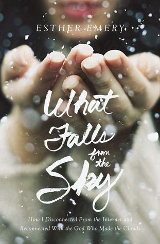
What Falls from the Sky by Esther Emery

This kind of book isn’t my usual fare, but I discovered this author through some YouTube videos on homesteading, and when I read in the description about how she went for a year without the internet, I thought I’d give it a try. I was not disappointed.

Esther Emery has had an interesting life. With one foot in the California theater scene, another foot in the evangelical Christian scene, and… a third, foot, I guess? …in Idaho and the intermountain west, she’s got a very interesting perspective. Her experiences give her a lot of interesting insights, too. When she decided to go for a year without the internet, her life and marriage were falling apart. Going offline turned that all around.

It really surprised me how much she opens up. The writing did feel a bit pretentious at first, but that’s more a function of style than of sincerity. This books is very honest, sometimes brutally. In a world where so many people keep carefully crafted social media accounts, signal their own virtue to their peers, or choose to spend most of their time in echo chambers that serve to reinforce their views, a book like this one really stands out.

Because quitting the internet wasn’t just a stunt for Esther, thought it might have started out that way. It was a genuinely transformative event. As someone who could not function without the internet (mostly just because that’s how I make my living), I found her story to be both fascinating and refreshing. The insights that Esther shares from her experience are quite powerful.

So yeah. Good book. Not science fiction at all, but I enjoyed it. Maybe you will, too.

Why I deleted my Facebook account (again)

Please watch this video in its entirety (before YouTube takes it down). Whatever you think of James O’Keefe, this is serious stuff that he’s exposing, and it affects all of us.

The first time I deleted my Facebook, it was out of privacy concerns. I came back because there were social groups, such as my local church congregation, that organized all of their activities on Facebook and by being off the platform, I was cutting myself out of the loop. So I got back on, rationalizing that I could be careful about what I shared and it wouldn’t be an issue.

The second time I deleted my Facebook, it was because of the negative effect it was having on my life. I was disturbed about the way that social media was programming people, and I could feel it beginning to happen to me. It was around this time that I deleted my Twitter as well.

I came back because I worried that I was becoming too much of an “internet hermit.” There were also some social groups that it was more convenient to interact with over Facebook, but much less so than before. Mainly, I knew that there were people who wanted to reach out to me, and cutting out Facebook entirely seemed a little too extreme.

This time, however, it isn’t just about privacy issues, or even about social programming and the negative effects of social media in our lives. It’s about power, and conscience.

Facebook, Google, Amazon, and other big tech Silicon Valley companies have a massive political and cultural influence on our lives, and I don’t like what they’re doing with it. They’ve become too powerful, and now they’re abusing that power to shape our lives and our communities in ways that I don’t agree with. But the truth is, the only reason they have any power at all is because of us. We give them their power, and we can take it away.

I’m getting off of Facebook permanently this time because I don’t want to give that company any more power than they already have. I’m also deleting my Twitter. If I do come back to social media, it’s going to be through alternative platforms like Minds and Gab.

The next big step is to de-Google my life, and I’m not sure how I’m going to accomplish that. However, with the direction things are going, I believe it’s more important now than ever to do so. As for Amazon, it’s going to be much more difficult since such a large chunk of my income comes from them. What I will probably have to do is limit my dependence on these companies without cutting either of them out of my life completely.