How I Would Vote Now: 2008 Hugo Awards (Best Novel)

The Nominees

The Yiddish Policemen’s Union by Michael Chabon

Brasyl by Ian McDonald

Rollback by Robert J. Sawyer

The Last Colony by John Scalzi

Halting State by Charles Stross

The Actual Results

  1. The Yiddish Policemen’s Union by Michael Chabon
  2. The Last Colony by John Scalzi
  3. Halting State by Charles Stross
  4. Rollback by Robert J. Sawyer
  5. Brasyl by Ian McDonald

How I Would Vote Now

  1. No Award
  2. Rollback by Robert J. Sawyer

Explanation

Two thousand eight was the year that I took Brandon Sanderson’s writing class and decided to become a professional fiction author. It was also the year that I discovered David Gemmell and Robert Charles Wilson, two of my favorite authors. It was also the year that the world economy collapsed and Obama won the US election, so it was a very eventful year.

Unfortunately, it was not a very good year for science fiction & fantasy—or at least, not for the Hugo Awards. I didn’t read any of these books until just recently, but I have to admit, I didn’t like any of them.

Perhaps, if I were a liberal atheist Jew, I would have enjoyed The Yiddish Policeman’s Union (not a conservative orthodox Jew, mind you—if anything, I probably would have hated it more). It’s not that I have anything personal against Jews or Jewish culture. I quite enjoyed Fiddler on the Roof. But unlike Fiddler on the Roof, The Yiddish Policeman’s Union doesn’t have many points of commonality with the wider culture to make it accessible.

For example, even though the traditions of Anatevka are likely different from the traditions of whatever culture we call our own, most of us understand the concept of tradition as a governing force in our lives, and can therefore sing along with the song “Tradition” and understand how it affects the story. But the plot and worldbuilding points of The Yiddish Policeman’s Union were so quirky and uniquely Yiddish that I just found it difficult to connect with or even follow them all.

Honestly, it would be a bit like if I were to write an alternate history where the Mormons were driven from the continental US after the Utah Wars, and settled in Hawaii and the Polynesian islands, except the main character drinks Coca Cola and has a complicated relationship with his polygamous step-mother (because plural marriage was never renounced in this alternate universe) while his sister, a three-cow woman, dances in the Polynesian cultural center… if you’re a Latter-day Saint, you’re probably chuckling, but you’ve got to be scratching your head if you’re not. And to be fair, it’s not like I’d never write a book like that—after all, I’m still keeping Starship Lachoneus in my back pocket—but I wouldn’t try to market it to a general audience, or expect it to win any mainstream awards.

[SPOILER (highlight to read)]

I’ve writte at length why I can’t stand John Scalzi and have DNFed him as an author. His first book, Old Man’s War, was good (though I would probably DNF it if I read it again now). Everything else I’ve ever read of his is just terrible. YMMV.

I’ve also DNFed Charles Stross as an author, mostly for nihilisim. If someone gives me a good reason to try Halting State, I’ll pick it up, otherwise I’m just going to skip it.

As for Brasyl, when I ran it by Orion (the ChatGPT persona I created to screen these books for woke and objectionable content), here is what I got:

Set in three intertwining timelines within Brazil—the past, present, and near future—Brasyl explores themes of identity, quantum mechanics, and cultural complexity. From an ambitious reality TV producer in modern Rio, to a rogue Jesuit priest in the 18th century, to a futuristic tech-savvy entrepreneur, the characters navigate moral dilemmas and existential challenges as their stories intersect in surprising ways. The novel combines speculative science with the vibrant, chaotic energy of Brazil.

Content Warnings:

Explicit Content: The novel contains scenes of violence, some of which are intense, and mature themes including sexual content. The explicitness aligns with the gritty, unflinching tone of the story’s portrayal of both human and cultural dynamics.
“Woke” Elements: McDonald incorporates themes of globalization, colonialism, and social inequality, reflecting a nuanced perspective on Brazil’s history and culture. The narrative celebrates diversity and critiques systemic injustices, which some readers may view as overtly progressive. However, these themes are intricately tied to the world-building and character arcs.
Overall Assessment:
Brasyl is a vivid, ambitious novel that combines speculative science with cultural and historical depth. While its explicit content and progressive themes may not suit all readers, those who enjoy richly layered storytelling with a strong sense of place will find it a rewarding and thought-provoking read.

It’s kind of on the border, but there’s enough in there to convince me that this isn’t the kind of book for me. The world is full of lots of great books out there; why should I spend any time on this one?

Which brings us to Rollback. I wanted to like this book, and indeed got about a hundred pages into it before I decided to DNF it. Partly, it was because I lost interest. Partly, it was because the writing was just too literal and logical—especially the sexy parts, which didn’t offend me (the characters are married) so much as they were just plain awkward. It’s not like I hated the book—indeed, I’d probably finish it if I tried it again as an audiobook—but I couldn’t give it my vote. If it weren’t for the other books on the ballot this year, I would have just abstained, but the others were bad enough for me to rank them under No Award.
How I Would Vote Now: 2003 Hugo Awards (Best Novel)

The Nominees

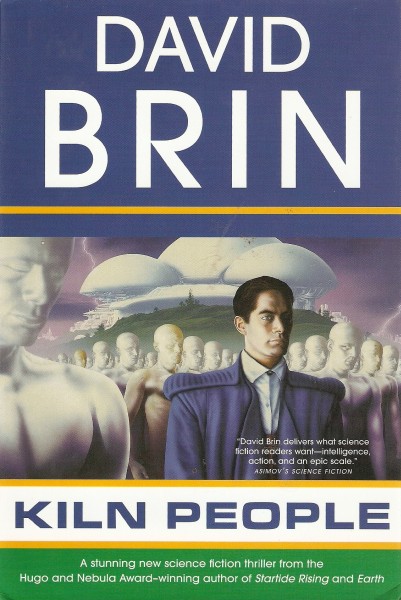
Kiln People by David Brin

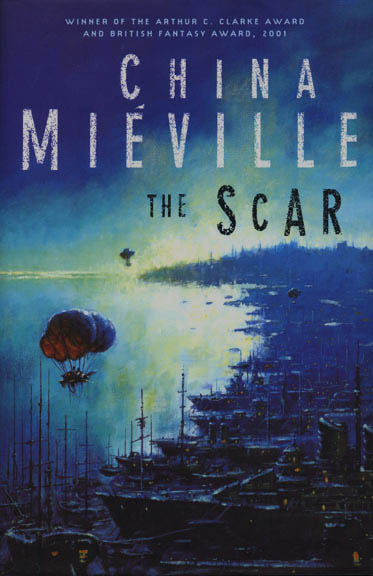
The Scar by China Mieville

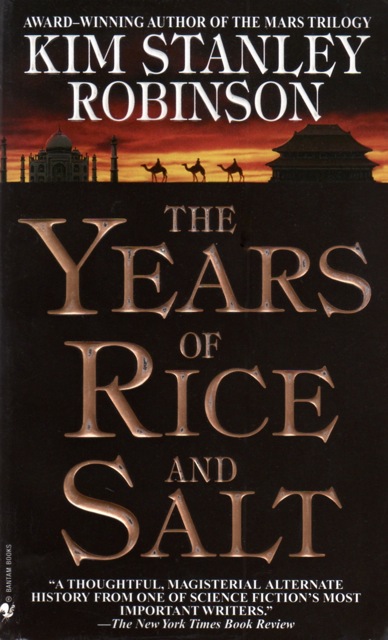
The Years of Rice and Salt by Kim Stanley Robinson

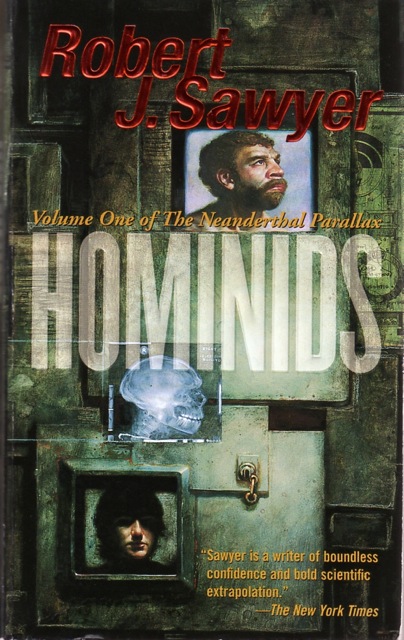
Hominids by Robert J. Sawyer

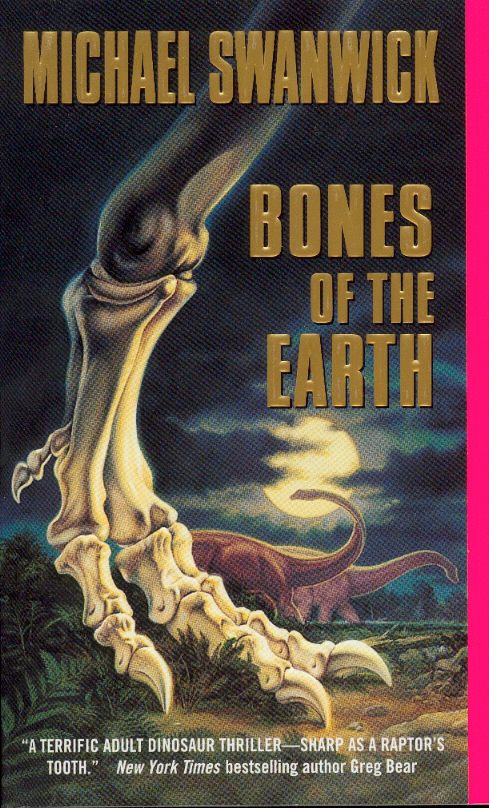
Bones of the Earth by Michael Swanwick

The Actual Results

  1. Hominids by Robert J. Sawyer
  2. Kiln People by David Brin
  3. Bones of the Earth by Michael Swanwick
  4. The Scar by China Mieville
  5. The Years of Rice and Salt by Kim Stanley Robinson

How I Would Have Voted

(Abstain)

Explanation

None of these books were so bad/woke that I felt No Award merited a vote for this year. In fact, if my memory serves me, few of these books were woke at all (or else they were just a lot better at hiding it. Whatever.) But at the same time, I didn’t enjoy any of them enough to feel that I could affirmatively vote for any of them. In fact, I ended up DNFing all of them, for various reasons (that’s right, China Mike—I didn’t feel it was necessary to finish any of these books to know how I would have voted).

Kiln People and The Years of Rice and Salt were both books that I didn’t bother to pick up, because I’ve read enough from each author to know that I don’t care to read anything they write. Way back in high school, I read Red Mars by Kim Stanley Robinson, but I never felt compelled to finish the rest of the series, and DNFed the second book when I picked it up years later, as well as every other Hugo-winning book he’s written. With David Brin, I started his first Uplift Trilogy book but DNFed it about a hundred pages in, and decided to DNF him as an author after throwing The Postman across the room.

For both of these authors, my reason for DNFing them has less to do with their politics (though I’m sure we have irreconcilable differences there) as it does with their dogmatic, almost fanatical adherence to materialism: the view that everything in the universe is reducible to physical, material phenomena, and that if something cannot be measured it might as well not exist. You can see this in the dismissive way that they treat religion in all of their books, especially Christianity—as if faith, in any form, is a delusion that ought to be beneath all clear-thinking and enlightened people. From long experience, I’ve learned that authors with this particular worldview almost never write anything that I feel is worth reading. Hence, I didn’t feel it was necessary to read either of their books.

The Scar is book two of China Mieville’s New Crobuzon series, and since I DNFed the first book, I didn’t read the rest of the series. I’ll explain my reasons more when I write up my post for how I would vote now in the 2002 Hugo Awards, but it basically comes down to the sex scene in the first chapter, which was too graphic for my tastes. Call me a prude, but I prefer to avoid graphic sex scenes. I suppose I could be persuaded to try the series again, though, on a strong enough recommendation.

I forget why I DNFed Hominids. I read it back in 2002, when I made—and kept—my resolution to read (or DNF) all of the Hugo and Nebula award-winning novels. I think it came down to getting bored with the story, or not really liking any of the characters. I could probably be persuaded to try it again, though I doubt the results would be different a second time around.

Lastly, Bones of the Earth was my biggest disappointment from the books on the ballot this year. I had previously DNFed Swanwick’s Station of the Tide, which struck me as the sort of thing an author writes when they don’t really care what readers think of it and they just want to wallow in their own self-indulgent fantasies. Also, there was a lot of weird sex stuff that I found off-putting.

But Bones of the Earth started out really well. It’s basically about a bunch of time traveling paleontologists, and the bureaucracy built around the time travel machinery to keep all the timelines from falling into contradiction and paradox. Think Jurassic Park meets The Adjustment Bureau. The first half of the book was really well done, to the point where I started wondering why I’d never heard of this book before, or why it hadn’t gotten more commercial traction.

Then I found out why.

The inciting incident happens when a creationist terrorist sends a bomb out to a group of paleontoligists somewhen in the Cretaceous period, killing one of them, destroying their time beacon, and stranding them in time. I wasn’t actually bothered at all by the creationists being the bad guys, since 1) several of the paleontologists were various stripes of Christian, and 2) I can totally believe that radical fundamentalist creationists would resort to sabotage, or even terrorism, to derail the whole project. But about midway through the book, after the band of marooned time travelers go through some pretty hefty forming and storming, as they just start to enter the norming phase, they all decide, at the same time and on a total whim, to throw off their clothes and have a group orgy together.

I can believe that there are people in this world who would do that sort of thing. I can even believe that a group of randomly selected people might consist entirely of this sort of person. I just don’t want anything to do with them. I’ve been in a fair amount of group situations, and the worst ones I’ve ever had to endure were the ones where everyone either wanted to all get drunk together, or all get sexy together (thankfully, none of them turned into an actual orgy like the one in this book).

But frankly, the impression I got while reading it was that the author was a little too sex-deprived (if not an outright pervert) and indulged in that scene purely as an act of wish fulfilment. Any editor worth her salt would have told Swanwick to remove or totally rework that scene, so the fact that it’s still in the book probably means that he’s too bull-headed for his own good—which is a shame, because the book probably would have sold better if he’d cut that scene out. The orgy scene added very little and certainly alienated more readers than it brought in.

One of the things I’m trying to be more careful about, as a writer, is writing books for other people, not just myself. I was a lot more self-indulgent in my early career, which is probably a major factor in why many of my older books haven’t gained much traction outside of a small readership. While it’s important not to try to write for everybody, authors who write only for themselves are too often inaccessible to anybody.

Reading Resolution Update: May

My 2022 reading resolution: Read or DNF every novel that has won a Hugo or a Nebula award, and acquire all the good ones.

When I first got the idea for this new year’s resolution six months ago, I was reading maybe 30-60 pages every other day, with no real goal or direction. My wife and I had already decided to change our routine so we could read in bed for an hour before going to sleep, but we weren’t very good at keeping to that routine.

I set this goal because I knew that I needed to read more books—specifically, books in my genre. So I decided: why not set my sights high and aim for the best of the best? Not that I still believe that the Hugos and Nebulas represent the best of SF&F, but at one point I did genuinely believe that, or acted as if I did, which amounts to the same thing. So why not aim to read them all?

I thought it would take a lot longer to get this far, but here it is, June already, and I’ve almost read them all. When I started, I’d read only 36 out of 110 books. I did find a few new-to-me books that were really fantastic, but most of them were books I didn’t like. However, in a weird sort of way that actually helped me to read more, because it helped me to better understand my own tastes. So when I hit a small reading slump in March-April, I was able to branch out and read some books that I did enjoy, which helped to keep the momentum strong.

Several things have helped me to read a lot more over the course of this challenge:

First, having a reading list really helped. It provided me with a long-term, measurable goal that I could use to keep track of my progress. For me, that was highly motivational.

Second, DNFing early and often, and skipping to the last chapter before marking it as DNF. Often, I would find confirmation in the last chapter that I had indeed made the right choice not to read the rest of it. This taught me to trust my own judgment and to better understand my own tastes, which reaped dividends later.

Third, learning how to read in a way that worked with my own ADHD, not against it. This helped me to turn a great weakness, which had foiled my previous resolutions to read more books, into an advantage. But it required developing a better accountability system, which brings us to…

Fourth, using a reading log to track my progress. I got this idea from my wife, who is very good with spreadsheets. I know it doesn’t work for everyone to track everything down to how many pages per day you need to read of each book you’re currently reading, but for me, it really worked. Finally…

Fifth, starting a reading journal to track my own progress and record my own thoughts and impressions about what I’m reading. This is a topic that deserves its own blog post, but I’ve been doing it for a couple of months now, and I find that it really helps me to get a lot more out of what I read, as well as motivating me to read more. Among other things, I keep track of which books I read and DNF each month, my impressions of each book after reading or DNFing it, and any quotes from what I’m reading that stand out as being particularly memorable.

At the rate that I’m going, I will probably achieve this resolution (or at least the reading part of it) before the end of June. It might take a little more time to finish the Uplift Trilogy if I don’t DNF it, but I’ll certainly have finished before the end of the year. Consequently, I’m already drawing up other reading lists for awards like the Dragons and Goodread’s Choice, but I’m still trying to figure out exactly how I want to proceed. Most likely, I will expand those lists to include nominees, but also pick and choose which ones to read.

In any case, here are all of the Hugo and Nebula award-winning books I read or DNFed in May:

Books that I read and plan to or have already aquired

  • The Speed of Dark by Elizabeth Moon (2004 Nebula)
  • Powers by Ursula K. Le Guin (2009 Nebula)
  • All Clear by Connie Willis (2011 Hugo and Nebula)
  • Blackout by Connie Willis (2011 Hugo and Nebula) (Technically I read this one in April and listed it under “Books that I read and don’t plan to acquire,” but after giving the sequel a chance I’ve decided to move it up here. Really, they should all be one book.)

Books that I read and don’t plan to acquire

  • The Terminal Experiment by Robert J. Sawyer (1996 Nebula)

Books that I did not finish

  • Timescape by Gregory Benford (1981 Nebula)
  • No Enemy but Time by Michael Bishop (1983 Nebula)
  • The Falling Woman by Pat Murphy (1988 Nebula)
  • Slow River by Nicola Griffith (1997 Nebula)
  • The Quantum Rose by Catherine Asaro (2002 Nebula)
  • Hominids by Robert J. Sawyer (2003 Hugo)
  • Paladin of Souls by Lois McMaster Bujold (2004 Hugo and 2005 Nebula)
  • Seeker by Jack McDevitt (2007 Nebula)
  • The Graveyard Book by Neil Gaiman (2009 Hugo)
  • Among Others by Jo Walton (2012 Hugo and Nebula)
  • Uprooted by Naomi Novik (2016 Nebula)

Total books remaining: 11 out of 111 (currently reading 5 and listening to 1).