 Since my last post on indie publishing, I’ve been thinking a lot about this subject. I haven’t decided to take the plunge into self published ebooks yet, but I have decided to make some changes in my writing and my career strategy, in order to position myself more favorably if/when I choose to do so.
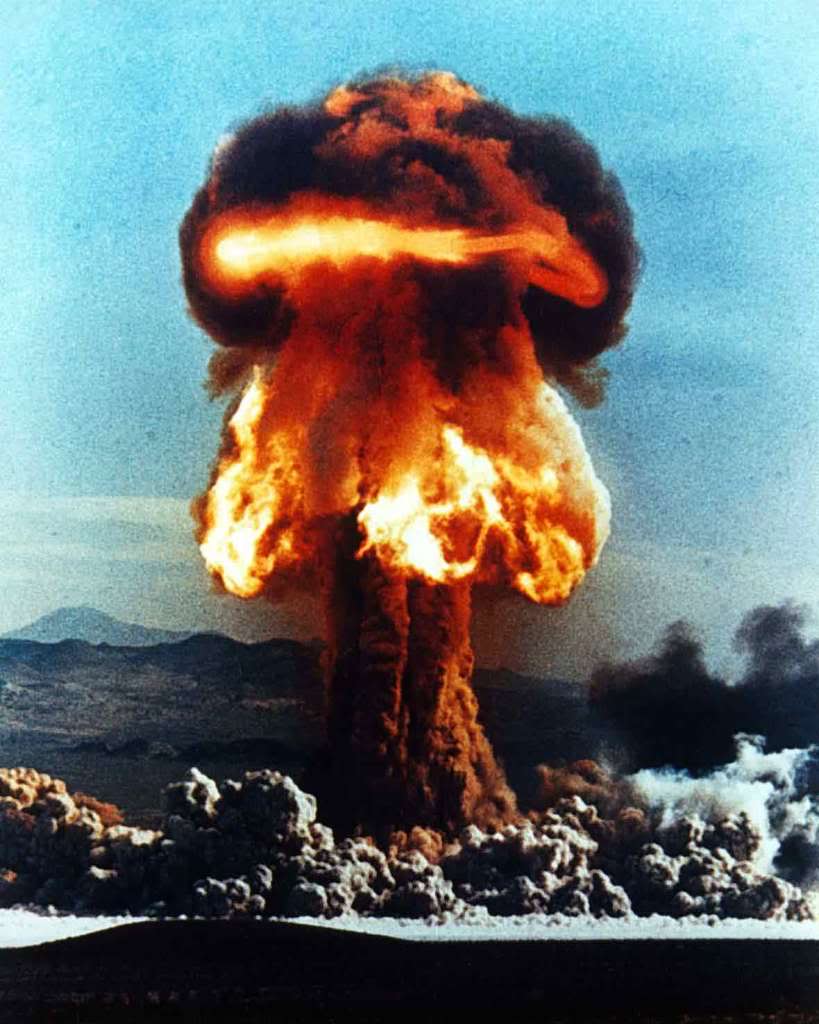
Basically, my new strategy is something like Japan or Saudi Arabia’s approach to nuclear weapons: they don’t have an explicit nuclear program (since that would violate the nuclear non-proliferation treaty), but they have gathered the equipment, resources, and expertise together so that if they decided to go nuclear, they could do it in a year or less.
First, though, I attended Brandon Sanderson’s class lecture this Thursday, in which he had some very interesting things to say about ebooks and the publishing industry. This was part I of his “how to get published” lecture, and here are some of the more interesting points he made:
- Almost all the indie writers who are making it big have at least one loss leader ($.99 or less) on their list.
- No one really knows whether indie publishing will be viable for large numbers of writers, or whether authors like Amanda Hocking and Joe Konrath are outliers.
- Successful indie published books are typically:
1) short (70k to 80k words)
2) written in a pulp genre (thriller, romance, paranormal, sword & sorcery, etc)
3) promoted very well through social networking - We have not yet seen any indie successes in epic fantasy, young adult / middle grade, historical fiction, or non-fiction.
- The produce model vs. unlimited shelf space argument for going indie doesn’t apply as much to science fiction & fantasy as other genres, because:
1) sf&f stays on the shelves in bookstores longer than other genres
2) sf&f series grow better with a big push on the first book
3) sf&f makes a lot of money on hardcover, unlike other genres
A lot of these points tend to mesh with what I’m hearing from my other sources–and Brandon really represents the last of the successful writers to make it big on the old model, before the ebook revolution began to take off. He doesn’t make as big a deal on the current 25/75 split on net ebook sales as I would make, but then again, he’s making most of his money through print.
So anyways, here is what I plan to change about what I’m doing in order to better position myself to best take the ebook plunge, if/when I decide to do so:
1) Write at least 2 polished novels per year
Kris Rusch and Dean Wesley Smith make very good arguments about how being able to write well quickly is a huge asset for a writer these days.
There are many good reasons for this:
1) Writing faster gives you more practice with craft, which tends to improve quality.
2) The best way to promote your books is to constantly write new books.
3) The limited shelf space argument against writing quickly is now moot with ebooks.
In particular, I want to increase my writing speed in order that I can have a larger list to put out if/when I decide to go with indie publishing. It’s much harder to be successful if you’ve only got one book available for sale; if/when I decide to take the plunge, I want to have at least three.
So far this year, I’ve finished one (Bringing Stella Home), but that’s because it was already sitting in the queue and only needed a quick touch up. I would like to get Worlds Away from Home polished before the end of the year, and possibly one other project, such as Edenfall.
2) Reduce production time to as close to one year as possible
Right now, it takes me on average about two years to write a polished, salable novel. That’s not a problem, because I have a lot of projects in the queue, but it’s not as fast as I would like. I wrote Genesis Earth and Bringing Stella Home while I was still a journeyman writer, figuring out my craft. I should be able to produce a lot faster.
Towards that end, I’m going to try to get Edenfall finished and polished within a year. Since it’s already March, that might mean getting it polished by February of next year, but I still want to try.
My biggest weakness is first drafts; I always tend to get stuck midway and drop the project for a while before I feel ready to finish it. That’s something I would like to change. Then again, that might just be part of my writing process, and shouldn’t be forced. However, I certainly could go through my revisions much faster.
3) Write out the direct sequels while the first book is still unpublished
Previously, I thought it was a bad idea to write out all the books in a series or trilogy before the first one is ever picked up. After all, a rejection from a publisher on the first book is a rejection on all the other books in the series as well. Using this reasoning, it was much better to write the first book of another trilogy, in order to maximize how much I could submit at any given time.
With indie publishing, however, it’s much better to release the whole trilogy all at once, so that readers who finish the first book can immediately pick up the others. Again, the paradigm here is that the best way to sell books is with other books; if they loved the one, they’ll buy the others, especially to find out what happens next.
Of course, the best model is probably to have an open series with several indirect sequels with recurring characters in the same world. With the Gaia Nova books, that’s exactly what I plan to do: Worlds Away from Home is set in the same universe as Bringing Stella Home, but with different characters and different story arcs.
However, Genesis Earth has serious trilogy potential, and with Edenfall I’ve decided to actually write the other books. If/when I decide to take the plunge, I want to be able to release at least the first two books in that trilogy at the same time. In fact, Genesis Earth is perhaps the biggest reason why I’m thinking so seriously about going indie, but that’s a subject for a whole other post.
4) Experiment with pulp genres such as space adventure stories
When Brandon said that the pulp genres tend to do better, I wasn’t sure whether that includes what I write. I write primarily science fiction, but not the kind of stories you’d read only for entertainment and promptly forget once you’re finished. If anything, I want to write more like Ursula K. Le Guin, whose stories are so meaningful they stick with you long after you’ve finished them.
Then again, there tends to be a lot of overlap in science fiction between the thoughtful, meaningful stuff and the pulps. Ender’s Game and Starship Troopers immediately come to mind as awesome, entertaining stories that also have a lot of depth. In his lecture, Brandon made it clear that “pulp” does not necessarily conflict with high art–just that the primary purpose of the story is to entertain.
I can live with that–and I actually have several story ideas that would translate well with the pulp mentality. I’d like to do a novel (or a series of novels) with Danica from BSH and her mercenary team, perhaps as a sort of origin story for Roman, Anya, Artyom, and the others. I’d like to revisit the Hameji as well, with a sort of “Ain Jalut in space” involving Sholpan’s son (BSH was basically the Mongol conquest of Baghdad in space). I’ve already started an “Odyssey in space,” as told from a female Telemachus character–that’s To Search the Starry Sea. All of these are, at their core, space adventure stories, and might translate well as pulps.
5) Commit to releasing one book every 6 months if/when I take the plunge
This is related to the first strategy on the list, but it’s more of a business plan than a personal writing goal. Basically, if/when I take the plunge, I want to:
1) have at least 3 finished, polished books to put out at first,
2) know that I can put out one book every six months at least.
This not only means developing a backlist, it means doing some soul searching as a writer to find out how difficult it is to keep up with this pace–and adjusting my writing habits accordingly. I’m optimistic that I can, but it’s something of a paradigm shift, and I want to make sure I’ve made that shift before I take the leap.
Anyhow, these are my thoughts on how to alter my current writing strategy. I haven’t yet decided to go indie, but when the time comes, I think that these things will help me to maximize my potential if/when I decide to do so.
Of course, what do any of us really know?
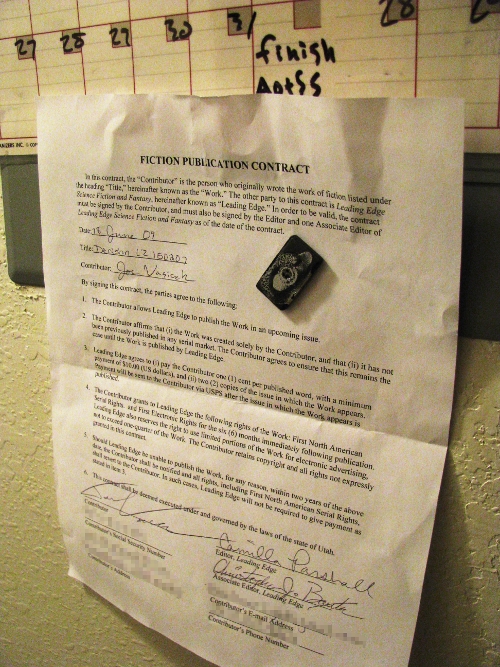
 That’s right–my first published story just came out in