2020-02-20 Newsletter Author’s Note: Thoughts on the History and Future of Science Fiction (Part 1)

This author’s note originally appeared in the February 20th edition of my newsletter. To sign up for my author newsletter, click here.

One of the projects I hope to get to someday is to make a podcast on the history of science fiction. I’m a huge fan of podcasts, and subscribe to almost 100 of them, and some of my favorites are history podcasts like Hardcore History, History of Rome, Revolutions, The Cold War: What We Saw, etc. At this point in my life, I don’t think it’s the right time to get into podcasting, but at some point in the next few years I’d really like to try my hand at it.

I have thought a lot about what this History of Science Fiction podcast would look like, though, and it’s led to some interesting thoughts about the future direction of the genre. Let me explain.

Modern science fiction began with Mary Shelley’s Frankenstein, which laid the groundwork for just about everything else. Authors like Jules Verne and H.G. Wells picked up the torch, launching “scientific romance” as its own literary genre. Many of the conventions and tropes of science fiction were set during this era, which lasted from the 1820s through the early 1900s.

The next major era of science fiction was the era of the pulps, which experienced its heyday in the 1920s and 30s. The publishing innovations that had made the penny dreadfuls possible only a generation earlier now led to a proliferation of novels and short story magazines, opening up all sorts of opportunities for new writers.

This was the era of bug-eyed aliens and scantily-clothed damsels in distress, as frequently displayed in the cover art. Science fiction, mystery, western, adventure, and true crime stories were all mashed up together. Major names from this era include Edgar Rice Burroughs and Hugo Gernsback, who coined the term “scientifiction” to distinguish the stories that would later be called under the name “science fiction.”

The pulps laid the groundwork for the golden age, which lasted through the 40s and 50s. It was greatly influenced by John Campbell’s tenure as editor of Astounding Science Fiction, and the authors that he mentored. This was when science fiction really came into its own. Major authors from this era include Isaac Asimov, Robert A. Heinlein, Arthur C. Clarke, George Orwell, and Ray Bradbury.

The next major era was the New Wave, when authors like Ursula K. Le Guin, Michael Moorcock, Frank Herbert, and Phillip K. Dick broke out of the conventions established by Campbell and other golden age figures, experimenting with new styles and creating new tropes. This was when we began to distinguish between “hard” science fiction that revolved around the hard sciences like physics and math, and “soft” science fiction that revolved instead around things like political science and social studies. The political radicalism of the 60s and 70s also influenced the science fiction of this era.

At this point, most histories of science fiction point to an era called “cyberpunk” or “the digital age,” which emerged in the 80s and defines the period that we’re currently living through. However, I don’t think this is correct. Instead, I think that literary science fiction went through a dark age from the mid-80s to the late 00s, and only recently began to emerge from it. Let me explain.

In film, TV, and video games, the 80s and 90s were a golden age. For books, however, it was exactly the opposite. The rise of the big box stores like Borders and Barnes & Noble drove independent booksellers out of business, which caused many local distribution companies to collapse. This, in turn, led to a period of mergers and consolidation within the publishing industry, giving rise to the “big six”: Hachette, HarperCollins, Macmillan, Penguin, Random House, and Simon & Schuster.

At the same time, the rise of the internet led to a massive and precipitous decline across newspapers and periodicals, including traditional short story magazines such as Analog and Asimov’s. Most of the science fiction magazines folded, unable to adapt their business models to the changing world. This would later change as podcasting and crowdfunding, but before those innovations would later revolutionize the industry, many considered short stories to be dead.

The effect of all of this was that literary science fiction entered a period of managed (and sometimes catastrophic) decline. As the publishing houses merged and consolidated, their offices all moved to New York City in order to pool talent and resources into one geographic center. However, this also led to problems like groupthink as publishing fell in an echo chamber.

Science fiction began to balkanize. The proliferation of cyberpunk, steampunk, deiselpunk, biopunk, and all the other _____punk subgenres is emblematic of this. Furthermore, as all of the major editors became caught up in the echo chambers of progressive, blue-state politics, they increasingly overlooked red state authors from “flyover country.” Baen, whose offices are in North Carolina, has never suffered from this, but Tor and the other New York publishers really have.

I think Orson Scott Card really bookends this period. In the 80s, he was the first author to win the Hugo and the Nebula in the same year. In the 00s, he was all but excommunicated from the canon for his allegedly homophobic views. Science fiction had transformed from the big tent genre of the 50s, 60s, and 70s to something so balkanized, elitist, and radical that “wrongthink” had unironically become a crime in the very genre that had invented the term.

And then indie publishing happened.

This author’s note is getting long, and there are other things (including writing) that I have to do today, so I’ll have to end on that note. I’ll follow up in my next newsletter with my thoughts on current trends in the science fiction genre, and where we’re heading from here. I think the 20s will see some massive creative destruction, but ultimately I’m hopeful that the best is yet to come. The dark age is over, and there’s never been a better time to be a reader—or a writer!

2020-02-06 Newsletter Author’s Note

This author’s note originally appeared in the February 6th edition of my email newsletter. To sign up for my newsletter, click here.

It has been an eventful week in American politics. Impeachment, State of the Union, Iowa Caucuses… don’t worry, I’m not going to go off on a rant about politics (much as I’m tempted to do so). I recognize that of the three main factions that exist in the United States—Team Red, Team Blue, and Team “I don’t want to talk about politics”—the vast majority of my readers belong to the latter. That probably includes you.

I wonder sometimes about the rest of the science fiction community, though. I read Locus Magazine each month, and while I think the editors generally do a good job of allowing all their contributors to offer their own views, you can hardly turn the page sometimes without an underhanded jab or a snide remark at the people on Team Red. Most of the time, they don’t seem to even realize that they’re doing it.

Does the science fiction genre rightly belong to the people who hold the “correct” political views? Should it? I don’t think so. If science fiction is truly the genre of ideas, then there needs to be a place in the genre for all ideas, even the really bad ones. Why? Because eventually, the people who decide which ideas are good or bad will be the absolute worst people to do so, if we give them that power.

That’s why I still read Locus Magazine, and why I’m still subscribed to all the SF&F short story podcasts (even if I don’t always listen to them). There was a real stinker of a story by N.K. Jemisin on Lightspeed last month: a barely disguised political screed arguing that tolerance is not enough, that free speech shouldn’t be a right, and that “some people are just fucking evil.” I didn’t finish that one. However, Lightspeed has put out some really tremendous stories in the past, and I’m sure they will again in the future.

Is this a frustration that you’ve had with some of the other authors you read? Do you ever feel that they, like many of our politicians, just aren’t listening to you? I think the main reason for all of the outrage in our politics these days is that everyone wants to talk and no one wants to listen. From what I can tell, that’s not just true in the United States, but in Europe, the United Kingdom, France, Hong Kong—pretty much everywhere else as well.

When I was in the Boy Scouts, I did a team-building ropes course during summer camp one year. One of the obstacles took us forever because everyone was screaming at everyone else, telling them what to do. For the next obstacle, our coach told us that the only people who could speak were the ones who had said nothing in the previous obstacle. I thought that we were going to fail. Instead, the quiet kids figured it out faster than any of the rest of us, and with their direction we were able to finish the course faster than I thought possible.

That experience taught me that it’s just as important to listen as it is to speak. Often, even more so. One of the reasons I deleted my social media was because I felt that I was becoming addicted to hearing myself speak, and consciously or not, surrounding myself with people who enabled that addiction.

If science fiction is truly the genre of ideas, then the best way to defeat the bad ideas isn’t to silence or cancel them, but to push them out with better ideas. As for the people who are “just fucking evil,” the best way to deal with that is to take a good, hard look in the mirror. That’s what I try to do. I just wish our politicians would do the same.

2019-11-14 Newsletter Author’s Note

This author’s note originally appeared in the November 14th edition of my author newsletter. To subscribe to my newsletter, click here.

So the latest controversy in SF&F fandom is the stripping of John Campbell’s name from the Campbell Award. The latest issue of Locus magazine has an op-ed from Cory Doctorow defending that decision, and it was so deserving of a fisking that I went ahead and fisked it myself. You can find it on my blog.

That said, I do think there were some good things in Doctorow’s piece. The message in the second half of the article, that people are neither wholly good nor wholly evil, and that we should learn from our misdeeds and set them right, is a message that I think we really need to hear, especially in today’s cancel culture that defines everyone by the worst thing they’ve ever said or done.

However, the good parts of the article are completely contradicted by the bad parts, where Doctorow argues that Campbell’s entire legacy is tainted and therefore needs to be cancelled. He also (surprise surprise) brings up the Sad Puppies and calls us all “white nationalists,” “Nazis,” and “the misogynist/white supremacist wing of SF.”

It’s not that I want to defend Campbell’s sexism and racism. I’m sure he had many odious views. I could even be convinced that it’s appropriate to retire the Campbell Award and replace it with something else, similar to moving offensive Confederate statues out of the public square and into museums instead.

The problem is that Campbell’s detractors are just as odious in their worldviews as he was, if not more so. When accusing someone of being “male” and “white” is enough to get them cancelled, how can that be anything but sexist and racist?

Which brings me to the ugly parts of the article: the naked hypocrisy. Doctorow stops just short of calling for the digital equivalent of a book burning, but he left me with the impression that he’d be the first to light the match. I don’t think that’s a misread either, because of this line:

Campbell’s impact on our field will never be truly extinquished (alas), but

Yep. And all the moderates, conservatives, libertarians, and old-school liberals in the field are part of the “misogynist/white supremacist wing of SF” too. Who’s the fascist again?

That’s about as far into politics as I care to go. I know you probably aren’t into science fiction for the politics, but if you want to read a more detailed fisking of this ridiculous article, you can find it on my blog. In the meantime, I’ll be back to more important things, like writing.

A Much Deserved Fisking

In the November issue of Locus magazine, Cory Doctorow wrote an op-ed piece defending Jeannette Ng and the decision to strip Campbell’s name from the Campbell Award. At least, that’s how it started out, but it quickly devolved into a hatchet piece against everyone in science fiction whose politics lie somewhere to the right of Stalin.

Ever since Sad Puppies III, I’ve more or less gotten used to the gaslighting, hypocrisy, and projection that has become de rigeur in the traditional publishing side of the field. But somehow, Doctorow’s hit piece manages to hit a new high water mark for leftist insanity.

Since my own politics lie somewhere between Boadicea and Genghis Khan, I thought it would be fun to give the piece a good old-fashioned fisking. I can’t pretend to be as good at it as Larry Correia (and I sincerely hope he fisks it himself), but damn, if anything ever was written to be fisked, it was this ridiculous piece.

Doctorow writes:

At the Hugo Awards ceremony at this summer’s Dublin Worldcon, Jeannette Ng was presented with the John W. Campbell Award for Best New Writer. Ng gave an outstanding and brave acceptance speech

Translation: Ng reinforced the dominant far-left narrative in the science fiction field, telling the gatekeepers exactly what they wanted to hear and earning widespread praise for it.

True bravery is Jordan Peterson deleting his $35,000/month Patreon in protest of their hate speech policies, or Kanye West coming out as a devout Christian, producing a worship album, and announcing that he will no longer perform any of his old songs.

in which she called Campbell – the award’s namesake and one of the field’s most influential editors – a “fascist” and expressed solidarity with the Hong Kong pro-democracy protesters.

You know who else shows solidarity with the Hong Kong protests? That’s right—everyone’s favorite deplorable frog!

Now that’s a dank meme.

I’m curious: does this make Ng a white supremacist for showing solidarity with people who use such a rascist hate symbol? Does it make Cory Doctorow a dog whistler to the far right for appealing to these obviously racist deplorables?

Of course not, but that’s the level of insanity we’ve fallen to.

I am a past recipient of the John W. Campbell Award for Best New Writer (2000) as well as a recipient of the John W. Campbell Memorial Award (2009). I believe I’m the only person to have won both of the Campbells,

All red flags to deplorable readers like me,

which, I think, gives me unique license to comment on Ng’s remarks, which have been met with a mixed reception from the field.

I think she was right – and seemly – to make her re­marks. There’s plenty of evidence that Campbell’s views were odious and deplorable.

There’s that word: “deplorable.” Whenever someone uses it unironically, it’s a sure sign that they hate you. It’s also a sign that they don’t actually have a good argument.

It wasn’t just the story he had Heinlein expand into his terrible, racist, authoritarian, eugenics-inflected yellow peril novel Sixth Column.

I haven’t heard of that one. Thanks for the recommendation, Cory! I’ve already ordered it.

Nor was it Campbell’s decision to lean hard on Tom Godwin to kill the girl in “Cold Equations” in order to turn his story into a parable about the foolishness of women and the role of men in guiding them to accept the cold, hard facts of life.

Okay, I call bullshit. “Cold Equations” wasn’t about the “foolishness of women,” it was about how when our inner humanity comes into conflict with the hard realities of the universe, the hard realities always win.

Switch the genders—a female pilot and a teenage boy stowaway—and the story still works. Switch the endings—have the pilot decide to keep the stowaway, dooming himself and the sick colonists—and it does not.

In fact, it makes the girl even more of a hapless, weak feminine stereotype. Stepping into the airlock voluntarily is an act of bravery. In some ways, she’s stronger than the pilot—and that’s kind of the point.

The thing that makes “Cold Equations” such a great story is that it functions as something of a mirror. It’s the same thing with Heinlein: those who see him as a fascist are more likely to be authoritarians, while those who see him as a libertarian are more likely to be libertarians themselves. After all, fascism is “citizenship guarantees service,” not “service guarantees citizenship.”

It’s also that Campbell used his op-ed space in Astound­ing to cheer the murders of the Kent State 4. He attributed the Watts uprising to Black people’s latent desire to return to slavery.

Was John Campbell a saint? No, and I don’t think anyone’s claiming that. In the words of Ben Shapiro, two things can be true at once: John Campbell had some racist, sexist views, and stripping his name from the award is wrong. (Also, that Doctorow is full of shit.)

The Campbell award isn’t/wasn’t named after him because he was a perfect, flawless human being. It was named after him because of his contributions to the field. If we’re going to purge his name from the award, are we also going to purge all of the classic golden-age books and stories that he edited, too? Are we going to have the digital equivalent of a book burning? Because that strikes me as a rather fascist thing to do.

These were not artefacts of a less-englightened [sic] era. By the standards of his day, Campbell was a font of terrible ideas, from his early support of fringe religion and psychic phenomena to his views on women and racialized people.

What are the standards of our own day? In what ways are we less-enlightened? Are future generations likely to accuse Doctorow of being a “font of terrible ideas,” just like he accuses Campbell here?

Do unborn black lives matter? If Trump is truly a fascist, why does the left want him to take all our guns? Is it okay to be white? Is Islam right about women? Is transgender therapy for prepubescent children just another form of conversion therapy? Are traps gay?

When you free your mind to explore new ideas, a lot of them are bound to be terrible. It’s simply Sturgeon’s law. So is Doctorow criticizing Campbell for having an open mind, or for not conforming to Doctorow’s values and beliefs?

Who’s supposed to be the fascist again?

So when Ng held Campbell “responsible for setting a tone of science fiction that still haunts the genre to this day.

I’m pretty sure that taking hormone blockers and getting your balls cut off makes you a hell of a lot more sterile than anything else. Lesbians, gays, transgenders, queers—all of these tend to be sterile as a general rule. Most babies are still made the old-fashioned way.

Male.

Isn’t her word choice kind of sexist here? I mean, she could have used the word “patriarchal,” but she didn’t. She. Deliberately. Used. The. Word. “Male.”

White.

Is she saying that it isn’t okay to be white?

Exalting in the ambitions of imperialists and colonisers,

Come on, Ng. Let’s not be racist. There were plenty of imperialists and colonizers who weren’t white Europeans. After all, how can we forget Imperial Japan and the Rape of Nanking? Now that was an ambitious massacre. The Turks also ran a pretty brutal empire, as did the Zulus and the Aztecs. You can’t tell me that cutting out the beating hearts of more than 80,000 prisoners to rededicate your temple isn’t ambitious.

settlers and industrialists,”

Find me one place that was not built by “settlers.” Find me one human being on this planet who has not benefitted from “industrialists.” Who do you think makes the vaccines and antibiotics? Who do you think makes machines that harvest your food?

Just for a single day, I would like to see all of these anti-capitalist types live without any of the benefits that capitalism and modern industry provide.

she was factually correct.

And yet, so completely full of shit.

In the words of Andrew Klavan, you can’t be this stupid without a college education.

Not just factually correct: she was also correct to be saying this now.

Because it’s [current year]!

Science fiction (like many other institutions) is having a reckoning with its past and its present. We’re trying to figure out what to do about the long reach that the terrible ideas of flawed people (mostly men) had on our fields.

The best way to fight a terrible idea is to allow it out in the open while fostering freedom of speech. In the words of Andrew Breitbart, sunlight is the best disinfectant.

The reckoning that Doctorow is calling for is something that’s already built into the field. Science fiction is constantly evolving and revisiting its past. Good science fiction not only builds on the stuff that came before, it critiques it while taking the ideas in a new direction.

We don’t need to tear down the legacy of the giants in the field who came before us; we simply need to build up our own legacies for the generations that come after us. But that’s not what Ng and the social justice warriors want to do.

It isn’t a coincidence that the traditionally published side of the field is rapidly losing market share as the SF establishment seeks to purge everything that could possibly offend their progressive sensibilities. The people doing the purging can’t compete on the open market because their toxic ideologies don’t resonate with the buying public, so they’re forced to resort to the digital equivalent of burning books and tearing down statues. Meanwhile, indie publishing is eating their lunch.

Get woke, go broke.

We’re trying to reconcile the legacies of flawed people whose good deeds and good art live alongside their cruel, damaging treatment of women. These men were not aberrations: they were following an example set from the very top and running through the industry and through fandom,

Future generations will struggle to reconcile our good deeds and our good art with our cruel and inhuman treatment of the unborn.

None of this is new. All of us are flawed; every generation is tainted with blood and sins that are reprehensible to those that follow. Realizing all this, you would think a little introspection is in order. But the people today who are so eager to throw stones are completely lacking in self-introspection that they can’t—or rather, won’t—see their own blood and sins.

to the great detriment of many of the people who came to science fiction for safety and sanctuary and community.

Is science fiction a “safe space,” or is it the genre of ideas? It can’t be both at the same time. Ideas are inherently dangerous.

It’s not a coincidence that one of the first organized manifestations of white nationalism as a cultural phenomenon within fandom was in the form of a hijacking of the Hugo nominations process.

Bullshit. If you think that the Sad Puppies were white nationalists, you’re either stupid or willfully ignorant (a distinction without a difference).

Larry Corriea’s flagship fantasy series, the Saga of the Forgotten Warrior, is set in an Indian-inspired fantasy world populated entirely by brown people. Brad Torgerson has been happily married to a woman of color for decades. Sarah Hoyt is both latina and an immigrant.

If this article was written three years ago, you would have just called them all racists, but you can’t do that now because “racist” has lost its edge. You’ve cried wolf far too many times, and no one pays attention to those accusations anymore. That’s why you use words like “fascist,” “white nationalist,” and “white supremacist” to describe your enemies—not because you actually believe it, but because those accusations haven’t yet lost their edge.

While fandom came together to firmly repudiate its white nationalist wing, those people weren’t (all) entry­ists who showed up to stir up trouble in someone else’s community. The call (to hijack the Hugo Award) was coming from inside the house: these guys had been around forever, and we’d let them get away with it, in the name of “tolerance” even as these guys were chasing women, queer people, and racialized people out of the field.

Translation: we’re done with paying lip service to “tolerance” and “open-mindedness.” From now on, if you don’t look like us, act like us, or think like us, we’re going to do everything we can to destroy you.

I’m telling you, these people hate us. That’s why they call us “deplorables.” That’s why they paint us as racists and fascists, even when we’re nothing of the sort. They don’t want to listen to us. They don’t want to give us a fair hearing. They want to destroy us.

Stripping Campbell’s name from the Campbell Award is just another example of this toxic cancel culture. It isn’t about reckoning or reconciliation. It’s a naked power grab.

Those same Nazis went on to join Gamergate, then became prominent voices on Reddit’s /r/The_Donald, which was the vanguard of white national­ist, authoritarian support for the Trump campaign.

See, this is why I can’t trust you, Cory. Gamergate had legitimate grievances with Anita Sarkeesian, Zoe Quinn, and Gawker. Trump supporters had legitimate reasons to want to stop Hillary Clinton from becoming president. Yet you casually dismiss all these people as deplorables, racists, and fascists without even listening to them.

That’s intelluctually dishonest, Cory. It’s also a form of gaslighting.

The connections between the tales we tell about ourselves and our past and futures have a real, direct outcome on the future we arrive at. White supremacist folklore, including the ecofascist doctrine that says we can only avert climate change by murdering all the brown people, comes straight out of SF folklore, where it’s completely standard for every disaster to be swiftly followed by an underclass mob descending on their social betters to eat and/or rape them (never mind the actual way that disasters go down).

I don’t think Cory Doctorow has any idea what actually happens when society collapses. When the thin veneer of civilization gets stripped away, people will eat each other. We’ve seen this just recently in Venezuela, Syria, and Mexico. Here in the US, we can see the seeds of our own collapse in Chicago, Portland, San Francisco, Baltimore, and Detroit (all very blue and progressive cities, by the way).

Also, I don’t think Cory Doctorow has any idea what he’s talking about when he says “white supremacist folklore.” What is that even supposed to mean? Just a couple of paragraphs ago, he called all the Sad Puppies “white nationalists,” and that obviously isn’t true. By “white supremacist folklore,” does he mean all the science fiction that doesn’t fit his radical progressive political ideology? Once again, he’s painting with an overly broad brush.

Also, notice how he uses “white supremacist” instead of “racist.” He can’t use “racist” because that word has been overused. Give it a couple of years, and “white supremacist” will lose its edge as well.

When Ng picked up the mic and told the truth about Campbell’s legacy, she wasn’t downplaying his importance: she was acknowledging it. Campbell’s odious ideas matter because he was important, a giant in the field who left an enduring mark on it. No one questions that. What we want to talk about today is what Campbell’s contribution was, and what it means.

Whenever the people on the progressive left claim that they want to have a “conversation” about something, what they really mean is “shut up and let me tell you how I’m right and you’re wrong.” There is no way to have an honest dialogue with these people, because they will not listen to us “deplorables.” Cory Doctorow has already demonstrated this with his blanket accusations against all the supporters of Gamergate, the Sad Puppies, and President Trump.

These people don’t want to talk about “what Campbell’s contribution was, and what it means.” They want to purge him from the field. Metaphorically, they want to burn his books and tear down his statues.

Look, I’m not trying to defend all of Campbell’s views here. I’m all for having an honest discussion about his bad ideas and how they’ve influenced the field. But I don’t believe I can have that discussion with people who clearly hate me, and will do whatever it takes to cancel and destroy me.

After Ng’s speech, John Scalzi published a post where he pointed out that many of the people who were angry at Ng “knew Campbell personally,” or “idolize and respect the writers Campbell took under his wing… Many if not most of these folks know about his flaws, but even so it’s hard to see someone with no allegiance to him, either personally or professionally, point them out both forcefully and unapologetically. They see Campbell and his legacy ab­stractly, and also as an obstacle to be overcome. That’s deeply uncomfortable.”

Scalzi’s right, too: the people who counted Campbell as a friend are au­thentically sad to confront the full meaning of his legacy. I feel for them.

Do you really, though?

It’s hard to reconcile the mensch who was there for you and treated his dog with kindness and doted on his kids with the guy who alienated and hurt people with his cruel dogma.

Did you catch the sneaky rhetorical trick that Doctorow uses here? He assumes that we’ve already accepted his argument that Campbell’s views were odious enough to have his name stripped from the award. Now he’s using an appeal to emotion to smooth it over.

Gaslighting of the highest order.

Here’s the thing: neither one of those facets of Campbell cancels the other one out. Just as it’s not true that any amount of good deeds done for some people can repair the harms he visited on others, it’s also true that none of those harms can­cel out the kindnesses he did for the people he was kind to.

Or cancel all of his contributions to the field?

If Doctorow actually believes all this, why does he support Ng, who argues that everything Campbell did should be cancelled out by his most odious views? If anything, this is an argument against stripping Campbell’s name from the award.

Life is not a ledger. Your sins can’t be paid off through good deeds. Your good deeds are not cancelled by your sins. Your sins and your good deeds live alongside one another. They coexist in superposition.

Yes, and you should never underestimate the capacity of the human mind to believe two mutually exclusive ideas at the same time, especially when his name is Cory Doctorow.

You (and I) can (and should) atone for our misdeeds.

Not in today’s cancel culture, where everything you’ve accomplished can be erased by the one bad thing you tweeted or posted to Facebook ten years ago. There’s also no forgiveness or repentance, when you will be forever remembered for the worst thing you said or did.

We can (and should) apologize for them to the people we’ve wronged.

No. Giving a public apology is the absolute worst thing you can do in today’s cancel culture, because your enemies will smell blood in the water and come in for the kill.

Never apologize to a mob.

We should do those things, not because they will erase our misdeeds, but because the only thing worse than being really wrong is not learning to be better.

Oh, this is rich.

You first, Cory. Have you taken a good, hard look in the mirror? Have you really, truly asked yourself “what if I’m wrong?”

I don’t see eye to eye with Vox Day about everything, but he was right about this: you social justice types always lie, you always double down, and you always project your own worst faults onto your enemies. That’s why you’re so blind to your own hypocrisy, even when it’s staring you in the face.

I completely and totally agree that we should all strive to admit when we’re wrong and learn to be better for it, but you’re not in a position to tell me that, Cory. Not after painting all us “deplorables” with such a broad brush.

People are flawed vessels. The circumstances around us – our social norms and institutions – can be structured to bring out our worst natures or our best. We can invite Isaac Asimov to our cons to deliver a lecture on “The Power of Posterior Pinching” in which he would literally advise men on how to grope the women in attendance, or we can create and enforce a Code of Conduct that would bounce anyone, up to and including the con chair and the guest of honor, who tried a stunt like that.

Honest question: was the sexual revolution a mistake?

Asimov, Heinlein, Farmer, and all the other science fiction writers who explored questions of sexuality back the 60s and 70s were speaking to a culture that had abandoned traditional morality for a new, “free love” ethic. In other words, having thrown out all the rules, they now felt free to explore their newly “liberated” sexuality.

Was Asimov wrong in his attempt to rewrite our sexual norms? Personally, I believe it was, but I come from a religious tradition that still practices total abstinence before marriage and total fidelity within. Even then, it still depends on context. Groping a random stranger at a science fiction convention is obviously wrong, but playfully pinching my wife when the two of us are alone? Not so much.

I find it really fascinating that the woke-scolds of the left have become far more puritanical and prudish than the religious right ever was. Within the bonds of marriage, most of us religious types are actually very sex positive—after all, where do you think all those babies come from?

And Ng calls us “sterile.” Heh.

We, collectively, through our norms and institutions, create the circum­stances that favor sociopathy or generosity. Sweeping bad conduct under the rug isn’t just cruel to the people who were victimized by that conduct: it’s also a disservice to the flawed vessels who are struggling with their own contradictions and base urges.

Fair enough, but there’s nothing generous about today’s cancel culture, which is frankly pathological in the way it defines everyone by their worst flaws and basest urges.

Creating an environment where it’s normal to do things that – in 10 or 20 years – will result in your expulsion from your community is not a kindness to anyone.

But how can we know what will and will not be acceptable in 10 to 20 years?

Twenty years ago, it wasn’t considered hate speech to say that there are only two genders. Ten years ago, “micro-aggressions,” “safe spaces,” and “white privilege” were not a thing. In fact, we’d just elected our first black president, bringing an end to our racially divisive past. /sarc

In the next 10 to 20 years, will we adopt all the theories and ideologies of the radical left? Or will the pendulum swing back in favor of more conservative morals and standards? We don’t know yet, because the future has not been written, and frankly, it’s not our place to write it. Every generation reinvents the world.

There are terrible men out there today whose path to being terrible got started when they watched Isaac Asimov grope women without their consent and figured that the chuckling approval of all their peers meant that whatever doubts they might have had were probably misplaced. Those men don’t get a pass because they learned from a bad example set by their community and its leaders – but they might have been diverted from their path to terribleness if they’d had better examples.

Certainly. I’m just not convinced that these virtue signalling, social justice warrior types are the examples that we should hold up.

They might not have scarred and hurt countless women on their way from the larval stage of shittiness to full-blown shitlord, and they themselves might have been spared their eventual fate, of being disliked and excluded from a community they joined in search of comradeship and mutual aid. The friends of those shitty dudes might not have to wrestle with their role in enabling the harm those shitty dudes wrought.

I’m confused. Does Doctorow believe that women are strong and independant, or does he believe that they’re tender, fragile creatures that need to be protected from socially inept, “larval” shitlords? I mean, I can see how they need to be protected from predators, since all of us—women and men—are vulnerable to various degrees… but you’d think that a strong, independent woman would be able to hold her own against a socially incompetent geek who is simply a “flawed vessel.”

Since her acceptance speech, Ng has been subjected to a triple-ration of abuse and vitriol,

Join the club.

much of it with sexist and racist overtones.

You keep using those words. I do not think they mean what you think they mean.

But Ng’s bravery hasn’t just sparked a conversation, it’s also made a change. In the weeks after Ng’s speech, both Dell Magazines (sponsors of the Campbell Award) and the James Gunn Center at the University of Kansas at Lawrence (who award the other Campbell Award at an event called “The Campbell Conference”) have dropped John W. Campbell from the names of their awards and events. They did so for the very best of reasons.

No, they did it because they were bullied into it by the woke-scolds.

As a winner of both Campbell Awards, I’m delighted by these changes. Campbell’s impact on our field will never be truly extinguished (alas),

Yes, because what you really want is to tear down all the statues and burn all the books. Who’s the fascist again?

but we don’t need to celebrate it.

Back when the misogynist/white supremacist wing of SF started to publicly organize to purge the field of the wrong kind of fan and the wrong kind of writer, they were talking about people like Ng.

Bullshit.

The entire point of the Sad Puppies (which Doctorow intentionally and dishonestly mischaracterizes as “the misogynist/white supremacist wing of SF”) was to bring more attention to a diversity of conservative and libertarian writers, many of whom are also women and people of color. We were the ones who were excluded, not the ones doing the excluding. In fact, we invented the words “wrongfan” and “wrongfun” to describe the unfair way that we were treated by the mainstream establishment.

Please stop trying to gaslight us, Mr. Doctorow. Please stop projecting your own faults onto us, and recognize your own hypocrisy which is laced throughout this article. I don’t expect a public apology, since I wouldn’t offer one myself, but do wish for once that you would just listen to the people on the other side of these issues. Just. Listen.

I think that this is ample evidence that she is in exactly the right place, at the right time, saying the right thing.

Meanwhile, traditional publishing and the SF establishment will continue to implode, and indies will continue to eat your lunch.

If all you want is to be king of the ashes, you can have it. The rest of us are off to build the new world.

2019-08-08 Newsletter Author’s Note

This author’s note originally appeared in the August 8th edition of my email newsletter. To subscribe to my newsletter, click here.

A couple of days ago, Mrs. Vasicek and I had an old friend of hers over for dinner. This friend was visiting from out of state, and Mrs. Vasicek made it clear that politics was a subject which we would have to avoid, or at least tread very lightly. Among other things, I’d have to drop my tailgate to make sure it didn’t make a bad first impression.

(One of these days, I’ll have to share a photo of my tailgate. I despise political correctness in all of its forms, so my tailgate has become something of a monument to the first amendment. Frequently at stop lights, people will take out their phones to snap a picture.)

The dinner went really well, and we had good conversations well into the evening. Surprisingly enough, this wasn’t because we outright avoided politics, but because when the issues came up, we were able to find common ground in spite of our obvious differences. In this way, we were able to connect in a much more genuine way than if we had avoided those difficult subjects entirely.

One of the things we talked about was the destructive influence of social media outrage. Our friend told us how the relationship between her father and her sister has been destroyed, because Facebook is the only way that they can connect with each other. Those interactions have become so politically toxic that they’ve lost all of the love that they once had for each other.

That’s sad, but it’s becoming an all-too-common occurance here in the United States. Some people believe that we’re on the verge of a second civil war. I don’t know what the future holds, but if it’s anything like the first civil war, I know that there will be honorable people on both sides. That’s the tragedy. I have ancestors who fought on both sides of the American civil war, and when people ask which side I think was right, I answer “the American side.”

I’m fascinated by Robert E. Lee and his decision to fight for the Confederacy, when Lincoln himself offered him command of the Army of the Potomac. He opposed both slavery and secession, yet his conscience couldn’t allow him to stand at the head of an invading army. Neither could it allow him to stand by idly while his friends and family were slaughtered—not when he was in a position to make a difference.

Did he make the right choice? I don’t know. However, I do believe that he tried his best to do so. I try to keep that in mind when I talk with people across the political divide. No matter how much we may disagree, it’s refreshing to meet people who are sincerely striving to do what’s right as best as they know how.

In these troubled times, when the public discourse is rapidly deteriorating and outrage is the social currency of the day, it’s important to recognize the good in people, no matter which side they line up on.

Defying Hitler by Sebastian Haffner

I picked this one up from Glenn Beck’s recommended reading list, and found it to be pretty good. The most disappointing part is that it was never finished, so what starts as a history of the Third Reich up to 1939 actually ends in 1933. It would be really fascinating to get Haffner’s account of events like the Night of the Long Knives or Kristallnacht, but unfortunately we never will.

That said, what we do have is a truly remarkable account of the fall of the German Empire, the chaos and collapse of the post-war order, and the transformation of German society as the Nazis rose to power. Most histories try to be objective, or at least try to limit their subjectivity. Not so with this book. As Haffner puts it:

Clearly, historical events have varying degrees of intensity. Some may almost fail to impinge on true reality, that is, on the central, most personal part of a person’s life. Others can wreak such havoc that there is nothing left standing… I believe history is misunderstood if this aspect is forgotten.

This book is not quite a history, and not quite a memoir. Rather, it falls somewhere between the two, combining the best of both forms to paint an extraordinarily vivid picture of one of the most terrifying times and places in modern history.

By far, the best part of this book is the depth and precision with which Haffner describes historical events and their effects on the German people. The only other author I know who is more precise with his language is Jordan Peterson. Because of this, it is very easy to imagine yourself in Haffner’s position, and to see the struggles of our time reflected in his story.

The parallels in Haffner’s account between Germany of the 1920s and 30s, and the United States today, are truly striking. It’s not a one-for-one comparison, of course, and the people today shouting “Nazi!” the loudest are obviously dead wrong. But the trends are headed in the same direction, and some of the more disturbing nuances are starting to rhyme.

My biggest takeaway from the book was this: when we reach a point where our neighbors are getting disappeared, it’s time to either take up arms or bug the hell out. In Germany, that happened well before the Nazis rose to power, which surprised me. But that wasn’t the only takeaway, by far. The book is full of them.

For anyone with an interest in the rise of Fascism and 20th century history, or anyone with an interest in politics and current events, I highly recommend this book.

Addicted to Outrage by Glenn Beck

I wasn’t always a fan of Glenn Beck. When I was in college back in the 00s, I thought he was a pompous blowhard—and I was probably right. We’ve both changed a lot since then. I started listening to his radio show podcast in 2017 at the urging of a friend, and to my utter shock I found him to be both reasonable and insightful. I’ve been listening ever since.

If you’re a regular listener to Glenn’s show, most of what you’ll find in this book is stuff you’ve already heard. That said, on the show you pick it up in bits and pieces, whereas here it’s all laid out in one place, without any filler or extraneous back and forth. Having done both, I would rather read this book and listen to his show only occasionally than listen to his show religiously and skip this book.

The thing I like most about Glenn is that he’s one of the few political pundits who have checked their pride in recent years. In Addicted to Outrage, he gives his story: how he went from being one of the most prominent and virulent right-wing commentators to acknowledging that he’s been wrong about some things and completely changing his approach. He lost a few of his old-time fans who preferred the screaming, ranting Beck, but gained an ability to understand and speak the language of those on the other side of the political divide.

The main thesis of this book is that outrage, especially social media outrage, has become an addiction very much like alcoholism, and that the steps for recovering for alcoholism apply equally as well for healing our modern outrage culture. Glenn brings up a lot of interesting points about how the outrage in our culture is increasing, how social media is designed specifically to foster a chemical addiction through repeated dopamine hits, and how it feeds into all of our worst impulses and does serious damage to our health, our relationships, and our ability to live together.

The most interesting part for me was where he talked about how our outrage culture and the news cycle is distracting us from the truly important stuff that’s going on right now, such as the development of AI, the rise of big tech monopolies, technological disruption and the looming unemployment crisis, and geopolitical challenges that threaten to drive our world into war. Again, this is all stuff that Glenn covers regularly in his radio show, but it’s useful to have it all in one place.

My biggest criticism of Glenn is that his obsession with all of the ways that things can go catastrophically wrong turns him into something of a doom pornographer at times. He generally keeps it classy, but classy doom porn is still doom porn. I don’t think we’re anywhere near a hostile artificial general intelligence sweeping the world with nanobots and turning us all into grey goo, for example. That said, his prediction track record is surprisingly good, so even with the doom and gloom it’s still worth listening to him. At least he doesn’t (usually) cross the line into fear mongering.

Glenn’s love of the Constitution definitely shines through this book. He spends a great deal of it going through the Declaration of Independence and the Bill of Rights, which I found to be insightful. In one of the more interesting chapters he talks about how we should neither whitewash our history nor condemn it, but acknowledge both the bad and the good and strive to live up to the aspirational deals set forth in our founding documents.

All in all, it was a good and insightful read. If you’ve never listened to Glenn, this book is actually a really good place to start.

Extra Sci-Fi S3E7: Dune – Wandering in the Desert

So the problem I have with most “ecological science fiction” is that it draws almost exclusively on the ideas of Malthusian economics—essentially, the argument that Thanos was right. The problem with this is that Malthusian theory has been disproven by every generation of humans to live on this planet for the last 150 years. It’s even more discredited than Marxism, which is another unscientific philosophy that “ecological science fiction” draws heavily from.

I remember an old 70s novel I picked up from the local used bookstore, where by the year 2000, Earth had warmed so much that Antarctica was the only habitable continent, and resources were so scarce that the main character—a buxom blonde—had to go topless. Yeah, very 70s. The premise of the novel was so absurd on its face that I couldn’t finish it.

I also remember an Octavia Butler book that I read. It was the sort of book that makes you chuck it at the wall once you’re finished. The plot went something like this: the main character has been abducted by aliens and drafted into their breeding program, and she spends the whole book trying to escape, only to learn that she’s already pregnant and never will. The end. The writing was pretty good, but the story was so horribly unsatisfying that I haven’t read anything by her since.

From what I can tell, most “ecological science fiction” is like that. Very pretty sentences, but horribly unsatisfying stories, with way too much preaching about how capitalism is evil and humans are destroying the planet. That’s probably why these books tend to win so many Hugo Awards.

Red Mars was okay, but it was less about Earth and more about Mars itself. I was personally more interested in the political intrigue among the colonists than the terraforming project, but both were pretty good. The characters all seemed a little bland to me, though, and I never really latched on to any of them, which is probably why I didn’t read the other books. From what I can tell, they got more preachy toward the end.

Everyone praises Dune for being an “ecological” novel, but to be frankly honest I never really got into that. The political intrigue and the struggle of Paul Atreides with his prescience was a lot more interesting to me, and while the ecological bits certainly played into the plot, I didn’t really care enough to pay much attention to that.

Also, the parts that I did pick up seemed pretty unbelievable to me. From what I remember, there was a second, much smaller type of worm that produced a certain kind of excretion which, if mixed with the spice, would cause a chain reaction that would completely destroy the Arrakis ecosystem. Something like Kurt Vonnegut’s ice 9, which instantaneously freezes any water it comes into contact with, which makes it the most dangerous substance on Earth because a single drop could freeze all the water on the planet. In my (albeit limited) experience, ecosystems always find their own equilibrium, which makes them resiliant against that sort of thing. But of course, that would probably interfere with the preaching that “ecological science fiction” tends to indulge in.

From what I can tell, Dune is one of the few pieces of “ecological science fiction” that hasn’t aged poorly, and that’s not because of the “ecological” bits, but in spite of them. Because the truth is that we live in a fantastically rich and abundant post-scarcity world, where “global warming” had to rebrand as “climate change” because none of the predictions came true, and the science has been so ridiculously politicized that the Green New Deal makes the Communist Manifesto look sane and reasonable.

Thanos was wrong. So too, apparently, is the entire field of “ecological science fiction.”

Dear Ms. Reader (Blast from the Past: June 2016)

So 2016 isn’t that long in the past, but while reviewing my blog archive, I came across this gem and knew I just had to share it this week, especially with all the flak that capitalism has been getting from a certain former bartender recently. Enjoy!


Dear Ms. Author.

I really like your books. I think they are well-written and I enjoyed reading them. (So far, so good, right? Hang on.) However, I have returned them all because you priced them at $0.99 to $2.99, and that is too much to pay for them. I can’t afford to pay that much for a book, even though I liked it. In the future, can you make sure you make all your books free so I don’t have to return them?

Dear Ms. Reader,

Thank you for reading my books. I appreciate your patronage. However, this is why my books are not free:

What have you done to serve your fellow man?

Sincerely yours,

Joe

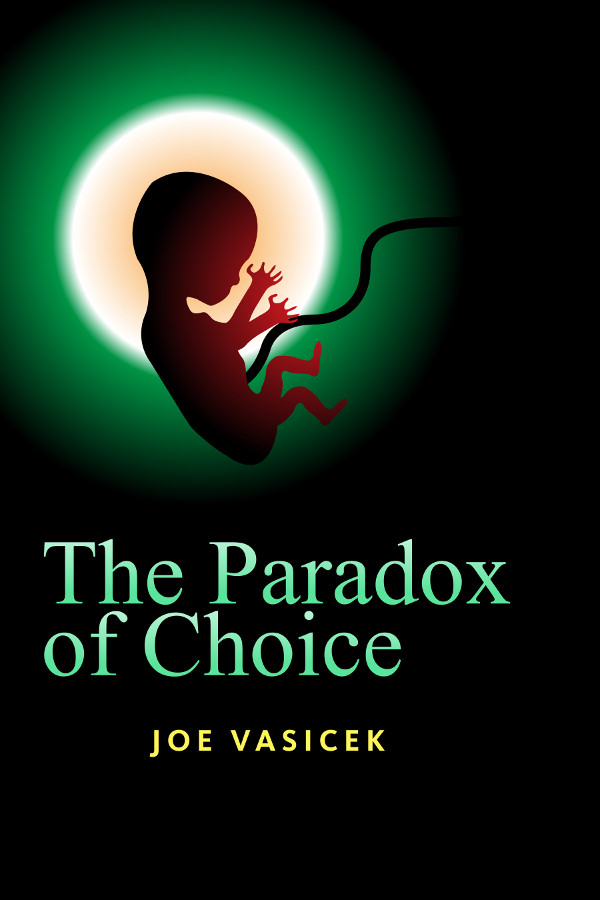
The Paradox of Choice: A chilling glimpse of an all-too possible future.

In cases where there may be severe deformities… I can tell you exactly what would happen. The infant would be delivered. The infant would be kept comfortable. The infant would be resuscitated if that’s what the mother and the family desired, and then a discussion would ensue between the physicians and the mother.


The Paradox of Choice

Enough small talk, Ruth. You didn’t come here to chat.

Is it really that obvious?

I’m afraid so. Who’s the father?

I don’t know, Jezebel. I can picture his face, but I can’t remember his name. I don’t even have his number. It was just one night—this was never supposed to happen.

Mmm hmm.

I’ve made a horrible mistake.

Don’t say that about yourself, dear. You’re a very strong woman. I’m sure we can find a way to fix this.

You are?

Absolutely. This is the current year, after all. Women have rights.

I know, but I think it may be too late. This is something I have to live with now.

Don’t be ridiculous, Ruth. It’s your choice.

Yes, but my baby is already three weeks old. I mean, look at him. He has my eyes.

You can’t seriously think of that as your baby.

Why not? He’s mine, isn’t he? I’ve already given birth to him.

Yes, you have. But the Supreme Court ruled that personhood does not extend to infants until they possess the ability to comprehend language. Until then, that thing is no different from a dog, or a cat.

But Jezebel, this is my child!

Not until its brain develops well enough that it can speak. Until then, there’s no legal difference between terminating him or putting down a dog.

How can you say that? Look at him, Jezebel! Look at how expressive his face is—how his eyes follow you—how he smiles.

Ruth, please. Don’t let your emotions cloud your judgment. Do you know how much other women have sacrificed to give you this choice?

No, but—

You are an empowered, modern woman. This is your choice. Don’t be ashamed of that. Be proud. Celebrate it.

But what if I don’t want to go through with it?

Come on, Ruth. Be reasonable. Are you really in a position to raise a child?

No, but I—

Then the most merciful thing you can do is terminate it, while you still can.

What?!

It’s true, and you know it. If you decided to keep it, you’d most likely find yourself trapped in the cycle of poverty, a single mother for the rest of your life. And is that any way to raise a family? Trust me, Ruth. Better to let it go.

But how is that worse than killing him?

The statistics don’t lie. A life trapped in poverty is not worth living.

How do you know that?

Are you seriously going to fight with me on this? You’ve led a privileged life, Ruth. We both have. It’s cruel and barbaric to bring a human life into the world under lesser circumstances than you’ve enjoyed.

But I already have.

No, you haven’t. Not according to the law.

But—but what if the law is wrong?

Ruth, dear. Please. You’re changing the subject. We aren’t talking about the law, we’re talking about you. About your life. About your freedom. About your choice.

I don’t know, Jezebel. It’s just… it doesn’t feel right to kill my child.

There you go again, calling it a “child.” Do we need to go over this again? It’s not a real child until it can speak.

But some babies can learn to make signs when they’re only a few months old. They can make gestures for food, for play, or for when they’re tired or hurt. Doesn’t that count?

Don’t get caught up in the minutiae of it, Ruth. The truth is, this is your choice, and anyone who tells you otherwise is just trying to shame you into silence. Don’t be ashamed. Don’t let them silence you.

I don’t know.

What do you mean, “I don’t know”? Do you doubt the science of brain development? Do you think you know better than the Supreme Court of the United States?

Okay, okay. I’m sorry.

Then what is holding you back?

Look at him, Jezebel. Isn’t he the cutest thing you’ve ever seen?

I know you feel attached to it, Ruth. And I know how hard this must be for you to hear. But I promise you, there is nothing wrong with letting it go.

Are you sure?

Yes. In fact, it would be a mercy.

But Jezebel—I can’t.

What do you mean?

I can’t put down my baby. It doesn’t seem right. Even if it is a mistake, it’s my mistake.

Then why should you have to carry it with you for the rest of your life? Why do you refuse to let it go? There’s still time for you to make this right. Be brave, Ruth.

How is it “brave” to kill my child?

We’ve been over this, Ruth. It’s not a “child.” Not yet.

Child or not, it’s still my own flesh and blood. I carried it to term and gave birth to it. I gave it life.

Yes, but it’s not a real person.

How can you say that? It laughs, it cries. It has feelings. If I don’t put it down, it will one day grow up to be a man. To be my son. His children will be my grandchildren. And who knows but what he’ll accomplish more in his life than I will in mine?

There you go, letting your emotions get the best of you again.

But where’s the line, Jezebel? When does he become a real human person? I’ve already brought him into this world.

Yes, you have. But until the law says he’s a person, he’s not one.

Is that what it all comes down to, then? The law?

I didn’t come here to argue with you about the law, but if that’s what it takes to convince you, then so be it. Yes, it all comes down to the law. If the law says you’re a person, you’re a person. If it doesn’t, then you’re not. Why make this more complicated than it needs to be?

Because… what if the law is wrong?

It isn’t wrong. This is your right. Your choice.

But isn’t murder a choice, too?

No, Ruth. Murder is a crime. It breaks the law.

But is that the only thing that makes it wrong?

Why should it matter?

Because putting down this child—I mean, terminating this life—it feels a lot like murder.

It’s not, Ruth. The law says so.

But what if the law said that I’m not a person? What if it said that you were within your rights to kill me? That would be murder now—would it still be murder then?

Ruth, I—

And who makes the law, anyway? How do we know that they’re right? I mean, yes, I know that without law, we can’t have a functioning society, but what if our laws are bad? What if following the law is wrong?

Don’t be ridiculous. Following the law isn’t wrong, because it’s the law. And the law says that you have a choice.

But—

Enough arguing, Ruth. Are you going to make your choice, or not?

What if I choose not to?

Ruth, Ruth, Ruth. How many times must we go over this?

But you said it was a choice. That means that I have options. I don’t have to kill—I mean, terminate it. If I did, it wouldn’t be a choice, would it?

That’s not the point.

Yes, it is. And it feels like you’re trying to make the choice for me.

Only because it’s the right one.

Why?

Because it’s empowering.

Then why does it feel like you’re trying to force it on me?

Don’t argue with me, Ruth. This is for your own good. One day, when you’re a happy, successful woman, you’ll look back on this conversation we had and thank me. Oh look, it’s beginning to snow.

It’s too warm outside to be snow.

My mistake. At least it’s good for the plants. Now, do you need me to come with you to the crematorium? I’m here to help you, Ruth. Every step of the way.

I don’t know. I just—

You just what?

Never mind.


Author’s Note

On January 22, 2019, New York enacted the Reproductive Health Act, which legalized abortion up to the moment of birth and repealed criminal charges for harming unborn children. A few weeks later, the Repeal Act was proposed in Virginia, which would have similarly repealed abortion restrictions in the state. In discussing this bill, Governor Ralph Northam said the following:

“In cases where there may be severe deformities… I can tell you exactly what would happen. The infant would be delivered. The infant would be kept comfortable. The infant would be resuscitated if that’s what the mother and the family desired, and then a discussion would ensue between the physicians and the mother.” (Julie, Cary, Ralph Northam, Ask the Governor with Va. Gov. Ralph Northam, WTOP-FM, 30 January 2019)

Governor Northam’s hypothetical case bears a striking resemblance to the 1939 case of baby Knauer, one of the first victims of child euthanasia in Nazi Germany. Baby Knauer was born with many severe deformities, including blindness, imbecility, and missing limbs. Hitler himself authorized the killing of the child. (Staatsarchiv Nürnberg, United States of America v. Karl Brandt et al., zitiert nach Ulf Schmidt: “Outbreak of War and Euthanasia. Results of Recent Research into the ‘Knauer Child’ in 1939.”) After baby Knauer, the Nazi eugenics program rapidly expanded to include forced euthanasia of the mentally ill and handicapped, and ultimately evolved into what we now know as the Holocaust.

In today’s political discourse, we have a tendency to use the Nazis as a proxy for the ultimate evil. Nazis don’t just exist on the spectrum of good and evil; Nazis are the scale. However, a compelling argument can be made that abortion in the United States exceeds the evil of the Nazis.

First, consider the numbers. Six million Jews were exterminated in the Nazi Holocaust, plus several hundred thousand Romani, Homosexuals, Jehovah’s Witnesses, and disabled. However, since Roe v. Wade, more than sixty million babies have been aborted in the United States alone. (Number of Abortions – Abortion Counters. http://numberofabortions.com/ accessed 9 March 2019) The number of babies aborted in the United States is an order of magnitude larger than the Holocaust.

Second, consider the historical context. In the 1920s and 30s, Germany was a shattered nation laboring under the burden of war reparations, hyperinflation, and starvation. In contrast, we are living in an unparalleled era of prosperity. The Germans turned to the Nazis out of fear and a sense of national crisis; we “shout” our abortions out of the apathy and selfishness of our own decadence.

Third, consider the victims. The German Jews were a distinct people with their own unique culture and religion. It wasn’t very difficult for the Nazis to “otherize” them, because they were already a peculiar people. In contrast, we are slaughtering our own flesh and blood, the fruit of our loins—our children.

The United States was founded on the principle of three unalienable rights: life, liberty, and the pursuit of happiness. And yet, when we look back at our own history, we find it difficult to comprehend how our fore-bearers could believe these things and still own slaves. I believe that future generations will look back on us in much the same way, and question how a people who claim to believe in the unalienable right of life could assent to the wholesale slaughter of the unborn.

Any woman who has carried a child to term will tell you that the baby inside of her has their own tastes and personality; that they sleep at certain times and wake at certain times, and get angry, happy, upset, or calm while still inside the womb. The science of biology tells us that from the moment of conception, a fetus possesses its own unique DNA, which determines hair color, eye color, sex, genetics, personality—everything that makes us human, short of actual lived experience. The point of viability is constantly being pushed back by developments in lifesaving technology, making it a poor moral standard. Is a child aborted at twelve weeks today any less of a human being than a child born in future decades, when we will have the technology to save that baby outside of the womb?

I don’t want to judge anyone who has had an abortion. I don’t know the details of every case or what lies in every human heart, and I cannot say with certainty that every abortion is wrong. However, I can say with certainty that every abortion ends a human life. When I look at what my nation has done, and the blood on our hands of the most innocent and powerless among us, I feel to echo Thomas Jefferson’s words: “I tremble for my country when I reflect that God is just, that his justice cannot sleep forever.”

This story was very difficult for me, and I wasn’t originally going to write it. The idea for it came to me several years ago, but it wasn’t until April 2017 that I felt impressed that this was something I needed to write. Even then, I only wrote it halfway. But the events of 2019 convinced me that I needed to dust off this old manuscript and bring it to completion.

Because I want this story to have the furthest reach, I am publishing it under a Creative Commons Attribition 4.0 International license (CC BY 4.0). Feel free to download it, upload it, meme it, rewrite it, and even resell it for your own profit. All I ask is that you copy this license and provide a link to the original.

I’ll end with this quote from Defying Hitler by Sebastian Haffner:

“We watched the earlier events unfold. They occupied and excited us… but they did not confront us with ultimate decisions of conscience. Our innermost beings remained untouched. We gained experience, acquired convictions, but remained basically the same people. However, no one who has, willingly or reluctantly, been caught up in the machine of the Third Reich can honestly say that of himself.”

I believe that we are living in a similar time. The assault on the sanctity of life deeply affects us all, both individually and as a society. In writing and publishing this story, I hope to have done some small part.

Thank you for reading.

Creative Commons License

The Paradox of Choice by Joe Vasicek is licensed under a Creative Commons Attribution 4.0 International License.