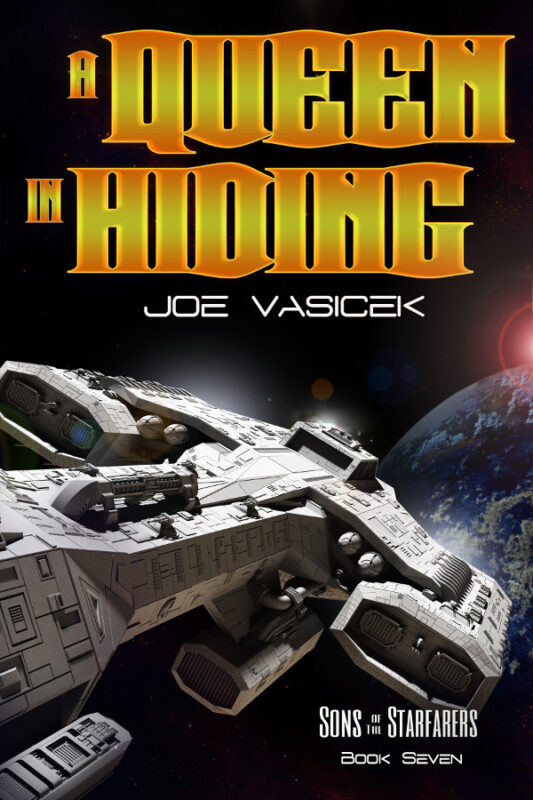
Is A Queen in Hiding for You?

A Queen in Hiding is a character-driven epic space opera about loyalty under pressure, identity under strain, and survival when there is nowhere left to run. Set deep within the long-running Sons of the Starfarers series, it delivers high-stakes interstellar tension blended with intimate moral conflict. This is science fiction that combines fugitives-on-the-run suspense with serious questions about responsibility, leadership, and what it means to remain human in a fractured galaxy.

What Kind of Reader Will Love This Book?

If you love…

  • character-driven space opera in the vein of The Expanse or Firefly
  • epic science fiction series where relationships evolve across multiple books
  • found family in space shaped by loyalty, sacrifice, and hard-earned trust
  • moral, thoughtful sci-fi that explores identity, unity, and individual freedom
  • clean space opera adventure without grimdark nihilism

…then A Queen in Hiding — and the broader Sons of the Starfarers series — is probably your kind of story.

This book is best experienced as part of the full series arc, beginning with Book 1.

What You’ll Find Inside

A Queen in Hiding follows central characters who have already survived war, betrayal, and political upheaval — only to discover that survival brings new and subtler challenges. As they navigate isolation, shifting alliances, and the consequences of earlier choices, the story explores themes of loyalty, identity, conscience, unity versus individuality, and the burden of leadership. The tone is tense yet reflective, blending space opera action with psychological depth and long-arc character development.

What Makes A Queen in Hiding Different

Fans of The Expanse-style pressure-cooker space opera or military SF will recognize the hard choices, the chase, and the tactical survival problem-solving—but A Queen in Hiding takes those familiar tensions in a more intimate, morally invasive direction. Where many space operas keep minds private and conflict external, this book leans hard into the horror (and strange tenderness) of shared consciousness, where love, fear, lust, shame, and loyalty echo through more than one head.

This series stands apart for its sustained focus on family bonds, cultural tension, and moral accountability across generations. The scale is galactic, but the heartbeat of the story is deeply personal. Instead of resetting after each crisis, the consequences carry forward — shaping who these characters become over time.

What You Won’t Find

You won’t find a light, standalone adventure that resets at the end. This is a deep-series installment that builds on long-running character arcs. You also won’t find nihilistic grimdark or shock-for-shock’s-sake storytelling—the stakes are serious, but the series remains grounded in hope and moral seriousness rather than cynicism.

Why I Think You Might Love A Queen in Hiding

This book represents a turning point in the series—where long-standing tensions finally demand honest reckoning. I wrote it because I wanted to explore what leadership, love, and responsibility look like when they’re tested beyond comfort. Every time I revisit it, I’m reminded that growth rarely happens in safety; it happens in exile, in uncertainty, and in the quiet decisions no one applauds.

If you crave space opera that treats character transformation as seriously as interstellar politics, this story was written for you.

Where to Get the Book

Related Posts and Pages

Explore the series index for Sons of the Starfarers.

Return to the book page for A Queen In Hiding.
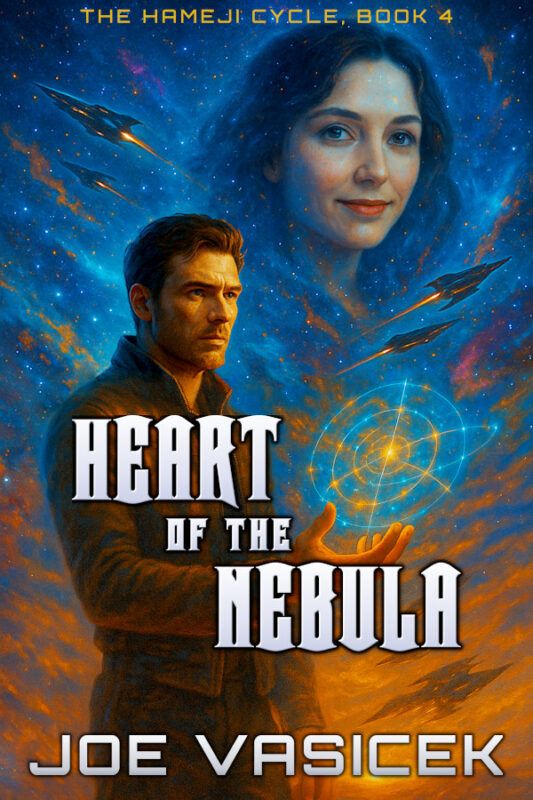
Survival After Catastrophe in Heart of the Nebula

Most science fiction stories focus on the catastrophe itself—the war, the invasion, the moment everything breaks. Heart of the Nebula asks a harder question: what comes after? This novel explores survival not as escape or victory, but as the long, grinding work of holding a shattered people together once the worst has already happened.

Heart of the Nebula is a character-driven space opera about survival after a devastating interstellar war, focused on leadership, scarcity, and the fragile work of rebuilding when victory is no longer an option. This is a story about living in the aftermath—when supply lines are fragile, authority is contested, and every decision carries consequences that can’t be undone.

Where the Idea Came From

The theme of survival after catastrophe grew out of thinking about what happens between history’s big moments. Wars end, empires fall, and invasions retreat—but the survivors are left to deal with the damage. In the author’s note, I talk about being interested in the liminal space after disaster, when the adrenaline fades and people are forced to confront loss, responsibility, and the reality that survival itself can be exhausting. I wanted to write a science fiction story set squarely in that aftermath—a post-war space opera where the central tension isn’t winning the conflict, but preventing a fragile civilization from quietly collapsing afterward.

How Survival After Catastrophe Shapes the Story

In Heart of the Nebula, the Hameji invasion is already over—but its consequences dominate every aspect of the plot, shaping a post-war survival narrative where rebuilding, scarcity, and leadership under pressure matter more than battlefield victories, even for readers new to the series. The surviving colonies are isolated, under-resourced, and barely holding together. Medical supplies, food shipments, and functioning infrastructure matter more than heroic speeches or decisive battles. Survival is measured in convoys protected, hospitals kept running, and fragile alliances maintained under pressure.

This theme also shapes the novel’s political and moral conflicts. Leadership becomes a form of triage: deciding what can be saved, what must be sacrificed, and how much compromise is acceptable before survival loses its meaning. Characters aren’t choosing between good and evil so much as between bad options and worse ones, all while knowing that a single failure could push their society from instability into total collapse.

What Survival After Catastrophe Says About Us

At its core, survival after catastrophe asks what we owe each other when the world no longer offers easy answers. When institutions fail and certainty disappears, morality becomes less about ideals and more about responsibility. For readers drawn to science fiction that explores rebuilding, moral responsibility, and the cost of survival after war, this theme asks not how we endure catastrophe—but how we remain human afterward. That’s why in Heart of the Nebula, survival isn’t just about staying alive—it’s about preserving trust, dignity, and a sense of shared purpose even when fear and scarcity make that difficult. It’s a reminder that rebuilding is not a single act, but a daily choice.

Why This Theme Matters to Me

I’ve always been drawn to stories about aftermath rather than explosions. The moments that interest me most are the quiet ones—when people have to live with what’s already happened and decide who they’re going to be next. Writing Heart of the Nebula was my way of exploring survival after catastrophe—the exhaustion, the moral weight, and the stubborn hope that survival can still mean something more than endurance.

Where to Get the Book

Related Posts and Pages

Explore the series index for The Hameji Cycle.

Return to the book page for Heart of the Nebula.







