Blurb and cover for Star Wanderers

So the first quarter finalists for the Writers of the Future contest were finally announced (finally!), and I wasn’t among them.  Oh well.  But the good news is that I can move ahead now to publish part 1 of Star Wanderers!

First, though, I need to work out a killer blurb.  This is what I’ve got so far:

When Jeremiah arrived at Megiddo Station, all he wanted was to make some trades and resupply his starship. He never thought he’d come away from the frontier outpost with a wife.

Before he knows it, he’s back on his ship again, alone with his accidental bride. Since neither of them speak the same language, he has no way to tell her that there’s been a terrible mistake. And because of the deadly famine that has ravaged her home, there’s no going back either. The only way forward lies across a dozen parsecs of cold, empty space.

Jeremiah wasn’t looking for someone to keep him warm on the long voyages, and he certainly isn’t ready to settle down. He’s a star wanderer, roaming the Outworlds in search of his fortune. But there’s a dark side to his wandering–a loneliness that threatens to destroy him. His unexpected passenger may be willing to end that, but how can she when they barely understand each other?

So what do you think?  Does it tickle your fancy?  Are you intrigued to read more?  Or are you thinking it’s kind of “meh”?  Any feedback would be much appreciated, even if it’s just “this reminds me of _____.”

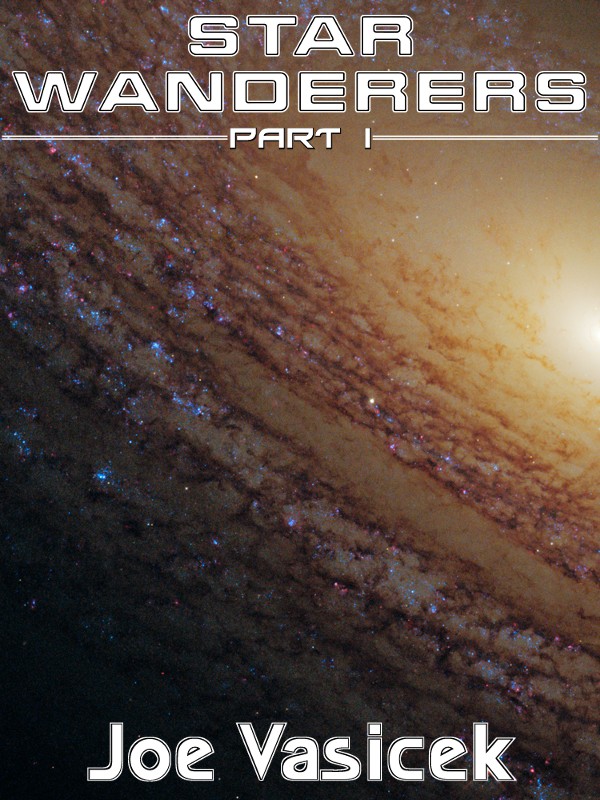
By the way, here’s the cover:
I’m experimenting a lot with this next novel.  The plan is to release it in a serial format first, then publish the full-length novel once I’ve serialized the sequel (more of a parallax actually.  The tentative title for that one is Star Home, and it’s the story from the girl’s perspective).

Here’s how I plan to publish it:

  1. Release Part I for $2.99.
  2. Give newsletter subscribers a two week coupon code on Smashwords to download Part I for free.
  3. Release Part II for $2.99 and drop Part I to free.
  4. Give newsletter subscribers a two week coupon code on Smashwords to download Part II for free.
  5. Release Part III for $2.99 and drop Part II to $.99.  Keep Part I at free.
  6. Give newsletter subscribers a two week coupon code on Smashwords to download Part III for free.
  7. Release Part IV for $2.99 and drop Part III to $.99.  Keep Part II at $.99 and Part I at free.
  8. Give newsletter subscribers a two week coupon code on Smashwords to download Part IV for free.
  9. Publish the full-length novel  at $4.95.

This way, no one has to pay more than five bucks for the whole thing, and people who subscribe to the newsletter get a really sweet deal.  There shouldn’t be more than a month or two between release dates–Part II is almost ready to go, and I plan on finishing the complete first draft in the next couple of days.

So yeah, that’s the plan.  I’m excited to finally get this story out to you!  I really had a blast writing it, and I think you’ll enjoy reading it, especially if (like me!) you’re a fan of science fiction romance.

More to come!
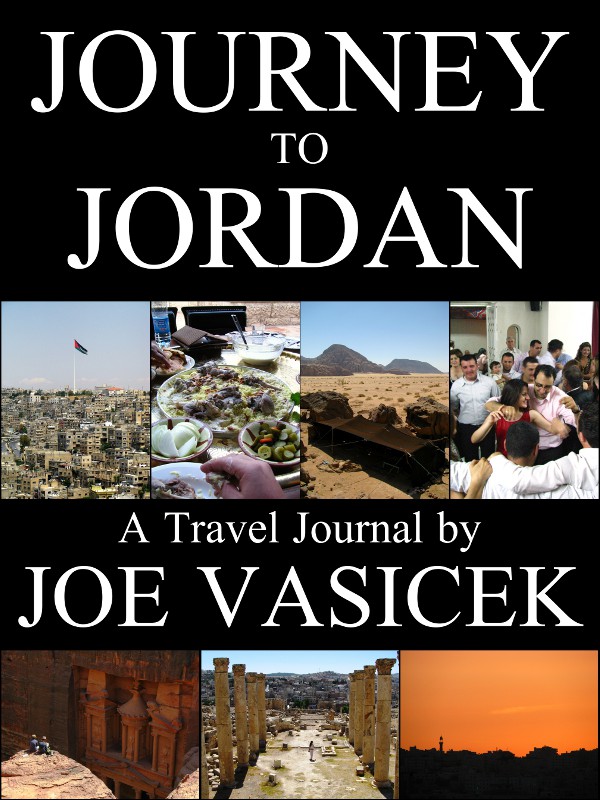
Kickstarter update, new blurb, and cover art for Journey to Jordan

First things first: with sixteen days to go, Desert Stars is currently about 36% funded.  If you haven’t picked up any of my books yet, this is a good place to start: I feel confident that it’s my best work yet.  $10 will get you a copy with your name in the front under “special thanks”–$25 will get you that plus everything I’ve published so far.  So check it out!

To keep the kickstarter campaign moving, I decided to update the blurb for Desert Stars.  Here’s what I came up with:

He was the sole heir to the Najmi camp, a young man raised by tribesmen after falling to the desert from the stars. She was the sheikh’s most beautiful daughter, promised his hand in marriage–if she can convince him to stay.

Together, they must travel to a land where glass covers the sky and men traverse the stars as easily as tribesmen cross the desert. Here, at the ancient temple dedicated to the memory of Earth, they hope to find the answers that will show them the way home.

But when love and honor clash, how can they face their destiny when it threatens to tear them apart?

So what do you think?  Does it grab you, or do I need to change anything?

Finally, I’m currently in the process of preparing my travel journals from the 2008 BYU Jordan study abroad trip for publication.  This is one that I’m doing 100% by myself–editing, cover art, etc.  If anyone wants to volunteer to make a proofreading pass, I would greatly appreciate it.  Currently, I’m about 1/3 of the way through; I hope to finish putting it together by December 1st.

In the meantime, here’s the cover art:

Pretty nifty, eh?  What do you think?

New guest post and blurb for Desert Stars

First of all, my latest guest post for the Bringing Stella Home blog tour is up at The Villain’s Worst Nightmare.  In it, I discuss where I got the idea for the Hameji, and how I world-builded (world-built?) their culture from the ground up.  Good stuff; you can find it here, along with another giveaway of Sholpan.

I just submitted a proposal to Kickstarter for Desert Stars.  I hope to raise at least $500 to help pay for editing and cover art, but the experience running the campaign should be useful too.  I’m a little bit nervous, but we’ll see how it goes.

One of the things they asked for was a description of the project, which is funny, because this week’s Writing Excuses was about pitching.  There’s a lot of good stuff in that episode, in case you haven’t heard it yet.  I don’t have a good blurb worked out for Desert Stars just yet, but this is what I came up with:

The short version

A tale of homecoming, intrigue, and romance on the fringes of an interstellar empire that has forgotten its holiest legend: the story of Earth.

The longer version

Jalil Ibn Sathi Al-Najmi wasn’t born in the desert; he fell from the sky when he was just a little boy. Now that he’s grown, he wants nothing more than to find his true home among the stars. But when the tribe that raised him conspires to shame him into a marriage that would keep him at the camp forever, he has to choose between honor, family, and the girl he loves.

Yeah, they both need work.  The short one isn’t short enough, and the long one has absolutely NOTHING about Mira, even though she’s arguably got the stronger character arc.  For those of you who’ve read the novel, what do you think it needs?  And for those of you who haven’t, does it interest you to read more, or not?

In other news, I revised through almost 15k words yesterday.  Man, it’s so nice having time to write again.  I’ll have to polish up my resume and start looking for work again sometime next week, but I’m glad I took the time off to work on Desert Stars.  I’m on track to finish this draft by the end of next week; after that, it shouldn’t need much more than a quick run-through before sending it off for the copy edits.  Needless to say, I’m excited. 🙂

Word splurge and refining the query

So this morning, I worked on the fifth draft of Genesis Earth while Facebook chatting with some friends I made from World Fantasy.  Next thing I know, it’s 4:30 and I’ve revised through 6.5k words.

To be fair, most of that work was pretty simple–polishing the prose, cutting unnecessary verbage, and the like.  But…wow.  Talk about a splurge.

Because of that, though, I didn’t get any work done in my other project, Into the Nebulous Deep. However, I did do something I’ve been needing to do since before World Fantasy: draft a query letter for Mercenary Savior. Here it is:

Dear _______,

My name is Joseph Vasicek, and I am writing to query my science fiction novel, Mercenary Savior.  I thought my work would be a good fit for you because ______.

As the galactic empire slowly collapses under the onslaught of the starfaring Hameji nomads, the sixteen year old James McCoy sets out to rescue his older brother and sister, Ben and Stella, from the Hameji conquerors.

Things look bleak until he meets Danica Nova, captain of a down-and-out mercenary company, who takes him in and becomes his mentor.  James reminds Danica of her brother, whom she failed to save when the empire slaughtered her family years ago.  Now, she hopes to find some redemption from her demons by saving James from his own.

However, as the two of them spiral onto a collision course with destiny, neither of them realizes that Stella has become a concubine to the Hameji overlord–and that Ben has been brainwashed and made an elite shock trooper in the unit sent to hunt them down.

Mercenary Savior is approximately 120,000 words long.  While it stands on its own as a complete story, it has potential for at least one direct sequel and several indirectly connected novels set in the same universe.

My previous publications include one short story published in the December 2009 issue of Leading Edge.  I have also won first and second place in the annual Mayhew short story contest at Brigham Young University (for 2009 and 2007 respectively).  In addition, I keep a regular blog at http://onelowerlight.com/writing.

Thank you very much for your consideration.  As noted in your submission guidelines, I have included _____.

Cordially,

Joseph Vasicek

So what do you think?  Does the pitch work?  Does it resonate well, or is it boring / cliched / confusing in any way?  Any thing else egregious that I should fix before I send this out?  Please let me know!

I really suck at submitting stuff.  Right now, I’ve only got three or four queries out on Genesis Earth, and one on Mercenary Savior. Like most things, though, the only way to change that is with practice.  By next week, I want to send out at least five queries on Mercenary Savior and have the synopsis ready to go.

Also, my friend from World Fantasy had an interesting suggestion for me: try to break into the small presses with my science fiction stuff, to build a name for myself, and work my way up from there.

This runs directly contrary to Dave Wolverton’s break in with a bang philosophy, but it makes sense; very few major publishers seem to be publishing much space opera these days (with the exception of Baen).  From what I gathered at World Fantasy, science fiction is a difficult sell these days, and several sf writers are going this route.

I could write more, on other subjects, but that’s enough for now.  Good frickin night.

Genesis Earth pitch and other assorted thoughts on writing

Today I got together with Charlie after her work and discussed how to pitch my novel Genesis Earth.  We did it in the following way: I took a few minutes to explain what the book was about, while she wrote down the words that stood out and excited her.  Later, I took the words and worked out a thirty second pitch for it.

It was HARD!  I spent nearly two hours after meeting with her just to write out a stupid four or five sentence blurb!  Selling your work is totally different from producing it.  Anyway, here’s what I came up with:

Michael has never set foot on Earth, but it haunts him as much as the legacy of his parents.  So when his parents build the first artificial, traversable wormhole, he sets out with his mission partner, Terra, to explore the Earthlike planet on the other side.  They arrive only to discover an empty, abandoned world and an unresponsive ghost ship advancing towards them.  When Terra’s schizoid tendencies threaten her mental stability, they both must learn to trust each other in order to confront the mysteries of the new universe–and the personal insecurities that keep them from what they truly desire.

I have that down to 29.6 seconds.  I should probably cut it shorter, but as it is it only has about half of the words that Charlie wrote down.  If I cut it any more, I’m afraid it just won’t make sense.

It’s a start, though, and talking with Charlie helped me out tremendously.  I realized that when I’m selling this stuff, I need to focus on the characters.  Sure, all the worldbuilding stuff is interesting, but it’s not what hooks the reader.  If all you’ve got is thirty seconds, don’t cut to the chase–and don’t give a synopsis!  Synopsis =/= pitch!

Charlie was exhausted, so as we talked, she started ranting in a way that can be described as bluntly honest.  Interestingly enough, most of what she said was actually quite helpful, not only for Genesis Earth, but also for my other projects.

The most helpful thing she mentioned was that when you’re writing characters, you often have to pick out their distinctive character traits and consciously overemphasize them.  If you don’t, the reader might not pick up on it and find your characters stale and boring.  While I hate melodrama and try to keep my novels free of it, I also need to keep my characters interesting.  It’s a fine line to walk, but one that you can’t avoid.

She also said that it’s very easy for protagonists to be more boring than the main characters.  I think this is probably because we rely on formulas and cliches when we’re starting out, since that’s much less risky than breaking the rules we don’t yet fully understand.  The protagonist is the character closest to the trope, while the side characters can do what they want without threatening the integrity of the story.  

Charlie said that because it’s so easy to fall into the trap of a boring protagonist, you need to consciously choose the traits that are interesting about that character and work them into the story as much as possible.  I realized, as she said that, that my main protagonist for Hero in Exile is, indeed, a boring character.  I need to pick out the things that make him interesting and consciously work those into his character.

This got me to think about planning.  I’ve found that if I try to outline a novel when I set out to write the rough draft, I end up telling a completely different story.  However, if I try to write a second draft without an outline, I have a hard time keeping things straight and fixing all the stuff I missed while discovery writing the first draft.

(I’m really upset now, because I was going to mention something that I need to foreshadow in the next revision of Genesis Earth, but…I totally forgot what it was!  GAH!!!  That’s what I get for not outlining!)

Charlie then started to rant about some of our writing friends, and how she would never listen to criticism on her writing from someone she considered to be an inferior writer to herself.

That part was…interesting.  While I agree 110% that arguing with criticism is a sign of a poor writer, I don’t think it’s especially useful to rank writers in terms of “good” or “bad.” I would like to believe that I can learn something from everybody, and not just what not to do.  Perhaps that’s optimistic, but I think it’s also practical–I’ve found that a bloated ego can shoot you in the foot six ways to Sunday before you even know what’s going on.  I’ve found that not just through one unfortunate experience, but through several.

Brandon Sanderson said something very interesting in the last email he sent out to his English 318 class: he said that in New York, editors and agents don’t rank manuscripts by “good” and “bad,” they rank them by how much work they think it needs to be publishable.  There is a distinction between the two, just as there’s a distinction between recognizing something that works really well and something that follows the rules.  

That’s about all I have the time for now.  I’ve got to get to bed.  Late night internet == bad idea.