Back from Coeur d’Alene

It occurs to me that most of my posts in the past month have either been extremely doom-and-gloom, or they’ve been excerpts from some of my most recent work. This probably gives the impression that I’m huddled in a corner somewhere, black-pilled and traumatized, and seeking some sort of an escape through my writing, when really, that is not the case.

In fact, the main reason I haven’t posted more is because I’ve been so busy with life and family. It’s been a really great year for us, with a new baby and a bunch of cross-country road trips that have been a lot of fun. I’ve also been testing out a lot of AI writing techniques, and while that has really invigorated my creativity in a major way, it’s also taken me away from things like this blog, which is why you haven’t heard as much from me.

If I were still on social media, I have no doubt that I would be doom-spiraling right now, what with everything that’s happening in the world. Even without social media, I’ve been glued to the news sites I follow, checking for hourly updates on the war with Israel (which I really do believe is the opening stages of World War III). But that’s actually not very new for me: back in high school, I was the same way, following the news every day from the public computers at my school library. The 9/11 attacks happened on the first day of school for me, but in the last couple of months of the previous school year, I remember being frustrated that no one seemed to be taking this Osama Bin Laden guy more seriously, especially after the USS Cole and Kenya embassy bombings. Then the summer came, and I mostly goofed off, but as soon as school got started I was back to following the news on a daily/hourly basis.

So I’ve got a lot of experience with taking scary news in stride and not letting it totally consume my life. In fact, that’s the main reason I follow things like this so closely: so that when the unthinkable happens, I can face it without getting shocked or overwhelmed. And recent posts to the contrary, I’m not black-pilled at all. In fact, I tend to believe that I was put on the Earth at this specific period of time for a reason, and not just one that was imposed on me: that at some point, before I was born, I was given a choice between this and some other era, and I specifically chose this time to be born. Maybe I’m just imagining it, but it would not at all surprise me if that turned out to be the case.

In any case, we just got back from our last family road trip of the year, this time up to Coeur d’Alene to spend some time with Piper’s brother and his family, as well as my in-laws, who joined us on the trip. We had a really good time! Our daughter had a blast playing with all her cousins, especially the ones about her age right now. We also got to see her cousin’s baptism, so that was really good. Provo to Couer d’Alene is about an 11 hour drive, which is not quite far enough to justify getting a hotel, but for a 7 month-old and a 3 year-old, it was pretty hard. We’re all glad to be home now.

My wife is super busy working on her PhD. Specifically, she’s getting a paper ready for a major conference she hopes to attend with the rest of her lab. Her paper is on using AI to generate useful cross references across a body of work (eg Shakespeare, Jane Austen, The Bible, etc), and she’s developed a method that cuts down the cost of creating a cross reference set by upwards of 50%. But for the next couple of days, she’s going to be really busy with all of that.

Meanwhile, I’ve been taking care of the kids while the grandparents are on another road trip out to Omaha. It hasn’t been that bad, but I’ve also been pretty swamped with work, which one of the reasons I’ve been neglecting this blog. I have a bunch of ideas for posts I’d like to share, but no time to get to them, though hopefully that will change soon. Here are some of the posts I’d like to write:

  • A part 4 to my Navigating Woke-SF series. I recently had some experiences with the woke SF publishing world that have made me rethink things in a way that y’all would probably find very interesting.
  • An update to my generational cycles of grimdark and noblebright theory. This is one of the things I’ve been thinking about, and I’m starting to think that some of my basic premises in that post were wrong, or at least not entirely accurate, requiring an overhaul.
  • A lot of thoughts on AI and writing. This has been my main focus for the past couple of months, and I have thoughts. Many, many thoughts.
  • More thoughts on geopolitics and current events, especially on the trajectory of the unfolding global conflict and what it all means on a moral and spiritual level. But I think I should hold off on posting too much about that, since I’ve already spent so much time on it already.

Which of those things would you like to see next? I can’t promise anything, but I do want to spend more time on the stuff that followers of this blog actually want to read. In the meantime, I’ll try to intersperse a few quick update posts like this one, and get back into the habit of regular blogging.

This is why Meta is going to fail

So while Mrs. Vasicek and I were in the theater for the first time since the pandemic, watching the trailers before Dune, we saw this commercial for Facebook’s new Meta rebrand:

Since the theater was almost completely empty, we were already having fun by making snarky commentary. And when this commercial came on, it was a gold mine. So creepy. So disturbing. So “I really don’t want whatever the hell this is trying to sell me.”

But right before the end, Mrs. Vasicek nailed it and said: “it’s probably for Meta!” And then, bam! Meta’s new logo came on, and we both had a good laugh.

Seriously, though, ever since Zuckerberg announced that Facebook would be rebranding as Meta, I’ve been fascinated with it—not because I’m looking forward to it, but because it is so. So. Cringe. It’s like watching a train wreck in real time. History may prove me wrong about this, as plenty of things that were laughable when they started out proved to change the world, but I really do think that Meta is going to fail. Spectacularly.

I have so many thoughts about this. So many thoughts. But if I had to break it all down to one core idea, it would be this:

At some point in our lives, all of us will reach a point where something about ourselves comes into conflict with reality. At that point, we can make one of three choices: we can try to change reality, we can decide to ignore the conflict, or we can work on changing ourselves.

Part of becoming an adult is realizing that there are aspects of reality that you simply cannot change. We can choose our actions, but we cannot choose the consequences of our actions. To paraphrase Jordan Peterson, we realize that we should clean our rooms before we try to change the world.

Right now, the world is ruled by people who reject the notion that their actions have consequences, and believe that reality can be whatever they want. That is the main reason why everything is falling apart. But instead of recognizing this and changing course, our leaders are doubling down and demanding that we all bend the knee and fall into line with their false reality.

It’s not going to work.

Zuckerberg is one of those people. Facebook didn’t succeed because it invented social media, or did it better than anyone else: it succeeded because Zuckerberg realized that his end users were actually his product, and his consumers were the corporations and governments that wanted all their data. So he optimized Facebook to be as addictive as possible and got more than a billion people hooked on it.

At that point, Facebook was so ubiquitous that it was difficult to function in the real world without it. Those of us who tried to quit soon learned that Zuckerberg was holding our social connections hostage, and that we could expect to be cut off from our friends and family if we tried to leave.

But then the Trump years happened. Social media became toxic, and Facebook in particular became embroiled in scandal. Zuckerberg tried to thread the needle between the partisan divide, and all he managed to do was split the baby. Team blue hated Facebook for selling their data to companies like Cambridge Analytica, and team red hated Facebook for “fact checking” and shadowbanning them. Meanwhile, team “don’t talk to me about politics” became exhausted by the whole thing, and started to unplug in increasing numbers.

I think Zuckerberg needs Meta to be a success much, much more than any of us need or want Meta. This is pure speculation on my part as I don’t have any figures to back it up, but I suspect that Facebook peaked sometime in the last five years and has been declining at an ever sharper rate ever since. It’s probably not just Facebook, either, but all social media. They’re all toxic now.

But after all the goodwill that he’s burned, is Zuckerberg really the technological Moses who’s going to lead us all to the new promised land? And is the promised land really just a cheesy-looking version of Second Life with VR headsets?

The three things that Zoomers and Millennials crave more than anything are meaning, authenticity, and redemption. Those are also the three biggest things that Big Tech has been depriving us of. That’s not going to change until we get away from Silicon Valley culture.

Anyone who has started a family will tell you that the best way to find meaning, authenticity, and redemption in your life is to raise children. And yet, when Google designed their campus to have all the amenities necessary for their employees to live, work, and play there indefinitely, they somehow forgot to build any sort of playplace or daycare for children. That’s Silicon Valley culture: sexy and sterile, inclusive and censorious, flashy and vapid.

Second life failed because the people at the top tried to milk it too hard, and the users revolted. Facebook’s users are revolting for similar reasons, because manipulating us to have the right behavior is now Facebook’s product, and they’re milking us for all we’re worth. Is Meta going to be any different? Because it looks an awful lot to me like a farcically transparent attempt to build the Matrix. Can somebody please tell Zuckerberg that the Matrix was supposed to be a dystopia, and not an instruction manual?

Ultimately, though, I don’t think it’s going to matter much, because Meta is going to fail. Spectacularly. The deeper I look into it, the more it seems that the writing is on the wall. Of course, I could be wrong about Meta—spectacularly wrong, even—but I’m not betting on it. Because if I had to choose between plugging into Zuckerberg’s new Matrix and vacationing in Iceland, the choice would not be difficult:

DUNE!

So Mrs. Vasicek and I saw the new Dune movie in theaters last weekend, and let me just say, it was awesome in every sense of the word!

Speaking as someone who’s read the novel three times and fervently believes it to be the most perfect science fiction book ever written, this movie did not disappoint. Not only is it the best movie adaptation of the book, hands down, but it may be the best adaptation that it’s possible to make of the book. Denis Villeneuve has done for Dune what Peter Jackson did for Lord of the Rings. It’s incredible.

With all of that said, I’m not sure if the movie would make much sense to anyone who hasn’t already read the book first. Dune is really a story within a story within a story, and while the movie captures that aspect quite well, it also touches very, very lightly on the outlying stories, which could be confusing for someone who isn’t already familiar with the novel. Even in my first read, I didn’t fully appreciate the complexity: it took two rereads before I began to grasp the full significance of all of the moving parts.

At its heart, Dune is about the struggle of Paul Atreides (the Chosen One) to push back against his destiny, because he knows that his success will be far more devastating, for him and for the galaxy, than his failure. In that, it’s a brilliant subversion (in the truest sense) of the hero cycle. But all of that takes place within the story of the Bene Gesserit and their quest to create the Kwisatz Haderach, a super-human who can see the past, present, and future all at once. But the Bene Gesserit scheming is all happening within the political intrigue of the Great Houses and the Imperium, specifically with the feud between House Atreides (which presents the greatest threat to the emperor) and House Harkonnen—and all three stories converge on the planet Arrakis, amidst the struggle of the Fremen to terraform their desert world into a lush, green paradise when all of the powers of the galaxy want to exploit it for the spice that is so important for interstellar space travel.

For someone who is already familiar with all of that from the book, the movie hits on all of those nested stories perfectly, without getting bogged down or missing the most important story of all: Paul’s internal struggle with his own destiny. But for someone who is new to all of that, the movie might be really confusing. It will be really interesting to hear what my Dad thinks of it, because he’s never read the book and he plans to stream the movie over Thanksgiving break. I’ll report back when I hear his reaction.

Some people are criticizing the movie for ending at the wrong place, but I actually think it ended at the exact right spot: where Paul becomes one of the Fremen by killing his first man in a duel. It’s subtle, but the whole movie builds up perfectly to that moment, making Paul’s character arc the central driving story arc. For me, it didn’t feel at all like I’d only gotten half a movie, or that the director was drawing the story out to make it into a trilogy. It felt very natural to end the story there, and a great set-up for the sequel, which should wrap up Dune itself. The third movie will conclude Paul’s story by giving us Dune Messiah, which should be really interesting, since the first movie actually did a lot to set that up. If the second movie is as good as the first, then the third one may actually be better than the book.

It’s become very fashionable these days to cast a major character as an ethnic minority, which can be really annoying. However, I wasn’t all that bothered by the decision to cast Doctor Kynes as a black woman. It did some interesting things for the character that I thought worked really well for the story, and for Paul’s relationship with Kynes. So even though that was the movie taking license from the book, I felt like it was a really good call.

One criticism that I do tend to agree with is that the characters feel a lot more like archetypes than like real people. That’s fair, not only for the movie, but for the book. My wife says that’s the main reason why she didn’t like the book, because none of the characters felt “real” to her. But that focus on archetypes is something I really enjoyed about the book, so it wasn’t as big of a problem for me with the movie.

Another point of criticism that my wife had was that neither the movie nor the book have a whole lot of joy. That’s also fair: the movie does tend to hit the same emotional notes over and over, without much variation. The most humorous part was where the Reverend Mother tells Paul “farewell, young human. I hope you live,” which wasn’t actually meant as a joke (and Mrs. Vasicek and I are totally going to use that line on our own baby from now on).

But it really did hit the sense of wonder quite spectacularly, not just with the big things like the desert and the sandworms, but the fine details like the control systems of the ornithopters, or the grittiness of the stillsuits and the spice mining equipment. It really does stick with you long after you’ve watched the movie, and makes you want to watch it over and over.

All I can say more is that I’m really, really, really looking forward to the next one!

Camp NaNoWriMo: Day Thirteen

  • Words written: 1,363
  • Total stories written: 1
  • Total words written: 7,926
  • Total words remaining: 22,074
  • Total words behind: 4658

Decent writing day. I woke up feeling much better, which allowed me to get a lot more done. I’ve also made a conscious decision not to do publishing tasks before noon, so that should help to prioritize the writing.

The problem before was that when I sit down to work (usually while the baby takes her morning nap), I would procrastinate writing by doing publishing tasks instead. Important stuff that does need to get done, but not as important as writing. The afternoon is Mrs. Vasicek’s turn to watch the baby, so that’s when I’ll do the admin type stuff.

Another thing I’m experimenting with is writing on a tablet instead of the desktop, which is set up in the family room where everyone usually hangs out. There are advantages to that (see Stephen King’s On Writing), but when you need to write your way out of a rut, some privacy and/or quiet space can be very helpful to get you to focus. Fortunately, I’ve figured out a way to work with Mrs. Vasicek’s old Kindle Fire. Cheap, crappy tablet, but it has a basic word processing app that produces TXT files, and that’s all I need.

So that’s what’s going on here. Should have a couple of days to get back in the saddle and build the writing momentum again. At some point, I need to haul a bunch of yard waste to the dump and help my sister pull her stuff out of a storage unit in Manti, but those aren’t imminently urgent.

2020-02-15 Newsletter Author’s Note

This author’s note originally appeared in the February 15th edition of my newsletter. To sign up for my author newsletter, click here.

I’m writing this author’s note on Friday evening, after a long and wonderful day at Life, the Universe, and Everything (LTUE). Of all the science fiction conventions that I attend, I think LTUE is my favorite. It’s local to Utah Valley, so a lot of the regulars have become longtime friends of both mine and Mrs. Vasicek’s.

But the biggest reason I love LTUE is because it has such a strong writing track. Where FanX Salt Lake (the big local media con) is all about fandom and geek culture, LTUE is all about helping creatives to develop their craft, learn the business, and connect with the people who love the things that they create. It started as an academic symposium for aspiring science fiction writers, but in recent years it has branched out to other creative fields like art, film, gaming, etc, all with an emphasis on science fiction and fantasy.

There have been a lot of really great panels in the last couple of days. One of my favorites was on the future of Fantasy, where Peter Orullian, James A. Owen, Rafael Hohmann, and Charlie Pulsipher (who does a fantastic Velociraptor impression) discussed the rise and fall of Grimdark, the dawning of Noblebright, the push from the industry for the #ownvoices movement, and the indie explosion of LitRPG. Lots of really fascinating trends to keep an eye on!

I forget which panel it was on, but M. Todd Gallowglass gave some really prescient advice for aspiring writers: “You don’t make a writing career by being read; you make a career by being reread.” He was also on a great panel about whether or not it’s worth it to pursue a master’s degree, and he shared some very interesting points that run counter to what I’ve heard from everybody else: namely, that for a career writer it generally isn’t worth it. M. Todd Gallowglass is one of my newest favorite people at LTUE, and he’s always a blast to talk and hang out with.

The good folks from World Fantasy Convention are here at LTUE as well, and they gave a panel talking about all the wonderful things we can expect from attending World Fantasy 2020 in Salt Lake this year. It’s so close by, why wouldn’t we want to attend? I’m really torn on this: it’s a convention that caters more to the traditional side of the business, which isn’t the path that I’m pursuing, but I attended World Fantasy in 2009 and 2010, and it is a really great convention… also, it’s so close this year, practically in our own backyard… I don’t know. But even if I decide not to go, I will almost certainly attend the barcon.

The LTUE benefit anthology launch party was also a lot of fun! Lots of great stories from old-timers and regulars. I look forward to reading it! I also look forward to collecting as many signatures from everyone as I can. For last year’s anthology, Trace the Stars, I’ve gotten all but four of the author signatures. Also, I’m happy to report that next year’s LTUE benefit anthology will include a story of my own!

Brandon Sanderson wasn’t here on Thursday or Friday, but I expect we’ll be seeing him tomorrow. Kevin J. Anderson is here, as well as David Farland, Eric James Stone, and Tony Daniels, senior editor at Baen. Tony Daniels was also on a panel today with Mrs. Vasicek, where they discussed near future SF. Lots of fascinating things to think about, both from a technological angle and a social angle. I really liked Mrs. Vasicek’s “left field” near-future prediction: that AIs will eventually replace professors and every college student will have a personally tailored AI!

Speaking of Mrs. Vasicek, she gave a really fantastic presentation today called “Rage Against the Algorithm,” where she offered some insight into the Amazon hive mind, gleaned from their recent research papers. It appears that book covers are about to matter a whole lot more in the Amazon algorithm, and that they are putting a lot more emphasis on search and on the review system (which they are working to fix). Also, book categorization may start to become dependent at least partially on reviews. If you’re one of my author-fans and all of this sounds intriguing, let me know and I’ll email you a copy of her powerpoint.

On Friday morning, I moderated a panel on unconventional outlining techniques with Mackenzie Kincaid, Michael F. Haspil, and Els Curtis. That was a lot of fun. Mackenzie had some really great advice for productivity apps and hacking your own personal habits, and Michael and Els had lots of great insight into their own personal outling methods as well. Some really great questions from the audience really got the panel rolling, and I think it turned out quite well.

Friday night was the big mass booksigning, and it was a lot of fun! Definitely my most successful signing even so far. Caught up with a bunch of my old fans, and met a lot of new people as well, several of whom went on to buy a book or two. Also got into some really great conversations with other fellow creatives, including Emily Martha Sorenson, whom Mrs. Vasicek and I chatted with until almost everyone else was gone. It was really fantastic to talk with so many great people who share the same passion for geek culture and speculative fiction! Mrs. Vasicek and I both had a blast.

By the time this newsletter reaches your inbox, we will probably be on our way to the last day of LTUE. Mrs. Vasicek has a panel on computer hacking that looks really interesting, and I’m on a writing/publishing panel about how to avoid rookie mistakes—basically, how to learn from all of the many, many mistakes I’ve made over the years! Should be a lot of fun. If you’re there, be sure to come up and say hi! If not, maybe next year.

That’s my LTUE report for this year. It’s definitely shaping up to be one of the more memorable ones. Each year, it seems to get even better—may that continue for many more years to come!

2020-01-16 Newsletter Author’s Note

This author’s note originally appeared in the January 16th edition of my email newsletter. To sign up for my newsletter, click here.

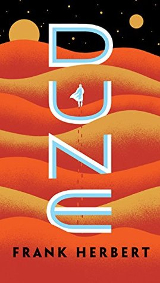
For my birthday last year, Mrs. Vasicek got me the first three books in the Dune series by Frank Herbert. I looove the new cover art, which is mostly why I wanted them, but I’ve only ever read the first book. Since the other books are on our shelves now, I pretty much have to read them, but it’s been years since the last time I read it.

So that’s why I’m reading Dune for the third time, and wow, it is so much better than I remembered. Part of that is because there is so much going on that you have to reread it two or three times just to get it all. The first time I read Dune, I thought it was okay but not all that great—certainly not on par with Lord of the Rings, which everyone compares it to. In reality, though, most of the story went right over my head. I read it again a couple of years later, after catching up on some of the lore, and that time I was much better able to appreciate it.

My own book Desert Stars takes place on a desert planet in a far distant future, but that’s basically where the similarities end. The politics of empire, with the emperor, the great houses, and the spacing guild; the Mentat human supercomputers and secretive Bene Gesserit with their megalomanaical breeding program; the Fremen, the spice, and above all else the transcendant leap in evolution, perfected in Paul Atreides, that allows certain people to see past this dimension into the future. Dune may just be the most perfect science fiction novel ever written.

Having said that, I should point out that Mrs. Vasicek doesn’t really like it. She feels that the characters fall flat, that their near-superhuman abilities strain credulity and make them much less interesting, and that the omniscient point of view makes the book too dense. In the seven months that we’ve been married, I’ve learned that I shouldn’t dismiss her judgment too quickly. Not only does it go a long way toward promoting marital tranquility, but more often than not, she’s actually right.

Then again, she’s only read Dune once. When I read it for the first time, I had many of the same criticisms. And while new things did stand out on my first rereading of it, including things about the characters, it wasn’t like they leaped off the page or the prose itself became any less dense. Mostly, it was all the other things that really stood out: the world building, the politics, and the statement the book makes about mankind’s ultimate destiny.

My new year’s resolution for 2020 is to read 100 books. When I told my sister that, she said “you should read at least 100 of them before the baby is born.” Dune is such a massive brick of a book that I’m already a couple of weeks behind, but I don’t care. It’s really, really good. I’m looking forward to the other ones!

2020-01-10 Newsletter Author’s Note

This author’s note originally appeared in the January 10th edition of my email newsletter. To sign up for my newsletter, click here.

So right after we got home from the holidays, Mrs. Vasicek had her ultrasound, and we found out that we’re having a baby girl! We are super excited! She looks really healthy so far, so hopefully everything goes well and we get to welcome her into the world this spring.

Right now, we’re in baby name mode, and I have to say it’s a bit different from picking character names. You would think I would have some experience in this area, being a fiction writer and all, but no. My number one name choice is Æthelflæd, but Mrs. Vasicek has soundly vetoed it, which is a shame because it’s such a good namesake: lady of Mercia, daughter of Alfred the Great, and a formidable woman in her own right (yes, I’ve been binge listening to the British History Podcast).

In all seriousness, though, it is really awesome that we’re having a baby girl. I grew up with three sisters, and I’ve often thought that I’d be able to do well raising a daughter. Now we’ll find out!

We’ll probably give our baby a name from our extended family, though that doesn’t actually narrow things down very much. On the Czech side, I’m rather partial to Ludmilla (Lilly), but sadly Mrs. Vasicek has vetoed that one as well. Neither of us are keen on our grandparents’ names, so we’ll probably go back a little further, or save one of those for a middle name.

One thing we probably won’t do is resort to the Utah Baby Name Generator, though it is a real hoot. Tim Urban also has a really fun blog post on baby names up on his blog, Wait But Why. I’m sure if we’re indecisive for long enough, people will start to come out of the woodwork and tell us all sorts of crazy things about names and naming.

What are some girl names that you really like? We’re very much open to suggestions. Who knows? Even if we don’t end up using them, they might show up in my next book.

I suspect that Mrs. Vasicek will be on the fence right up until the month the baby is born, at which point she’ll make a firm choice and won’t be swayed from it. So until then, I guess I just need to maintain a firm grip on the Overton window, though it may have already slipped out of my control.

Æthelflæd…

2019-12-19 Newsletter Author’s Note

This author’s note originally appeared in the December 19th edition of my author newsletter. To subscribe to my newsletter, click here.

I’ve been thinking a lot about self-reliance recently. I just finished reading One Second After by William R. Forstchen, and while it’s a good book—perhaps even an important book—I have to say that is not the sort of thing that is fun to read when you’re newly married and expecting your first child. It really makes you think about the things you take for granted, and just how fragile our world really is.

If you know the basic premise of the book, you’re probably nodding along sagely right now. If not, then you probably haven’t read much prepper fiction yet. One Second After is actually a pretty good book to start with, if you’re interested in the genre. In the next couple of weeks, I’ll write a proper review.

I don’t consider myself a “prepper” in the common sense of the word. I don’t have a stockpile of guns or ammo, I don’t really go for all the “tacti-cool” stuff that’s popular in prepper circles, and I don’t obsess over SHTF scenarios. That said, I’m not ignorant of the many ways our society could (or is) falling apart, and I do have contingency plans if/when that happens.

Probably the best prepper blog/resource that I’ve found is Listening To Katrina, which was written by a guy who lived through Hurricane Katrina and the aftermath. Lots of really fascinating stuff there, and he does a fantastic job of boiling his experience down into lessons for the rest of us. I discovered this blog just as I was starting to get more interested in self-reliance and emergency preparedness, and it did a lot to develop my thoughts on the subject.

Another big influence on me were the Forgotten Skills books by Caleb Warnock. A lot of really fascinating stuff there. He hits on things from the self-reliance angle more than the prepper angle, which is how I like to come at it too. It’s not about having two years of freeze-dried food in your basement that you never eat or use, it’s about living in such a way that you can provide for your own needs whether or not a disaster strikes, and produce more than you consume.

About a year ago, I took what I’d learned from these and other resources and mapped out something that I call my Path to Self-Sufficiency:

  1. Learn how to store and use oats, beans, and wheat.
  2. Learn how to make bread and maintain a sourdough culture.
  3. Start an herb garden and learn how to garden.
  4. Develop a storage system for canned and dry goods.
  5. Learn how to make kraut and fermented vegetables.
  6. Learn how to make yogurt and cheese.
  7. Keep a garden for greens, tomatoes, peas, and peppers.
  8. Learn how to can and pickle.
  9. Finalize the garden plan (including compost).
  10. Build a rainwater reclamation system.
  11. Develop a source of off-grid power.
  12. Build a wood-fired oven and learn how to make bread with it.
  13. Learn how to hunt and process game meat.
  14. Develop a plan for livestock.
  15. Secure a source for eggs and milk.
  16. Learn how to make clothing and work with textiles.
  17. Build a shop and learn how to work with wood and metals.
  18. Build a foundry and learn how to cast metals.
  19. Build a greywater reclamation system.
  20. Secure a source for homespun textiles.
  21. Acquire productive land and improve it.
  22. Build an off-grid cabin.

The items are listed in rough order, though I’ve jumped around a little bit since making the list. For example, Mrs. Vasicek and I have solar panels on our house (11), and we’re looking seriously into keeping bees (14). But it’s a pretty good reference point for answering the question “okay, what’s next?” Currently, I’m working on step 6, and when spring comes around I’ll dive into steps 7, 8, and 9.

A lot of this hearkens back to a blog series that I started several years ago, called “the self-sufficient writer.” At the time, I was exploring ways that I could incorporate what I was learning into my writing career and lifestyle. The goal, I suppose, was to show how it’s possible not only to make a living as a writer, but to achieve a healthy degree of self-reliance at the same time.

Would you be interested in reading that blog series if I brought it back? I’ve learned a few things since then, and would have to start it over from the beginning, but it’s an interesting subject that I enjoy exploring. And now that I’ve finally got some land to work with, there’s so much more to do.

The Path to Self-Sufficiency is very much a work in progress, and I doubt I’ll get to everything on it. A lot depends on Mrs. Vasicek and what she wants to do. With a child on the way, other projects will no doubt take priority, but with everything going on in the world, this is not a ball I think we can afford to drop. If you have any suggestions or stories of your own, I’d love to hear from you.

2019-12-05 Newsletter Author’s Note

This author’s note originally appeared in the December 5th edition of my author newsletter. To subscribe to my newsletter, click here.

We had a very eventful Thanksgiving this year. My whole side of the family was in town for a baptism and a funeral, and we had Thanksgiving dinner with Mrs. Vasicek’s family, as well as pie night, which is a tradition my in-laws have. So lots and lots of family, which was stressful in some ways but also a lot of fun.

Mrs. Vasicek and I took advantage of this to make a family announcement, which I can now share with you: we’re having a baby! The due date for little junior is in May, and we don’t yet know if it’s a boy or a girl, but we will definitely find out next month.

I don’t think it’s really hit either of us yet. Of course, it’s something we talked about while we were dating, and since both of us are in our thirties we decided it would be best not to wait. Our lives are sure to change in a major way once little junior comes along, but for now, it’s still business as usual.

It has made me think a little bit about a blog post I wrote some nine and a half years ago, right after I graduated from college. The post was a response to a New York Times article about “emerging adulthood,” or the idea that we should count the time between adolescence and full adulthood as a separate stage of life.

The article points out that there are five traditional milestones that mark the transition to adulthood:

  • Completing school
  • Leaving home
  • Achieving financial independence
  • Getting married
  • Having a child

In our parents’ and grandparents’ generations, people commonly achieved all of these milestones sometime in their early twenties. However (the NYT article argues), because that isn’t as easy in today’s modern world, and because the human brain isn’t fully developed until about age 25, we shouldn’t put too much pressure on young people to achieve these milestones until their late twenties or early thirties.

As a 25 year-old at the time I read the article, I was much more interested in how I measured up with the milestones than the argument for putting off adulthood itself. Now, at age 35, I’m finally about to hit the last one.

I never consciously tried to put off the responsibilities of adulthood. If I’d found Mrs. Vasicek in my mid-twenties, I wouldn’t have made her wait another ten years. And yet, it seems that many of my peers are putting off adulthood as long as they can—in some cases, indefinitely. There’s a reason why “adulting” is a word now, and why pajama-boy is a meme.

And yet… if I’d met Mrs. Vasicek ten years ago, I don’t think it would have worked out. And if somehow it did, I probably would have put my writing career on the back burner, or abandoned it entirely. Many of my friends who got married a year or two out of college did exactly that. Those who are still pursuing their creative careers are generally either single, married without children, or stay-at-home moms (which seems even more difficult than juggling writing with a day job, but hey).

I suppose I benefited from this idea of “emerging adulthood,” since through my mid-thirties I basically was one. But I didn’t choose it because it was the easy path. It would have been a lot easier to give up on writing—but ironically, I don’t think Mrs. Vasicek would have been attracted to me if I’d done that, and there’s a very good chance I’d still be a single basement-dweller.

So what does this mean about this idea of “emerging adulthood”? Is it something that we should recognize? Yes, but not as an excuse to put off the responsibilities and milestones of adulthood. It isn’t worth putting off your life—or your future family—just because you’re afraid to take that next step, whatever it may be.

2019-11-07 Newsletter Author’s Note

This author’s note originally appeared in the November 7th edition of my author newsletter. To subscribe to my newsletter, click here.

One of the things I’ve come to really love about married life is reading in bed with Mrs. Vasicek. Right now, I’m finishing House of Assassins by Larry Correia, and she’s reading the Westmark Trilogy by Lloyd Alexander. She just finished the mystery novel A Better Man (making a few jokes about the title), and I just finished Genghis Khan and the Making of the Modern World, which has revived my perennial fascination with the Mongols.

It’s great to share a book with someone you love, but it’s also great to share the same space as the person you love while totally immersed in a book. Those are two different things. I’m also rediscovering how refreshing it is to end a long day by unwinding with a good book for an hour or two.

Reading stands apart from other leisure activities. Whenever I spend too much time on YouTube, or playing computer games, or doing something else involving the internet and a screen, I always come away feeling drained. Not so with reading. In fact, it’s the exact opposite.

Reading a good book always leaves me feeling replenished, like I’ve just come back from an exciting adventure, or come to the end of a perfect day. The books that stick with me always seem to have changed me in some way, even if it’s so subtle that I can’t tell how.

Unlike watching TV or YouTube, reading takes work. It isn’t laborious, but the act of reading requires just enough effort that when I’m tired or worn out, screens and the internet usually win out. But when I make the conscious decision to turn away from those things and open up a book instead, I never regret it. The same can’t be said when I come to the end of a YouTube binge.

It’s never too late to start a new habit or set a new resolution, but there’s something about getting married that makes it easier. So in an effort to read more (and finally get to all the books that I’ve accumulated over the last few years), I’m setting a goal to read two books a week. That’s 100 books over the course of a year, with a bit of allowance for unforeseen interruptions.

A hundred books sounds like a lot, but as a writer, it’s probably on the low end of what I should be reading anyway. Hopefully the quality of my writing improves as I do it. If I get into the habit now, then it shouldn’t be too difficult to make and keep that resolution for 2020.

What are some of the ways that you enjoy reading? With a spouse? With a pet? Alone? In a warm and quiet place? With a beverage of something tasty? Or maybe in a crowded place, with lots of opportunities for people watching?

I suppose there are just as many ways to read as there are ways to write, which is to say that there’s one for every reader. May you be fortunate enough to spend lots of time with yours!