My 2022 reading resolution: Read or DNF every novel that has won a Hugo or a Nebula award, and acquire all the good ones.
Earlier this month, I finished my last Hugo/Nebula book and ordered the last two ones that I hadn’t yet acquired. The first of those (Powers by Ursula K. Le Guin) arrived just this morning, and the other one (Way Station by Clifford D. Simak) is supposed to arrive next week, so I think that now is a good time to do a retrospective and share some of my thoughts.
There were 104 books in total, including the most recent award winners (I decided not to count the retro-Hugos midway through the year). Of those, I’ve read 35 through from start to finish, and decided that 24 were worth keeping. The rest of them (69, or almost exactly two thirds) I DNFed.
Finishing one in three books is actually about on par for me. I’ve found that if I don’t allow myself to DNF books early and often, I just don’t read. Also, it doesn’t really surprise me that nearly one third of the books I read all the way through didn’t really impress me. What can I say—I’ve a very opinionated man.
Of the 28 books that have won both a Hugo and a Nebula, I finished 12 (or about two-fifths) and found that eight (or a little over a quarter) were worth keeping. So not much different than the overall totals.
Of the 45 books that won only a Hugo, I finished 18 (exactly two-fifths) and found that 14 (about a third) were worth keeping. So my personal taste seems to be tilted more toward the Hugo than the Nebula. The difference becomes even more stark when you take out the 20 books that were nominated for (but did not win) a Nebula, a whopping 16 of which I DNFed. Excluding those, we’re left with 25 books, 14 (or more than half) of which I finished, and 11 (or just under half) I thought were worth keeping.
The contrast becomes even sharper when we look at the Nebula-only winners. Out of the 31 books that didn’t win a Hugo but did win the Nebula, I finished only five (less than one-sixth) and found that only two were worth keeping. Both of those were books that weren’t even nominated for the Hugo. When we look at the 16 Nebula-winners that were nominated for a Hugo but didn’t win, I finished only two of them (one-eight) and didn’t think that any of them were worth keeping.
So the best predictor that I wouldn’t like a book is if it won a Nebula and was nominated for a Hugo, but didn’t win. In other words, if the SFWA crowd (which is mostly authors) said “this is the best novel published this year!” and the denizens of Worldcon said “yeah… no,” that almost guaranteed I would hate it. In fact, just getting nominated for a Nebula is enough to make a book suspect.
This is why, earlier in the year, I posited the theory that SFWA has done more to ruin science fiction than any other organization. I saw this trend coming all the way back in the spring, when I was only halfway through the reading list. In the early years, SFWA was all about politicizing science fiction, and in the last few years, it’s basically turned into a nasty bunch of mean girls all trying to get a Nebula for themselves.
I tracked a few other awards just to see if there were any correlations. For the 18 books that placed in any category in the Goodreads Awards, there were only four books that I finished and two that I thought were worth keeping. Network Effect by Martha Wells received 22,971 votes in the Science Fiction category in 2020, which came to 9.69%. Blackout by Connie Willis gained only 337 votes in 2010, but that was 9.19% back then. Both of those books were keepers. The only other book that got a higher percentage for its year was Redshirts by John Scalzi, with 4,618 votes at 10.82%, but I DNFed that one. Most Hugo/Nebula winning books didn’t even clear the 5% threshold in the Goodreads Choice Awards, and in my experience anything under 10% that doesn’t immediately jump out to me probably isn’t worth reading.
Of the six Hugo/Nebula books that were nominated for a Dragon Award, the only one I even really finished was Network Effect by Martha Wells. But that makes sense, since it’s no great secret that the Hugo/Nebula crowd is trying to sabotage the Dragons by pulling exactly the same shenanigans that they accused the Sad Puppies of doing. Accusation is projection is confession, after all. As of 2022, there has never been a Hugo/Nebula winning book that has also won a Dragon, and while part of me hopes that it stays that way, another part of me is very curious to read the first book that does.
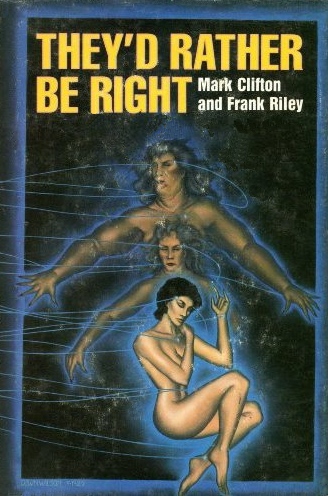
Almost all of the 104 Hugo/Nebula winning books placed somewhere in the various Locus recommended reading lists, which isn’t surprising since those lists are generally regarded as feeders for the Hugos and Nebulas (and used to get more people voting in them, too). Of the seven books that weren’t on a Locus list, the only one I finished was They’d Rather Be Right by Mark Clifton and Frank Riley, which also has the distinction of being the most difficult book to find.
(A lot of people think They’d Rather Be Right was the worst book to ever win a Hugo, but I actually enjoyed it. Unlike most Hugo/Nebula books, it was remarkably anti-Malthusian, which is probably why it’s so hated. As for the worst book to ever win a Hugo, I personally grant that distinction to Dreamsnake by Vonda N. McIntyre.)
There were only ten Hugo/Nebula books that won or were nominated for a World Fantasy Award, and I only finished two of them (and didn’t think either were worth keeping). Perhaps that means that makes it the actual best predictor that I’ll hate a book, but ten is a pretty small sample size, so I’m holding off judgment for now.
The best two decades for me were the 50s (7 books, 4 keepers) and the 00s (16 books, 6 keepers), though the 80s came in close with five keepers out of sixteen books—and let’s be honest, Blackout and All Clear by Connie Willis are basically two halves of the same book. In contrast, the worst two decades were the 70s (only one keeper out of 13 total books) and the most recent decade, the 10s (15 books, 2 keepers).
So far, the 20s aren’t shaping up to be much better. In fact, I think it’s entirely fair to say that given the state of fandom since the election of President Trump (and the general state of insanity in this post-Trump era), a Hugo or a Nebula should count as a mark against a book, rather than for it. That is, the primary value of these awards is to tell you which books to avoid. Perhaps this will change at some point in the future, like it did after the madness of the 70s or the malaise of the 90s (not a good decade for science fiction, apart from books published by Baen), but I’m not holding my breath.
So that was my reading resolution for 2022. If I hadn’t allowed myself to DNF, I can guarantee that I never would have accomplished it. As it stands, though, I’m pretty satisfied with how it turned out.
What sort of reading resolution should I set for 2023?