მე ♥ ქუთაისი (I ♥ Kutaisi)

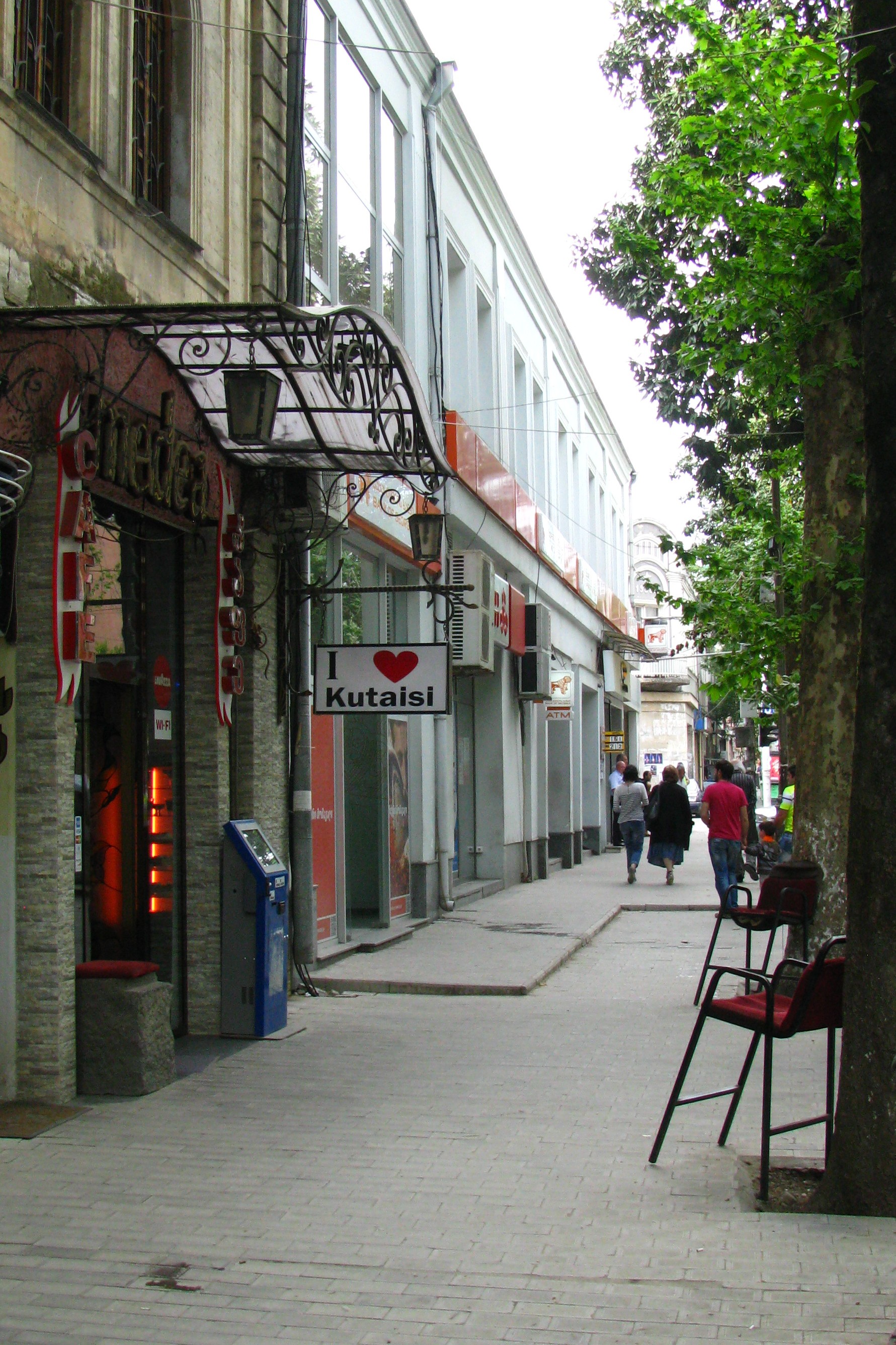
Medea Cafe & Bar, a popular expat hangout in downtown Kutaisi. It’s also something of a landmark because of the conspicuously English street sign.

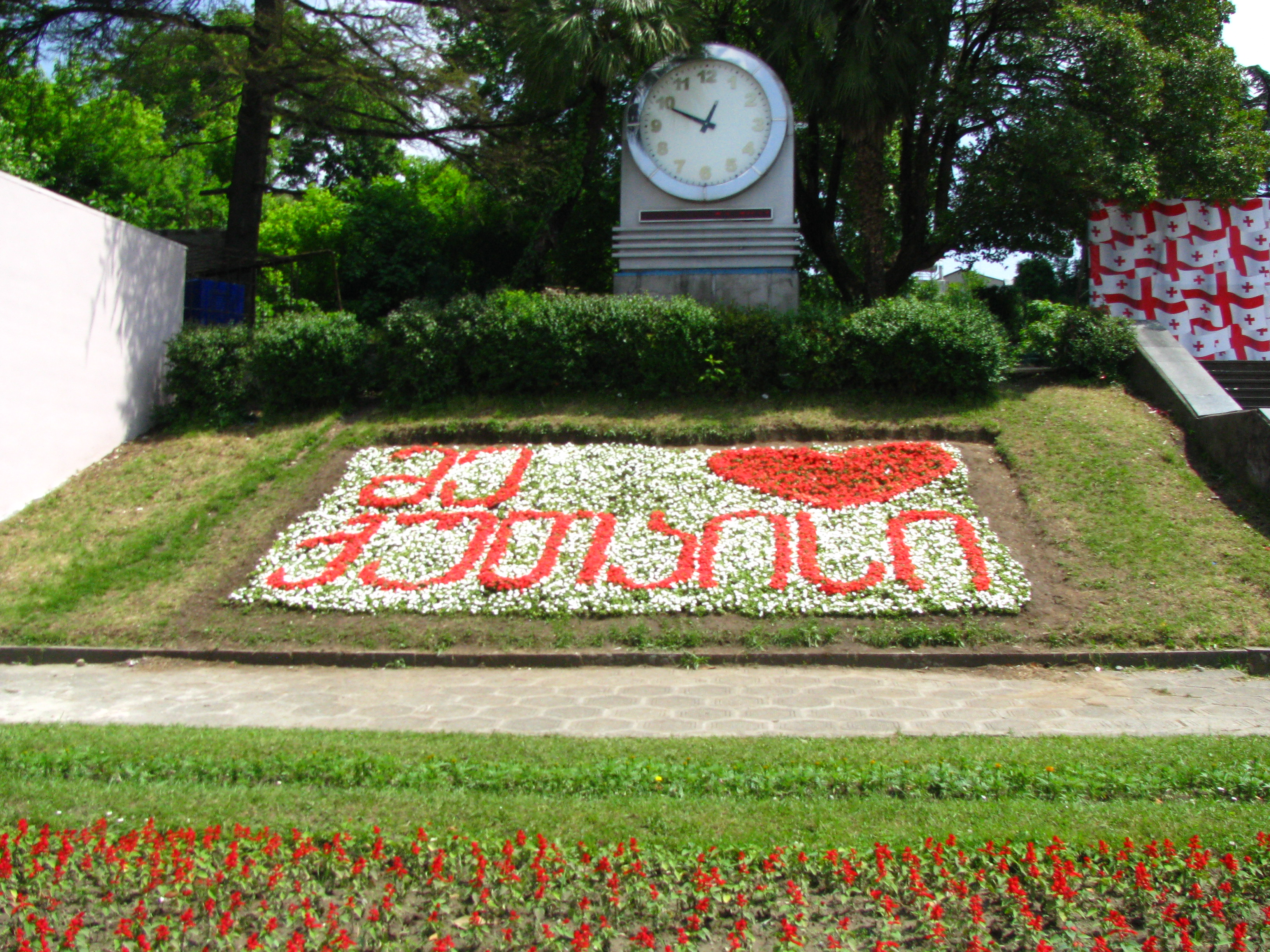
That’s Georgian for “I ♥ Kutaisi.” Like the New York City ad campaign on which it’s based, it’s become a part of the local culture.  You can see it on billboards, street signs, stickers, t-shirts–unlike the US, where it’s uncool to wear a band’s t-shirt at their own concert, everyone was wearing their “I ♥ Kutaisi” shirts at Kutaisoba last week.

So since I’ve been living here in Kutaisi for almost three months, I thought I’d give you all a virtual tour of the city–or at least the downtown area, since Kutaisi is really more like a very big village with a city in the middle.  But that’s why I love it.
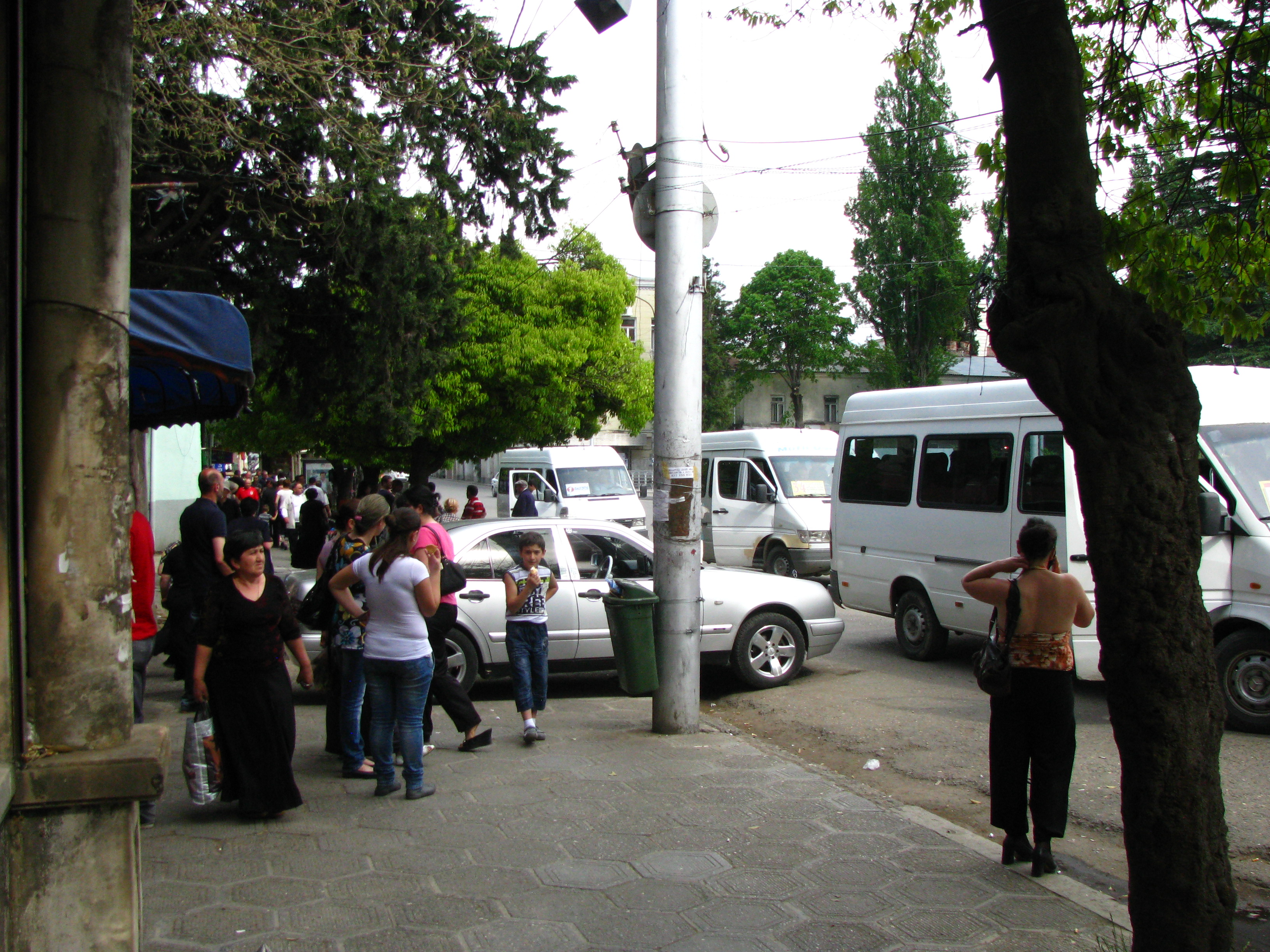
Tsitelikhidi, or Red Bridge Station.

Our tour starts at the main marshrutka terminal downtown, Tsitelikhidi, or Red Bridge Station.  The place is a wonderfully chaotic mess of taxis, buses, and marshrutkas, while their drivers pass the time by smoking cigarettes and yelling at each other.  Old women wander around the crowds selling khatchapuri and lavash, while people are constantly coming and going.  Interestingly enough, this is also where you can find one of the largest concentrations of apothekas (pharmacies) in the city.
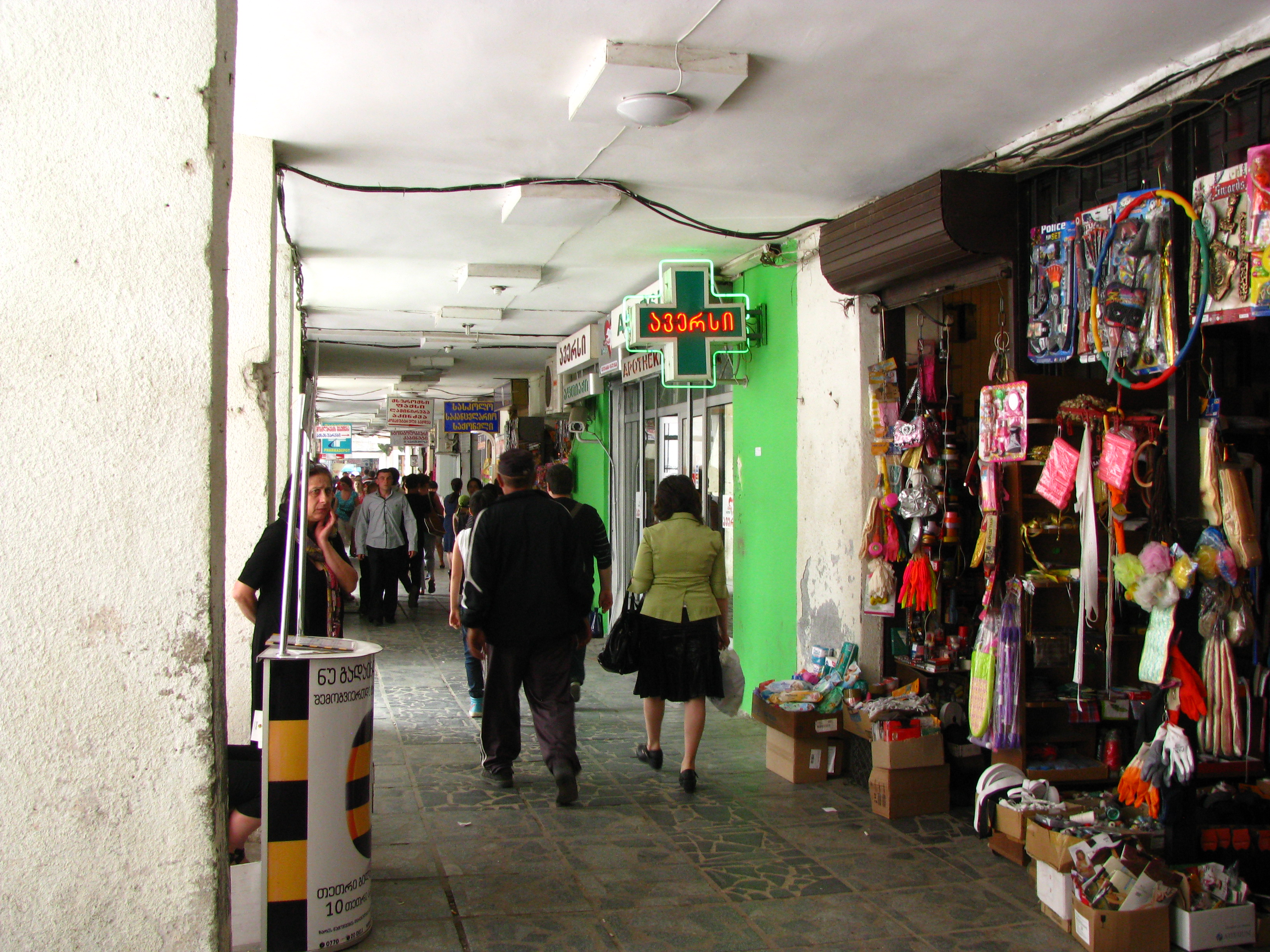
I bought an earwax removal kit from this apotheka, along with a bulb syringe obviously meant for babies. The pharmacist thought that was hilarious.
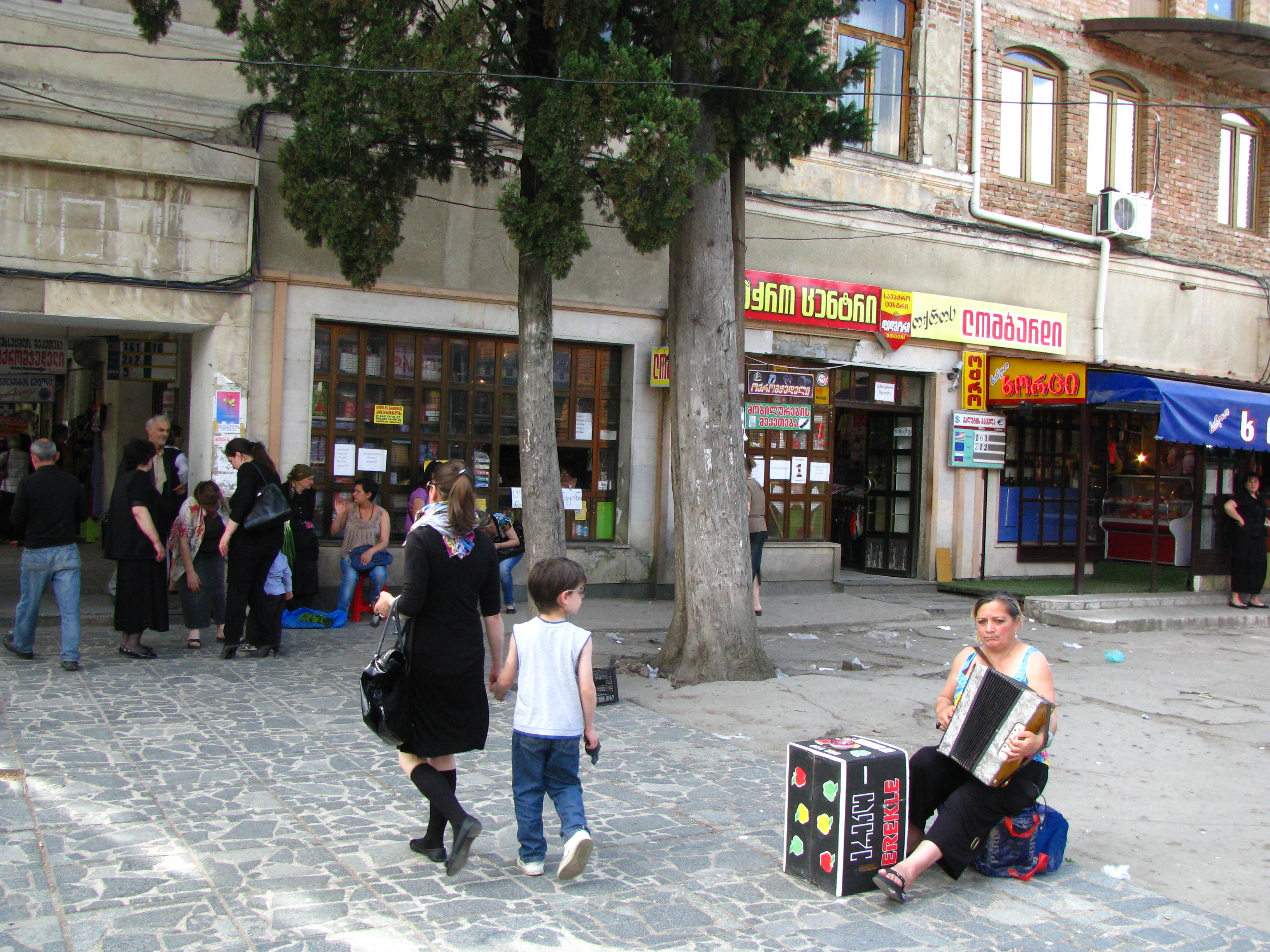
For street performers in Kutaisi, the accordion is the instrument of choice.

The sidewalk leading away from the station leads into a long narrow corridor typical of most Georgian street markets, with stalls and vendors packing every available space.  Here you can find cookies, ice cream, and cold drinks, both soft and hard; candles, religious icons, and other “souvenirs,” as the vendors like to call them; cheap plastic goods from China, wrapped in dusty plastic; freshly killed meat hanging from butcher’s windows; and all sorts of other random things.  But as busy as this place seems, it’s nothing compared to the main marketplace.
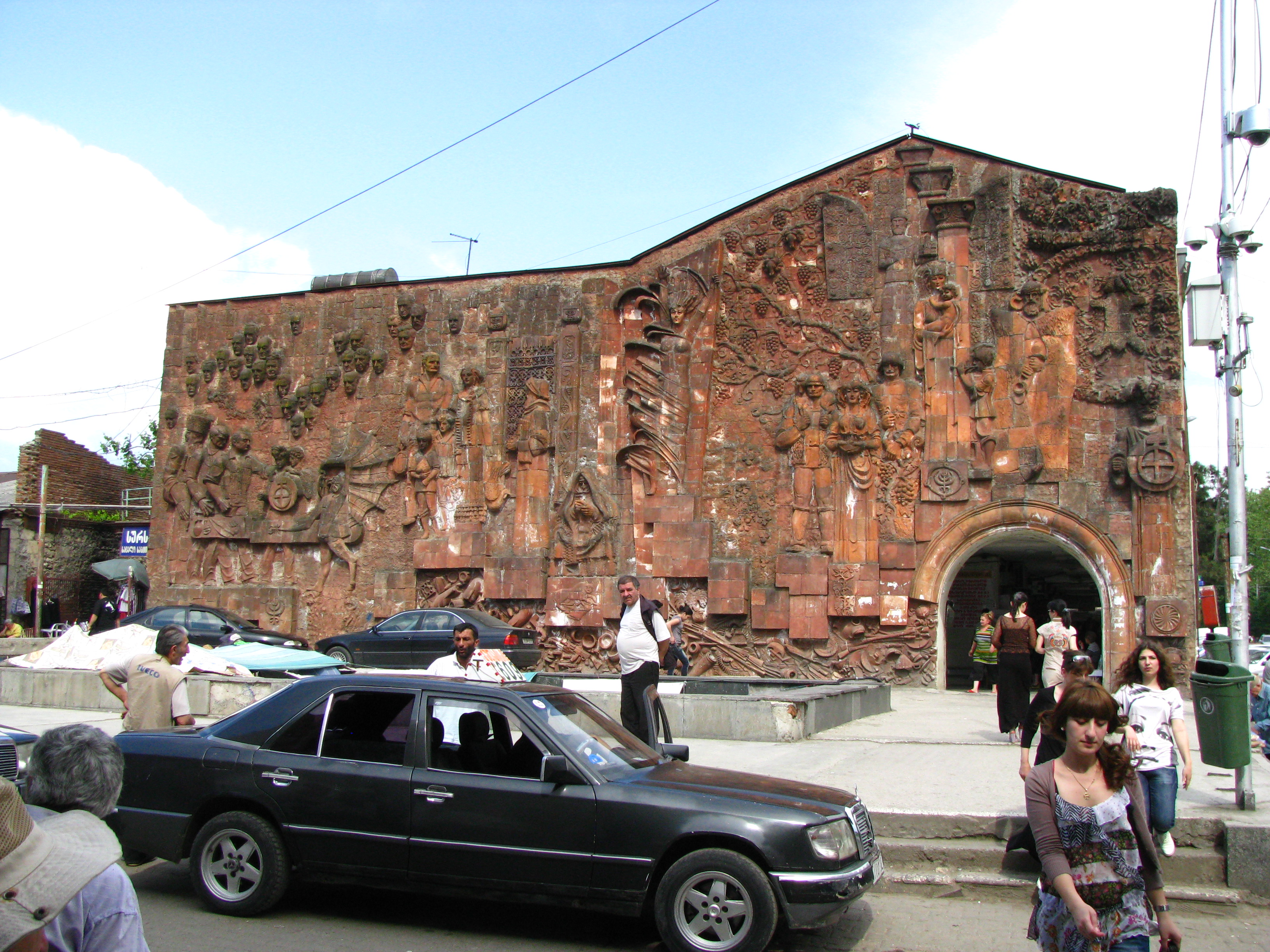
I have no idea what’s all on this frieze, but it looks pretty cool.  Also, bangs are very much in fashion.
This is actually a pretty good place to buy a belt.

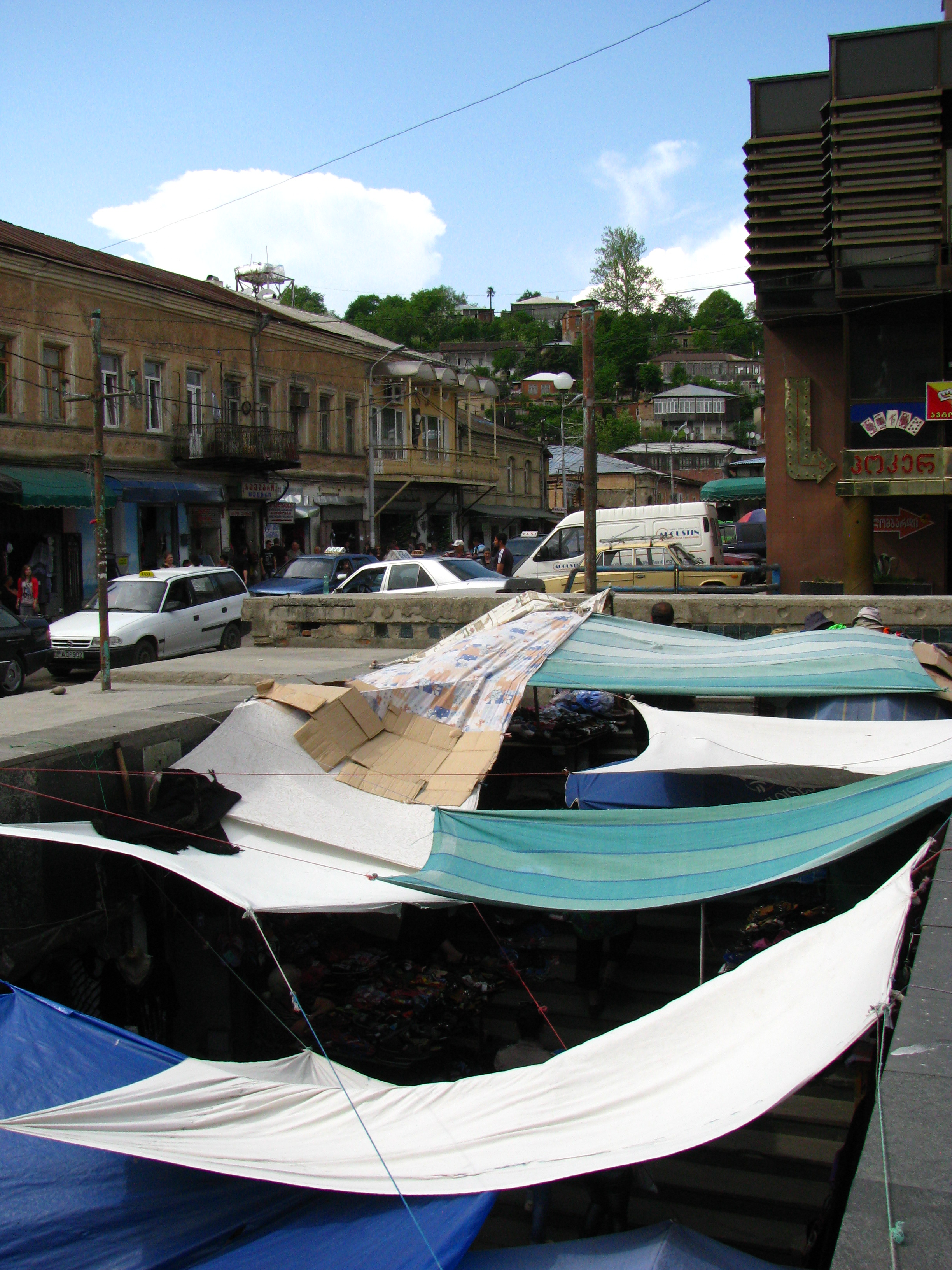
The corridor opens up at the end of the block, to a tunnel which leads underneath the main road (Rustaveli, named after the great medieval Georgian writer) to Mirzani restaurant on the far side.  At the mouth of the tunnel, tarps and blankets stretch haphazardly over vendors selling clothes, cheap shoes and cigarettes.  Further down the tunnel, you can find more clothes, belts, brassieres, more shoes, and all sorts of fabrics.

We continue past an old building with a giant frieze, presumably depicting scenes from the history of the city.  There’s a lot of history to choose from–Kutaisi was the capital of ancient Colchis, and a major regional center throughout the Middle Ages, when locally-born King David the Builder united all of Georgia, turning it into a “land between two seas.”
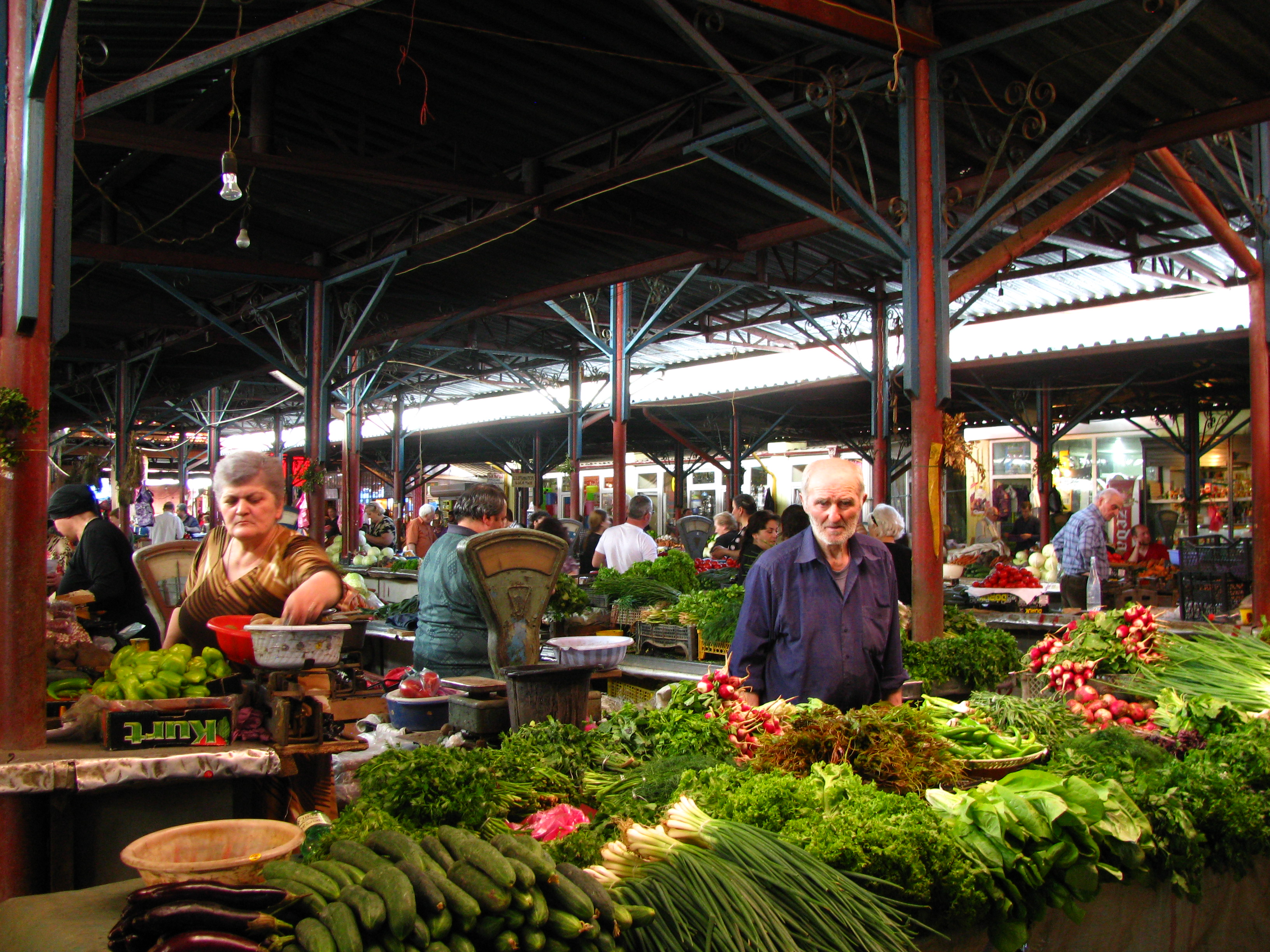
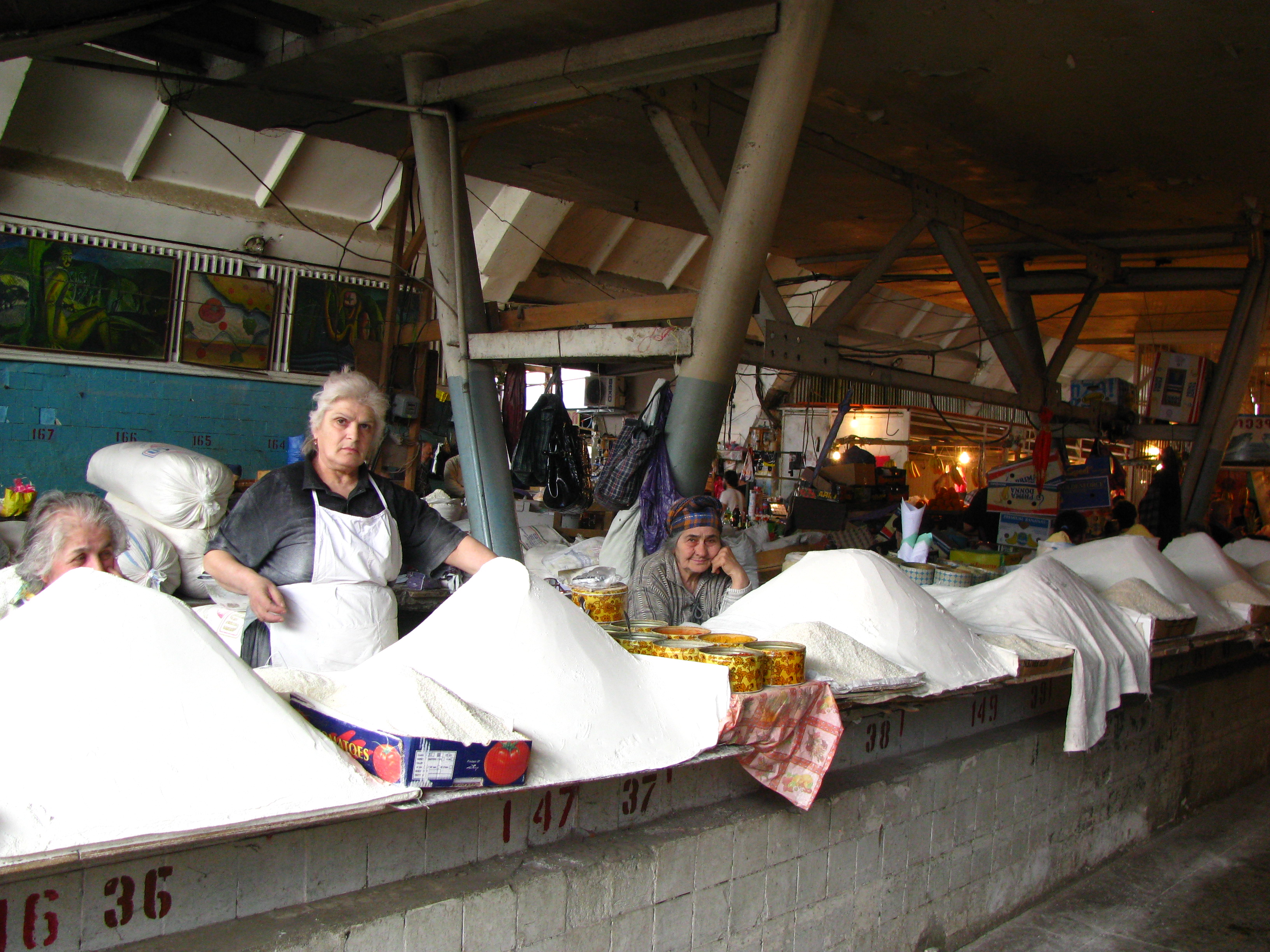
Alas, no hot peppers.
This is where you come to buy flour.
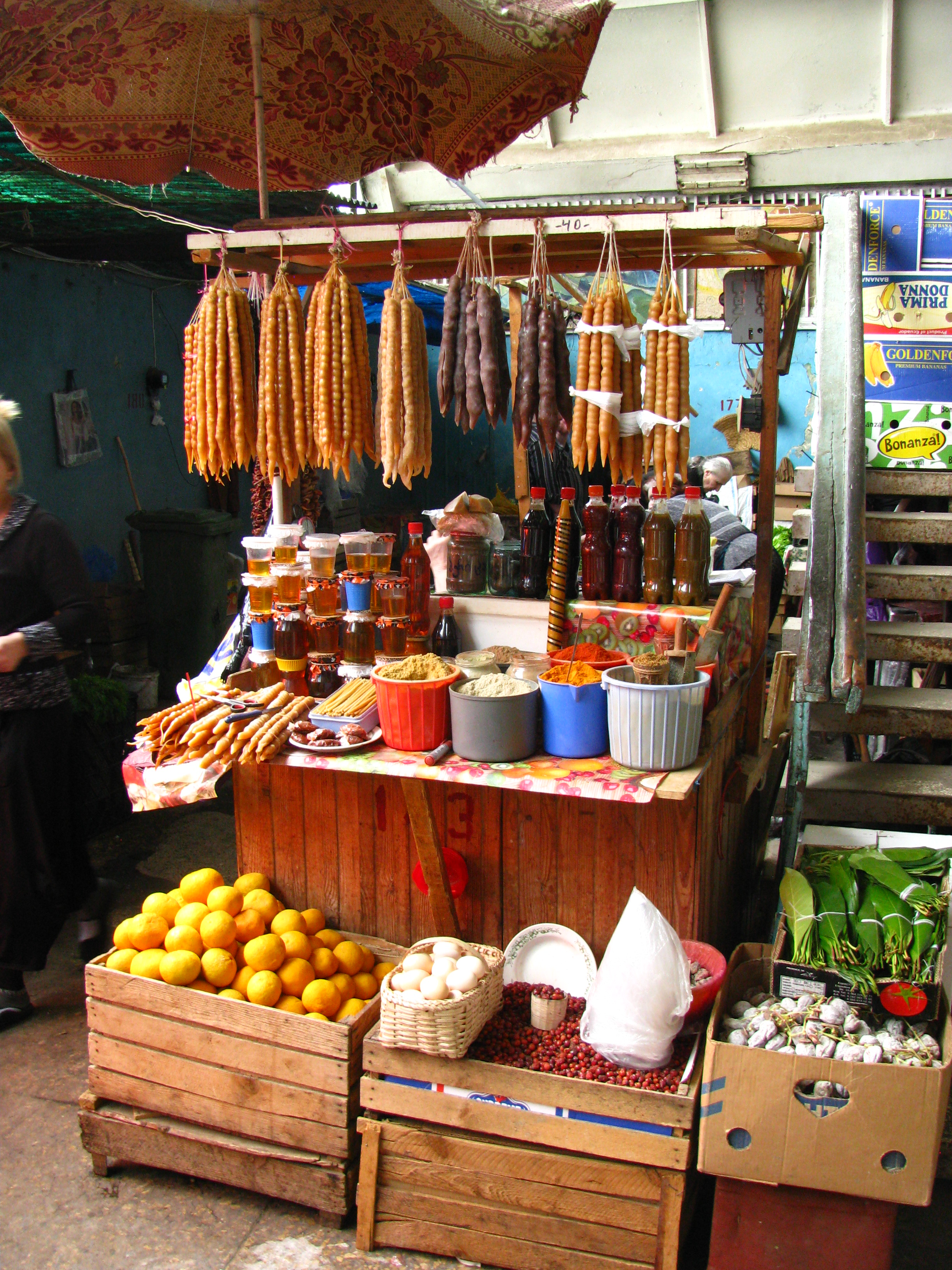
The candle-like stuff hanging from the top is churchkhela, strings of hazelnuts dipped in congealed grape extract. I assume the jars immediately beneath them contain wine.

Next, we take a left and promptly get lost in a giant bazaar.  Here, you can find all sorts of fruits and vegetables, beef and chicken, bread and cheese, wine and beer–basically, anything that you would usually get from a grocery store in the US.  Georgians have grocery stores too, but the bazaars are usually cheaper and fresher.  Plus, they’re a whole lot more fun.  I’ve heard that you can haggle with the vendors, though the prices are so low (1.5 GEL for a kilo of apples) that I’ve never felt a need.
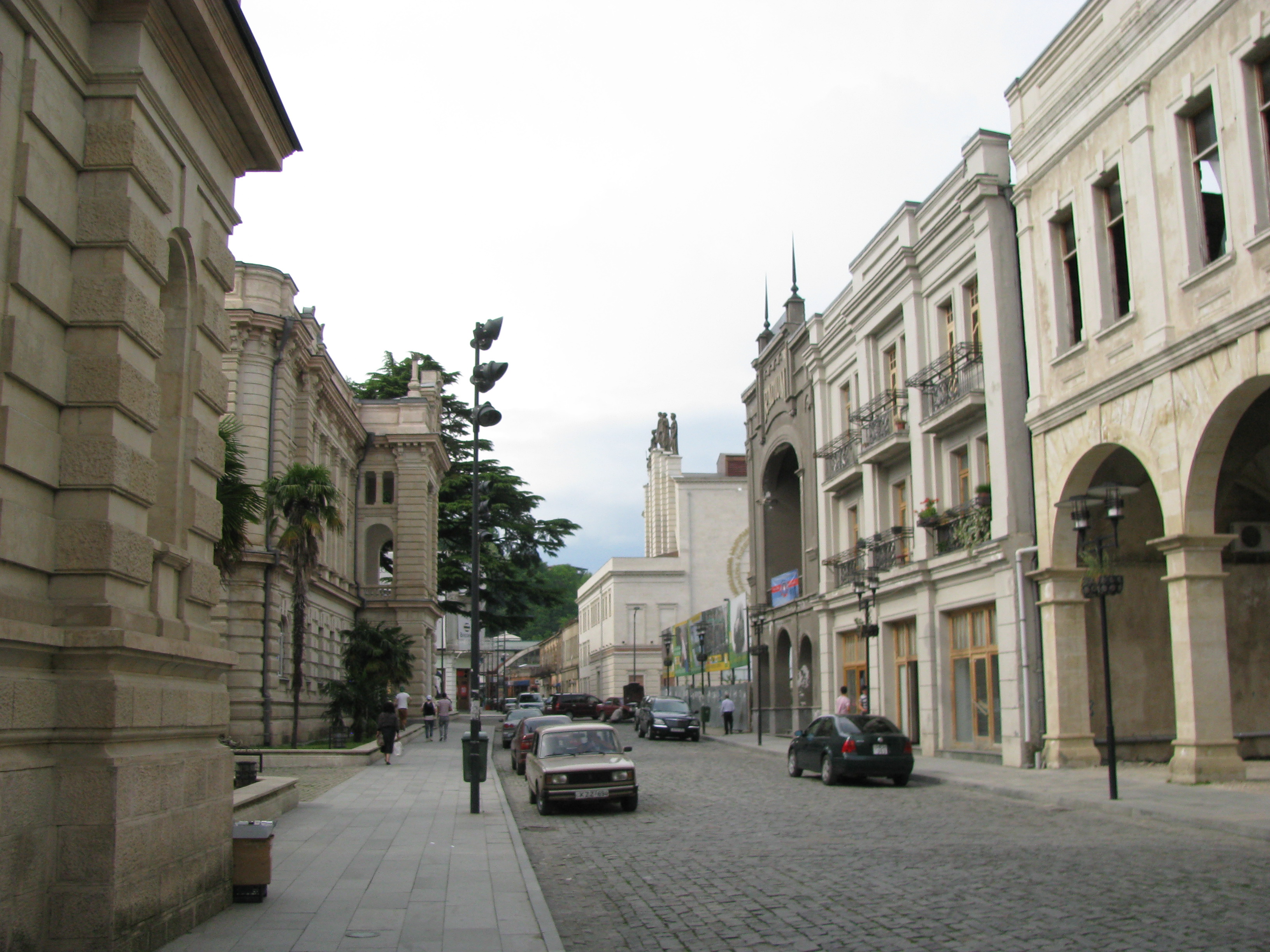
Rustaveli Avenue.
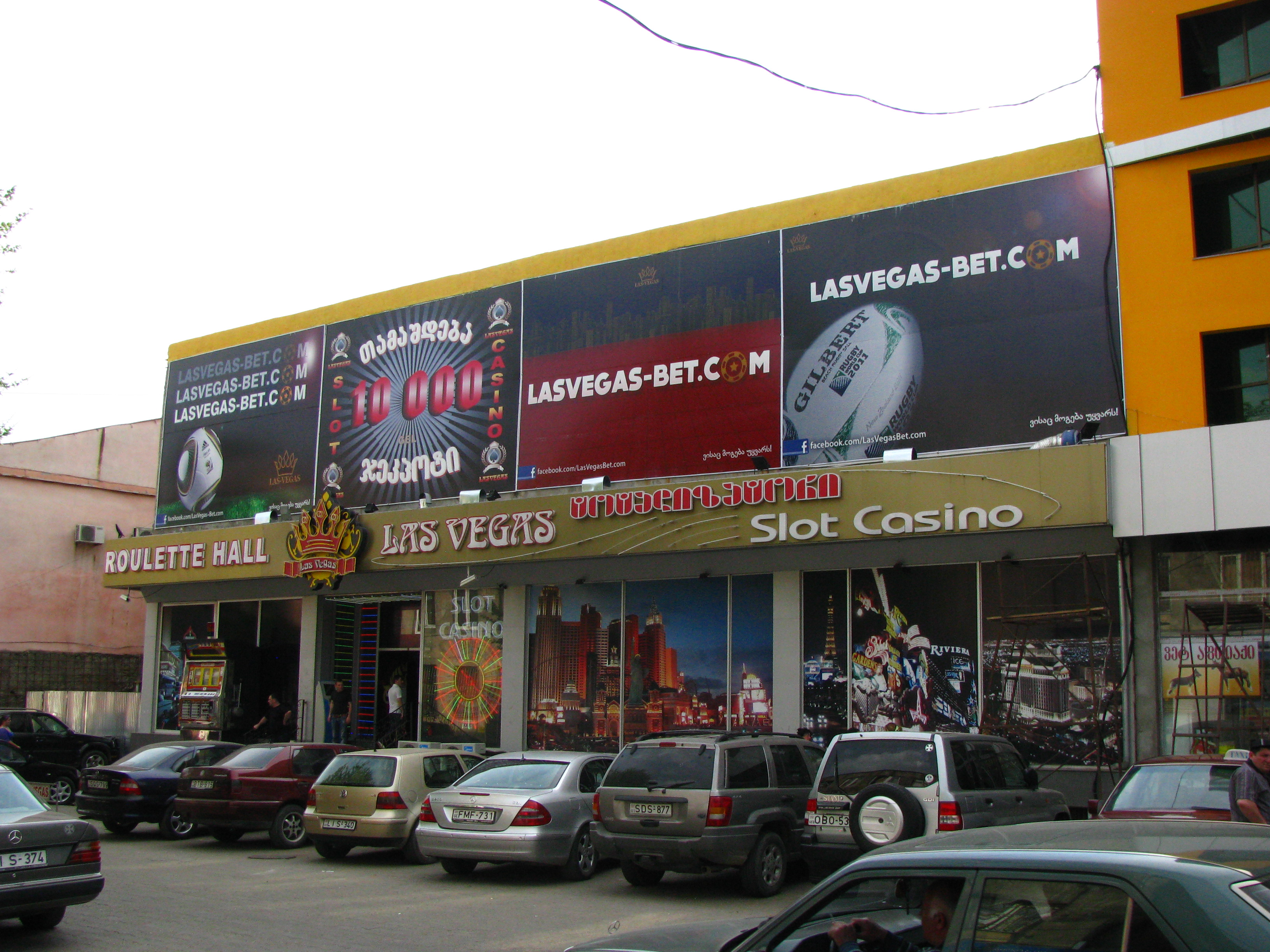
Las Vegas casino. Gambling is big in Georgia.
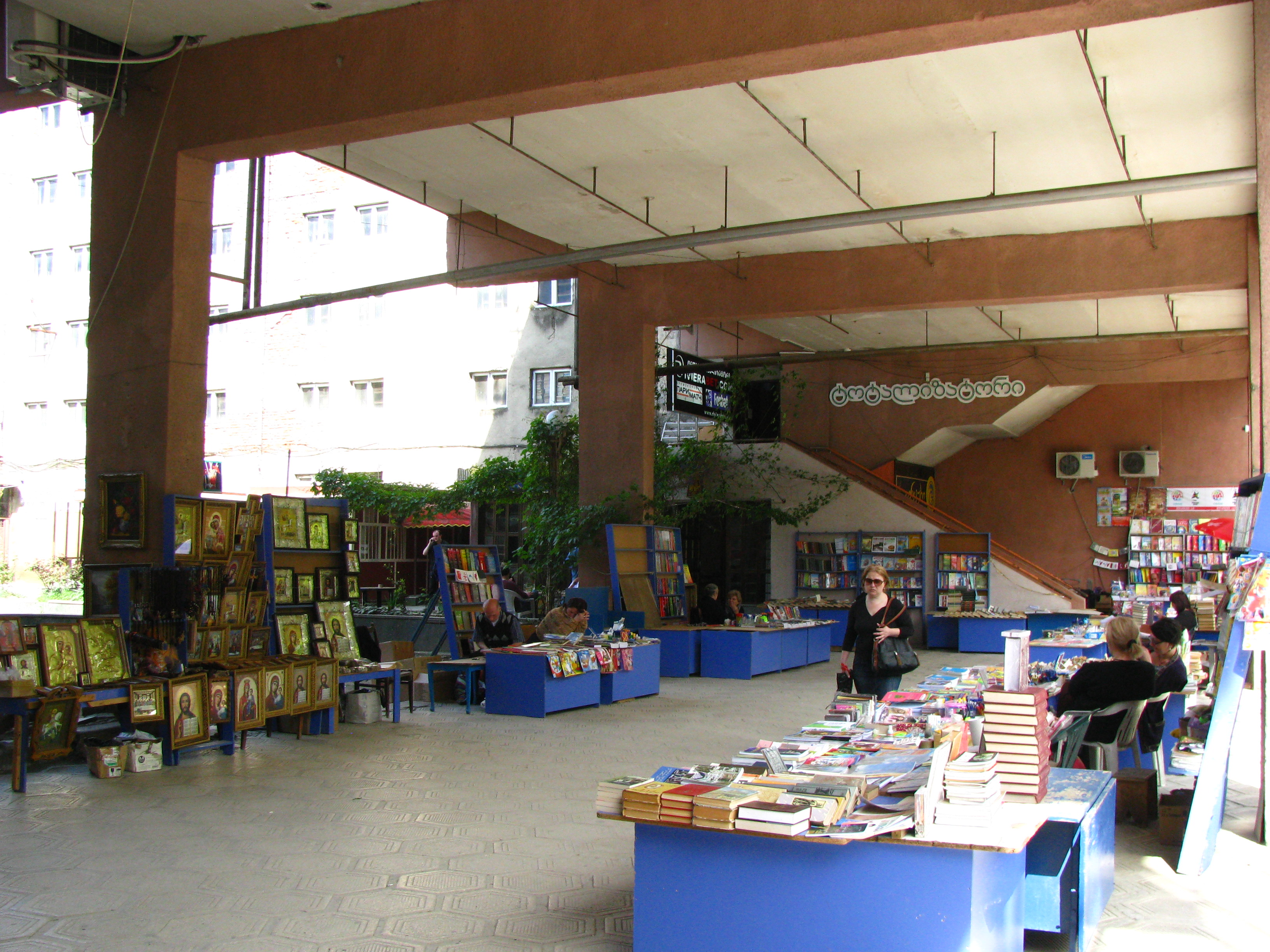
The book market. If I could read Georgian, this is where I would spend most of my time.

We spend a little bit of time wandering around before going to the main city park.  Heading up towards Jatchviskhidi, you can find all sorts of pawn shops, casinos, and money exchanging places, while near the library (at least, that’s what I think it is) there’s a mini-bazaar with all sorts of books.  Of course, that’s one of my favorite places to check out!

Along Rustaveli Avenue, however, the city takes on a pleasant European feel, with attractive cobblestone streets, wide boulevards, and Napoleonic architecture.  Here, you’ll find the opera house, the mayor’s mansion, and the central school (of 44 public schools citywide).
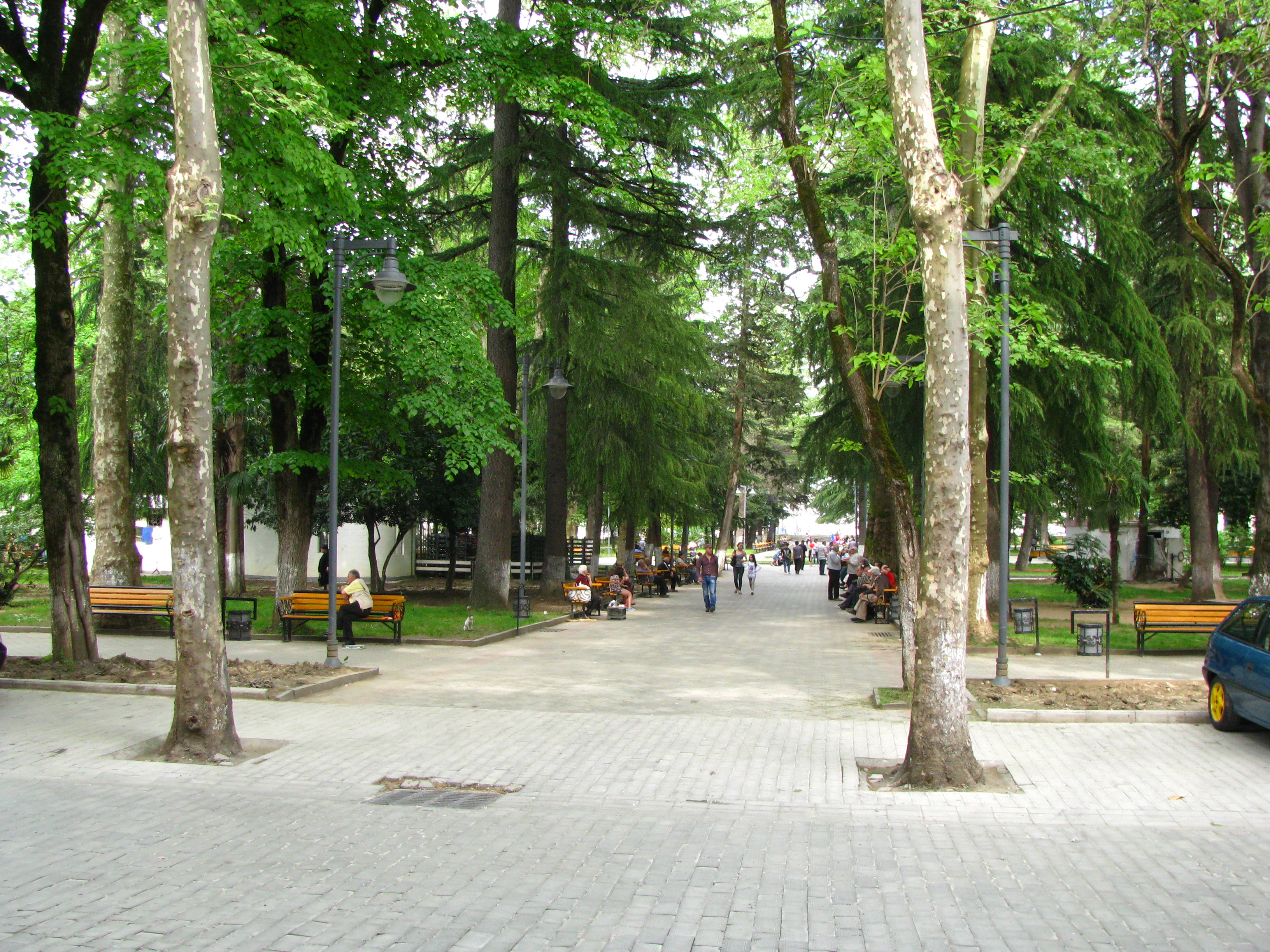
The view from just outside Medea Cafe.
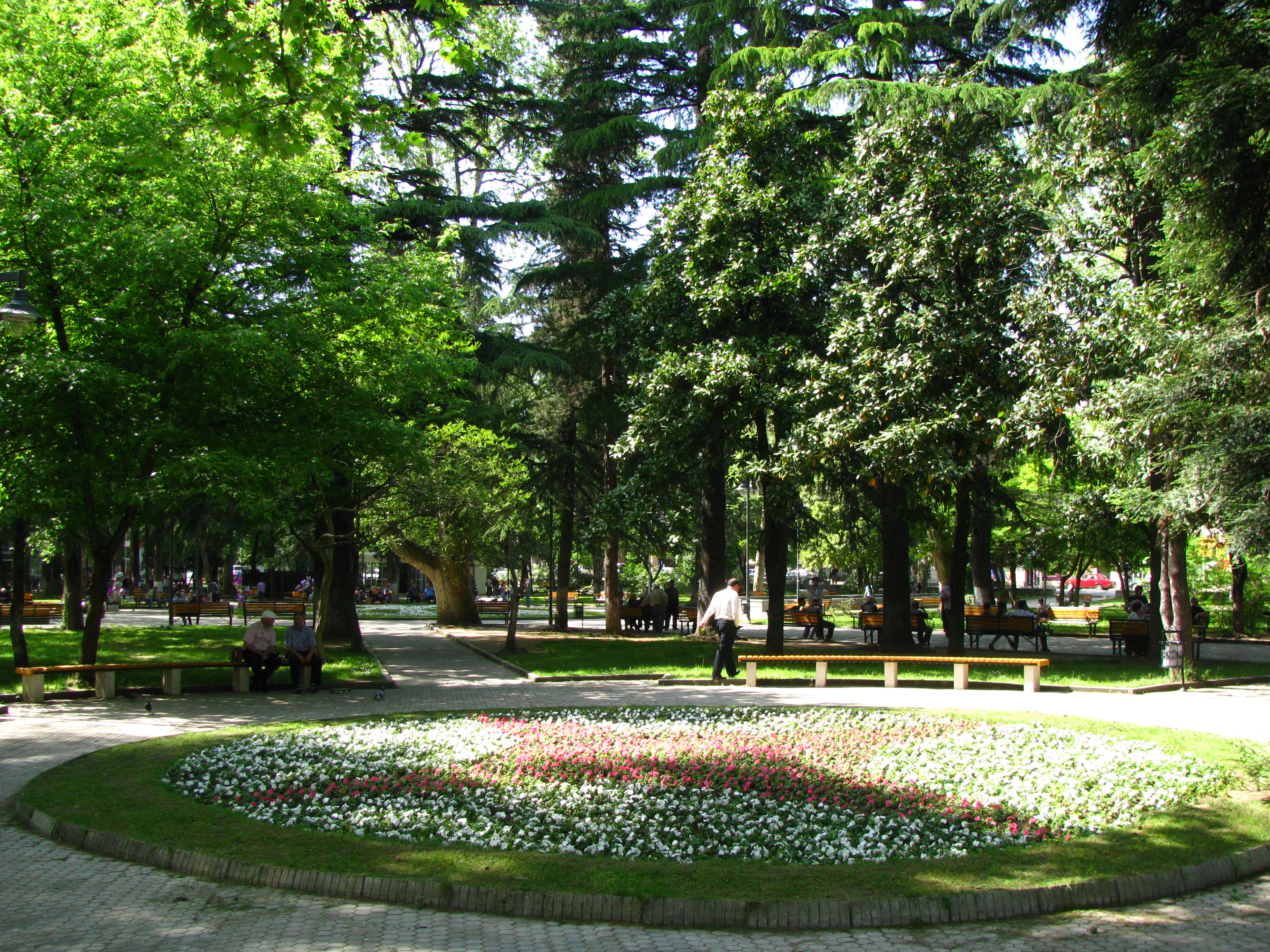
One of the many flower gardens in central park.
One thing Georgians (or at least, Kutaisians) know how to do right is their public parks.

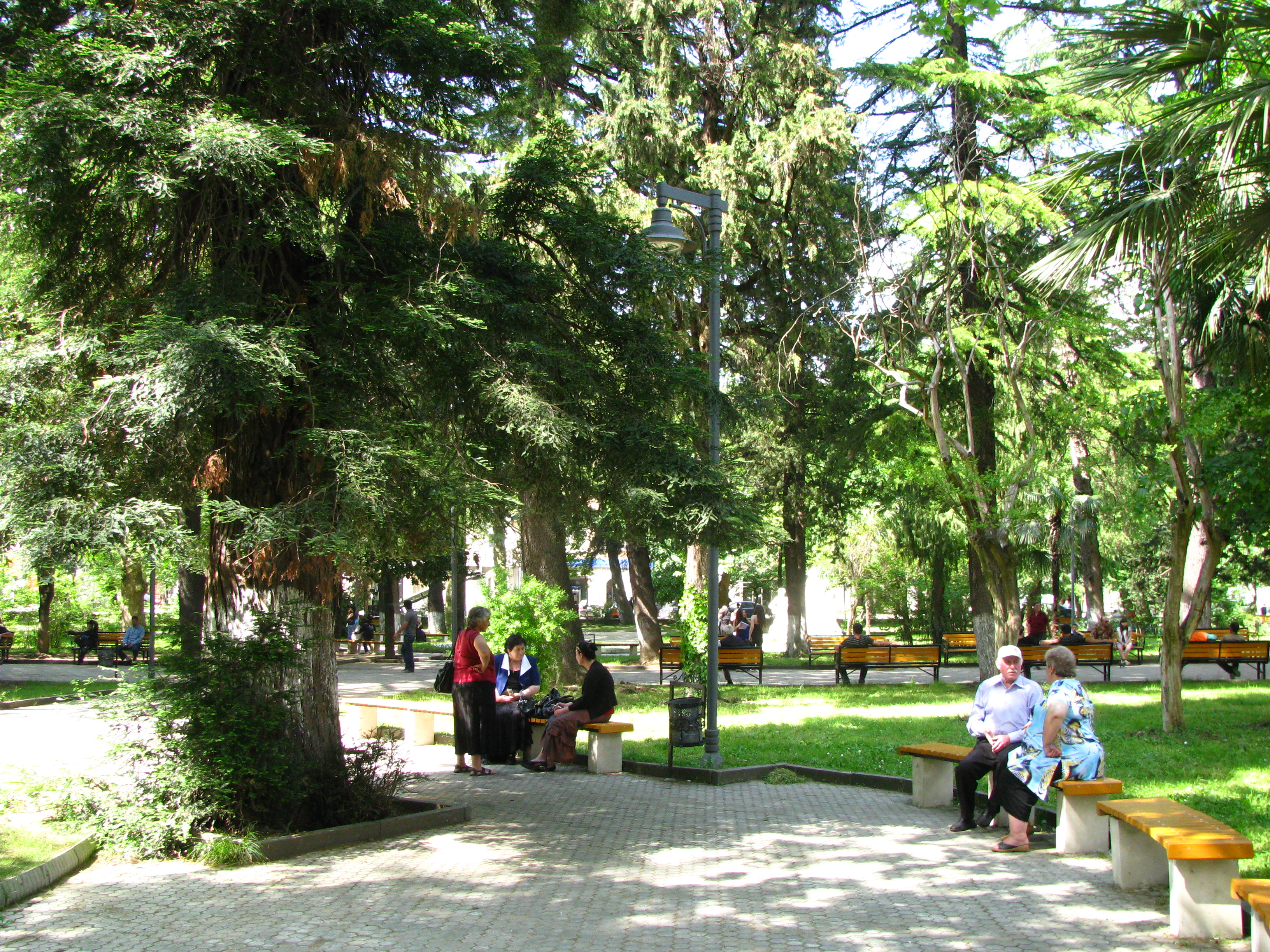
Next we come to Bulvari, the main central park of Kutaisi.  On a hot, muggy day, this is the perfect place to relax, with shady palm and pine trees, attractive public fountains, and plenty of benches to go around.  Vendors sell balloons, candy, and ice cream, while at the center, old men with cheap plastic cars take children for a ride around the main circle.
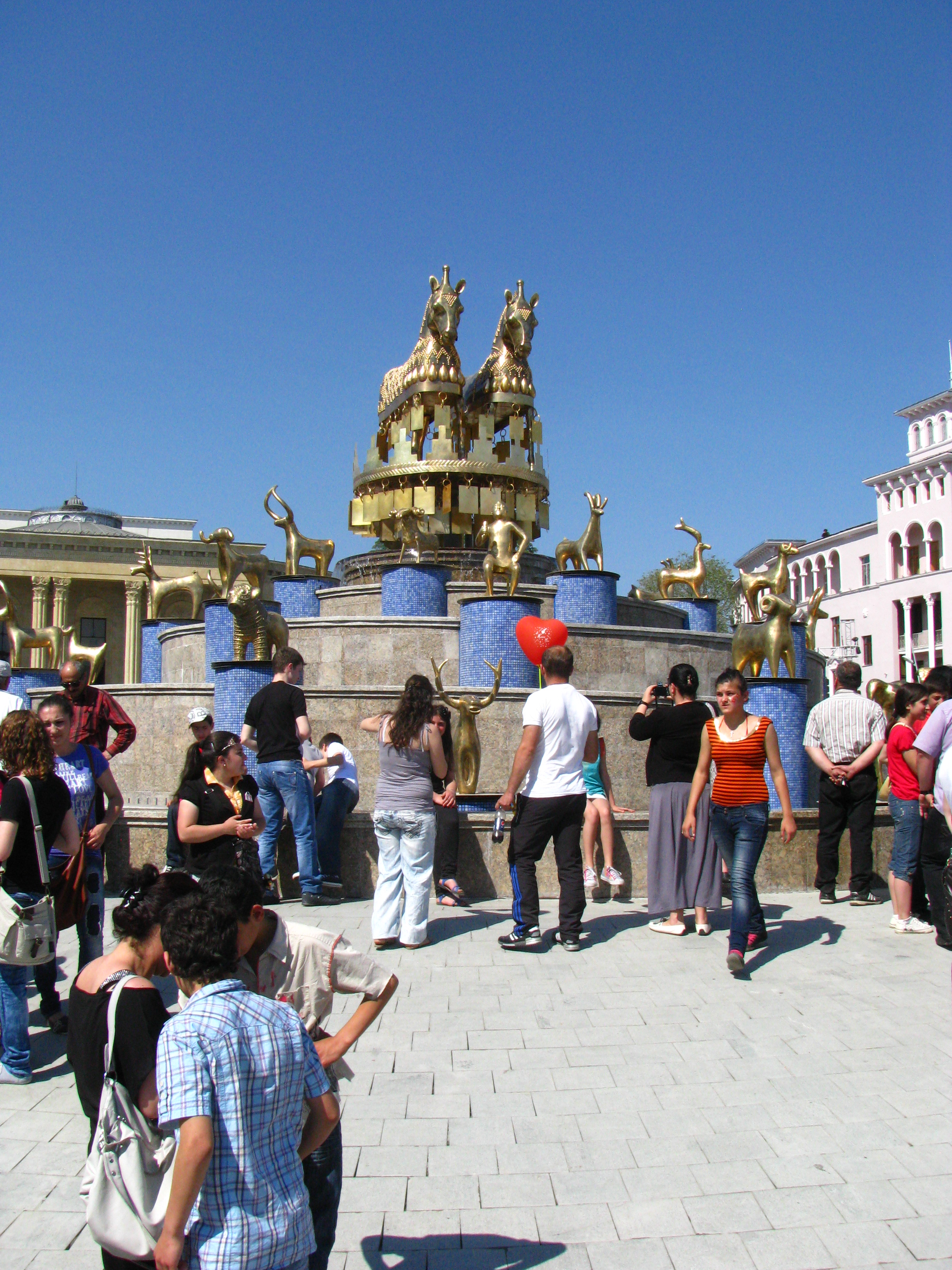
The new fountain at the main square. Some TLGers think it looks kind of tacky, but I think it’s a pretty good attempt to capture some of Kutaisi’s ancient heritage. There’s certainly plenty to choose from.

The main city square is on the other side of the park, with the theater on the left, the banking district on the right, and a giant fountain in the center depicting replicas of ancient Colchian artifacts found in Imereti province.  It’s one of the many interesting ways the city has been trying to reinvent itself since the end of the Soviet Union.  The statue of David the Builder that once graced this square now stands in front of the train station, at the end of the boulevard that bears the same king’s name.
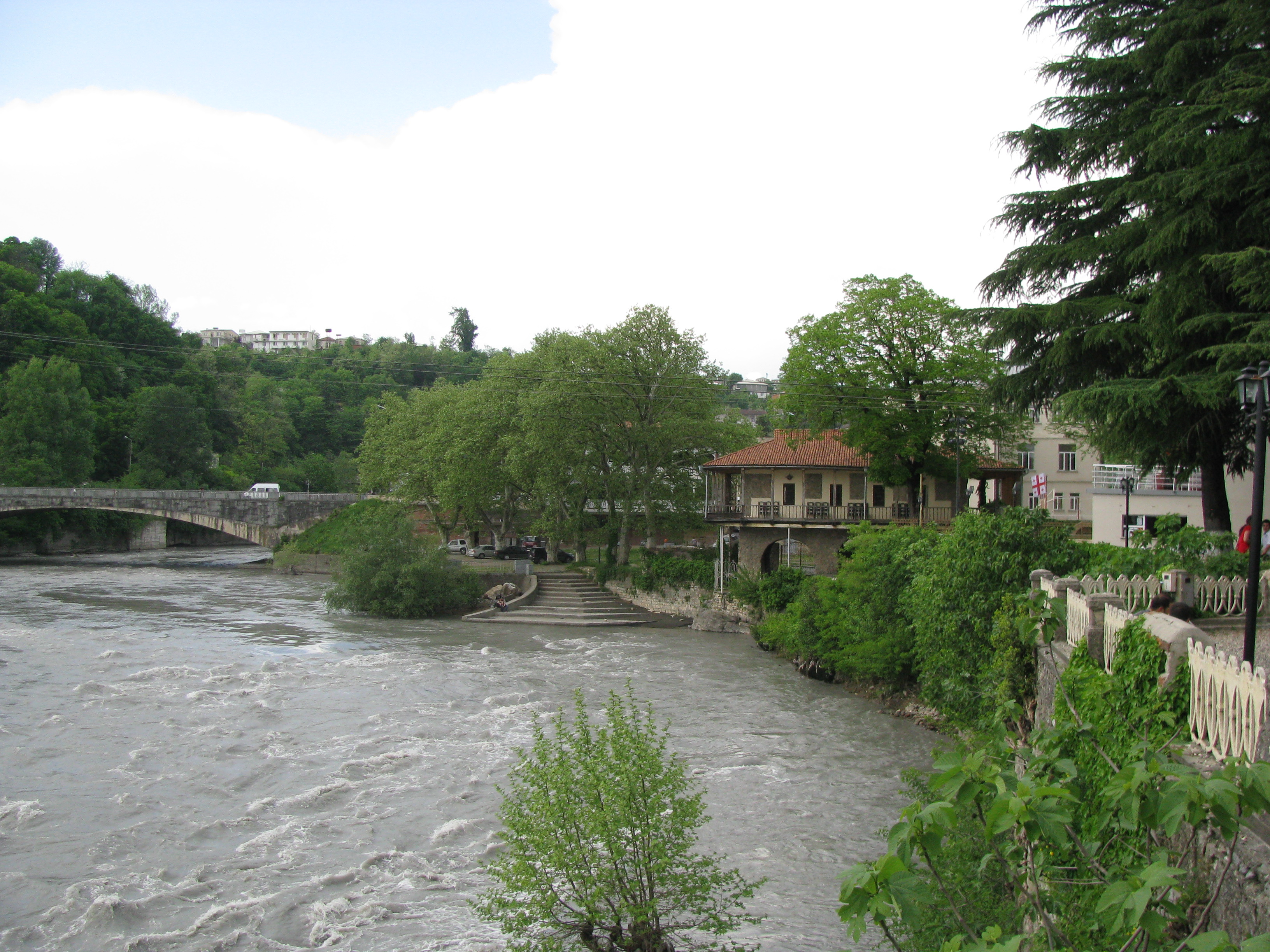
You can see the back of Mirzani’s across the river. It’s probably the best restaurant in town.
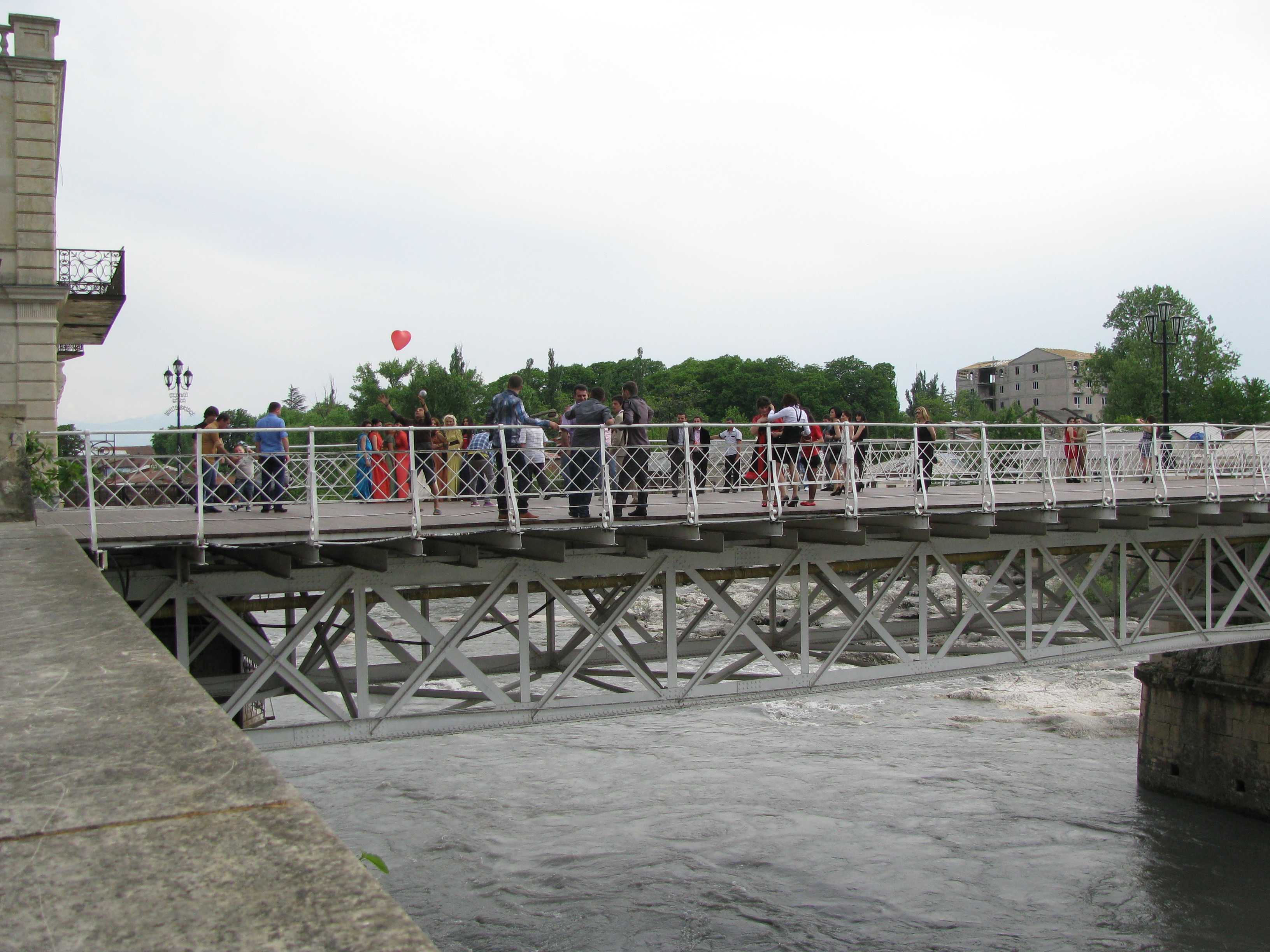
Tetrikhidi (White Bridge), with a wedding party posing for photos.
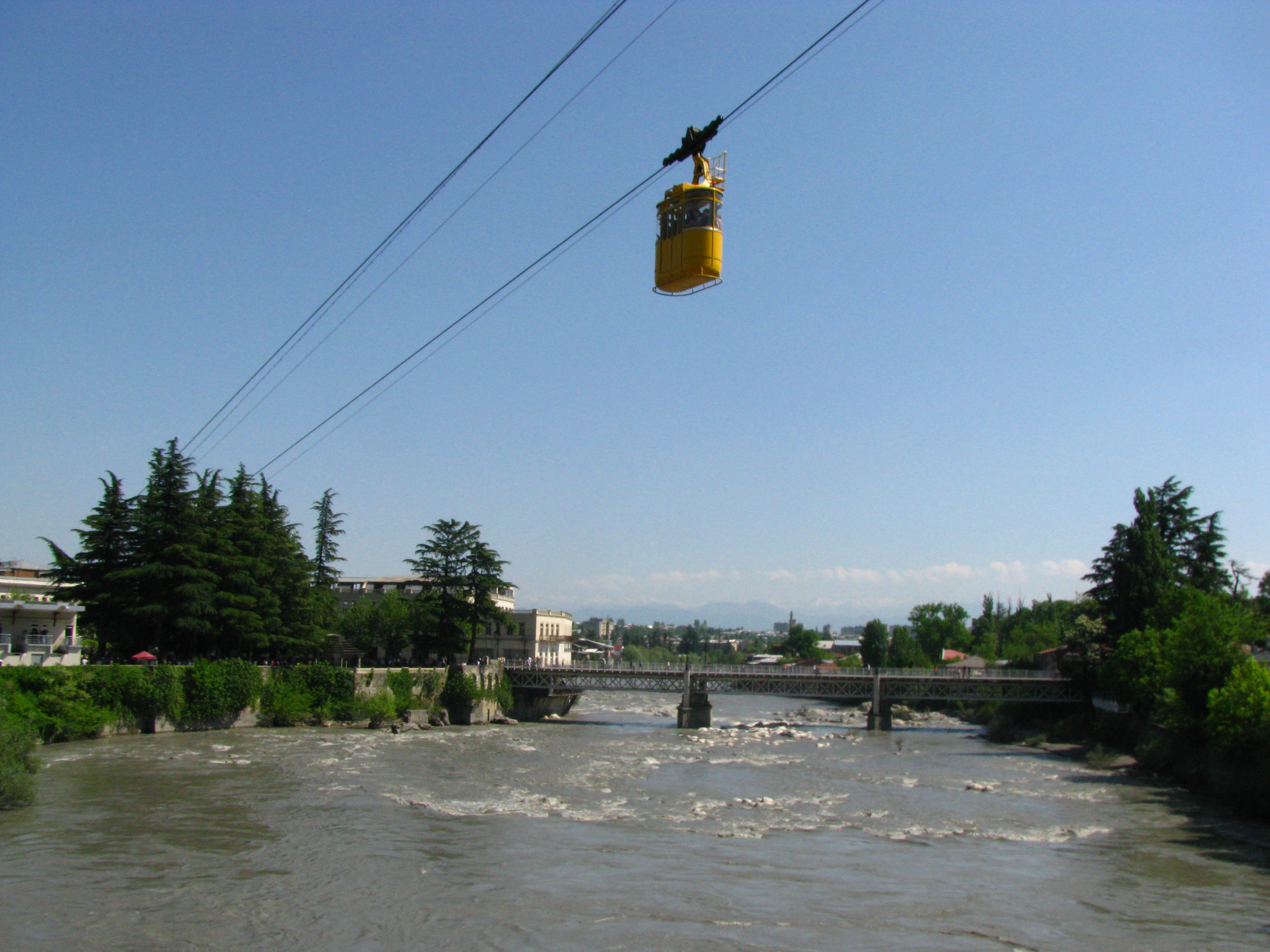
The Kutaisi gondola. I don’t know why, but Georgians seem to have a thing for gondolas.

Looping back around, we return to the Rioni river and the neighborhood immediately surrounding Tsitelikhidi.  There are actually three bridges here: Tsitelikhidi (Red Bridge), Rustaveliskhidi (Rustaveli Bridge), and Tetrikhidi (White Bridge), a pedestrian bridge next to another attractive garden.  From here, a gondola takes visitors over the river to an amusement park at the top of a hill.  On the weekends, wedding parties often stop here to take pictures, then speed around the city honking their horns and making noise.
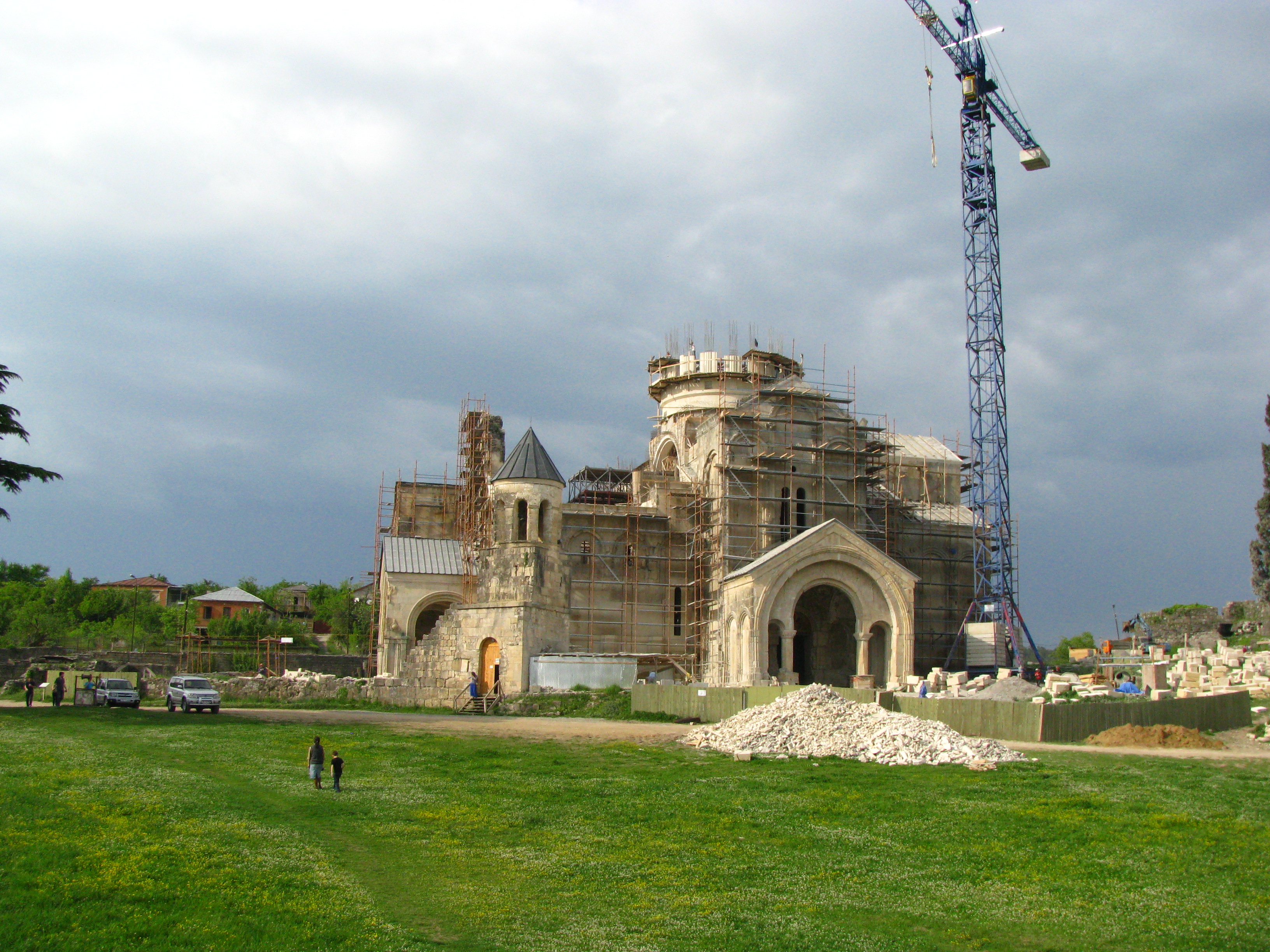
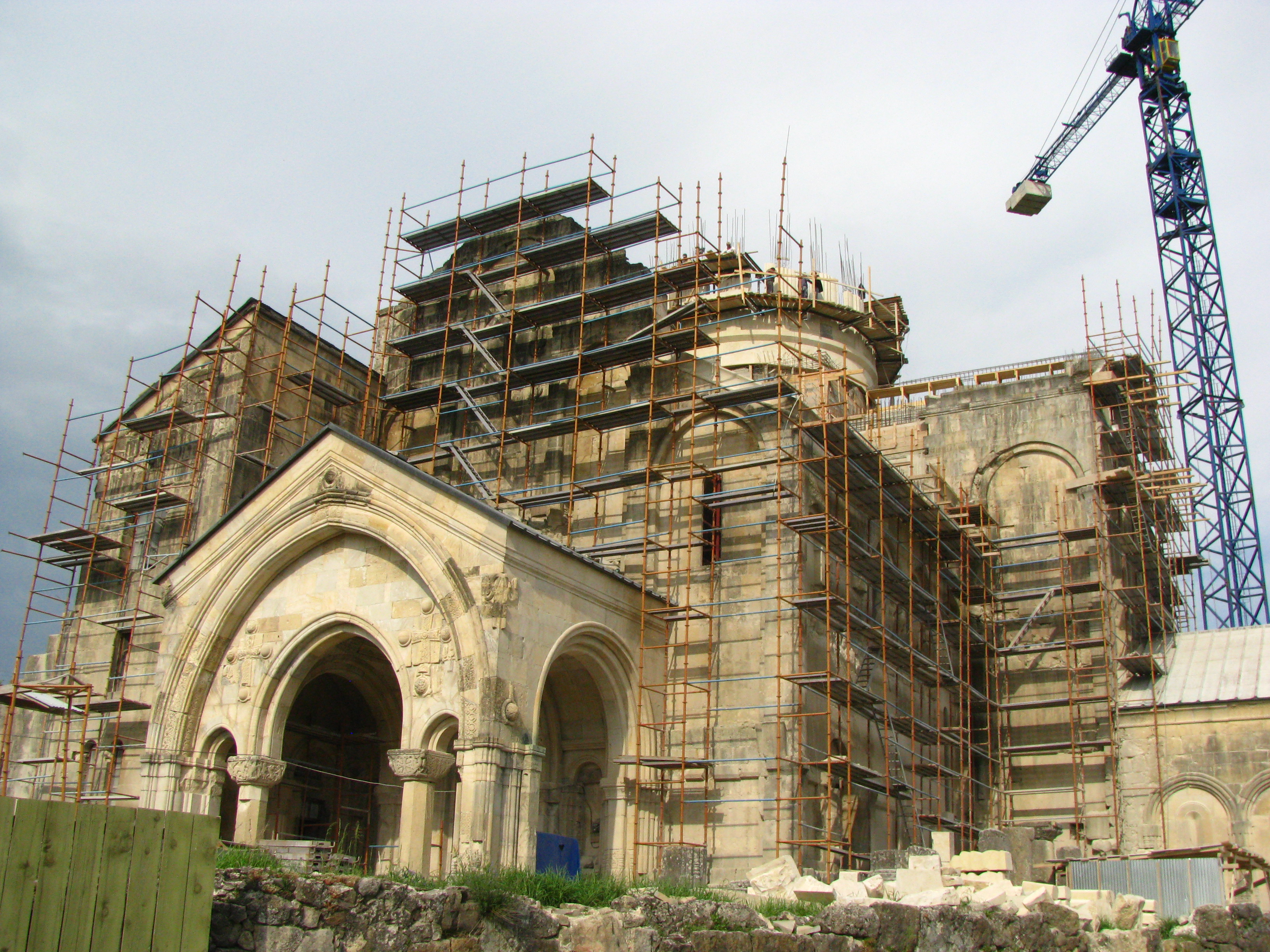
Bagrati Cathedral in the spring.
Close up of Bagrati. The reconstruction is actually progressing fairly rapidly.

Heading north, we pass through the markets again and cross over Jatchviskhidi (Chain Bridge) to the right bank of the Rioni.  After passing another curbside station–this one for marshrutkas heading to the northern villages–we climb a 200 step staircase and find ourselves at the foot of Bagrati Cathedral.

Bagrati is a thousand year-old Georgian Orthodox church, the largest and most important in the city.  After the Turks razed it in the 18th century, it lay in ruins for hundreds of years.  But now, with Georgia’s newly-won independence and the economic boom fueled by the IMF and other foreign investors, the historic cathedral is under reconstruction.  I probably won’t be here when it’s finished, but I definitely want to come back and see it when it is.
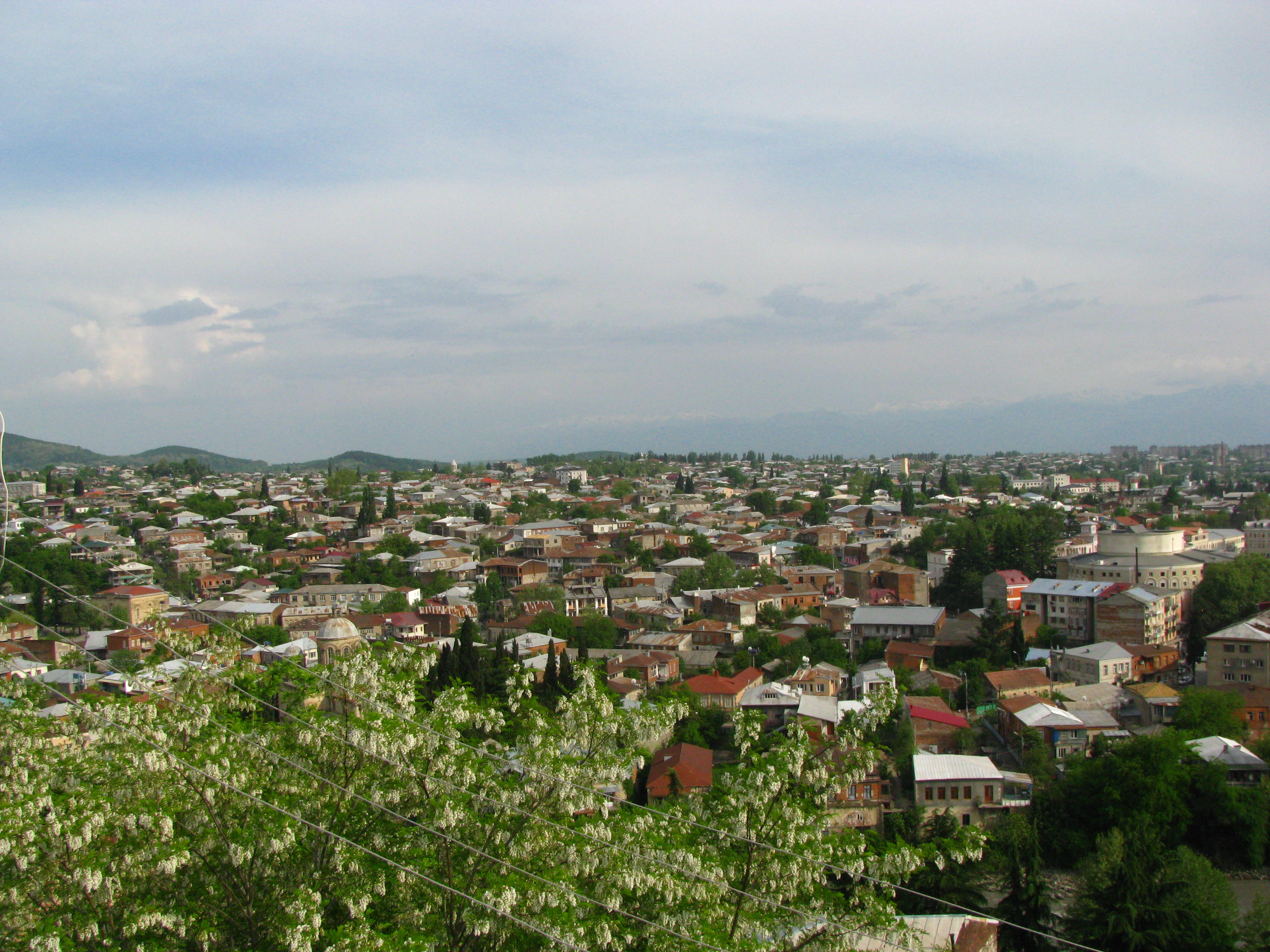
The view looking southeast.
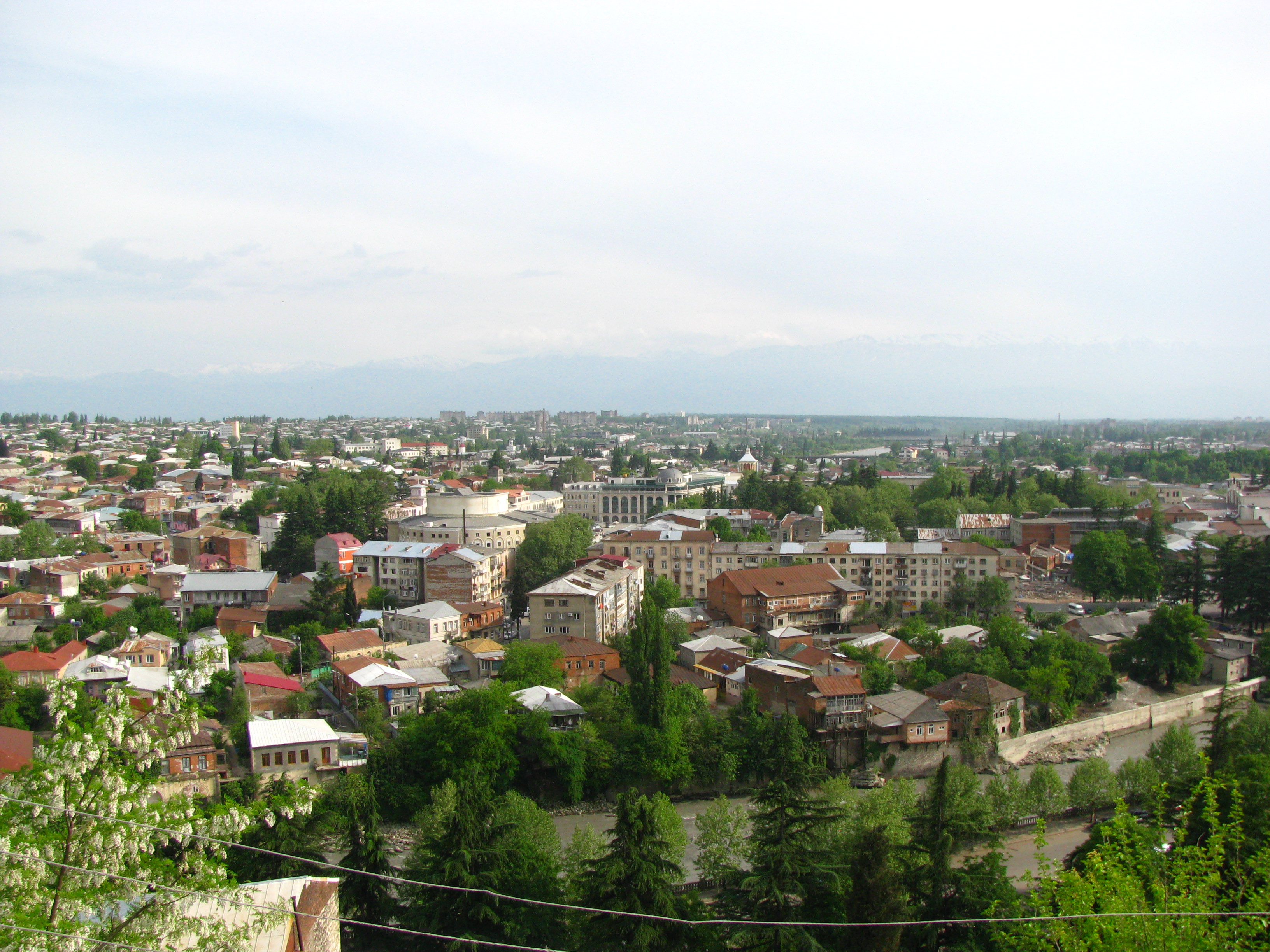
The view looking southwest. The mountains in the distance are the Lesser Caucasus, about 4000 meters above the elevation of the city.
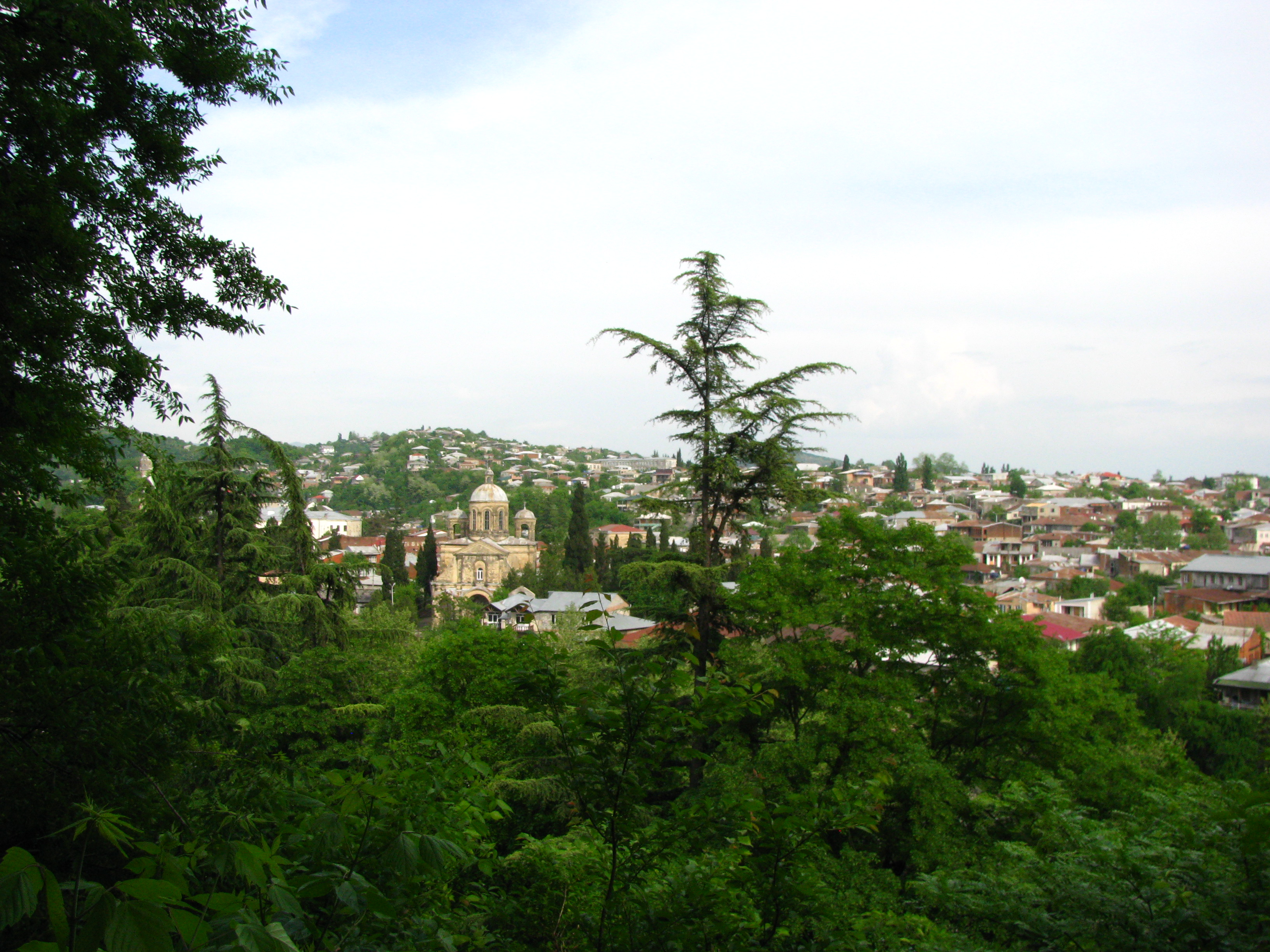
View from the steps leading up to Bagrati. Kutaisi has a lot of churches.

Bagrati Cathedral sits on an imposing hill with a magnificent view of the whole city.  Here, you get a sense of just how big Kutaisi really is.  It’s not a tall city, or a particularly busy city, but compared to the rest of Georgia outside of Tbilisi, it’s pretty huge.

Unlike Tbilisi, however, the city has had very little exposure to the West.  People still stop to stare curiously at foreigners, and hardly anyone speaks English.  It’s much quieter than Tbilisi, too, with fewer cars, more parks, and lots of gardens and orchards, even in the more crowded districts.  People live closer to the land, and travel often to the outlying villages where they still have friends and family.

Perhaps the best way to put it is that Kutaisi still possesses that sense of rustic Caucasian innocence that Tbilisi has since lost.  You can hear it in the way people laugh and see it in the way they kiss and are kissed by their children.  For a city that was legendary long before the maps showed America as a separate continent, that’s no small thing.
მე ♥ ქუთაისი


Up to my elbows in book surgery

That’s probably the best term for what I’m doing with Heart of the Nebula right now.  Basically, I let some of my darlings live, and they grew some extra limbs and started drooling acid without my realizing it.  But now, I’ve put enough distance between myself and the first draft that I have no qualms about grabbing the axe and chopping off heads.

Don’t worry; this is all a normal part of my creative process.  Maybe someday, stories will burst fully formed from my head like Athena from the brow of Zeus, but for now, my ideas are a lot more like baby turtles–if I’m lucky, one or two out of a dozen will actually reach the water and survive.  Protip: don’t follow the lights.

Speaking of ancient mythology, I’m reading the Argonautica right now, and I can’t help but notice that it would make a really, really, REALLY awesome science fiction story.  No, seriously–think about it.  A group of legendary heroes sets out on an epic voyage in search of some applied phlebotinum macguffin, have all sorts of adventures on strange and distant planets, get the girl to fall in love with the captain, and bring her back with them to their homeworld.  It would also work well as a heroic fantasy, but space is so much more awesome.

Incidently, Kutaisi was the capital of ancient Colchis, where Jason and the Argonauts came seeking the golden fleece.  People still speak of Medea as if she were a real person–generally, they think she was a dirty traitor who sold out her own people.  But people still enjoy the love story, and if you keep your eyes open you can see restaurants and hotels named after her.

So yeah.  Ancient Greek mythology + science fiction = win.  You can definitely expect to see some more of that in my own writing in the future.

In other news, I recently did an interview on fellow indie author Ty Johnston’s blog.  In it, I talk a little about my travel writing, what draws me to speculative fiction, my favorite number (hint: it’s 12), and my insights into the ancient Mayan calendar and the 2012 apocalypse.  It was a lot of fun–you should definitely check it out.

If you would like to host me for an interview on your blog, shoot me an email!  I’m always up for stuff like that.  Otherwise, I’d better roll up my sleeves and get back to hacking up operating on my book.

Getting settled in the land of the Kartulis

About three weeks have passed since I came to Georgia, and I’m starting to feel comfortably settled in this new place.  I like it a lot out here: my host family is great, I get along really well with everyone at the school where I work, the kids are so crazy eager to learn it’s awesome…really, I couldn’t ask for more.

Of all the places in Georgia where TLG volunteers are placed, Kutaisi seems like one of the best.  It’s the second largest city in the country, so it has access to several amenities such as markets, hospitals, restaurants, parks, and basically anything else you’d  expect in an urban center.  However, it’s about 200 km from Tbilisi and has very little exposure to the West, so culturally it’s very authentically Georgian.  It’s also much less crowded, and (in my opinion) much more beautiful.

My host family is great; I get along with them real well and already feel like a member of the family.   My youngest host brother, Kako, is 9 years old; I showed him Star Control II over the weekend, and he’s been addicted to it ever since.  We also play chess, and I’ve kind of taken him under my wing to teach him the basics of good strategy.  He’s getting steadily better!

Gura and Kati are the two teenage kids; they also speak English, so we’ve had some fun discussions.  Besides Facebook and her cell phone, Kati is really into books; I showed her my Kindle, and she wants me to help her persuade her father to get her one!  Gura is into Call of Duty and spends a lot of time hanging out with his friends; he lacks confidence when it comes to English, but he knows it better than he thinks he does.

The parents don’t speak much English, but they are really good people.  It’s a working class family; the dad works as a welder, and the mom is a nurse part-time and a home-maker full time.  They spend an amazing amount of time and energy on their kids, which is pretty typical for this part of the world.  They’re both non-smokers, and they’re very respectful of the fact that I don’t drink coffee, tea, or alcohol.  Some of the extended family keeps trying to push wine on me, but in the land known as the cradle of wine, that’s to be expected.

We basically spend all of our time in the family room when we aren’t sleeping; it’s where the heater is, so despite the relatively cramped space it’s the most comfortable room in the apartment.  Furniture consists of a couch, a computer desk and office chair, a bucket seat from an old van, a folding table, several small wooden chairs and a stool.  The TV isn’t quite a member of the family, but when the power isn’t out, it’s usually on.

The neighborhood is this bizarre mix of urban and rural elements.  The roads are super muddy and free-range chickens wander everywhere at will, but everyone lives in 9-story apartments that were built back in the Soviet days, when Kutaisi was a major center for the auto industry.  The school was built 50 years ago this year and has barely been renovated since, but it’s just starting to get some much-needed attention, with a computer center and a resource room for special needs students.  When the weather clears up, I’ll bring my camera to school and take some pictures so you can see what the classes are like.

I’ll have to do a post later on Georgian culture; there are some really bizarre and paradoxical juxtapositions, such as the way they mix religion and alcohol, or their strong belief in the nuclear family with their easy-going acceptance of bride-napping as a “Georgian tradition.” I have yet to really get a handle on all this stuff.  However, as a culture, they have a great respect for literature; when people ask my profession and I tell them I’m a writer, their eyes light up, and they show me a degree of deference that I never would have gotten back in the States.

Partly to have something to talk with them about, I’m reading War and Peace by Leo Tolstoy right now.  I just finished Book III, where Napoleon smashes the Russians and Austrians in the Battle of Three Emperors.  Everyone says that it’s the best novel ever written, and now that I’m in the thick of it, I’m starting to agree with them.  There’s a lot of really good storytelling here, as well as passion and depth.  I have the feeling that I’m going to be on a Russian literature trip for a while, though I should probably pick up some Rustaveli and Kurban Said as well.

As far as writing goes, I’ve had some difficulty settling down into a solid routine, not because of lack of time so much as trouble with my current WIPs.  Star Wanderers has more or less stalled; I ran into another wall midway through part III, and I’m still not quite sure how to get past it.  I’ve decided to take a break for a while, but I think my experiences here with the Georgian language are going to give me what I need to really make this novel come together.

In the meantime, I’m working on the 2.0 draft of Stars of Blood and Glory.  I’ve decided to try something new: revising not by chapter, but by viewpoint character.  Isolating each of the five viewpoints is helping me to see which ones work, and which ones are missing something.  I’ve also been using Dan Well’s 7-point outlining method, which is helping out a ton.

It feels like I could be writing more, but I’m not pushing myself too hard at this point.  I’m still adjusting to life in this totally new culture, and I’m also spending a lot of energy getting my TEFL career off on the right foot.  It’s paying off; I’m having a great time teaching, more than I thought I would.  Pretty soon, though, I’m going to start putting more energy into my writing.  I just hope that I’ll have enough mental space left over to really immerse myself and make it work.