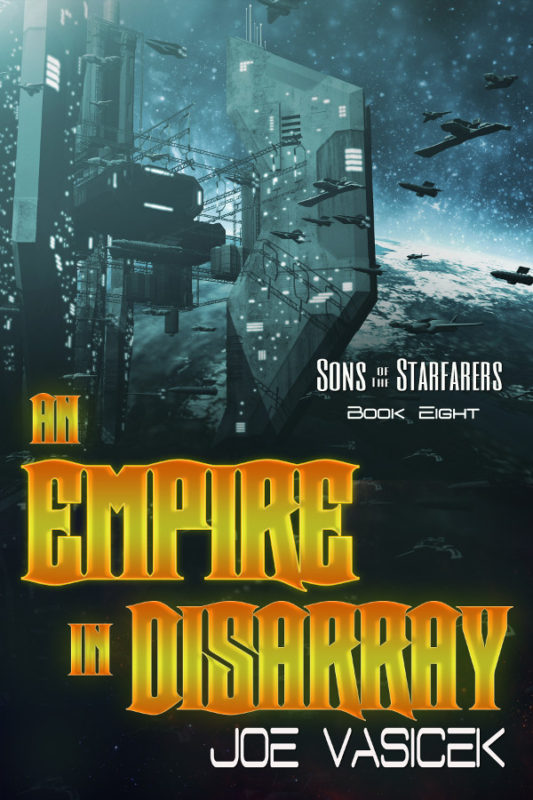
Is An Empire in Disarray for You?

An Empire in Disarray is late-series space opera at full intensity: shifting alliances, desperate diplomacy, covert raids, and the personal cost of holding a fragile coalition together when everything starts to crack. This is book eight in the nine-book Sons of the Starfarers series, which means the story is driving hard toward endgame—without losing sight of the characters who’ve carried you across the war.

If you want a sci-fi series where battles and politics matter because they press people to their moral limits, this is the kind of reading experience you’re in for.

What Kind of Reader Will Love An Empire in Disarray?

If you love …

  • character-driven military science fiction and space opera with long-running arcs and real consequences
  • rebellion-vs-empire stories that evolve into messy “what now?” politics after the turning point
  • tense alliances, betrayals, secret negotiations, and behind-enemy-lines missions
  • found family (and actual family) dynamics under extreme pressure—duty vs. loyalty vs. love
  • big stakes told through a close, emotional lens (you feel the cost, not just the spectacle)

…then An Empire in Disarray is probably your kind of story.

What You’ll Find Inside

An Empire in Disarray follows Mara Soladze and the people bound to her as the Outworld war effort enters its most unstable phase: victories don’t settle anything, power reshuffles, and old enemies become uneasy necessities. The book mixes fleet-and-station scale strategy with intimate, character-level tension, especially as trust becomes both the most valuable currency—and the easiest thing to weaponize. The result is a fast-moving, high-stakes installment that feels like the calm-before-the-storm is finally over.

What Makes An Empire in Disarray Different

Fans of authors like Lois McMaster Bujold (character-first military sci-fi), Elizabeth Moon (duty, leadership, and hard choices), or James S. A. Corey (factional politics in space) will recognize the blend of strategy, relationships, and shifting loyalties—but this series leans especially hard into consequences that accumulate across many books.

Where many space operas keep escalating external threats, Sons of the Starfarers also asks what happens when the “good side” starts fracturing under its own compromises. And in this installment, the story’s distinctive edge is how it forces characters to navigate collective survival while still fighting to remain fully themselves.

What You Won’t Find

You won’t find a cozy, standalone entry point here—this is the eighth book in a nine-book arc, and it’s written to pay off (and complicate) what came before. You also won’t find grimdark nihilism for its own sake: things get intense, but the series is ultimately driven by the question of whether people can become better under pressure, not merely harder.

Why I Think You Might Love An Empire in Disarray

In the author’s note, I half-joke that nobody should write a nine-book series—and then I admit why I did it anyway: because I’ve cared about these characters from the beginning, and I wanted to see where war would take them when it stopped being abstract and became personal. When I was drafting this book, I’d just moved back to Utah after a long stretch in Iowa, driving that lonely road through Wyoming and down past Evanston into the mountains—thinking about pioneers, endurance, and the strange mixture of hardship and beauty that comes with trying to build something that lasts.

That’s the heart of this installment, too. The ending I’d imagined for this series was never going to be neat or permanent—politics rarely is, especially after revolution—and my background in political science (and the places I’ve lived and traveled) shaped that. But the real reason I think you might love this book is simpler: An Empire in Disarray is where you get to see how far Mara has come, and what kind of person she chooses to become when all the easy choices are gone.

Where to Get the Book

Related Posts and Pages

Explore the series index for Sons of the Starfarers.

Return to the book page for An Empire in Disarray.
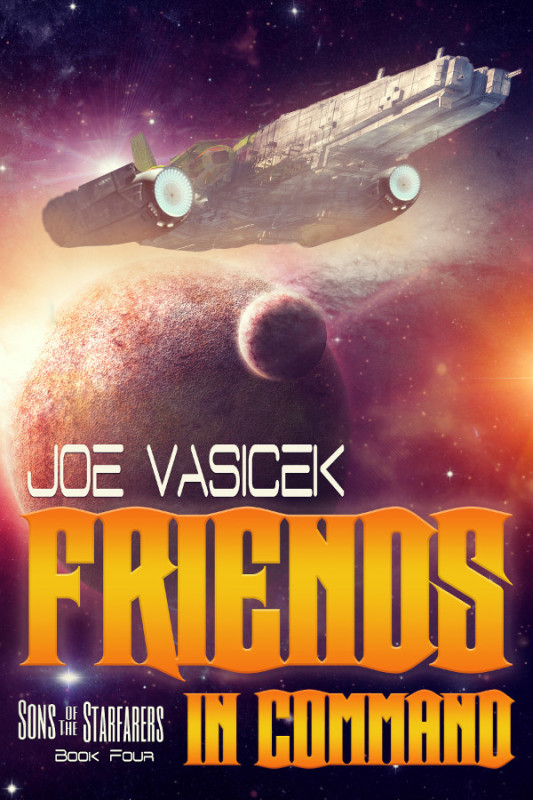
Is Friends in Command for You?

Friends in Command is a character-driven military science fiction novel and space opera series installment about leadership, loyalty, and the quiet terror of being responsible for other people’s lives. Set during an escalating interstellar war, it follows a small starship crew forced to grow up fast—personally, morally, and professionally—when command stops being theoretical and starts being real.

This is the fourth book in the Sons of the Starfarers military science fiction series and builds directly on the events, relationships, and character arcs established in the earlier novels.

What Kind of Reader Will Love Friends in Command?

If you love…

  • military science fiction that focuses on people, leadership, and consequences, not just tactics
  • character-driven space opera about friends becoming leaders under pressure
  • stories where command is a burden, not a reward
  • long-running series with deepening relationships and evolving roles across multiple books
  • emotional arcs about loyalty, responsibility, and hard-earned maturity in wartime

…then Friends in Command is probably your kind of story.

What You’ll Find Inside

The story centers on a young crew—many of them longtime comrades—now thrust into positions of real authority aboard a frontline warship in a character-driven military space opera. As the war grows more complex and dangerous, friendships are tested, mistakes carry higher costs, and leadership becomes a daily moral trial. The tone is thoughtful and tense, balancing moments of action with introspective, character-focused scenes, and the pacing reflects the pressure of command: urgent when it must be, deliberate when it matters most.

What Makes Friends in Command Different

Unlike many military SF novels that focus on ascension and glory, Friends in Command is about the awkward, painful middle stage of leadership—when characters are no longer protected by inexperience but not yet confident masters of their roles. It functions as a bridge book within the series, deepening character arcs and setting the emotional stakes for what comes next. Readers who enjoy ensemble casts and long-form character growth—rather than clean standalone victories—will find this installment especially rewarding.

What You Won’t Find

This is not a standalone novel, and it’s not designed for readers who want a reset with each book. You also won’t find nihilism or shock-for-shock’s-sake violence; while the story is intense and serious, it remains grounded in loyalty, conscience, and earned hope rather than cynicism.

Why I Think You Might Love It

I think Friends in Command resonates because it captures a moment many stories skip over: when people are promoted before they feel ready, and the cost of getting things wrong suddenly includes the people they care about most—a moment many readers recognize from real life as much as from fiction. This book mattered to me because it let the characters stop reacting and start choosing—sometimes badly, sometimes bravely—and those choices ripple forward through the rest of the series.

Where to Get the Book

Related Posts and Pages

Explore the series index for Sons of the Starfarers.

Return to the book page for Friends in Command.

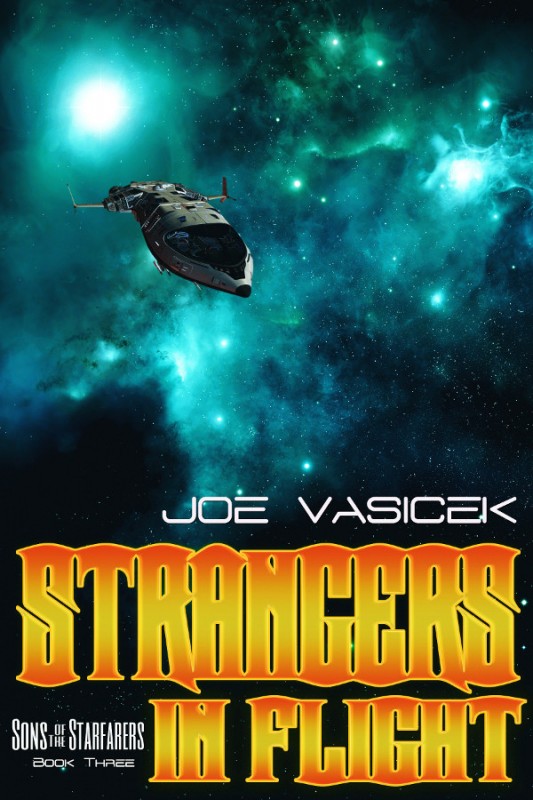
Is Strangers in Flight for you?

The Sons of the Starfarers series is a character-focused science fiction saga about exile, loyalty, and survival on the edges of interstellar war. Strangers in Flight (Sons of the Starfarers: Book 3) is a military science fiction adventure story about survival on the run—when one wrong jump can put you back in the hands of people who own the corridors. It delivers starship tension, cultural collision, and the slow, earned shift from “I’m alone” to “we’re in this together”—when survival starts depending on someone else.

What Kind of Reader Will Love Strangers in Flight?

If you love…

  • space opera / military-flavored SF where the danger feels immediate and personal (pirates, patrols, docking bays, and narrow escapes)
  • character-driven adventure about loyalty, grief, and the determination to keep going when everything gets taken from you
  • fish-out-of-water culture shock with real emotional weight (language barriers, customs clashes, trying to belong in a world that isn’t yours)
  • unlikely partners / found connection—two strangers forced to trust each other under pressure
  • resourceful protagonists who solve problems under confinement and constant surveillance

…then Strangers in Flight is probably your kind of story.

What You’ll Find Inside

This book follows Isaac—an outworld starfarer trying to stay alive and get free—and Reva, the once-mysterious “henna girl,” now awake and thrust into a hostile culture where even basic norms (language, clothing, privacy) don’t match her own. The mood is tense and kinetic, with a constant undercurrent of grief, disorientation, and stubborn hope. The style leans fast-paced and adventure-forward, with close-up emotional stakes and the feeling that every safe place is temporary.

What Makes Strangers in Flight Different

Instead of drawing out its central mystery across the entire series, Strangers in Flight brings a long-teased character fully into the story and allows her to actively shape its direction. It’s here where Reva (the mysterious cryosleep survivor from the first book) becomes a full character whose choices reshape the direction of the story. The book also leans hard into culture as conflict—not just politics and lasers, but the intimate friction of norms, taboos, and translation (and what it costs to adapt without losing yourself). And at its core, it’s about two people helping each other endure different kinds of captivity—external and internal—until they aren’t strangers anymore.

What You Won’t Find

You won’t find a slow, meditative “slice-of-life in space” book here—this one is built to keep the overarching series moving and to keep the tension tight. Also: while the story includes a culture with different norms around privacy and modesty, and moments of uncomfortable attention from antagonistic men, it treats the situation as a real complication and source of vulnerability rather than as eroticized content.

Why I Think You Might Love It

When I hit Book 3, this story stopped feeling like “the next installment” and started feeling like the bridge that revealed how the series could become what it wanted to be. I didn’t want Reva’s mystery to dominate everything, so I made a choice that changed the whole series: I brought her fully onstage, let her become real, and let the plot grow out of who she is—sharp, resourceful, and carrying a kind of loss that’s harder to outrun than any ship. And in a strange way, that’s what I hope lands for you as a reader: the idea that sometimes the best way to survive your own crisis is to help someone else survive theirs—until “strangers” quietly becomes “we.”

Where to Get the Book

Related Posts and Pages

Explore the Sons of the Starfarers series index.

Return to the book page for Strangers in Flight.

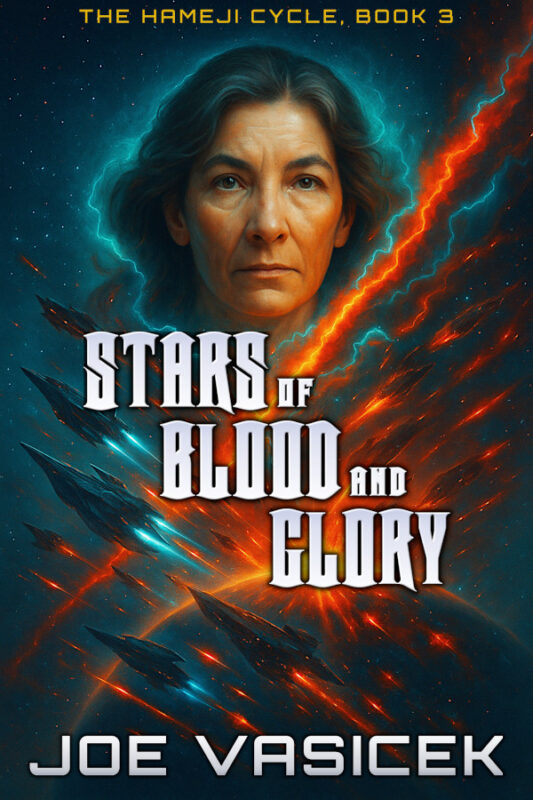
Is Stars of Blood and Glory for You?

Stars of Blood and Glory is a character-driven military science fiction novel about war at its breaking point—when survival, honor, and loyalty are no longer abstract ideals but immediate, costly choices. Set during a decisive turning point in an interstellar war between the Hameji and the Federation, it follows soldiers, mercenaries, exiles, and captives forced to confront what victory actually costs. This is a story about sacrifice, identity, and whether a shattered people can reclaim a future without losing what made them human.

What Kind of Reader Will Love Stars of Blood and Glory?

If you love…

  • military science fiction that treats war as a moral and human problem, not just a tactical one
  • stories about exile, lost homelands, and the longing to return
  • character-driven space opera focused on loyalty, duty, and personal cost across a connected series narrative
  • gritty but meaningful narratives where hope survives through action, not speeches
  • ensembles of soldiers, mercenaries, and civilians bound together by shared loss in an ongoing interstellar war

…then Stars of Blood and Glory is probably your kind of story.

What You’ll Find Inside

The story follows multiple viewpoints—most notably veteran mercenary Roman, the haunted assassin Rina, and a captured Hameji prince—caught in the aftermath of catastrophic defeats and desperate counterstrikes. The emotional journey moves from grief, rage, and moral exhaustion toward hard-won resolve, as each character must decide what they are still willing to fight for—and what they can no longer justify. The pacing balances intense space combat, covert operations, and quiet character moments, with a grounded, serious tone that emphasizes consequence, responsibility, and survival over spectacle.

What Makes Stars of Blood and Glory Different

Unlike many military science fiction novels that focus on how wars are won, Stars of Blood and Glory focuses on what comes after—when victory is uncertain, morale is shattered, and survival alone feels hollow. Drawing inspiration from real historical turning points—such as the Battle of Ain Jalut, where a seemingly unstoppable empire suffered its first decisive defeat—the story blends space opera with themes of exile and cultural survival. Rather than glorifying conquest or domination, it examines how meaning is rebuilt when honor and glory have already failed.

What You Won’t Find

This is not a light or comedic military adventure, and it doesn’t shy away from the emotional and psychological toll of war. You won’t find invincible heroes, easy victories, or a cynical “nothing matters” worldview. The violence is purposeful and character-driven, serving the story’s moral weight rather than existing for shock value or spectacle alone.

Why I Think You Might Love It

Stars of Blood and Glory brings the mercenary characters from Bringing Stella Home to a turning point while telling a complete, emotionally self-contained story. It closes a major chapter in the Hameji conquests, and can be read as a standalone or in series order. At its heart, it’s about choosing dignity, responsibility, and meaning even when the universe refuses to offer clean answers—and trusting that those choices still matter. If you care about characters who endure, adapt, and choose meaning in the aftermath of loss, I think this story will stay with you.

Where to Get Stars of Blood and Glory

Related Posts and Pages

Explore the series index for The Hameji Cycle.

Return to the book page for Stars of Blood and Glory