Addicted to typesetting

So I just realized it’s been a looong time since I posted anything besides Trope Tuesday posts on this blog.  A lot of things have happened, and I’ve got a lot of things I want to blog about, but really all my spare time has been spent happily typesetting for Stars of Blood and Glory and Star Wanderers: Outworlder (Part I).

I always tell people that if I wasn’t a writer, I’d be a typesetter because I enjoy it so much.  I’m not sure if that’s true, because it can get a little mind-numbing after a while, but as an indie writer who only has to do it every now and again, it’s really fun!  The best part, of course, is getting to that finished product, a book full of words and paragraphs and chapters that look so beautiful on the page, which you can flip through and say “wow, I wrote that!”

The whole process is great, though, even with the frustrations like computer crashes and formatting struggles.  Fortunately, those don’t happen quite as often since I’ve more or less figured out the tools.  I use LibreOffice almost exclusively for the interior (yes, I know In Design is awesome but LibreOffice works well too), and The Gimp for the cover art.

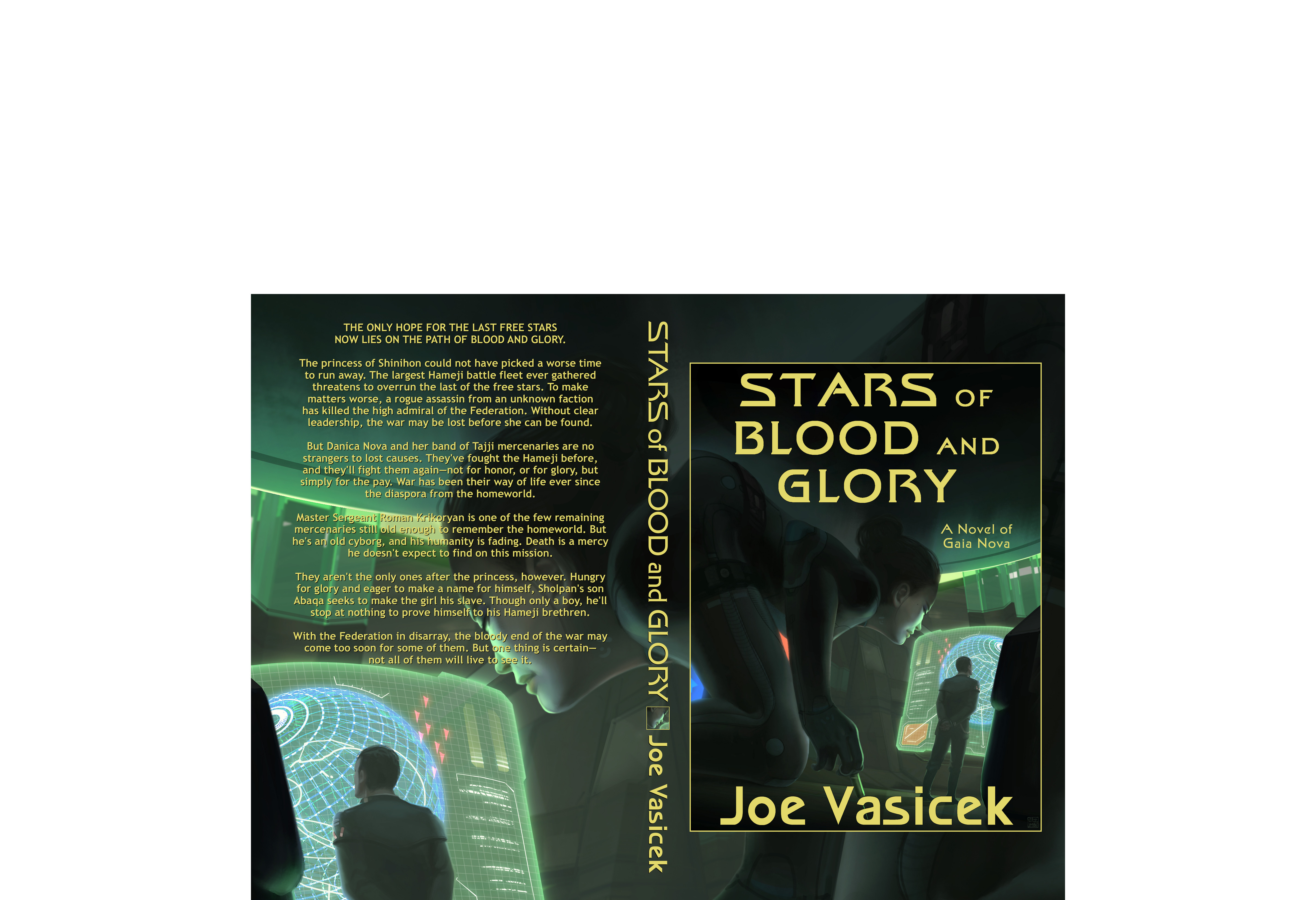
Yesterday, I started on the cover art for Stars of Blood and Glory, thinking it would take me a few days to finish it.  Well, one thing led to another, and a few hours later I had this:

POD cover (Stars of Blood and Glory)Not bad.  I think I was able to do it so quickly because I followed the same basic pattern as Bringing Stella Home and Desert Stars.  Once you know what you’re doing, it doesn’t take very long to do it.  It also helped to have such great art (shout-out to Hideyoshi)!
So yeah, the only thing I have to do now is order the proofs and approve them.  After that, the print edition of Stars of Blood and Glory should be up on Amazon in just a couple of days, so keep an eye out for that!

Also, I don’t think Amazon has announced this to the general public yet, but this Christmas they’re starting a program where you can get the ebook edition of a participating book bundled with the print edition of the book for an extra $2.99 or less.  It’s called Matchbook, and I’m happy to announce that all of my novels will be in the program!  They’ll be priced at either $1.99 or $.99, so if you’re looking for a Christmas gift, you can buy one of my print books and get the ebook for yourself for more than 50% of the price.  The Star Wanderers books, when I have the print versions up (and I’m working on that now), will bundle the ebooks for free!

So yeah, that’s what’s been taking away from my blogging time.  Salt Lake Comic Con was also pretty cool–it was my first Comic Con experience, so I should probably blog about that too.  Also, some book reviews, some stuff that exploded on the internet recently that I want to react to … yeah, I’ve fallen a bit behind.

But above and beyond all this blogging / typesetting / publishing stuff, writing is still my #1 priority.  I started the first Sons of the Starfarers novella just last week, and have been working on it a little every day since.  I’m way excited about this next project–it’s going to be amazing!  Like a spinoff of Star Wanderers, but sooo much more.  But I’ll wait until tuesday to talk about that.

In the meantime, keep an eye out for the print edition of Stars of Blood and Glory!  It should be out in the next week or so.  And as for Star Wanderers, the print editions should be coming out this month or next, depending on how effectively (or not) I can manage this typesetting addiction.

Later!

Things I’ve learned from STAR WANDERERS

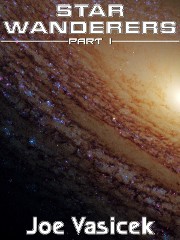
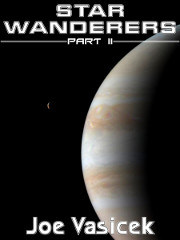
Star Wanderers I (thumb)Star Wanderers II (thumb)Star Wanderers III (thumb)Star Wanderers IV (thumb)SW-V Dreamweaver (thumb)SW-VI (thumb)SW-VII Reproach (thumb)

When I published the first couple installments of Star Wanderers, it represented both an experiment with a new publishing format and a departure from the more long-form styles that I was used to.  Now, a little over a year later, I can say it’s been a success.  The series isn’t finished, and I’m still learning as I go, but here are some of the big lessons that I’ve picked up:

Novellas are surprisingly well-suited to series. They read fairly quickly, contain enough focus to sustain an episode of a larger story, and yet at the same time contain enough space to develop a wider arc.  Plus, they are a lot quicker to write than novels and generally don’t require as much editing, since it’s easier to get the story right on the first pass.  This means that you can put out novellas faster and more regularly than long-form novels, maintaining good momentum for the series as a whole.

It’s hard to write anything shorter than a novella without leaving readers unsatisfied.  By far the biggest criticism I’ve received for Outworlder (which is really more of a novelette than a novella) is that the story feels too short.  If the novella (17,500 to 40,000 words, or 80 to 150 pages) has all the benefits of the novel and the short story, then it seems that the novelette (7,500 to 17,500 words, or 30 to 80 pages) has all of the drawbacks.  Then again, it could just be that I have yet to master the form.

The satisfying element in a series is at least as important as the returnable element.  Every successful episodic story has some sort of returnable element–something about the story that makes the audience ravenous for more.  Often, this takes the form of a cliffhanger, leaving something unresolved.  However, it’s not enough just to string readers along, holding back whatever your story has promised them.  In every installment, you have to deliver.

It’s a delicate balance, to be sure, but the advantage of erring on the side of satisfaction is that the satisfaction can actually become a major hook in itself.  If readers know that they’re going to be satisfied whenever they pick up one of your books, you don’t have to ratchet up the tension to eleven in order to keep them coming back.  Several Star Wanderers reviews mention that it’s more relaxing and not as fast paced as other space opera, but sales of parts III through VI are almost 1:1.

Readers love to revisit a good story from another character’s point of view.  Some of the most glowing reviews I’ve received for this series are for Dreamweaver, which is basically a parallel novella to Outworlder but from Noemi’s point of view.  In Outworlder’s Amazon also-boughts, it sometimes even appears ahead of Homeworld, which actually comes before it in the series order.  This tells me that readers love to revisit a story, or to hear the same story again but from a different point of view.  Head-hopping from episode to episode can be a great way to add variety and depth.

Plenty of readers are willing to pay $2.99 per book for a series they enjoy.  When I published the omnibus for Star Wanderers I-IV, I wondered if sales of the individual novellas would taper off since I priced the omnibus much lower than their sum.  To my surprise, sales for both the omnibus and the individual installments have actually remained about even.  Since the omnibus clearly shows up on Amazon’s recommendations, this tells me that $2.99 is not too high of a price, even for a novella.

Perma-free works; however, free and $.99 attract some bad apples.  Do not underestimate the power of free, especially perma-free for the first book in a series.  I credit that strategy for at least 90% of the Star Wanderers sales, since the series itself has boosted my total sales numbers by more than an order of magnitude.  However, there are people out there who never fail to find something to complain about.  These are usually the same people who don’t like to pay for anything, and when they realize that the rest of my series is not free, they tend to leave unhelpful and/or incomprehensible reviews.

I priced Fidelity at $.99 to try to give readers more of a hook from part I to part II, but the sales ratio between part II (Fidelity) and part III is about 2.5:1–in other words, pretty bad.  Judging from some of the reviews, it seems that a fair number of the people who are dropping out are the bad apples.  I haven’t decided whether to raise the price, but if things keep going the way they have been, I probably will.

Series don’t usually take off until the third or fourth installment.  Do you know how many sales Outworlder had in the month when I first published it?  About 10–and that was actually a surprise.  When I published Fidelity, I had even fewer, and Sacrifice hardly sold anything until Outworlder went perma-free.  When it did, sales of the other two novellas picked up, but it wasn’t until after I’d published Dreamweaver that the sales of Fidelity started hitting triple digits.  The lesson to me is clear: it takes time for a series to pick up steam, so don’t be like Fox.  Give it a chance to grow.

Nothing sells a book like writing and publishing more books.  This is probably the main driving factor behind the last point.  I’ve done almost no promotion for Star Wanderers, other than putting out new books on a fairly consistent basis.  Amazon’s algorithms have probably done their part (sales on other outlets haven’t been growing nearly as much), but at the end of the day, there is no substitute to writing more and better books.  Any sort of promotional or marketing activity that takes away from my writing time is just not worth it–not when I’ve got stories to tell.

Right now, I’m getting ready to start a new spin-off series, which hopefully will be even more successful.  I’ll to try out a few new things (mostly along the lines of better covers and meatier novellas), but mostly, I’m going to try to replicate the success I’ve achieved with Star Wanderers by keeping these lessons in mind.  I have no idea how this new series is going to go, but I figure I know enough about the publishing side now that I can focus my attention on writing an awesome story, which is the most important thing after all.

Do you like your chapters named or numbered?

There’s an interesting article linked on The Passive Voice blog about the importance of a table of contents, especially in ebooks.  The article is geared mostly for non-fiction, which is a whole different beast from novels and novellas, but the discussion on TPV got me thinking: for ebooks, is it better to name chapters or to merely number them?

In the comments section on TPV, Jamie makes an interesting point:

With e-books in particular I think there needs to be more care taken with the TOC. I can easily find my place with a print book even without a book mark, but with an e-reader, it’s possible to lose your place very easily, and “loc 4950″ is not going to be committed to my memory banks. I know what happens in the chapter titled “His Grace of Avon Takes Command of the Game,” but I’m not sure if that was chapter 16 or 15 “loc 1730″ or what. I won’t remember the number.

For organizational purposes for my own use I title my chapters, and I believe that readers will appreciate that habit, too, and will be more forgiving if they use the Look Inside feature and see those headers vs. if they just see “1, 2, 3.”

I try to make sure the titles are enticing and pique the curiosity of anyone who would see them in a TOC. They’re not spoilers, because unless you’ve made it to the end of the previous chapter, you’ll likely have no idea what the next chapter’s title is referring to (and if it is obvious, it simply increases the suspense/curiosity). The titles Makes Sense in Context (TM).

When I first learned how to make an ebook, the concept of a table of contents for a novel seemed pretty weird.  I was used to reading print books, which you can flip through much easier and find what you’re looking for just from the feel of the pages.  But with ebooks, obviously that’s much different.  A table of contents is more than just a list of chapters, it’s an important navigational tool that can’t be overlooked.

But if chapter hyperlinks are perhaps the only way to flip through the middle of the book, does that mean that merely numbering the chapters is insufficient?  I have to admit, the concept of naming each chapter seems a bit old-fashioned, but the technology has changed and as writers, we need to change with it.

In the context of a hyperlinked table of contents, numbers are practically meaningless.  They can even be quite ugly, if there’s a huge list of them that sprawls beyond the screen.  Chapter titles can sprawl even more, but they at least provide some idea of what lies on the other side of the link.

I’ve done it both ways.  For example, the table of contents for Genesis Earth looks like this:

Table of Contents

Copyright Page
Table of Contents

The Wormhole | The Mission | Terra | Cryothaw | The Ghost Ship | Trust and Deception | Betrayal and Discovery | Arrival | First Contact | Call and Answer | Earth | Rescue | Emotion and Reason | Planetfall | The Natives | Origin and Destiny | A New Genesis | Epilogue

Author’s Note | Acknowledgments

Most of the chapter titles are pretty mysterious, but I was kind of going for that.  And in any case, is it possible to make them completely unambiguous without spoiling key parts of the story?  It seems like the art of naming chapters is much subtler and more complex than you’d think at a first glance.

In contrast, the table of contents for Desert Stars looks like this:

Table of Contents

Copyright Page
Table of Contents

Prologue
Book I: Dome and Desert
1 | 2 | 3 | 4 | 5 | 6 | 7 | 8 | 9 | 10
Book II: Sand and Stars

11 | 12 | 13 | 14 | 15 | 16 | 17 | 18 | 19 | 20 | 21 | 22

Author’s Note | Acknowledgments

I kept the numbers for the chapters, but divided the novel into two sections or “books” and listed the numbered chapters as minimally as possible, to save space.  I suppose it looks all right, but as a guide to navigating the book, I’m not sure how useful it is–not to mention how hard it can be to click on a hyperlink that’s only one character long, especially on a touchscreen.

For Journey to Jordan, there were so many entries that I didn’t bother listing them all in the table of contents.  Instead, I divided each part into sections based on location, then listed the locations in the table of contents and the posts/chapters at the head of each section, complete with hyperlinks.

As a side note, it’s actually pretty amazing how internal hyperlinks can change the experience of the book.  For one thing, it opens up all sorts of possibilities for alternate endings and “Choose Your Own Adventure” type stories.  Is it possible to list a chapter in the <manifest> without including it in the <spine>?  I don’t think it is (at least, not in a well-formatted ebook), but if you could find a way to do that, you could add all sorts of hidden content and Easter eggs …

In any case, for my shorter Star Wanderers novellas, I think I actually prefer numbered chapters.  The stories are short enough that the numbered subdivisions still have meaning, and the chapter lists aren’t long enough to look too cluttered.  Besides, I’ve already started the series in this particular format so I think it will be better to keep it this way.

But for future books and future series … I don’t know.  What do you think?  Are ebook chapters better off named or numbered?

Last chance to get my books 50% off on Smashwords!

swlogoHey guys, just a heads up that tomorrow and Wednesday are the last days to get all my books 50% off on Smashwords for the annual summer sale.  Everything is under $2.50 USD, and the $.99 stuff is free!  That might seem like a pretty steep discount, but I actually earn as much from each sale as I would for a trade paperback sale if my books were traditionally published, and I don’t mind passing on the savings to you.

Also, my friend and fellow writer Ben Keeley did a blog post about our low-key backpacking trip up Rock Canyon, so if that interests you, you can check it out on his blog.  That rattlesnake was pretty freaky!  Good thing he was about as eager to get away from us as we were to get away from him.  We didn’t climb any mountains on this one, but we did find a gorgeous campsite on the side of a steep ravine. I definitely want to go camp there again sometime.

I’m taking it easy as far as the writing goes, but making some progress on The Sword Keeper.  A lot of it right now is gathering ideas and reviewing what I’ve written so far (eleven chapters, or about 50k words).  The first chapter requires some changes, but the rest I’ll probably let stand as it is and pick up where I left off.  Once I’m fully immersed in this story again, I think the rest will come quite readily.

In the meantime, here’s a video of Mariam Elieshvili singing “ჩვენ ახლა ერთურთს,” chven axla erturts.  I have no idea what the lyrics mean (something about looking for love in each others’ eyes), but Mariam’s voice is amazing and I think I may have a small celebrity crush on her.  All this Georgian music definitely puts me in the mood to work on The Sword Keeper, kind of like how all that Arabic music helped me to write Desert Stars.

… and now I want to go back to Georgia.  Again. :'(

New STAR WANDERERS story coming soon!

SW-VI Benefactor (thumb)So last night I finished the 2.0 draft of Star Wanderers: Benefactor (Part VI), and I have to say, it’s pretty good.  With the first draft, there were parts of it that worked well, but as a whole it didn’t seem to really cohere together, and I didn’t know why.  After getting some helpful feedback from first readers, I think I’ve figured it out and brought it together.
I’ve sent it out to some friends for proofreading, and that should be done before the end of next week.  While they’re doing that, I’ll write up the author’s note, figure out the teaser for Reproach (Part VII), and get everything else squared away for publication.  With luck, I’ll format the ebooks over the weekend of the 27th and have them up on Amazon, Kobo, Barnes & Noble, and Smashwords before the end of the month.

I’m really happy with the way this one turned out.  It doesn’t have a whole lot of action, but it really gets into the personal conflicts and struggles of the characters.  It also explores some of the implications of what it means to live in a culture where the oldest son of nearly every family leaves his homeworld at age 19 to venture across the stars, never to return again.  The other stories explore this from the perspective of one of the sons; this one explores that from the perspective of one of the fathers.

As always, if you’d like a free copy of this one, be sure to sign up for my mailing list; I’ll send out a Smashwords coupon code for email subscribers to download it for free.  The next one, Reproach, should be out in August/September (hopefully closer to August).

No new books this month, but the next few should be stacked.

I’m working on Star Wanderers: Deliverance (Part VIII) right now, and it’s coming along swimmingly.  Where the other novellas are pretty much character dramas in a space opera setting, this one is more space adventure with the character / relationship stuff under the surface.  It’s all about Mariya and Lucca, how they meet and end up falling for each other in some very extreme circumstances.  I think they crash-land on Zarmina in chapter 3, and things just get crazier from there.  Today, I wrote a scene with some giant reptilian bird-monsters, and I think I pounded out 1,000 words in 20 minutes.

So yeah, I’m having a lot of fun with that.  The next one I’m going to publish, though, is Benefactor (Part VI), and I still have to do a lot of revisions on that one.  So it probably won’t be out until next month sometime, probably closer to August–I want to make sure it’s as good as I can make it.  But since the first draft of Reproach (Part VII) is already finished, it (hopefully) shouldn’t be much longer than that for it to come out, maybe in August.  And Deliverance should come out soon after that.

For now, my goal is to finish Deliverance this week, and start the revisions for Benefactor immediately after that.  It would be awesome to get these books out in July > August > September, though it might be more like July > September > October.  Definitely, I’ll have Part VIII out before the holidays, perhaps even Part IX or X as well.

In the meantime, I just started typesetting the print edition of Stars of Blood and Glory and set Desert Stars and Genesis Earth for expanded distribution through CreateSpace.  There’s been some interesting developments in print-on-demand in the past few months, which may make it possible to get my books in bookstores through that venue.  I still need to do some research on that end, but I do want to get the print versions out there at least.  My first priority, though, is definitely writing.

There’s been a great deal of interest in my Star Wanderers ebooks, not at blockbuster levels but certainly more than I was expecting.  And it’s growing, too–June is already my best month ever sales-wise, and most of the reviews have been quite positive.  If the momentum keeps up with the next few books in the series, I might (might!) be able to go full-time before the end of the year.  Worldcon 2013 is definitely looking like a possibility, and if I can find some friends to room and/or drive down with, chances are good that I’ll be going.

So yeah, thanks for all your support and interest!  This has been my dream for a long, long time, so it’s really gratifying to see it finally within my grasp.  I definitely don’t take it for granted, so I will do all I can to write more and better stories for you guys.  My goal is to write more than a hundred novels & novellas, and I’m already on track to do so!

I’ll leave you with this video from Georgia, which I still miss almost every day.  Man, I need to find another place that I can fall in love with as much as I did with that country.  A small part of me wants to say “screw it all” and go back … in any case, here’s the video:

Naxvamdis!

STAR WANDERERS: THE JEREMIAH CHRONICLES is now available!

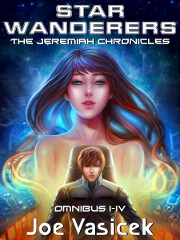
SW-TJC (thumb)Hey guys, exciting news!  I just published Star Wanderers: The Jeremiah Chronicles!   It’s an omnibus that contains Parts I-IV of the series.  You can find it now on Amazon, Barnes & Noble, Kobo, and Smashwords, as well as Omnilit, All Romance eBooks, and Drivethru Fiction.  It should be up on Sony, iTunes, and other eretailers in a week or two.

This omnibus edition doesn’t actually contain any new content, except for the author’s note which I’ll post a little later on the blog.  But if you’re just getting started with the Star Wanderers series, this is a slightly less expensive way to get the first four installments than buying them all individually.  Plus, the cover art is pretty kewl–at least, I think so. 🙂

If you’ve read the series up through Homeworld, I would really appreciate it if you’d take the time to post a review on the omnibus.  There’s no expectation to do so, of course, but it really does help things out a lot.  Also, if you’re a Goodreads user, you can add the omnibus to your library here.

That’s just about it for now.  At some point, I’d like to put out a print version, but I’m not sure whether to do the full omnibus or to do a sort of back-to-back edition, where it’s two novellas with the one printed upside down and on the other side.  What the heck–maybe I’ll do both.  But I still have to format the print version of Stars of Blood and Glory, so it might take a while before I get around to that.

In the meantime, I’d better get back to writing Part VII: Reproach.  This publishing stuff is all good fun, but the important thing is to keep writing.

See you around, and thanks for reading!

Hey! Are you an aspiring writer / artist / creative whatever?

If you are, you really really really need to check out this webcomic about the three jaguars.

It’s about the three main voices in every professional artist’s head, and how they bicker and play off of each other.  As someone whose been in the writing business for a few years, I can say that it’s absolutely spot on (and not just because they’re anthropomorphized jaguars).  Seriously, this webcomic needs to be like a primer for all creative types or something.

The thing I’ve learned the most by following this webcomic has to do with the marketing voice.  I’ve always had it in the back of my mind that marketing is evil.  And if you do it wrong, it really is.  But if you do it right, it’s actually pretty amazing:

…your goal in marketing is to create sustainable relationships with people who want you to succeed; in short, to seek patrons, rather than one-time customers. To do that, you can’t be focused on the money or the one-time sale. You want to inspire customer loyalty. You want people to be invested in your success. You want them to feel special … because they are.

A lot of the stuff I do, like keeping this blog, or putting Author’s Notes at the end of all my books, comes back to this idea of making meaningful connections with people.  I just never saw it as marketing.  But if marketing yourself is really about focusing on people rather than obsessing about sales, that’s totally something that I can do–something that I’m excited to do!

The character I can relate to the most is probably Business Manager.  It’s the entrepreneurial spirit I can trace back to my grandpa, who started his own oil company in West Texas and was successful enough to put all us grandkids through private school.  But Artist is definitely in there as well–it’s why I’m always jumping from project to project, driving my inner business manager crazy.

So yeah, if you’re a creative type, you’ll definitely want to check out this webcomic.  It’s written by the self-published author whose books briefly got pulled from Amazon during the Space Marine controversy (fortunately for all of us, she held out and won).  Lots of good stuff there–she really knows what she’s talking about.

In the meantime, let me leave you with this incredible piece of orchestral trance music.  It’s quite possibly the most epic thing I discovered last week.  The video is pretty good too.

Take care!

Thoughts on serials and ebook pricing

I’m going to do something potentially dangerous and discuss pricing strategies in a rather candid way.  I may risk turning off some of my potential readers, especially the ones who don’t like shorter works, but I want to be as open and transparent as I can, since I figure it’s only fair, especially to someone who’s just getting started with my books.

First of all, let me just say that if I could, I would make all my books free and write for love instead of money.  The trouble, though, is that I have to eat, and at some point in the (hopefully) not too distant future I’m going to have to feed a wife and children as well.  If I made all my books free right now, I would have to spend all my time and energy doing something other than writing, and as a result there would be far fewer books for you to read.

In the last year, I’ve discovered that the best way to make money self-publishing is to write in series, preferably at a short enough length that you can release a new installment every other month.  A lot of other writers are discovering this, which is why there is such an explosion of series and serials.

I know a lot of readers don’t like this.  And when a writer takes a perfectly good novel and splits it arbitrarily into parts, each one without a solid arc or story structure to hold it together, I get a little bit ticked as well.  But the reality is that if you can tell a story in a series of short, self-contained novellas rather than a single novel, it will probably meet with better commercial success.

The price points for novellas are kind of tricky, though.  For anything priced below $2.99, Amazon takes 65%, whereas from $2.99 to $9.99, the self-publisher takes 70%.  To give that some perspective, you would have to sell 10x the number of copies at $.99 to earn as much on one sale of a book at $4.99, and 6x for a book at $2.99.

The trouble, of course, is that for a series where each installment is priced at $2.99, the readers may end up paying a lot more, depending on the lengths of the story arcs and the size of each installment.  Novellas are kind of in a gray area, where $.99 seems kind of cheap for that much story, but three or four installments at $2.99 really add up–especially with so many other ebooks priced at $5 or below.

Now, I’d like to believe that most readers judge the value of a story by its quality and not by its word count, or by how much they have to pay per word.  There are books like City of the Saints that I don’t mind buying in $2.99 increments at all.  At the same time, though, I think there’s something to be said about keeping prices fair.

This is all on my mind right now because I’m getting ready to release the first Star Wanderers omnibus and expand that series considerably over the next year.  It’s the series that sells best out of any of my books, and the one with the most potential to make it so that I can go full time.  Plus, I really love writing in this universe, and have a lot more stories in it to tell.

Right now, this is the pricing structure I’m following:

  1. Outworlder — free (15,000 words)
  2. Fidelity — $.99 (17,000 words)
  3. Sacrifice — $2.99 (19,000 words)
  4. Homeworld — $2.99 (20,000 words)
  5. Dreamweaver — $2.99 (19,000 words)

Parts I through IV make a complete story arc, though of course each individual novella is a self-contained story on its own.  With Part I at free and Part II at $.99, I figure readers have a good way to figure out if these are the kinds of stories that they’ll want to read.  But if I keep pricing the stories at $2.99, at some point this series is going to get really expensive.

So here’s what I plan to do to alleviate that:

1) Make new releases free to newsletter subscribers.

For every Star Wanderers story up to this point, I’ve made it free for the first two weeks on Smashwords and given that code out through my email newsletter.  I did that originally as an incentive to get people to sign up for my newsletter, but I think it’s a good series strategy as well.  This way, if someone discovers Star Wanderers now, they can buy all the previous installments at the higher $2.99 price point and look forward to receiving any future installments for free.

Some may question the business sense of giving away free books to readers who are willing to buy them, but the way I see it, the fans are the ones who are selling these books, not me.  I’m willing to put a free book in the hands of someone who already loves the series, and is more likely to write a glowing review or to share it with a friend.  And since sales of this series continue to grow, that strategy would seem to be paying off (or at the very least, it’s not biting me in the ass).

2) Try to put more story into each individual installment.

If $2.99 seems a lot for a short novella, then maybe I need to expand on them, with things like extra subplots and viewpoint characters.  Of course I don’t want the stories to feel like they’re padded, but if I can enrich the story in a way that really adds to it, then that’s certainly something that I should do.

For all of the Star Wanderers series so far, each novella is told from the point of view of just one character.  This sort of focus can be good, because it really gets me into the head of that character.  However, sometimes it’s also good to play things off of another character’s story, both to act as a foil and to provide contrast.

That’s what I’m doing with Reproach (Part VII) right now.  It’s not just from Mariya’s point of view, but Noemi’s as well, and that adds a lot to the tension as you see their competing motives and the way their views of the world really clash.  It’s delicious.  Benefactor (Part VI) is just from Jakob’s viewpoint, just because I wanted the story to really focus on his character, but most of the other stories kicking around in my head have room for at least another viewpoint character without taking away from the spirit of the series itself.

3) Price the omnibus editions less than the sum of their parts.

For someone who is just getting started with Star Wanderers, $2.99 might seem like a lot to pay to get caught up.  That’s only going to get more daunting as the series gets longer.  For that reason, I’m inclined to price the omnibus editions much lower–at least $4.95, which is the price of one of my novels.  At 70,000 words or so for Parts I-IV, that seems only fair.

I am a bit worried that sales of the individual novellas will drop off once I release the omnibus, but I figure if I’m constantly releasing new ones, those should cover the slack.  Since Dreamweaver (Part V) is already out, and Benefactor (Part VI) will be out in another month or so, new readers who come in through the omnibus will have more than enough to keep them coming back.

The other benefit of doing it this way is that it reduces the chance that readers will drop out midway through the story arc.  It seems that a few of them are doing that, or at least taking a while to get from Part II to Part III to Part IV, etc.  By having them all in one omnibus and encouraging readers to buy that instead of the individual parts, hopefully they’ll have more of a chance to get hooked, making it all the more likely that they’ll keep coming back.

So that’s my plan, at least for now.  When The Jeremiah Chronicles comes out next week, I’ll price it on parity with my other novels, even though that’s somewhat less than all the individual parts.  I’ll make all new Star Wanderers novellas free for my newsletter subscribers, and do what I can to enrich them with extra viewpoints and subplots (without just padding them, of course).  This way, I hope my readers won’t feel like I’m ripping them off, and I’ll still have a good shot of making a decent living at this.

With the way things have been going, I’m actually really excited.  The slow build approach is working, and if it keeps up then I think I may be making enough to go full-time by this time next year.  I’ll be sure to keep you posted as things come along.

In the meantime, if you have any thoughts or comments, please don’t hesitate to share.  I’m still thinking this issue through, and there’s a lot I have left to learn.  In fact, I feel like I’m only just starting to figure it out, so any other perspectives on this topic would be much appreciated!

Z is for Zenith

pioneer_book_scifiHas space opera passed its zenith?

Sometimes, it certainly looks that way.  All the major stuff seems to be reprints of past series and reboots of decades-old franchises.  Star Trek, Star Wars, Stargate, Battlestar Galactica, Ender’s Game, Dune, Babylon 5–all the big names seem to have had their start at least a generation ago.  At any science fiction convention, you’re likely to see more gray-haired men than kids in their teens and twenties.  And if you go to a publishing conference, new adult, urban fantasy, and paranormal romance are ascendant.

I’ve noticed that people are using the term “science fiction” increasingly to describe stories that don’t have anything to do with space.  Dystopian, post-apocalyptic, steampunk, even time travel–all of these subgenres are certainly part of the fold, but they’re very different from the stories about starships and alien worlds.  And then you have all the markets for short fiction that have been forced out of business–and even a few larger publishers, like Night Shade Books which is now selling off all its assets (read: authors) to avoid bankruptcy.

I remember going to World Fantasy 2010 in Columbus, Ohio, and feeling dismayed at the complete lack of science fiction.  World Fantasy is (or was, at least) the premier professional conference for speculative fiction literature, but all of the attention was going to urban fantasy and steampunk.  On the freebie table where publishers often dumped ARCs and review copies of their books, the only space opera stuff I really saw were a couple of titles by Glen Cook and one other guy–and I watched that table hawkishly for the full three days of the conference.

Sometimes, it seems as if it would be so much better if I had grown up in the 80s.  That’s when science fiction really had its heyday.  But all through the 90s, the genre seems to have been on the decline, much like NASA and the US space program.

So is space-centered science fiction on the way out?  Have we passed the glory days, and it’s now just a long decline until it becomes an obscure niche, beloved by some, but enigmatic to others?

In spite of everything I said above, I actually don’t think so.  In fact, I think we’re on the cusp of a science fiction renaissance, and that sci-fi geeks like myself will look back twenty years from now and wish that they were born in our era.  Here’s why:

1) Scientific discoveries are transforming the way we see the universe.

The day I posted P is for Planets, NASA’s Kepler mission announced the discovery of three Earth-like worlds orbiting in the habitable zones of their stars.  The existence of alien Earths is not conjecture–it’s a confirmed fact.  As our ability to study these worlds improves, it’s only a matter of time, IMO, before we find a world that has life.

We’ve discovered the Higgs-Boson.  We’re unraveling the fundamental building blocks of the universe.  We’ve built telescopes to look back to the dawn of time itself, and we’re learning more about the cosmology of the universe every year.  Perhaps even more remarkably, we understand now how little it is that we actually know–that the entirety of the observable universe is only about 5% of it, and even that’s optimistic.

All of this will take time to trickle down to the popular consciousness, but with all the new discoveries that are happening, I think that’s already in the process of happening.  In particular, I think the recent discoveries in the realm of exoplanets and astrobiology are going to shake things up in a major way in the next five or ten years.

2) The privatization of space travel is paving the way for a rapid expansion into space.

The US space program has been plagued with funding problems since at least the end of the Cold War space race.  Since the space shuttle program was retired just last year, the only way for our astronauts to get into space is through the Russian Soyuz spacecraft at Baikonur.  If NASA had to put a man on the moon, they do not currently have the knowledge or technology necessary to do it.

In the private sector, though, it’s been a very different story.  SpaceX has had a number of successful launches recently, most notably sending the first unmanned resupply capsule up to the International Space Station.  And just a couple days ago, Virgin Galactic had the first successful test flight of its rocket-powered spacecraft.

It’s sad to see the space shuttle go, but there are a lot of reasons why the program was flawed and inefficient to begin with.  By handing things off to the private sector and turning space exploration into a viable business venture, we can hopefully overcome those inefficiencies and eventually make space accessible to the general public.

And then you have the organizations like Mars One that are looking even further ahead to the colonization of Mars.  There’s a groundswell of excitement for Martian colonization that is starting to get some real money behind it.  Will it go anywhere?  It’s hard to say right now, but even if it suffers another decade or two of setbacks, it’s getting public attention, especially from the younger generation.

3) Video games are bringing a fresh new look and feel to the genre.

Not all of the big sci-fi series hail from 70s and 80s.  Halo started up as recently as 2001, and it’s a multi-billion dollar franchise with games, books–even Legos.  In fact, there are lots of sci-fi video game franchises right now, many of them right on par with other classic space opera.  Just look at Starcraft, for example, or Mass Effect, or Eve Online and Sins of a Solar Empire.  The number of sci-fi games has been exploding.

In fact, this explosion has been happening for some time.  While literary science fiction may have suffered something of a decline back in the 90s, that was the heyday of games like Master of Orion and Sid Meier’s Alpha Centauri.  Flight simulators like Flight Commander and X-wing proliferated like crazy, while even some of the classic RPGs like Final Fantasy borrowed heavily from science fiction tropes.  And those are just a few of the games that I can list off the top of my head!

Whether or not literary sf is on the decline, a whole new generation has been introduced to the genre through the medium of video gaming.  This is not just a small niche audience playing this stuff, either–in the US at least, Halo is as mainstream as Monopoly or Settlers of Catan.  In fact, you could say that science fiction is more mainstream now than it ever has been, and a lot of that is due to sci-fi video games.

4) The e-publishing golden age is giving us thousands of new voices.

But what about the world of literary sf?  Are we in a decline?  Do people just not read science fiction anymore?  How bright is the future for science fiction literature?

Actually, this is the area where I’m the most optimistic of all.

The publishing industry is changing at the speed of light, much in the same way that the music industry changed about a decade ago.  Just as the MP3 revolution allowed all sorts of eclectic yet entrepreneurial artists to thrive without the oversight of record labels, the epublishing revolution is opening all sorts of doors for the enterprising author.  And while the changes are driving publishers (such as NSB) out of business, they are enabling authors who only sell in the mid-list range to make a respectable living.

At Worldcon 2011, Ginger Buchanan (senior editor at Tor) asserted that there has never been a runaway science fiction bestseller.  In the eyes of New York publishing, that may be true–but New York has a notorious record for missing the catch in pursuit of one big fish.  Because of epublishing, whole new genres like New Adult that publishers thought would never sell are now going mainstream.

And even the niches that stay niches are becoming quite lucrative for the authors who can build a decent following.  When author cuts out the middlemen and develops a direct relationship with the readership, it only takes a thousand true fans or so become a financial success.  As Kris Rusch pointed out so aptly, those numbers may bring only scorn from New York, but for the writers who actually produce the content, that’s a vein of pure gold.

I can’t tell you how many success stories I’ve heard from fellow sci-fi writers over on the Kindle Boards, who started just for the grocery money and ended up quitting their day jobs.  But as Hugh Howey pointed out, the runaway bestsellers are not the true story of the epublishing revolution–it’s the little guys who only sell a few hundred copies a month but are earning enough to support themselves writing what they love.

Indeed, we’re already starting to see an explosion of new science fiction, thanks largely to the ease of electronic self-publishing.  I’ve only read a few of them so far, but Nathan Lowell stands out among them, as well as my good friend Kindal Debenham.  These guys and so many others are bringing a fresh new voice to space opera, revitalizing the genre in ways that simply weren’t economical back in the days of Big Publishing.

So even if space opera as a literary genre isn’t quite large enough to go mainstream, it is large enough to support a wide range of new voices under the emerging business models.  And as the epublishing revolution continues to mature, I think we’re going to see a new golden age comparable to the era of the pulp adventure stories.

I’ve been publishing my own work since 2011, and I can attest that there’s never been a better time to be a writer.  I’m not quite making enough to go full-time yet, but at the rate things are going, it will only be a  year or two before I realize my dream of making a living telling stories that I love.  And if they’re the kind of stories that you love too, then that’s great news for all of us!

So has science fiction reached its zenith?  I don’t think so.  It went mainstream about a generation ago, which was definitely a huge moment, but for the last few decades it’s been in the process of branching out and rediscovering itself.  Right now, I think we’re on the verge of a wonderful new renaissance that is going to blow us all away.  As a lifelong reader and writer of science fiction, I certainly hope that’s the case.  And because of the reasons listed above, I sincerely believe that it is.