B is for Book Blurb

Perhaps the most important part of your book’s sales page, on Amazon or any other retailer, is the book description. More than anything else (except perhaps the cover), this is what sells your book. If done right, it will interest the reader enough to download a sample or buy the book outright. If not, they probably won’t even finish reading it before they click to the next page.

So how do you write a knockout book blurb? Honestly, I wish I knew. I don’t think mine are bad, but I’m sure there’s room for improvement, and if they seem really awesome to me now it’s probably because my blurb writing skills haven’t risen to the next level. I tend to tinker with my blurbs until I get sick of them, then I do all I can to avoid looking at them until it’s time for a revamp.

That said, it’s not like you’re writing a novel. Just the opposite, in fact. If you try to cram your whole book in the blurb, chances are that you’re doing it wrong. You’re not trying to summarize the story or convey information, you’re trying to spark enough interest to convince the reader to try out your book. The hardest part is figuring out what to mention and what to keep out. Once you know that, the rest is fairly easy–fun, even.

There’s a video I watch whenever I have a blurb to write, because it helps me to channel the kind of voice I’m looking for. It features the top five voice-over artists in the United States riding a limo together, and it’s both hilarious and awesome. Watch!

For some reason, that video always kicks the blurb-writing part of my brain into high gear. But that makes sense–a good book blurb is a lot like a good movie trailer. Both of them spark a compelling interest in the reader/viewer, and neither of them gets bogged down in too many details (or worse, spoilers) about the book/movie.

At LTUE 2013, Howard Tayler gave a presentation in which he listed four key elements of a book blurb. They are:

  1. Inciting Incident
  2. Character Action
  3. Conflict
  4. Hook

Whenever I write a book blurb, I try to keep those four things in mind. As an example, here’s the blurb to Star Wanderers: Outworlder (Part I):

HE WANDERS THE STARS IN SEARCH OF A HOME. INSTEAD, HE GOT A GIRL WITHOUT ONE.

When Jeremiah arrived at Megiddo Station, all he wanted was to make some trades and resupply his starship.  He never thought he’d come away with a wife.

Before he knows it, he’s back on his ship, alone with his accidental bride. Since neither of them speak the same language, he has no way to tell her that there’s been a terrible mistake. And because of the deadly famine ravaging her home, there’s no going back.  She’s entirely at his mercy, and that terrifies him more than anything.

Jeremiah isn’t ready to take responsibility for anyone. He’s a star wanderer, roaming the Outworld frontier in search of his fortune. Someday he’ll settle down, but for now, he just wants to drop the girl off at the next port and move on.

As he soon finds out though, she has other plans.

The inciting incident is the accidental marriage which unexpectedly brings the girl into Jeremiah’s life. That introduces the conflict–that there’s a girl on Jeremiah’s space ship, and he doesn’t know what to do about her. The character action is the second to last paragraph, which describes him as a star wanderer out to seek his fortune and not to settle down. And the last part–the zinger at the end about the girl having other plans–is the hook.

It’s not a formula though, and you can’t approach it as such. There’s an art to it that doesn’t always break down so easily. The good news, though, is that it’s a skill that can be learned–a writing skill. If you have the chops to write a novel, then with focused practice you can learn how to write a knockout book blurb, just like you can learn how to write a blog post, or a tweet, or any other piece of writing.

In my opinion, writing a book blurb is a critical skill for any indie writer. No one is going to be more excited about your book than you are, and since that’s such a critical part of writing a good blurb (it’s hard to get people excited about something that you yourself aren’t excited about), it isn’t something you can easily contract out. But since you’re already a writer, it’s definitely something that you can do.

O is for Orbit

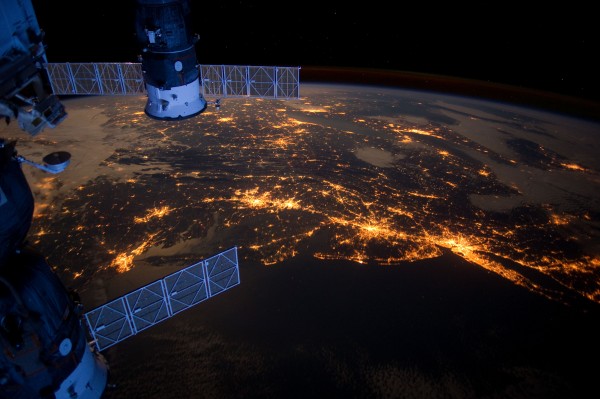
iss030e078095

One of the key things that makes space different from Earth is that nothing is ever stationary.  Anything close to our planet that isn’t moving at a good clip (measured in miles/kilometers per second) is liable to plummet like a brick.  Gravity is still in effect, even though you’re in free fall and thus don’t really feel it.

The way to get around the falling problem is to orbit whatever celestial body you’re plummeting towards.  When your tangential velocity gets high enough, gravity becomes your centripetal acceleration, and the system becomes rotational rather than discrete.  In other words, you’re still falling, but you’re moving fast enough to cross the edge of the horizon before you hit.

Just to give you a scale of how fast you have to go to make this work, the International Space Station (ISS) is orbiting at about 230 miles (370 kilometers) above sea level, and it makes a complete rotation around the earth every 90 minutes.  That means that the good folks who live and work up there see about 16 sunrises and sunsets per day.

If you’ve spent your whole life living planetside, orbital mechanics can be a bit difficult to grasp.  Here are just a few of the basics:

Since orbit is basically free fall, you don’t need to fire your engines to stay aloft.  In fact, once you’re parked in a stable orbit, you can stay there almost indefinitely.  This is how satellites work: we use a rocket to put them in position, but once they’re there all they need is a minor adjustment from time to time.  The moon is basically a giant natural satellite, and it doesn’t need any sort of thrust to stay aloft.

As objects fall closer to the body they’re orbiting, they orbit faster.  Just think about how figure skaters speed up when they pull their arms in closer to their bodies.  The main reason for this is that the object has a much shorter distance to travel to make a complete revolution.  To understand how this works, take a CD and measure the inside edge versus the outside edge.

However, since your tangential velocity is proportional to your centripetal acceleration (ie gravity), the way to jump to a higher orbit is to speed up.  Conversely, the way to fall to a lower orbit is to slow down.  An object’s angular momentum (mass X tangential velocity) is proportional to the distance of the object from the rotational system’s center of mass, so changing the object’s velocity will also change its distance from the center.

So if you’re in a spaceship and you’re about to collide with an object on a parallel orbit, the way to avoid it is not to nose your ship up like an airplane.  Instead, fire your engines and try to go faster (or slower, as the case may be).  It’s a bit counter-intuitive, but your altitude will change accordingly.  The anime/manga series Planetes really got this right.

However, even though you’re moving faster at a higher orbit, you have a lot more distance to travel, so it actually takes longer to make a complete orbit.  If you go high enough, you can eventually get to the point where the orbital period equals the rotational period of the celestial body you’re orbiting.  We call this a geosynchronous orbit.  If you’re orbiting around the celestial body’s equator, then to a person on the surface, it appears as if you’re stationary.  You’re not, of course–nothing in space really is–but both you and the person on the planet’s surface are moving in tandem, so that’s how it appears.

Ever wonder why satellite dishes all point in the same direction?  This is why.  The signal comes from a satellite in geostationary orbit, where it doesn’t move relative to the people on the surface.  Thus, if you know where to point your dish, you will always get a signal since the satellite doesn’t appear to move.

An orbit doesn’t have to be circular, but the barycenter (ie the center of mass for the whole system, where the mass of both objects cancels each other out) has to be at one of the focal points of an ellipse.  This is how comets work.  An object in an elliptical orbit will speed up when it gets closer to the object it’s orbiting, and slow down when it gets further away.

It’s possible–indeed, quite common–to orbit two celestial bodies simultaneously.  For example, since the Earth orbits the sun, anything orbiting the Earth must also orbit the sun at the same time.  If you’re close enough to the Earth, this doesn’t really matter since the Earth exerts a much more immediate force.  But when you get further away, interesting things start to happen.

A Lagrangian point is a point of gravitational balance between two orbiting celestial bodies of unequal mass.  Basically, they’re points of equilibrium where objects appear to remain stationary, so long as they continue to orbit in tandem with the other two celestial bodies.

In science fiction, these are great places to put space stations and other orbital settlements, since they appear as fixed points relative to the planet or moon that they’re moving around.  In real life, asteroids tend to clump around these points in a planet’s orbit, especially the L5 and L4 points.  Jupiter has so many of them that we call them the Trojans and the Greeks.

Since orbital mechanics can be a bit difficult to grasp, a lot of science fiction gets it wrong, especially space opera.  For a recent example, just look at the Halo series–unless those Covenant ships have some sort of magical drive, there’s no way they could hover above the surfaces of planets the way they do.  Orbiting does NOT equal hovering.  And in Halo: Reach, where Jorge knocks out the main ship for the Covenant advance force … yeah, if a ship that large actually fell from orbit into the surface of a planet, it would be moving fast enough to make a crater the size of a small continent, kicking up enough dust and debris to cause a mass extinction event like the one that killed the Dinosaurs.

At the same time, when a science fiction story goes the length to get the orbital mechanics right, it can add a surprising amount of realism.  A good example of this is Passage at Arms by Glen Cook.  I loved how he depicted the orbital siege of the main colony world, with the way the orbital space battles looked like from the planet’s surface.  The human forces were able to keep a toehold on space due to a low orbiting asteroid that the aliens couldn’t get to without exposing their forces to attack, and that served as the staging ground for the main characters to fight back.

For hard sci-fi, orbital mechanics is absolutely essential–you’ll be tarred and feathered if you get any of it wrong.  For soft sci-fi like space opera, it’s not essential, but it adds a lot to the story if you can get it right.  In any magic system, the limitations are what make it interesting.  If you’re writing science fiction, then physics is your magic system, so knowing how it works can really add a lot to your story.

For example, in the recent Schlock Mercenary storyline, the characters board a spaceship with an artificial gravity generator centered around a large cylindrical pylon that runs the length of the ship.  One of the implications of having Earth-strength gravity around such a small object is that you can actually throw a baseball into orbit.  And that’s just the beginning!  Needless to say, I’m really interested to see where Howard Tayler takes this story in the weeks and months to come.

Even though I write more space opera / science fantasy type stuff, I do the best I can to get my orbital dynamics right.  You can see this in the space battles in Stars of Blood and Glory and Bringing Stella Home, as well as the setting elements in Desert Stars.  When the desert tribesmen look up at the night sky, they gaze at the stars and satellites–hundreds of satellites, many of them starships bound for distant spaceports on the more civilized side of the world.  One of the reviewers said that the world felt so real it was almost like he could reach out and touch it, so I guess I did something right.  I’ll definitely keep it up in the future.

LTUE 2013

Man, LTUE 2013 was this weekend, and it was AWESOME.  One of the best conventions I’ve ever attended.  I spoke on my first panel, attended my first book signing event as an author, and got to meet up with some old friends, as well as some amazing new people.

Since I live tweeted most of the panels I attended, I thought it might be interesting to repost a few of those here, with some additional thoughts.  So…here goes!

THURSDAY

I believe this was Scott Parkin from the “What Do You Write?” panel. Good advice. Megan Whalen Turner also had some very interesting things to say on the subject of genre, which I have since forgotten. But I recorded it, and the recording will eventually be made publicly available in the LTUE conference archives, or so I’ve been told.

This one was from the “What Is ‘Punk’ Literature and Its Many Genres?” panel. David Butler and Larry Correia were HILARIOUS. Nearly got into a wrestling match right in front of us.

And when the esteemed Mr. Butler began to describe his book, I swear, a choir of steampunk angel Moronis somewhere began to sing a heavenly chorus. I mean, he had me with Edgar Allen Poe faking his death to become a secret agent, but Orson Pratt’s phlogiston guns? Eliza R. Snow as chief counterintelligence officer for the Kingdom of Deseret? I will definitely be checking out this book, City of the Saints (which is apparently a finalist for the 2013 Whitney Award).

David Butler is also a way cool guy. I hung out with him a bit in the dealer’s room, chatting about Mormon history, Lyman Wight (“shoot and be damned!”), Sir Richard Francis Burton’s expedition to Salt Lake City, and all sorts of other crazy zany stuff. And the whole time, he was playing a guitar. So yeah, definitely a way cool guy.

This discovery CHANGED MY LIFE. Also, it helped me to save immensely on lunch money, as well as join in on some way cool conversations with other panelists as they desperately tried to escape their fans. Okay, not really, but the green room was AWESOME.

Howard Taylor’s presentation on teasers was tremendously insightful. In a nutshell, he said that a teaser (aka book description on Amazon / back cover) should have or at least point to the following things:

  1. The inciting incident
  2. Character action
  3. Conflict
  4. Hook

We then went over a few examples, including some good ones that broke these rules, and finished up by doctoring a couple of teasers volunteered from the audience. Howard Taylor admitted to me later that he wasn’t entirely satisfied with the way he presented it, but I get the impression that he’s never entirely satisfied with anything less than perfection. It was a great workshop.

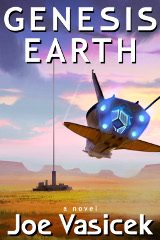
From “Engaging the Reader.” Great panel. Lisa Mangum described the planning / drafting / revising process for each of her first three novels, and they were all wildly different. With seven novels under my belt so far, I can definitely relate. Some, like Genesis Earth and Stars of Blood and Glory, practically write themselves. Others are like having a c-section with a hacksaw. And others…yeah, I’m not going to go there.

FRIDAY

Okay, maybe I said one useful thing: when there’s a language barrier, little things become big obstacles. One of the other panelists, Anna Del C. Dye, also had a bunch of stories about adapting to a foreign language and culture (in her case, the United States).

Overall, the panel was really, really fun! I also had some cards out for Star Wanderers: Outworlder, and a bunch of people came up afterward to get them. Guess I must have said something interesting. I hope you guys enjoy the book!


From “Current Trends in SF.” Great panel–it totally wasn’t just another over-hyped discussion about what’s hot right now. I asked how the panelists think the trend cycle will change in the age of self-published ebooks, and they had some very interesting things to say. They all agreed that speed to market, while it may give some advantages, isn’t a make-or-break game changer, or even really a good strategy (unless you really love the trend you’re writing to). Some things change, others remain the same. It will be interesting to give this one a re-listen.


From “Creators in the Community.” Probably one of the best panels of the entire convention. Tracy Hickman is really on top of the changes in the publishing world, and had a lot of interesting things to say about it in all of his panels. As for the subject of writerly communities, much wisdom and insight was shared by all of the panelists. Definitely look for this one.

Man, I’d forgotten how cool the guys at Dungeon Crawlers Radio are! They interviewed me back in 2011, when I was just getting ready to publish Genesis Earth. This time, we talked about space opera, sci-fi romance, language barriers in marriage and all the crazy things I have to look forward to, and a bunch of other stuff. I also shared some of my thoughts and opinions on self-publishing myths, especially regarding the “tsunami of crap.” We coined a new word, “nerdaissance,” to describe all the awesome new stuff that’s coming out now, thanks to the ease of self-publishing.

So yeah, it was a great interview! I’ll definitely be cross-linking once it goes live.

From “Effective Book Covers.” Great panel with some very good artists and cover designers, including Isaac Stewart who does all the maps for Brandon Sanderson. Although some parts were geared toward illustrators, most of the advice was for writers (especially self-pubbing writers) who are looking to design their own covers. Lots of great and insightful perspectives from the visual arts side of things.

FRIDAY NIGHT BOOK SIGNING

Okay, I’ve got to be honest: when I went into the mass signing with my cardboard box of CreateSpace POD novels, I didn’t expect to sell anything. I figured that was just my ticket to get a seat at a table and hand out cards for Star Wanderers: Outworlder to some of the casual book browsers.

Well, I was pleasantly surprised! An uncle of one of my old mission companions was impressed enough to buy a couple of copies. I think he’s one of these guys who likes to buy things from new authors to help encourage them. It’s great to see people like that. He told me to keep writing, and I told him I definitely would!

Lots of people snagged the card for Outworlder, and I came up with a pretty decent pitch: “it’s about a starship pilot who accidentally marries a girl who doesn’t speak his language.” That raised a lot of eyebrows! A lot of people were really happy to see a science fiction story, especially a space adventure. I get the impression that there’s a craving for this kind of stuff in the market that isn’t currently being satisfied. So yeah, that was very encouraging!

After things wound down a bit, I wandered around the signing checking out some of the other books. Saw a couple that I recognized from the Kindle Boards, which was interesting. Chatted with them, as well as a bunch of geeky guys about chain mail, Halo, Frank Herbert, and all sorts of awesome stuff. Man, the best part about sci-fi/fantasy conventions is the chance to just talk with people! So much interesting stuff. It was great.

SATURDAY


From “Write For the Market or Write What You Know?” Another great panel. Definitely will be re-listening to that one.

From the main address with Megan Whalen Turner. She talked about book censorship and the need to teach children how to make their own reading choices, rather than keeping them sheltered and making the choice for them. She pointed out how every time a New York Times article comes out bemoaning some YA book for inappropriate content, it’s kind of hypocritical because there are so many other books they miss. The Golden Compass, for example, didn’t even pop up on their radar until the movie came out. Kids don’t magically become mature, well-adjusted adults when they turn 18–we have to teach them to make these choices (and mistakes) for themselves.

From “How Does Your Story Mean?” Great discussion on the writing process. Saw a lot of other good live-tweets during this one.

Okay, I take back what I said about the best panel of the convention. THIS was definitely the best. “The Engines of Exploration,” with Howard Taylor, Megan Whalen Turner, Roger White, James Owen, Kevin Evans, and Charles Stanford–the panel was packed. It basically turned into a round-robin discussion of which commodities are most essential to modern civilization, which ones will be the most valuable in the event of a societal collapse, and which ones will take us to the stars. The eventual consensus on each of these eventually came down to goats. Seriously. GOATS!


From “Writing Romance Without Erotica.” Lots of delicious awkwardness, as well as some really interesting thoughts and perspectives on the subject of romance. One of the panelists talked about the importance of “character penetration” without realizing about halfway through the panel how hilarious that phrase sounded in this context. But yeah, there was also a lot of wisdom in there as well. There are a lot of strong opinions about sex and romance floating around in this part of the world, so it was a very spirited and interesting panel.


The last panel of the convention (technically, symposium, but whatever) was “eBook Publishing” with some highly successful indies like Michaelbrent Collings. As you can tell from the tweets, it was a bit controversial, but very, very interesting. Questions were flying all over the place, on subjects ranging from formatting to building an audience. The biggest shock to me was that none of the panelists (none of them!) are on Smashwords. It’s a wild, wild west out here in indie-land. Makes me wonder, maybe I should publish to iTunes through another venue? Hmmmm…

So yeah, that was pretty much the whole convention/symposium. I finished it out by playing Alhambra with a bunch of friends from Kindal Debenham’s writing group who came down from Seattle and Idaho. Good, good times–it was actually kind of sad to say goodbye. Definitely worth coming 11 time zones to attend.

All I can say is that I am STOKED for Conduit!
New upload and thoughts on ebooks

Yesterday, I reformatted Genesis Earth and uploaded the new version to Amazon, Barnes & Noble, and Smashwords.  Basically, I took everything I’ve learned about ebook formatting in the last few months and brought it up to date.

Here’s the complete list of changes:

  • Revised author’s note to include Facebook and Goodreads links, mention of newsletter, etc.
  • Added teasers for BSH and Desert Stars.
  • Credited my editor on copyright page.
  • Put table of contents on one screen.
  • Added nav points using KindleGen.

If you’ve got the old version, the book itself is pretty much the same; basically, I just uploaded a cleaner version, with links to my other works.  Genesis Earth continues to sell better than Bringing Stella Home and Sholpan, so I figured it would be good to update it.

As for how sales of my ebooks have been going, to be honest they’ve dropped off quite a bit.  At Amazon, my free short stories have more or less equalized at 20-80 downloads per week, and they’re starting to get some traction on the new Amazon FR store, but the paid stuff has slowed down quite a lot.

What this tells me is that I haven’t yet built up enough of a reader base to be self sustaining.  It’s not enough just to upload your work to Amazon and the other ebook retailers (though that’s certainly important);  you’ve got to find ways to reach new readers and get your name out there.

I’m not too worried; I figure the most important thing right now is to build my list.  After all, if you want to get discovered, the most important thing is to have something that people can discover.

Beyond that, though, I’m going to try a variety of strategies, including submitting work to more traditional markets (especially short stories).  The biggest breakthrough would probably come from Writers of the Future, so I plan to put a lot more effort into that contest.

I’ll also focus a lot on the email newsletter, since that’s the best direct connection I have with my readers.  For those of you who have already signed up, expect to see a lot more free and exclusive content.  And for those of you who haven’t–what are you waiting for??  Check out the sidebar and sign up!

In the meantime, I’m going to keep writing novels and indie publishing them.  It’s definitely worth it, even if sales are initially slow.  Like Howard Tayler says, the first step to making grizzly bear soup is killing the grizzly bear–everything after that is just making soup.

Civilized internet trolling and things to look out for

The Genesis Earth blog tour rolls on; just recently, I did an interview with Cindy Borgne of Dreamer’s Perch.  She’s been showcasing a number of other indie writers on her site, and the interviews are quite interesting, so check it out!

Also, Moses Siregar is up to an interesting new project called Indie Author Rockstar.  I’m not sure exactly how it will work, but it’s basically a community book blog / monthly book contest.  Genesis Earth will be participating in that, so be sure to check it out once it goes live (and also check out the site’s twitter feed)!

Finally, I got embroiled in a somewhat heated discussion with Howard Tayler on the comment thread of the latest Writing Excuses podcast.  The question we circled around was: “is traditional publishing still safe?” I’m not totally sure what ‘safe’ means in this context, since writing has never been truly ‘safe,’ but it was an interesting if somewhat exasperating discussion. 

Fortunately, it ended well, meaning that I didn’t get banned (though I think Howard was contemplating it). I don’t think either of us ‘won,’ but several onlookers came away feeling enlightened–and most of them agreed that the discussion was generally polite. So if I’m a troll, at least I’m a civilized one. If that’s even possible.

So that’s what’s going on here.  Genesis Earth is still selling at a slow but steady pace, and the revision of Desert Stars is going very, very well.  This is going to be such an AWESOME book–I can’t wait until I’ve got it up for you guys to check it out!

In parting, let me leave you with this amazing trance song I discovered while working data entry. That’s one of the advantages of doing boring computer work all day–it frees you in some ways to do other things. Enjoy!

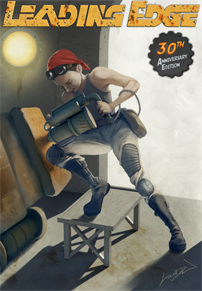
Another publication in Leading Edge!

That’s right!  My poem “Zarmina,” dedicated to Gliese 581 g (the first exoplanet discovered in its sun’s habitable zone) is published on page 98 of issue 61 of Leading Edge!

Also included in this issue is an excellent essay by Brandon Sanderson, in which he introduces his second law of magic systems.  It’s an excellent essay, and has made me rethink how I do FTL systems, especially for the Gaia Nova universe.  I’ll have to do a post a little later on that.

Besides this landmark essay by Brandon Sanderson, this issue features stories by Dan Wells and Dave Farland, as well as an interview with Howard Tayler.  And as always, it includes a number of excellent stories and illustrations.  Check it out!

(Full disclosure, I volunteer as a slushpile reader and occasional copy editor for the magazine.  However, my work always goes through the submission process under a pen name, where only the head editor knows who I am until the decision on whether to acquire the story has been made.)

In other news, Genesis Earth is now up on Goodreads, so go check that out as well!  The nice thing about Goodreads is that you can give the book a # star rating without having to write out anything else.  If you’re so inclined, I would very much appreciate an honest review–but if you do give it a rating, please be honest.  Don’t worry; even if you give me less than five stars, I won’t hunt you down like this crazy author (hint: get some popcorn and read the comments).

So anyhow, that’s what’s been going on here.  Desert Stars is coming along slowly but surely, and I’m working on getting some cover art for Bringing Stella Home.  If you have any ideas or suggestions on the art, please let me know.  I’ll probably go through my back issues of Leading Edge to search out good sf artists.  For some reason, I’m having a hard time finding anything that clicks on deviantart.  My goal is to epublish that book by the end of July.