Before there was J.R.R. Tolkien, there was Robert E. Howard. And before there was Middle Earth, there was Conan the Barbarian and the Hyborian Age.
Robert E. Howard had an amazingly prolific writing career, cut tragically short by his suicide. When I think of all the books and stories we could have had if Howard had not shot himself in grief after the death of his mother, it fills me with a profound sense of loss (and makes me want to rewatch the excellent biopic about him—or more accurately, his girlfriend—The Whole Wide World). I love Howard’s fantasy stories—not just the ones about Conan and his adventures, but the ones about Bran Mak Morn, Kull of Atlantis, Solomon Kane… honestly, he wrote so many stories that I have yet to exhaust them all.
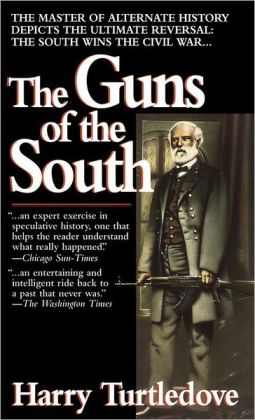
But my favorite are the stories about Conan the Barbarian, who is undoubtedly his most famous literary creation. Over the course of the last century, Conan the Barbarian has taken on a life of his own, with dozens of writers taking a stab at writing stories in the Cimmerian’s world. My favorite of these is probably John Maddox Roberts, though I have a soft spot for L. Sprague de Camp. Harry Turtledove also wrote an excellent Conan novel, Conan of Venarium.
In a lot of ways, Robert E. Howard’s Conan stories set the standard for modern fantasy—or at least for the sword & sorcery strain for it. Tolkien later established the epic fantasy strain, and you can make a solid argument that every other successful fantasy book is derivative of one or the other (or both). Where the epic fantasy strain tends run super long, with novels in the 200k word to 400k word range, the sword & sorcery strain tends to run much shorter, with many of the original Conan stories clocking in at under 10k words. In fact, from what I’ve gathered, until Lord of the Rings became popular in the 60s and 70s, most readers thought that the natural length of a fantasy story was under 10k words.
For the Conan stories, that’s probably true—or at least, under 40k words, since many of Howard’s original novellas are quite good. My favorite of his is probably either “The Tower of the Elephant” (perhaps the most classic Conan story) or “The Black Stranger,” which had a very interesting Mexican standoff between three stranded pirate captains that Conan totally blows up. I also really enjoyed “Iron Shadows in the Moon,” mostly because the female love interest gets an interesting and satisfying character arc. The crucifixion scene from “A Witch Shall Be Born” was really great, too, and of course, the brutal savagery of “Red Nails” made a really big impact—though since that was the last Conan story Howard wrote before he shot himself, it has a very dark edge to it.
Howard only wrote one Conan novel, and to tell the truth, I wasn’t particularly impressed by it—it just felt like a generic Conan story, padded with a bunch of filler to increase the length. But I did really love Conan the Marauder by John Maddox Roberts, where Conan rises through the ranks of a horde of nomadic tribesmen, starting as their slave and eventually becoming the right-hand man of the Hyborian age’s Genghis Khan. The two major villains of that book had exceptionally satisfying deaths, and the writing was almost as pulpy and glorious as Howard’s writing itself.
After you’ve read all the original Conan stories, you really should watch The Whole Wide World. It’s a wonderful film about the only woman Howard ever loved, his on-again off-again girlfriend Novalyne Price, and their turbulent relationship. As a writer, I really appreciated the glimpse that the movie gives into the life of the author himself—and on how some of his eccentricities as a writer mirror my own. Thankfully, though, my family life has been much more stable. I don’t blame Novalyne Price for rejecting Howard, but I am very thankful for my own wife and children. My own writing changed dramatically when I became a husband and father. I can only imagine what wonderful stories we would have had if Robert E. Howard’s life had taken a similar path.
The book I’ve written that comes closest to matching the mood, theme, and action of a typical Conan story is probably The Riches of Xulthar. It isn’t nearly as good as the original Conan stories, but I do think it compares favorably against some of the later knock-offs. The idea for it came when I was playing around with ChatGPT and asked it to write me a fantasy adventure story in the style of Robert E. Howard. Things took off from there. Riches of Xulthar was my first AI-assisted novel, though after using AI to generate the rough draft, I rewrote the whole book to put it in my own words, which is the process I use for all of my AI-assisted books. If you’re interested, you can do a side-by-side comparison between the AI draft and the human draft on my blog.