How I Would Vote Now: 1983 Hugo Awards (Best Novel)

The Nominees

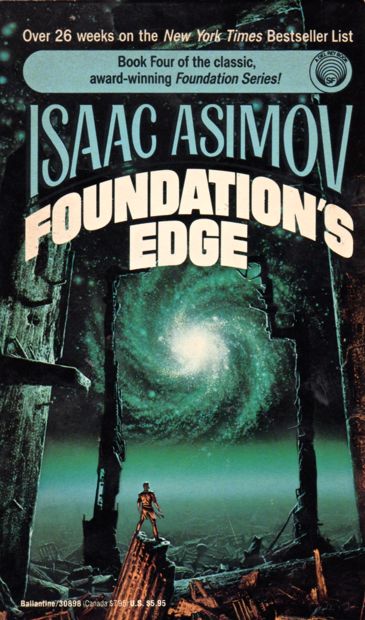
Foundation’s Edge by Isaac Asimov
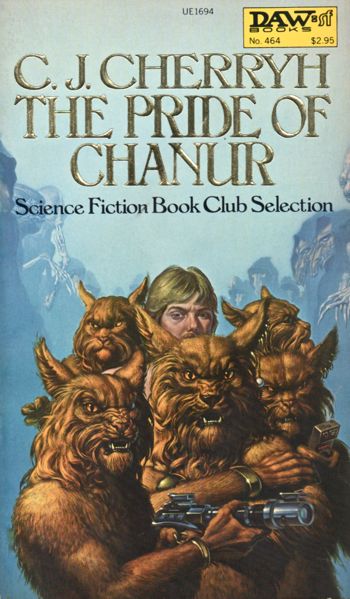
The Pride of Chanur by C.J. Cherryh
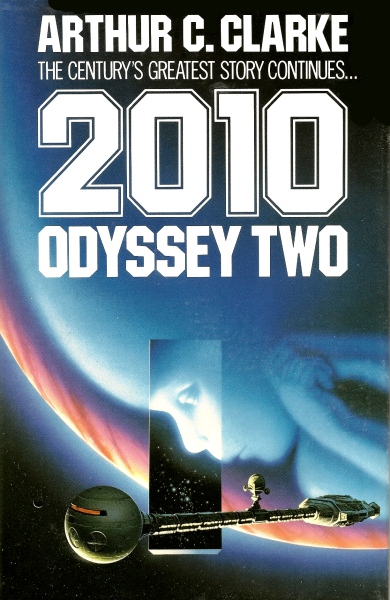
2010: Odyssey Two by Arthur C. Clarke
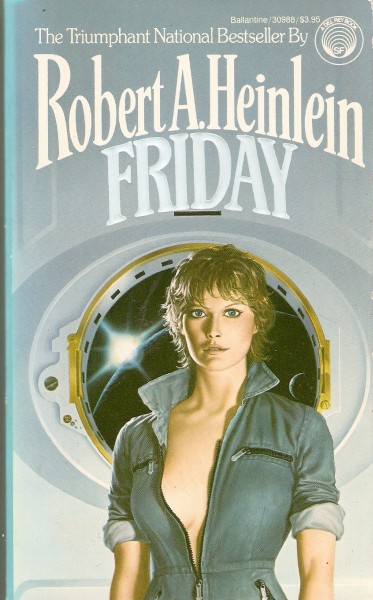
Friday by Robert A. Heinlein
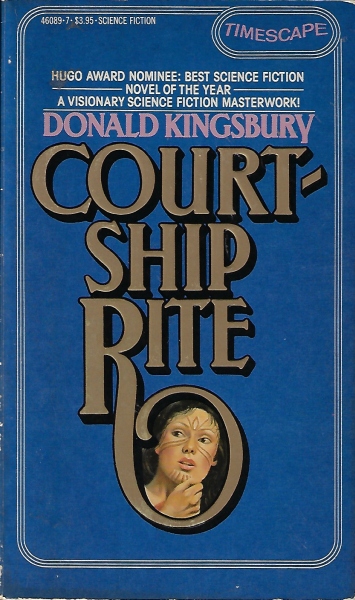
Courtship Rite by Donald Kingsbury

The Sword of the Lictor by Gene Wolfe

The Actual Results

  1. Foundation’s Edge by Isaac Asimov
  2. The Pride of Chanur by C.J. Cherryh
  3. 2010: Odyssey Two by Arthur C. Clarke
  4. Friday by Robert A. Heinlein
  5. Courtship Rite by Donald Kingsbury
  6. The Sword of the Lictor by Gene Wolfe

How I Would Have Voted

  1. Foundation’s Edge by Isaac Asimov

Explanation

I haven’t read all of Asimov’s Foundation novels yet, but I’ve loved all of the ones that I’ve read, including Foundation’s Edge. Really fun. Lots of interesting ideas. Classic sci-fi. A must-read for sure.

I’ve written before about my love-hate relationship with Heinlein. The long and short of it is that I’ve learned to avoid any of his books where he explores his free love ideas about sex and women. I’ve really enjoyed his juveniles, and books like Farnham’s Freehold and Starship Troopers. But if it’s got a partially (or fully) unclothed woman on the cover, it’s probably not for me.

Courtship Rite was an easy skip, based on ChatGPT’s preview of the book. Here is what it said:

Courtship Rite by Donald Kingsbury is one of the most morally challenging and controversial works in classic science fiction. The most immediate concern is the sexual content: Kingsbury depicts a harsh, survival-driven society on the planet Geta where sexual practices are ritualized, non-monogamous, and culturally compulsory. Several scenes contain explicit adult sexual behavior—never pornographic in tone, but described in enough detail to be unmistakably explicit. These sexual rites are integral to the worldbuilding and cannot be skipped without losing the thread of the story.

Violence is also central to the novel, particularly the culture’s reliance on cannibalism as both a sacrament and a pragmatic necessity in a resource-scarce ecosystem. Cannibalism is discussed repeatedly and explicitly, sometimes in unsettling biological detail, and ritual combat, ordeal, poisoning, and execution also appear. Although the novel does not dwell on scenes of graphic torture or sadistic harm, the society it portrays practices ritual child sacrifice and cannibalism, and this is presented as a normalized element of Getan culture.

From the book description: Jo Walton remarked that Courtship Rite “is about a distant generation of colonists on a planet with no usable animals. This is the book with everything, where everything includes cannibalism, polyamory, evolution and getting tattoos so your skin will make more interesting leather when you’re dead.”

There are too many good books in the world for me to waste any of my life reading that.

I know a lot of people love Gene Wolfe’s Book of the New Sun series, but I tried the first book and just couldn’t get into it. The fantasy world was just too macabre for me, and the story never hooked me. I’ve also heard that his writing is an acquired taste, so maybe I should give it another chance. But if I were to cast my ballot now, I wouldn’t vote for it.

As for 2010: Odyssey Two and The Pride of Chanur, I DNFed both of those for basically the same reason: I got bored. The story and characters didn’t really hook me, the world building was interesting but not enough to keep me reading, and over time I just lost interest and gave up. They weren’t terrible books, just not particularly interesting or compelling. I might enjoy them in audio, though, so maybe I’ll give that a try.

If that seems a little harsh, I’d like to point out that No Award doesn’t appear anywhere on this ballot. For the Hugo Awards, that’s saying something. In general, the 80s was a pretty good decade for the Hugo Awards, so even though this particular year wasn’t a bullseye for me, I’d still rather read any of these books (even Courtship Rite) over most of the woke crap that gets nominated these days.

Reading Resolution Update: April

My 2022 reading resolution: Read or DNF every novel that has won a Hugo or a Nebula award, and acquire all the good ones.

In 2007, when I was a sophomore in college, I went up to Salt Lake City with some friends and was browsing the awesome (and fairly run down, even at the time) used bookstore near the Gallivan Plaza TRAX stop, which has since changed names and moved to another location. It was a really awesome used bookstore, and I determined to buy a SF novel while I was there, since I was really getting back into SF after my mission. I saw a massive 600+ page trade paperback edition of Cyteen by C.J. Cherryh, and since I was reading Downbelow Station at the time, I decided to get that one.

For the next fifteen years, I lugged that book everywhere, through more than a dozen moves (though for the biggest move, where I made the pioneer trek in the wrong direction and repented 8 months later, I boxed it up with my other books and left it in a friend’s basement). In all that time, I never actually read it—or even opened it up, really—but it was always there, somewhere in the middle of my dismally long TBR list.

It wasn’t that I didn’t want to read it: I just didn’t have (or make) the time. Downbelow Station had been an okay read, if not spectacular, but I had really enjoyed some of C.J. Cherryh’s shorter books, like Merchanter’s Luck and Voyager in Night. Also, space opera books about sprawling galactic empires were right up my wheelhouse, so it didn’t seem odd for me to own such a book that I hadn’t yet read. In fact, most of the books that I owned throughout this time were books that I wanted to read but hadn’t gotten around to yet. If I have a superpower, it’s an uncanny ability to acquire books no matter where I am. Unfortunately, I’m not as good at reading them.

Fast forward to 2022. I’ve gotten married, had a daughter, launched my own writing career, and become a homeowner—and I’m still lugging this massive 600+ page trade paperback book that I’ve never read. But I’ve just set a resolution to read (or DNF) every Hugo and Nebula award-winning novel, and Cyteen is on the list. So around the middle of March, I finally open it up and start reading it.

After about a month, I decided to DNF it.

It’s not that it was terrible. Perhaps you enjoyed it, and that’s fine. I just found it to be too drawn out and confusing. I think C.J. Cherryh does better when she’s focusing on just a few characters, rather than trying to give the grand sweep of galactic civilization or whatever. I didn’t finish Foreigner for similar reasons. Maybe someday I’ll return to that one and Cyteen, but for now, I’m counting it as a DNF.

But the thing is, I was hauling around this massive book for most of my adult life. When I bought it in 2007, I figured that since it had won a Hugo, it had to be good. Perhaps, if I’d read it back then, I would have been more patient with it and slogged through to the end. Perhaps I would have decided it was just as good as Downbelow Station. Or perhaps, if I read Downbelow Station today, I would end up DNFing it as well.

The point is, I wish I’d been a lot more discerning about my reading when I was younger, and not just acquired books that I hoped to read “someday”… because books (at least the paper ones) are heavy and take up a lot of space. And a lot of them really aren’t worth reading. Of course, you’ve got to read a few stinkers to figure out what you really like, so it isn’t always a waste… but libraries exist for a reason.

So what this experience really tells me is that Mrs. Vasicek and I are doing the right thing by taking our family to our local library once a week. Also, it tells me that the second part of my resolution—to actually acquire all of the books that I think were worth reading—is just as important as actually reading them. Because, if the ultimate goal is to “seek… out of the best books words of wisdom,” then it’s not enough to just make a list: you actually have to read the damned things, and keep your own personal library in order to revisit those words and share them with others. Because ultimately, you have to discover which books are the “best books” on your own, and your best books list isn’t going to be the same as anyone else’s best books list. Which means that you can’t rely on anyone else’s list. You can use it as a starting point to make your own list, but that’s all you should use it for.

So now I want to go through all of the books I’ve acquired over the years and figure out which ones I ought to get rid of, because Cyteen certainly wasn’t the only one. In fact, most of the books in our family library are books that I haven’t (yet) read. By my count, there are just under 150 of them, totalling about 55k words. Even at a rate of 100 words or two hours of reading each day, that’s still going to take almost two years… and that’s not counting all the library books that we’re sure to check out in the meantime.

Oh well. I suppose this is more of a process than anything else. Journey before destination, and all that. And I’m sure I’ll have fun in the process, since despite the fact that I DNF far more books than I actually read, I do genuinely enjoy reading.

In any case, here are all of the Hugo and Nebula award-winning books that I read (or DNFed) in the month of April:

Books that I read and plan to or have already acquired:

  • Rainbows End by Vernor Vinge (2007 Hugo)
  • Blackout by Connie Willis (2011 Hugo and Nebula) (audio)

Books that I read and do not plan to acquire:

  • Blackout by Connie Willis (2011 Hugo and Nebula) (print)

Books that I did not finish:

  • A Time of Changes by Robert Silverberg (1972 Nebula)
  • The Gods Themselves by Isaac Asimov (1973 Hugo and Nebula)
  • The Fountains of Paradise by Arthur C. Clarke (1980 Hugo and Nebula)
  • The Claw of the Conciliator by Gene Wolfe (1982 Nebula)
  • Cyteen by C.J. Cherryh (1989 Hugo)
  • Tehanu by Ursula K. Le Guin (1991 Nebula)
  • The Diamond Age by Neal Stephenson (1996 Hugo)
  • The Moon and the Sun by Vonda N. McIntyre (1998 Nebula)
  • Parable of the Talents by Octavia E. Butler (2000 Nebula)
  • 2312 by Kim Stanley Robinson (2013 Nebula)
  • Beyond This Horizon by Robert A. Heinlein (1943 Retro Hugo, awarded in 2018)
  • The Nemesis from Terra by Leigh Brackett (1945 Retro Hugo, awarded in 2020)

Total books remaining: 26 out of 110 (currently reading 12 and listening to 3).