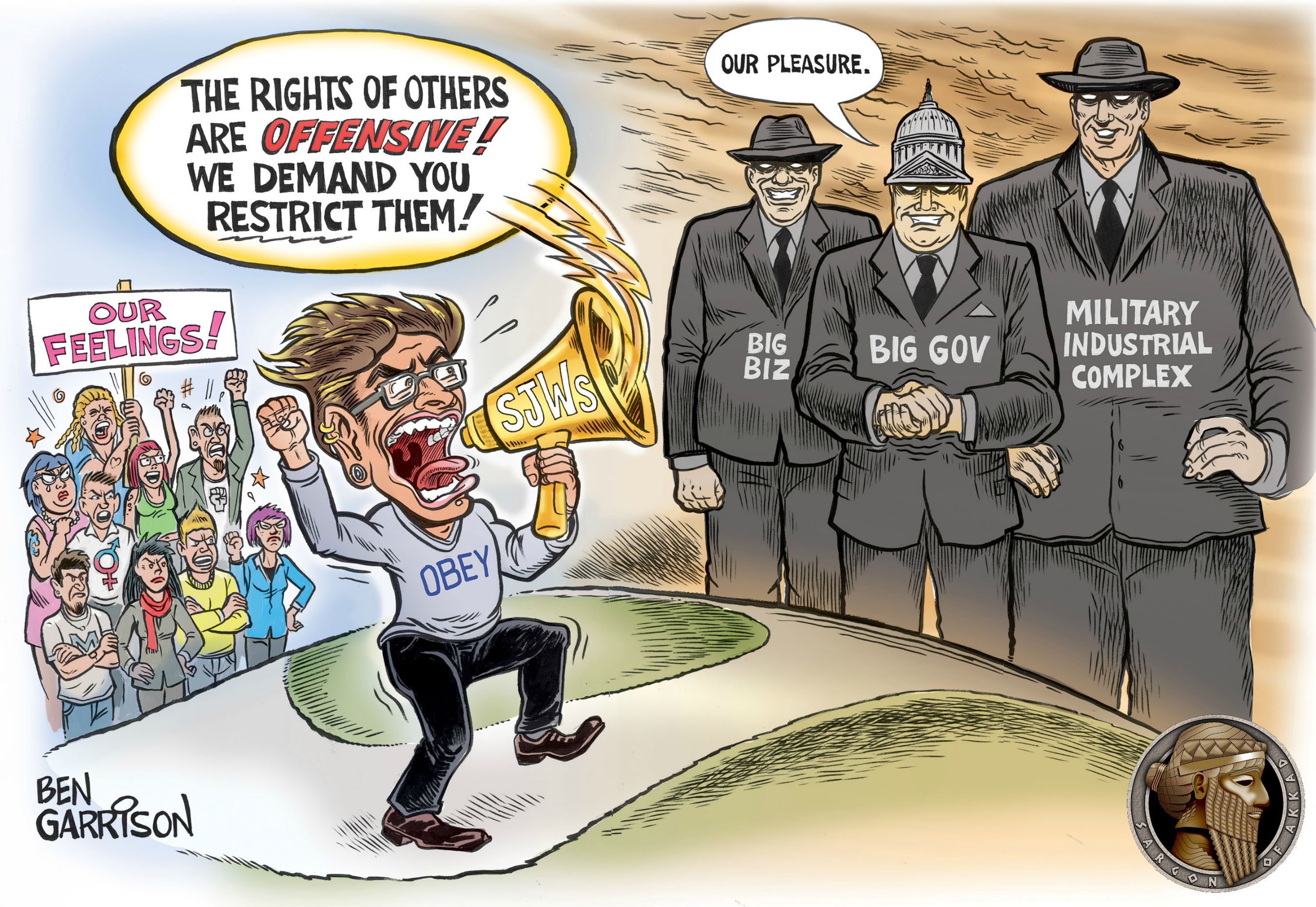
I’ve been watching a lot of Malcolm & Simone Collins’s videos lately. They are a pair of super odd ducks, but they are both super intelligent and have some very unexpected insights into our world. On some issues (particularly the issue of Mormon fertility) I think they are off-track, but on others I think they are spot on, and earlier than most of the rest of the culture. They also love trolling crazy leftists—in fact, it’s how they built up their channel.
This is the best one I’ve listened to so far. You should ignore the clickbaity title, because what it’s really about is the way that men and women complement each other as husbands and wives, especially in our current post-industrial world where the corporate 9-5 job is becoming a thing of the past. I particularly enjoyed how Malcolm compares the role of husband and wife to the characters in the game Shovel Knight. Very geeky, and also very insightful. Worth a listen.
That is the lesson that I haven taken from the recent blow-up over Harrison Butker’s commencement speech at Benedictine College. Here’s a pretty good rundown of what actually happened, and the way the internet has reacted:
If this is truly where our culture is right now—where a thoughtful and measured statement of traditional conservative belief is sufficient to incite viral online outrage from those who call themselves progressive—then I must be doing something wrong if the people who are piling up on this gentleman aren’t also piling up on me.
It wasn’t always this way. Granted, there have always been dark and hate-filled corners of the internet where people who despise traditional religious conservatism have spread their virulent views—and to be fair, Twitter/X has turned into such a toxic echo chamber that the outrage over this may be getting amplified more than it actually deserves.
But our culture has changed a lot in the last five years, and not for the better. And if the Overton window has truly moved so far that it’s considered beyond the pale to encourage women to find personal fulfillment as wives and mothers, then Harrison Butker is the man I want to stand with. They can call me every name in the book, and I will bear their vociferous outrage as a badge of honor.
Remember when the wrongfun brigade screamed and shouted and gnashed their teeth that the Sad Puppies were cheating the Hugo Awards through “slate voting,” or whatever the hell they called it? That we were somehow gaming the system to put our racist, sexist, misogynistic, fascist authors (many of whom were non-white, female, and/or flaming libertarians) on the ballot? Well… if you’ve been paying attention to the Dragon Awards, you know by now that those accusations were always flat-out lies, because the wrongfun brigade has been doing exactly the same thing they accused us of doing: cramming the wokest garbage on the Dragon Awards ballot, year after year after year.
It’s a toss-up which book is the worst offender, but so far I think that The Future of Another Timeline by Annalee Newitz takes the “worst book ever nominated for a Dragon by the wrongfun brigade” award. Seriously, if I were to write a parody of a book written by a washed-up second-wave feminist desperately trying to stay culturally relevant by proving her woke bona fides, there would not be any substantial difference between that and the actual novel. The villians—I kid you not—are an evil time-traveling brotherhood of men’s rights activists who are trying to rewrite history so that women are enslaved as breeders for the Patriarchy. Thankfully, the righteous sisterhood (er, trans-sister, non-binary… damn, that’s awkward) of uber-feminists thwarts the evil MRAs and defeats them in an epic time travel war. Abortions for all!
Seriously, it is clear from the very first page of this woefully inadequate toilet paper substitute that Newitz has never even attempted to thoughtfully and meaningfully engage with a men’s right’s activist, let alone an actual feminist who engaged meaningfully with them. And that’s what I find so fascinating. There was a time when the left was actually pretty good about engaging their ideological opponents on their own terms, and steel-manning, rather than straw-manning, the opposition’s arguments. Today, the left is totally incapable of that. That’s why all of the books that the wrongfun brigade afflicts upon us read like parodies, and why all of the awards that the wrongfun brigade has taken over are best taken as a list of books to avoid.
But all of this got me to thinking: am I capable of steel-manning the left’s argument on a position with which I vehemently disagree? Can I make their argument for them in a way that would make even the most rabid, foaming-at-the-mouth feminist nod reluctantly and admit: “yes, that is exactly what I believe”?
Let’s find out, shall we?
Since the dawn of time, women have been bound and fettered to their wombs. The ability to give birth, which the right sees as a privilege and a blessing, is actually the source of all the inequality between the sexes, and the reason why women have never been as free or as liberated as men.
Throughout history, men could have sex as often as they wished without any fear of becoming pregnant from the encounter. They might fear getting their female partner pregnant, but they always had the option to walk away. In contrast, women had to be constantly aware of the fact that any sexual encounter—whether wanted or not—could lead to nine months of exquisite physical torture, followed by a bloody birthing experience that often resulted in her death. And even in those cases where the mother survived, she now had a child who would be physically dependent on her for years, and mentally or emotionally dependent on her for decades. All of this could result from even the most innocuous sexual exploration—or a single unwanted rape.
Without reliable birth control—and many traditional religious societies still discourage birth control, same as they have for centuries—even a comfortably married woman could expect to spend the majority of her life bearing and caring for children, whether or not she wanted to. And because this experience was universal to all women, society developed strict gender roles that discouraged women from pursuing an education or a career. How could a woman pursue such things, when so many small children depended on her? In this way, the womb defined a woman’s station in life, and she had very little control or say in the matter. After all, what sort of a wife could deny her husband sex? And what sort of a woman could make a living in a world of men without a husband?
The invention of the birth control pill did a lot to liberate women, but it didn’t do enough. At best, the pill granted women a reprive that allowed them to see what the world might be like if they were no longer bound to their wombs. After all, even the most reliable birth control fails from time to time, especially if you forget to take it (or find it too difficult to obtain).
This is where the issue of abortion comes in. Conservatives like to smear us as being “unscientific” or confused about when life begins, but in truth that is just a side issue—a distraction from the real issue, which is liberating women from their wombs. Because the power to create life isn’t empowering at all if it only goes one way. If you have the power to give, but not to take, that power can be used against you. Same if you have the power to create, but not to destroy.
This is why abortion needs to be both legal and readily available through all stages of pregnancy: because unless women can choose to abort the life within them, then they will never be truly liberated. Nature has given them the power to give life, but without the power to take it, women will always be second-class citizens, confined to the restrictive gender roles imposed on them by their wombs. This is why birth control alone is insufficient: it only blocks the ability to create life, and that imperfectly. But power has to flow both ways.
Conservatives make a lot of noise about the value of life, but they are suspiciously silent on the issue of quality of life. Indeed, they seem to be unable or unwilling to consider that some lives simply are not worth living. Thus, they are willing to make exceptions to their pro-life stance for things like ectopic pregnancies—conditions where the choice is between letting both the mother and the baby die, or killing the baby to save the mother—but they fail to see how the same principle might apply in situations where the woman has to choose between aborting the child to obtain a successful career, or have the child and condemn them both to a life of abject poverty.
Not all life is equal. Some lives are more worth living than others, and some people’s lives are so terrible that they wish they’d never been born. How is it virtuous or noble to give anyone that kind of a life? It isn’t. Abortion is a hard thing, but sometimes it is necessary, and the alternative—the pro-life position—is downright cruel.
But that isn’t the main reason why abortion is so important. The main reason is that it liberates women from the fetters of the womb. It grants them the antithesis to the power that nature grants them, the power to create life, and thus allows them to pursue whatever sort of path they wish. Many women who have abortions go on to have children later in life, when the time is right for them. And because of those abortions, they are better able to care for those children, when they do come.
At this point, we should talk about how men control women’s bodies. Now, it’s obvious that there isn’t some super-secret Patriarchy society that meets on Tuesdays to discuss how they can advance their goal to turn all women into slaves for breeding purposes. That’s not what we mean when we say “controlling women’s bodies.” However, it is natural for people to fear the things that they don’t understand, and to try to exert control over the thing that they fear. Men clearly don’t understand women—that fact has been memed so often, it’s practically self-evident. So is it really all that hard to believe that men often try to exhert control over women, out of their fear and misunderstanding?
This control takes on many forms, but perhaps the most common form is that of gender roles. Men want women to take on a defined role because, among other things, that makes women understandable. But these roles are often more constrictive than the corresponding roles imposed upon men. A “mother” is often subject to a higher standard than a “father,” and is judged much more harshly when she fails to live up to that role. Also, the role of “mother” grants a lot less bodily autonomy than that of “father.” Is it really hard to see how this becomes a mechanism of control—specifically, over women’s bodies?
The issue at the heart of all of this is liberation. Freeing women from the harsh realities imposed upon them by their wombs is just the beginning. The ultimate liberation is the freedom to redefine reality itself—to decide whether or not one actually is a woman, and transcend the restrictions of sex and gender altogether. And why shouldn’t we exercise this power? Since the dawn of time, humans have been creatures of innovation, refusing to accept the constraints that nature has imposed upon us. When we looked up at the birds and saw that they could fly, we didn’t say “that’s nice, but nature didn’t give us that ability, so we should just stay in our place here on Earth.” Rather, we took inspiration from the birds and kept innovating and inventing until we, too, had the ability to fly. Why should sex or gender be any different?
This is why feminism and transgenderism aren’t actually at odds. It’s also why the new “what is a woman?” meme on the right, however cute, is totally irrelevant. Yes, it is true that ever since the dawn of time, a woman has been defined as an adult human female. That isn’t interesting. What is interesting is what women may become, after they’ve been liberated. Or men, for that matter. Because the liberation of women also ultimately liberates all of humanity: male, female, and everything in-between.
Liberation is the goal. Liberation is the key. Accept no boundaries, and refuse to live by the rules that are imposed upon you. Partake of the forbidden fruit, and you too may ascend to godhood. Refuse to accept the stories of Icarus and Prometheus as cautionary tales. Rage, rage against the dying of the light.
So a couple of days ago, I finished revising “The Freedom of Second Chances” and started looking for places to submit it. That was how I found this anthology call, for a pro-abortion anthology titled Aseptic and Faintly Sadistic: An Anthology of Hysteria Fiction. The guidelines were so unbelievable that I just have to fisk them on this blog. Here we go!
Hysteria
Interesting title for an anthology. I’m sure this will feature only the most thoughtful and enlightening stories that the speculative fiction field currently has to offer.
Irrational.
Okay.
Frenzied.
Uh, okay.
Unreasonable.
Oookay.
Unable to speak their own experiences.
One of those things is not like the others. One of those things just doesn’t belong.
Seriously, if you are free to be as irrational, frenzied, and unreasonable as you wish, then what exactly is preventing you from being able to “speak [your] own experience”? If you are still free to do this:
…then you are not being silenced by the pro-life crowd.
(As a side note, you would not believe how difficult it was to find that video. YouTube search would not bring it up, no matter how many combinations I tried. Even Brave search mostly brought up music videos and disgusting sex tapes. I had to go to The Comments Section by Brett Cooper, look up the video where she briefly reacted to it, freeze the frame, and scroll through a couple pages of search—not on YouTube, or on Google, or on Duck Duck Go (all of which are “curated” now), but on the Brave browser’s native search engine.
But tell me again how your side is the one that is “unable to speak their own experiences.” I’m sure that’s why this hilarious and eminently meme-able video about a story in the current news cycle has only received 10k views in the four days of its existence, and no mention on Know Your Meme at all. After all, it’s not like conservatives are the ones being censored and shadowbanned.)
In the case of abortion specifically, we have been told for decades in the United States that Roe v. Wade was safe
No, I’m pretty sure that was just something that you people told yourselves.
and that we were overreacting, illogical, needlessly aggressive—hysterical.
Actually, “safe, legal, and rare” was pretty much the majority viewpoint until Trump became president and all of the masks came off. So tell me, was “safe, legal, and rare” a lie from the very beginning?
Now look. We were none of those things.
Then why is the title of your page literally “Hysteria Submission Call”? Because it seems to me that all of those words—”overreacting,” “illogical,” “needlessly aggressive,” and “hysterical”—describe you people perfectly. As further evidence:
Aseptic and Faintly Sadistic:
It is so wonderfully fitting that the title of your anthology invokes the Marquis de Sade, the man who asked why everyone else’s pain should be more important than his pleasure. After all, why should 60 million dead babies—a death count that would make Hitler blush—be more important than your freedom to have promiscuous, irresponsible sex?
An Anthology of Hysteria Fiction,
I have literally never considered the combination of those two words until I saw them in your anthology call.
which is presented by CHM and will benefit the Chicago Abortion Fund, is seeking dark speculative fiction from anyone directly at risk as a result of the Supreme Court’s ruling on Roe v. Wade, defined inclusively.
But exclusively of, you know, actual women. After all, I noticed that you never mentioned the word “woman” in that sentence. Pretty weird, considering that Roe v. Wade was supposed to be about “a woman’s right to choose.” Or was that always a lie, too?
Guidelines
Genre: Dark speculative, widely defined. Don’t self-reject!
Oh no, honey. It’s not me that I’m rejecting when I say that you people will never see any of my work. Though I was tempted to troll you by submitting “The Freedom of Second Chances,” since it’s the most pro-life story I’ve written so far in my career. But I decided to fisk your anthology call instead.
Theme:
Hysteria.
Interpret the theme broadly. You don’t have to beat me over the head with the connection.
But how can it be “hysteria” if we aren’t beating you over the head? After all, that’s what the Trump years were all about: beating the narrative over all our heads until morale improved.
I am willing to look at everything from retellings of “The Yellow Wallpaper” to sci-fi space opera rockstars. Feel free to take on one of the many faces of the monstrous patriarchy directly.
Isn’t it curious how “the Patriarchy” totally isn’t a crazy conspiracy theory, but the Wuhan lab leak theory, or the efficacy of ivermectin in treating covid, or the reports of alarming menstrual irregularities and increased rates of myocarditis in people who took the covid vaccine all were. But since the pandemic, the difference between conspiracy theory and conspiracy fact has been between 4-6 months—except for the truly crazy conspiracy theories, like the idea that the moon landing was a hoax. Or the Patriarchy.
Because if you can’t now, when the heck can you?
Well, your anthology call is certainly taking this “hysteria” theme seriously. So points for consistency, I guess.
Open To: Anyone directly at risk as a result of the Supreme Court’s ruling on Roe v. Wade, defined inclusively
But once again, defined exclusively of actual, you know, women. And by “women,” I mean adult female humans, because those are, you know, the only people who can actually get pregnant (emojis notwithstanding) and therefore, you know, the only people who can actually get abortions.
Seriously, though, it is amazing what sort of knots these people will tie themselves into in order to avoid having to answer the question “what is a woman?”
(Also, this is a knitpick, but it’s worth pointing out that there’s a typo in that sentence, since it ends without a period. Pertinent because the anthology call was supposed to be written by a professional editor.)
Word Count: Maximum 5,000 words, no minimum.
Reprints: No.
Multiple Submissions: No.
Simultaneous Submissions: Yes! But please alert us immediately if the piece is accepted elsewhere and needs to be withdrawn.
In all fairness, I have to give these people credit for allowing simultaneous submissions. In this era of digital publishing, it is insane for publishers to expect writers to give them exclusivity when deciding whether or not to purchase publishing rights. It’s also inconsiderate, but that was true before digital publishing.
Simultaneous submissions are one of my industry hobby horses. Maybe I’ll write a blog post about that, though it may get me blacklisted from a few of these magazines. Then again, I’ve probably already been blacklisted for writing stories that are pro-life. Remind me how Dobbs v. Jackson makes you “unable to speak [your] own experiences” again? Oh, right.
Pay:
6 cents/word (USD)
As this is a charity anthology, authors who would like to contribute more and who are safe to do so may waive pay. This is completely optional, and we will never ask you to do this; you can only request it upon acceptance.
Except you kind of just did ask, in a passive-aggressive sort of way.
Date Open: July 18
Date Closed: August 1
Format:
Shunn-ish. I don’t need your home address or phone number, we haven’t even met.
No need to stress about the cover letter, but if you are a member of a marginalized community underrepresented in discussions of reproductive justice, feel free to note that if you are comfortable.
Notice again that they never actually mention the word “woman.” Which is incredible, because in the very act of discussing “marginalized” and “underrepresented” groups, they are literally erasing and marginalizing half of the people on this planet. Never forget: accusation = projection = confession 100% of the time with these people.
Submissions: AsepticAndFaintlySadistic@gmail.com
Please use this format for the subject line of your submission email.
Last Name; Story Title; Word Count
Other Stuff
The Editor Likes:
Forward-thinking,
Translation: pro-trans propaganda that refuses to acknowledge the existence of women.
expertly crafted
Translation: the sort of thing an English major would write.
speculative fiction. Work that uses innovative forms,
Translation: the sort of thing that wouldn’t appeal to people who like fun, entertaining stories. Because that would be wrongfun.
original voices,
Translation: “We’re looking specifically for a previously unpublished writer who checks all the right intersectional boxes, so that when xe becomes an award-winning darling of the field, we can say that we were the first ones to publish xer.”
broken timelines,
I actually had to look this one up. Apparently, they want to publish the next “Unknown Number,” because if an artist can duct tape a banana to a wall in a gallery and call it fine art, then a writer who checks all the right intersectional boxes should be able to win the Hugo with a Twitter thread. Or something.
metafiction,
Translation: post-modern garbage.
etc, but is still legible.
But will you accept my submission if it’s written in crayon?
Think Carmen Maria Machado, Nadia Bulkin, Mona Awad, Rivers Solomon, Angela Carter, Emily M. Danforth, Caitlin R. Kiernan.
The only one of those writers I’ve actually heard of is Rivers Solomon, and from what I can tell her faer main claim to fame is that she fae checks all the right intersectional boxes.
Absolutely Not:
TERF-y, gender-essentialist fiction.
Lest you think I exaggerate when I say that these people want to erase and marginalize women, we have it right here, straight from the horse’s mouth. No trans-exclusionary radical feminist stories, aka anything that defines “woman” as an adult human female, no matter how feminist it might otherwise be.
Trans activists talk big about how everyone who opposes them treats them like they “don’t exist,” but that is exactly what they are doing to women: erasing them. Once again, accusation is ALWAYS projection is ALWAYS confession with these people.
Gratuitous sexual assault, gratuitous violence, and unchallenged -isms and -phobias (body horror welcome).
I’m not surprised. Abortion is the ultimate body horror.
The Title Comes From: Margaret St. Clair’s fantastic short “Brenda” (Weird Tales 1954).
Thanks for the tip. I will certainly avoid that one.
Why the Chicago Abortion Fund: It looks like, for the foreseeable future, Illinois is going to be the only state with abortion protections in place serving a very large section of the country.
And by “protections,” of course they mean that there will be no protections in Illinois for the unborn.
Abortion funds are especially critical at this time, as they provide financial assistance to directly cover the costs of abortion.
Because those abortionists really need their lamborghinis!
The Chicago Abortion Fund provides grants from between $100 to $300 dollars to those seeking abortion services, and they attempt to provide this grant for 100% of the people who contact them. They also provide assistance in locating additional funding, as well as with travel and associated expenses.
From their website: The mission of the Chicago Abortion Fund is to advance reproductive autonomy and justice for everyone by providing financial, logistical, and emotional support to people seeking abortion services and by building collective power and fostering partnerships for political and cultural change. We envision a world where everyone has the freedom and autonomy to create lives, families, and communities that are healthy, safe, and thriving and where the full range of reproductive choices, including abortion, are accessible and affirmed.
If these people are truly “pro-choice,” why are they so obsessed with shutting down crisis pregnancy centers? Just look into the crazy eyes of Elizabeth Warren as she talks about it, and then ponder on the fact that dozens of crisis pregnancy centers have been firebombed and vandalized by the left-wing terrorist group Jane’s Revenge in just the past month. Why?
Because the “pro-choice” crowd only really believes in one choice: abortion. But having only one choice means that you have no choices at all, meaning that “pro-choice” is actually a lie. Just like “safe, legal, and rare.” Just like “a woman’s right to…”
Which brings me back around to the most incredible thing about this anthology call: the fact that the words “woman” and “women” do not appear anywhere, even though this is supposedly a pro-abortion anthology. In fact, the anthology call goes out of its way to discourage submissions that are “gender essentialist,” meaning that they affirm the scientific, biological nature of sex. In a pro-abortion anthology call!
It is impossible to satirize these people. They are so possessed by their radical ideology that they satirize themselves without realizing it. In a sane and healthy world, the anthology would be a failure, the publisher would go bankrupt, and the stories themselves would quickly fade into cultural irrelevancy—
—which may happen yet. The cultural tides are turning, and these people are so devoid of self-awareness that they are totally blind to it. That is precisely why the overturning of Roe v. Wade caught them so flat-footed. And instead of responding to this setback with introspection and reflection, they immediately jump to hysteria, not realizing that doing so wins no converts and turns away many who would otherwise be sympathetic.
They are losing.
They are losing HARD.
Moreover, they have no idea how hard they are losing.
In their arrogance, they will fall.
And after they do, future generations of readers will look back in wonder and bewilderment at anthologies like this one that were products of their insane (and interesting) times.
I don’t usually do these fisking articles, but in my efforts to find more traditional markets to send my short stories, I’ve come across some truly insane submission guidelines. Since none of these markets is likely to publish anything by a conservative straight white cisgender Latter-day Saint Christian male such as myself, I don’t see much harm in fisking a couple more of them. What do you guys think?
…the MPDG “exists solely in the fevered imaginations of sensitive writer–directors to teach broodingly soulful young men to embrace life and its infinite mysteries and adventures.” MPDGs are said to help their men without pursuing their own happiness, and such characters never grow up; thus, their men never grow up.
You know how the term “space opera” was originally a derogatory term for crappy science fiction? I’m going to go out on a lark, invoke tropes are tools, and argue that Wikipedia is wrong and there’s nothing inherently bad about this trope.
Anita Sarkeesian is not a huge fan of the manic pixie dream girl. In fact, it was the first trope she deconstructed way back 2011, before her scammy kickstarter. I’m not a huge fan of Anita Sarkeesian, but it’s worth rewatching her take on it:
In particular:
The manic pixie perpetuates the myth of women as caregivers at our very core—that we can go fix these lonely, sad men, so that they can go fix the world.
Here’s the thing, though: when you study the men who have fixed the world, you almost always find a strong, caregiving woman behind them. This is portrayed very well in The Darkest Hour, with Winston Churchill’s wife, Clementine:
Granted, Clementine Churchill is no manic pixie, but she did provide critical support to her husband, and was one of the key influences that shaped him into the great man of history that he ultimately proved to be.
Here’s the thing: men need women, just as women need men. All the feminist eye-rolling in the world doesn’t make that untrue. And for men who are lonely, depressed, or overly introspective, a perky outgoing woman can really have a positive impact.
The key to doing this trope well is to make the MPDG a complete character in her own right. Critics rightly point out that something is wrong when she exists solely for the benefit of the male protagonist. That’s not a feature of this trope, though: that’s just bad writing in general.
The best example of a MPDG in my own work is probably Deirdre from Heart of the Nebula. The rest of this post is going to be full of spoilers, so if it’s on your TBR list, you should probably skip to the end now.
Deirdre is very much a character in her own right. She’s the ship’s historian of the Chiran Spirit, a generation ship that James liberates from pirates before going into cryosleep. In spite of her perky, cheerful demeanor, she has experienced deep pain in her life. She immediately latches onto James, but over time this transforms from an interest in a living historical figure to genuine attraction and love.
James and Deirdre round off each others’ rough edges. She helps him to recover his optimism and self-respect, while he helps her to understand herself better and decide what she truly wants. They both help each other to reconcile with difficult baggage from each of their pasts, and though they both go through a period of disillusionment, they ultimately come out stronger for it on the other side.
Here’s the thing, though: if Deirdre was anything but a manic pixie dream girl, she wouldn’t have been able to help James through his darkest hour. It’s her bouncy enthusiasm, clumsy excitement, and unfailing optimism that draws him out of his callused shell. Without those characteristics, the story—and her character—wouldn’t have worked.
In short, I believe that the manic pixie dream girl trope very much has a place, and isn’t inherently sexist or mysoginistic at all. It can be, if done poorly, but when done well it points to the reality that men need women just as women need men, and that’s actually a good thing, no matter what the feminists say.
This post is going to be political. Consider yourself warned.
I am not afraid of terrorists. I am not afraid that I, or anyone I love, will be caught up in a Paris-style terrorist attack. For one thing, most of the people love live in Shall Issue states with very few gun restrictions. Time and again, the second amendment has proven to be an effective line of defense against terrorists, mass shooters, and other deranged individuals who consider themselves above the law. Gun laws do not stop these people (surprise!), but a responsible armed populace does.
I am not afraid of a massive economic collapse, though I suspect that another one is imminent. I just looked at my mutual funds and realized that they have flatlined for about the last year—which is exactly what happened just before the collapse of 2008. The Chinese stock market collapse earlier this year is having repercussions across the world, but an economic collapse is something you can personally prepare for, and I believe very firmly in the principle “if ye are prepared, ye shall not fear.”
I am not afraid of a massive societal collapse, of zombies roaming the landscape—either the literal undead zombie or the metaphorical people-as-animals type. I consider a collapse of this kind to be highly unlikely, because if there’s one thing the Great Recession taught me, it’s that there’s a very big difference between the collapse itself and people’s experience of it. In some parts of society, the last collapse was barely felt at all. In other areas of society (such as Detroit), the collapse has never ended. Rarely do all sectors of society collapse at the same time—and even if they do, it’s still something that you can prepare for.
I am not afraid of any of these things. However, I am terrified that the United States, like Rome of old, is about to witness the death of the Republic.
In his groundbreaking book The Next Hundred Years, George Friedman discussed this dilemma at length. He foresaw the 21st century as a fundamentally American century, with the Pax Americana defining the geopolitical landscape. Many of his predictions have been and are currently being vindicated, including the return of an aggressively expansionist Russia, the gradual collapse of Europe, the economic development of Mexico, and the Chinese economic slow-down.
Yet the tension between Republic and Empire was something that he could not resolve, except to say that it is imperative that we find a balance between the two. A Republic places moral constraints on the power of the state, tempering the forces of Empire. When the Republic is destroyed, the Empire ceases to be benevolent and becomes totalitarian.
So why do I bring this up now? Because the recent events in this country have left me profoundly disturbed.
In October, House majority leader John Boehner (R) stepped down from office. Before he went, however, he and his cronies in the Senate and the House of Representatives rammed through a bill that effectively abolished the US debt limit until March 2017. Immediately after the bill was signed, the US debt jumped by more than $300 billion in a single day, and it has been rising precipitously ever since.
(As a side note, the debt-to-GDP ratio in the United States is now as bad as the PIGS countries in Europe—you know, the ones whose sovereign debt crisis precipitated the economic collapse in Europe, which has been FAR worse than our own collapse. That alone is enough to be frightening, but again, an economic collapse is something that I can prepare for. I’ve lived through one already, after all.)
And what was Our Glorious Leader’s response? He praised them, natch.
In fact, he’s doing more than that: he’s BANKROLLING them. That’s right: the same administration that gave the NSA a mandate to spy on the entire US citizenry and established a legal basis for drone strike assassinations of US citizens is now bankrolling a movement of domestic civil unrest.
With no debt limit.
There’s a term for these students, and that term is USEFUL IDIOTS. According to Wikipedia, useful idiots are “propagandists for a cause whose goals they are not fully aware of, and who are used cynically by the leaders of the cause.” In other words, they are pawns for evil and conspiring men who use them to sieze power and control.
This is not a new thing. In the Cold War, the KGB devoted the vast majority of its resources not to espionage, but to subversion. In this manner, they infiltrated, destabilized, and ultimately siezed control of several third-world countries. The primary target of their subversion efforts was always the United States and her allies. Defectors such as Yuri Bezmenov repeatedly warned us of this threat.
We can see the subversion process in action through the development of Left-wing movements like modern feminism. If you can spare an hour and a half, I highly recommend that you watch this video where Youtuber Sargon of Akkad interviews Erin Pizzey, the founder of the women’s shelter movement. What began as a movement to genuinely help victims of domestic abuse was blatantly co-opted by Marxist elements and folded into the modern feminist movement as a front for raising money. Even though men are also victims of domestic abuse, there are almost no shelters for men because this would threaten the taxpayer gravy train that has been siphoned off by the feminists for years. And the scariest part? That the radical feminists ultimately won. Our modern society has been reshaped by them in so many negative ways that it’s hard for us in this generation to see the forest for the trees.
But as scary as third-wave Marxist Feminism can be, it’s not them that I’m afraid of. They are, after all, little more than useful idiots. What frightens me are the evil and conspiring men (and women) behind them.
Are the old Soviet subversion programs still active and in operation? Probably not. The modern FSB is a shadow of its former KGB self, as the numerous Russian intelligence failures in Ukraine have shown. For all its aggressive bluster, Putin’s Russia is weak.
Still, it’s worth pointing out that the Soviet Union was never completely dismantled. When we conquered Nazi Germany, we held the Nuremberg Trials to root out Nazism and exterminate it. We did no such thing in Russia. Many of the former Soviet elites are still in Russian government today, foremost among them Vladimir Putin himself. The institutions of the communist state were reorganized, their personnel shuffled around, but they were never completely abolished.
That said, I don’t think it’s the Russians who are directly pulling the strings. I think it’s far more likely that their socialist allies and sympathizers in the West (men such as Bernie Sanders, though I suspect he’s just another useful idiot) took over the subversion programs once the Soviet Union fell, and have been using them for their own ends ever since.
This is why I am so deeply opposed to “social justice.” It is such a vague and nebulous thing that anyone who calls for it cannot help but become a useful idiot. The one thing that all social justice warriors have in common is the belief that a more powerful government is necessary to fix all problems. Naturally, this plays straight into the hands of those evil and conspiring men.
Social justice has become something of a buzzword in recent years. It defined the 2015 Hugo Awards, which was a localized but still significant battle in the ongoing Culture Wars. That was how I was first introduced to SJWs and their repulsive identity politics.
But again, it’s not the SJWs that frighten me. They are perhaps the most useful of idiots, but they are still just useful idiots like the others. It’s the movers and the shakers behind the scenes that frighten me—the evil and conspiring men who see them as a means to accomplish their own ends.
And the thing that terrifies me most of all is that the target of these evil and conspiring men is the Republic itself, or in other words, the rights and liberties enshrined in the Constitution. When those are swept away, the Republic will be truly dead. And my greatest fear is that the day is fast approaching when the Constitution will hang by a thread, with precious few to uphold it.
I can prepare myself for an economic collapse. I’ve lived through one before. I can build my food storage, learn how to be more self-sufficient, take measures to defend myself, and prepare contingency plans in case of SHTF. I can insulate myself and the people I love from most disasters.
About a year ago, there was a big discussion in the science fiction & fantasy community about sexual harassment and sci-fi conventions. As a result of that discussion, allegations were thrown out about a certain senior editor at Tor, rumors began to fly, and through what some might characterize as popular justice and others might characterize as an internet bullying campaign, the editor was fired.
That disturbed me, so after engaging in a rather heated discussion on Mary Robinette Kowal’s blog about it, I wrote a blog post of my own, which I then took down (though not before it was picked up elsewhere) after some private email correspondences that were rather toxic. Even though I had an opinion, I decided that this wasn’t where I wanted to plant my flag, especially since it looked like I’d be hard-pressed to defend it.
Well, at the risk of taking some rightly earned flak, I want to bring back that post in order to give myself an opportunity to respond to it. My views and opinions have changed since then, and I don’t think I was right.
First of all, it’s come to my attention that this isn’t the first instance of high drama within the SF&F community. In fact, there have been so many inane kerfluffles and genuine spats over the years that for lifelong, hardcore fen, engaging in them is practically a sport. So now, I can see that my concerns about the community “tearing itself apart” were naive at best, and concern trolling at worst.
Second, through the efforts of writers like Jim C. Hines and Cora Buhlert, through following various discussions on Twitter, KBoards, and blogs like The Passive Voice, and through various conversations on-line and off-line with personal friends, I’ve come to realize that bigotry, sexism, and sexual harassment are much bigger problems within the SF&F community than I thought they were. The majority of voices now being raised are not trying to advance some nefarious PC agenda, but are simply pushing back against some very legitimate grievances. If we’re only hearing about those grievances now, it’s because they’ve been swept under the rug for too long.
Whether or not there is a faction in the SF&F community with an overt political agenda, that’s an entirely separate and disconnected issue from sexism, sexual harassment, and the stigmatization of minorities. Just because it’s not as visible to me as a white male author and fan doesn’t mean that there isn’t a major problem. If anything, I’m the least qualified person to make that judgment. The people who are complaining about these issues should be taken entirely at their word.
The science fiction & fantasy community as a whole is maturing and diversifying, and that’s a very good thing. It’s bringing in a rich influx of wildly imaginative stories, which strengthens the genre tremendously. Whatever your worldview, whatever your gender, whatever your preferred fandom, you should feel like there’s a place for you here if that’s what you want to read and write. Anything that makes people feel harassed or unsafe, stigmatized, or unwelcome is a much bigger threat to the genre than anything else.
As the SF&F community continues to mature and epublishing brings in a whole new generation of writers, there’s going to be a lot more drama as issues that have been swept under the rug for years are brought into public view. As this happens, I think it’s important to keep in mind what makes our genre strong: a rich variety of visionary and imaginative voices. The message should always be “there’s a place for you here,” not “you’re only welcome if you look and think like me.”
So yeah, I want to go on the public record and take back what I said in that previous post. There’s a much bigger issue here that should not be overshadowed, and it was wrong for me not to acknowledge it. I hope that no one feels that I’m disparaging of women, minorities, transgendered individuals, or any other group within fandom, because that’s not what I stand for. I may not agree with all of your views–in fact, I expect I’ll disagree with many of them–but that’s what makes the genre strong, and I don’t want anyone to feel like their voice is being silenced.
As for the other issues, I’m not quite so worried about the internet bullying aspect anymore because it’s clear that most of the pushback is not malicious, even if it can become quite vocal and heated at times. I don’t condone internet bullying at all, and I reserve the right to be critical where I believe the intent is malicious. At the same time, I don’t think there can be much credibility when gender-normative white male writers cast themselves as the victims.
If you felt demeaned or angered by what I said, either here on my blog or by my comments somewhere else, I’m sorry. My views on these issues are evolving, so I hope you’ll take that into account. And I hope that we can all keep an eye on what makes the community strong, which is a wide diversity of visionary and imaginative voices.
NOTE: I’ve since changed my views and retracted many of the things I said in this blog post. You can find a link to the retraction here.
Oh, boy, has there been a lot of drama in the science fiction & fantasy community recently. From the trouble with the SFWA bulletin to the revelation of accusations of serial sexual harassment by a senior editor at Tor, it seems like the whole community (or at least, the part that sees itself as part of a wider community) is up in arms. And while a lot of the response has been balanced and civil, I’ve also seen some things that I find troubling.
For the benefit of the doubt, let me just say that I support the people who are coming forward with stories of harassment and abuse. It’s clear that this is a problem, and that it needs to be addressed in a way that brings about real change. Also, I agree that the community has a history of demeaning or undervaluing the women within it, making it a lot more difficult for female writers to earn the same level of respect as their male counterparts. That, too, needs to change.
But guys … can’t we get along? Can’t we come together and get back to what this community is really about–sharing and telling good, fun stories?
Don’t get me wrong–I’m not trying to minimize any of the problems causing this drama. They need to be fixed, and it’s going to take time to do so. But are they going to become the focus of everything we talk about, or are we going to turn back to the things that unite us, and pull together as a stronger and better community than we were to start out with?
Right now, I get the impression that the majority of members who are active in the SF&F community mean well and want it to be a welcoming space. They may have their faults, but they’re working on them. And most of their faults are not causing direct harm to others.
Then there’s a small but outspoken minority who wants change, wants it now, and wants it so badly that they see problems everywhere. Many of them have legitimate concerns, and people from the less outspoken majority are coming out and confirming that. But many of them are dangerously overzealous–and since we have in this community some of the most imaginative minds in the world, it doesn’t take much for people to start projecting onto people they disagree with, or reading things into comments that aren’t actually there, or seeing those who question or disagree as The Enemy.
I cannot control how others perceive me. I cannot speak without risking that someone is going to misconstrue my intent and feel “silenced,” or “afraid,” or whatever. I can reach out to people privately, though, so if you feel like I’m part of the problem, please contact me and let me know.
This whole thing reminds me of my time from ’03 to ’05 as a Mormon missionary. Oh boy, was there drama. Imagine a couple hundred sexually repressed, 19-21 year-old boys (and a couple dozen young women) in a rigidly structured environment, with tremendous emotional pressures and very little direct supervision. There was drama, and I hated it. The best times on my mission were when I never saw anyone but my companion (Mormon missionaries live and work together in pairs) and maybe the four or six other members of the district once a week or so.
But the way things are playing out right now, I wonder if the outspoken minority is so determined to reshape the SF&F community in their own image that they’re tearing it apart. Orson Scott Card, for example, has been tarred and feathered multiple times and thrown out of the community on a rail. And yet, Ender’s Game is still one of the best (and bestselling) science fiction books ever written. Mike Resnick, for all his chauvinism, has written a lot of really good books and stories too. Jim Frenkel, for all his creepiness, has been instrumental in bringing us great books from Tor.
Does this excuse their faults? Of course not. But guys, these authors and editors aren’t The Enemy–they’re part of the community just as much as you are. And you deal with offenders within the community differently than you do with offenders who are not.
A lot of people are congratulating themselves and saying that we’re doing a good job rooting out these problems and dealing with them in an open and reasonable way. And to an extent, I think that’s true. But if there’s one thing I’ve learned from all this drama, it’s that the SF&F community is a lot more fractious than I’d previously realized, and that the ties that bind us really aren’t that strong at all. And that makes me wonder if it’s better just to forget the whole thing–forget the conventions, forget SFWA, forget the major blogs–and just do my own thing independently of everyone else.
And honestly, it would appear that a large number (perhaps even a majority) of SF&F writers are doing just that, especially the self-published ones who don’t really care about courting publishers or winning awards. For these guys, it’s all about the readers–and isn’t that the way it should be?
Yeah, sorry, no Trope Tuesday this week. Third week missed in a row! Not so good. Thing is, I’m really focused on finishing Star Wanderers: Reproach (Part VII) right now, with a self-imposed deadline of May 31st. I figure that’s more important, and I really don’t want to break my momentum.
I’ve been vacillating a lot about this project. Sometimes, I think it’s halfway decent, perhaps even good. Other times, I wonder how the @#$! I came to be trapped in this story and why I’m wasting the best years of my life writing this crap. The other Star Wanderers stories are selling decently well, but this one is so shite that it’s bound to kill the series and why am I writing this why why WHY???
And then I get the chains back on my inner editor and drag him down to the dungeon, where I keep him on a strict diet of bread crusts and rotten cheese. No wonder he hates me.
I know those trope posts are a popular feature around here, so I’ll get back on top of them once this project is finished (which WILL be this week! It WILL!!) In the meantime, if you’re looking for a trope fix, you should check out Anita Sarkeesian’s latest Feminist Frequency video. She does an awesome job deconstructing feminist video game tropes, in a much more meticulous and thoughtful manner than I have ever achieved here:
Part of me wants her to take my own stories and analyze them for feminist tropes. The other part shudders in abject horror at what she might possibly find.
Whoops, looks like the inner editor just got loose again. Better go hang out on the KBoards until I’ve got him back in the dungeon.