If you’re thinking of self publishing, read this. All of it.

I just read a fascinating Q&A on Reddit with Hugh Howey, author of the self-published phenomenon Wool.  After six trancelike hours reading through all the comments, all I can say is “wow.”

Okay, I guess I can say a little more.  Yesterday, I listened to Brandon Sanderson’s lecture on self-publishing from his English 318 class this year.  While I agree with much of what he says, a lot of it is already out of date.  Probably the biggest thing is whether it’s still advantageous for indies to go with a traditional publisher after making a name for themselves.  In 2011, Amanda Hocking had some good reasons for going traditional.  In 2012, Hugh Howey has some very good reasons not to.

The other big thing, though, is this idea of author platform–that to be a successful indie, you have to find some way to drive large numbers of people to your books.  Well, not necessarily.  Hugh Howey was a nobody for three years, and the title that finally pushed him over the tipping point was the one he promoted the least.  To me, that shows:

  1. current sales are not a predictor of future sales, and
  2. a great book will grow into its audience independent of its author.

Granted, there may be a threshold that needs to be crossed before word-of-mouth really starts to kick in, but if a nobody with passable cover art and no author platform can cross it, that threshold isn’t very high–and that’s good news for all of us.

The way I see it, there are three big myths that writers struggle with in making the shift from traditional to indie publishing:

1) The flood of crap books will keep you from getting noticed

This grows out of the paradigm of limited shelf space–that the best way to get noticed is to have your book occupy more space relative to all the other books on the shelf.  This might be true in the brick and mortar world, but the rules are much different in the digital realm.

Think about it: how many new blogs are launched every single day?  Thousands, if not hundreds of thousands.  And yet people still find the good content amid the sea of crap.  On Youtube, an average of one hour of video content is uploaded every single second.  And yet there are still entertainers making a lot of money through their Youtube channels.

The rules in the digital realm are completely different from everything in the physical world.  Figuring that out requires a huge paradigm shift, one that even indie writers struggle with.

2) Publishing a book is an event that must be promoted

This grows out of the paradigm of velocity, or as Kris Rusch puts it, the “produce model” of publishing:

Every month publishing comes out with brand new product. Shelf space is limited in every single brick-and-mortar bookstore.  Big Publishing makes the bulk of its money during the first few months of a book’s existence.  So if a book sits on a bookstore’s shelf until the book sells and that sale takes six months to a  year, the bookstore and the publisher lose money.

Better to dump the old inventory on a monthly basis—for full credit for unsold items—than it is to have the inventory sit on the shelves and grow “stale.”

Of course, the flaw in this logic is that digital shelf space is unlimited, therefore books do not “spoil.” No matter how much time passes, an ebook can still be found in the same place.

Therefore, does it really make sense to make a big deal over an indie book release?  Maybe to jump start some word-of-mouth, but it’s not like your career is going to be harmed if you do nothing.  In fact, it might be better to hold off until you have a few more titles up, so that when you give the first one that push, readers will have something else to read once they’ve finished it.

3) To succeed you need to find a way to “break in”

This grows out of the gatekeeper paradigm, where the system is closed and the few entry points are guarded by a select group of taste makers whose job is to bestow legitimacy on those who meet the qualifications to get in.  It’s the concept of patronage, where success comes from being chosen by a wealthy benefactor, and it’s connected with the idea that you haven’t truly “arrived” until <fill in the blank>.

The flaw with this paradigm, of course, is that publishing is no longer a closed system.  The gates haven’t just been flung open, the walls themselves have been torn down.  The job of the taste makers is no longer to protect readers from the dross, but to lead them to the gems–which is honestly much closer to what it should have been in the first place.

So what does this mean for creators?  It means that there’s no longer a system to break into.  You don’t need to write better than everyone else, you just need to find (and keep) your 1,000 true fans.  Success isn’t bestowed upon you by some higher authority, it’s something that you discover on your own as you hone your craft and build your business.

Honestly, this is one that I still have a lot of trouble with.  When I left to teach English in Georgia, in the back of my mind I had this vague notion that I was going into a self-imposed exile, and wouldn’t come back or settle down until I’d “broken in.” Of course, this made me quite discouraged, because it felt like things were out of my control–or worse, that I’d somehow failed.

But listening to Brandon’s lecture and reading Howey’s Q&A session helped me to remember that it’s all still in my control.  I don’t need a benefactor, I just need a good plan, if that makes any sense.  So right now, I’m thinking things through and making the necessary revisions to that plan.  There probably won’t be any big ones–I still think I’m more or less on the right track–but it will be good to update my paradigm.

By the way, the title of this post applies to the Q&A with Hugh Howey, not to the post itself.  Though if you are thinking of self publishing, I hope it’s helped out in some way.

Also, I just finished part I of Wool, and it deserves every bit of praise that it’s got.  Expect to see a review of the omnibus shortly.
Rivers and orphans and rivers, oh my!

So one of my goals this summer is to release POD (print-on-demand) editions for the three novels I currently have up as ebooks (Genesis Earth, Bringing Stella Home, and Desert Stars).  I started with Genesis Earth a couple of days ago, and wow!  I had no idea that getting a book ready for print could be so much fun!

I just finished formatting and typesetting the interior today, and it looks pretty awesome!  Drop caps, chapter headings, page numbers, a pleasingly arranged text–there’s something immensely satisfying about paper, an experience that ebooks (as awesome as they are) just don’t quite capture.  If I weren’t a writer, I’d be a typesetter–but because I’m an indie, I can be both!

As with ebooks, the learning curve for print formatting is pretty steep, but I think I’ve got the hang of it.  The guys over at Kindle Boards gave me a lot of helpful advice, and sent me a really awesome POD guide that’s been a lifesaver.  My editor (who’s also trained in typesetting) gave it a once over too, so I think we’re in good shape.

Barring any unforeseen complications, the print version of Genesis Earth should be up in a couple of weeks.  The cover art is more or less done–I just need to revise the blurb, send the PDFs out to CreateSpace, and wait for the proof to come in the mail.

One thing I’m wondering is whether to go with the free ISBN (which will list CreateSpace as the publisher) or to spend $10 and go with my own imprint.  My gut tells me to go with the free option–not because it’s cheap so much as because it’s less complicated–but I wonder if there might be some advantages down the road to taking the other.

ISBNs, imprints, and distribution channels, oh my…I’ll have to save that for another post a little later. 🙂

Star Wanderers: Part I is now available!

That’s right–the first part of my novel Star Wanderers is now available on Kindle and Smashwords for $2.99!  Barnes & Noble, iTunes, and Kobo editions should be coming out shortly (though I’m waiting for Kobo to launch their direct publishing platform, which may take a while).

This is the first part of a four part novel, but really it’s more of a series of short novellas since each part has its own distinct story arc with a beginning, middle, and end.  This one is about 15,000 words (or 40-60 pages), and takes place in the Gaia Nova universe about a thousand years before the events of Bringing Stella Home.  It’s about a boy and a girl who don’t speak the same language but find themselves alone on a starship together.  Here’s the description:

HE WANDERS THE STARS IN SEARCH OF A HOME. INSTEAD, HE GOT A GIRL WITHOUT ONE.

When Jeremiah arrived at Megiddo Station, all he wanted was to make some trades and resupply his starship. He never thought he’d come away with a wife.

Before he knows it, he’s back on his ship, alone with his accidental bride. Since neither of them speak the same language, he has no way to tell her that there’s been a terrible mistake. And because of the deadly famine ravaging her home, there’s no going back. She’s entirely at his mercy, and that terrifies him more than anything.

Jeremiah isn’t ready to take responsibility for anyone. He’s a star wanderer, roaming the Outworld frontier in search of his fortune. Someday he’ll settle down, but for now, he just wants to drop the girl off at the next port and move on.

As he soon finds out, though, she has other plans.

Also, I’m happy to report that I finished the full-length version of Star Wanderers over the weekend, making it my seventh written novel!  Here are the stats:

words: 68,367
chapters: 20
ms pages: 317
start date: 1 September 2011
end date: 1 July 2012

And some other stats, just for fun:

kilometers traveled: ~32,000
languages encountered: English, Georgian, Russian, Mingrelian, Hebrew, Arabic, Turkish, Farsi, Polish, Slovakian, German, Armenian, Spanish, French, and Australian
other books started before finishing: 4
other books finished before finishing: 2
other books published before finishing: 2

Part II is pretty close to publication, but Parts III and IV still need a bit of work.  Since the rough draft is finished, though, it shouldn’t take too long to get everything else ready.  If all goes well, I’ll publish Part II in August or September, and the other parts in two month intervals.

This novel was a lot of fun to write, in spite of how difficult it sometimes was.  I always knew it was a story worth telling, and that gave me both the motivation to finish it and the courage to send it out into the world.  I think you guys are really going to like it, especially if you’ve enjoyed my other sci fi romance stuff.  As I said on Twitter back in 2011, girl + starship = WIN!

So yeah, check it out!  And be sure to keep an eye out for Part II, which should be coming out in just a month or two!

Staying in Georgia

So I’ve decided to stay here in Georgia for another semester.  Things are working out really well, I enjoy teaching English, and for the full experience I think it will be better to stay for a full year.

I’m not sure if I’ll stay in Kutaisi yet, though.  It’s a convenient place to live, but I have upwards of 30 kids in my classes, which can be a real challenge.  I’d kind of like to spend the next semester in a village or small town, where I can know all the kids by name.  Then again, I really like it here in Kutaisi, and I’m doing so much where I am that I’d kind of like to stay, just to see how things turn out.

Currently, I’m teaching grades 1-6, 9-10, and 12.  It sounds like a lot, but I’ve got great co-teachers who help out a ton.  I teach 18 class periods per week, which is enough to keep me busy but not so much that I feel overwhelmed.  My favorite grade to teach is probably 4th or 5th, where the kids know enough to surprise you but don’t have all the issues that come with teenagers.  There are different things I enjoy about each grade, though, so it’s good to have a mix.

The second semester doesn’t start until September, so that’ll give me a few months off to do whatever I like.  My current plan is to come home and work on getting print editions of my books out.  TLG will pay for my flight out and back, and my parents will let me stay at their place over the summer, so I think things will work out quite well.

As for what to do in December once this tour is finished–that’s an entirely different question.  I could probably leverage my experience here in Georgia to get a much higher paying job in Asia or the Persian Gulf, but all I’m really looking for is a job situation to tide me over until my writing career takes off.  That, and an awesome cultural experience.

What I’d REALLY like to do is find some remote desert village in the Middle East, where the locals will pay for room and board, my book royalties will pay the rest, the cultural experience will give me a chance to practice my Arabic, and my teaching skills will make a real difference in the local community.

Towards that end, I found this site called Workaway.  A friend of mine used it to get a short-term job in a Bedouin camp in Wadi Rum, and there are TONS of other opportunities listed just like it.  I freaked out a little when I saw it, because it looks AWESOME.  When I was in Jordan, I used to fantasize about spending some time in the desert with the Bedouin, so getting the chance to actually do that would be amazing!

TLG will pay for my flight home at the end of the second semester, but I can opt to go anywhere else, so long as the ticket price isn’t any more than Tbilisi to JFK.  Since this is the year my sister’s get together with their in-laws for Christmas, it might be better to go straight from Georgia to my next job at the end of December.

I was thinking about it as I walked around my neighborhood earlier today, and it made me wonder: why did I wait so long?  There are so many awesome opportunities overseas–if you don’t have any debt or anyone you need to support, you could spend years hopping from one random adventure to the next.  I could spend years doing that.  And with epublishing, all I really need is my netbook and periodic internet access to put up new books as I write them–everything else more or less takes care of itself.  It’s fantastic.

In any case, that’s the plan for now.  I’m taking the night train to Tbilisi tonight, so I’d better go get ready for that.  See you around!

Finding the right price

One of the most controversial parts of indie publishing is deciding what price to set for your books.  Epublishing is so new that there isn’t any good data to base pricing decisions off of, and everyone seems to have a different feeling as to what is “fair.” Most readers (including me) agree that $12.99 is a little outrageous for an ebook, but beyond that, the opinions are all over the map.

When I published Genesis Earth, I priced it at $2.99 and haven’t changed it since.  It remains my best selling novel, but at maybe 5 to 10 sales per month, that really doesn’t mean much.  Besides, it’s impossible to know whether price has been the main factor in that.  I briefly dropped my other novels to $2.99, and it had absolutely no effect.

My ultimate goal is to make a living off of my writing, so if my books aren’t going to sell much better at $2.99 as they are at $4.95, from a business perspective I’d rather go with the higher price.  However, as a reader, I’m opposed to paying more than about $5 for an ebook, even from an author I love.  Others might be willing to pay more, but if I can build a readership large enough to support myself at the $4.95 price point, I’d much rather do that.

So, after experimenting with price points and thinking things through, here’s the scheme that I think I’m going to follow:

  • Short stories: $.99
  • Novellas and novel installments: $1.49
  • Short novels (under 90k words): $2.99
  • Longer novels (over 90k words): $4.95

The important thing, of course, is to build a readership that is willing to pay for my work.  I have no idea how to go about doing that, but as far as pricing goes it’s probably important to pick a scheme and be consistent.  Some of my friends are doing quite well at $2.99, while Dean Wesley Smith advises charging much more, but this is the scheme that makes the most sense to me–which honestly isn’t saying much.

About the only thing I can say is that the best way to push a title is to make it free.  All of my short stories were free at one point or another, and even after the initial rush was over, I was still getting around 80 to 100 downloads per week, sometimes more.  I have no idea how many of those people actually read the stories, or how many of those people went on to buy my other titles, but sales did seem to be slightly better across the board when I had at least something out for free.

Now that I’ve got eight titles out, I think it may be a good idea to drop the price of at least one of them for free and keep it there permanently.  David Gaughran recently featured a guest blogger who used this strategy to push her other titles at places like Barnes & Noble, which isn’t as indie friendly/agnostic as Amazon or Smashwords.

For that reason, I’ve decided to make Sholpan free again and to keep it there for the foreseeable future.  It’s already available for free at Barnes & Noble, KoboSmashwords, and Diesel, but Amazon hasn’t matched the price yet–and that’s where you can help me.

If you go to Sholpan’s Amazon page and scroll down to the Product Details, there’s a link that says “tell us about a lower price.” If you click on that, it asks for a link to the site that’s selling the ebook at a reduced price.  If enough people fill that out, I’m hoping that Amazon’s algorithms will take notice and match the price–so if you could take a moment and do that for me, I’d greatly appreciate it!

Also, if you’ve read the novella and enjoyed it, I’d appreciate it greatly if you’d take the time to post a favorable review.  Amazon has some weird thing where they copyright reviews written on their site, but for everywhere else you can just copy and paste the same review across multiple sites.  And a lot of them allow you to just leave a rating without writing a review, including Goodreads (Sholpan’s page is here).  I don’t want anyone to be disingenuous, of course, but if you enjoyed the book and took the time to rate it or leave an honest review, I would greatly appreciate it.

Thanks so much!  Until next time, I’ll see you around.

Back to writing (and publishing)

I was snowed in again this weekend, so I took advantage of the time to work on my writing–specifically, to figure out what to work on next.  Things have been kind of crazy these past few weeks, so I haven’t written very much, but now that I’ve settled into a new routine, it should be much easier to get back to writing again.

The plan is to finish Star Wanderers first, before April.  After taking a couple weeks off, I think I’m ready to get back into that project and write through the wall that I’d run up against earlier.  Besides, Stars of Blood and Glory needs more time; it’s only been about a month since I finished the last draft, and that’s not long enough to get a fresh perspective.

I’m a little past the midway point on Star Wanderers–around the middle of part III–so it should be about 20k to 25k before the whole novel is finished.  I wrote the first part in a little less than two weeks, so three weeks should be enough to finish at least the rough draft.  The main thing is to write every day and get some momentum going, which shouldn’t be too hard–I’m still really excited about this project.

As you may recall, I submitted Part I to Writers of the Future.  From lurking on the forums, it appears that the first round of rejections and honorable mentions are starting to come out.  I haven’t heard anything yet, so I’m still in the running.  Since no news is good news at this point, part of me hopes that I don’t hear back for a while–but the other part wants to hear back soon, so I can go ahead and publish it!

Here’s the current plan:

  1. Finish the rough draft of the complete novel.
  2. Publish Part I at $1.50 (free to newsletter subscribers).
  3. Get feedback for part II, revise and publish.
  4. Repeat for Parts III and IV, with one or two months between each release.

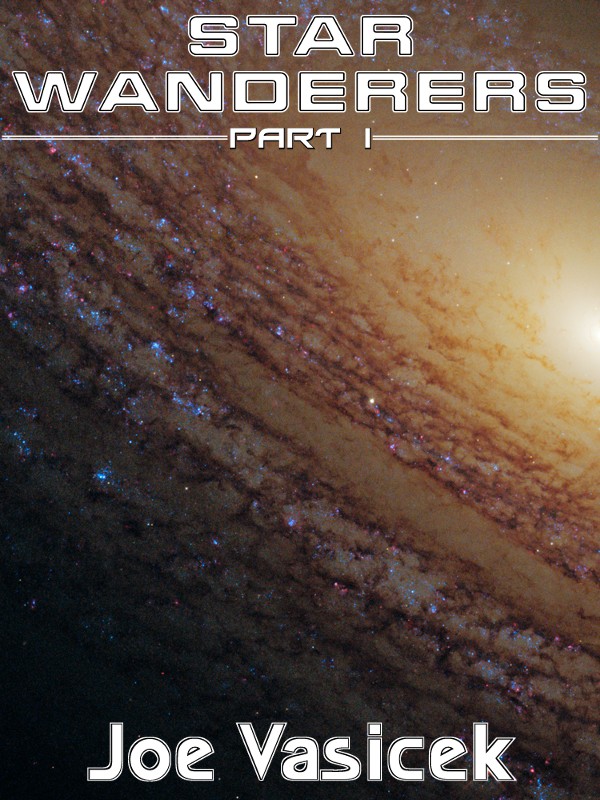
As a teaser, here’s the cover that I made when I was back in Massachusetts.  I decided to go with some NASA / Hubble images, at least for the first release.  Here it is:

Everything is ready to go; I just need to hear back from Writers of the Future before I can publish it.  I’m going to wait until the rest of the novel is finished, though, just to be safe.  Expect to see it sometime in April (unless it’s a finalist for WOTF–hey, you never know).

Enough for now; I’d better get back to writing.  See you around!

Getting settled in the land of the Kartulis

About three weeks have passed since I came to Georgia, and I’m starting to feel comfortably settled in this new place.  I like it a lot out here: my host family is great, I get along really well with everyone at the school where I work, the kids are so crazy eager to learn it’s awesome…really, I couldn’t ask for more.

Of all the places in Georgia where TLG volunteers are placed, Kutaisi seems like one of the best.  It’s the second largest city in the country, so it has access to several amenities such as markets, hospitals, restaurants, parks, and basically anything else you’d  expect in an urban center.  However, it’s about 200 km from Tbilisi and has very little exposure to the West, so culturally it’s very authentically Georgian.  It’s also much less crowded, and (in my opinion) much more beautiful.

My host family is great; I get along with them real well and already feel like a member of the family.   My youngest host brother, Kako, is 9 years old; I showed him Star Control II over the weekend, and he’s been addicted to it ever since.  We also play chess, and I’ve kind of taken him under my wing to teach him the basics of good strategy.  He’s getting steadily better!

Gura and Kati are the two teenage kids; they also speak English, so we’ve had some fun discussions.  Besides Facebook and her cell phone, Kati is really into books; I showed her my Kindle, and she wants me to help her persuade her father to get her one!  Gura is into Call of Duty and spends a lot of time hanging out with his friends; he lacks confidence when it comes to English, but he knows it better than he thinks he does.

The parents don’t speak much English, but they are really good people.  It’s a working class family; the dad works as a welder, and the mom is a nurse part-time and a home-maker full time.  They spend an amazing amount of time and energy on their kids, which is pretty typical for this part of the world.  They’re both non-smokers, and they’re very respectful of the fact that I don’t drink coffee, tea, or alcohol.  Some of the extended family keeps trying to push wine on me, but in the land known as the cradle of wine, that’s to be expected.

We basically spend all of our time in the family room when we aren’t sleeping; it’s where the heater is, so despite the relatively cramped space it’s the most comfortable room in the apartment.  Furniture consists of a couch, a computer desk and office chair, a bucket seat from an old van, a folding table, several small wooden chairs and a stool.  The TV isn’t quite a member of the family, but when the power isn’t out, it’s usually on.

The neighborhood is this bizarre mix of urban and rural elements.  The roads are super muddy and free-range chickens wander everywhere at will, but everyone lives in 9-story apartments that were built back in the Soviet days, when Kutaisi was a major center for the auto industry.  The school was built 50 years ago this year and has barely been renovated since, but it’s just starting to get some much-needed attention, with a computer center and a resource room for special needs students.  When the weather clears up, I’ll bring my camera to school and take some pictures so you can see what the classes are like.

I’ll have to do a post later on Georgian culture; there are some really bizarre and paradoxical juxtapositions, such as the way they mix religion and alcohol, or their strong belief in the nuclear family with their easy-going acceptance of bride-napping as a “Georgian tradition.” I have yet to really get a handle on all this stuff.  However, as a culture, they have a great respect for literature; when people ask my profession and I tell them I’m a writer, their eyes light up, and they show me a degree of deference that I never would have gotten back in the States.

Partly to have something to talk with them about, I’m reading War and Peace by Leo Tolstoy right now.  I just finished Book III, where Napoleon smashes the Russians and Austrians in the Battle of Three Emperors.  Everyone says that it’s the best novel ever written, and now that I’m in the thick of it, I’m starting to agree with them.  There’s a lot of really good storytelling here, as well as passion and depth.  I have the feeling that I’m going to be on a Russian literature trip for a while, though I should probably pick up some Rustaveli and Kurban Said as well.

As far as writing goes, I’ve had some difficulty settling down into a solid routine, not because of lack of time so much as trouble with my current WIPs.  Star Wanderers has more or less stalled; I ran into another wall midway through part III, and I’m still not quite sure how to get past it.  I’ve decided to take a break for a while, but I think my experiences here with the Georgian language are going to give me what I need to really make this novel come together.

In the meantime, I’m working on the 2.0 draft of Stars of Blood and Glory.  I’ve decided to try something new: revising not by chapter, but by viewpoint character.  Isolating each of the five viewpoints is helping me to see which ones work, and which ones are missing something.  I’ve also been using Dan Well’s 7-point outlining method, which is helping out a ton.

It feels like I could be writing more, but I’m not pushing myself too hard at this point.  I’m still adjusting to life in this totally new culture, and I’m also spending a lot of energy getting my TEFL career off on the right foot.  It’s paying off; I’m having a great time teaching, more than I thought I would.  Pretty soon, though, I’m going to start putting more energy into my writing.  I just hope that I’ll have enough mental space left over to really immerse myself and make it work.

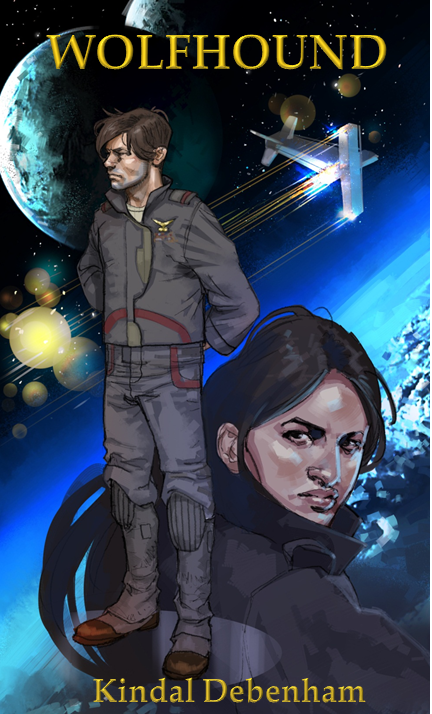
Wolfhound by Kindal Debenham

Jacob Hull may be just a spacer’s son, but he’s not afraid to dream big.  As an ensign in the Celostian Navy, his biggest dream is to pilot a destroyer like the Wolfhound, the brand new ship on which he receives his first assignment.  But when pirates attack on their training exercises and drive them far from the rest of the Celostian fleet, Hull realizes that his dream might be more than he asked for…

Full disclosure: Kindal Debenham is actually a good friend of mine–we were both members of Quark in college and still keep in touch as alpha readers for each others’ books.  That’s not why I’m saying that I loved this book, though.  I’ll admit, I had a few doubts when I first started it.  The descriptions are a little wordy, the formatting isn’t perfectly clean–but none of that really matters, because the story is AWESOME.

Why is it so awesome?  Because it’s full of characters you want to root for, facing one impossible conflict after the other, each one bigger and more daunting than the one before.  The story gets off to a decent start, but it really starts to take off after the first third or so, and just keeps getting better and better right up to the end.

Seriously, this is the kind of book I used to hunt for in the library as a kid.  It reminds me a little of the old Star Wars novels by Timothy Zahn, Kevin J. Anderson and Michael A. Stackpole.  Forget dark, dystopian futures and boring, high-concept stuff–this is some rip-roaring space opera, with stations you wish you could visit and starships you wish you could fly.

So yeah, I loved this book.  Great read; once I got into the second half, I couldn’t put it down.  If you’re a fan of space adventure stories, you should definitely check out this book.  It’s available from both Amazon and Smashwords as an indie published ebook, and it’s actually holding it’s own quite well on the Amazon bestseller lists.  It definitely deserves the spot!  Oh, and if you want to check out Kindal’s blog, you can find him here.

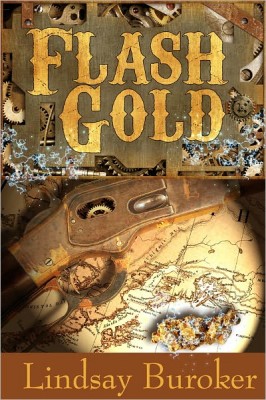
Flash Gold by Lindsay Buroker

All Kali McAlister wants is to leave Moose Hollow far, far behind–and with her dogless sled, the $1,000 prize for the sled race is just her ticket.  But with pirates, gangsters, and thugs in the Yukon after her late father’s alchemical secrets, she’ll be lucky to make it to the finish line alive.  And then there’s that striking man by the mysterious name of Cedar–why is he helping her?

This was a fun steampunk adventure story.  It was fast-paced, well-written, and quite enjoyable; Buroker knows how to hook a reader with interesting characters and conflicts.  I’m looking forward to reading more books set in this universe.

That said, I did have a few issues with this book.  At some parts, the dialog came across as wooden because the characters’ words and reactions didn’t match the intensity of the scene.  For example, Kali and Cedar got caught up in a couple of friendly discussions during gunfights, one about her automatic reloading rifle (which was somewhat excusable) and one about the status of their relationship (which felt a little contrived).  Also, the climax of the story revolves around a late third act info dump, which is a pet peeve of mine.  It didn’t bring the story to a screeching halt, but it did feel a little clumsy.

None of those kept me from enjoying the story, but they were definitely things I noticed.  My biggest issue was probably a lack of real dept or thoughtfulness; what I like to call a “stuff happens, the end” kind of story.  The main character had good internal motivations, but no real internal conflict.  For example, she had this whole history with a previous lover betraying her trust, but she didn’t really struggle much with learning to trust again; all that old baggage was just a part of her background.

Overall, though, this was a fun action-adventure romp.  The steampunk setting was great, one that I’d like to come back and revisit.  And in spite of my critiques, I didn’t feel cheated by this story at all; it really was an enjoyable read.  For $.99, what do you have to lose?

You can find Flash Gold at the author’s site here, or at Smashwords and Barnes & Noble (for some reason, the Amazon link appears to be broken).

Journey to Jordan is now up on Amazon and Barnes & Noble!

That’s right–my travel journals from the 2008 study abroad to Jordan are now up on Amazon, Barnes & Noble, and almost everywhere else!  Here’s a complete list:

Kindle | Kindle UK | Kindle DE | Kindle FR | Kindle ES | Kindle IT | Nook | Smashwords | Kobo | Diesel | Xinxii | Sony | iTunes

Kobo, Xinxii, and Sony should be coming in the next couple of weeks.

I initially set the price for the illustrated version at $4.95, but the transaction fees are a lot less than I thought they would be, so I’ve decided to drop it down to $2.99 with the unillustrated version.  The changes should be reflected on Amazon and Barnes & Noble in a few hours.

I had an amazing, life-changing experience in Jordan, and after coming home, I had big dreams of turning my travel journals into a book.  Because of ebooks and indie publishing, that dream is now a reality.  From the description:

In 2008, Brigham Young University partnered with the University of Jordan to organize a summer study abroad program for its Arabic students. Scattered across West Amman in home-stays coordinated with Amideast, these students spent the summer living, studying, playing, and adventuring in the Middle East.

This is the travel journal of one of those students, and gives a detailed and intensely personal account of his time there. Besides the cultural experience of living with a Palestinian family in an Arab country, it tells the story of a critical juncture in his life, and how traveling across the Middle East helped to shape his personal growth, his spirituality, and his love for a people far from his American home.

Kind of cheesy, but yeah. 🙂 I hope you like it–please share it if you do!

I’m about to embark on another adventure, so this probably won’t be the last travel journal I do.  Who knows–maybe a year or two from now, I’ll be doing a book like this on my experiences in Georgia.  Or better yet, I’ll make it back to the Middle East and do a before-and-after.  Whatever I do, I’ll be sure to keep you guys updated frequently–so definitely stay in touch!