None of these books/authors are so terrible (or so woke) (except maybe for Kim Stanley Robinson) that I would have ranked them below “no award.” With that said, I just didn’t think any of these books were good enough for me to vote for.
Greg Bear’s Moving Mars is basically a sci-fi retelling of the 60s student protest movement on Mars. That’s the big draw. The more I learn about what was actually happening in the 60s, though, the more insufferable I find the hippies and their ideological descendants to be. Needless to say, I DNFed this one.
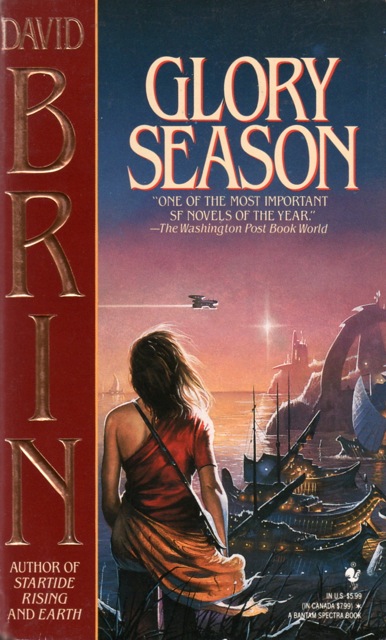
I skipped the book by David Brin, because he’s just such a dogmatic atheist. I tried his Uplift books and DNFed them for much the same reason. If you’re going to be so dogmatic in your religious views that you cannot build a fictional world where the opposite views might plausibly be true, I have no time for you. That’s equally true for theists as for atheists (unless, of course, the book falls into the religious fiction genre).
I tried Virtual Light, but DNFed it only a couple of pages in, due to some explicit violence against children. Now that I’m a father, I have a really low tolerance for that kind of stuff. I’ve also found Gibson to be a bit too dark and gritty for my taste. He seems to occupy the same literary niche as Neal Stephenson, and rub me wrong in much the same way.
It’s been so long since I DNFed Beggars in Spain that I’ve forgotten what my issue with it was. I found the basic premise to be quite interesting, and got about halfway through the book. Ultimately, though, I think I just got bored with it. But I might come back to this one. Of all the books on the Hugo ballot this year, this is the one I’m most willing to try again.
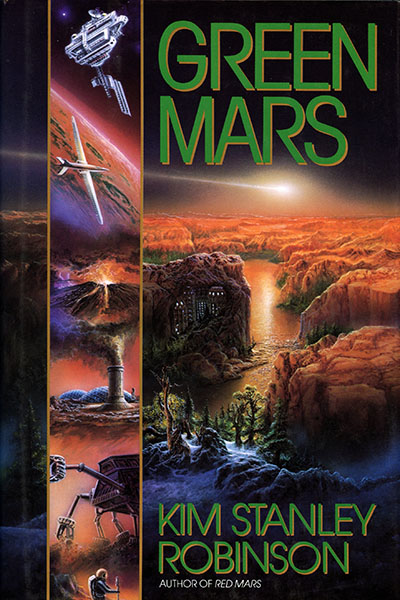
As for Green Mars, I just couldn’t get into it. Part of that is how insufferable I find KSR’s self-righteous liberal politics to be, but another part was the sexual content in the first few pages. I read Red Mars back in college, when my threshold for those kind of content issues was much lower, but I did come very close to DNFing it after the farm orgy scene. Also, Red Mars was a bit of a slog for my younger self, since I never really latched on to any of the characters. Same with Green Mars. Just a lot of people doing a lot of things, when it was clear that all the (crunchy liberal) author really cared about was the capital “I” Idea. Pass.
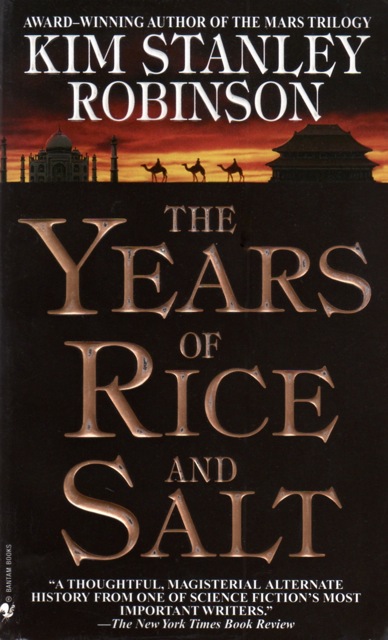
The Years of Rice and Salt by Kim Stanley Robinson
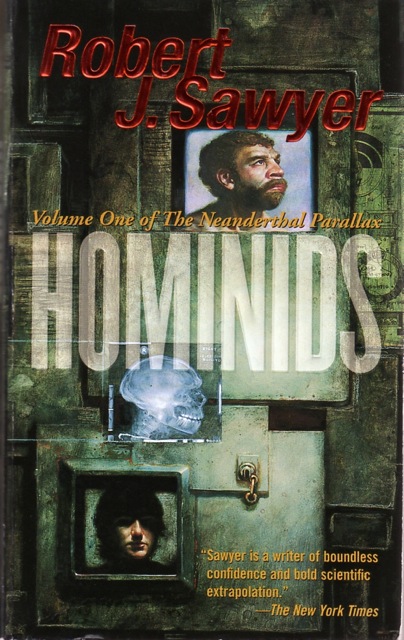
Hominids by Robert J. Sawyer
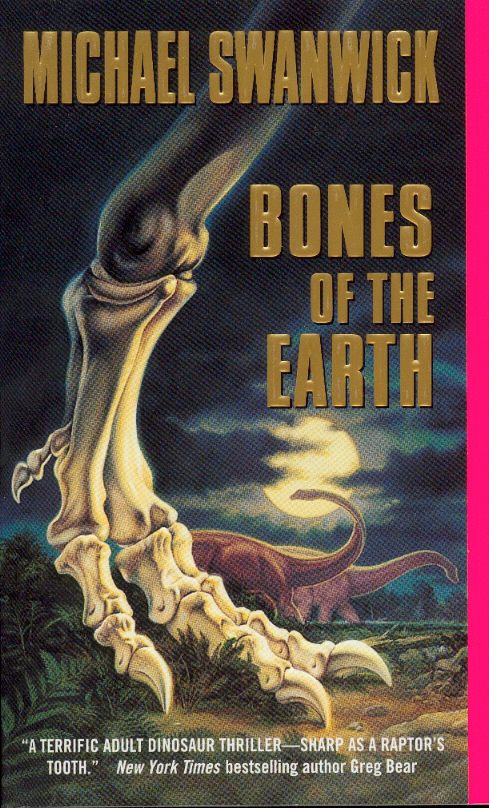
Bones of the Earth by Michael Swanwick
The Actual Results
Hominids by Robert J. Sawyer
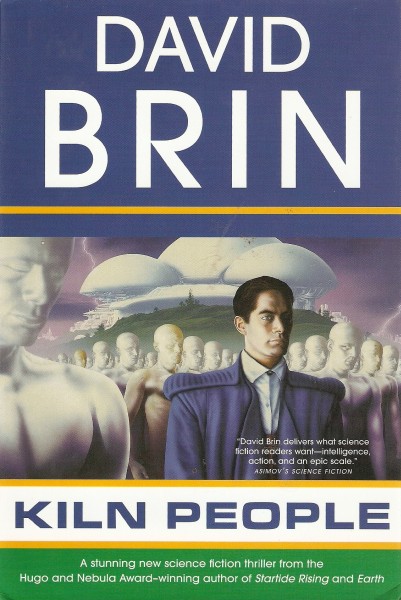
Kiln People by David Brin
Bones of the Earth by Michael Swanwick
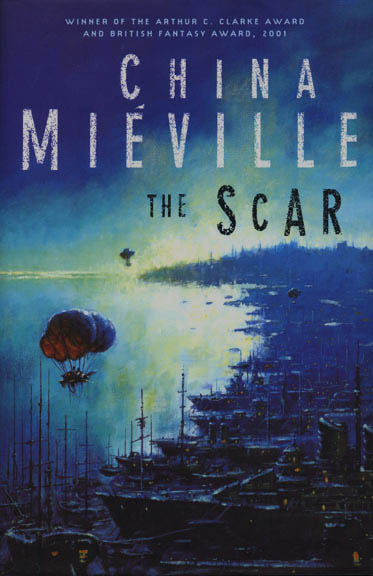
The Scar by China Mieville
The Years of Rice and Salt by Kim Stanley Robinson
How I Would Have Voted
(Abstain)
Explanation
None of these books were so bad/woke that I felt No Award merited a vote for this year. In fact, if my memory serves me, few of these books were woke at all (or else they were just a lot better at hiding it. Whatever.) But at the same time, I didn’t enjoy any of them enough to feel that I could affirmatively vote for any of them. In fact, I ended up DNFing all of them, for various reasons (that’s right, China Mike—I didn’t feel it was necessary to finish any of these books to know how I would have voted).
Kiln People and The Years of Rice and Salt were both books that I didn’t bother to pick up, because I’ve read enough from each author to know that I don’t care to read anything they write. Way back in high school, I read Red Mars by Kim Stanley Robinson, but I never felt compelled to finish the rest of the series, and DNFed the second book when I picked it up years later, as well as every other Hugo-winning book he’s written. With David Brin, I started his first Uplift Trilogy book but DNFed it about a hundred pages in, and decided to DNF him as an author after throwing The Postman across the room.
For both of these authors, my reason for DNFing them has less to do with their politics (though I’m sure we have irreconcilable differences there) as it does with their dogmatic, almost fanatical adherence to materialism: the view that everything in the universe is reducible to physical, material phenomena, and that if something cannot be measured it might as well not exist. You can see this in the dismissive way that they treat religion in all of their books, especially Christianity—as if faith, in any form, is a delusion that ought to be beneath all clear-thinking and enlightened people. From long experience, I’ve learned that authors with this particular worldview almost never write anything that I feel is worth reading. Hence, I didn’t feel it was necessary to read either of their books.
The Scar is book two of China Mieville’s New Crobuzon series, and since I DNFed the first book, I didn’t read the rest of the series. I’ll explain my reasons more when I write up my post for how I would vote now in the 2002 Hugo Awards, but it basically comes down to the sex scene in the first chapter, which was too graphic for my tastes. Call me a prude, but I prefer to avoid graphic sex scenes. I suppose I could be persuaded to try the series again, though, on a strong enough recommendation.
I forget why I DNFed Hominids. I read it back in 2002, when I made—and kept—my resolution to read (or DNF) all of the Hugo and Nebula award-winning novels. I think it came down to getting bored with the story, or not really liking any of the characters. I could probably be persuaded to try it again, though I doubt the results would be different a second time around.
Lastly, Bones of the Earth was my biggest disappointment from the books on the ballot this year. I had previously DNFed Swanwick’s Station of the Tide, which struck me as the sort of thing an author writes when they don’t really care what readers think of it and they just want to wallow in their own self-indulgent fantasies. Also, there was a lot of weird sex stuff that I found off-putting.
But Bones of the Earth started out really well. It’s basically about a bunch of time traveling paleontologists, and the bureaucracy built around the time travel machinery to keep all the timelines from falling into contradiction and paradox. Think Jurassic Park meets The Adjustment Bureau. The first half of the book was really well done, to the point where I started wondering why I’d never heard of this book before, or why it hadn’t gotten more commercial traction.
Then I found out why.
The inciting incident happens when a creationist terrorist sends a bomb out to a group of paleontoligists somewhen in the Cretaceous period, killing one of them, destroying their time beacon, and stranding them in time. I wasn’t actually bothered at all by the creationists being the bad guys, since 1) several of the paleontologists were various stripes of Christian, and 2) I can totally believe that radical fundamentalist creationists would resort to sabotage, or even terrorism, to derail the whole project. But about midway through the book, after the band of marooned time travelers go through some pretty hefty forming and storming, as they just start to enter the norming phase, they all decide, at the same time and on a total whim, to throw off their clothes and have a group orgy together.
I can believe that there are people in this world who would do that sort of thing. I can even believe that a group of randomly selected people might consist entirely of this sort of person. I just don’t want anything to do with them. I’ve been in a fair amount of group situations, and the worst ones I’ve ever had to endure were the ones where everyone either wanted to all get drunk together, or all get sexy together (thankfully, none of them turned into an actual orgy like the one in this book).
But frankly, the impression I got while reading it was that the author was a little too sex-deprived (if not an outright pervert) and indulged in that scene purely as an act of wish fulfilment. Any editor worth her salt would have told Swanwick to remove or totally rework that scene, so the fact that it’s still in the book probably means that he’s too bull-headed for his own good—which is a shame, because the book probably would have sold better if he’d cut that scene out. The orgy scene added very little and certainly alienated more readers than it brought in.
One of the things I’m trying to be more careful about, as a writer, is writing books for other people, not just myself. I was a lot more self-indulgent in my early career, which is probably a major factor in why many of my older books haven’t gained much traction outside of a small readership. While it’s important not to try to write for everybody, authors who write only for themselves are too often inaccessible to anybody.
My 2022 reading resolution: Read or DNF every novel that has won a Hugo or a Nebula award, and acquire all the good ones.
This is the last one of these resolution updates that I’m going to post here on this blog. I’ve only got three books left now: Falling Free by Lois McMaster Bujold (1989 Nebula), A Fire Upon the Deep by Vernor Vinge (1993 Hugo), and Doomsday Book by Connie Willis (1993 Hugo and Nebula). Since I already own all of those, I’ll probably finish reading them by the end of July, and the only other books I need to acquire to finish the resolution are Way Station by Clifford D. Simak (1964 Hugo), Rainbows End by Vernor Vinge (2007 Hugo), and Powers by Ursula K. Le Guin (2009 Nebula).
I will, however, do an in-depth study of the final results and post them here. There should be some interesting trends, and hopefully my own reading preferences will provide some useful insights, though really those preferences say more about me than they do about these books. Reading tastes are very subjective, so I’m sure there are a lot of good and brilliant people who love some of these books that I’ve passed on, and vice versa. But maybe sharing my own reading preferences will help others to develop their own, and if that helps to encourage more reading, that would be great.
One of the major insights that I’ve already discovered is that the best predictor that I will not like a book is if it won a Nebula without winning a Hugo. In a post last month, I speculated as to why that may be. I’ve already expanded my Hugo/Nebula award spreadsheet to include all of the nominated books as well, but I’ve blacked out the Nebula nominated books and will probably skip most of them. After all, if there’s something about the Nebula books that rubs me the wrong way, maybe I can get more use from that award by using it as a “do not read” list rather than a recommended reading list.
I’m also branching out to the Dragons and Goodreads Choice award-winning books, starting with the most recent ones and working my way back. The really neat thing about Goodreads Choice is that they post how many votes each top-20 book got in each category, and how many votes were cast in each category overall, so it’s very easy to quantify and rank each book. For example, in the science fiction category, Project Hail Mary by Andy Weir won first place in 2021 with 92,831 votes out of 281,584, or a 32.97% plurality. That is the largest plurality that any book has ever won in that category, so either Project Hail Mary is a damned good book, or all the other books really sucked—and I tend to think it’s the former, which is why I’m reading it now.
The Dragons are very different, but I haven’t read enough of them to notice any trends or form any opinions. However, there are some indications that the Dragons are the anti-Hugos/Nebulas, and to some lesser extent the anti-Goodreads Choice Awards, which seem to swing more toward the Hugo/Nebula crowd, even if most of the Hugo and Nebula nominated books only typically get between 5% and <1% of the vote. To gather more data, I’ve decided not to skip any of the Hugo/Nebula books that placed in the Goodreads Choice Award, especially since 2015 when the Sad Puppies schism really shook things up in the science fiction book world. So it will be interesting to see which of these books I think are worth reading and owning, and which ones I think aren’t.
So in short, now that I’ve (just about) read all of the Hugo and Nebula winning books, I’m going to move on to the Hugo (but not Nebula) nominated books, the Dragons, and the Goodreads Choice winners and nominees. But I’m not going to set a deadline, or hold myself to reading all of them. Rather, I’m just going to take it as a starting point, and instead set a goal of 100 pages per day, reading whatever strikes my fancy.
Books that I read and plan to or have already acquired
Hyperion by Dan Simmons (1990 Hugo)
Books that I did not finish
Startide Rising by David Brin (1984 Hugo and Nebula)
The Uplift War by David Brin (1988 Hugo)
To Say Nothing of the Dog by Connie Willis (1999 Hugo)
A Deepness in the Sky by Vernor Vinge (2000 Hugo)
Darwin’s Radio by Greg Bear (2001 Nebula)
Jonathan Strange & Mr. Norell by Susanna Clarke (2005 Hugo)