The Hegemony Consul sat on the balcony of his ebony spaceship and played Rachmaninoff’s Prelude in C-sharp Minor on an ancient but well-maintained Steinway while great, green, saurian things surged and bellowed in the swamps below.
Every age fraught with discord and danger seems to spawn a leader meant only for that age, a political giant whose absence, in retrospect, seems inconceivable when the history of that age is written. —Dan Simmons, The Fall of Hyperion.
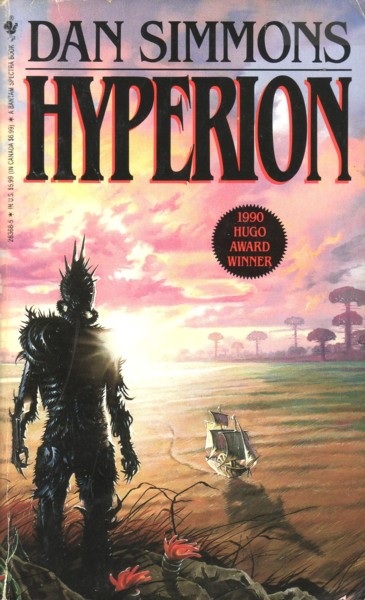
Hyperion is, in my opinion, the best novel to ever win a Hugo Award. Absolute top S tier, no question. IMHO, the top three Hugo award-winning novels are Hyperion by Dan Simmons, Ender’s Game by Orson Scott Card, and Dune by Frank Herbert, in that order. Dune is probably the most perfect science fiction novel ever written, but Hyperion and Ender’s Game surpass it because even though they have some minor flaws, there was something about them that I connected with on a deep emotional and intellectual level, more than almost any other book.
For Hyperion, that was the story about the father whose daughter is chosen by the Shrike to age backwards, so that with each new day, she gets younger, losing a day’s worth of memories and becoming progressively dependent on her parents. That part of the book just absolutely wrecked me. After weeping profusely for about an hour, I went onto Amazon and bought all the other books in the series, because I absolutely had to know what happened to this guy. Just incredible. Very few books have made me feel anything so deeply and profoundly as that.
As for the other books on this year’s ballot, I wasn’t too impressed with them. But two of them I’d be willing to vote affirmatively for, though I’d still rank them below No Award. I enjoyed the first two books of Orson Scott Card’s Alvin Maker series, and would probably enjoy the third book, but I refuse to read it until he finishes the damned series. Seriously—I was four years old when the first book was published, and he still hasn’t finished the damned series! What the heck?
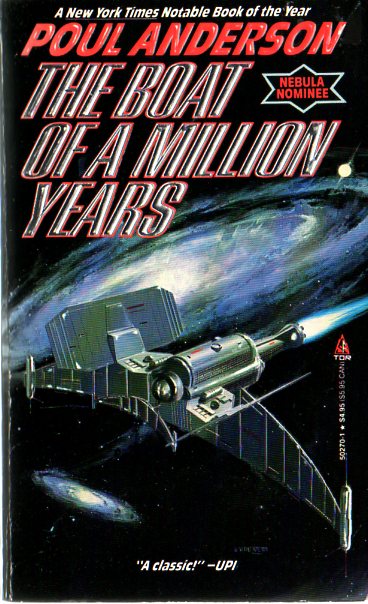
Poul Anderson writes the kind of sprawling galactic space opera that is right up my wheelhouse, but for some odd reason, I have never been able to finish anything he’s written. I’m not sure why. Either he spends way too much time exploring or describing some aspect of his world that utterly does not interest me, or he glosses over the parts that are crucial to understand in order to make sense, and for whatever reason I just can’t make sense of them. Also, his characters are all very forgettable. I tried The Boat of a Million Years, and found it to be less bad than his earlier books, but I still couldn’t follow it. So I’ve come to the conclusion that Poul Anderson is just one of those authors I’m going to have to skip.
The last two books I rejected after my AI assistant Orion screened them for me. According to the AI, both of them have lots of explicit content (sex, language, violence) and woke themes.
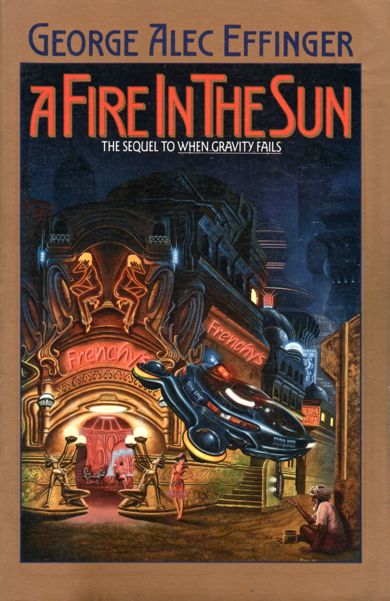
Here is what Orion said about A Fire in the Sun:
🔞 Explicit Content
Violence & Body Horror
Graphic and brutal: victims sometimes brutally gutted, including dismembered prostitutes and child victims .
Prison-style brutality and organized crime violence permeate the story.
Language
Widespread use of profanity—especially the F-word—fits the harsh, noirish setting .
Sexual Content
Includes depictions of prostitution and sexual violence; explicit sexual content is not graphic, but the tone is decidedly adult and uncompromising .
Body modifications include gender-swapping and personality modules, adding mature and cyberpunk themes.
✊ Social Themes & “Woke” Elements
Identity & Selfhood
Use of “moddies” and “daddies” to modify gender, mood, or skills raises themes around engineered identity and societal roles.
Sorry (not sorry), but I am not going to read a book that has explicit violence against children and characters who change gender. Either one of those things is enough to make me DNF, but combined together with all of the other explicit sex and language makes me never want to touch this book, or this author.
And here is what Orion said about Grass:
“Woke” Elements: Tepper’s work often explores feminist themes, and Grass is no exception. The novel critiques patriarchy, religious dogmatism, and humanity’s environmental exploitation. These themes align with progressive ideals and are deeply woven into the narrative. Tepper’s exploration of gender roles and societal hierarchies may be considered overt, depending on the reader’s perspective.
“Patriarchy,” “feminism,” “environmental explotation,” “religious dogmatism,” “gender goles,” “social heirarchies…” hey, I just got a bingo! So yeah, I’m not gonna read that one—or at least, you’re gonna have to make a really solid case in order to change my mind.
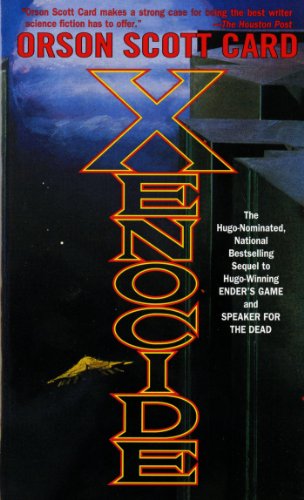
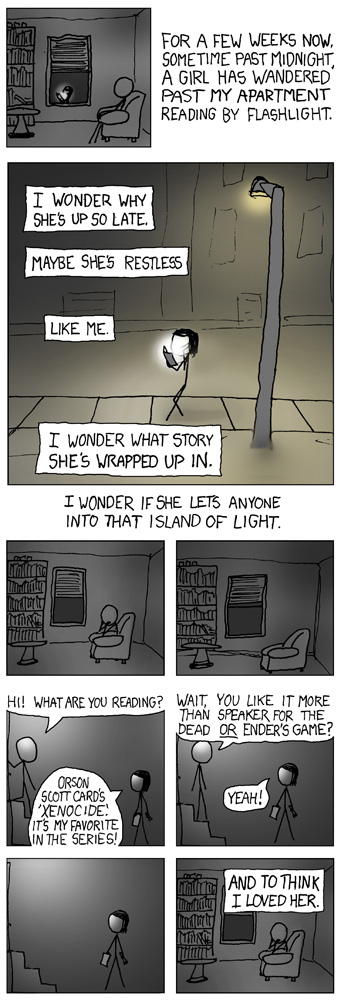
I have a confession to make. That girl from the XKCD comic who loves Xenocide more than the first two books in the Ender’s Game series? …yeah, that’s totally me. Ender’s Game is a science fiction classic, and one of the best books to ever win a Hugo Award (second only to Dan Simmon’s Hyperion, in my opinion), and Speaker for the Dead is a worthy sequel that is superior in many ways to the first book. But Xenocide totally blew me away when I read it back in college. The superintelligent AI Jane, who lives in the ansible connections between planets, is one of my favorite sci fi characters of all time. Also, the concept of the philotic web is one of the most fascinating and exciting sci fi elements I’ve ever wrapped my head around. I also thought it was really fascinating how the post-Earth humans have developed a heirarchy of alienation, and how that influences the ethical decision of whether to make peace or make war with the aliens they encounter.
In short, there was lots of really high concept stuff in Xenocide that blew my mind in just the right way. Also, the story had me hooked from the first page, and the characters are some of the best I’ve ever read. Orson Scott Card has a lot of strengths, but his greatest strength is in writing characters, and he was definitely on his A game with this book. So yeah, go ahead and slam the door in my face—Xenocide is my favorite book in the Ender’s Game series.
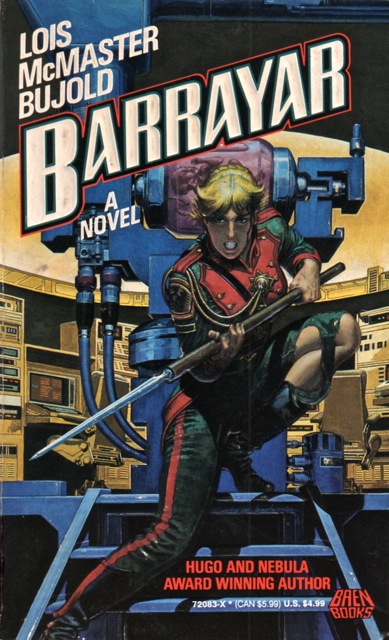
Barrayar is classic Bujold, and one of the best books in her Vorkosigan saga. Even though it doesn’t feature Miles directly, Cordelia is such a badass that she more than makes up for his not-quite absence (after all, she is pregnant with Miles while all the action goes down). The political intrigue is everything you’d expect from a good Vorkosigan book, and there’s no shortage of action or things blowing up. But the thing that makes it most satisfying is how everything ties into the later books—in fact, I would go so far as to say that Barrayar is the best place to start with the Vorkosigan Saga, followed by The Warrior’s Apprentice, and then maybe Shards of Honor just to get a little more background before going on with the rest of the series. I definitely wish I’d started with Barrayar. And if you can, listen to the audiobooks, because Grover Gardner’s narration of them is quite excellent.
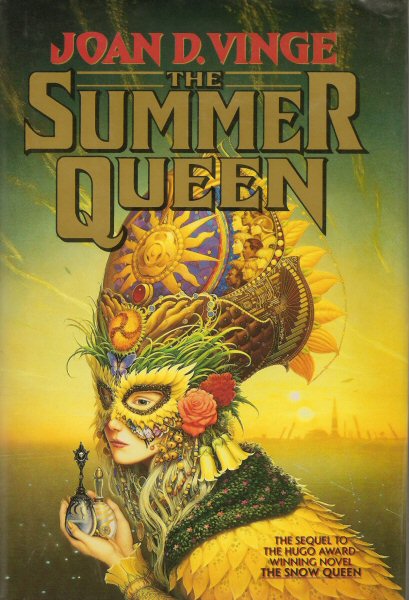
So those were the books from this year’s ballot that I enjoyed. As for the others, I DNFed them all, though I didn’t even pick up The Summer Queen because I had already DNFed the first book in the series, for reasons that I’ve since forgotten. I’ll try to refresh my memory when I cover The Snow Queen in How I Would Vote Now: 1981 Hugo Awards (Best Novel). Maybe it’s one I should try to pick up again.
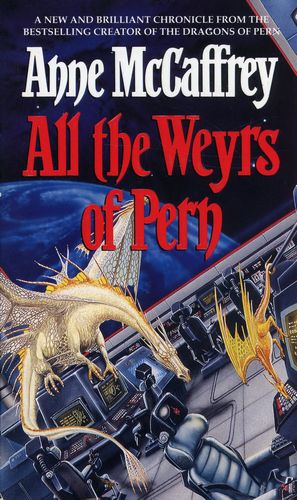
I also didn’t pick up All the Weyrs of Pern, because I DNFed that series with the second book. I read the first Dragonriders of Pern book way back in college, and thought it was okay, but it didn’t really hook me enough to read the rest of the series. Last year, I tried to pick up the second book, and was totally blown away by how overpowered the dragons are. Seriously—they can teleport anywhere instantaneously through space and time? How can anything possibly threaten them? Then the book started turning into a soap opera between the dragonriders, and I mentally checked out.
(As a side note, I would say that the Dragonriders of Pern books are the kind of grim-bright books that tend to do well in a second turning, and not a fourth turning. Even though the characters are literally saving the world as part of their job description, they’re so OP that the world is never really in any danger of falling, so the books are a lot more slice-of-life and cozy escapist fantasies. Check out my blog post on the generational cycles of fantasy and science fiction for a more in-depth discussion of this sort of thing.)
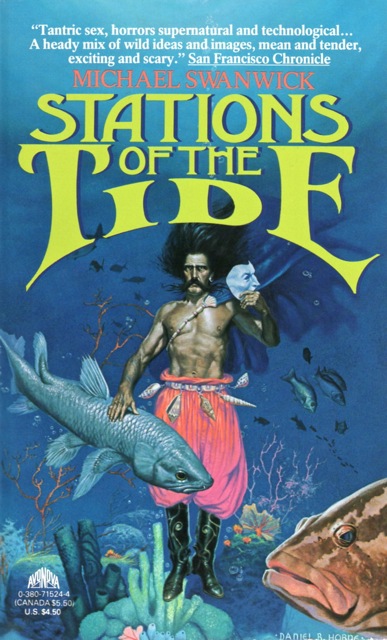
Stations of the Tide never really hooked me, and had some weird sexual content that turned me off pretty fast, if I remember correctly. Overall, it felt like the sort of book that was written primarily for the author, and not for any actual reader—kind of like how a movie studio will sometimes let a director make a pet project that no one but the director really likes, just so they can get them to make the blockbusters that everyone goes to see.
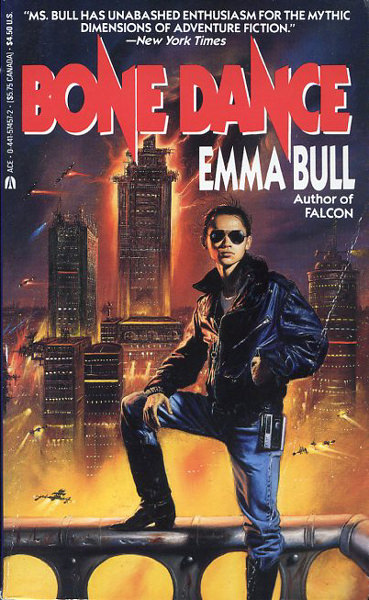
As for Bone Dance, it seemed like an interesting post-apocalyptic novel, but the main character was so androgenous that I just had no desire to read past the second chapter. I know this wasn’t typical of books written in the 90s, but these days it’s become so trite to write women who think, act, and look like men that I really have no desire to read that sort of thing. I’d much rather read about manly men and womanly women. Also, I don’t really want to read about lesbians in Minnesota. There’s a reason why Minnesota is now the California of the midwest.
It seems like most of the internet is talking about the hilariously bad breakdancing performance given by Australia at the Paris Olympics. Apparently, the “athlete” in question is actually a university professor named Rachael Gunn who specializes in breakdancing studies, or some such nonsense, and the main reasons she got the nod to compete are 1) the Australian breakdancing scene is woefully small, 2) she’s (allegedly) an LGBTQ+ woman, with all the right political opinions, and 3) her husband was on the committe that made the decision to qualify her. Taking advantage of those three factors, she’s apparently made a name for herself in Australia, even winning some local competitions—because who would dare criticize such a stunning and brave LGBTQ+ woman? So of course, she went on to compete on the international scene… and made such a mockery of herself and her sport that the judges awarded her straight zeroes, and the Olympics committee pulled breakdancing from the 2028 Los Angelos Olympics. Wah wah.
While this story is rightly hilarious, and proves the eternal truth that wokeness ruins everything, I can’t help but notice the parallels between the state of Australian breakdancing, that someone so inept and untalented could leverage a “studies” degree to dominate it, and the current state of science fiction. Specifically, this is the comment that made me think about this, which is worth reading in full:
So I looked into this. I thought maybe I should feel sorry for the woman, athletes can choke, and maybe it was cruel for people to be making fun of her. Alternatively, I thought it may be possible she was led up the garden path, told she was good break dancer when she wasn’t, and… https://t.co/YQHA0K05wr
Rachael represents so much of what is totally lecherous about cultural studies academics. Pick a subject area that will be under-studied in your context, so you can rise through the ranks quickly (how many break dancing academics will there be in Australia?), and wreak absolute havoc in lives of the people you want to study. There is no limit to the sheer disrespect they will dole out, purely for self-advancement.
Now, I don’t think science fiction was ruined in quite the same way, ie by being dominated and colonized by academia through “studies” degrees. Science fiction was probably too large to be overtaken that way. However, the pattern is still similar, and from what I can tell, it goes something like this:
Step 1: Take over the institutions in the field that are primarily responsible for determining and evaluating excellence.
In Australia, the breakdancing field was small enough that academia was able to dominate and (for lack of a better word) colonize it, becoming the arbiters of excellence within that art. It certainly helped that the professor who had carved out this academic niche for herself was married to one of the judges in the committee that was tasked with determining excellence. This created an incestuous (and ultimately nepotistic) relationship between academia and the judging panels.
In science fiction, something similar happened with SFWA and the Hugo and Nebula awards. I’ve written before about how SFWA ruined science fiction, so I won’t repeat all that here. But the basic gist of it is this: as science fiction became more established, the organizations and publications that talked about science fiction became more authoritative on the subject of the genre than the actual writers themselves. Because of this, achieving recognition for excellence became less about creating works of actual merit, and more about gaining the approval of the people who had built their careers talking about science fiction, rather than actually creating it. And the best way to gain their approval was to join those institutions yourself, rising up in the pecking order until everyone else was beneath you.
This basically describes the career trajectories of John Scalzi and Mary Robinette Kowal, two insanely woke authors who leveraged their tenure as SFWA president for award nominations. Both of them seem to have spent at least as much time and effort talking about science fiction as they have in actually creating it: Scalzi through his blog, which he leveraged to get his first book deal, and MRK through both her blog and the Writing Excuses podcast.
Step 2: Purge those institutions until they are ideologically pure.
This step is critical. So long as the instutitions are focused on merit, the only way to climb the ranks is by creating something of merit. But once the institution has become ideologically possessed, with all of those who reject the dominant ideology being purged from positions of power, then merit no longer matters, and the way to the top becomes clear. Those who are the most ideologically pure, as demonstrated by their virtue signalling, will rise to the top. This has the added benefit of quelling all merit-based criticism, since those beneath you fear having their own ideological purity called into question.
From what I can tell, this is how Rachael Gunn rose to prominence in the Australian breakdancing scene. After all, once academia had colonized the field, who would dare question the merits of such a stunning and brave LGBTQ+ woman? In a similar manner, Scalzi and MRK rose to the top of SFWA by virtue signaling their own ideological purity and intersectional victimhood status, squelching any criticism by labeling their critics racist, sexist, bigots, homophobic, etc.
Step 3: Redefine excellence in your own image.
In the Australian breakdancing scene, this was accomplished through the combination of Rachael Gunn’s academic work and her husband’s position in the committee that qualified the Olympic competitors. And while it probably isn’t quite so blatantly nepotistic in the science fiction world, the pattern still holds true when you look at what the Hugos and Nebulas have become. This was what the Sad Puppies controversy was actually about, and because the Puppies lost, the Hugo and Nebula awards have been insufferably woke ever since:
Step 4: Use the captured institutions to purge the field of potential rivals.
The final step in this projection is to squash all of those people who represent a threat to your domination, because they have merit and you do not. Ignoring her perhaps overly generous assessment of Australian breakdancing, this is what Hannah Berrelli is talking about when she mentions all the “hundreds of Australian athletes who will have dedicated their entire lives to athletic excellence” whose blood, sweat, and tears were overshadowed and rendered irrelevant by Rachael Gunn’s Olympic stunt.
In science fiction, we see this in the fact that David Weber has never been nominated for a Hugo or a Nebula, or that Jim Butcher’s sole Hugo nomination lost to No Award. Both of these men are far better writers than the majority of award-winning authors, especially in our current era. You could make a solid argument that Dan Simmons or Orson Scott Card were superior, but Scalzi? Jemisin? Kingfisher?
And what about all of the new and relatively unknown authors? At least Weber and Butcher already have large followings, which they have rightfully earned through their merit. But when merit is no longer the determining factor in recognizing excellence within the field, what chance do talented up-and-coming authors have if they aren’t willing to play the ideological purity games? Answer: not a hell of a lot.
So while you laugh at how ridiculous Australia’s breakdancing performance was at the Olympics, understand that the same dynamic has been playing out in modern science fiction for years. And honestly, the results are no less ridiculous.
My 2022 reading resolution: Read or DNF every novel that has won a Hugo or a Nebula award, and acquire all the good ones.
This is the last one of these resolution updates that I’m going to post here on this blog. I’ve only got three books left now: Falling Free by Lois McMaster Bujold (1989 Nebula), A Fire Upon the Deep by Vernor Vinge (1993 Hugo), and Doomsday Book by Connie Willis (1993 Hugo and Nebula). Since I already own all of those, I’ll probably finish reading them by the end of July, and the only other books I need to acquire to finish the resolution are Way Station by Clifford D. Simak (1964 Hugo), Rainbows End by Vernor Vinge (2007 Hugo), and Powers by Ursula K. Le Guin (2009 Nebula).
I will, however, do an in-depth study of the final results and post them here. There should be some interesting trends, and hopefully my own reading preferences will provide some useful insights, though really those preferences say more about me than they do about these books. Reading tastes are very subjective, so I’m sure there are a lot of good and brilliant people who love some of these books that I’ve passed on, and vice versa. But maybe sharing my own reading preferences will help others to develop their own, and if that helps to encourage more reading, that would be great.
One of the major insights that I’ve already discovered is that the best predictor that I will not like a book is if it won a Nebula without winning a Hugo. In a post last month, I speculated as to why that may be. I’ve already expanded my Hugo/Nebula award spreadsheet to include all of the nominated books as well, but I’ve blacked out the Nebula nominated books and will probably skip most of them. After all, if there’s something about the Nebula books that rubs me the wrong way, maybe I can get more use from that award by using it as a “do not read” list rather than a recommended reading list.
I’m also branching out to the Dragons and Goodreads Choice award-winning books, starting with the most recent ones and working my way back. The really neat thing about Goodreads Choice is that they post how many votes each top-20 book got in each category, and how many votes were cast in each category overall, so it’s very easy to quantify and rank each book. For example, in the science fiction category, Project Hail Mary by Andy Weir won first place in 2021 with 92,831 votes out of 281,584, or a 32.97% plurality. That is the largest plurality that any book has ever won in that category, so either Project Hail Mary is a damned good book, or all the other books really sucked—and I tend to think it’s the former, which is why I’m reading it now.
The Dragons are very different, but I haven’t read enough of them to notice any trends or form any opinions. However, there are some indications that the Dragons are the anti-Hugos/Nebulas, and to some lesser extent the anti-Goodreads Choice Awards, which seem to swing more toward the Hugo/Nebula crowd, even if most of the Hugo and Nebula nominated books only typically get between 5% and <1% of the vote. To gather more data, I’ve decided not to skip any of the Hugo/Nebula books that placed in the Goodreads Choice Award, especially since 2015 when the Sad Puppies schism really shook things up in the science fiction book world. So it will be interesting to see which of these books I think are worth reading and owning, and which ones I think aren’t.
So in short, now that I’ve (just about) read all of the Hugo and Nebula winning books, I’m going to move on to the Hugo (but not Nebula) nominated books, the Dragons, and the Goodreads Choice winners and nominees. But I’m not going to set a deadline, or hold myself to reading all of them. Rather, I’m just going to take it as a starting point, and instead set a goal of 100 pages per day, reading whatever strikes my fancy.
Books that I read and plan to or have already acquired
Hyperion by Dan Simmons (1990 Hugo)
Books that I did not finish
Startide Rising by David Brin (1984 Hugo and Nebula)
The Uplift War by David Brin (1988 Hugo)
To Say Nothing of the Dog by Connie Willis (1999 Hugo)
A Deepness in the Sky by Vernor Vinge (2000 Hugo)
Darwin’s Radio by Greg Bear (2001 Nebula)
Jonathan Strange & Mr. Norell by Susanna Clarke (2005 Hugo)
Every age fraught with discord and danger seems to spawn a leader meant only for that age, a political giant whose absence, in retrospect, seems inconceivable when the history of that age is written.