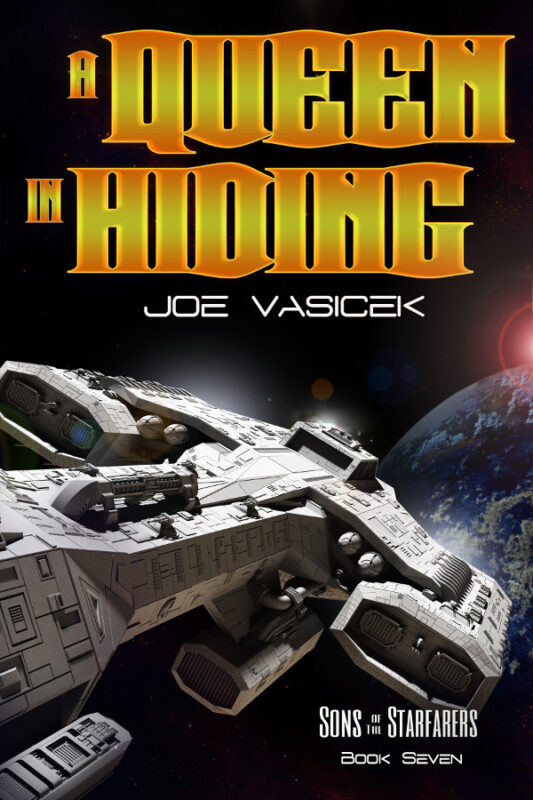
Is A Queen in Hiding for You?

A Queen in Hiding is a character-driven epic space opera about loyalty under pressure, identity under strain, and survival when there is nowhere left to run. Set deep within the long-running Sons of the Starfarers series, it delivers high-stakes interstellar tension blended with intimate moral conflict. This is science fiction that combines fugitives-on-the-run suspense with serious questions about responsibility, leadership, and what it means to remain human in a fractured galaxy.

What Kind of Reader Will Love This Book?

If you love…

  • character-driven space opera in the vein of The Expanse or Firefly
  • epic science fiction series where relationships evolve across multiple books
  • found family in space shaped by loyalty, sacrifice, and hard-earned trust
  • moral, thoughtful sci-fi that explores identity, unity, and individual freedom
  • clean space opera adventure without grimdark nihilism

…then A Queen in Hiding — and the broader Sons of the Starfarers series — is probably your kind of story.

This book is best experienced as part of the full series arc, beginning with Book 1.

What You’ll Find Inside

A Queen in Hiding follows central characters who have already survived war, betrayal, and political upheaval — only to discover that survival brings new and subtler challenges. As they navigate isolation, shifting alliances, and the consequences of earlier choices, the story explores themes of loyalty, identity, conscience, unity versus individuality, and the burden of leadership. The tone is tense yet reflective, blending space opera action with psychological depth and long-arc character development.

What Makes A Queen in Hiding Different

Fans of The Expanse-style pressure-cooker space opera or military SF will recognize the hard choices, the chase, and the tactical survival problem-solving—but A Queen in Hiding takes those familiar tensions in a more intimate, morally invasive direction. Where many space operas keep minds private and conflict external, this book leans hard into the horror (and strange tenderness) of shared consciousness, where love, fear, lust, shame, and loyalty echo through more than one head.

This series stands apart for its sustained focus on family bonds, cultural tension, and moral accountability across generations. The scale is galactic, but the heartbeat of the story is deeply personal. Instead of resetting after each crisis, the consequences carry forward — shaping who these characters become over time.

What You Won’t Find

You won’t find a light, standalone adventure that resets at the end. This is a deep-series installment that builds on long-running character arcs. You also won’t find nihilistic grimdark or shock-for-shock’s-sake storytelling—the stakes are serious, but the series remains grounded in hope and moral seriousness rather than cynicism.

Why I Think You Might Love A Queen in Hiding

This book represents a turning point in the series—where long-standing tensions finally demand honest reckoning. I wrote it because I wanted to explore what leadership, love, and responsibility look like when they’re tested beyond comfort. Every time I revisit it, I’m reminded that growth rarely happens in safety; it happens in exile, in uncertainty, and in the quiet decisions no one applauds.

If you crave space opera that treats character transformation as seriously as interstellar politics, this story was written for you.

Where to Get the Book

Related Posts and Pages

Explore the series index for Sons of the Starfarers.

Return to the book page for A Queen In Hiding.
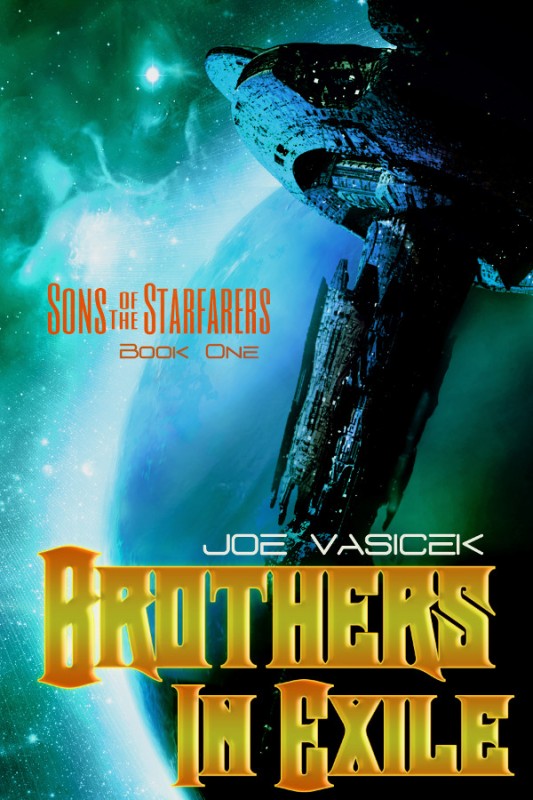
The Cost of Compassion in Brothers in Exile

At its heart, Brothers in Exile is a character-driven space opera and science fiction adventure built around a single, defining moral choice. The story asks a deceptively simple question: what happens when compassion turns freedom into responsibility? From that choice grows a story about brotherhood, moral obligation, and the moment when an independent life gives way to lasting commitment.

Where the Idea Came From

Brothers in Exile grew out of my thoughts on frontier stories about rugged individualism and personal freedom. On the edge of civilization, mobility means safety: you can leave, disengage, and avoid entanglements. I wanted to explore what happens when characters reject that logic—not because they’re naïve, but because compassion demands commitment. What if, in a frontier science fiction setting, compassion isn’t a momentary kindness, but a decision that permanently ties you to others—and to a future you can no longer walk away from?

How the Cost of Compassion Shapes the Story

In Brothers in Exile, Isaac and Aaron begin as independent starfarers with no fixed home, no political allegiance, and no long-term obligations beyond each other. Compassion changes that. When they choose to help a young woman frozen in cryosleep—someone they were never meant to be responsible for—they are no longer merely passing through the Outworlds. They become involved—personally, morally, and historically.

The cost of compassion in this story is not framed as regret or doubt; the brothers never question whether they did the right thing. Instead, the cost appears as entanglement: new enemies, new loyalties, new dangers, and the slow erosion of the freedom they once prized. Isaac feels this as the weight of responsibility—each compassionate choice narrowing his room to maneuver. Aaron experiences it as clarity: once you recognize another person’s humanity, walking away is no longer an option.

This tension—between freedom and obligation, independence and belonging—drives the conflict of the book and sets the trajectory for everything that follows.

What the Cost of Compassion Says About Us

We often want to think about compassion as something offered freely, but real compassion creates bonds—and bonds create responsibility. Brothers in Exile reflects the idea that freedom is comfortable precisely because it avoids commitment. True compassion ends that comfort. It ties us to people, to places, and to futures we did not plan. The story suggests that while this cost is real and often painful, it is also the price of meaning. For readers who enjoy thoughtful, hopeful science fiction where moral choices matter more than spectacle, this tension sits at the heart of the story.

Why This Theme Matters to Me

This theme matters to me because I don’t believe that moral choices exist in isolation. Compassion changes who we are and what we’re responsible for next. In Brothers in Exile, Isaac and Aaron don’t lose their freedom because they make a mistake—they lose it because they choose to care. That choice doesn’t make their lives easier, but it gives them direction, purpose, and a place in a larger story. That, to me, is what makes the cost of compassion worthwhile—and why this story belongs at the beginning of the Sons of the Starfarers series.

Where to Get the Book

Related Posts and Pages

Explore the series index for the Sons of the Starfarers series.

Return to the book page for Brothers in Exile.

Is Brothers in Exile for you?

Brothers in Exile by Joe Vasicek is a character-driven space opera / adventure sci-fi about two brothers trying to survive as independent starfarers on the edge of a growing empire. When their routine run takes them to a silent derelict station—and a discovery they can’t ignore—the story turns into a tense, momentum-driven ride through frontier ports, bad deals, and the early tremors of interstellar conquest.

Brothers in Exile is Book 1 of Sons of the Starfarers, a clean, character-driven space opera series about starfarers caught in the early tremors of imperial expansion.

What Kind of Reader Will Love Brothers in Exile?

If you love…

  • frontier space opera: starships, stations, salvage, dangerous trade routes
  • space opera with heart: loyal crews, sacrifice, and family bonds under pressure
  • clean, hopeful science fiction (minimal profanity, no explicit sex) with faith, family, and conscience in the background
  • high-stakes trouble that escalates fast: one decision → bigger consequences → empire-scale ripple effects
  • mystery + rescue momentum, where “we can’t just walk away” drives the plot

…then Brothers in Exile is probably your kind of story.

What You’ll Find Inside

Isaac Deltana is the careful one—the older brother trying to keep their ship, their finances, and their lives from flying apart. Aaron is the spark—reckless, brave, and stubbornly determined to do the right thing once he believes something matters. The tone is tense but humane: a fast-paced, character-driven space adventure with heart, built around survival, moral choice, and the bond between brothers as the Outworlds begin to feel the shadow of the Gaian Imperials stretching outward.

What Makes Brothers in Exile Different

A lot of space opera is driven by lone wolves or chosen ones; this one is driven by family—two brothers who can’t stop being brothers even when everything is going wrong. It has the frontier trading feel of classic space opera, but puts family and moral choice front and center. It has a “scrappy ship on the fringe” flavor you might associate with Firefly, but the moral center is steadier and the tone is less cynical. And while there’s big-picture geopolitics (expansion, control, annexation), the story stays grounded in human-scale decisions: what you owe a stranger, what freedom costs, and how far you’ll go to keep someone from being used or erased.

What You Won’t Find

You won’t find grimdark nihilism, explicit sexual content, or shock-for-shock’s-sake violence. This is clean, character-driven space opera—fast-moving and emotional—rather than slow, technical hard sci-fi. The science is ‘believable enough,’ but the focus is on choices, consequences, and the bond between brothers.

Why I Think You Might Love Brothers in Exile

I wrote Brothers in Exile because I wanted a space adventure where the relationship mattered as much as the action. In my author’s note, I talk about how the brother dynamic in the film Gettysburg (and the real emotional weight behind it) helped shape the characters Isaac and Aaron—the older brother trying to be the responsible one, and the reckless younger brother who pushes back against the authority figures in his life. If you enjoy stories where family is both the complication and the strength—where two people face the void together and refuse to stop caring—I think you’re going to enjoy this book.

Where to Get Brothers in Exile

Related Posts and Pages

Explore the series index for the Sons of the Starfarers series.

Return to the book page for Brothers in Exile.








