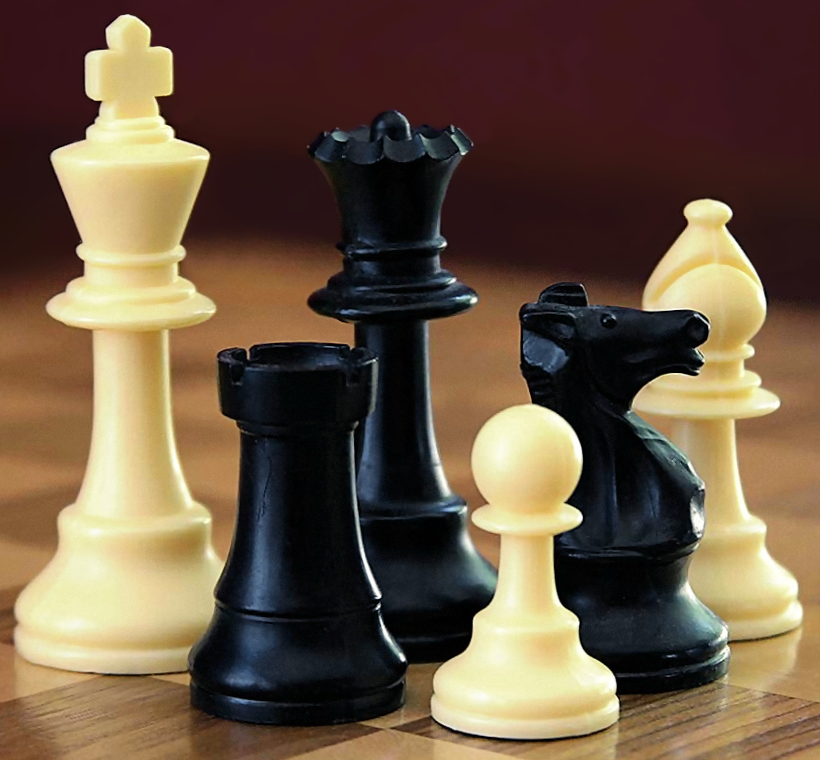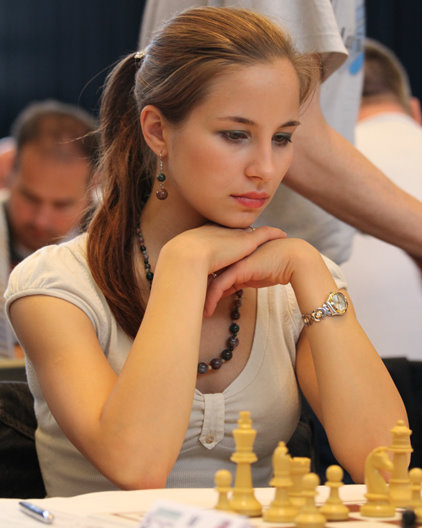
Want a fast and easy way to show that your characters are smart? Not bookish, necessarily, or nerdy, or even the designated smart guy in the five-man band, but intellectually adept no matter what else their role in the story? Well, you could indicate that through inordinate loquaciousness, but too much of that tends to make your dialog unreadable (not to mention, it’s way overdone). You could have them rock a chalkboard, but not every story takes place in high school, and finding a chalkboard outside of academia is a bit of a challenge. So what else can you do to indicate a high level of intelligence?
It’s true. Stereotypes aside, one of the most effective ways to indicate that your characters are intelligent is to show them playing chess. From Star Trek to Discworld, Independence day to Doctor Who, Big Bang Theory to Harry Potter to Command & Conquer, chess is a fast, dirty, and effective way to show intelligence. And while popular conceptions of chess nerds give the game a bit of baggage, it’s not as bad as you might think. Sure, Sheldon might fit the stereotype, but Cain and Spock certainly don’t. Even David Levinson from Independence Day turns out to be something of a badass in the end.
So why is chess such an effective way to show that a character is smart? Probably because of all the other tropes associated with chess. As one of the oldest and deepest strategy games of all time, chess is thoroughly embedded into our cultural consciousness. Chess motifs are common in all sorts of stories, and the chess master is a significant character archetype. There’s a reason we call the most complicated gambit pileup Xanatos Speed Chess.
 Besides all the archetypal reasons for this trope, there are quite a few real-world reasons as well. Playing chess can potentially do all sorts of interesting things to your brain, like stave off Alzheimer’s and improve your concentration and problem-solving skills. All over the world, people associate chess skills with intellectual prowess, and after you’ve played a few games, it’s not hard to see why. According to Carl Sagan, the game requires “strategy, foresight, analytical powers, and the ability to cross-correlate large numbers of variables and learn from experience.” If you’ve got all of those, chances are you’re at least above average.
Of course, this trope can be inverted in some clever and interesting ways. In Bill and Ted’s Bogus Journey, for example, the ditzy main characters challenge Death to games of Battleship, Clue, Twister … basically, a whole host of non-cerebral games, in lieu of the expected trope. In Foxtrot, the only character who loves chess is the Dad, who is rather dumb compared to his kids (maybe they all got bored of it?). The classic example, though, has got to be Star Wars, where Chewbacca’s emotional impulsiveness is lampshaded over a game of <X> chess:
I haven’t used this trope a whole lot in my own work yet, but I just started work again on The Sword Keeper, an epic fantasy novel where chess tropes are going to be a major part of the story. The mentor figure is something of a chess master, though because he’s a sentient sword he can’t experience or interact with the world except through his telepathic connection with the main character, a simple tavern girl. She knows the basic rules of chess, however, (“chadrak” in this universe) and so one of the ways the sword trains her is through putting her through chess scenarios. Later, it becomes apparent that the story itself is kind of like a game of chess, with the major characters loosely correlating with the different pieces, and the main character as the queen. I’m excited–it’s going to be really cool. 😀
So yeah, this is definitely a trope you’re going to see from me in the future, and not just as a one-scene throwaway either. Stay tuned for more!