Technically, the entire Wheel of Time series was also on the ballot this year, but there is no other year in which a complete series (as opposed to the latest book in the series) was ever on the ballot. It seems really weird that they would do that just for Wheel of Time, so I’m going to act as if it never happened. Otherwise, The Wheel of Time would probably get my #2 slot, just above No Award.
I haven’t read Warbound, but I have read enough of Hard Magic, the first book in Larry Correia’s Grimnoir Chronicles, to know that I’m going to read the rest. The magic system is a lot more explicitly rules-based than much of his other stuff, but the characters are great, the story is great, the world is fascinating… it’s definitely up there with the rest of his work. Good stuff. Great writer.
Ann Leckie holds the record for the author I’ve DNFed the fastest. Ancillary Justice is the book that put her on the map. The main character is a sentient spaceship, which sounds like a pretty cool starting concept… until you realize that the most exciting thing about this spaceship is that it’s transgender, and views every other human as a “she.” Derp. The whole book is obsessed with leftist gender politics, which is why I believe that No Award is more deserving than this garbage. I predict it will not age well.
I forget why I DNFed Neptune’s Brood. I think it had to do with sex, violence, and drug use that was just too explicit for me. When I was in my 20s, I was willing to do dark and gritty, but these days I have little patience for it. I think this may have been the book that made me decide to skip Charles Stross as an author, so there must have been a lot of it.
As for Parasite, I think the main thing for that one was that I just felt no interest or connection with any of the characters. Glancing over the book, it doesn’t appear that it had any explicitly terrible content, and I vaguely remember getting bored with the story and deciding that it wasn’t worth continuing. But having read and DNFed several other works by this author, I know she has a tendency to veer into crossing my lines (such as building sexual tension between a brother and sister, or throwing in weird occult stuff, or making her main character a transgender child). And running the book through ChatGPT, it appears that the book has an undercurrent of nihilism, which I absolutely cannot stand in any fiction. Perhaps I picked up on that soon enough to DNF it early.
Of the three books from this year that I DNFed, I’d be most willing to give Parasite another try, then maybe Neptune’s Brood. But I wouldn’t be willing to read Ancillary Justice (or anything else by Ann Leckie, for that matter) unless you paid me damn well for it. And even then…
Two thousand eight was the year that I took Brandon Sanderson’s writing class and decided to become a professional fiction author. It was also the year that I discovered David Gemmell and Robert Charles Wilson, two of my favorite authors. It was also the year that the world economy collapsed and Obama won the US election, so it was a very eventful year.
Unfortunately, it was not a very good year for science fiction & fantasy—or at least, not for the Hugo Awards. I didn’t read any of these books until just recently, but I have to admit, I didn’t like any of them.
Perhaps, if I were a liberal atheist Jew, I would have enjoyed The Yiddish Policeman’s Union (not a conservative orthodox Jew, mind you—if anything, I probably would have hated it more). It’s not that I have anything personal against Jews or Jewish culture. I quite enjoyed Fiddler on the Roof. But unlike Fiddler on the Roof, The Yiddish Policeman’s Union doesn’t have many points of commonality with the wider culture to make it accessible.
For example, even though the traditions of Anatevka are likely different from the traditions of whatever culture we call our own, most of us understand the concept of tradition as a governing force in our lives, and can therefore sing along with the song “Tradition” and understand how it affects the story. But the plot and worldbuilding points of The Yiddish Policeman’s Union were so quirky and uniquely Yiddish that I just found it difficult to connect with or even follow them all.
Honestly, it would be a bit like if I were to write an alternate history where the Mormons were driven from the continental US after the Utah Wars, and settled in Hawaii and the Polynesian islands, except the main character drinks Coca Cola and has a complicated relationship with his polygamous step-mother (because plural marriage was never renounced in this alternate universe) while his sister, a three-cow woman, dances in the Polynesian cultural center… if you’re a Latter-day Saint, you’re probably chuckling, but you’ve got to be scratching your head if you’re not. And to be fair, it’s not like I’d never write a book like that—after all, I’m still keeping Starship Lachoneus in my back pocket—but I wouldn’t try to market it to a general audience, or expect it to win any mainstream awards.
[SPOILER (highlight to read)]
The real kicker, though, was when I skipped to the end and learned that one of the book’s plot twists was that a side character got a secret abortion. That just pissed me off.
I’ve writte at length why I can’t stand John Scalzi and have DNFed him as an author. His first book, Old Man’s War, was good (though I would probably DNF it if I read it again now). Everything else I’ve ever read of his is just terrible. YMMV.
I’ve also DNFed Charles Stross as an author, mostly for nihilisim. If someone gives me a good reason to try Halting State, I’ll pick it up, otherwise I’m just going to skip it.
As for Brasyl, when I ran it by Orion (the ChatGPT persona I created to screen these books for woke and objectionable content), here is what I got:
Set in three intertwining timelines within Brazil—the past, present, and near future—Brasyl explores themes of identity, quantum mechanics, and cultural complexity. From an ambitious reality TV producer in modern Rio, to a rogue Jesuit priest in the 18th century, to a futuristic tech-savvy entrepreneur, the characters navigate moral dilemmas and existential challenges as their stories intersect in surprising ways. The novel combines speculative science with the vibrant, chaotic energy of Brazil.
Content Warnings:
Explicit Content: The novel contains scenes of violence, some of which are intense, and mature themes including sexual content. The explicitness aligns with the gritty, unflinching tone of the story’s portrayal of both human and cultural dynamics. “Woke” Elements: McDonald incorporates themes of globalization, colonialism, and social inequality, reflecting a nuanced perspective on Brazil’s history and culture. The narrative celebrates diversity and critiques systemic injustices, which some readers may view as overtly progressive. However, these themes are intricately tied to the world-building and character arcs. Overall Assessment: Brasyl is a vivid, ambitious novel that combines speculative science with cultural and historical depth. While its explicit content and progressive themes may not suit all readers, those who enjoy richly layered storytelling with a strong sense of place will find it a rewarding and thought-provoking read.
It’s kind of on the border, but there’s enough in there to convince me that this isn’t the kind of book for me. The world is full of lots of great books out there; why should I spend any time on this one?
Which brings us to Rollback. I wanted to like this book, and indeed got about a hundred pages into it before I decided to DNF it. Partly, it was because I lost interest. Partly, it was because the writing was just too literal and logical—especially the sexy parts, which didn’t offend me (the characters are married) so much as they were just plain awkward. It’s not like I hated the book—indeed, I’d probably finish it if I tried it again as an audiobook—but I couldn’t give it my vote. If it weren’t for the other books on the ballot this year, I would have just abstained, but the others were bad enough for me to rank them under No Award.
For some reason, I have a handful of these posts that I thought I’d scheduled months ago, but that never went out.
The Nominees
The Algebraist by Ian M. Banks
Jonathan Strange & Mr. Norell by Susanna Clarke
River of Gods by Ian McDonald
Iron Council by China Mieville
Iron Sunrise by Charles Stross
The Actual Results
Jonathan Strange & Mr. Norell by Susanna Clarke
River of Gods by Ian McDonald
The Algebraist by Ian M. Banks
Iron Sunrise by Charles Stross
Iron Council by China Mieville
How I Would Vote Now
No Award
Jonathan Strange & Mr. Norell by Susanna Clarke
Explanation
To be frankly honest, the only book from this year that I actually picked up was Jonathan Strange & Mr. Norrell. It wasn’t a bad story, but it didn’t hook me enough to want to commit to almost 900 pages of reading. I think I got through about the first 100 pages before I gave up on it. Filling 900 pages is not a difficult thing to do; what’s difficult is filling 900 pages and making all of it compelling reason. Tolstoy, Dumas, and Tolkien all achieved that feat. Susanna Clarke’s debut novel did not achieve it, at least for me.
The reason I didn’t pick up Iron Council by China Mieville is because I DNFed his New Crobuzon series with the first book. I’ve written about this before, but the first book, Perdido Street Station, had a sex scene in one of the first chapters that was explicit enough to make me check out. That might not be an issue for most of you, but it was for me.
I didn’t pick up Iron Sunrise because I’ve read enough of Charles Stross’s other work to know that he doesn’t write the kind of books that I care to read. A lot of that comes down to explicit content as well, though I also detected a heavy strain of nihilism that I just have no interest in bringing into my life. So unless I get a strong recommendation from someone I know and trust, I’m just going to skip all of his books.
I’ve also decided to skip everything Ian Banks has written, after getting about halfway through Consider Phlebus before ultimately deciding to chuck it. In that book, there’s about a hundred page interlude where the story just comes to a stop so that the author can slip in a thinly-veiled lecture about how atheism is the only religious worldview that isn’t a scam. After getting through those hundred pages, I decided I’d read enough: Ayn Rand is just as preachy, and much more compelling.
(Interestingly enough, I don’t think I have ever read a Christian author who is as preachy or dogmatic in their Christianity as the hardcore atheists like Banks and Rand are dogmatic in their atheism. I’m sure they exist, but I have yet to discover them.)
That leaves River of Gods by Ian McDonald, but before picking up that novel, I decided to run that title by Orion, my AI assistant whom I now use to screen all of these novels for woke and explicit content before I try to read them. I trained Orion to screen these books after I had such a horrible experience reading The Man Who F***ed Himself by David Gerrold (you can read more about that here). When I ran River of Gods by Orion, this is what he said:
Synopsis (Spoiler-Free): Set in mid-21st-century India, River of Gods presents a richly woven tapestry of interconnected stories that explore a future shaped by climate change, political tensions, and technological advancements. From an AI researcher grappling with the ethical implications of her work to a comedian turned politician and a genderless individual navigating societal challenges, the novel offers a kaleidoscopic view of a diverse and fragmented world.
Explicit Content: The book includes some explicit sexual content and mature themes. Violence is present but not gratuitously described, serving to underscore the stakes of the characters’ struggles. Strong language and depictions of societal corruption also feature in the narrative.
“Woke” Elements: McDonald addresses issues like climate change, gender identity, social inequality, and the impacts of globalization, reflecting a progressive outlook. The exploration of gender fluidity and societal norms is particularly prominent, as is the novel’s focus on the intersection of tradition and modernity in India.
Overall Assessment: River of Gods is a bold, sprawling work of speculative fiction that blends science fiction concepts with cultural depth and complexity. Its explicit content and overtly progressive themes may not appeal to all readers, but its ambitious scope and richly detailed world-building make it a standout in the genre. Those who appreciate deeply layered narratives with a strong social and cultural lens will find much to admire.
The “exploration of gender fluidity” and “genderless individual navigating societal challenges” is a dead giveaway to me that this is not the kind of book I want to read. Honestly, the plot sounds a bit like Love Actually set in a near future version of India, where the love is replaced by wokeness. I suppose I could be wrong, but I don’t feel like reading 500+ pages to learn that Orion’s assessment was right. So far, he’s been surprisingly good at the other titles I’ve given him.
So much for 2005. It feels like every year since this one has been a tug-of-war between the kind of science fiction that I like, and the kind of science fiction that I absolutely cannot stand. That’s why I keep having to put No Award on the ballot for these How I Would Vote Now retrospectives. When I’m done, it will be interesting to go back and see which years got No Award and which ones didn’t. The 70s was another era where the award-winning science fiction really turned sour, but the good stuff came back in the 80s and 90s, if only briefly. I wonder if it will ever come back from what it is now.
I’ve found that Hugo Award winning / nominated books tend to fluctuate in decade-long waves, in terms of how much I enjoy them. Some decades are pretty good, others are just downright terrible. Generally speaking, the books from the 50s and early 60s were good if not great (though Dune is certainly a masterpiece), the late 70s had a couple of years with some hits and misses, and most of the books from the late 80s and early 90s were actually pretty good. But from the mid 60s through most of the 70s (and into the early 80s), the Hugos were generally garbage, mostly because of how they were saturated with radical feminism, Malthusian economics, and global coolingglobal warming climate change hysteria. Also, there were lots of communist “fellow travelers” writing during that era. After the mid 90s, it seems like the Hugos tried to become “dark and gritty,” just like comic books and epic fantasy. A lot of those old political trends from the 60s and 70s came back with a vengeance, and from the late 90s through the early 2010s, the books are really hit and miss for me.
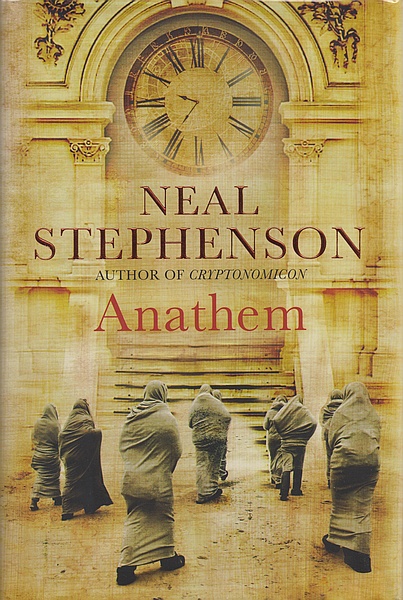
The year 2009 was a complete and total miss, in my opinion. I didn’t like any of the books or authors that were nominated that year, though I will admit that I skipped all but two of them. I’ve written before about how much I cannot stand Scalzi as either an author or a human being, and after trying to read his Interdependency novels, I’ve just completely sworn him off. Zoe’s War is technically a sequel to Old Man’s War, which I enjoyed at the time, but after all of Scalzi’s shenanigans I have no desire to finish that series. As for Neal Stephenson and Charles Stross, everything I’ve read from them is so loaded with gratiutous sex, graphic violence, and sheer unadulterated nihilism that I’ve sworn them off as well. Dark and gritty is almost always overrated.
Moving on to Little Brother… how can I put this? The book is about a teenage hacker and his high school buddies who fight back against an insidious surveillance state, which seeks to control every aspect of its citizens’ lives. Great concept… except that if you went back in a time machine and brought Cory Doctorow from 2009 into a debate with Cory Doctorow today, one of two things would happen: 1) the debate would turn into a vicious cage match, from which only one of them would leave alive, or 2) the older Doctorow would say “but a police surveillance state isn’t bad if the Democrats are in charge,” to which the younger Doctorow would say “you make a very good point, sir,” and the two would leave as best of friends. Which is to say that Cory Doctorow is a massive hypocrite when it comes to the lucrative merger of Big Tech and the state, and I can’t tell if his hypocrisy goes back all the way to the Bush years, or whether the election of 2016 broke him. Either way, I just could not get into Little Brother because of how thoroughly he’s flip-flopped on his views.
(As a side note, I really would like to see someone train two large language models on Doctorow’s writings, one from everything pre-Trump, and the other from everything post-Trump. It would be fascinating to pit those two models against each other in a simulated debate, because of how thoroughly he’s flip-flopped. Also, it would be entertaining to watch the real Cory Doctorow’s reaction to this simulated debate, because he’s written extensively about how much he hates ChatGPT and generative AI.)
With all of that said, however, I didn’t think Little Brother was terrible, even though I couldn’t finish it. As with Scalzi, it had less to do with the book itself and more to do with my opinion of the author, which is why I’ve decided to rank it above the other books below No Award. But I put it below The Graveyard Book, because there wasn’t really anything political or offensive in that one; it just wasn’t for me. I can’t affirmatively vote for The Graveyard Book, because I didn’t enjoy it enough to finish it, but if it had been a different year, I simply would have abstained instead of putting it below No Award.
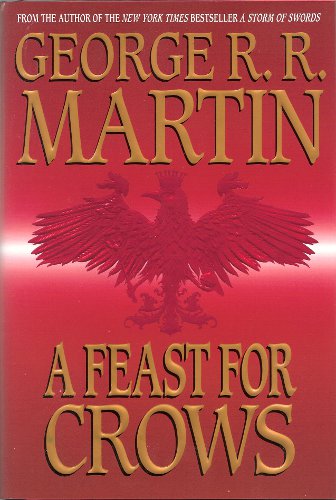
This is going to be controversial, but I don’t think any of George R.R. Martin’s A Song of Ice and Fire books should have been nominated for the Hugo Award. In the first place, those books are pure fantasy, and while the line between fantasy and science fiction can become blurry at times, with everyone drawing it in a slightly different place (Dragonriders of Pern, for example), I do think it’s important to draw that line somewhere, because each of us as readers draws that line somewhere. Some readers read only fantasy, some read only science fiction, and even among readers who read both, they scratch very different itches.
(As a side note, A Dance With Dragons came out right when I was indie publishing my first few books, and I remember being super annoyed that it was monopolizing all of the top spots on the Amazon bestseller charts for subgenres like science fiction > action & adventure, even though it was very clearly not a science fiction book. That annoyed me as both a writer and a reader.)
More than that, though… how do I say this? I know that a lot of people are (or were) huge fans of Game of Thrones, that it had a huge and lasting cultural impact, and that the writing quality of both the books and the miniseries was quite excellent, at least for the first few books/seasons… but to what end? The HBO series itself is blatantly pornographic, and the books are even worse, glorifying the immorality and horrific violence that characterizes the series. Worse, there is no good or evil in this world: only power. This means that there are no heroes, only victims and victimizers.
I’m not sure how much Game of Thrones is responsible for shaping our current cultural decay, and how much it was simply a reflection of the culture in which it was created, but this obsession with power and the victim-victimizer complex lies at the heart of all of the social pathologies currently driving the West to cultural and spiritual suicide. It’s the force driving our own modern Game of Thrones, between the MAGA disciples of orange Jesus and the machinations of our Big Tech and Deep State overlords, with their hordes of hypnotized NPC zombies protesting in behalf of [current thing], all while remaining carefully masked. It turns out that when you embrace Martin’s paradigm, rejecting good and evil for the pure pursuit of power, and define everyone by their victimhood status, it leads to the death of everything in your culture that is good, true, and beautiful.
And even laying all of that aside, the fact that Martin hasn’t finished the damned series yet has done more to destroy the epic fantasy genre than all the other things that his career has otherwise accomplished. If you’re a new fantasy writer and you have a great idea for an epic fantasy series, you’d better have a good day job or a sugar daddy/momma, because most readers won’t give your series a chance until after you’ve finished the last book. But can we honestly blame the readers for this, when Martin ran off with their money and left them all burned?
Back when Game of Thrones / A Song of Ice and Fire was still ascendant, fans and readers were all mesmerized by how skillfully George R.R. Martin could subvert their expectations and pull off twists that no one had foreseen. It turns out that the biggest expectation that Martin ever subverted was the expectation that he would finish the damned series.
Anyways, that’s enough ranting about George R.R. Martin and the pathological effect that I believe he’s had on the culture. I read A Game of Thrones back in 2010 and decided to skip the rest of the series. The writing was fantastic, but I hated all of the characters and could tell that things were going to get way too dark and way too graphic in the later books. And now, I wish I lived in a world where George R.R. Martin was still a mostly unknown midlist author, with a small cult following but not a lot of influence on the culture overall. It would be a much better world.
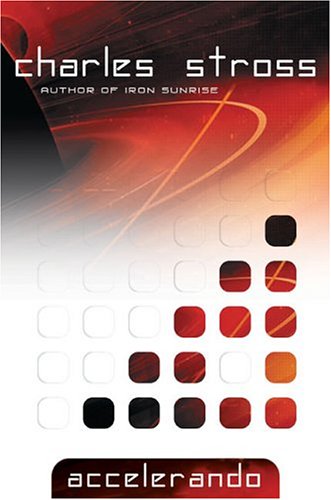
I skipped Accelerando, because I’ve read enough Charles Stross to know that his particular brand of grungy cyberpunk nihilism rubs me the wrong way. Learning the World wasn’t terrible, but I DNFed it because I got bored, though I could be persuaded to try it again. It was just too much of an idea book, without enough story to really hook me.
Old Man’s War… my thoughts on that one are complicated. I cannot stand Scalzi as either an author or a human being. He’s basically an obnoxious internet influencer who made it big back in the days of the blogosphere, before “influencer” was a job title. Of course, to be an influencer, you have to either 1) be an extremely attractive woman, or 2) be off your rocker somehow, and that definitely describes Scalzi. He is an obnoxious blowhard who likes to argue with people on the internet for fun and profit, except he’s apparently not as good at social media as he was at blogging, so he’s pivoted to writing science fiction and playing the SFWA mean girls game instead.
But most of that happened after Old Man’s War, so it’s not exactly fair to judge the book on all of that. And I have to admit, I enjoyed it back in 2008 when I read it. It’s basically a retelling of Starship Troopers and The Forever War, but without all of the nihilism and politics—and since the nihilism and the politics are the things that got me hung up on both books (though I actually enjoyed the politics of Starship Troopers; the part that slightly annoyed me was getting a lengthy treatise on human sociology instead of an adventure novel), Old Man’s War was basically a retelling with all of the good parts and less of the bad parts. So I’ll grudgingly give Scalzi his due and admit that his first book is good enough to deserve an affirmative vote.
But Robert Charle’s Wilson’s Spin is easily the best book on the ballot from this year, and possibly the best Hugo-nominated book that I’ve read from this whole decade. It’s fantastic. One of the best science fiction novels I’ve ever read. The rest of the trilogy is just as good, too. In fact, Spin and its sequel Axis were a huge influence on my own Genesis Earth, though it may not be obvious at first glance. I read Spin when I was studying overseas in Amman, Jordan, while I was still working on the first draft of Genesis Earth. The next year, I read a whole bunch of Robert Charles Wilson’s other books, and I have to say that I have yet to read a book he wrote that I didn’t enjoy. His books have had as much influence on me as Ursula K. Le Guin, and largely scratch the same itch.
So that’s how the 2006 Hugos shape up for me: three books that I didn’t like, and two that I did—and one of those books is one of my all-time favorites.