The Cost of Forced Redemption in A Queen in Hiding

What if you had the power to change someone from the inside out—to erase their worst impulses, soften their rage, rewrite their guilt? Would that be mercy… or violation?

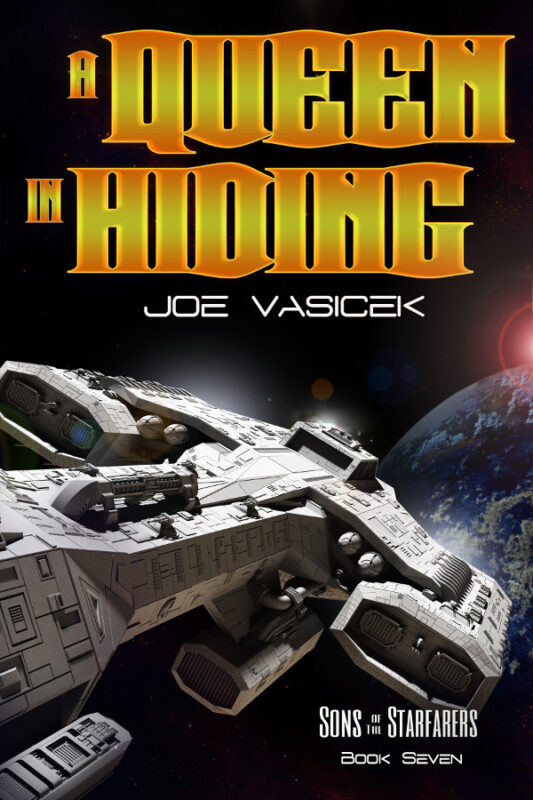
In A Queen in Hiding, the seventh book of the Sons of the Starfarers space opera series, the question isn’t whether people need redemption. It’s whether redemption still counts if it isn’t chosen.

Where the Idea Came From

Across the Sons of the Starfarers series, I’ve explored war, exile, occupation, resistance, loyalty, and moral courage under pressure. But as the story world expanded—and as certain characters gained the ability to influence minds directly—I kept coming back to a troubling “what if”:

If you could fix what is broken in someone, why wouldn’t you?

History is full of movements, regimes, and even well-meaning reformers who believed they were improving humanity. Philosophically, it’s an old debate about free will and the “greater good.” Personally, it grew out of my fascination with the thin line between protection and control—the same tension that runs through this entire military science fiction series. In a universe shaped by authoritarian powers and fragile freedom, the temptation to force goodness is always lurking.

How The Cost of Forced Redemption Shapes the Story

In A Queen in Hiding, redemption becomes more than a character arc—it becomes a weapon, a responsibility, and a moral fault line.

As the collective grows and new abilities emerge, the characters are confronted with a frightening possibility: they could intervene directly in someone’s inner life. They could remove trauma. Suppress destructive impulses. Even erase memories that cause pain or danger. From a distance, that sounds compassionate. Up close, it raises a chilling question: who decides what a person is allowed to remain?

This tension threads through Reva’s choices in particular. Her desire to protect, heal, and rebuild is sincere. But good intentions do not erase consequences. The story keeps pressing on a single point: healing that bypasses consent becomes indistinguishable from domination. And domination—no matter how kindly framed—is the very evil the series has been resisting from the beginning.

Other characters push back, arguing that redemption must be chosen. Growth without agency is not growth at all; it’s replacement. That debate doesn’t just create personal conflict—it drives strategic decisions, shapes alliances, and forces the collective to define what kind of future they’re actually building.

In that way, this theme doesn’t stand alone. It reinforces one of the central through-lines of Sons of the Starfarers: freedom is fragile, and you can lose it even while trying to save others.

What The Cost of Forced Redemption Says About Us

Modern readers live in a world full of systems that promise improvement—political movements, therapeutic models, technological algorithms, ideological crusades. We all feel the pull to correct, reform, and “fix” what’s wrong.

But A Queen in Hiding asks a deeper question:
Is a person still themselves if their moral growth was imposed?

The novel suggests that redemption without consent erases the very dignity it claims to restore. True change must involve choice—even when that choice is slow, painful, and uncertain. Hope, in this view, isn’t about control. It’s about trusting that people can become better without being rewritten.

Why This Theme Matters to Me

I’ve always been drawn to stories about loyalty, sacrifice, and protecting the people you love. But the older I get, the more I’m convinced that protection can turn into control if we’re not careful. In writing A Queen in Hiding, I felt that tension deeply. It’s tempting to imagine a world where brokenness could simply be edited out. Yet I’ve come to believe that freedom—including the freedom to fail—is part of what makes redemption meaningful at all.

If the Sons of the Starfarers series is about anything, it’s about preserving human dignity in the face of overwhelming power. And dignity cannot survive without consent.

Where to Get the Book

Related Posts and Pages

Explore the series index for Sons of the Starfarers.

Return to the book page for A Queen in Hiding.
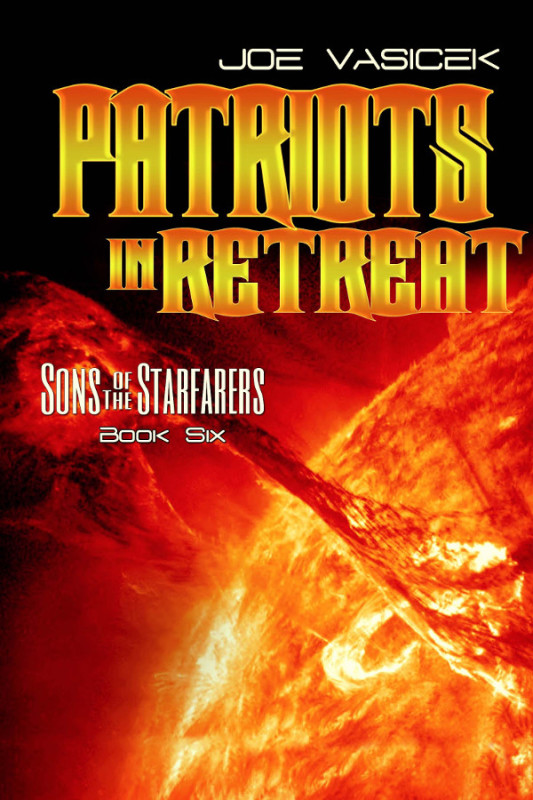
The Price of Freedom in Patriots in Retreat

Freedom is one of those words that sounds simple—until you’re the one paying for it. Patriots in Retreat (Book 6 of Sons of the Starfarers) asks a harder question than “Is freedom worth fighting for?” It asks: what does freedom cost when you’re losing, exhausted, and running out of options—and what are you willing to become in order to keep it?

Where the Idea Came From

This theme took shape during a season when I was confronting limits—creative, financial, and personal. The indie publishing landscape was shifting. Advertising costs were rising. Series momentum doesn’t maintain itself. I realized that “creative freedom” wasn’t something I possessed automatically just because I was independent. It had to be defended—through discipline, consistency, and sometimes uncomfortable adaptation.

At the same time, I was thinking about historical moments when nations or movements had to retreat in order to survive: the American Revolution’s early setbacks, the long withdrawals that preserved armies so they could fight another day. Victory stories are inspiring—but retreat stories are revealing. They expose what a cause is really built on. Patriots in Retreat grew from that intersection: the realization that freedom isn’t won easily. It’s proven in endurance.

How The Price of Freedom Shapes the Story

In Patriots in Retreat, freedom isn’t framed as a triumphant banner—it’s framed as a burden that forces decisions. The Outworld cause is under pressure, and the characters are repeatedly pushed into situations where every path forward has a price: lives, resources, trust, reputation, and sometimes the comfort of clear moral choices. The book’s tension comes less from grand speeches and more from what freedom demands in the quiet moments—when leaders have to decide what to sacrifice, what lines not to cross, and what kind of future they’re still trying to preserve.

That’s why this is a retreat story: not because the characters stop fighting, but because retreat exposes what you truly value. When you don’t have enough strength to do everything, you find out what you’re willing to protect first—and what you’re willing to lose. Patriots in Retreat keeps returning to the same underlying question: if you pay any price to stay free, do you still end up with freedom… or only survival?

What The Price of Freedom Says About Us

We like to imagine freedom as a clean moral good—something obviously worth having and obviously worth defending. But in reality, freedom competes with comfort, safety, convenience, and the desire for control. When circumstances grow unstable, it becomes tempting to trade liberty for certainty, or to justify harsh measures in the name of survival.

Patriots in Retreat suggests that the true test of freedom isn’t how loudly we celebrate it, but how carefully we protect its character under pressure. Do we still believe in human dignity when resources are scarce? Do we preserve moral limits when fear rises? The story reflects a sobering truth about human nature: the greatest threat to freedom often comes not from an external empire, but from our willingness to abandon our own principles when things get hard.

Why This Theme Matters to Me

I’m drawn to stories where freedom is more than a slogan—where it has weight. I’ve learned (often the hard way) that independence isn’t something you achieve once and then coast on. You keep it by paying attention, doing the work, and making the hard choices before the crisis makes them for you. That’s what I wanted this book to feel like: not just the thrill of fighting an empire, but the sobering, hopeful truth that freedom is a cost you keep paying—because the alternative costs more.

Where to Get the Book

Related Posts and Pages

Explore the series index for Sons of the Starfarers.

Return to the book page for Patriots in Retreat.

The Cost of Protecting Your Family in Children of the Starry Sea

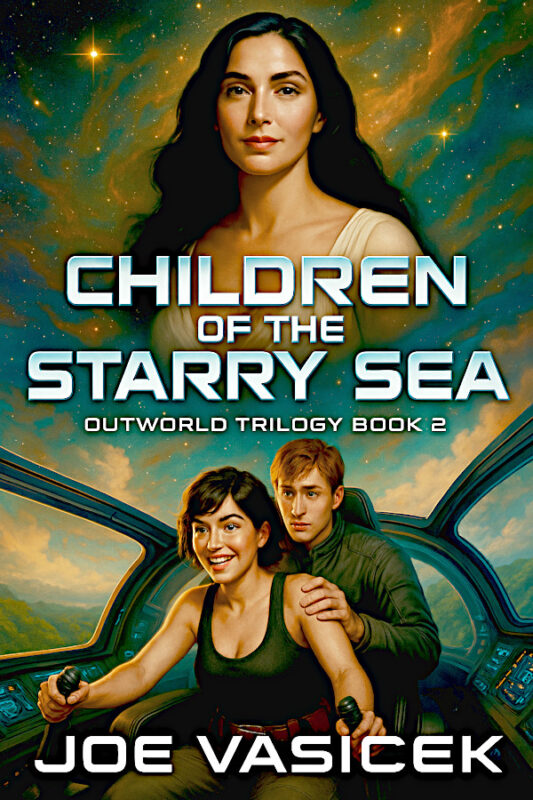
What does it cost to keep your family safe when your planet is under occupation and war has come to your doorstep? In this character-driven space opera about resistance, family loyalty, and moral responsibility, protection stops being a private instinct and becomes a dangerous, public act. Children of the Starry Sea is built around that question: not whether family is worth protecting—but how much you are willing to risk, lose, or become in order to do it.

Where the Idea Came From

I wanted to write a space opera that treated family not as background motivation, but as the central pressure point of the story. Instead of focusing only on fleets and empires, I asked: what does interstellar occupation feel like at the dinner table? In a child’s bedroom? In the split second when a parent has to decide whether to run, hide, resist—or trust? As the opening novel of The Outworld Trilogy, this book establishes the emotional and moral foundation for a larger interstellar conflict that unfolds across the series.

How The Cost of Protecting Your Family Shapes the Story

In Children of the Starry Sea, nearly every major decision flows from someone trying to shield the people they love.

Parents take risks they would never take for themselves. They lie, improvise, and step into danger because the alternative is unthinkable. Characters who might otherwise stay cautious find themselves hacking systems, negotiating with enemies, or joining fragile resistance networks—not because they crave heroism, but because someone smaller and more vulnerable depends on them.

But protection isn’t clean. It isn’t just bravery. It comes with tradeoffs. Seeking safety can draw unwanted attention to innocent communities. Rescuing one person may endanger another. Holding your family close may require you to let something else go—status, security, reputation, even pieces of your own identity. The story continually asks whether protecting your own can ever be separated from responsibility toward the wider human family.

That tension—between private love and public consequence—is what drives the emotional core of the novel. The political conflict matters. The empire matters. But what truly raises the stakes is that every strategic move has a face attached to it. A child. A spouse. A parent. The war is never abstract. It is always personal.

What The Cost of Protecting Your Family Says About Us

At its heart, this theme reflects something deeply human: love makes us brave—but it also makes us vulnerable. The people we cherish most are the very ones who can be used to control or break us. And yet, we keep loving anyway.

Stories about parents protecting children and families holding together under pressure resonate because they mirror our own fears and hopes. We all understand, instinctively, that safety is fragile. That stability can vanish. That sometimes the only thing we truly control is what we are willing to sacrifice for someone else. Children of the Starry Sea suggests that while protection has a cost, love is still worth paying it—because it is the one thing occupation, fear, and violence cannot fully erase. In an era when many readers are drawn to found family stories, resistance narratives, and emotionally grounded science fiction, this theme speaks directly to that hunger for stories where love—not power—is the true source of courage.

Why This Theme Matters to Me

When I wrote this book, I was thinking a great deal about responsibility—about what it means to be entrusted with other lives. In the author’s note, I talk about how real-life transitions and uncertainties shaped the emotional undercurrent of the story. I wasn’t interested in writing power fantasy. I wanted to write about burden. About the quiet, relentless weight of trying to do right by the people who depend on you.

For me, Children of the Starry Sea is ultimately about hope that survives fear—not because circumstances are easy, but because love makes endurance possible. It is a family-centered space opera that insists courage begins at home.

Where to Get the Book

Related Posts and Pages

Explore the series index for The Outworld Trilogy.

Return to the book page for Children of the Starry Sea.

Is Children of the Starry Sea for You?

Children of the Starry Sea is a character-driven space opera about the cost of protecting your family when an empire takes control of your world. Set on a contested colony and orbiting space station, this second book in The Outworld Trilogy blends political tension, intimate family drama, and high-stakes escape into a story about courage under pressure. This is science fiction that cares as much about parents and children as it does about fleets, invasions, and interstellar power struggles.

What Kind of Reader Will Love This Book?

If you love…

  • character-driven science fiction focused on family, faith, and moral responsibility
  • space opera about resistance movements and underground escape plans
  • stories where parents must protect their children in impossible political situations
  • multi-POV novels that balance action with emotional depth
  • hopeful sci-fi that wrestles with sacrifice, loyalty, identity, and belonging

…then Children of the Starry Sea is probably your kind of story.

What You’ll Find Inside

Children of the Starry Sea follows Jeremiah, Reva, Mariya, Isaiah, and Salome as their colony and orbital station fall under the control of the Hameji—an expansionist empire determined to enforce submission. Pirates resurface, political negotiations turn coercive, and secret escape plans unfold under constant surveillance. At the same time, the mysterious collective consciousness that binds Reva and Isaac raises urgent questions about identity, assimilation, and belonging. The emotional journey moves from fear and disorientation to quiet resolve and sacrificial courage. The result is a tense but intimate space opera—fast-paced in moments of infiltration and escape, reflective in scenes of family, faith, and moral choice—about standing firm when everything familiar is stripped away.

What Makes Children of the Starry Sea Different

Fans of traditional military space opera will recognize invasions, political negotiations, and resistance efforts—but this story takes those elements in a deeply personal direction. Where many science fiction invasion stories focus primarily on fleet battles and tactical maneuvers, Children of the Starry Sea leans into the domestic and moral cost of occupation: dinner tables under surveillance, parents negotiating with conquerors, teenagers stepping into adulthood too soon.

Readers who enjoy layered ensemble casts will appreciate the shifting perspectives between parents, children, and outsiders—especially the unique thread of the collective consciousness that shapes Reva and Isaac’s storyline. Instead of framing assimilation as pure horror, the novel explores belonging, identity, and agency in unexpected ways, making it both intellectually and emotionally distinctive within modern indie space opera. Where many science fiction stories treat hive minds as purely monstrous, this novel explores collective consciousness as both gift and danger—complicating the usual invasion narrative with questions of agency, consent, and chosen belonging.

What You Won’t Find

You won’t find grimdark nihilism, graphic brutality, or cynical antiheroes. While the stakes are high and the threat is real, this is not a hopeless dystopia. Violence has consequences, and moral choices matter. If you’re looking for relentless darkness or shock-value storytelling, this may not be the right fit.

Why I Think You Might Love Children of the Starry Sea

This story matters to me because it explores something I think science fiction doesn’t always take seriously enough: the quiet, daily courage of families under pressure. At its heart, Children of the Starry Sea is about parents learning when to protect and when to let go, about teenagers stepping into adulthood too soon, and about holding onto faith and identity when larger powers try to define your future for you. Finishing this novel required persistence and trust—much like the characters themselves must learn. If you care about science fiction where family is central rather than incidental, I think this book will stay with you.

Where to Get the Book

Related Posts and Pages

Explore the series index for The Outworld Trilogy.

Return to the book page for Children of the Starry Sea.

Survival After Catastrophe in Heart of the Nebula

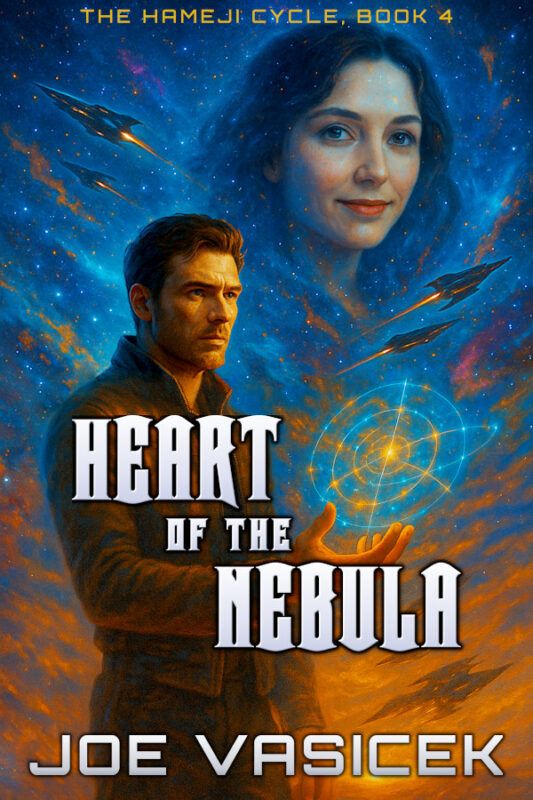
Most science fiction stories focus on the catastrophe itself—the war, the invasion, the moment everything breaks. Heart of the Nebula asks a harder question: what comes after? This novel explores survival not as escape or victory, but as the long, grinding work of holding a shattered people together once the worst has already happened.

Heart of the Nebula is a character-driven space opera about survival after a devastating interstellar war, focused on leadership, scarcity, and the fragile work of rebuilding when victory is no longer an option. This is a story about living in the aftermath—when supply lines are fragile, authority is contested, and every decision carries consequences that can’t be undone.

Where the Idea Came From

The theme of survival after catastrophe grew out of thinking about what happens between history’s big moments. Wars end, empires fall, and invasions retreat—but the survivors are left to deal with the damage. In the author’s note, I talk about being interested in the liminal space after disaster, when the adrenaline fades and people are forced to confront loss, responsibility, and the reality that survival itself can be exhausting. I wanted to write a science fiction story set squarely in that aftermath—a post-war space opera where the central tension isn’t winning the conflict, but preventing a fragile civilization from quietly collapsing afterward.

How Survival After Catastrophe Shapes the Story

In Heart of the Nebula, the Hameji invasion is already over—but its consequences dominate every aspect of the plot, shaping a post-war survival narrative where rebuilding, scarcity, and leadership under pressure matter more than battlefield victories, even for readers new to the series. The surviving colonies are isolated, under-resourced, and barely holding together. Medical supplies, food shipments, and functioning infrastructure matter more than heroic speeches or decisive battles. Survival is measured in convoys protected, hospitals kept running, and fragile alliances maintained under pressure.

This theme also shapes the novel’s political and moral conflicts. Leadership becomes a form of triage: deciding what can be saved, what must be sacrificed, and how much compromise is acceptable before survival loses its meaning. Characters aren’t choosing between good and evil so much as between bad options and worse ones, all while knowing that a single failure could push their society from instability into total collapse.

What Survival After Catastrophe Says About Us

At its core, survival after catastrophe asks what we owe each other when the world no longer offers easy answers. When institutions fail and certainty disappears, morality becomes less about ideals and more about responsibility. For readers drawn to science fiction that explores rebuilding, moral responsibility, and the cost of survival after war, this theme asks not how we endure catastrophe—but how we remain human afterward. That’s why in Heart of the Nebula, survival isn’t just about staying alive—it’s about preserving trust, dignity, and a sense of shared purpose even when fear and scarcity make that difficult. It’s a reminder that rebuilding is not a single act, but a daily choice.

Why This Theme Matters to Me

I’ve always been drawn to stories about aftermath rather than explosions. The moments that interest me most are the quiet ones—when people have to live with what’s already happened and decide who they’re going to be next. Writing Heart of the Nebula was my way of exploring survival after catastrophe—the exhaustion, the moral weight, and the stubborn hope that survival can still mean something more than endurance.

Where to Get the Book

Related Posts and Pages

Explore the series index for The Hameji Cycle.

Return to the book page for Heart of the Nebula.

The Cost of Victory in Stars of Blood and Glory

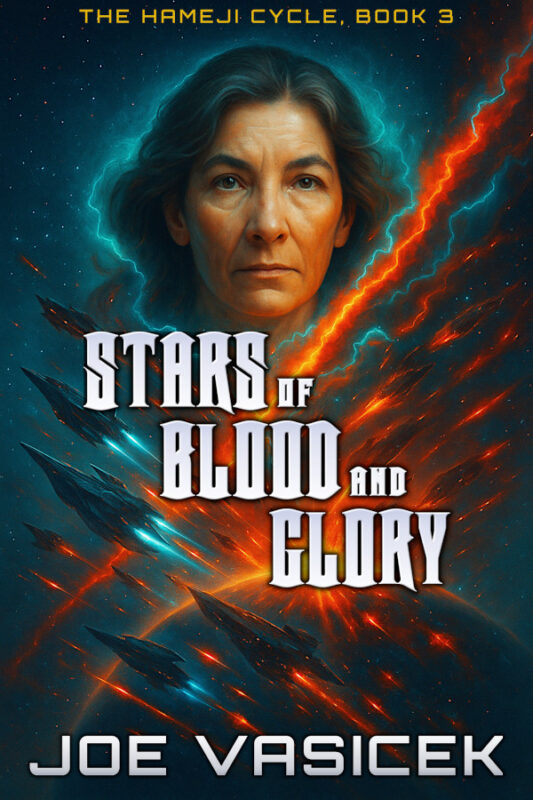
War stories often promise a payoff: win the battle, save the people, earn the glory. But Stars of Blood and Glory is a military science fiction novel that keeps circling a harder question—what does victory actually cost, and who gets stuck paying the bill? In this character-drive space opera, “winning” is never free. It’s a debt—paid in lives, in conscience, and in the things you can’t unsee afterward.

Although this is the third book in The Hameji Cycle, Stars of Blood and Glory is written as a standalone military science fiction novel, with a complete character arc and a decisive turning point in the war. Readers can start here and experience a full story, then explore the wider series if they want more context and depth.

Where the Idea Came From

The seed of this novel came from history. After writing Bringing Stella Home with the Mongol conquest of Baghdad (1258) as a loose influence, I knew I wanted to follow it with the Battle of Ain Jalut—the moment when an apparently unstoppable force suffers its first decisive defeat. That became the backbone of this book’s premise: a war that turns, a juggernaut that finally bleeds, and the uneasy question of what it takes to make that happen. As I developed the cast and conflicts—especially the mercenaries and the Rigelan/Japanese culture thread—the theme of cost kept asserting itself, not as an “idea,” but as the emotional truth underneath every major decision. That historical moment helped crystallize the book’s central question: what does it cost to stop a conquering power, and what kind of victory is worth surviving?

How The Cost of Victory Shapes the Story

In Stars of Blood and Glory, victory is never framed as a clean scoreboard result. It’s framed as a choice with consequences that keep expanding outward—through fleets, through civilians, through relationships, through the survivors who have to live with what was done in their name. The war demands miracles, but miracles here look less like triumph and more like someone volunteering to be the price. You see this at the strategic level, where commanders and leaders make wartime command decisions, gambling with everything they have left because “not losing” is no longer an option. When the moment comes, the story doesn’t celebrate the win—it forces you to sit in the silence afterward and feel what it took.

That theme also plays out at the personal level, where sacrifice isn’t abstract. Sometimes the cost is paid in one decisive, irreversible act—someone choosing to stay behind so others can escape, buying a few minutes that matter more than a lifetime. Sometimes the cost is paid in guilt and moral injury, as characters realize too late that their mistakes don’t just endanger themselves, they drag everyone else into the blast radius. Even when the battle goes “right,” the human math never does. The book keeps asking: If your survival requires someone else’s destruction—what does that make you?

What The Cost of Victory Says About Us

I think this theme resonates because it’s true far beyond war fiction. In real life, we’re always tempted to treat outcomes as if they’re separate from the means: If it worked, it must have been worth it. But human beings don’t actually live that way. We carry the cost in our bodies and memories. We mourn what we had to trade away. We wonder whether the thing we saved was worth what we became in the saving. Stars of Blood and Glory leans into that uncomfortable moral realism: sometimes the “right” outcome still leaves blood on your hands, and the only way forward is to acknowledge it instead of pretending victory makes everything clean. For readers who want science fiction that treats war as a human and moral problem—not just a tactical one—this question sits at the heart of the story.

Why This Theme Matters to Me

I’ve always believed that character death—and sacrifice more broadly—should mean something. Not as shock, not as spectacle, but as a kind of honoring: the idea that people matter enough that their loss changes the shape of the story and the people left behind. That’s why I keep returning to this question of cost. It’s easy to write war as adrenaline and hero-posters. It’s harder—and more honest—to write it as a series of choices that leave scars, even when you win. And if this book has a heartbeat, it’s that: the stubborn belief that what we do matters, what it costs matters, and the people who pay that cost deserve to be remembered.

Where to Get the Book

Related Posts and Pages

Explore the series index for The Hameji Cycle.

Return to the book page for Stars of Blood and Glory.