- Time
- Gravity
- The Sun
- The immutable laws of physics
- Greed
- Pride
- Hunger
- Stupidity
- A good story
- Truth
Tag: anti-woke
Yes, Brandon Sanderson has gone woke
By his own admission, in his latest blog post: On Renarin and Rlain. He says the post is addressed “toward my more conservative readership.” However, he also calls himself “an ally to LGBT+ people” and boasts about writing the “first openly gay men [in] the Wheel of Time.” When discussing Christianity and his own Latter-day Saint faith, he makes repeated appeals to “empathy” and “respect,” without addressing the Bible’s clear condemnation of sexual sin. He also does not mention the Family Proclamation, which clearly lays out his own church’s position on homosexuality, transgenderism, and gay marriage.
In other words, Brandon basically told his conservative readers “I hear you, but you’re wrong.” He implies that any conservative Christian who has concerns with the gay romance in Wind and Truth is lacking in empathy and respect. He also implies that by voicing their concerns, they are dividing the world into “us” vs. “them” and betraying a key tenet of their own Christian faith.
If Brandon genuinely wanted to allay the concerns of his conservative readers, he would have acknowledged the Family Proclamation and Biblical standards of sexual morality. He would have discussed the gay romance of his latest book in the context of such standards. Then, he would have presented an argument similar to Andrew Klavan’s: that conservative art is not the same as conservative life. Good art must provide an honest and truthful representation of life. It should not glorify or promote those aspects of life that are evil. Brandon starts to make the first half of that argument, in discussing how Tracy Hickman portrayed gay characters in his books, but he fails to follow it up. He doesn’t explain how making a gay romance essential to the plot of Wind and Truth serves the good, the true, and the beautiful.
Brandon doesn’t seem to trust his conservative Christian readers to be able to separate the sin from the sinner. He also refuses to acknowledge the lived experience of his gay and lesbian readers who have chosen to live morally pure and faithful Christian lives. Like Brandon, I am a member of the Church of Jesus Christ of Latter-day Saints. Some of the most inspiring members of the church for me are those who struggle with same-gender attraction but still live true to their testimonies. I imagine it must feel pretty lonely at times like this, when their brother in Christ has chosen to side with those who preach the false gospel of pride, equity, and self-worship, instead of the gospel of the One who declared “Father, Thy will be done, and the glory be Thine forever.”
Has Brandon denied his faith? I’m not Brandon’s bishop, nor am I his eternal judge. It’s important to remember that the church is not a place for perfect people. I do think there ought to be a place in the church for self-described LGBT+ allies, so long as they sustain the leaders—and the doctrine—of the church. But if he hasn’t crossed the line, he’s certainly standing a lot closer to it than I ever would.
My personal testimony is that the Family Proclamation is inspired of God, and that the men who wrote and signed their names to it are prophets, seers, and revelators. It teaches true principles about the family and sexual morality. We are all children of God, gays and lesbians included, and that makes us all brothers and sisters regardless of how we choose to live. At the same time, Christ didn’t suffer and die for us so that we could continue in our sins. If the Family Proclamation is true, affirming homosexuality is not an act of love, no matter how empathetic it may be. Christ had empathy for the woman caught in adultery, but because He loved her, He also commanded her to “go, and sin no more.”
On a personal level, I feel frustrated and disappointed by Brandon’s recent turn. I count Brandon as an early mentor—in fact, it was Brandon’s class that inspired me to pursue writing as a career. I haven’t spoken with Brandon in years, but I do still count him as a friend. If I could sit down with him I would ask him about the people he’s surrounded himself with. They seem to be leading him in a bad direction, since he seems to have grown out of touch.
Has he betrayed his conservative readers? Yes, I think he has, and that he’s making a big mistake by doing so. One of the things that set him apart until now was the fact that his books are very clean. His fans may argue that Renarin and Rlain’s romance is also clean, but as a conservative reader, it feels more like a camel’s nose peeking under the tent. In a world of drag queen story hour, pornographic gay pride parades, and genital mutilation of children, is it even possible to have a clean gay romance? I think not. To paraphrase Brandon, as much as we may long for the days where there was no slippery slope, maybe that world never existed. Maybe there will always be an instinct to divide the world into the “clean” and the “queer.”
So let me just say this: whatever the stories that Brandon wants to tell, I can no longer trust that they’ll be the kind I’ll want to read. He could still turn around, of course, and I genuinely hope that he does. But reading between the lines, it seems that this turn toward the woke is not a new direction from him. It seems to be something that he’s contemplated for some time. I’ll still read the rest of his secret projects and keep my signed copies of the original Mistborn trilogy. But I’m going to DNF the Stormlight Archive, and probably won’t buy his future books.
Brandon ends his blog post by saying that one of his primary goals in life is to be more empathetic. This is what motivates him to write: because it’s how he explores the world. I, too, feel compelled to explore the world through my stories, but my primary goal is to pursue the truth. Those two goals aren’t always in conflict, but when they are, I think the pursuit of truth should be higher. The pursuit of truth ultimately leads us to love one another more fully and more meaningfully than the pursuit of empathy does. It saddens me that Brandon disagrees.
The state of science fiction is as bad as Australian breakdancing
It seems like most of the internet is talking about the hilariously bad breakdancing performance given by Australia at the Paris Olympics. Apparently, the “athlete” in question is actually a university professor named Rachael Gunn who specializes in breakdancing studies, or some such nonsense, and the main reasons she got the nod to compete are 1) the Australian breakdancing scene is woefully small, 2) she’s (allegedly) an LGBTQ+ woman, with all the right political opinions, and 3) her husband was on the committe that made the decision to qualify her. Taking advantage of those three factors, she’s apparently made a name for herself in Australia, even winning some local competitions—because who would dare criticize such a stunning and brave LGBTQ+ woman? So of course, she went on to compete on the international scene… and made such a mockery of herself and her sport that the judges awarded her straight zeroes, and the Olympics committee pulled breakdancing from the 2028 Los Angelos Olympics. Wah wah.
While this story is rightly hilarious, and proves the eternal truth that wokeness ruins everything, I can’t help but notice the parallels between the state of Australian breakdancing, that someone so inept and untalented could leverage a “studies” degree to dominate it, and the current state of science fiction. Specifically, this is the comment that made me think about this, which is worth reading in full:
The relevant part is this:
Rachael represents so much of what is totally lecherous about cultural studies academics. Pick a subject area that will be under-studied in your context, so you can rise through the ranks quickly (how many break dancing academics will there be in Australia?), and wreak absolute havoc in lives of the people you want to study. There is no limit to the sheer disrespect they will dole out, purely for self-advancement.
Now, I don’t think science fiction was ruined in quite the same way, ie by being dominated and colonized by academia through “studies” degrees. Science fiction was probably too large to be overtaken that way. However, the pattern is still similar, and from what I can tell, it goes something like this:
Step 1: Take over the institutions in the field that are primarily responsible for determining and evaluating excellence.
In Australia, the breakdancing field was small enough that academia was able to dominate and (for lack of a better word) colonize it, becoming the arbiters of excellence within that art. It certainly helped that the professor who had carved out this academic niche for herself was married to one of the judges in the committee that was tasked with determining excellence. This created an incestuous (and ultimately nepotistic) relationship between academia and the judging panels.
In science fiction, something similar happened with SFWA and the Hugo and Nebula awards. I’ve written before about how SFWA ruined science fiction, so I won’t repeat all that here. But the basic gist of it is this: as science fiction became more established, the organizations and publications that talked about science fiction became more authoritative on the subject of the genre than the actual writers themselves. Because of this, achieving recognition for excellence became less about creating works of actual merit, and more about gaining the approval of the people who had built their careers talking about science fiction, rather than actually creating it. And the best way to gain their approval was to join those institutions yourself, rising up in the pecking order until everyone else was beneath you.
This basically describes the career trajectories of John Scalzi and Mary Robinette Kowal, two insanely woke authors who leveraged their tenure as SFWA president for award nominations. Both of them seem to have spent at least as much time and effort talking about science fiction as they have in actually creating it: Scalzi through his blog, which he leveraged to get his first book deal, and MRK through both her blog and the Writing Excuses podcast.
Step 2: Purge those institutions until they are ideologically pure.
This step is critical. So long as the instutitions are focused on merit, the only way to climb the ranks is by creating something of merit. But once the institution has become ideologically possessed, with all of those who reject the dominant ideology being purged from positions of power, then merit no longer matters, and the way to the top becomes clear. Those who are the most ideologically pure, as demonstrated by their virtue signalling, will rise to the top. This has the added benefit of quelling all merit-based criticism, since those beneath you fear having their own ideological purity called into question.
From what I can tell, this is how Rachael Gunn rose to prominence in the Australian breakdancing scene. After all, once academia had colonized the field, who would dare question the merits of such a stunning and brave LGBTQ+ woman? In a similar manner, Scalzi and MRK rose to the top of SFWA by virtue signaling their own ideological purity and intersectional victimhood status, squelching any criticism by labeling their critics racist, sexist, bigots, homophobic, etc.
Step 3: Redefine excellence in your own image.
In the Australian breakdancing scene, this was accomplished through the combination of Rachael Gunn’s academic work and her husband’s position in the committee that qualified the Olympic competitors. And while it probably isn’t quite so blatantly nepotistic in the science fiction world, the pattern still holds true when you look at what the Hugos and Nebulas have become. This was what the Sad Puppies controversy was actually about, and because the Puppies lost, the Hugo and Nebula awards have been insufferably woke ever since:
Step 4: Use the captured institutions to purge the field of potential rivals.
The final step in this projection is to squash all of those people who represent a threat to your domination, because they have merit and you do not. Ignoring her perhaps overly generous assessment of Australian breakdancing, this is what Hannah Berrelli is talking about when she mentions all the “hundreds of Australian athletes who will have dedicated their entire lives to athletic excellence” whose blood, sweat, and tears were overshadowed and rendered irrelevant by Rachael Gunn’s Olympic stunt.
In science fiction, we see this in the fact that David Weber has never been nominated for a Hugo or a Nebula, or that Jim Butcher’s sole Hugo nomination lost to No Award. Both of these men are far better writers than the majority of award-winning authors, especially in our current era. You could make a solid argument that Dan Simmons or Orson Scott Card were superior, but Scalzi? Jemisin? Kingfisher?
And what about all of the new and relatively unknown authors? At least Weber and Butcher already have large followings, which they have rightfully earned through their merit. But when merit is no longer the determining factor in recognizing excellence within the field, what chance do talented up-and-coming authors have if they aren’t willing to play the ideological purity games? Answer: not a hell of a lot.
So while you laugh at how ridiculous Australia’s breakdancing performance was at the Olympics, understand that the same dynamic has been playing out in modern science fiction for years. And honestly, the results are no less ridiculous.
How I would vote now: 2023 Hugo Award (Best Novel)
Alright, let’s tackle the most controversial Hugo awards since Sad Puppies 3—and possibly the most controversial Hugos ever!
The Nominees

Legends & Lattes by Travis Baldree

Nettle & Bone by T. Kingfisher

The Spare Man by Mary Robinette Kowal

The Daughter of Doctor Moreau by Silvia Moreno-Garcia
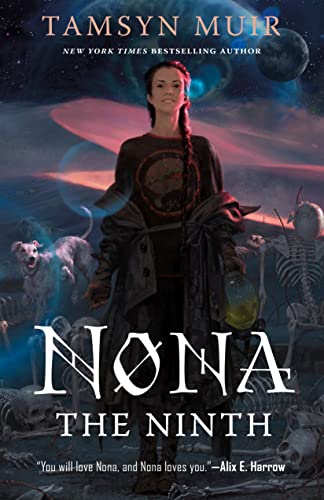
Nona the Ninth by Tamsyn Muir

The Kaiju Preservation Society by John Scalzi
The Actual Results
- Nettle & Bone by T. Kingfisher
- Legends & Lattes by Travis Baldree
- The Kaiju Preservation Society by John Scalzi
- The Daughter of Doctor Moreau by Silvia Moreno-Garcia
- The Spare Man by Mary Robinette Kowal
- Nona the Ninth by Tamsyn Muir
How I Would Have Voted
- No Award
- The Daughter of Doctor Moreau by Silvia Moreno-Garcia
- Legends & Lattes by Travis Baldree
Explanation
The 2023 Hugo Awards were an epic clusterfuck, from which the Hugos might never recover (and honestly, I kind of hope they don’t). Not only did the organizers exclude a bunch of titles like Babel by R.F. Kuang that probably would have placed very high, if not outright won first place—excluded them for no other discernible reason other than that they might have offended the Chinese Communist Party, since China was hosting the awards—but they also disqualified thousands of Chinese ballots for the same reason that they disqualified thousands of Sad Puppy ballots in subsequent years since the big kerfluffle in 2015: namely, that they were Wrongfans having Wrongfun.
Apparently, to get on the Hugo ballot, you have to either 1) pander to or be a member of the SFWA mean girls club (for crying out loud, two of the authors on this year’s ballot were former SFWA presidents), or 2) write a lesbian love story. I suppose you can also get on the ballot if you write a love story that’s gay, transgender, polyamorous, or some other flavor of queer, but lesbians are easier because the male readers are less likely to be grossed out or confused by it.
Anyways, I didn’t enjoy any of these books, though I have to admit that I didn’t even try to read The Kaiju Preservation Society (because I cannot stand Scalzi, either as an author or a human. The Collapsing Empire with its random throwaway sex scene in the second or third chapter was the last straw for me) and The Spare Man (my wife picked it up and was so confused and turned off by the non-gendered pronoun dickery that I knew it was too woke for me). I DNFed Tamsyn Muir’s Locked Tomb series with Gideon the Ninth, for reasons that I detailed in my recap of the 2021 Hugo Awards.
As for Nettle & Bone, I was pleasantly surprised at first, because the love interest was heterosexual—which, for the Hugos, is very unusual these days. But there were other things about the book that turned me off, such as the anachronism of a religious medieval world that’s been gutted of anything religious that might offend a non-religious reader in 2023, and a very anti-natalist bias with some lines that could have come straight from Margaret Sanger. So that’s why I put Nettle & Bone below No Award, and didn’t even bother ranking it anywhere on my ballot.
Legends & Lattes wasn’t terrible, but I got bored after the first couple of chapters, and because of the lesbian love story I’m not too keen to try it again (though I suppose I could be persuaded otherwise). As for The Daughter of Doctor Moreau, I didn’t find anything objectionable with that one, and actually got about halfway through, but… I just didn’t care about any of the characters. Not a terrible book, but it just wasn’t for me.
Of the two, I think I liked The Daughter of Doctor Moreau better, or disliked it less, which is why I put it on the ballot above Legend & Lattes and below No Award. Why include anything on a ballot below No Award? Because the way that ranked choice voting works, you can still influence the outcome that way even if No Award is eliminated during the counting. It’s basically like saying: “I don’t think any of these books deserve an award, but if I had to award one of them, I’d give it to (1) and (2), in that order.”
So that’s my take on the infamous 2023 Hugo Awards. Frankly, I think it would have been much better if the Chinese wrongfans had completely taken it over, and made it so that Worldcon was held in China every other year, with Chinese authors dominating the Hugos from now on. There are certainly enough Chinese sci-fi readers to justify such a move. But alas, it seems that the Trufans are going to keep clutching the Hugos with a deathgrip until 1) they’re all dead (since most of them are boomers anyway), or 2) the Trufans and the Hugos both become culturally irrelevant, if indeed they aren’t already.
(Speaking of China, hi Mike Glyer! Still buying views from Chinese clickfarms to boost your online rankings? It must be a real slow news week if you pick up this blog for your File 770 pixel scroll.)
Why I no longer consider myself to be a libertarian
I’ve been going back and forth on this post for almost a year now, wondering how exactly to express my thoughts. Some of the positive reviews on my fiction have expressed that I write “libertarian fiction,” and in some ways, I think that’s accurate: certainly, I value liberty very strongly, and support those government policies that are designed to safeguard our liberties while opposing those that seek to destroy it. That has not changed. But my views of libertarianism more generally have, perhaps in some ways that might surprise my longtime readers.
First, a little bit of my personal history. I grew up in one of the most liberal parts of the country, Pioneer Valley, Massachusetts, and considered myself a conservative while I lived there. Then, after serving a two-year mission for my church in Silicon Valley, California—what is probably the most progressive, leftist part of the country—I went to college at Brigham Young University, in the most Republican county of the most Republican state in the United States. At that point, I considered myself to be a sort of left-leaning classical liberal. When Dick Cheney spoke at BYU’s commencement, I blogged about the protests and attended the alternate commencement where Ralph Nader spoke.
I graduated in 2010, in the middle of the Great Recession, and made the fateful decision not to go to grad school at that time. To this day, I count that as the single best decision I ever made in my life (right up there with deleting my Facebook and Twitter accounts). Not only did this force me to learn how to navigate the real world, but it also got me out of the indoctrination factory that the national university system has become, even to a degree at my alma mater, BYU.
About five years after I graduated, I got red-pilled and started listening to right-wing commentators like Glenn Beck, Ben Shapiro, and Dennis Prager. I also looked seriously into Ron Paul and the libertarian movement, and became something of a libertarian. As fractitious as libertarianism is as a political philosophy, it seemed like the most logically coherent and intellectually honest way of understanding the world, whereas leftism and conservatism were both riddled with internal contradictions.
But then I got married and started a family. That experience has changed me in a lot of ways, perhaps even more than all the rest of my life experiences combined. But politically, the biggest thing it has caused me to rethink is this question:
What is the fundamental unit of society?
I’d always played lip service to the belief that the family is the fundamental unit of society, but starting a family of my own has made that real for me—indeed, has made me realize—in a way that simple bumper-sticker slogans never could. Before, I was living for myself. Now, I live for my children. Before, I was the hero of my own story, and that story was a single volume. Now, my story is just a single volume in an ongoing saga, a link in the chain of the generations that came before and will go on after me.
Libertarians believe that they stand in opposition to authoritarians of all stripes, be they communists, fascists, socialists, etc. But both libertarians and authoritarians operate on the unspoken assumption that the individual, not the family, is the fundamental unit of society. Leftists want to destroy the family and put the state in charge of raising and educating children, in order to make them obedient to government authority. Libertarians, on the other hand, romanticize this idea of the atomized individual who follows his own path and eschews all forms of collectivism, including the family. Ayn Rand’s books are populated by ubermensch who seem like they’ve sprung forth from the head of Zeus, and the children in her novels are basically just adults in miniature.
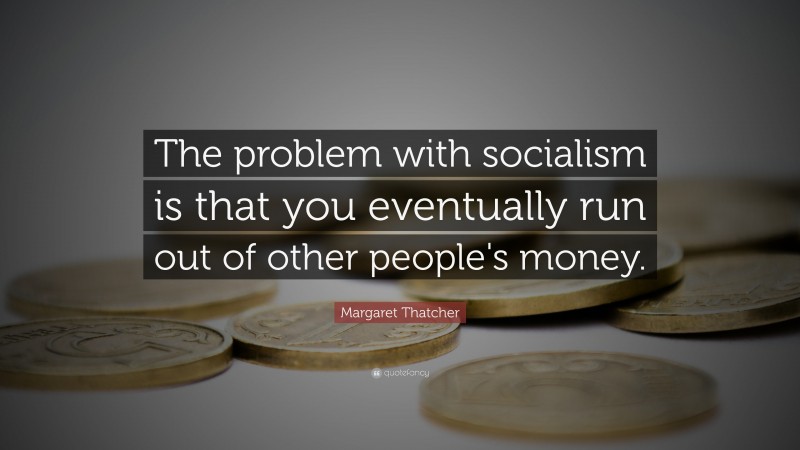
Allow me to put it this way: Margaret Thatcher had a brilliant quote about socialism that libertarians love to repeat. And from a purely economic standpoint, I believe that the libertarians are correct. But change that quote just a little, and you get this:
The problem with
socialismlibertarianism is that you eventually run out of other people’smoneyfamilies.
Families don’t just happen. They take a lot of work to build and to maintain, and unless they are planted in a culture that nourishes them, they will wither and die. Libertarianism does not foster that kind of a culture, yet it depends on families in order to raise the kind of people who can make a libertarian society work. People from broken families often lack the mental and emotional maturity to take upon themselves the personal responsibilities that come with personal liberty—in other words, they lack the capacity for personal independence which libertarianism depends on. Growing up in a healthy family isn’t the only way to develop that sort of independence, but a society of broken families will invariably fail to produce such a people.
This is why libertarianism ultimately leads to authoritarianism. We aren’t all characters in an Ayn Rand novel: we aren’t all ubermensch all of the time, reshaping the world by the strength of our will. And when we inevitable fail, where can we turn to for help? If society is nothing more than a group of individuals, then ultimately the only place to turn to is the state. Perhaps there may be churches, companies, or other private civic organizations to which a person may turn, but any form of libertarianism that rejects altruism as a moral good will fail to foster these organizations as well. So, in the absense of anywhere else to turn, individuals will, over time, turn increasingly to the state, trading their libertarian freedoms for economic and social security. A society that exalts the individual at the expense of the family will always, in the end, devolve into a statist tyranny.
If you want to create a stable society that recognizes individual freedom, you have to recognize the family as the fundamental unit of that society, and you have to proactively enact policies that will foster a culture of strong families. Not only does this give you a social safety net that is totally apart from the state, but it also ensures that your society will be self-perpetuating, since one of the central purposes of the family is to create and raise children.
In fact, the family is perhaps the best antidote to government power creeping into every facet of society, which also makes it the best way to push back against woke leftism, ESG, and the Great Reset. Hence why everything about leftist progressivism is calculated to destroy the family. Parents concerned about CRT in their schools? Domestic terrorists. Kids who say that they’re transgender? Transition them without telling the parents, and take them away from their families if the parents object.
But it’s not just a partisan issue. If the family is the fundamental unit of society and needs to be strengthened, then there are things on both the left and the right that need to change. For example, poverty is a huge issue for families, since poor families are much more likely to break up due to the stress. But conservatives often ignore the issue of income inequality, mouthing platitudes about the free market while giving us socialism for the rich and capitalism for the poor. And the libertarians are little better, what with how they push for the legalization of drugs, prostitution, abortion, and pornography. Few things have done more to destroy the family than widespread substance abuse and the hypersexualization of our society.
This is why I’ve mostly given up on reading Heinlein anymore. He’s a brilliant writer with a fascinating take on some of science fiction’s most fundamental tropes, but whenever he writes about sex or sexuality, all I can think of is “the problem with libertarianism is that you eventually run out of other people’s families.” Heinlein and his boomer readership took the family for granted, neglected their own, and gave us a world of widespread sexual promiscuity, where society is falling apart.
So that’s why I don’t consider myself a libertarian anymore, even though there are many tenets of libertarianism that I still admire and believe, especially on the economic side. I suppose you say that I’m a conservative, but that isn’t really accurate either, because most strains of conservatism in 2024 really seem more about conserving the leftism of two or three generations ago. So I guess that means I’m politically homeless—just like most of my fellow Americans these days.
Navigating Woke SF, Part 5: Where do things stand now?
So it’s been almost exactly two and a half years since I posted my first “Navigating Woke SF” blog post, where I demonstrated an anti-conservative bias in the responses I was getting to my traditional short story submissions, and predicted a cultural backlash against the woke moral panic of our times. Those predictions are now playing out all around us, from the Bud Light boycott to the last few Disney/Pixar bombs to the unlikely success of movies like The Sound of Freedom, which is still showing in theaters in my area.
To no one’s surprise, the institutions like Disney that have already been captured by the woke intersectional left have been tripling- and quadrupling-down on their woke insanity, as we see in movies like The Marvels and Disney’s live action Snow White. Which has opened up some wonderful opportunities for conservative-minded publishers and creators to outflank them, as we see with the Daily Wire’s competing release of Snow White:
Indeed, the anti-woke backlash in the mainstream culture has gotten so bad that South Park recently lampooned it with an episode where all of their characters were replaced by “diverse women.” I didn’t watch the full episode, but the clips I saw from it were absolutely hilarious—and directly over the target.
So with all of that brewing in the cultural mainstream, where do things stand in our particular little corner of it? Namely, science fiction publishing and the traditional short story markets?
Well… let me tell you a story. It begins earlier this year, when I decided that I wanted to take some of the money I’ve been earning with my indie-published book sales and subscribe to one of the traditional science fiction magazines. For a writer like me, it’s a legitimate business expense, and it seemed like a nice way to support the genre, as well as build my science fiction collection.

I decided to go with Clarkesworld, because even though they are woke, they seemed to be less woke than most of the other major magazines. The particular brand of diversity they like to emphasize is on publishing non-US authors, especially Chinese authors, who tend to write stories that are neither woke nore anti-woke, which can be a real breath of fresh air. Seriously, there is some really fascinating science fiction coming out of China these days, which is definitely worth checking out, and Clarkesworld, to their credit, tends to publish a lot of good Chinese authors.
So I subscribed to Clarkesworld magazine and began to receive a physical issue each month, which I added to my currently-reading pile and slowly read through. But I began to notice something disturbing with each issue: namely, that even if the story itself wasn’t particularly woke, there would always be some woke element thrown into it. For example, the story might be a weird western adventure tale, but one of the characters would randomly mention their LGBTQ wife. Or the story would be a far future space opera, and one of the characters would casually drop that they were trans, even though it had nothing to do with the story.
At the same time as all of this was happening, I discovered this interesting podcast where a former Dreamworks animator discusses how he left the company after learning that the Dreamworks executives were explicitly trying to use their movies as a form of social engineering for the woke agenda. The mechanism for this social engineering was what I found particularly interesting: namely, that they would associate the movie’s villain with some specific aspect of culture/religion that they were trying to villify, and associate the good guys with those aspects of the woke agenda that they were trying to push. In the example given in the podcast, they literally had the villain shout “the family is the basic unit of society!” at the climax of the story.
According to the former Dreamworks animator, this is especially true of sequels for popular franchises and IPs. For example, Wreck-it Ralph is a really fun and well-told story about a “bad guy” from a video game trying to become a hero, and becoming one when he sacrifices himself to save a misfit character from another video game, who turns out to be that video game’s queen. Really charming, really good story. But Wreck-it Ralph 2 throws all of that out of the window, turning Ralph into a simp and Venelope into a liberated girl boss, and crapping on all the traditional Disney princesses at the same time. The message was laid on pretty thick, and the result was a garbage movie.
Which made me wonder about Clarkesworld, because that particular social engineering technique is EXACTLY what I was seeing in almost all of the Clarkesworld stories. The thing is, I couldn’t tell if it was deliberate or unintended. I can totally believe that the Clarkesworld editors would tell their authors “we love your story, but we want you to add just this small woke element to it, and then we’ll publish it.” There are enough desperate authors out there who would probably do exactly that, if it meant receiving an acceptance from a pro-paying market after getting so many disheartening rejection letters.
But personally, I think it’s more likely that the authors are throwing in these elements themselves, without any explicit direction from the editors. That is, the authors are so desperate to be published by these woke traditional magazines that they’re not only self-censoring the stuff that they don’t think the editors will like, but they’re adding woke elements just because they know it will increase their odds of getting accepted. Which to me, is just sad.
Honestly, I wish that the more conspiratorial option were true, and that Clarkesworld has a devious social engineering agenda that they push onto their stories. That would be better than the alternative, which is that the literary science fiction field has been so thoroughly captured by the left that authors are adding woke elements to their stories without getting any feedback, direction, or urging from the editors and publishers, just because they know these stories won’t go anywhere without them.
So how is a conservative (or at this point, even a non-leftist liberal) supposed to navigate the field? At this point, I really don’t think there’s any way to do it except to go indie, or to go with Baen (which is itself independent of the Big 6 Big 5 Big 4+1 Big 3+1 whatever the New York book publishing establishment is called these days, after the Simon & Schuster sale). There may be some other small publishers that, like Daily Wire, are driving into the smoke of our cultural institutions’ Götterdämmerung, but within the science fiction field, I don’t think any of them are big enough to offer much more than what you’ll get by going indie—except, perhaps, with the opportunity to get in early with the up-and-coming next generation of editors and publishers, who will eventually replace the dinosaurs that currently dominate the field.
But that’s a big gamble that may never pay off, because the science fiction field has been dominated by leftists since at least the mid-60s, to the point where most subgenrese of science fiction are now synonymous with woke. After all, if the authors themselves are inadvertently telling stories that use social engineering techniques, not because the editors are making them, but because that’s the only way to get published, the rot runs very, very deep. And even during the “morning in America” moment in the 80s, when science fiction pulled back from the leftist crap to give us classics like Ender’s Game, there was still a thread of the wokeism in stuff like the sexuality in the Vorkosigan books, or the environmentalism in Hyperion (which I love, don’t get me wrong… but yeah, Dan Simmons is a bit of a tree-hugger).
The point that I’m trying to make with all of this is that, when it comes to the woke agenda, science fiction is a thoroughly captured field. That’s what this last episode in navigating woke SF says to me. If that ever changes, it will be after most of the traditional markets like Clarkesworld collapse and the major awards like the Hugos and Nebulas go defunct, because until that happens, everyone in this particular field is still going to be in denial about the anti-woke cultural backlash. That’s just how deep the woke goes. So until then, if you’re a non-woke author like me, the only way to navigate the field without compromising your values is to go full indie, at least when it comes to short stories.
What about supporting the arts? At this point, instead of subscribing to a particular publication or magazine, I’ve decided to make a short list of non-woke authors I want to support, and to buy their books as soon as they come out. One of those authors is Andrew Klavan, who writes more in the mystery/thriller genre than science fiction, though his Another Kingdom trilogy is quite good. I’m reading his latest Cameron Winter mystery right now, and it’s quite good. I highly recommend it.
This guy gets it
As I said previously, this is the defining moral conflict of our times.
From the Book of Mormon:
7 And now I write somewhat concerning the sufferings of this people. For according to the knowledge which I have received from Amoron, behold, the Lamanites have many prisoners, which they took from the tower of Sherrizah; and there were men, women, and children.
8 And the husbands and fathers of those women and children they have slain; and they feed the women upon the flesh of their husbands, and the children upon the flesh of their fathers; and no water, save a little, do they give unto them.
9 And notwithstanding this great abomination of the Lamanites, it doth not exceed that of our people in Moriantum. For behold, many of the daughters of the Lamanites have they taken prisoners; and after depriving them of that which was most dear and precious above all things, which is chastity and virtue—
10 And after they had done this thing, they did murder them in a most cruel manner, torturing their bodies even unto death; and after they have done this, they devour their flesh like unto wild beasts, because of the hardness of their hearts; and they do it for a token of bravery.
11 O my beloved son, how can a people like this, that are without civilization—
12 (And only a few years have passed away, and they were a civil and a delightsome people)
13 But O my son, how can a people like this, whose delight is in so much abomination—
14 How can we expect that God will stay his hand in judgment against us?
Moroni 9:7-14
The atrocities that we saw by Hamas on October 7th were on exactly the same level as the atrocities in the closing chapters of the Book of Mormon. The only thing we haven’t heard about is cannibalism, both of Hamas fighters against the victims, and of the hostages fed with the flesh of their own children—but frankly, it wouldn’t be surprising, given the scope and nature of the atrocities we already know about.
And yet, there are significant numbers of people in the West who approve of the jihad against the Jewish people? Truly, we are swiftly passing from a “civil and delightsome people” to a “people… without civilization.”
Define “woke.”
Woke (WOHK): Adjective
Of or pertaining to the mass formation psychosis currently gripping the United States and most of the developed world. This mass formation psychosis is led by radical leftist ideologues and driven by social media addiction. Due to the collusion between major technology companies and the US government, there is also an element of state-sponsored propaganda and control.
The mass began to form in the late 2000s with the popularization of social media. As these technologies began to replace face-to-face human reactions, it created the pre-conditions of social isolation and free floating anxiety, in large part due to the addictive nature of the algorithms which promoted content most likely to induce outrage and anger in the end-user (see CGP Grey, “This Video Will Make You Angry”). Once these pre-conditions were in place, all that was necessary to create the psychosis was a target or series of events to focus the attention of the mass.
The 2010s were characterized by several of these focusing events, starting in 2012 with the shooting of Michael Brown and the subsequent riots in Ferguson, Missouri, and continuing with numerous mass shootings such as Orlando and Sandy Hook, several landmark Supreme Court decisions on gay rights such as United States V. Windsor and Obergerfel v. Hodges, and the rise of such controversial movements as Gamergate and the Sad/Rabid Puppies. The culminating event in the creation of this mass formation psychosis was the election in 2016 of Donald J. Trump as President of the United States.
Following Trump’s election, rogue elements of the bureaucracy, the administrative agencies, and the intelligence community (colloquially referred to as the “deep state”) successfully exploited this mass formation psychosis in an effort to hamstring the Trump administration and ultimately remove him from power. These deep state actors acted in collusion with the Silicon Valley technology companies that ran the social media platforms.
Because of the inherently left-leaning political bias of these Silicon Valley companies, this mass formation psychosis always had a leftist bent, and tended to promote radical leftist ideologues as its leaders. However, in any mass formation, the leaders are often just as caught up in the psychosis as the followers. This soon became manifest in the moral and rational incoherence of its leaders (see “What Is a Woman?”), and in the various internal contradictions of their own respective causes and beliefs. While “wokeism” is inherently political, it is not primarily characterized by a unified political ideology or movement.
The high water mark of the mass formation psychosis occured in 2020 during the covid-19 pandemic, during which it took on all of the defining characteristics of a cult (see “What is the Covid cult?”). The George Floyd riots were the major culminating event, but Trump’s ostensible defeat in the disputed 2020 elections and his subsequent removal from power in the January 6th color revolution removed the central focusing element necessary for the mass formation psychosis. Since then, the deep state and political establishment has attempted several times to find a new focusing element for the psychosis, with such issues as climate change or the Russo-Ukraine war, but thus far these efforts have proven unsuccessful (see: “I SUPPORT THE CURRENT THING!”)
At this time (March 2023), it is unclear how this mass formation psychosis will end. If Trump is re-elected in 2020, it may catch a second wind, or it may be replaced by the right-leaning mass formation psychosis characterized by Trumpism and the MAGA movement. It may fizzle out slowly, or it may be defeated by the growing demand for a religious revival in the United States. Alternately, it may prove to be the precursor of a much more dangerous mass formation psychosis, this time driven by AI and the outbreak of World War III. Regardless, the events of the next 12 to 18 months will determine which course our society will take.
I will never apologize for refusing to use sensitivity readers.
The Roald Dahl and Ian Fleming estates have been in the news lately, after their publishers have worked with committees of “sensitivity readers” to rework their books in order to make them less offensive to woke sensibilities. The outcry was so great that Roald Dahl’s publishers agreed not to go through with their plan to sanitize his books, but to release the originals along with the censored versions (though I have heard conflicting stories indicating that the ebooks have been retroactively censored).
For many readers, this was their first time learning that “sensitivity readers” are a thing. While their outrage at the Orwellian rewriting of dead authors’ works is entirely justified, sadly, this is nothing new to the science fiction and fantasy field. Indeed, as Larry Correia and Steve Diamond pointed out in the latest episode of Writer Dojo, sensitivity readers have been a thing for at least a decade, and the most insidious examples of censorship are the ones we don’t see, when writers self-censor for fear of offending the outrage mobs.
For several decades now, science fiction and fantasy has skewed hard to the left, and the fact that there wasn’t a major outcry against these self-appointed Orwellian censors back in the 10s is a damning indictment of field as a whole. Why did it take until now, when the beloved works of Roald Dahl and Ian Fleming were threatened, for large numbers of people to speak out against this trend? Because all of the big names and major institutions in the SF&F field (or at least, the traditionally published side of it) tacitly approve of the censors and are quietly (and sometimes not so quietly) working to advance their politically correct agenda.
Back in the early 10s, when sensitivity readers were starting to become fashionable, I privately swore that I would never, under any circumstances, submit my work to any of these professional grievance mongers, nor internalize any of their rules to self-censor my work. If I was writing about another culture and needed to make sure I got things right, I would seek out feedback from a trusted friend who had personal experience with that culture (which is actually surprisingly easy here in Utah, thanks to how many of us have served missions in every corner of the Earth). I would not seek feedback from anyone whose paycheck depends on finding new and innovative ways to be offended.
The thing that’s sad, though, is how many writers have bent the knee to these cultural vandals, because they felt it was the only way to get their work out there. I happen to enjoy being a voice in the indie wilderness, but it’s not for everyone, and a lot of writers are self-censoring in order to keep their agents, or their publishing deals, or even just because they hope to have an agent or a publishing deal someday. It’s sad.
If I were feeling conspiratorial, I would point out that if my goal was to establish a neo-feudal, Orwellian police state, where religion was replaced with The Science, individuals were atomized away from their families, and the common folk were divided against each other by identitarian tribal distinctions in order to make them easier to govern, I would seek to capture the SF field before moving forward with my plans, so as to prevent a new 1984 or Brave New World from spoiling them. The pen is mightier than the sword, after all. If possible, I would subvert the SF field to actively advance my agenda, such as pushing the Marxist politics of envy, or the Malthusian economics of depopulation, or the post-modern rejection of any and all sexual mores and gender roles, so as to destroy the family as the fundamental unit of society. But none of that would really be necessary, so long as I made sure that nothing of any real truth or beauty came out of the field. All of the major awards would favor the ugliest lies that my propaganda machine put out into the world, and all of the professional organizations would pit authors and editors against each other according to their tribal identities, such as race or class or religion. Victimhood would be rewarded, and merit would be suppressed—and anyone in the field who dared to oppose this agenda would be harrassed relentlessly by my underlings, who would work to get them canceled from publishing deals and disinvited from major events.
In any case, I’m not going to be a part of that, even tangentially. Which is I I will never use sensitivity readers to review my work, nor apologize for refusing to bend the knee to the woke censors.
Confessing My White Privilege
From the title of this post, you’re probably expecting a snarky takedown of the concept of “white privilege” and a good solid fisking of critical race theory. And while I thoroughly despise everything having to do with CRT, liberation theology, and Ibram Henry Roger’s X Kendi’s ideas of “anti-racism,” I do have one point of white privilege that I do need to confess. That is to say, I do indeed have an undue advantage because of the color of my skin.
I get to be the boogeyman.
As a straight white cisgender male conservative Christian, the woke intersectional left may mock me, attack me, or otherwise attack me rhetorically for my values, beliefs and opinions, but they do not ignore me or pretend that I do not exist. For example, if I write a blog post that criticizes the wokeness of science fiction, File 770 will often pick it up. I’m not on social media anymore, but if I were, I’m pretty sure that my anti-woke posts would similarly spark a very hot debate, and get passed around by intersectional leftists as an example of white supremacy.
If I were a straight black cisgender male conservative, all of those people would treat me as if I didn’t exist.
Their entire system of belief depends on black people fitting into a role defined by neo-Marxism, which separates everybody into racially-defined groups and declares that certain races are the oppressed, while other races are the oppressors. Black conservatives, especially black Christian conservatives, repudiate this theory by their very existence, which is why you’ll often hear people on the left claim that they aren’t “black enough.” Which of course is just another way of saying that they don’t exist.
You’ll often hear woke social justice types accuse conservatives of “denying the existence” of people who are trans, or queer, or in one of their other intersectional victim groups. This is nothing less than confession through projection. If you’re gay and you’re conservative, you aren’t really gay. If you’re trans and you’re conservative, you aren’t really trans… except, if your skin color is white, they can always chalk it up to “interalized whiteness” or some other such nonesense. But if you’re black? No such thing.
Of course, there are some black conservatives who are prominent enough that the woke types cannot ignore them. Justice Clarence Thomas comes to mind, as well as Thomas Sowell, Larry Elder, Candace Owens, Justin Whitlock… but here’s the thing: because these prominent conservatives are black, they get WAY more hate and vitriol from the left than white conservatives. Ridiculous amounts of hate. Larry Elder, for example, was called “the black face of white supremacy” and nearly got egged during his run for governor of California. By a leftist. Would that have happened if he weren’t black? Probably not.
Here’s the thing, though: for every black conservative who is too prominent for the woke intersectional left to ignore, there are hundreds—perhaps thousands—of small fry like me who they can effectively unperson and ignore. Which isn’t to say that every black conservative creator’s struggles are due to woke racism, but it is definitely a factor, and one that I personally don’t have to deal with because I am the great white boogeyman. Any publicity is good publicity, especially when you’re small.
Of course, there is a way to remove this white privilege and equalize the opportunities for black conservatives and white conservatives alike… and that is to remove anti-racism, CRT, liberation theology, and all of this other woke garbage from our society. If our culture were not dominated by these ideologies, I would not be privileged above black conservative creators in this way. And frankly, that’s a world I’d much rather live in.
But this does make me want to find more conservative, black authors like me who are finding it difficult to get any traction in this industry because they are black and conservative. Indie is (to my knowledge) still a pretty level playing field, but traditional publishing is not, especially with the short story markets. And of course, promo sites and newsletters are going to be a mixed bag.
So if any of you know of some black conservative authors (or if you happen to be one), please let me know! I’d like to check them out.