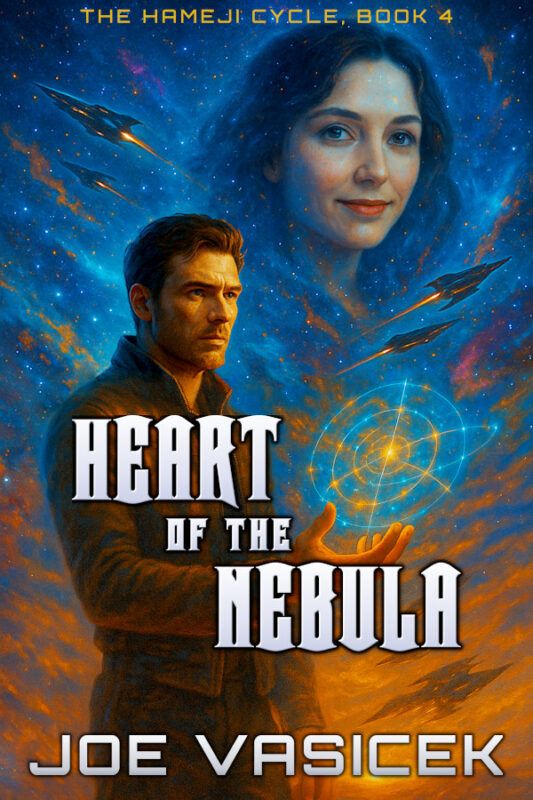
Heart of the Nebula is a character-driven space opera and political military science fiction novel about leadership, sacrifice, and the cost of protecting a people who are barely holding together. Set after a brutal alien occupation and a desperate refugee exodus into deep space, the story follows survivors of the Hameji War as they struggle to remain unified while haunted by past choices. This is a story about moral courage under pressure—when there are no clean victories, only necessary and costly decisions.
Heart of the Nebula is part of The Hameji Cycle, a character-driven science fiction series about occupation, resistance, exile, and the long aftermath of interstellar war. It continues The Hameji Cycle’s exploration of occupation, exile, resistance, and the moral cost of survival after interstellar war. It is the fourth book of the series, but can be read as a standalone book.
What Kind of Reader Will Love Heart of the Nebula?
If you love…
- character-driven science fiction that treats leadership and responsibility as moral burdens, where decisions affect entire communities
- space opera focused on refugees, displaced peoples, and survival after catastrophe
- stories about sacrifice, loyalty, and the tension between individual conscience and communal good
- thoughtful science fiction that explores politics, ethics, and power without cynicism
…then Heart of the Nebula is probably your kind of story.
What You’ll Find Inside
At the center of Heart of the Nebula is James McCoy, a reluctant leader trying to guide a fractured colony of refugees through the aftermath of war, betrayal, and long-term displacement. The story balances tense action—mutiny, political fracture, and survival in deep space—with quiet emotional reckoning, including moments where every available option carries moral cost, tracing the psychological cost of command and the lingering weight of past choices. The tone is serious and reflective, with moments of intensity and tenderness, and a steady pace that prioritizes character, consequence, and ethical decision-making over spectacle alone.
What Makes Heart of the Nebula Different
Unlike many space operas that celebrate charismatic heroes and clear-cut triumphs, Heart of the Nebula interrogates what happens after a hero becomes a legend—and that legend begins to divide the people it was meant to save. It blends military science fiction with political and ethical science fiction, focusing on how legends distort truth and fracture communities. The story also centers an exodus narrative—less about conquest or discovery, and more about survival, memory, and the fragile act of rebuilding a society in exile.
What You Won’t Find
This is not a lighthearted or quippy adventure, and it doesn’t offer easy moral answers or fast resolutions. You won’t find simplistic good-versus-evil framing, power fantasies, or violence treated as consequence-free. Romance exists, but it remains grounded and secondary, serving the emotional journey rather than driving the plot.
Why I Think You Might Love Heart of the Nebula
I wrote Heart of the Nebula because I couldn’t let go of a question that kept resurfacing: when people willingly sacrifice themselves for the greater good, is it right—or even moral—to intervene and undo that sacrifice as a leader responsible for others? This book is my attempt to wrestle honestly with leadership, responsibility, regret, and the cost of choosing “no one left behind” in a universe that punishes mercy. If you enjoy science fiction that treats ethical dilemmas seriously and allows characters—and societies—to live with the consequences, I think this story will stay with you.
Where to Get the Book









