Q is for Quitting the Day Job (or never having one to begin with)

Writing is one of those gigs where everyone expects you to have a day job, since common wisdom says that writers don’t make money. In traditional publishing, that may be generally true, but self-publishing is an entirely different game. It isn’t necessarily easy to make a living as an indie writer, but it is possible–much more possible than it is in the traditional industry.

I can’t speak authoritatively on when it’s right to quit the day job because I never really had one. I graduated in 2010, during the height of the “jobless recovery”–the soporific catchphrase invented by Washington policy wonks to describe the weird phenomenon where GDP was improving but unemployment was still in the crapper. For everyone outside of the Emerald City of Washington, we were still deep in the quagmire of the Great Recession.

I had just gotten back from an internship in the Emerald City that had severely disillusioned me to all things political. That rendered my degree in Political Science pretty much useless, and I found myself hitting the streets of Provo looking for something–anything–that would pay. I sold my body as a plasma donor, I sold my soul as a call center interviewer, and eventually I settled into that weird blend of mercenary prostitution that constitutes temp work. But even the temp jobs were scarce, and I found myself living from month to month, barely scraping enough to get by.

That’s when I learned about self-publishing. By this point, I already knew that I wanted to be a full-time writer. That was my plan A, and since it didn’t look like I’d ever land a steady day job, there was no plan B to fall back on. The stuff I was writing didn’t seem to be anything New York was interested in–not enough to pay a living wage, at least–so I jumped into self-publishing with both feet and never looked back.

When you first start out self-publishing, chances are that you’ll languish in obscurity for a while, barely selling enough books to make pizza money month to month. That was certainly the case with me. My economic situation wasn’t improving, so in 2012 I decided to go overseas and teach English in the Republic of Georgia.

GEORGIA | hyper – travel from Piotr Wancerz | Timelapse Media on Vimeo.

Besides temp work (which doesn’t really count), teaching English is the closest thing I’ve had to a day job. And while I loved the adventure of living in another country, the job itself wasn’t really all that fulfilling. It was really hard to balance writing with all the other stuff going on, even though the job took no more than 20 hours per week. It took up a lot of mental space, and that was enough to make writing really difficult.

So I came back to the States in 2013 and did my best to settle back in. Then, a weird thing started to happen. My books, which before had only earned pizza money, suddenly started earning grocery money. That soon grew to grocery and gas money, and before the end of the year, I was making rent money on top of that as well. My Star Wanderers books had started to take off, and even though they weren’t spectacular bestsellers, they pushed me up to the point where writing was my primary source of income.

Today it’s still touch and go, but I’m more or less making a living off of my books. I’m considering going overseas again, only this time, I’d live off of my royalties instead of getting an ESL job. Then again, there’s this girl I’ve been seeing, and she might keep me in this country for a while. If things work out, I have no idea how that would change things, but I imagine it would raise the making-a-living bar pretty substantially. With the way my book sales are growing, though, I’m confident that things will work out.

Back when I still planned on getting a day job, I thought that there would be some sort of magic threshold where, once I crossed it, I would make my entire living off of my writing career and would never work another job again. Instead, what I’ve found is that it’s more of a zone, where some (or perhaps even most) of your income is from book sales, but you still have to take on an occasional paying gig to make ends meet. There is no magic threshold at which you’ve “made it,” it’s more about just making it up as you go along.

All of this is made much, much easier by the fact that Amazon pays monthly royalties like clockwork. Barnes & Noble does too, and Smashwords and Kobo are also reliable, though a little less predictable as to when they’ll get their money to you (Smashwords seems to be holding onto my royalties until the end of this month, which is really annoying because usually they pay in the first week of each quarter). Since sales reports are instantaneous, I can look at how my books sold in March and know how much I’ll make in May.

It also helps that my earnings per book are significantly higher as an indie than they would be if I were signed with a traditional publisher. I don’t get an advance, but that’s okay because advances these days are pitiful anyway (seriously, $5,000 paid out over the course of two or three years? That’s less than I made as a volunteer ESL teacher in Georgia). And since I can publish as many books as I can write, I’ve been able to put out a lot more books as an indie, without the hassle of trying to run them past a committee of overworked editors in the bowels of some New York publishing house.

As for when it’s right to quit your day job, I have absolutely no idea because I never had one. But the fact that I (a nobody) am making it even without a day job says a lot. If you want to quit your day job and make a living as a writer, your chances of making it are a lot better if you take the indie route.
O is for Online Presence

When you’re an indie author, your business exists almost exclusively on the internet. Chances are that ebook sales make up the bulk of your revenue, and those are entirely online. And without the backing of a major publisher, you probably aren’t going to get many books into bookstores (although it is possible). Most of your print sales are going to be online as well.

So if the bulk of your business is online, it only makes sense that you should maintain an online presence or persona of some kind. But what sort of presence should this be? Do you need to be on social media, even if you don’t really enjoy it? What about blogging? What are the dos and don’ts of maintaining an online presence?

Honestly, I don’t think it really matters which platforms you use to build your online presence, so long as you’re accessible in some way. Marketing gurus say that you have to be on social media, but my Star Wanderers books took off when I was living in a developing country with very limited internet access, and hardly ever posted to Facebook or Twitter at all. Even now, my Facebook author page is kind of a ghost town–I post links to each blog post, and I respond whenever a fan drops in with a comment, but that’s about it.

In my opinion, the most important thing to keep in mind when building an internet presence is to do the things that feel the most genuine and authentic. Facebook has never felt very authentic to me, except when I’m interacting with people I know in real life. Twitter, though, had an in-the-moment format that I really enjoy. Even then, I don’t feel nearly as authentic on Twitter as I do on my own blog, where I can post my thoughts and observations without restriction. For that reason, the core of my online presence is my blog, and I use my social media accounts to funnel people here rather than using social media as an end destination.

Besides being authentic, I think it’s important to be gracious to your fans and to not insult or repel them. A handful of authors (such as John Scalzi and Larry Correia) have developed personas that are highly opinionated, controversial, and crude, but they do it in such a way that it draws a following and keeps them. You don’t have to be liked by everyone–indeed, if you’re being authentic you certainly won’t–but you need to be careful to show respect and basic decency toward your fans. They are your bread and butter, and if they find your online behavior repulsive, you’re going to have a very hard time making and keeping them.

When it comes to politics and religion, I try not to be too divisive. Those are certainly important parts of my life, so it wouldn’t be very authentic of me to ignore them completely, but I don’t want my political opinions or religious beliefs to get in the way of my fans enjoying my stories. I don’t write stories just for Mormons, or just for libertarians, or just for white men–I write stories for people who look up at the stars and wish that they could go there. For that reason, I try to be mindful that the people who enjoy my stories might not (indeed, certainly do not) all look or act or believe like I do. I may disagree with them on some issues that I personally find important, but I don’t have to let that come between them and my stories.

The author-reader relationship is a fascinating thing that I have much still to learn about. Right now, my approach is basically to keep from getting in the way as much as possible. Occasionally I’ll get a piece of fan mail that will gush about something they loved about a story but criticize something they didn’t. I never argue back against it, since arguing isn’t going to change the experience they had when they read the story. Instead, I thank them as graciously as I can for reading.

My goal as an author is to stay out of the way of my readers enjoying my stories. For those who do enjoy the stories and want to connect with me, I write author’s notes at the back of all my books and keep an online presence on my blog where they can reach me. But if they don’t want to do that, that’s fine too. I try to be as authentic as I can without alienating anyone who enjoys my stories, and the key to that is to always be grateful for my readers. Writers may create stories, but readers bring them to life, since without anyone to read them, stories are basically dead.

N is for Noise

With all the millions of books out there, and more coming out each year, is it getting harder for authors to market their books? Since anyone can publish a book now, is all that noise drowning out new voices?

It’s tempting to think that way, especially when you’re just starting out as an indie author. Everything is a big struggle, and you find yourself grasping for something–anything–to explain why you aren’t seeing the success that you want to see. With all of the millions of books flooding the marketplace, it’s easy to feel that your own books are getting buried.

Personally, though, I reject this idea that the noise is drowning us all out. You aren’t getting drowned out by all the other books out there. You’re not locked in a zero-sub competition with other authors. And readers who pick up another book in your genre aren’t overlooking yours–in fact, they’re more likely, not less likely, to find and enjoy your books.

A couple of years ago, I wrote three posts on this subject. The first one discusses self-publishing as it relates to traditional publishing, and why the ebook revolution is something for authors to be excited about rather than afraid of. The second one discusses how what the elites view as noise is actually the democratization of literature. The third one compares publishing a book with writing a message in a bottle–even though the ocean/marketplace is vast, if the bottle/book doesn’t sink to the bottom, it will eventually wash up somewhere and be discovered.

The idea that the noise is drowning out your book is based on a number of false assumptions, the first that all things equal, a reader is more likely to read your book if there are fewer options available. But for that to be true, 1) readers would have to be equally motivated to read all books, and 2) readers would have to devote the same amount of time to reading, no matter how many other priorities compete for their time.

No one reads a book for entertainment just because there’s nothing else for them to read. Perhaps that would be true if they were stranded on a desert island with just a couple of books, but boredom is a very, very low bar to cross and there are thousands of non-reading activities that can clear it as well or better than reading a book. Even for the voracious readers whose addiction to the written word is stronger than their need to eat, there’s an endless buffet of fanfiction and all sorts of other reading options made possible by the internet.

If someone reads your book, it’s not because there’s nothing else for them to read–it’s because they find your book interesting. And if someone reads another author who writes a lot like you, chances are that they’ll be more likely, not less likely, to pick up your book than someone who’s never read that kind of stuff before. Readers rarely tire of their favorite genres–the more they love a book, the more likely they are to search out another just like it.

Complaining about all the books that make it harder for readers to find yours is like complaining that girls never like nice guys. The people who complain the loudest never really seem all that willing to take a good, hard look at themselves and ask why it is that girls/readers aren’t interested in them. It’s not enough just to be “nice”–you’ve got to have some personality. If a book sinks, it’s almost always because something about it sucks. No author is entitled to success, just like no guy is entitled to a girlfriend.

I firmly believe that there’s room enough in the marketplace for everyone–provided, of course, that your book doesn’t suck. And even if it does, there are probably still readers out there who will love it. Beyond a certain point, literary quality is all subjective anyway. If you write good books, give them the proper mating plumage (blurb, cover, metadata), and put them out where readers can find them, they will–no matter how many other books are out there.

J is for the Joys of Self-Publishing

Brandon Sanderson teaches an English class at Brigham Young University, and I was one of his students back in 2008 and 2009. At LTUE this year, he asked me to come in and speak to his class about what it’s like to be an indie writer, so I prepared a short ten minute presentation on the things that I love the most about self-publishing. They are:

1. I have complete creative freedom.

As an indie, I don’t have to worry about agents, editors, marketing departments, interns, or anyone else who could kill my project before it has a chance to get out into the world. If I can write it, I can publish it. If I want to write something crazy like a story about Amish vampires in space, or steampunk Mormon airships, or orcs falling in love on the battlefield, I can do it without having to worry whether it will ever find a home outside my hard drive.

Of course, if I write stuff that’s more niche, chances are that it’s only going to find a niche audience. But that’s okay, because:

2. I don’t have to be a bestseller to find success.

With the way that the royalty numbers for indies work out, I don’t have to be a mega blockbuster bestseller to have a viable career. In fact, all I really need is to sell a thousand or so books per month–which seems like a lot until you realize that there are 1.4 billion English speakers in the world (over 300 million of whom are native). Plus, if I have thirty or forty books out, I can make a comfortable living selling no more than double digits on each one.

It’s the thousand true fans principle at work, and for indie writers, it really does work. I only started self-publishing three years ago, and I’m already making enough to keep my head above water. And to everyone except my small handful of fans (who don’t even come close to a thousand), I’m just another nobody.

3. I have the flexibility to reinvent myself and try new things.

As an indie, I’m not locked down by any contracts that I can’t get out of. That gives me a great deal of flexibility in how I can run my career. If I wanted to unpublish everything and start over under a different name, I could do that. If I wanted to try out a new genre, or dabble in something experimental like serials, I could do that. At any time, I can completely remake myself however I want.

That flexibility is crucial because of how quickly the market is changing. Publishers are consolidating and going bankrupt, bookstore chains are struggling, and new technologies and business models are opening the doors to all sorts of new opportunities. As an indie, I’m in a great position to take advantage of them.

4. I can connect directly with my readers and fans.

Not just in the sense of connecting through social media, but connecting through my books as well. If my fans are clamoring for a sequel, I can write it and get it out to them while it’s still fresh in their minds. If they have trouble finding my books somewhere, I can clear the problem up myself without getting tied up in the bureaucracy of a large publisher.

The two most important people in the book world are writers and readers. As an indie, I can make sure that no one comes between my readers and me.

5. I’ve learned to treat my career like a small business.

A lot of writers view this as a downside, or at least a hassle they’d rather not deal with. They decide not to self-publish because all they really want to do is write. After all, isn’t it better to get someone else–an agent, for example–to handle the business side of things? Isn’t it better not to have to worry about all that stuff?

For me personally, the answer is a clear and resounding NO. The business stuff isn’t a hassle–it’s actually kind of fun! Plus, the fact that I know exactly where all the money is, how much I’m getting paid, and how much I owe gives me much more peace of mind than trusting all that stuff to an agent ever would. Far from taking away from my writing time, it’s actually given me more time since the only real person I have to deal with is myself.

Besides, freelancing is just AWESOME. I love being self-employed! True, my boss is a jerk and all of my coworkers are boring, but that’s okay because

6. I have no one to blame for my failures, but my successes are all my own.

This, more than anything else, is what I love the most about self-publishing. If my books flop, it’s on me. If they hit the top 100 lists for their subcategories and garner dozens of positive reviews, that’s on me too. I’ve had books that have done both–in fact, I’ve got a book right now that’s currently #263 Free in the Kindle Store.

Yes, there are a lot of ways that I can screw up as a self-published writer. But there are a lot of ways that I can succeed, too. Like everyone, I have to deal with the fear of failure, but I don’t have to worry about not getting the credit–or the reward–for my success. As an indie, it’s all on me, and that’s exactly the way I want it to be.

I is for Indie

I first started self-publishing in 2011, when “self-published” was still a dirty word. Back then, we called ourselves indies in order to escape the stigma–or mitigate it, at least. And that led to a war between us and the publishing establishment over the meaning of the term “indie.”

If it sounds dumb, that’s because it was. “Indie” is short for “independent,” as in an artist who is unaffiliated with a corporation or large commercial organization. Trouble was, the establishment was already using the term “indie” to describe bookstores that weren’t affiliated with the larger chains (Border, Barnes & Noble, etc), or the small presses that hadn’t been gobbled up by the Big 6.

Also, I think the technological disruption of ebooks caught the industry with their pants down. Authors, publishing their books themselves in this newfangled digital form? Diving into the wilds of the marketplace without the nurturing patronage of a publisher? As if ebooks will ever become a thing! Don’t they know that self-publishing is the kiss of death?

And it was, in the old days when publishers held a monopoly over all the important distribution channels. For the greater part of the 20th century, signing with a traditional publisher was the only viable way to have a career. There were a couple of self-publishing success stories, but they were the exceptions that proved the rule. For almost a century, there was no real way to be a writer and go indie.

Because of that, those of us who have chosen this path are largely making it up as we go along. Unlike the film industry, where “indie” has a connotation of artistic purity, or the music industry, where “indie” has a connotation of hip, local, and unique, indie books and indie writers have had to build their own reputations largely from scratch. It has definitely been an uphill battle.

Back when I first started self-publishing, I was very particular about calling myself an “indie writer” and not a “self-published writer.” Now, though, I’m comfortable with either term. The self-publishing stigma is pretty much dead, and “self-published” describes what I’m doing just as well as “indie” does.

That said, I think it was a good thing that we claimed the indie label when we did. Our mode of self-publishing is very different from the modes of self-publishing that came before, and distancing ourselves from the vanity presses and self-publishing scams helped a lot of us to let go of our inhibitions and jump into the new world of publishing with both feet. That certainly was the case with me.

In the future, I hope that indie books gain the same reputation for artistic integrity and creative freedom that indie films and indie music now enjoy. I think we’re definitely on the way. Sure, there are lots of crappy self-published books out there, but there are also a lot of really excellent ones, and those are the ones that readers are going to remember. Hopefully, some of my own books will be among them.


H is for Hybrid Author

Is it worth seeking traditional publication if you’re an indie writer? Are there advantages to going with a legacy publisher after you’ve published yourself?

A lot of writer throw around the word “hybrid” as if that’s their ultimate goal–the thing that’s going to make their career. A hybrid author is an author with their feet in both sides of the publishing world: the legacy world, with corporate publishers or small but reputable houses, and the indie world with their self-published books.

This might be a bit controversial, but I’m going to throw down the gauntlet and argue that most of the praise of the hybrid path is either hype or wishful thinking. From what I’ve seen, most hybrid authors fall into one of three camps:

  • Veteran authors who are disillusioned with the legacy industry and are doing everything they can to self-publish everything. They still have contracts that they can’t get out of, though, so technically they are considered ‘hybrid,’ even though many would rather not be.
  • Indie authors who haven’t been disillusioned about traditional publishing yet and believe that a legacy publisher would carry some of the burden for things like marketing and promotion. In other words, indies who believe that the grass is greener on the other side of the fence.
  • Unpublished writers who have been submitting to traditional publishers for years, and have deer-in-the-headlights syndrome with all the new publishing options available to writers. They’ll dabble with self-publishing, but their heart is still set in the old world.

So would I ever consider signing with a traditional publisher? I’ve thought about it quite a bit over the last few years, and I’ve come up with four conditions that have to be met before I’d do so. Please keep in mind, though, that I am not a contract lawyer, and that the following is my opinion and not legal advice.

Three of them are deal breakers on my side. They are:

1. Non-compete clauses

This is absolutely non-negotiable. In fact, if I see any sort of non-compete clause in a contract sent to me, I’ll pull out of negotiations altogether since it shows to me that the publisher is negotiating in bad faith.

A non-compete clause is a contract clause that says something like “the author shall not publish or cause to be published anything that may compete with the work.” Basically, it’s a publisher’s way of clamping down on you and saying you can’t publish anything without their approval. There is no f****** way I would ever tie myself up like that–not only would it kill the self-publishing side of my career, but it would also be unfair to my readers who have come to expect regular releases from me.

Let’s flip this on its head and say that I put in a non-compete clause for my publisher. For example, suppose I signed a contract with Tor Books that said “the publisher (Tor Books) shall not publish or cause to be published anything that may compete with the author’s work.” Can you see how ridiculous that is? How insanely one-sided it makes the contract out to be?

A publisher would never sign one, and neither will I.

2. Rights reversion clauses

If I’m going to sign a contract with a traditional publisher, I want to know when that contract is going to end. Life of copyright is life of the author plus 70 years, and that is far too long for me. But a lot of traditional publishing contracts contain loopholes that keep the rights from ever reverting back.

There are reasons why a publisher would want to hold onto your rights without actually publishing your book. Copyright is an intellectual property, and shows up on a corporate publisher’s ledger as an asset. Just by sitting on your rights, they’re able to show an accounting gain. So if they can hold onto your rights, they probably will.

I won’t sign a contract unless it includes an explicit date when the rights will revert to me. The length of the term and the options for renewal are open to negotiation, but having an explicit date is not.

3. Any payment terms based on net

Right now, the industry standard for ebooks is 25% of net. What does that mean? It means “we’ll pay you 25% of the revenue from your ebooks, after costs.” What costs, you may ask? There’s the rub–they aren’t specified.

“Net” is how Hollywood screws people over. It’s how a rockstar can go on a multi-million dollar tour and end up owing the record label money. It’s a dirty trick of creative accounting that the large corporate publishers are now starting to employ. In the old days, they used to base royalty payments off of the list price of the book. Now, though, New York is becoming more like Hollywood and less and less author friendly.

The fourth condition is a deal breaker for most publishers, on which I don’t see myself giving any ground. It is:

4. Ebook rights

Ebooks are where the money is. Legacy publishers understand this, and they’re doubling down on them. Hugh Howie, who signed a print-only deal with Simon & Schuster, has since said that the publishers are not open to considering that sort of deal now–not even for a massive bestseller like him.

The thing is, what value does a legacy publisher bring to epublishing? In less than an hour, I can craft an ebook that’s formatted better than most of the ebooks coming out of New York. As an indie, I have access to all the same online bookstores and distribution channels as the big publishers. And by self-publishing, I have control over the critically important metadata–a ball that legacy publishers often drop by relegating it to the lowest employees on the corporate ladder.

When it comes to ebooks, I do not see a single item of value that legacy publishers can bring to the table. Rather, I see a host of liabilities, and for what? With self-publishing, I can earn up to 70%-80% for every ebook I sell. With a publisher, I’d be lucky to get 15%–and that’s if they’re being generous.

For novels and other book-length works, it simply does not make sense to me to sign with a traditional publisher. Not in today’s industry, at least. And with the way legacy publishers are clamping down and making rights grabs, I don’t see it ever making sense in the foreseeable future either.

HOWEVER …

For short stories, the situation for authors is much more favorable. The magazines have no inclination to tie you up with non-compete clauses, the rights to the story revert back to you soon after publication, the payment is usually based on word count and specified in the contract, and the ebook rights stay with you (the magazine might purchase non-exclusive digital rights, but that won’t prevent you from republishing it as an ebook on your own).

I can see myself going hybrid by publishing short stories through the traditional markets. In fact, that’s exactly what I’m trying to do. Besides the chance to refine my craft by working on my short game, I figure that getting picked up by the major magazines will help to draw new readers to my other books. I have no idea how much it will help, but I figure it’s worth trying out. Besides, science fiction is a genre where reputation can make a big difference to your career, and you can build a reputation a lot more effectively through traditional short story markets than through self-publishing.

At the same time, though, that’s more of a side project than anything. My bread and butter is self-publishing, and that’s where my feet are firmly planted. I don’t see that changing anytime soon.

E is for Editing

Does every book need to be professionally edited? Will it be the end of the world if you publish something without running it past an editor?

Short answer: Yes.

Long answer: Yes, but there are different kinds of edits, and different ways to do each one. You don’t have to pay through the nose to create an acceptable product, though in my experience, “you get what you pay for” is more true for editing than it is for cover design.

A well-crafted book that is reasonably free of typos, spelling and grammatical errors, poorly worded phrases, story inconsistencies, and gaping plot holes is a sign of respect to your readers. Every time a reader comes across one of these mistakes, it kicks them out of the story, robbing them of some of the enjoyment that they otherwise would have had. Stories only come to life when someone reads them, so we should do all that we can to remove any obstacles that might get between our readers and the story. That means editing.

There are different levels of editing, though. The broadest kind deals with story level problems–plot holes, character inconsistencies, that sort of thing. Below that, you have stuff like line and copy editing, which deals with inconsistencies in the details of the story–a character who uses an M16 on one page and an AK-47 on the next, for example. Below that, you have proofreading, which deals with the basic rules of spelling and grammar.

For the broadest story-level stuff, I never hire an editor. Instead, I have a group of trusted first readers, some of them writers, some of them avid readers, some of them experts in a particular field, and before I publish something I run it by them. When I first started out, I asked for a line-by-line critique, but nowadays there are only three questions I ask:

  1. Did you like the story?
  2. If you didn’t finish it, where did you stop?
  3. If you did finish it, would you like to read the next one?

I’ve noticed that people approach a story much differently if they’re reading to critique it, rather than if they’re reading it for fun. By taking the pressure off, I know that any other feedback they give me is something that a reader is going to notice too. I make it clear that I’m open to whatever feedback they care to give, but I don’t try to force it out of them–that would interfere with the reading experience.

Also, how a reader reads a story often says more than their actual feedback. If they stop in the middle, I know that something before that point is broken. If it takes them a long time to finish it once they’ve started, then either something is broken or the story just isn’t for them. If they finish it in a couple of days, before I can follow up if they’ve even started, then I know that the story is pretty solid.

After making any story-level changes and cycling it back through different rounds of first readers to green-light it (I never ask a first reader to read a story twice), I move on to the copy editing and proofreading phase. What I do here depends mostly on the length of a story. If it’s a novel-length work, I always hire a copy editor. Always. I don’t trust myself to self-edit those things–I just don’t have the stamina. Better to pay the money and get someone to do it properly.

For novellas and short stories, it depends on the project. I usually try to find another set of eyes to run it past, but if money’s tight I’ll usually barter services or find a college student who’s looking to build their portfolio. And sometimes, yes, I’ll self-edit. BUT (and this is a big but) if I self-edit, I don’t do it halfway. I read the story forwards and backwards, out loud. It’s horribly tedious and I hate doing it, but sometimes you’ve got to do what you’ve got to do.

Then again, my writing tends to be fairly clean, and I did work for a year in a writing lab, and a semester as a TA for a freshman level writing course. I wouldn’t recommend self-editing unless you’re solidly grounded in an English background, and even then, I’d recommend hiring someone if at all possible.

Because here’s the thing: editors and writers are different kinds of people. Writers would rather be so immersed in the story that they lose sight of the words, whereas editors are so turned on by words and the fine points of their usage that they actually enjoy busting out the Chicago Manual of Style. Yes, there are strange hybrid people who somehow do both, but the editing hat is very different from the writing hat, and use very different parts of the brain. Frankly, I don’t know how they do it.

On the subject of style manuals: if you’re going to hire an editor, it will save you both time and hassle if you give them a style guide that’s fitted to your particular way of doing things. This is particularly true if you write speculative fiction and have a whole bunch of made-up words. Just to give you an example of what one looks like, here’s mine: Vasicek style guide.odt

So yeah, your books  are definitely going to need some kind of editing. How you accomplish that depends on the project, your budget, and you. As with everything in the indie author world, you have options.

A is for Advice

For this year’s Blogging from A to Z Challenge, I’m going to write about self-publishing. I’m not a huge bestseller, but I have been a self-published indie author for the past three years, and I’m more or less making a living at it now (it’s still touch and go from month to month, but writing is my primary income now and it looks like it’s going to stay that way for the foreseeable future).

To start off this blogging challenge, I’d like to say something about publishing advice. I’ve heard a lot of it over the years, nearly all of it controversial in some way. The book industry has changed so much over the past few years, with so many publishing paths opening up to writers, that any piece of advice is bound to be contradicted in some way by another that sounds equally valid and well-reasoned.

So how do you know which advice to follow and which to discard? I don’t have easy answers, but I can point to a few things that have helped me to refine my crap-o-meter.

First, if the person offering the advice can’t back it up with a demonstrable level of success, then it’s just their opinion and should only be regarded as such. Good advice is backed by data, especially in today’s digital world.

Second, even if the person offering the advice does have a high level of success, if they present their advice as the Only True Path, they’re probably dead wrong on some level. Every writer is different, every book is different, and every path to success is different. Writers have so many options in this new world of publishing that anyone who takes a binary view is bound to be blindsided.

Third, just because a large number of people believe something doesn’t make it any more valid. This is something to be especially wary about when trolling online communities, since those tend to become echo chambers over time. No matter how many times a piece of advice is repeated, if it’s crap to begin with, it will still be crap when it gets to you.

Ultimately, it’s important to keep in mind that no one in this industry knows anything with any degree of certainty. With the way the book world has changed over the past few years, decades of publishing experience don’t count for much anymore. And even if someone knows what’s worked for them, it’s impossible to know whether it will work for you until you try it.

So how do you know if a piece of advice is good? By trying it, of course! One of the nice things about being an indie writer is the flexibility to reinvent yourself as often as you want. I’ve got twenty books out and I’m still re-inventing myself–still trying out advice and learning new things. There’s a lot of uncertainty, yes, but with uncertainty comes opportunity, as long as you don’t get locked down.

Over the next few blog posts, I’m going to share a lot of my own personal opinions and experiences, with a bit of advice thrown in just to be helpful. None of it should be taken as gospel. For everything that’s worked for me, I’m sure that the opposite has worked just as well for someone else.

Odds and ends

A couple of quick things I neglected to mention in my last post:

First, I ran a promo for Star Wanderers: Outworlder (Part I) on The Fussy Librarian over the weekend. If you’re looking for a daily newsletter with good book recommendations, you should definitely check them out. The team behind the site puts a lot of effort into making it a quality newsletter, and they tailor your recommendations not only by genre, but by the level of sex, profanity, and violence as well. I’ve subscribed to them for a couple of weeks now, and I’ve already seen some excellent books on their list, including Brandon Sanderson’s The Way of Kings.

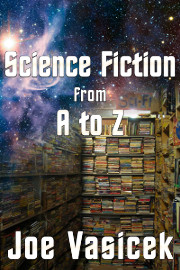
SFA-Z (thumb)Second, my latest book, Science Fiction from A to Z, is now up on Amazon, Amazon UK, Barnes & Noble, Smashwords, and Kobo! Feel free to pick up a copy. It’s up just in time for this year’s Blogging from A to Z Challenge, which starts tomorrow! I’ve already got a couple of posts lined up, so it should be just as fun as last year.

When I finished last year’s A to Z challenge, I realized that those blog posts would work well together as a book. You can still find the original posts on my blog, of course, but I’ve collected them here for your convenience. It was a fun side project, and at $2.99 you can consider it like buying me a drink or tossing a couple of bucks into the tip jar.

That just about does it. See you tomorrow for this year’s A to Z challenge!

Further thoughts on the drama in the SF&F community and a rescinding of some previous thoughts

About a year ago, there was a big discussion in the science fiction & fantasy community about sexual harassment and sci-fi conventions. As a result of that discussion, allegations were thrown out about a certain senior editor at Tor, rumors began to fly, and through what some might characterize as popular justice and others might characterize as an internet bullying campaign, the editor was fired.

That disturbed me, so after engaging in a rather heated discussion on Mary Robinette Kowal’s blog about it, I wrote a blog post of my own, which I then took down (though not before it was picked up elsewhere) after some private email correspondences that were rather toxic. Even though I had an opinion, I decided that this wasn’t where I wanted to plant my flag, especially since it looked like I’d be hard-pressed to defend it.

Well, at the risk of taking some rightly earned flak, I want to bring back that post in order to give myself an opportunity to respond to it. My views and opinions have changed since then, and I don’t think I was right.

First of all, it’s come to my attention that this isn’t the first instance of high drama within the SF&F community. In fact, there have been so many inane kerfluffles and genuine spats over the years that for lifelong, hardcore fen, engaging in them is practically a sport. So now, I can see that my concerns about the community “tearing itself apart” were naive at best, and concern trolling at worst.

Second, through the efforts of writers like Jim C. Hines and Cora Buhlert, through following various discussions on Twitter, KBoards, and blogs like The Passive Voice, and through various conversations on-line and off-line with personal friends, I’ve come to realize that bigotry, sexism, and sexual harassment are much bigger problems within the SF&F community than I thought they were. The majority of voices now being raised are not trying to advance some nefarious PC agenda, but are simply pushing back against some very legitimate grievances. If we’re only hearing about those grievances now, it’s because they’ve been swept under the rug for too long.

Whether or not there is a faction in the SF&F community with an overt political agenda, that’s an entirely separate and disconnected issue from sexism, sexual harassment, and the stigmatization of minorities. Just because it’s not as visible to me as a white male author and fan doesn’t mean that there isn’t a major problem. If anything, I’m the least qualified person to make that judgment. The people who are complaining about these issues should be taken entirely at their word.

The science fiction & fantasy community as a whole is maturing and diversifying, and that’s a very good thing. It’s bringing in a rich influx of wildly imaginative stories, which strengthens the genre tremendously. Whatever your worldview, whatever your gender, whatever your preferred fandom, you should feel like there’s a place for you here if that’s what you want to read and write. Anything that makes people feel harassed or unsafe, stigmatized, or unwelcome is a much bigger threat to the genre than anything else.

As the SF&F community continues to mature and epublishing brings in a whole new generation of writers, there’s going to be a lot more drama as issues that have been swept under the rug for years are brought into public view. As this happens, I think it’s important to keep in mind what makes our genre strong: a rich variety of visionary and imaginative voices. The message should always be “there’s a place for you here,” not “you’re only welcome if you look and think like me.”

So yeah, I want to go on the public record and take back what I said in that previous post. There’s a much bigger issue here that should not be overshadowed, and it was wrong for me not to acknowledge it. I hope that no one feels that I’m disparaging of women, minorities, transgendered individuals, or any other group within fandom, because that’s not what I stand for. I may not agree with all of your views–in fact, I expect I’ll disagree with many of them–but that’s what makes the genre strong, and I don’t want anyone to feel like their voice is being silenced.

As for the other issues, I’m not quite so worried about the internet bullying aspect anymore because it’s clear that most of the pushback is not malicious, even if it can become quite vocal and heated at times. I don’t condone internet bullying at all, and I reserve the right to be critical where I believe the intent is malicious. At the same time, I don’t think there can be much credibility when gender-normative white male writers cast themselves as the victims.

If you felt demeaned or angered by what I said, either here on my blog or by my comments somewhere else, I’m sorry. My views on these issues are evolving, so I hope you’ll take that into account. And I hope that we can all keep an eye on what makes the community strong, which is a wide diversity of visionary and imaginative voices.