So perhaps this wasn’t the best thing to do at 2:00 am this morning, but I downloaded the new Twenty Sixteen WordPress template and tried it out. As you can probably tell, I liked what I saw.
Specifically, I like this one because it’s a lot less busy, which probably translates well to mobile devices and tablets. Also, it makes the landing pages for my books look much cleaner. The sidebar is a lot wider, but the design is less distracting. It really puts the focus on the images, which is good, because that lets my book covers really shine.
This blog has evolved a lot over the years. It started in 2007 as just a space for me to gush as I wrote my first novel. From there, it turned into something of a public journal. When I graduated from college and started publishing, it gradually turned into something for my friends to something for my fans.
Nowadays, it’s as much of a book site as it is a blog. All of my books and stories have their own pages, complete with buy links, and connected by series and genre. The teasers in the backs of my books all link to these pages, as well as the subscription page for my email lists.
All of this has necessitated making some changes in the site’s design. I like this template, but I’ll probably play around with a couple of others before I settle on one for the long-term.
What do you guys think? Twenty Sixteen: yea or nay?
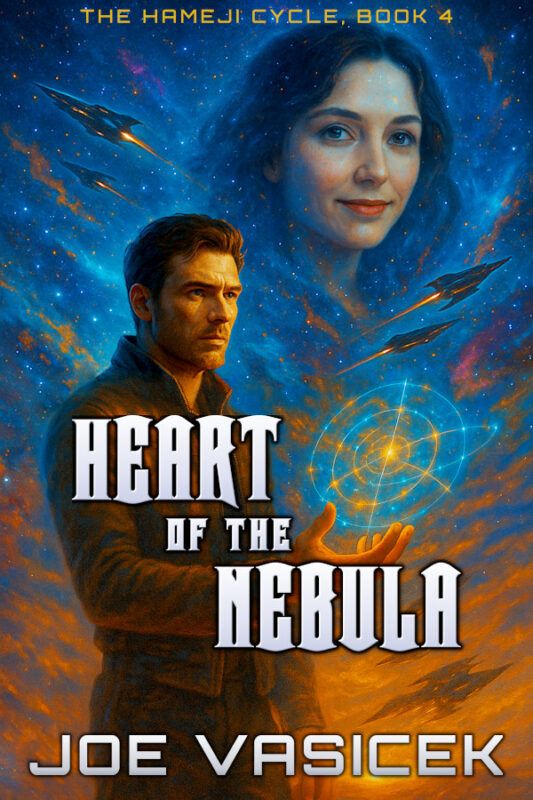
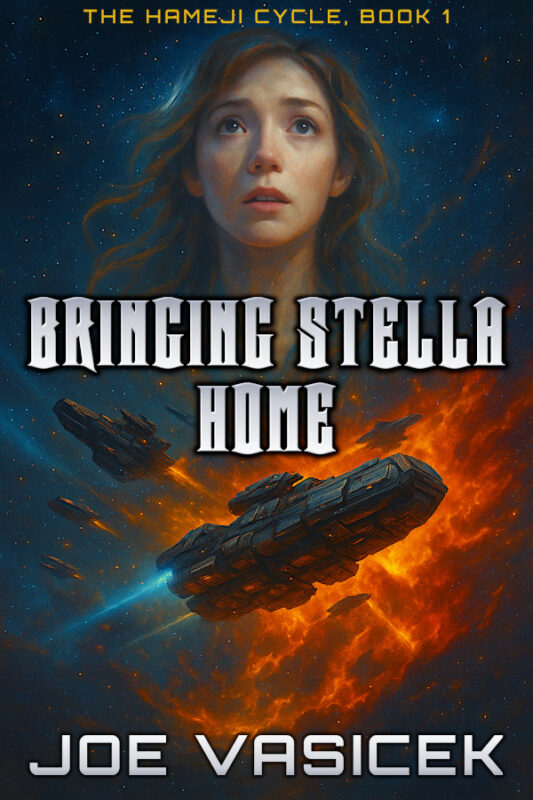
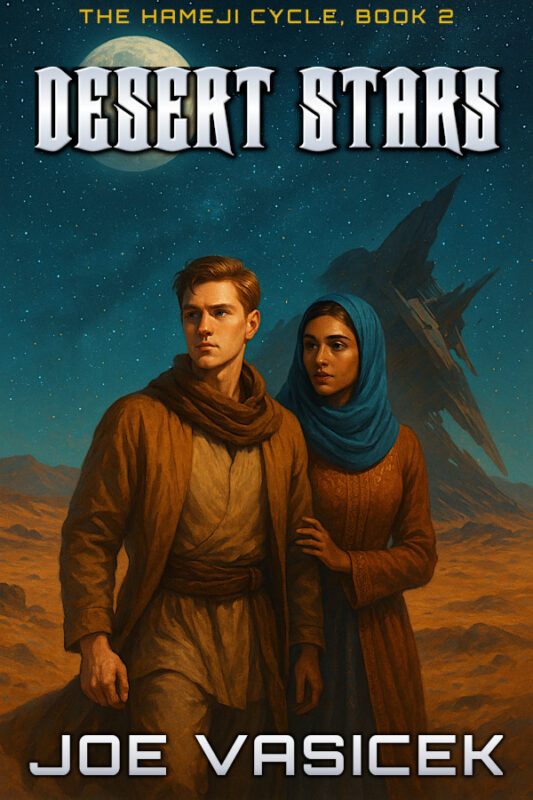
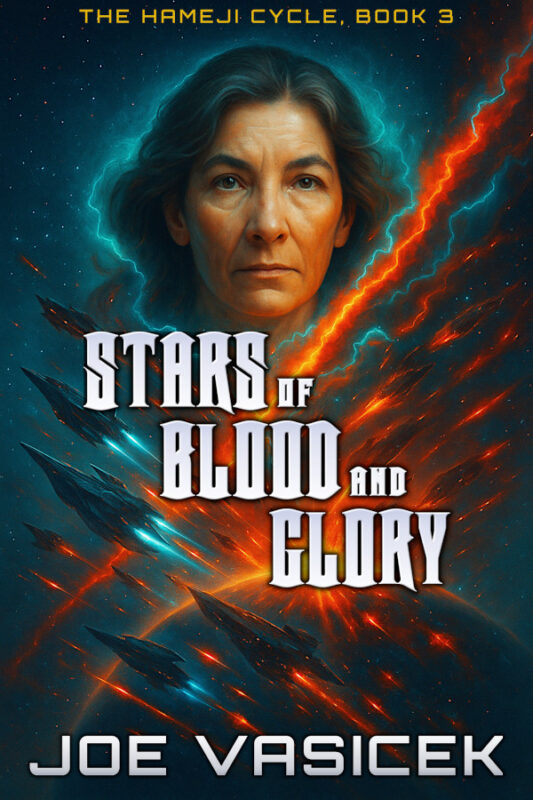
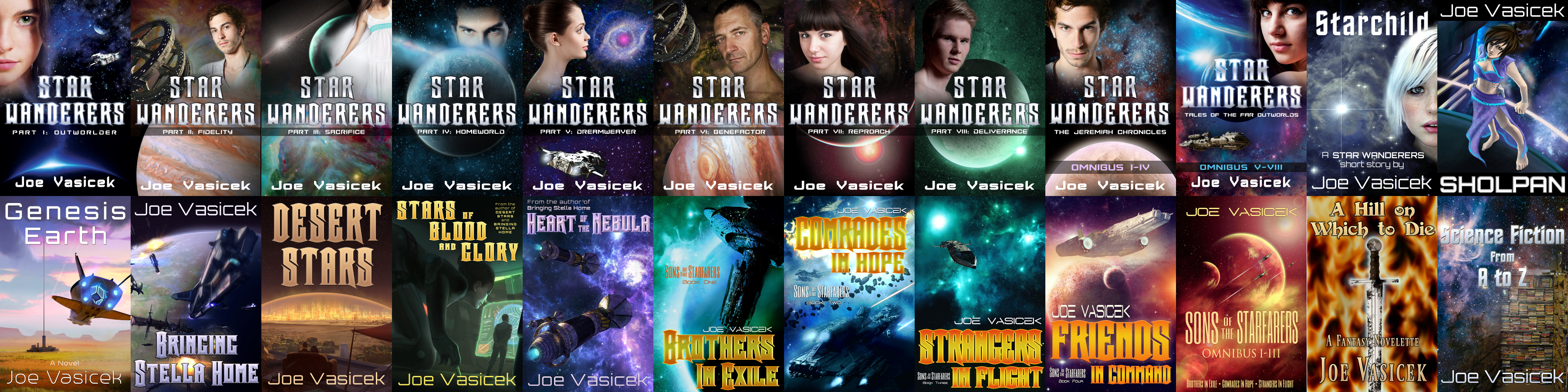
Over the weekend, I put together a banner for my books. The main reason was so I could use it on Twitter, but it’s probably useful for other places as well:
It’s kind of cool to have all my books laid out in one place—and this isn’t even all of them! It does get all the big ones, though, like Star Wanderers, Sons of the Starfarers, and the Gaia Nova series.
I’m also toying with the idea of a more minimalistic website redesign. The starry header and background are kind of cool, but they do make things look a little bit busy, especially on the book pages. Those pages serve as landing sites for the links in the backs of my books, and I want them to be as intuitive and non-busy as possible.
This blog has certainly evolved quite a bit over the years, and I’m sure it will continue to evolve further. In the meantime, I am quite pleased with this book banner.
This post is going to be political. Consider yourself warned.
I am not afraid of terrorists. I am not afraid that I, or anyone I love, will be caught up in a Paris-style terrorist attack. For one thing, most of the people love live in Shall Issue states with very few gun restrictions. Time and again, the second amendment has proven to be an effective line of defense against terrorists, mass shooters, and other deranged individuals who consider themselves above the law. Gun laws do not stop these people (surprise!), but a responsible armed populace does.
I am not afraid of a massive economic collapse, though I suspect that another one is imminent. I just looked at my mutual funds and realized that they have flatlined for about the last year—which is exactly what happened just before the collapse of 2008. The Chinese stock market collapse earlier this year is having repercussions across the world, but an economic collapse is something you can personally prepare for, and I believe very firmly in the principle “if ye are prepared, ye shall not fear.”
I am not afraid of a massive societal collapse, of zombies roaming the landscape—either the literal undead zombie or the metaphorical people-as-animals type. I consider a collapse of this kind to be highly unlikely, because if there’s one thing the Great Recession taught me, it’s that there’s a very big difference between the collapse itself and people’s experience of it. In some parts of society, the last collapse was barely felt at all. In other areas of society (such as Detroit), the collapse has never ended. Rarely do all sectors of society collapse at the same time—and even if they do, it’s still something that you can prepare for.
I am not afraid of any of these things. However, I am terrified that the United States, like Rome of old, is about to witness the death of the Republic.
In his groundbreaking book The Next Hundred Years, George Friedman discussed this dilemma at length. He foresaw the 21st century as a fundamentally American century, with the Pax Americana defining the geopolitical landscape. Many of his predictions have been and are currently being vindicated, including the return of an aggressively expansionist Russia, the gradual collapse of Europe, the economic development of Mexico, and the Chinese economic slow-down.
Yet the tension between Republic and Empire was something that he could not resolve, except to say that it is imperative that we find a balance between the two. A Republic places moral constraints on the power of the state, tempering the forces of Empire. When the Republic is destroyed, the Empire ceases to be benevolent and becomes totalitarian.
So why do I bring this up now? Because the recent events in this country have left me profoundly disturbed.
In October, House majority leader John Boehner (R) stepped down from office. Before he went, however, he and his cronies in the Senate and the House of Representatives rammed through a bill that effectively abolished the US debt limit until March 2017. Immediately after the bill was signed, the US debt jumped by more than $300 billion in a single day, and it has been rising precipitously ever since.
(As a side note, the debt-to-GDP ratio in the United States is now as bad as the PIGS countries in Europe—you know, the ones whose sovereign debt crisis precipitated the economic collapse in Europe, which has been FAR worse than our own collapse. That alone is enough to be frightening, but again, an economic collapse is something that I can prepare for. I’ve lived through one already, after all.)
And what was Our Glorious Leader’s response? He praised them, natch.
In fact, he’s doing more than that: he’s BANKROLLING them. That’s right: the same administration that gave the NSA a mandate to spy on the entire US citizenry and established a legal basis for drone strike assassinations of US citizens is now bankrolling a movement of domestic civil unrest.
With no debt limit.
There’s a term for these students, and that term is USEFUL IDIOTS. According to Wikipedia, useful idiots are “propagandists for a cause whose goals they are not fully aware of, and who are used cynically by the leaders of the cause.” In other words, they are pawns for evil and conspiring men who use them to sieze power and control.
This is not a new thing. In the Cold War, the KGB devoted the vast majority of its resources not to espionage, but to subversion. In this manner, they infiltrated, destabilized, and ultimately siezed control of several third-world countries. The primary target of their subversion efforts was always the United States and her allies. Defectors such as Yuri Bezmenov repeatedly warned us of this threat.
We can see the subversion process in action through the development of Left-wing movements like modern feminism. If you can spare an hour and a half, I highly recommend that you watch this video where Youtuber Sargon of Akkad interviews Erin Pizzey, the founder of the women’s shelter movement. What began as a movement to genuinely help victims of domestic abuse was blatantly co-opted by Marxist elements and folded into the modern feminist movement as a front for raising money. Even though men are also victims of domestic abuse, there are almost no shelters for men because this would threaten the taxpayer gravy train that has been siphoned off by the feminists for years. And the scariest part? That the radical feminists ultimately won. Our modern society has been reshaped by them in so many negative ways that it’s hard for us in this generation to see the forest for the trees.
But as scary as third-wave Marxist Feminism can be, it’s not them that I’m afraid of. They are, after all, little more than useful idiots. What frightens me are the evil and conspiring men (and women) behind them.
Are the old Soviet subversion programs still active and in operation? Probably not. The modern FSB is a shadow of its former KGB self, as the numerous Russian intelligence failures in Ukraine have shown. For all its aggressive bluster, Putin’s Russia is weak.
Still, it’s worth pointing out that the Soviet Union was never completely dismantled. When we conquered Nazi Germany, we held the Nuremberg Trials to root out Nazism and exterminate it. We did no such thing in Russia. Many of the former Soviet elites are still in Russian government today, foremost among them Vladimir Putin himself. The institutions of the communist state were reorganized, their personnel shuffled around, but they were never completely abolished.
That said, I don’t think it’s the Russians who are directly pulling the strings. I think it’s far more likely that their socialist allies and sympathizers in the West (men such as Bernie Sanders, though I suspect he’s just another useful idiot) took over the subversion programs once the Soviet Union fell, and have been using them for their own ends ever since.
This is why I am so deeply opposed to “social justice.” It is such a vague and nebulous thing that anyone who calls for it cannot help but become a useful idiot. The one thing that all social justice warriors have in common is the belief that a more powerful government is necessary to fix all problems. Naturally, this plays straight into the hands of those evil and conspiring men.
Social justice has become something of a buzzword in recent years. It defined the 2015 Hugo Awards, which was a localized but still significant battle in the ongoing Culture Wars. That was how I was first introduced to SJWs and their repulsive identity politics.
But again, it’s not the SJWs that frighten me. They are perhaps the most useful of idiots, but they are still just useful idiots like the others. It’s the movers and the shakers behind the scenes that frighten me—the evil and conspiring men who see them as a means to accomplish their own ends.
And the thing that terrifies me most of all is that the target of these evil and conspiring men is the Republic itself, or in other words, the rights and liberties enshrined in the Constitution. When those are swept away, the Republic will be truly dead. And my greatest fear is that the day is fast approaching when the Constitution will hang by a thread, with precious few to uphold it.
I can prepare myself for an economic collapse. I’ve lived through one before. I can build my food storage, learn how to be more self-sufficient, take measures to defend myself, and prepare contingency plans in case of SHTF. I can insulate myself and the people I love from most disasters.
If there is any national holiday that is routinely overlooked, it is Thanksgiving. In our intensely consumer-driven society, Christmas looms ever greater, bringing with it the pseudo-holidays like Black Friday and Cyber Monday. Each year, the jingles of commercialism threaten to drown out the message of gratitude which Thanksgiving celebrates.
So with that in mind, I intend to keep a proper Thanksgiving this year, and every year. It is a time for food, a time for family, and above all else a time to ponder on all the good things in our lives, and to give thanks for them.
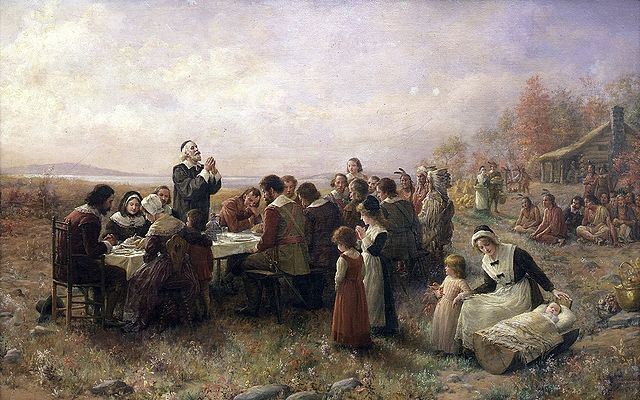
According to tradition, the first Thanksgiving feast was made by the pilgrims in 1621, after their first good harvest in the New World. They had come to America seeking religious freedom, which had been denied them in Europe. Instead, they found a foreboding wilderness whose native inhabitants had been all but wiped out by the plague. There were no hospitals, no grocery stores, no internet—no one except an English-speaking indian named Squanto to help them, and no way to send for help across the wide, dark Atlantic.
It was a struggle just to survive. Many of them died. Those who lived saw the hand of Providence in their survival, and after a bounteous harvest ensured that they would have food for the winter, they dedicated a feast to acknowledging that Providence that had saved them.
In a lot of ways, the pilgrims are to America what the pioneers are to the Mormons. And interestingly enough, I have direct ancestors among the pilgrims as well as the Mormon pioneers. So for me, it’s more than just a nice story: it’s a part of my family history that makes me who I am. And I suspect the same is true for many other readers of this blog.
So in the spirit of that first Thanksgiving feast, here are the things that I am especially thankful for this year:
I am thankful for my near and extended family. Tolstoy was wrong when he said that all happy families are alike: every family has their own quirks, even the ones that hold together. I wouldn’t give up my family’s quirks for anything.
I am thankful to live in a free country, where my rights to life, liberty, and property are respected and honored. I am also thankful for the brave men and women of our armed forces who sacrifice so much to keep it free.
I am thankful for the opportunity to pursue a career as an author, and for the flexibility and control that indie publishing provides. I have no one but myself to blame for my failures, but my successes are all my own. Even after four years, it’s still exhilarating.
I am thankful for my readers, who have made and continue to make this publishing journey possible. I am thankful for all that they do that supports me, from buying and reading my books to sharing with friends, posting reviews, sending me fan mail, and connecting in a hundred other little ways that together make this whole thing worthwhile. Seriously, you guys are awesome. The only thing I could ask is to have more of you!
This is yourself from the future. I know, that sounds kind of cheesy, but it’s true. Pay attention, because there are things I need to tell you. This is not to replace the life lessons that you’ll soon be learning, but to help you learn them faster so you can move on to the important stuff.
Right now, your college career is in full swing. You’re writing a lot of books on the side, and that’s great—keep it up. You will find a lot of success in your goal to be a professional writer. You’re also studying Arabic and Political Science with vague ideas of having some sort of an impact on the world. That’s fine, but unless you make those goals more specific and focused, you’re not going to accomplish anything by them. And before you try to change the world, you first need to take the time to understand it.
At this very moment, the world is transforming right before your eyes in ways that will cause you to look back and wonder. The financial collapse and housing bubble have thrown the global economy into chaos, and the resulting fallout will have a greater impact on your life than 9/11 or any other event. Up until now, you’ve focused on the Middle East, but the place you should be looking to is Europe. Why? Let’s just say there is a reason why every world war has had its origins in the European penninsula. Study the continent. Spend some time there. Learn a couple of languages, and pay attention to current events. Always be aware that you live in interesting times.
Your political affiliation on Facebook is “agnostic,” which you think is really funny. Frankly, that’s bullshit. Good and evil have political dimensions, and you aren’t doing anyone any favors by sitting on the fence. Pick a side, and choose it well. But always have the strength and integrity to admit it when you were wrong.
You’re proud of the fact that you never voted for George W. Bush. In the future, though, you’re going to regret your vote for Obama more than you ever would have regretted a vote for Bush. Obama will break every campaign promise he ever made, except to get us out of Iraq, and that will be the biggest mistake of his presidency (yes, the Iraq War was a mistake, but trust me, Obama will make it unimaginably worse). However, you will never regret your vote for Romney in 2001.
One of the most important lessons you will ever learn is that there are two kinds of people in this world: makers and takers. The makers believe in expanding the pie by creating wealth and value for everyone. In contrast, the takers believe that everyone should get “their fair share.” Somehow, this always ends up with the takers being the ones to cut the pie, with them getting the biggest slice. Don’t be a taker. Be a maker.
Enough about politics. Let’s move on to personal advice.
Don’t be afraid to change your major. Don’t put off doing an internship. Those will be the biggest regrets of your college career. Even so, there is nothing you do in college that you will deeply regret, so don’t worry about it too much. Continue to take full advantage of your time there.
At the same time, don’t worry too much about grad school. Your real education won’t begin until after you leave academia. Book learning is good, but it’s no substitute for real-world experience. Learn how to master your own personal finances. Never be ashamed to work an honest job, no matter what that job may be.
Contrary to what you currently believe, marketing and sales are not evil (though human resources certainly is). The only reason you think they’re evil is because they rule the world, and from your sheltered academic perspective you can’t see the good that capitalism creates. Embrace marketing. Learn how to properly sell yourself. You don’t have to be dishonest to be a good salesman.
People who self-publish are not as crazy as you think they are. The publishing industry is about to be turned on its head, and that is going to create a lot of opportunities for you. Keep your eyes open, but be aware that the best and worst publishing advice you will ever hear will come from the same source. Also, Miss Snark is full of shit.
Finally, don’t worry too much about dating or getting married. Definitely put yourself out there, but spend less time obsessing about it and more time having fun. Contrary to what you may think, there are actually attractive women out there who will be attracted to you. Keep an open mind, grow out your beard, and you’ll find them (if they don’t find you first!).
That pretty much sums it up. Always be happy, but never be content.
Your 2015 self.
P.S: If you want to lose weight, lift weights. Running and hiking just don’t cut it for your body type.
“Excellent men,” her father said as he sat back down across from her. “If only we had a hundred more like them.” The door hissed shut, and the car rose up and headed for the residential district of the station.
“You didn’t have to get that last promise from them,” Sara said, folding her arms. “That was a bit melodramatic.”
“Perhaps,” he said, “but they won’t soon forget it, will they?”
“I suppose not.”
The floor fell out below their car as it rose up the high ceiling of the station’s central dome. Sara recognized the familiar gardens and parks that were so characteristic of the upper class neighborhoods of the Colony. Young mothers pushed strollers past the carefully manicured hedges and picturesque streams. Leafy green trees shimmered in the sunlight that shone through the carefully tinted windows overhead. From high above, however, Sara could see that every house and hedge was virtually identical, and the streams all ran in endless circles, doubling back on themselves. It was a sheltered world apart from reality—an artificial imitation of the peace and prosperity that had once been common throughout the system. Though she’d grown up within that illusion, she had no desire to stay there.
“Do either of them have top-level clearances?” she asked.
“No,” said her father. “As far as they know, you’re just another delegate.”
Sara sighed. “That’s going to make things difficult, if I have to keep my mission a secret from them.”
“Be discreet. They’ll never notice a thing, if you do it right.”
If I do it right. That was the trick, wasn’t it?
“I’ll do my best.”
“That might not be good enough,” said her father. “The Colony may not survive if you fail.”
“I know,” said Sara. “I know.”
They sat in silence as the carefully manicured illusion of prosperity passed far below.
====================
Heart of the Nebula
The lone wolf must now lead his people across the stars.
To save his people from the Hameji, James must lead them on a desperate exodus across the stars. But with each decision, the line between protector and tyrant grows thinner. And in a galaxy full of predators, freedom is the first dream to die.
They called him a lone wolf. Now, he must lead them across the stars.
Five years have passed since the Hameji conquered James McCoy’s homeworld. The yoke of occupation has grown unbearable, and unless he can help his people throw it off, everything that he fought for will be destroyed.
Light-years away, in the heart of the Good Hope Nebula, there is a place where they can start over. But the dangers are many, and the way is unclear. Only a strong leader can take them there.
James once gave all that he had to save the ones he loved. To do so again, he must become the leader that his people need. But he’s never been more than a maverick, and even his friends fear he will trade their freedom for security and lose both.
In a galaxy full of pirates and wolves, how can James save his people without becoming a monster?
Joe Vasicek fell in love with science fiction and fantasy when he read The Neverending Story as a child. He is the author of more than twenty books, including Genesis Earth, Gunslinger to the Stars, The Sword Keeper, and the Sons of the Starfarers series. As a young man, he studied Arabic at Brigham Young University and traveled across the Middle East and the Caucasus Mountains. He lives in Utah with his wife and two apple trees.
Some of the links in the page above are "affiliate links." This means if you click on the link and purchase the item, I will receive an affiliate commission. You will not receive any additional charge.
As an Amazon Associate I earn from qualifying purchases.
“So, ah, Mister patrician,” said James. “I’m almost afraid to ask, but what exactly is this all about?”
Her father chuckled. “Cutting to the chase, are we? I can see why you went into the military and not politics.”
Sterling laughed nervously, clearly unsure of himself. James only nodded.
“I take it you haven’t heard of the interstellar conference at Gaia Nova,” her father said, clasping his hands together the way he always did when he got down to business. “A quorum of delegates from the Hameji-occupied worlds is seeking to draft a petition of redress for the general security failure and widespread economic collapse. It’s been a long time in coming, but the Hameji have agreed to sponsor the meeting, which is scheduled to take place in two standard weeks.”
James frowned. “Petition of redress? Since when did the Hameji allow that?”
“We’ve managed to convince them that it’s in their best interests to let us organize,” said Sara, giving the lieutenant a disarming smile. “Besides, they’re much too interested in their military campaigns to worry about us.”
Whether from her words, her smile, or some combination of both, James offered no further objection. Her father continued.
“I’m sending you both with the delegation as a military escort. You are responsible for the security of the diplomatic team, including the safety of my daughter.”
“Yes, sir,” said James. From the way he looked at her father, it seemed almost as if he were purposefully avoiding eye contact with her.
“There are some on the committee who view your presence as merely a formality. However, I want you to know that I expect nothing less than your finest. Our colony has a lot riding on the outcome of this conference. I personally have a lot riding on it, considering that my daughter is a member of the diplomatic team. It is vitally important that you see to their security and ensure that they return unharmed. Do you understand?”
“Yes, sir,” said James. “We understand perfectly. Don’t we, Sterling?”
“Of course,” said the ensign. “Don’t worry, sir.”
Her father nodded, evidently satisfied. “Good. This diplomatic mission is critical. If we don’t persuade the Hameji to take a more active role in resolving the growing security crisis, I don’t know what we’re going to do.”
Though the emotion was evident in her father’s voice, she could tell by the glassy look in his eyes that he didn’t fully believe what he was saying. Fortunately, as the car slowed down in front of the Defense Corps’s barracks, neither of the soldiers seemed to notice.
====================
Heart of the Nebula
The lone wolf must now lead his people across the stars.
To save his people from the Hameji, James must lead them on a desperate exodus across the stars. But with each decision, the line between protector and tyrant grows thinner. And in a galaxy full of predators, freedom is the first dream to die.
They called him a lone wolf. Now, he must lead them across the stars.
Five years have passed since the Hameji conquered James McCoy’s homeworld. The yoke of occupation has grown unbearable, and unless he can help his people throw it off, everything that he fought for will be destroyed.
Light-years away, in the heart of the Good Hope Nebula, there is a place where they can start over. But the dangers are many, and the way is unclear. Only a strong leader can take them there.
James once gave all that he had to save the ones he loved. To do so again, he must become the leader that his people need. But he’s never been more than a maverick, and even his friends fear he will trade their freedom for security and lose both.
In a galaxy full of pirates and wolves, how can James save his people without becoming a monster?
Joe Vasicek fell in love with science fiction and fantasy when he read The Neverending Story as a child. He is the author of more than twenty books, including Genesis Earth, Gunslinger to the Stars, The Sword Keeper, and the Sons of the Starfarers series. As a young man, he studied Arabic at Brigham Young University and traveled across the Middle East and the Caucasus Mountains. He lives in Utah with his wife and two apple trees.
Some of the links in the page above are "affiliate links." This means if you click on the link and purchase the item, I will receive an affiliate commission. You will not receive any additional charge.
As an Amazon Associate I earn from qualifying purchases.
As the tram began to decelerate, gravity slowly returned. When it came to a stop, James opened his eyes and took a deep breath. After checking himself over to make sure he was presentable, he picked up his bag and stepped out. A man in a crisp business suit stood waiting for him on the other side, with two aides standing just behind him.
It could only be the patrician.
“Mister patrician, sir,” he said, dropping his bag to offer a salute. “It’s an honor to meet you in person.”
“Lieutenant James McCoy, I take it?”
“Yes, sir.”
“Excellent. It’s a pleasure to meet you, as well.”
The patrician offered James his hand and gave him a firm, commanding handshake. He was a tall, heavyset man, with a clean-shaven face and receding hairline. His chest and arms were surprisingly strong, though, and his expressive face betrayed a mind that was obviously quite active.
“I’ve heard a lot about you, Lieutenant,” he said. “My aides here have briefed me on your entire file.”
“My, ah, file?” James asked. He swallowed nervously and tried not to think about what was in there.
“Yes, yes, of course. You’ve built up quite an impressive service record, with—what? Twenty-one kills?”
“Twenty-six,” said James, his heart racing.
The patrician smiled. “I’ve already spoken with your co-pilot, Ensign Jones. He speaks very highly of you.”
Sterling?
“I’m… glad to hear that, sir.”
“Yes, he’s waiting for us in the car. But first, allow me to introduce you to my daughter, Sara.”
A gorgeous young woman stepped forward, offering her hand. James froze, and his stomach all but dropped through the floor. Her golden hair cascaded over her shoulders, and her smile almost made his heart stop. Her form-fitting smart-dress accentuated the natural curve of her hips, while her deep blue eyes shone like the shimmering starfields of deep space.
“Hello,” said James, unable to say anything else. Somehow, he managed to shake her hand without making a fool of himself.
“Hello,” said Sara. “James, I take it?”
“You can call me that,” he all but stammered.
====================
Heart of the Nebula
The lone wolf must now lead his people across the stars.
To save his people from the Hameji, James must lead them on a desperate exodus across the stars. But with each decision, the line between protector and tyrant grows thinner. And in a galaxy full of predators, freedom is the first dream to die.
They called him a lone wolf. Now, he must lead them across the stars.
Five years have passed since the Hameji conquered James McCoy’s homeworld. The yoke of occupation has grown unbearable, and unless he can help his people throw it off, everything that he fought for will be destroyed.
Light-years away, in the heart of the Good Hope Nebula, there is a place where they can start over. But the dangers are many, and the way is unclear. Only a strong leader can take them there.
James once gave all that he had to save the ones he loved. To do so again, he must become the leader that his people need. But he’s never been more than a maverick, and even his friends fear he will trade their freedom for security and lose both.
In a galaxy full of pirates and wolves, how can James save his people without becoming a monster?
Joe Vasicek fell in love with science fiction and fantasy when he read The Neverending Story as a child. He is the author of more than twenty books, including Genesis Earth, Gunslinger to the Stars, The Sword Keeper, and the Sons of the Starfarers series. As a young man, he studied Arabic at Brigham Young University and traveled across the Middle East and the Caucasus Mountains. He lives in Utah with his wife and two apple trees.
Some of the links in the page above are "affiliate links." This means if you click on the link and purchase the item, I will receive an affiliate commission. You will not receive any additional charge.
As an Amazon Associate I earn from qualifying purchases.
At the groan of the opening blast doors, James eased off of his cot and rose to face the electrified grill on the far side of his cell. Heavy footsteps sounded on the floor, no doubt to escort him off the ship. Sure enough, three men walked into view: a short, balding man with a gray-haired goatee, flanked by two military police.
“Lieutenant McCoy,” said the older man: a master sergeant, by the insignia on his shoulder. James’s eyes grew wide, and he hastened to give a salute.
“Yes, sir.”
“I have orders to escort you to the docking terminal with your personal effects.” The master sergeant nodded to the MPs, who depowered the door and swung it open on its squeaky, archaic hinges.
Strange, James thought to himself. Still, if high command wanted to strip him of his commission, they wouldn’t have sent such a high-ranking officer to meet him at port—which begged the question, why had they sent anyone at all?
“Thank you, sir,” he said. “May I ask who wishes to see me?”
The master sergeant stepped back to allow James to step out into the narrow hallway between cells. “I suppose it’s only fair,” he muttered. “It’s the patrician. He’s waiting for you at the terminal right now.”
“Th-the patrician?” James’s blood ran cold, and his heart skipped a beat. The patrician was the commander-in-chief of all Colony defense forces, and the highest elected official in the Colony government. Either James was in deeper trouble than he realized, or something else was going on that he didn’t know anything about.
====================
Heart of the Nebula
The lone wolf must now lead his people across the stars.
To save his people from the Hameji, James must lead them on a desperate exodus across the stars. But with each decision, the line between protector and tyrant grows thinner. And in a galaxy full of predators, freedom is the first dream to die.
They called him a lone wolf. Now, he must lead them across the stars.
Five years have passed since the Hameji conquered James McCoy’s homeworld. The yoke of occupation has grown unbearable, and unless he can help his people throw it off, everything that he fought for will be destroyed.
Light-years away, in the heart of the Good Hope Nebula, there is a place where they can start over. But the dangers are many, and the way is unclear. Only a strong leader can take them there.
James once gave all that he had to save the ones he loved. To do so again, he must become the leader that his people need. But he’s never been more than a maverick, and even his friends fear he will trade their freedom for security and lose both.
In a galaxy full of pirates and wolves, how can James save his people without becoming a monster?
Joe Vasicek fell in love with science fiction and fantasy when he read The Neverending Story as a child. He is the author of more than twenty books, including Genesis Earth, Gunslinger to the Stars, The Sword Keeper, and the Sons of the Starfarers series. As a young man, he studied Arabic at Brigham Young University and traveled across the Middle East and the Caucasus Mountains. He lives in Utah with his wife and two apple trees.
Some of the links in the page above are "affiliate links." This means if you click on the link and purchase the item, I will receive an affiliate commission. You will not receive any additional charge.
As an Amazon Associate I earn from qualifying purchases.
No, I haven’t abandoned the Self-Sufficient Writer series. The path to self-sufficiency is an ongoing journey for me, and I wanted to take some time to learn a few things before I shared them here. My attempts at gardening this year ended rather badly, but I learned a lot from it and I’m carrying those lessons to other projects like an indoor herb garden, which seems to be doing well. Expect some interesting posts in the next month or two.
I started this blog series in order to explore topics like homesteading, emergency preparedness (also known as “prepping”), and the self-sufficient lifestyle from the perspective of a career writer, or really anyone who freelances in a creative profession that affords them a great deal of flexibility.
When you are a writer, you are your own boss. You set your own hours. You can work from anywhere in the world (or in space, I suppose), so long as you have an internet connection. And while it takes a lot of work to be successful, it’s not like a nine-to-five assembly line job where you’re doing the same thing all the time. Creative work requires periods of down-time where you “refill the well,” so to speak, where you typically switch focus to something more mindless in order to allow your creative batteries to recharge.
In short, writing is a profession that allows a great deal of space for pursuing a self-sufficient lifestyle. And that’s important, because it’s also the sort of profession that requires a degree of self-sufficiency, at least for those who intend to make it a lifelong career. With writing, there is no security. There is no minimum wage, $15 or otherwise. You never know when the market will fall out from under you. You’re constantly vacillating between feast and famine, and when you first start out, it’s usually more famine than feast. If you don’t have all the other aspects of your life in order, it’s going to be a really rough (and potentially deadly) roller-coaster ride.
But there are other reasons to pursue a self-sufficient lifestyle—reasons that apply not only to writers, but to people of all walks of life. With the tragic events in Paris last week, those reasons are becoming more and more apparent to everyone with the courage to recognize them.
We live in a global society that is on the verge of a catastrophic collapse. The economic and geopolitical pillars that held up the old order are buckling, the chaos and bloodshed in the developing world has started to spill over, and our modern consumer lifestyle is completely unsustainable. A detailed discussion of all these factors would require multiple blog posts, but for a writer like me who studies this sort of thing, it’s becoming increasingly apparent that the strain on our culture’s failure points is becoming more severe.
One of the responses to this has been the prepper movement, also known as survivalism. It’s been around for a long time, but has grown significantly in recent years. And there’s a lot of good that’s come out of it. Preppers believe that individuals should take personal responsibility for themselves and their families, in order to be prepared when shit hits the fan (SHTF).
There’s certainly a lot of overlap between preparedness and self-sufficiency, and the more seasoned and experienced preppers tend to fall in the space between the two. But there are also some key distinctions between the typical prepper mentality and true self-sufficiency which can be quite instructive.
The typical prepper spends a lot of time and energy on guns and ammunition, and is more likely to see their neighbors as the enemy in the event of a collapse. In contrast, those who are self-sufficient are more likely to reach out and help their neighbors, understanding that the first step to helping others is to take care of yourself.
The typical prepper is obsessed with doomsday scenarios where the entire society collapses all at once. In contrast, those who are self-sufficient are more focused on personal emergencies, such as accidents, unemployment, medical conditions, etc. They understand that it is far more likely that they will face a personal catastrophe than a widespread general one.
The typical prepper spends a lot of money on stockpiling supplies and equipment that they may never use. In contrast, those who are self-sufficient actually save money by buying the things they know they are going to use and getting it in bulk or when it goes on sale.
The typical prepper stocks up on dehydrated foods and MREs that they probably would not enjoy living off of, since they do not rotate through it. In contrast, those who are self-sufficient understand the principle of “eat what you store and store what you eat.” For them, food storage is a lifestyle as much as a contingency plan.
The typical prepper has a lot of camping gear and a massive “bug-out bag” that probably has more stuff than they can carry. In contrast, those who are self-sufficient are much more prepared to “bug-in,” with a garden that yields fresh food, livestock such as chickens or bees, and other aspects of a home economy that enable them to withstand disruptions without having to abandon their homes.
The typical prepper tries to do everything himself, so that he can face the post-apocalyptic world on his own. In contrast, those who are self-sufficient understand the importance of community and are more likely to band together and barter with others for the needs that are more difficult to fulfill on their own.
In his book More Forgotten Skills of Self-Sufficiency, Caleb Warnock devotes an entire chapter to the differences between the prepper mentality and the self-sufficient lifestyle, with the controversial chapter title “STOP BEING PREPARED.” While I think there’s a lot of good to be said about emergency preparedness, it’s important to understand that the intersection between preparedness and self-sufficiency is the optimal place to be.
Preppers who do not develop the skills of self-sufficiency tend to let their preparedness lapse, and people who pursue a self-sufficient lifestyle without understanding the need to be prepared end up missing some of the most important reasons for pursuing self-sufficiency in the first place.
In the Mormon scriptures, there is a verse that reads: “if ye are prepared ye shall not fear.” That is one of the most important points of both preparedness and self-sufficiency: it gives you security and peace of mind, both to face the major disasters and the personal ones as well. For those pursuing a creative career that has little to offer in the way of security, that peace of mind is key. It allows you to be more creative, because you don’t have to worry as much about your basic needs. It gives you confidence and helps you to think positively, even in the face of hardship. And while this series is more about self-sufficiency than it is about preparedness, the two go hand-in-hand. Because without a mentality of personal preparedness, the self-sufficient lifestyle is ultimately incomplete.


 If there is any national holiday that is routinely overlooked, it is Thanksgiving. In our intensely consumer-driven society, Christmas looms ever greater, bringing with it the pseudo-holidays like Black Friday and Cyber Monday. Each year, the jingles of commercialism threaten to drown out the message of gratitude which Thanksgiving celebrates.