Why writing every day may not be the best advice

When I started writing back in college, the prevailing advice was to write every day. And to be fair, at the time, that was very good advice. I was just getting started on my writing career and had a lot of learning to do. My writing improved by leaps and bounds as I strived to make progress on my WIPs every day.

Now, though, I’m not so sure that writing every day is the best thing to strive for.

It’s not that I’m against the idea of practice. Writing is one of those rare creative professions where people don’t think you get better the more you do it. Of course, that’s flat-out wrong. The best musicians put in hours and hours of practice, as do the best chess players, or the best soldiers, or the best sports stars. Writing is no different. If you don’t put in the time and effort, you won’t get the results.

At the same time, there’s a tendency among aspiring and even journeyman writers to become consumed with guilt because they missed their writing goal for the day. This is counterproductive. Goals don’t exist to give you satisfaction or guilt, but to give you direction. Satisfaction comes from what you achieve in pursuit of a goal, not in the goal itself.

So that’s one aspect of it. But there’s another aspect, and that’s how effective it is (or isn’t) to write every day.

Between high school and college, I worked as a gofer on a masonry crew. One of the things my boss used to say was “work smarter, not harder.” He often said it rather tongue-in-cheek, but it’s still an important concept. It doesn’t matter how hard you work if you’re doing it wrong.

This applies to writing as well. What does it matter that you write every day, if you’re just going to throw out most of it anyway? Is that really the best use of your time and energy? If by taking a week to establish things like plot, character, world-building, etc, you could write a much cleaner and better first draft, does it matter that you technically weren’t writing every day during that week?

Write smarter, not harder.

Now, I’m very glad that I did write every day back when I was starting out. My first (and possibly my second) million words were mostly crap, so it was better to put in the time and get through it as quickly as possible, just for the learning and growth.

But now that I’m an established journeyman writer, I find that the results are much better if I take the time to do some basic prewriting before I attack the first page. My first drafts are cleaner. The story comes together easier, with fewer problems. I don’t have to do “triage” revisions, where I’m throwing out characters, subplots, or even major plot points simply because they don’t work.

In Brandon Sanderson’s writing class, I once asked what I needed to change so that I could write my WIPs straight through without getting stuck in the middle. Brandon asked me if I was still finishing them, and when I said yes, he basically said don’t worry about it. That was good advice then, but it isn’t anymore. I’ve reached the point where writing smarter is more important than writing harder.

Anyway, those are my thoughts at the moment. Things change a lot when you’ve been writing for 10+ years, and unlike all the resources available for aspiring writers, there isn’t a whole lot of stuff out there to help guide you through the later phases. I’m basically figuring it out as I go.

12 Strong

This movie was fantastic. Every bit as good as the trailers make it out to be. A sight above Zero Dark Thirty, and on par with American Sniper. I wouldn’t be surprised if it’s the best movie I see all year.

It’s really fascinating to see how combat forges bonds between people. At the beginning, right after ODA 595 gets dropped in Afghanistan, there’s a real sense of tension as they don’t know who they can trust. That clears up after a few good battles, and by the end, it’s totally gone.

There’s also a really euphoric sense of victory that can be hard to find in Hollywood war movies. It’s easy to find movies that say “war is horrible,” and this one certainly says that as well, but it can be difficult to find a movie that portrays American forces as righteous leaders and unambiguous heroes. This one certainly does, without hamming it up or going over the top in any way, because these men really are heroes.

And the scale of the victory… I mean, Saving Private Ryan was a great movie, but the victory was less about the war and more about saving a single man. Zero Dark Thirty was about killing Osama Bin Laden, but there wasn’t a whole lot of actual combat. Hacksaw Ridge was a tremendous story about the heroism of one man, but the scope was still limited to the island of Okinawa.

In contrast, the scope of 12 Strong was the entire Taliban, and the War of Afghanistan itself. To this day, the victory marks Al Qaeda’s greatest defeat. Besides all that, there’s something awesomely badass about leading an outnumbered cavalry charge against tanks, rockets, RPGs, and truck monted machine guns, and winning.

Awesome movie. Though I have to say, I think there’s a bug on Rotten Tomatoes, because they have the scores for 12 Strong and The Last Jedi switched. In any case, this is definitely a war movie worth seeing.

Alien Hunters by Daniel Arenson

I picked up this book from an Instafreebie giveaway, though it is free on Amazon and other venues (I assume). Even though it’s the first book in the series, it stands well on its own, which is always a plus.

I enjoyed this book. That said, it’s pretty wacky. Be prepared to suspend your disbelief for basically the entire book. Case in point: the good guys fly a spaceship that’s basically a giant dragon, with an AI interface that is literally an android Geisha. Also, there’s an otaku ADHD demon (literally a demon) who wears pajamas, lives in the spaceship’s attic, and likes to drink their fuel. Also, the main character’s brother is a literal knight in shining armor, and his girlfriend is an alien space babe gladiator (gladiatress?).

Like I said, it’s a pretty wacky book. But it’s also a really fun story. The whole thing was over the top, but in an entertaining way. I laughed out loud at several points and finished the book in a couple of days. Good, clean, fun, fast story.

Some of the other reviews complain that this is basically a fantasy story set in a science fictional universe. I actually think that’s a strength. It’s very science fantasy, but it hits the tropes in the right ways. And as wacky as the story is, the characters are well rounded and fun to read about (especially the pajama-wearing demon).

Will I read the next book? Probably, though it’s not super high on my TBR pile at the moment. But that’s only because there’s a bunch of stuff that I’ve been meaning to get to for months, or even years, that are now suddenly very urgent. For a light escapist diversion that I can read in a couple of sittings, something like this is perfect.

Free and 99¢ ebooks for January

Free:

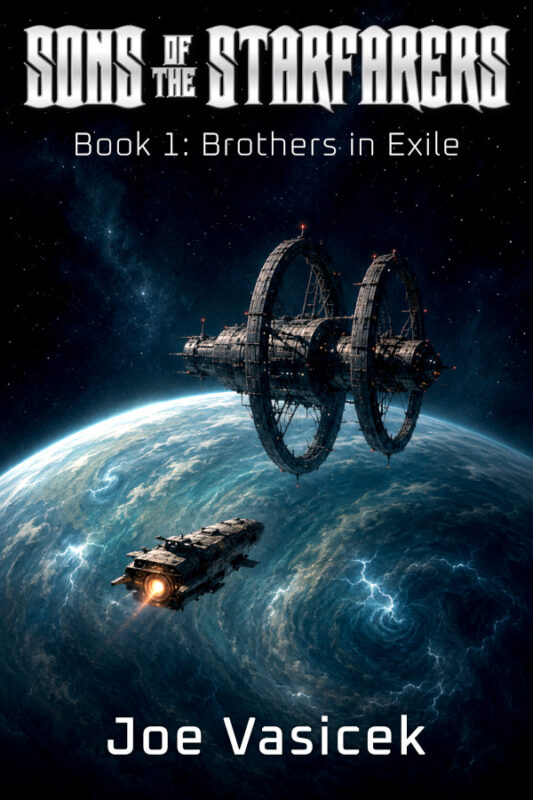
Brothers in Exile

Brothers in Exile

eBook: free!

Isaac and Aaron are nothing if not survivors. Their homeworld lost and their people scattered, all they have left is each other. Then, in the Far Outworlds, they find a dead colony with a beautiful young woman frozen in cryostasis. She is also a survivor—and she needs their help.

More info →

99¢

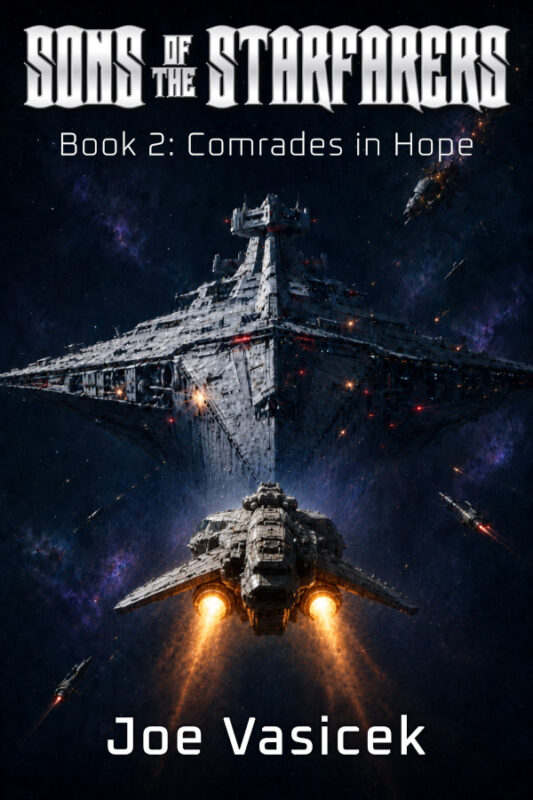
Comrades in Hope

Comrades in Hope

$9.99eBook: $0.99

Isaac and Aaron have joined the war effort, and not a moment too soon. The Imperials are poised to strike at the heart of the New Pleiades and obliterate the ragtag flotilla standing in their way. Aaron always wanted to prove himself, but he was never ready to make the ultimate sacrifice—until now.

More info →

Thoughts on Mark Coker’s 2018 Publishing Industry Predictions

January is a time for making forecasts and predictions, and Mark Coker of Smashwords certainly did not disappoint. I have a lot of respect for Mark Coker, not only for being one of the pioneers of indie publishing, but for continuing to share his data and insights with us over the years.

That said, I have many much opinions.

Mark gets a lot of flak from authors for his anti-Amazon stance, which is nowhere crystalized quite so perfectly as his 2018 publishing industry predictions. Seriously, half the post is a massive litany against Amazon’s publishing practices that systematically recounts just about everything he sees wrong. It’s quite impressive.

Perhaps the most inflammatory thing he says is this:

Authors who now derive 100% of their sales from Amazon are no longer indie authors.  They’re dependent authors.   I suppose we have indie authors and de-authors now.

Here’s the thing, though: he isn’t wrong.

Back in 2010, when self-publishing was still considered by many to be the “kiss of death,” I read a post on a writing blog (I think it was Writer Beware) that said, basically: “if you’re taking the indie publishing route instead of traditional publishing, that makes you self-published. So call yourself a self-published author, because you are one.”

At first, I was really pissed off at that blogger. Couldn’t she see that there was a huge gulf between indie publishing and self-publishing? A year or two later, though, I had to concede that she had a point. I was bringing my own baggage to the table by insisting that indie publishing was separate and distinct from the dreaded “self-published” label. Today, I don’t give a damn whether or not a book is self-published, and I don’t think most readers do either.

It’s the same thing with Mark Coker’s “indie authors” and “de-authors.”

The truth is, if you depend on only one publisher or publishing platform for all of your writing income, then by definition you are dependent. It doesn’t make a difference whether that’s a traditional publisher or Amazon. If you want to be independent, then you have to cultivate multiple income streams from multiple sources. It’s that simple.

You’re still a self-published author, whether you do savvy ebooks and print-on-demand editions. or whether you did a 5,000 book print run with a vanity press that sits in your basement from now to eternity. You’re still a dependent author, whether you’re making a killing on Kindle Unlimited or whether you sold your copyright to a Big 5 publisher for a mess of pottage.

However, while I agree with Mark on that much, I disagree quite strongly on his conclusion that the government needs to break Amazon up. Oh, no. Hell no. It’s not different this time, Mark. The Luddites are still wrong.

The biggest publishing story of 2017 was that Amazon’s biggest enemy is… Amazon. Because it turns out that when you stop paying authors for single-book sales and instead pay them shares out of a massive fixed pot, it incentivizes scammers to find all sorts of interesting ways to game your system. And if your business model depends on automating as much of your website backend and customer service as possible, you can’t fix the scamming problem without pissing off indie (and not-so-indie) writers everywhere.

It’s going to take a while for all this to shake out, but I do believe that indie writers will come out on top—so long as Amazon’s competitors in the publishing world step up and actually compete.

Stop whining about Amazon, Mark, and bring your damn website out of the late 90s.

With that out of the way, here are Mark’s predictions, with my thoughts.

1.  2018 will be another challenging year for the book industry

Has there ever been a year in which this hasn’t been the case? Long before KDP, Smashwords, or any other epublishing platform was invented, all of the best books have been up on the internet for free. Movies, TV, video games—we’ve always competed with these things for reader attention, and always will. I don’t see anything that makes 2018 different in that regard.

In fact, I’m going to go out on a limb and predict that the book industry will stabilize and grow—not as measured by traditional metrics like Nielsen Bookscan, but in non-traditional metrics like the Author Earnings Report. Why? Because books are counter-cyclical, and we’re already overdue for the next recession. The stock market is melting up, the yield curve is flattening, inflation is already hitting real estate, healthcare, and education, and the geopolitical situation is a nest of potential black swans.

I don’t think 2018 will be the year when shit hits the fan—I expect that will happen in Trump’s second term, sometime around 2021 or 2022. If nothing else, the tax cuts have applied palliative care to our economy. But the debt will continue to grow, the deficits will get worse, and inflation is going to hit the average consumer in a massive way this year.

All of this bodes well for books.

2.  The glut of high-quality low-cost ebooks will get worse

Please, Mark. The Tsunami of crap was never a problem to begin with. Like I said above, long before epublishing was a thing, the best books ever written in the history of the world were already available, for free, through sites like Project Gutenberg.

There’s still plenty of opportunity for new authors. The Childlike Empress still needs a new name. The Nothing is not going to swallow Fantastica. If you know how to swim, you can still swim just as well, whether the water’s ten or ten thousand feet deep.

3.  Barnes & Noble is sick and will get sicker

I can see this happening. I haven’t been following Barnes & Noble too closely, but they failed pretty hard with the Nook and their corporate troubles haven’t been good for the bottom line. At this point, though, Barnes & Noble is dead wood that needs to burn in order for something else to come up in its place.

4.  Kobo’s sales will falter

I don’t think they will. Kobo is much bigger in the international markets than Amazon, and the economic problems are worse overseas than they are here in the States (which means that conditions are better for books). I think Kobo will do just fine, though I’m not sure that Smashwords books on Kobo will do as well.

Kobo is still innovating, with things like Kobo Plus and the promotions tab on KWL. Mark Lefebvre had a good run, but I think it’s a good thing that they’ve got some new blood coming in. I predict that Kobo will do just fine.

5.  Devaluation pressures will persist

Again, I completely disagree with Mark Coker on this one. Ebook prices for indie books have actually stabilized over the past few years, and with increasing inflation, I predict they will tend to rise in 2018, though not in a dramatic way.

Once you get below a certain price point, competing on price really doesn’t make much of a difference, and I think a lot of successful indies understand this. Also, books are not fungible. When I make time to read, I don’t want just any book—I want that book. So long as it costs me less than a good meal, price be damned.

There is, of course, an argument to be made that all else being equal, power readers are drawn to lower-priced books. It’s probably an exaggeration to say that these power readers are king makers, but it’s not too far from the truth. That said, the way to get around this is to run periodic sales and promotions, just like any other industry.

Come on, Mark. Just because your book is $5.99 doesn’t mean you can’t mark it down to free or 99¢ every once and a while.

6.  Single-copy ebook sales will decline

On Smashwords, perhaps. I’m not convinced that they will generally.

For the entertainment value, it’s a hell of a lot cheaper to buy a book (especially an indie book) than it is to buy a video game or a movie. Because of that, books tend to be counter-cyclical. The real economy is not doing as well as the official numbers say: households are still under massive pressure, with debt at unprecedented levels and wages shrinking as adjusted for price inflation. I predict that this trend will continue in 2018.

I haven’t seen the data on this, but if I had to speculate, I would say that power readers tend toward subscription models for books, whereas casual readers tend toward single-copy book sales. I would also speculate that power readers are less responsive to economic shocks than casual readers—they’re going to read whether or not their pocketbook is getting squeezed. Again, I haven’t seen the data for this, but if I had to plant a flag, that is where I’d plant it.

Are single-copy sales cannibalized by book subscriptions? To an extent, yes, but I think we’ve already hit something of a floor. If the economic pressures on the middle class worsen and we see an influx of casual readers into the market, I think single-copy sales will start to bounce back. As I see it, there’s a lot more room on the upside than the downside.

7.  Romance authors will feel the most pain from KU

Can’t speak to that, as I’m not a romance author. But based on Amazon’s missteps in 2017, I think KU will actually see a decline as authors continue to flee and scammers continue to dominate. Again, I don’t see much more room on the downside for things to fall.

8.  Large traditional publishers will reduce commitment to romance

And large traditional publishers will continue to shove their heads up their backsides, so no one in the indie publishing world will care. Kris Rusch wrote a much more lengthy analysis where she says as much.

9.  Email list fatigue

Totally disagree. The guys over at the Science Fiction and Fantasy Marketing Podcast discussed this recently, and the conclusion they came to is that authors who claim that email lists don’t work as well as they used to are doing it wrong.

That said, I could see a bit of a shakeout as readers who have signed up for every author’s list go through and cull their inboxes. And I could also see a stabilization and/or decline in sites like InstaFreebie that offer free books in exchange for signing up for an author’s list. But I don’t think this will translate into declining effectiveness of email lists generally.

In contrast, I predict that email lists will continue to be the most effective marketing tool for the vast majority of authors, myself included. My list has never been larger, and never been more effective at selling books.

10.  Pressure will build to drop author royalties

I could see this happening. That said, the pessimists in the industry have been predicting this for years, and I don’t see why it would happen now. In fact, if it did happen now, it would create a great opportunity for competing publishing platforms.

Amazon may be the big dog in the publishing industry, but they don’t have their house in order. The KU scamming scandals of 2017 demonstrated this quite clearly. If Amazon were to cut author royalties, it would hurt KU authors the most, and really bite Amazon in the ass long-term.

It’s not a bad idea to have contingency plans in place, in case something like this happens. That said, I don’t think Amazon’s position is strong enough to pull it off.

11.  Audiobooks will be a big story in 2018

This, I can see happening. From what I can tell, audiobooks are experiencing explosive growth, which will continue as more competitors like Findaway Voices find a place in the market, and more indie books come out of their exclusivity agreements with Audible. I really need to figure out how to put out audiobook versions of all my books.

12.  Audible will face increased competition

This is already happening, and I believe it will continue. Perhaps we will see more pressure to raise author royalties for audiobooks than we will see pressure to lower author royalties for ebooks.

13.  Readers will still pay for books worth reading

Yes, indeed. In other news, the sun will continue to rise in the east, people will continue to grow old, and teenagers will continue to believe that they are the very first ones to discover human sexuality.

14.  New subscription services will be introduced

I’m very interested in this one. Mark is in a much better position to see these things coming than I am, and if he’s right, that would be very big news indeed.

Will it be a game changer? I don’t think so, but I half expect to be wrong. Right now, my books are on Scribd and Kobo Plus, and I haven’t seen much of an effect, but subscription services tend to shake up every industry where they take root, and ebooks aren’t an exception.

That said, I don’t think that any new book subscription services will dramatically change my own indie publishing business in 2018. I hope to be proven wrong.

15.  Calls will grow in the US for antitrust action against Amazon

Fat chance, Mark. If anything, Walmart and Home Depot are going to eat Amazon’s lunch. The “Amazon effect” has been greatly exaggerated: truth is, the retail sector is just full of dead wood after a decade of easy credit, stock buybacks, and government bailouts.

Trump is going to defy expectations and win a second term. The Republicans may lose the House in 2018, but I don’t think they will. As for the Senate, almost all of the seats up for election are currently held by Democrats. The Russiagate narrative is coming apart, the Clinton Foundation is once again under investigation, tax cuts are coming, and #MeToo is causing the Left to eat their own. I think the Republicans are going to have a good year.

If calls for anti-trust action against Amazon grow, they will fall on increasingly deaf ears. Thank goodness.

16.  Indies will reassert control over platform

More to the point, Twitter and Facebook will generally decline, while sites like Steemit and Weme will pick up the slack.

If indies do take control of their own platforms, it will be through things like blogs and email lists, which runs contrary to Mark’s prediction in #9. However, I half expect a shakeup in social media to lead to a mass migration of authors to some new site, once the first movers experience huge success.

I’m not sure of this one. It could go either way. Barring the rise of the next Facebook, I think Mark may be right. But I consider it just as likely that we see Facebook go the way of MySpace as something else takes over.

17.  Indie authors will take a closer look at podcasting to reach new readers

Not a bad idea. I doubt it will take off generally, but a few authors will certainly find new opportunities here—especially authors who are also invested in producing their own audiobooks. Could shake things up a bit.

Overall, while I tend to disagree with Mark’s 2018 predictions, he raises some interesting points to consider. Here are some predictions of my own:

  1. I will continue to write new books.
  2. I will continue to publish new books.
  3. A lot of new readers will discover my books.
  4. My email list will more than double.
  5. I will fall behind on this blog more than I should.
  6. I will continue to listen to Sabaton.

Thoughts on Star Wars: The Last Jedi

What a disappointment.

I was going to avoid spoilers, but now that I’ve had some time to reflect, man oh man I’m just gonna vent about everything. Because there is so much wrong with this movie, and so many things that could have been awesome but instead turned into missed opportunities. So this post is full of spoilers. Consider yourselves warned.

First, taken entirely on its own, the story is just broken. I’m undecided whether the writers and/or director were too clever or too stupid for their own good. Half the plot of the movie turned out to be a red herring, which made Finn, Rose, and to a certain extent Poe Dameron completely unnecessary characters. It seemed like the writers were trying to play with tropes and plot conventions in an unexpected way, but it ended up completely breaking the story. The Dark Knight did something similar and pulled it off masterfully, but The Last Jedi is no Dark Knight.

The purple-haired feminazi who replaced Princess Leia for half the movie deserves a special measure of my wrath. How a woman with all the charisma of a dead fish became one of the chief leaders of the rebellion lite, aka the resistance, I don’t know. There wasn’t a single scene with her where I wasn’t screwing my face up and cringing. And her command decisions were just completely awful. If you know that you’re going to lose most of your starships anyways, why not ram the super star destroyer at light speed with the first damn one to fall?

I think my biggest problem with the new Star Wars movies is that, with the notable exception of Rogue One, they introduce a bunch of new characters and assume that you’re going to admire them simply because they show up. We’re told that Snoke is the new big bad, but we know nothing about who he is, how he rose to power, what his capabilities are, etc. So when he dies, the only thing going through my head was “well, that was interesting,” whereas when Emperor Palpatine dies, it was this big emotional moment.

We’re never made to admire the new characters, we’re simply told why we should admire them. Goggle eyes orange face is supposed to be this super well-connected smuggler type, but we never learn anything about her other than that Han Solo apparently admires her, and she ends up shooting things a lot. Who is she? Where does she come from? What’s her history? Who is she connected with, and how? Show don’t tell, dammit. Give us something to make us care.

The fridge logic really ruins this movie. Why did Luke tell Rey to go away, when he obviously left a map for them to find him? If ramming starships at light speed is a thing, why hasn’t anyone ever done it before now? If Kylo Ren truly wants to wipe out the past and start over, why is he still fighting the Resistance?

Which brings me to the greatest missed opportunity of the movie. When Rey and Kylo Ren team up, that was truly awesome. Great fight scene, great turning point. For a moment, you think that you’re going to see something new in the Star Wars universe. The whole movie has been building up to it. Luke Skywalker has already established that the Jedi deserve to die out because they’re really a bunch of zealous fanatics, and Kylo Ren has already refused to give himself to the dark side fully. He reaches out his hand to Rey, offering her the chance to join forces and create something new, something that transcends both the light and the dark sides of the force. And then they go right back to fighting each other as if none of this had ever happened, because this is Star Wars, where apparently nothing ever changes.

It’s not so much that Kylo Ren was the most interesting character in the movie, so much as that he was the only interesting character. At this point, he’s the only one I’m still rooting for. Rey is an idiot. Finn and Rose are useless baggage and dead weight, respectively. Princess Leia is apparently still around, but without Carrie Fisher playing the part I really do not care about her. Chewbacca is still alive, I guess. So are R2D2 and C-3PO. But they’re the last original Star Wars characters, and I really don’t think they can carry a story. Poe Dameron is cool, but perpetually hamstrung by the idiots running the Resistance, and that gets old real fast.

As someone who grew up with Star Wars—who ranks Empire Strikes Back as his favorite movie of all time—I hate to say this, but I’m not going to watch the next Star Wars movie to come out. Not unless it gets overwhelmingly positive reviews and all my geek friends can’t stop raving about it. Rogue One was good, but The Last Jedi? It’s crap.

Here’s my ranking of Star Wars movies from best to worst:

  1. The Empire Strikes Back
  2. A New Hope
  3. Rogue One
  4. Return of the Jedi
  5. The Force Awakens
  6. Revenge of the Sith
  7. The Last Jedi
  8. Attack of the Clones
  9. The Phantom Menace

At this point, I don’t think anything below Return of the Jedi is worth rewatching.

One week left and right on track

An Empire in Disarray
Phase:1.0 Draft
Due:9 years ago
70%

I’ve got exactly one week left on my deadline for An Empire in Disarray (book 8 of Sons of the Starfarers), and surprisingly, I’m actually on track to finish it on time. You have no idea how satisfying it will be if I can actually pull this off.

People tell me that I’m a prolific author, but I never feel like it because I almost never hit my own deadlines. For a long time, I thought that was because of a lack of discipline, but I’m starting to discover it’s more of an issue with my prewriting. As I mentioned in my previous post, I’m retooling my writing process, especially with the prewriting, and it’s making a tremendous difference.

This WIP is a proof of concept. For the last book, Victors in Liberty, I’ll see if I can replicate it. Over the next few WIPs I expect I’ll refine it even further.

Guys—if this actually works, I may be able to triple my creative output. Triple it. Instead of taking years to write novels, it will take months. Instead of agonizing over lengthy revisions and multiple drafts, I’ll be writing clean first drafts that are ready to send to the editor without making a second pass.

All this time, I’ve been using a needle and thread, and now I just got a sewing machine.

So yeah, I’m pretty excited. Also, An Empire in Disarray is on track to be finished by Christmas. I’ll still do a standard revision pass, just to make sure it’s publishable, but still.

Huzzah!

Knights of Dark Renown by David Gemmell

If you’ve been following this blog for any time at all, you know I’m a huge fan of David Gemmell. He’s not only my favorite fantasy writer, he’s my favorite writer, period. His first book, Legend, is still one of my favorite books of all time.

The Knights of Dark Renown is a true standalone, something rare in David Gemmell’s sizeable bibliography. And yet, page for page, it stands up to the best of his work. A brutally violent world populated with unlikely heroes and redeemed villains. An ancient order of magical knights fighting back against an even more ancient evil. Characters who leap right off the page and grab you by the heartstrings, making you weep when they die and stand up and cheer when they triumph—sometimes with the very same breath.

Honestly, if I’d written this review right after I read the book, it would be nothing but “squee!” repeated over and over. It’s been a few months, so my excitement has definitely been tempered with the passage of time, and yet looking back I can definitely say that this was an excellent book.

It’s probably the best vampire novel I’ve ever read, which isn’t what I was expecting. There are a million different kinds of vampires out there, most of which I have no interest in, but these vampires strike much closer to the original: charming, blue-blooded monsters who look perfectly normal on the outside, but beneath the facade are as cruel and terrifying as the most competent and accomplished serial killers—which they very often are. But the really awesome part is how the vampires tempt those they deem worthy to join them, which is how they begin the conquest of the world of men. Without ruining the book, I’ll just say that I was impressed.

Gemmell is often accused of writing the same book over and over again. While that isn’t completely fair, I do see how he gets that reputation. Thing is, that book he supposedly keeps rewriting is a damn good one. He’s a lot like Louis L’Amour in that way.

However, Knights of Dark Renown is something of a departure from that vein. The magic system is different from his other books, as is the lore. The usual character archetypes are there, though he combines them in different ways. The bard, for example, follows a very different path from the Drenai books, and is cut from a different cloth. But none of it is a particularly great departure from Gemmell’s usual fare.

With all that said, I really enjoyed this book. It easily earned the five stars I gave it. Highly recommended.

Bake the #MAGA cake

The US Supreme Court is hearing a case today that will decide whether or not a gay couple can force a cake artist to decorate a cake for a gay wedding. The issue at stake is not whether a business can refuse service to people based on sexual orientation (the baker was willing to sell the gay couple any out-of-the-box cake on his shelf), but whether the government can force a creative professional to use their talent to advance a message that runs contrary to the individual’s conscience.

Unfortunately, it looks likely that the court will rule against the baker. In other words, we will soon live in a country where artists can legally be forced to create propaganda that runs contrary to their beliefs. And yet, for even questioning this, I’m somehow the fascist??

This isn’t about discrimination. This is about free speech. If I, as an artist, don’t have the freedom to choose what kind of art I create, I no longer have freedom of speech. It really is that simple.

So here’s what I propose. If the Supreme Court rules against the baker, then every bakery in San Francisco, Chicago, and New York City should be forced to make MAGA cakes from now until November 2020. We should fill them up with so many orders that a week won’t go by that they won’t be forced to push the message that put Trump into the White House.

We’ve already seen the power of 4chan and weaponized autism. I have no doubt that this is something that we can do. And maybe, just maybe, it will convince the few reasonable people on the Left to see just how hypocritically batshit insane their side has become. Because if we have to live in a country where conservative bakers are forced to make gay wedding cakes, shouldn’t liberal bakers be forced to make MAGA cakes too?

Please, internet gods. Make it so.