Here’s my new pricing strategy

A few weeks ago, I had an impression that I needed to revisit my overall pricing strategy, not just for ebooks but for audiobooks too. So I sent out a few feelers, trying to see how other indie authors are pricing their books, and also ran a reader survey (thank you to everyone who participated in that, by the way!)

After all of that, I’ve put together a new pricing strategy that I will probably keep over the next few years, inflation notwithstanding. It’s not that much different from what I was doing before, but it is worth sharing with you, especially if you’re on a tight budget and you want to know the best way to pick up my books. So let’s go through each format, and I’ll share my plans.

Paperbacks

Until now, I’ve basically just been pricing all my paperbacks at a flat $14.99 USD, with equivalent price points in each of the major currencies. For shorter books, this meant that I took a hefty profit. For longer books, a hefty loss.

Moving forward, as I move to distribute all of my titles through Ingram via Draft2Digital, I am going to price my paperback titles such that I take at least a $2 profit through wide distribution. For most titles, this means they will fall somewhere in the $12.99 to $15.99 range. Some of the larger books may go as high as $18.99. This does not include shipping costs.

As always, if you purchase a paperback on my store, I will sign and personalize them for free if that is what you want me to do. Not all of them are up yet, but I hope to get them all up there over the next few weeks.

Audiobooks

Until now, I’ve been pricing my audiobooks on the lower end of the price range that human-narrated audiobooks can command, which means that most of them were either $8.99 or $16.99. That was just the list price, though, and I frequently ran month-long sales where they were all discounted to $2.99. And of course, if the ebook was already free, I also made the audiobook free.

But this was before AI-narrated audiobooks began to come out on the major platforms in large numbers. Now, it looks like one of the biggest trends in the book world is the explosion of AI-narrated audiobooks. I forget which podcast I heard it on, but some industry experts are predicting that within 10 months, most of the audiobook market will consist of AI-narrated audiobooks.

Obviously, it costs much less to produce an AI-narrated audiobook vs. a human narrated audiobook. In fact, without AI, none of my titles would be available in audiobook format, since they are all AI-narrated. And after asking around some of the author communities I follow, it appears that most authors are pricing their AI-narrated audiobooks closer to their ebooks, rather than their human-narrated audiobooks.

What was more surprising to me was to learn that of the readers who took my reader survey, those who listen to audiobooks felt fairly strongly that an AI-narrated audiobook shouldn’t cost more than the ebook. So it’s not just the authors who are driving this trend, but the readers as well.

With that in mind, and the data I gathered on ebook pricing points, I have decided to make the list price of all of my digital books, whether ebooks or AI-narrated audiobooks, priced at $4.99 moving forward. That’s just the list price, though: occasionally, I will run a $2.99 sale, where either all my audiobooks or all of my ebooks are discounted to the $2.99 price. And for certain titles, like my Sons of the Starfarers books, I plan to keep them on a $2.99 sale permanently, since it’s a nine book series and that’s what they were priced at before. Also, if the ebook is free, so is the audiobook.

And as always, if you buy an audiobook from my online store, you automatically get the ebook free as well.

Ebooks

Before, I used to price my ebooks at either $2.99, $3.99, or $4.99, depending on the book. In general, first-in-series books were permanently at $2.99, while the later books were all at $4.99.

Moving forward, however, I plan to keep all of my ebooks (except for the Sons of the Starfarers books) priced at $4.99, regardless of where they fall in the series, though I will occasionally run $2.99 sales across the board.

(The exception to all of this is box sets, which I plan to keep at $9.99. At this time, I only do box sets for the ebooks, and I don’t want to price those so low that they undercut my regular titles. I may discount them during a $2.99 sale, but I haven’t yet decided on how much.)

My goal with this is to make it so that price isn’t a factor in deciding which book to buy next. If they’re all the same price, then it shouldn’t make much of a difference—and if $4.99 is too much for your budget, then you can just wait until I run the next $2.99 sale, which should happen approximately every third month or so.

As always, you can get $1 off of the ebook with the coupon code “buy direct” when you purchase it from my store. This only applies to $4.99 books, however—if the book is currently on sale for $2.99, the coupon does not apply.

$2.99 sale November-December 2024

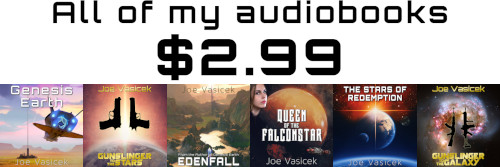
With all of that said, I am currently running a $2.99 sale on all of my ebooks and audiobooks, from now to the end of 2024. If you’ve wanted to read my books in ebook or audiobook format, but have ever balked at the price, now is a great time to pick them up! I have somewhere north of 20 novels out right now, and in the coming months, I plan to publish a lot more (which is another reason to run $2.99 sales, so that my readers don’t have to spend upwards of $100 to read all of my books).

Where Ezra’s Eagle Goes Off the Rails

So it’s November 6th, 2024, the day after election day. President Trump has won an astonishing election victory, marking the greatest political comeback in US history. For those of us who feel like we’ve been gaslit and abused for the last four years, it really does feel like things are starting to look up for the country.

At least, for most of us, that is the case. For others of us, the black pill has been so bitter that we’re almost scared to hope again. Last night, I was up until 2am, just because I didn’t want a repeat of 2020, where we all went to bed convinced that Trump had a lock on the election, only to wake up to burst pipes, boxes of uncounted ballots, voting machines behaving strangely, windows and doors boarded up against Republican observers, and other sorts of “election fortification.” So frankly, I don’t blame anyone for being on pins and needles until Trump actually puts his hand on the Bible and is officially sworn in as the 47th (or possibly 48th) President.

I’m seeing that reflected right now in my blog stats, where in the last 24 hours, I’ve seen hundreds of hits on my old post This Scenario Would Fulfill Ezra’s Eagle, which I wrote several years ago. For some strange reason, that post is now the #2 Google search result for the query “Ezra’s Eagle,” which makes me feel like it’s my duty to offer periodic updates to the situation.

But first, a quick explanation of the Ezra’s Eagle prophecy:

This video is a very good explanation of the prophecy, as interpreted by Michael B. Rush. The part I find most compelling about it is the sequence of rulers, which really does line up uncannily well with our last 16 presidents. Whenever Biblical prophecies start going into numerology, I always raise my eyebrows a bit, because there are lots of ways to twist numbers to make them appear to fit your own personal interpretation. But if you read the original source material in 2 Esdras 11 and 12, it actually lines up very well with what has (so far) transpired.

However, it’s where we get to Rush’s interpretation of the last two short feathers and the lion that I tend to think it goes off the rails. This may come as a surprise to some of you, but I am not convinced that there will be a singular Anti-Christ figure in the end times. I know that a lot of Evangelical eschatology revolves around this figure, but the way they get there is through a rather selective reading of Daniel, Ezekiel, and Revelation that leaves me scratching my head. When I read the Bible, I see a lot of passages talking about a spirit of Anti-Christ, but not a singular figure—and certainly not one with Godlike powers.

But the big thing is the lion, which Rush connects (correctly, I believe—assuming of course that the prophecy is true, which it may very well not be) with the remnant of Jacob in 3 Nephi 20 and 21. Latter-day Saint eschatology draws not only from Daniel (where we get the stone cut out of the mountain without hands), Ezekiel (where we get the stick of Joseph), and Revelation, but also from Isaiah, which goes into great depth about the scattering and gathering of Israel, and the return of the lost 10 tribes. There are also several other prophecies in the Book of Mormon that describe the latter-day gathering of Israel, which is central to the Latter-day Saint understanding of the end times.

Regarding the lost 10 tribes, within the Latter-day Saint tradition there are basically three possible views about what happened to them and where they are now.

The first is that they were taken to the north pole and currently live under the polar ice. This view was very popular in the 19th century, but almost no one believes it seriously now.

The second is that they were taken into space, and currently reside on another planet or in another dimension. While this may sound crazy, it does resonate with the scriptures we have that talk about how Enoch was taken into heaven, with the original city of Zion. This is the view that Michael B. Rush espouses, and he believes that the prophecies in 3 Nephi (as well as Ezra’s Eagle) will be fulfilled when the ten tribes come back down from space and liberate us from the Anti-Christ.

If that sounds a little too science fictional to you, you’re not the only one. Personally, I would love to read a novel where that’s how things turned out, but I don’t think those prophecies are actually going to be fulfilled that way—and here’s why.

The third view is that after the ten tribes passed out of our historical records, they migrated to the northern reaches of the Eurasian landmass, probably in what is now Siberia. There, they established a civilization, which was apparently still extant when the resurrected Christ visited the Americas, because He referred to them explicitly in 3 Nephi 17:

4 But now I go unto the Father, and also to show myself unto the lost tribes of Israel, for they are not lost unto the Father, for he knoweth whither he hath taken them.

This civilization probably continued for a while, perhaps for several centuries after the resurrection of Christ, but it eventually fell, probably due to a combination of the changing global climate (which was much warmer during Roman times, but went into a little ice age during the medieval era) and political upheaval on the Eurasian steppes. When China fell apart after the Three Kingdoms period, there was a massive depopulation as the survivors of those wars migrated westward onto the steppes, creating a cascade of violent displacement that ultimately culminated in the rise of the Hunnic confederacy and the migration period in Europe, which brought about the fall of the western Roman Empire. The ten tribes could easily have been conquered during this period, and their survivors assimilated into the Hunnic or Turkish tribes. Or perhaps they survived this era, only to be conquered by the Mongols in the 1200s. Either way, their culture was wiped out, and their descendants were assimilated into the cultures that conquered them and settled on their lands.

There’s quite a bit of evidence for this theory, including DNA evidence. There’s also some spiritual evidence from the patriarchal blessings of people from this region, where most of the people are have been blessed to belong to one of the ten tribes. The guys at Ward Radio discuss this at length in the episode above—Jonah Barnes actually served his mission in Siberia, so he has firsthand experience with this. Also, there is some pretty solid scriptural evidence in Jacob 5 and the allegory of the olive tree. When the branches of the natural tree are first scattered throughout the vinyard, there is a location that is mentioned once in verse 24, and never mentioned again. If this represents the lands of the lost ten tribes during Christ’s time, that makes sense, since their culture had not yet been wiped out—but after it was wiped out, and the survivors assimilated into the culture that conquered them, they were no longer a “branch” within the context of the allegory.

So how does this relate to Ezra’s Eagle? If the ten tribes are actually among us, and not in space as Michael Rush believes—indeed, if the descendants of the lost tribes are currently being gathered into the Church of Jesus Christ of Latter-day Saints, through the missionary work currently happening in central Asia—then the “remnant of Jacob” that will go forth as a lion is the members of the Church of Jesus Christ of Latter-day Saints who gather to the New Jerusalem, either to build it or to migrate there after it has been built. Third Nephi 20 and 21 go into great depth about this.

But what does it mean that they will tread down their enemies among the gentiles? Does it mean that the Church of Jesus Christ of Latter-day Saints will go all nationalistic, organize a militia, and go to war directly against the United States? Almost certainly not. After all, the twelfth article of faith states: “we believe in being subject to kings, presidents, rulers, and magistrates in obeying, honoring, and sustaining the law.”

But I could see a scenario where the United States collapses and becomes a failed state on the national level, with cartels, gangs, and local warlords stepping into the power vacuum under the veneer of what’s left of our democratic republic. Under that scenario, the church would step into the gap and help its members to organize and develop a strong, self-reliant community that could not only survive in such a post-collapse world, but actually thrive in it. In many ways, we’re already set up to do exactly that. And if the call comes during this time of chaos to build up the New Jerusalem, I could see us making a modern pioneer trek to Missouri, and prevailing over the gangs and warlords who try to stand in our way.

Under this scenario, the last two feathers of Ezra’s Eagle aren’t the Anti-Christ and the Beast, but the last two presidents of the United States, who attempt to restore the nation after the catastrophic fall of the deep state (represented by the three eagle heads) but who ultimately fail to do so. This is when the nation collapses, and we become a failed state on the federal level. Then the Church of Jesus Christ of Latter-day Saints rises up to fill in the gap, standing against the gangs and warlords in the ensuing power vacuum, until we are called to build the New Jerusalem and fulfill the end-times prophecies contained in 3 Nephi.

To me, this is a much more plausible interpretation of Ezra’s Eagle than Rush’s view that the lost ten tribes will liberate us in some sort of extraterrestrial invasion of our planet, while a godlike Anti-Christ rules the whole world. But frankly, I don’t think any of this is going to happen—at least, not on the timeline of Ezra’s Eagle. President Trump won the election with a clear mandate, and I believe he will become our 47th president. With the way things are currently unfolding, I no longer believe that the Ezra’s Eagle prophecy is true in a literal sense. It may have been an authentic vision of a possible series of events, but I do not believe we are on that timeline. After all, there is a reason why Joseph Smith never translated the Apocrypha—or canonized it, for that matter.

But I guess we’ll find out soon. After all, if anything happens to Trump between now and January 20th… let’s just pray for our country during this very uncertain time.

(And for the record, if the Ezra’s Eagle prophecy is true, I still totally believe that Janet Yellen is the first eagle’s head.)

Did I predict it?

On July 24th, 2024, eleven days after the (first) Trump assassination attempt, I posted the following predictions:

1. There will not be a second assassination attempt against President Trump before the election.

On this one, I got it wrong badly. There was at least one other attempt on Trump’s life, the one with the gunman camped out in the golf course for ten hours, who very nearly got a shot in. There was also a case where a whole bunch of people in the stands at one of the Trump rallies was hospitalized with chemical burns, probably from an attempted chemical attack on President Trump. But that one didn’t make the news nearly as much. And those are only the ones we’ve heard about.

I hope Trump makes it to the inauguration, because now that he’s actually won the election—and there are still people taking shots at him—the odds of him getting assassinated between now are not insignificant.

5. Harris will lose badly and Trump will win the 2024 election in an electoral landslide.

This one, I think I got right. I’m writing this post on election night after all of the networks have called Pennsylvania for Trump, and Trump has declared victory (though it’s unclear if Kamala has called him to concede yet). It is possible that we might see some “election fortification” in the next 24 hours, but I think it’s unlikely. And while Trump’s victory could have been more of a blowout, I do find it telling that Kamala Harris failed to outperform Joe Biden in every single county in the country. Youch.

So by my count, that puts me at three out of four in the prediction game. Not perfect, but pretty good. We’ll see how the rest of them play out, because I think the last few weeks of 2024 are going to be pretty rocky. Hopefully I’m wrong, but we’ll see.

Got a moment to take my book pricing survey?

It’s been a few years since I last ran this survey, and I’m curious to see how things have changed (if indeed they have changed at all). Also, there’s a new question about pricing audiobooks, which I’m especially eager to analyze, since that’s something I haven’t quite figured out yet. Check it out!

Late October Update

It’s been a really mild autumn this year. We got our first hard frost only about a week ago, and it’s currently about 66 degrees outside. Feels positively balmy!

The image above is my current computer setup. The playpen is for the kids to watch a show while I’m working on the other monitor, such as what I’m doing right now. We’re still living with my in-laws, so this room is their library add-on. It’s really nice! I especially like how much light the windows let in, as well as the fact that it’s set away from the rest of the house, so I don’t have to worry as much about waking sleeping kids.

For the last few months, I’ve been alternating between each week between different WIPs, trying to use some of the principles I learned from hacking my ADHD in order to write more. I should really write a blog post about that soon. Basically, I switch out a new project every week, shepherding about half a dozen WIPs toward completion instead of completing them one at a time.

Since I only just started a few months ago, it’s going to be a few more months before the first of the projects is finished, but once I fill out the queue to that point I should be able to publish a new novel every other month for the forseeable future. Once I can do that consistently, without sacrificing the quality of the stuff I write, the plan is to move it up to once every six weeks, then once every month. With the way I’ve been incorporating AI into my writing process, it’ll be a challenge but still very doable.

I’m also working to get all of my audiobooks up on Findaway Voices, which distributes to Spotify, among other places. Since I’m not quite sure how to price them, I’m running a $2.99 sale for the rest of the year. The plan is to run a book pricing survey with my email list and use that data to guide future pricing for my ebooks and AI-narrated audiobooks. I’ve also been invited into the beta for Amazon’s AI-narrated audiobooks, so those should be going up on Audible before too long.

In family news, my wife is applying for a position in the BYU Linguistics Department, and they just set up a bunch of interviews (including the one with a General Authority, which is supposed to be with both of us). She’s also finishing up her PhD, which should be done next year. Between that and watching the kids, I don’t have a lot of uninterrupted writing time—thank goodness for AI!

And now the kids’ shows are over, so I’d better get back to doing other things. Take care!

How I Would Vote Now: 1956 Hugo Awards (Best Novel)

The Nominees

The End of Eternity by Isaac Asimov

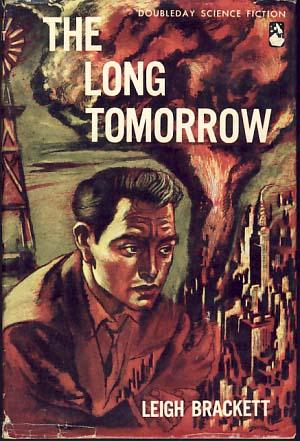
The Long Tomorrow by Leigh Brackett

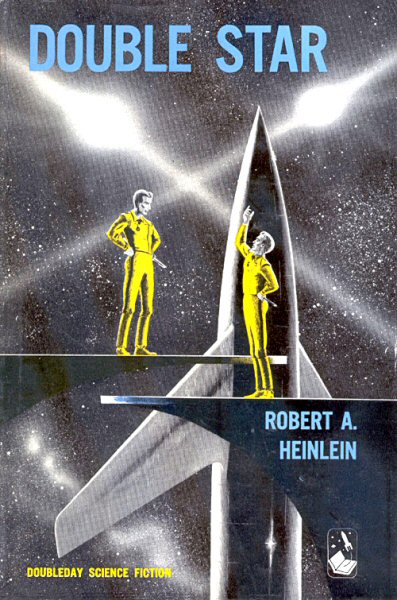
Double Star by Robert A. Heinlein

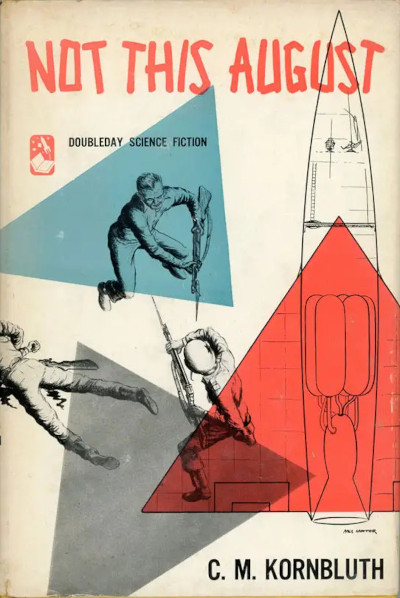
Not This August by C.M. Kornbluth

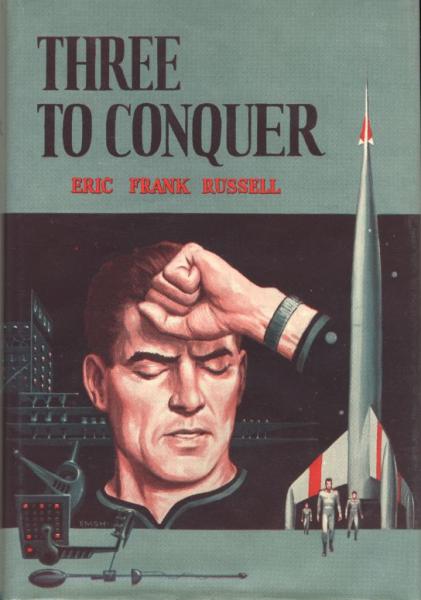
Three to Conquer by Eric Frank Russell

The Actual Results

  1. Double Star by Robert A. Heinlein
  • The End of Eternity by Isaac Asimov
  • The Long Tomorrow by Leigh Brackett
  • Not This August by C.M. Kornbluth
  • Three to Conquer by Eric Frank Russell

How I Would Have Voted

  1. The Long Tomorrow by Leigh Brackett
  2. The End of Eternity by Isaac Asimov
  3. Double Star by Robert A. Heinlein
  4. Three to Conquer by Eric Frank Russell
  5. Not This August C.M. Kornbluth

Explanation

This was a really good year for science fiction.

I’ve read every one of these books from start to finish, and I love them all. Even the lesser ones I’d put up above most of the Hugo-nominated books from the last couple of decades. And the best—well, let’s go there.

First, Not This August. This was really more of an early Cold War political thriller, with frightening near-future space technology since, at the time this was written, Sputnik was freaking everyone out in a major way. The technology itself is moderately science fictional, but if a book like this were written today, it would probably be shelved as a technothriller—which makes me wonder if the conservative science fiction writers of the 60s and 70s didn’t just migrate to the thriller genre as science fiction was increasingly taken over by the left. But that’s a subject for another blog post.

In any case, Not This August is very much a cautionary tale, kind of like 1984, but set only a decade or two after WWII. Basically, China and the USSR launch a joint invasion of the US that succeeds, but an underground resistance movements works to finish this American superweapon: an orbital military base armed with nuclear weapons that is undetectable by the surface and can bomb anywhere on the planet.

Since it was written in the early part of the 50s, it plays very much on fears that the world wars would shortly resume, and that the US would never recover economically from the wars. Such fears later proved to be unfounded, but at the time, there were very good reasons to think we were caught in a vicious cycle—and in some ways (such as with Eisenhower’s warnings of the Military-Industrial complex), perhaps we were.

In some ways, it was a difficult read, not because of the writing itself, but because of how dark it was. However, like any good thriller, it built up the suspense quite nicely, and I finished the last hundred pages at a sprint. With that said, it hasn’t aged nearly as well as 1984, and reading it from the perspective of the 2020s it seems much more like an historical curiousity than a true cautionary tale. But I enjoyed it.

Three to Conquer was much lighter, and a fun, quick read. It’s about a man who is secretly a telepath, who stops on the side of the road to help a stranded motorist and discovers that some hostile alien body-snatchers have come to Earth after infecting three returning astronauts, and are now trying to takeover all of humanity before we realize that they’re even here. It’s a race against time to find and kill all of the zombified humans before they infect everyone else, with a cute little love story thrown in for good measure, between the main character and his secretary. A fun if somewhat forgettable read. I did really like how the main character had a sharp mind and was quick on his feet.

Now, to the really good ones.

Double Star is a fantastic book, and just because I’ve put it at third place on my ballot, you should not think that means that I thought it was mediocre at all. In fact, I’d put it above probably 60% or 70% of the novels that have won the Hugo. It’s quite good, showcasing Heinlein at some of his best (though I do think Farnham’s Freehold is better). It was a really compelling story about a man who overcomes his prejudices and shortcomings to grow into the role that has (quite literally) been cast for him. It also makes me very, very glad that I’m not an actor. Highly recommended.

The End of Eternity is one of the best time travel novels I’ve ever read. It’s about this bureaucratic organization called Eternity, which exists to shepherd humanity safely through 75,000 centuries of history. Basically, the technicians of Eternity calculate all the best ways to tweak the timeline with “reality changes” in order to avoid all of the worst catastrophes, like pandemics, global wars, etc. But after the 75,000th century, there’s a long period of “hidden centuries” that are somehow inaccessible to them, followed by a world where humanity is extinct. The main character is a technician who falls into forbidden love with a woman in Time, whose existence is going to be wiped out by a reality change. He conspires to save her by bringing her into Eternity, and sets off a series of events that threaten to wipe out Eternity itself.

I really enjoyed this book. Toward the end, I wondered if this book would have a happy ending, since I couldn’t think of any way to pull that off without making it kind of sappy and cliche. Then the twist happened, and everything changed… but we still got the happy ending, which fit in perfectly with the world-changing twist. Just a really brilliant book by an all-time science fiction master. Classics like this are the reason why Isaac Asimov hasn’t been canceled yet, and hopefully never will be.

As I said above, I genuinely enjoyed all of these books. But as good as they all were, none of them blew me away nearly as much as Leigh Brackett’s The Long Tomorrow.

The Long Tomorrow is a post-apocalyptic story about a future America, after the atomic wars, where cities are a thing of the past, the Constitution has been amended to restrict the size of towns (in order to prevent them from becoming potential targets for a nuclear weapon), and most of the population has reverted back to 19th century tech and an Amish or Amish-adjacent lifestyle. But there are legends about a secret city called Bartorstown, where the old technology hasn’t been lost, and people still live lives full of wonder and wealth, just like the old days.

The story follows two boys who run away from home in order to find Bartorstown, tracing their adventures and coming of age, until they finally learn the terrible truth about what Bartorstown actually is, and grapple with what that means for all of them. It’s a pretty basic plot, but what really blew me away was the depth of character and how brilliantly Brackett’s writing and storytelling drew me into their lives, making them come alive. Consequently, the story really came alive, raising all sorts of questions that left me thinking and wondering long after I’d put it down. There are some really heavy themes in this book, but like the best sci-fi, it doesn’t feel like “message” fiction at all.

It’s a little bit sad, though, because Brackett wrote this book just as the hydrogen bomb transformed foreign policy with the threat of mutually assured destruction, thus making her post-apocalyptic future into something totally implausible. The Long Tomorrow only works in a world where total nuclear war doesn’t result in the utter annihilation of humanity. From what I can tell, that’s the main reason this book never really took off. Also, I’m guessing that Brackett didn’t have as many fans as Heinlein or Asimov, and since the Hugos have always essentially been a popularity contest (these days, among an increasingly narrow and snobbish clique), that’s probably the main reason why The Long Tomorrow didn’t win the Hugo this year, even though I personally think it’s the most deserving book on the ballot.

But as I said above, 1955 (the publication date) was a really good year for science fiction, and all of these books are really good—some of the best, in fact. I highly recommend them all!

The Silmarillion Teaser Trailer

I just hope Amazon isn’t involved in any of the production.

(FYI, this isn’t real. But wouldn’t it be neat if it were? Heck, even if it were just the Narn i Hîn Húrin, I’d be all over that!)

Thoughts on the Israel-Iran War

I know that it’s been just a week since I said I would post less about politics and current events, but the events of the past week are so Earth-shattering that I really can’t hold back.

First, yesterday’s 200+ missile strike on Israel by Iran. For me, the scariest footage I’ve seen so far was this:

because it reminded me of this:

Obviously, Israel was not wiped off the map by Iran’s ballistic missile strike. In fact, from what I’ve heard most recently, the only casualties from that attack are one Palestinian in Judea/Samaria, and five Iranians when the missile they were prepping blew up on the launch pad. Wah wah sad trombone.

But it would be a very different story if any of those missiles had been tipped with a nuclear warhead.

So as we await Israel’s response to this unprecedented attack, I think it’s not to early to call the start of the Israel-Iran war. It’s been a long time coming, but I think it’s actually here, and I think it’s going to heat up a lot faster than most people think it will.

At this point, the two big questions on my mind are: 1) how many other countries are going to get dragged into this war, and 2) do the Iranian mullahs actually believe that they can win?

I’ll tackle the second question first. If the answer is “no,” then it means that the Iranians are being purely reactive, and this is Israel’s war to lose. And unlike the United States, which has a long track record of snatching defeat from the jaws of victory (especially under our current alleged president), the Israelis are clearly determined to win.

At the risk of waxing dangerously optimistic, I think there’s a very good chance that this is the case. The Hezbollah exploding pagers was an incredible operation that caught everyone by surprise, and the way the Israelis followed it up with the assassination of Hezbollah’s top dog Hassan Nasrallah was a massive blow that has the potential to completely reshape the Middle East. And now, with their assault on southern Lebanon, Israel has effectively eliminated Hezbollah as an existential threat to their nation, just as they have eliminated Hamas with the Gazan war.

Of course, given the nature of the escalation, the Iranians were forced to respond, and not just by shooting off a bunch of missiles into the desert for show, the way they did when Trump killed Qasam Soleimani. But such a response is guaranteed to escalate the conflict even further, to the point where Israel is now likely to take out Iran’s entire nuclear program, and possibly their oil wells too. They clearly have the capacity to do so.

Will the unpopular Islamist regime survive such a dramatic escalation? What if Mossad also assassinates a few of their mullahs, or the Ayatollah himself? Do the mullahs really think they can win?

What if they actually do?

What if they aren’t just purely reacting to events as they unfold, but are purposefully shaping events according to some script which we have yet to see? What if they want Israel to escalate, so as to drag other countries into the conflict?

I forget where I saw this statistic, but something like 70% of Iran’s oil production goes to China. If Iran’s energy sector is effectively taken offline by an Israeli strike, how will China respond? Does that make them more or less likely to launch an invasion of Taiwan, or to become more aggressive in the South China Sea?

Iran is also supplying Russia with most of their offensive drones, which the Russians have put to quite effective use in their war with Ukraine. If Israel takes out Iran’s drone production, or threatens to take it out, how will Putin respond? Will he come to Iran’s aid, the way he came to Bashir Al-Assad’s aid in the Syrian civil war? Will he expand the Russo-Ukraine war? Will he go nuclear?

If the Israel-Iran war is confined to a regional war, Israel will probably win and become a regional hegemon—and thanks to Biden’s and Obama’s catastrophic mishandling of foreign policy, the United States’ influence in the region has been and will continue to be seriously diminished. But with an Iranian defeat, the Abraham Accords are likely to become the framework for reshaping the entire region. The two-state solution to the Israeli-Palestinian conflict will be discarded, and most of the Palestinians will probably be relocated as Israel gradualy absorbs Gaza, Judea, and Samaria. Some of them may become Israelis, but most will not.

Iran’s best chance to win this war is to draw in as many other countries as it can, especially Russia and China. Will they do so? Can they do so? Do they believe they can do so? I think this question is the key.

But here’s one question I do believe that I can answer: is this the beginning of the Battle of Armageddon—the prophesied end-times conflict that will precede the second coming of Christ? No, I don’t believe that it is, for the following reasons: 1) the Jews have not yet built the third temple, 2) the Latter-day Saints have not yet built the New Jerusalem in Missouri, and 3) the world is not yet united in war against Israel. This war may be the dress rehearsal for Armageddon, and depending on the outcome, we may only be a decade or two away from it, but I don’t think this is the big event.

Not yet, in any case. As we’ve seen over the last week, the situation can change very quickly.

AI-Assisted Writing: Why Write a Novel with AI?

One of the things about AI-assisted writing that has really surprised me is how resistant other writers can be to the very idea of using AI in their creative writing process. Here in Utah valley, there’s a large enough writing community that we occasionally get together for an informal meetup over lunch, and every time I’ve brought up the subject, I could almost see the fists come up. At one of our local writing conventions, Writer’s Cantina, I was on a panel about AI-assisted writing… and there were maybe only four people in the audience (and one of them was my wife!)

It’s a shame, because I really do think that generative AI is going to transform the way we write everything, from emails and reports to blog posts, long-form essays, and yes, even fiction. It’s only a matter of time. AI is gradually being worked into the apps and programs we all use to write, and as people become more comfortable with it in other aspects of their lives, they’re going to start using it to write fiction—and that’s okay! Almost all of the resistance is based on ignorance and fear, not a clear-eyed understanding of how these AI tools actually work.

As someone who remembers the days when “self-published” was very much a dirty word—in fact, many people considered it the kiss of death to ever having a professional writing career—it very much feels like we’re repeating the whole tradpub vs. indie wars of the early 2010s, just over the issue of AI-assisted writing. The biggest difference is that the internet is 10x more toxic than it used to be, probably because of how polarized and partisan our world has become in general. But other than that, it’s like we’re only a year or two away from an AI-assisted author having a massive breakout and proving that you can write with AI and be a success, the way Amanda Hocking proved that you can self-publish and be a success.

So why should writers consider writing a novel with AI? One of the things I hear a lot from other writers is “I enjoy the writing process too much to ever consider using an AI to help me write.” Which is fine, I guess, if you’re writing just for yourself and maybe your own family. But if writing is your career, or something you hope to turn into a career, why wouldn’t you want to experiment with AI-assisted writing? After all, if you refuse to even experiment with it, how can you possibly know that it won’t improve your process in some way? And if it can improve your process and give you a competitive edge, isn’t that reason enough to try?

Here is what I’ve found after a year and a half of experimenting with AI-assisted writing:

In the old days, it would take me anywhere from six months to several years to write a novel. Now, I can write a novel-length work in about 1-3 months.

Before, I would hit a patch of writer’s block in the middle of almost every project, leading to weeks (and sometimes months) of agonizing frustration and crippling self-doubt. Now, because of AI, I can step back far enough to see the forest from the trees and identify all of the major story issues before they become creative blocks—and generate a rough draft in about a week.

Before, whenever I would come up with a great new story idea while in the middle of another project, I would have to suppress my enthusiasm for that idea or risk having it derail everything I was working on. Now, I finish my projects fast enough that that generally isn’t a problem—and even if it is, it only takes a day or two of chasing that idea to satisfy the creative itch, and either trunk the idea entirely or turn it into a new project to work on later.

Before, my biggest limitation was my ability to turn ideas into words. Now, with a few clicks, I can generate all the words I could possibly need, and the biggest limiting factor is my ability to stay true to my own creative vision.

It’s a completely different paradigm, with a totally new skillset and a very long (and at times somewhat steep) learning curve—and that’s probably the real reason why most writers are so reluctant to experiment with it. But is it really worth it? The only way to find out is to make the leap. For the last 18 months, I’ve been making that leap, and even though I have yet to feel like I’ve mastered AI-assisted writing, I’ve already seen enough to believe that it is.