September Shorts 2022: Hunter, Lover, Cyborg, Slave

Whenever I do these short story challenges, the first one always feels like it’s super hard, and I end up spending way more time on it than I thought I would. It also usually ends up a lot longer than I would like. Hopefully the rest of them come faster and easier than this one did.

With that said, I’m actually fairly happy with how this one turned out. It’s kind of a cyberpunk space opera story, dark and gritty, but hopefully with some interesting twists and turns. Also, it’s not a nihilistic story at all, so it kind of breaks from a lot of cyberpunk with that. I really can’t stand nihilistic fiction.

Once again, I used the Mythulu cards to come up with the main story idea. Here are the cards that I drew:

  • JUNGLE: Supports a broad spectrum of life, so competition is fierce. Naturally brings out the strongest, biggest, brightest in everyone.
  • BIOLUMINESCENT: Light emitted by a living organism.
  • HUNTER: Searching with intent to kill. Draw +1 Relationship to explore motive.
    • FAMILIAR: Conduit for magic. Both parties are powerless and ordinary when alone. Represents how relationships transform us for the better.
  • MAN AND MAKER: Maker transforms a raw, useless thing into something extraordinary. Maker’s relationship with creation reveals narcissism or humility.
  • WANTED: Politically important and resisting subpoena or arrest. Authorities are willing to pay bounty to locate.
  • CYBORG: Trades a pound of flesh for superhuman advantage.
  • CHAOS: Source of evolution. Self-aware beings require background chaos for sanity. The amount needed varies.

That last card, CHAOS, got me to think about everything else in a certain way, but by the time the story was finished I don’t think I’d explicitly included that element in the story. That usually happens with at least one of the cards when I do this exercise: it influences how I think about everything else, but then I forget it while writing the actual story.

The thing that made everything come together was the idea of having an AI familiar, like a magic familiar, except with artificial intelligence. This AI is really just a projection of the user’s own subconscious, but augmented with artificial processes so that it interacts with the user like an intelligent, autonomous being.

My wife is getting her PhD in computer science, and she believes that we may never create a superintelligent AI because there appears to be a tradeoff between specialists and generalists. In other words, AI is very good at specializing in specific tasks or areas, but humans are very good at generalizing across all tasks or areas. It may simply be that to create an AI that is good at generalizing, you have to sacrifice its ability to specialize.

The idea of an AI familiar gets around that, because it piggybacks on the user’s own mental processes to do its generalizing, without the user being able to notice. That’s probably not how it works in real life, but this is a sufficiently advanced technology that I don’t feel bad about using a little hand-wavium to explain it. Besides, it makes for a pretty interesting story.

Final word count for the rough draft clocks in at just under 8,200 words. I will probably cut that down below 7,000 after workshopping it, making it a short story by SFWA’s definitions, which (unfortunately) are industry standard.

New Short: The Library of Fate

I actually wrote this one before September, but since I forgot to mention it then, I thought I’d blog about it now. The rough draft is only about 3,700 words, and is basically a time travel / alternate universe story set in a fantasy world, where the evil sorceror weaves possibilities in order to magically alter the timeline.

Once again, this is a Mythulu-inspired story, though instead of drawing a bazillion cards, I only drew six (one for each card type). The cards I drew are:

  • PROSTITUTE: Selling time, body, safety, passions, or dreams to make a living. A few aware of their vulnerability find honor in their work.
  • LIBRARY: Sanctuary for knowledge. Doesn’t necessarily have 4 walls.
  • EXPERIMENT: A controlled investigation where subject does not understand the test. Undertaken to resolve conflicting theories about the world.
  • DYING: Terminally ill, facing extinction, or on a trajectory of colliding beliefs that will rewrite identity forever.
  • WOVEN: Fibers lovingly tangled into a useful shape.
  • AETHER: Matter that is nothing yet, but can become anything. Pure possibility.

It was that last card that started to move everything into place. Others, like the prostitute card or the experiment card, kind of got overlooked in the formulation of the story, though they did serve as useful initial prompts to get me thinking. But once I figured out a way to relate those aspects to the rest of the story idea, they morphed into something else entirely—which is fine.

Got feedback for this one from my writing group yesterday. A lot of things about this story worked really well for them, but they were confused about how the magic works, which is something I need to rectify. Ironically, there was not enough exposition or info dumping in this one. Fixing that will probably add another 500 to 1k words, so I’m expecting the final draft of this story to come in somewhere between 4.5k and 5k.

But it’ll have to wait for a few weeks at least, as I work on finishing the first few stories for September’s writing challenge!

New Short Story Writing Challenge

I self-publish a new short story every month, and I try to keep at least six in the hole so that I have some time to send each one to the magazines and anthologies. Right now, I’ve only got three, soon to be two, so I need to write some short stories. Sounds like it’s time for a writing challenge!

So for the month of September, in addition to working on Children of the Starry Sea (though at a slower pace), I plan to write 40k words of short stories—enough for a small collection, which should fill out the buffer for a while. That comes to between 1,500 and 1,800 words a day, which honestly shouldn’t be that hard, since once I tend to get going on a short story, I’ll write it to the end, whether that’s 2k words or 4k words. I’ll spend the next few months workshopping them through my writing group and cleaning them up, then put them out on submission.

For purposes of this challenge, I’m going to include some of the short story fragments I have lying around, since those need to be cleaned up and turned into something useful. Also, I’ll definitely be working on some Zedekiah Wight stories, since I desperately need more of those to put out into the world. Also some Christopher Columbus stories, though it looks like those are going to get picked up by one of the magazines soon, so look out for that.

As an incentive, if I manage to accomplish this writing challenge, I’ll buy myself a couple of things on my Amazon wish list. I tend to put things on that list and forget about them, or else decide that it’s not worth spending the money, so it should be a good incentive. And I’ll post about each story as I write them. One of the things I want to do is to go through the whole Mythulu deck and write at least one story with each card. This would be a great time to do that.

So get ready! This should be a lot of fun!

Fisking Hysteria

So a couple of days ago, I finished revising “The Freedom of Second Chances” and started looking for places to submit it. That was how I found this anthology call, for a pro-abortion anthology titled Aseptic and Faintly Sadistic: An Anthology of Hysteria Fiction. The guidelines were so unbelievable that I just have to fisk them on this blog. Here we go!

Hysteria

Interesting title for an anthology. I’m sure this will feature only the most thoughtful and enlightening stories that the speculative fiction field currently has to offer.

Irrational.

Okay.

Frenzied.

Uh, okay.

Unreasonable.

Oookay.

Unable to speak their own experiences. 

One of those things is not like the others. One of those things just doesn’t belong.

Seriously, if you are free to be as irrational, frenzied, and unreasonable as you wish, then what exactly is preventing you from being able to “speak [your] own experience”? If you are still free to do this:

…then you are not being silenced by the pro-life crowd.

(As a side note, you would not believe how difficult it was to find that video. YouTube search would not bring it up, no matter how many combinations I tried. Even Brave search mostly brought up music videos and disgusting sex tapes. I had to go to The Comments Section by Brett Cooper, look up the video where she briefly reacted to it, freeze the frame, and scroll through a couple pages of search—not on YouTube, or on Google, or on Duck Duck Go (all of which are “curated” now), but on the Brave browser’s native search engine.

But tell me again how your side is the one that is “unable to speak their own experiences.” I’m sure that’s why this hilarious and eminently meme-able video about a story in the current news cycle has only received 10k views in the four days of its existence, and no mention on Know Your Meme at all. After all, it’s not like conservatives are the ones being censored and shadowbanned.)

In the case of abortion specifically, we have been told for decades in the United States that Roe v. Wade was safe

No, I’m pretty sure that was just something that you people told yourselves.

and that we were overreacting, illogical, needlessly aggressive—hysterical.

Actually, “safe, legal, and rare” was pretty much the majority viewpoint until Trump became president and all of the masks came off. So tell me, was “safe, legal, and rare” a lie from the very beginning?

Now look. We were none of those things. 

Then why is the title of your page literally “Hysteria Submission Call”? Because it seems to me that all of those words—”overreacting,” “illogical,” “needlessly aggressive,” and “hysterical”—describe you people perfectly. As further evidence:

Aseptic and Faintly Sadistic:

It is so wonderfully fitting that the title of your anthology invokes the Marquis de Sade, the man who asked why everyone else’s pain should be more important than his pleasure. After all, why should 60 million dead babies—a death count that would make Hitler blush—be more important than your freedom to have promiscuous, irresponsible sex?

An Anthology of Hysteria Fiction,

I have literally never considered the combination of those two words until I saw them in your anthology call.

which is presented by CHM and will benefit the Chicago Abortion Fund, is seeking dark speculative fiction from anyone directly at risk as a result of the Supreme Court’s ruling on Roe v. Wade, defined inclusively. 

But exclusively of, you know, actual women. After all, I noticed that you never mentioned the word “woman” in that sentence. Pretty weird, considering that Roe v. Wade was supposed to be about “a woman’s right to choose.” Or was that always a lie, too?

Guidelines

Genre: Dark speculative, widely defined. Don’t self-reject!  

Oh no, honey. It’s not me that I’m rejecting when I say that you people will never see any of my work. Though I was tempted to troll you by submitting “The Freedom of Second Chances,” since it’s the most pro-life story I’ve written so far in my career. But I decided to fisk your anthology call instead.

Theme

Hysteria. 

Interpret the theme broadly. You don’t have to beat me over the head with the connection.

But how can it be “hysteria” if we aren’t beating you over the head? After all, that’s what the Trump years were all about: beating the narrative over all our heads until morale improved.

I am willing to look at everything from retellings of “The Yellow Wallpaper” to sci-fi space opera rockstars. Feel free to take on one of the many faces of the monstrous patriarchy directly.

Isn’t it curious how “the Patriarchy” totally isn’t a crazy conspiracy theory, but the Wuhan lab leak theory, or the efficacy of ivermectin in treating covid, or the reports of alarming menstrual irregularities and increased rates of myocarditis in people who took the covid vaccine all were. But since the pandemic, the difference between conspiracy theory and conspiracy fact has been between 4-6 months—except for the truly crazy conspiracy theories, like the idea that the moon landing was a hoax. Or the Patriarchy.

Because if you can’t now, when the heck can you? 

Well, your anthology call is certainly taking this “hysteria” theme seriously. So points for consistency, I guess.

Open To: Anyone directly at risk as a result of the Supreme Court’s ruling on Roe v. Wade, defined inclusively

But once again, defined exclusively of actual, you know, women. And by “women,” I mean adult female humans, because those are, you know, the only people who can actually get pregnant (emojis notwithstanding) and therefore, you know, the only people who can actually get abortions.

Seriously, though, it is amazing what sort of knots these people will tie themselves into in order to avoid having to answer the question “what is a woman?”

(Also, this is a knitpick, but it’s worth pointing out that there’s a typo in that sentence, since it ends without a period. Pertinent because the anthology call was supposed to be written by a professional editor.)

Word Count: Maximum 5,000 words, no minimum. 

Reprints: No.

Multiple Submissions: No.

Simultaneous Submissions: Yes! But please alert us immediately if the piece is accepted elsewhere and needs to be withdrawn.

In all fairness, I have to give these people credit for allowing simultaneous submissions. In this era of digital publishing, it is insane for publishers to expect writers to give them exclusivity when deciding whether or not to purchase publishing rights. It’s also inconsiderate, but that was true before digital publishing.

Simultaneous submissions are one of my industry hobby horses. Maybe I’ll write a blog post about that, though it may get me blacklisted from a few of these magazines. Then again, I’ve probably already been blacklisted for writing stories that are pro-life. Remind me how Dobbs v. Jackson makes you “unable to speak [your] own experiences” again? Oh, right.

Pay: 

6 cents/word (USD)

As this is a charity anthology, authors who would like to contribute more and who are safe to do so may waive pay. This is completely optional, and we will never ask you to do this; you can only request it upon acceptance. 

Except you kind of just did ask, in a passive-aggressive sort of way.

Date Open: July 18

Date Closed: August 1

Format

Shunn-ish. I don’t need your home address or phone number, we haven’t even met.

The sentiment is mutual.

https://www.shunn.net/format/story.html

No need to stress about the cover letter, but if you are a member of a marginalized community underrepresented in discussions of reproductive justice, feel free to note that if you are comfortable. 

Notice again that they never actually mention the word “woman.” Which is incredible, because in the very act of discussing “marginalized” and “underrepresented” groups, they are literally erasing and marginalizing half of the people on this planet. Never forget: accusation = projection = confession 100% of the time with these people.

Submissions: AsepticAndFaintlySadistic@gmail.com

Please use this format for the subject line of your submission email.

Last Name; Story Title; Word Count

Other Stuff

The Editor Likes:

Forward-thinking,

Translation: pro-trans propaganda that refuses to acknowledge the existence of women.

expertly crafted

Translation: the sort of thing an English major would write.

speculative fiction. Work that uses innovative forms,

Translation: the sort of thing that wouldn’t appeal to people who like fun, entertaining stories. Because that would be wrongfun.

original voices, 

Translation: “We’re looking specifically for a previously unpublished writer who checks all the right intersectional boxes, so that when xe becomes an award-winning darling of the field, we can say that we were the first ones to publish xer.”

broken timelines, 

I actually had to look this one up. Apparently, they want to publish the next “Unknown Number,” because if an artist can duct tape a banana to a wall in a gallery and call it fine art, then a writer who checks all the right intersectional boxes should be able to win the Hugo with a Twitter thread. Or something.

metafiction, 

Translation: post-modern garbage.

etc, but is still legible.

But will you accept my submission if it’s written in crayon?

Think Carmen Maria Machado, Nadia Bulkin, Mona Awad, Rivers Solomon, Angela Carter, Emily M. Danforth, Caitlin R. Kiernan. 

The only one of those writers I’ve actually heard of is Rivers Solomon, and from what I can tell her faer main claim to fame is that she fae checks all the right intersectional boxes.

Absolutely Not

TERF-y, gender-essentialist fiction. 

Lest you think I exaggerate when I say that these people want to erase and marginalize women, we have it right here, straight from the horse’s mouth. No trans-exclusionary radical feminist stories, aka anything that defines “woman” as an adult human female, no matter how feminist it might otherwise be.

Trans activists talk big about how everyone who opposes them treats them like they “don’t exist,” but that is exactly what they are doing to women: erasing them. Once again, accusation is ALWAYS projection is ALWAYS confession with these people.

Gratuitous sexual assault, gratuitous violence, and unchallenged -isms and -phobias (body horror welcome). 

I’m not surprised. Abortion is the ultimate body horror.

The Title Comes From: Margaret St. Clair’s fantastic short “Brenda” (Weird Tales 1954). 

Thanks for the tip. I will certainly avoid that one.

Why the Chicago Abortion Fund: It looks like, for the foreseeable future, Illinois is going to be the only state with abortion protections in place serving a very large section of the country.

And by “protections,” of course they mean that there will be no protections in Illinois for the unborn.

Abortion funds are especially critical at this time, as they provide financial assistance to directly cover the costs of abortion. 

Because those abortionists really need their lamborghinis!

The Chicago Abortion Fund provides grants from between $100 to $300 dollars to those seeking abortion services, and they attempt to provide this grant for 100% of the people who contact them. They also provide assistance in locating additional funding, as well as with travel and associated expenses. 

From their website: The mission of the Chicago Abortion Fund is to advance reproductive autonomy and justice for everyone by providing financial, logistical, and emotional support to people seeking abortion services and by building collective power and fostering partnerships for political and cultural change. We envision a world where everyone has the freedom and autonomy to create lives, families, and communities that are healthy, safe, and thriving and where the full range of reproductive choices, including abortion, are accessible and affirmed. 

If these people are truly “pro-choice,” why are they so obsessed with shutting down crisis pregnancy centers? Just look into the crazy eyes of Elizabeth Warren as she talks about it, and then ponder on the fact that dozens of crisis pregnancy centers have been firebombed and vandalized by the left-wing terrorist group Jane’s Revenge in just the past month. Why?

Because the “pro-choice” crowd only really believes in one choice: abortion. But having only one choice means that you have no choices at all, meaning that “pro-choice” is actually a lie. Just like “safe, legal, and rare.” Just like “a woman’s right to…”

Which brings me back around to the most incredible thing about this anthology call: the fact that the words “woman” and “women” do not appear anywhere, even though this is supposedly a pro-abortion anthology. In fact, the anthology call goes out of its way to discourage submissions that are “gender essentialist,” meaning that they affirm the scientific, biological nature of sex. In a pro-abortion anthology call!

It is impossible to satirize these people. They are so possessed by their radical ideology that they satirize themselves without realizing it. In a sane and healthy world, the anthology would be a failure, the publisher would go bankrupt, and the stories themselves would quickly fade into cultural irrelevancy—

—which may happen yet. The cultural tides are turning, and these people are so devoid of self-awareness that they are totally blind to it. That is precisely why the overturning of Roe v. Wade caught them so flat-footed. And instead of responding to this setback with introspection and reflection, they immediately jump to hysteria, not realizing that doing so wins no converts and turns away many who would otherwise be sympathetic.

They are losing.

They are losing HARD.

Moreover, they have no idea how hard they are losing.

In their arrogance, they will fall.

And after they do, future generations of readers will look back in wonder and bewilderment at anthologies like this one that were products of their insane (and interesting) times.


I don’t usually do these fisking articles, but in my efforts to find more traditional markets to send my short stories, I’ve come across some truly insane submission guidelines. Since none of these markets is likely to publish anything by a conservative straight white cisgender Latter-day Saint Christian male such as myself, I don’t see much harm in fisking a couple more of them. What do you guys think?

Short Story: Christopher Columbus, Treasure Hunter

So I finished this one a couple of days ago, but I forgot to write about it then, so I’m writing about it now. Hard to say much when this is the second in a series and the first one hasn’t come out yet, but I’m actually quite pleased with how this one turned out.

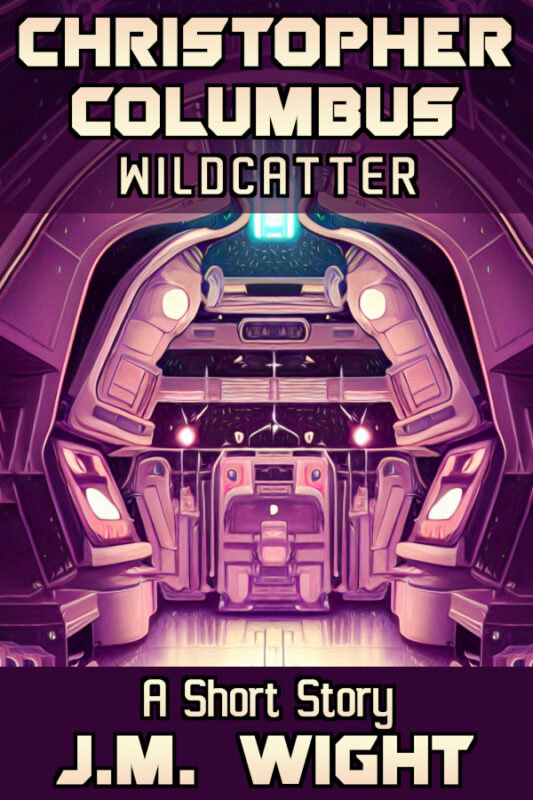
The first draft of “Christopher Columbus, Wildcatter” was honestly a bit of a mess. I think the main problem was that I was trying to cram too much into it, and when you look at all the Mythulu cards that I tried to use, it’s not hard to see how that could be the case.

When I workshopped it through my writing group, they suggested that I break it into two stories, and that’s exactly what I did—except that over the course of rewriting them, both stories took on a life of their own. The first one, “Christopher Columbus, Wildcatter,” more or less followed the original draft up to about the 2/3rds mark, but this story was only loosely based on the second half, and I ended up rewriting most of it from scratch.

I’m really happy with how it turned out, though, and I was even able to keep it under 7k words, which I didn’t think I was going to be able to do. These Christopher Columbus stories definitely follow a formula, though, so I don’t think I’m in danger of finding myself writing a novel when I think I’m writing a short story. Though taken all together, these stories probably will turn into something of a novel, which is fine.

I’d post an excerpt, but this story is out on submission, so I don’t want to void the first publication rights. You’ll just have to bear with me until the first story is out!

Short Story: The Body Tax

This was a fun one to write, even if it did go a little dark at first. The idea for it came from this article about a couple in San Francisco who received an outrageously huge warning fine ($1,500) for parking their car in their own driveway. In the comments to the article, I wrote:

This is why property taxes are evil. If the government can seize your house for non-payment of taxes, was it ever really yours to begin with?

But here’s the thing: every possible answer to that question is terrifying.

If you answer “no, I guess it wasn’t ever really my house,” you’re acknowledging that Mao was right and all power (and with it, ownership) flows from the barrel of a gun.

If you answer “yes, it’s still my own house,” then you have to answer the question: does the state have the right to issue property taxes?

Answer “yes, the state is within its rights,” then congratulations, you’ve just given the Maoist approach to property ownership a veneer of legitimacy and revealed yourself for a boot-licker and a coward.

Answer “no, the state is not within its rights,” then you’ve just acknowledged that you live under a tyrannical regime. It might be a relatively benign regime, but a petty tyrant is still a tyrant, as we saw during the covid lockdowns.

But you’ve still got one more question: do you pay the property taxes, or don’t you?

Answer no, and the state seizes your property and/or throws you in prison.

Answer yes, and you’ve just put yourself in the same position as the landlord who pays protection money to the mob. The only difference is that this mob wears uniforms and has a geographic monopoly on the use of deadly force.

This is why the Roman farmers welcomed the barbarians. Perhaps we should as well.

Later, as I thought on it, I wondered if perhaps I couldn’t write a short story that gets across everything I hate about the property tax. I came up with an idea where the thing that’s being taxed isn’t your property, but your time and your body—literally.

Once a quarter, you are required to voluntarily submit your body to the state, who uses a chip in your brain to turn you into a mindless zombie and exploit you for manual labor. If you have no record and a clean social credit score, it’s typically only for a couple of days. Otherwise, you’ll be a mindless zombie slave of the state for a couple of weeks, or maybe even a couple of months. If you’re a criminal, you may spend more of your life as a zombie slave than as a free man.

To make it even more outrageous and controversial, the story is about a young woman who wakes up from the body tax and finds that she’s pregnant. She was used as a sex worker, and the birth control failed. But the twist is that she’s pro-life, and wants to keep the child. Yay for controversy!

Like I said, it was a really fun story to write. And even though it goes to some pretty dark places, it actually has a happy ending, oddly enough. But the way I’ve currently written it, I think it’s a bit too sappy, so hopefully my writing group can help to smooth that out and make it end on the right note.

This will probably be my last short story for a while. I’ve decided to turn “Christopher Columbus, Wildcatter” into two stories: “Christopher Columbus, Wildcatter” (which I’ve already written) and “Christopher Columbus, Treasure Hunter.” That will probably turn into a wild and zany series of short stories. Also, based on the feedback from my writing group, I will probably turn “The Freedom of Second Chances” into two short stories (one of which will also be very pro-life, oddly enough).

But I may have to come back and write more short stories soon. “Blight of Empire” and “Christopher Columbus, Wildcatter” are both out on submission to the traditional markets, and both of them have received some surprisingly favorable responses from the editors. No contracts yet, but they are on hold for consideration. If they do get picked up, then I’ll have to write a couple more short stories (probably in the Christopher Columbus series) to fill out my publication schedule. Got to keep a solid buffer of short stories to publish.

In the meantime, I’ve resumed work on Children of the Starry Sea and hope to have it done by Thanksgiving. That should be enough time to finish the rough draft and cycle through all the necessary revisions, barring some unforeseen hangups like another major writing block or a difficult life event. But that’s the plan.

That’s all for now. I’ll leave off this post with an excerpt from “The Body Tax,” where Ellie (the protagonist) confronts the terrorist leader who has kidnapped her:

“If the state can throw you into prison—or worse, turn you into a robota—for failure to pay the body tax, was your body ever really yours to begin with? Be careful, because every possible answer to that question is terrifying.”

I sighed heavily. “All right. Suppose I say that you’re right, and it means that I don’t own my own body?”

Mav leaned forward, grinning manically from ear to ear. “Then you’ve just admitted that Mao Tsedong was right, and all power—as well as ownership—flow from the barrel of a gun. But consider the implications if your answer is no—that in spite of the body tax, you do still own your body. Then you have to ask yourself: does the state have the legitimate authority to levy such a tax, or does it not?”

“I don’t know,” I said, growing tired of these rhetorical games.

“If you answer that the state is acting within its authority to issue such a tax, then congratulations, you have just legitimized the Maoist philosophy of property and ownership. Might makes right, the strong always take what is theirs, and possession is the whole of the law. But if you answer contrarywise, that the state does not have legitimate authority to issue the body tax, then why do you pay it? Is it not simply because you fear what the state will do to you if you do not pay? In that case, your position is no different than the man who pays protection money to the mob—only this mob wears uniforms and calls itself the law. In which case, the state is simply the dominant criminal enterprise—or dare I say it, terrorist organization—in the area in which you live. Terrifying, yes?”

“Yes,” I agreed, more to get him to drop the subject than anything else. “It’s terrifying.”

Spring Shorts 2022 #4: The Freedom of Second Chances

I’m really happy with how this short story turned out. It pushes the edge in a lot of interesting ways, with the main character having to choose between duty and honor and doing what is right, and a forced abortion situation that puts the lie to the “women’s right to choose” insanity. It will probably get me blacklisted at a few more magazines, but at this point I really don’t care.

Once again, I used the Mythulu cards to come up with this story. Here are the ones I used:

  • CLONE: Many available forms, including: duplicate, twin, rebirth, alternative life path manifested, time traveler overlap, actor, understudy, etc. Can even mean a second chance or a relapse.
  • ABANDONED: Indicates a severe problem in the environment that prior ihabitants were unable to solve. Draw +1 Habitat.
    • COASTAL: Peaceful threshold where the ocean meets land. Known for caves, karsts, and dunes. Represents unsolvable relationship problems.
  • ERODED: Extensive, exponential deterioration of a foundation due to long-neglected defense.
  • MARRIAGE OF HONOR: A permanent relationship initiated to help someone else avoid shame or discredit.
  • TATTOO: Marked to identify, warn, or remember.
  • GUILTY: Responsible for the worst thing that has happened recently to everyone around them.
  • BODYGUARD: Primary purpose is to protect something else, at any cost.
  • VELVET: Labor-intensive weave of fabric that mimics the soft fur on a young buck’s antlers. Worn to inspire reverence or respect.
  • BLOOD: Represents the energy invested to keep something alive. The only element which affects the soul beyond mortality. Can taint or purify.
  • SLIPPERY: Wants freedom and is hard to hold onto. Often enjoys the chase.
  • BUREAUCRAT: Keeps others in bondage with words. Diverts enemies toward illusions to exhaust them into giving up.
  • CATALYST: Initiates or accelerates a chemical reaction without itself being affected. Gifted at getting things moving.
  • NECRO: Things that were once living, but no longer are. Draw again to decide what died. Draw +1 Habitat or Element.
    • PET: Healthy codependence with a clear heirarchy, usually between members of different species.
  • TORN: Forcibly separated parts, which often continue to exist separately. Indicates a lost privilege or reduction in status. Symbol of anger.
  • SIGIL: Symbols that have power to force or bind. Used in communities to rally groups together.

I’m going to keep going through until I’ve used all of the Mythulu cards in a story at least once. So far, they’ve proven to be an interesting way to not only generate story ideas, but to send my stories off in different and interesting directions. It usually takes me a little while (or sometimes a couple of different draws) to figure out how to fit everything into a coherent story, but I’m getting the hang of it, and the process is actually pretty fun.

As for the spring shorts challenge, it’s Memorial Day today, which means that the challenge is basically over. I only ended up writing four stories, which is a lot less than what I’d hoped to write, but I think these will turn out really well after I rework them a bit, so I’m counting it as a partial success.

For June, I plan to write two more short stories in order to fill up the buffer. My writing group meets once a month, so with two more stories to critique in June, that will give me a buffer of six months by the time July rolls around. I also plan to fix up all four of these spring shorts stories and put them on submission for the next few months, before I publish them as free singles.

I will try to do a new short story each month, in order to keep the buffer at six months, but I may do another short story nanowrimo this year if it turns out that I need more. As far as other WIPs are concerned, though, after I write these next two stories in June, I’m going to go back to novels. My plan right now is to write the first three chapters of The Sword Bearer and Captive of the Falconstar by the fourth of July, then decide whether to go on with one of those or to keep working on Children of the Starry Sea.

Refining my short story strategy

I’ve blogged several times about my short story strategy. To restate it briefly, I’ve found that it works best to self-publish all of my short story singles for free, and to take them down when I have enough of them (+40k words, usually about 10 stories) to bundle into a collection. I earn more this way than I do from selling the singles at 99¢, since all of the free stories help me to sell the collections. Also, I get better engagement from my fans and better discoverability with new readers, since when time is the only cost for reading a story, readers tend to prefer something short.

I’ve also found that with just a little bit of a marketing push, consisting mostly of my newsletter, reddit, free promotion sites, and group promotions such as Book Funnel and Story Origin, I can get my stories out to as many readers as most of the professional and semi-prozines. This was surprising to me, but when I compare my download numbers to the magazine circulation numbers published annually in Locus Magazine, there’s actually not much of a disparity. With a more aggressive marketing push, I can probably exceed those numbers.

Partly because of this, and partly because of how batshit crazy insane woke most of the traditional and award-winning SF&F short story markets have become, I no longer prioritize selling my short stories to the traditional markets, and am just fine self-publishing them first, even if that means forfeiting the couple hundred bucks they might have earned by selling them to a traditional market first. Many of my stories have languished on my hard drive for years while I was pursuing that path, and since time is money, I find it more worthwhile to publish them now. However, I do like to take at least a few months to submit them to the markets that aren’t insanely woke, and occasionally make a sale.

But still, I’ve been struggling lately with some of the finer details of this plan. How often should I publish my short story singles? How long should I keep them on submission before self-publishing them? Should I self-publish all of the stories that will eventually go in the next collection, or should I hold a few back so as to give my readers a reason to buy it? How long should each story be available as a free short story single?

From September 2021 through March 2022, I self-published at least two new titles every month. The purpose of the experiment was to see how this would impact overall sales. My sales did go up quite a bit by the end of this period, but that may have also been because of a few lucky BookBub Featured Deals that I got.

(It was a lot harder to get BBFDs back in 2021, largely because traditional publishing dumped all of the books that were in the production process when covid hit, so there was a lot more competition for spots. But now, it appears that there’s a bit of a drought of trad-published books, since all of the stuff coming out now was acquired during the time when they were still adjusting to all of the pandemic lockdown measures, and weren’t nearly as productive.)

However, the experiment was useful in demonstrating just how difficult it is to maintain such a rigorous self-publishing schedule for a lengthy period of time. I think that at least part of the reason I’m going through something of a creative slump right now is because of how much energy and mental space it took to publish 14 new titles in 7 consecutive months. Perhaps when I was still single, I could have kept up that pace indefinitely, but not with a wife and a baby daughter who deserve my attention. I can still occasionally publish more than one title per month, but not for multiple consecutive months without suffering some detrimental consequences.

At the same time, I do think there’s something to be said for consistency. For a long time in my early career, I would publish only intermittently, sometimes with several months going by before I put out another title. If instead, I’d spent the last ten years putting out a new free short story once a month, in the first week of the month, I’d probably not only have more fans right now, but more loyal fans.

So the plan from now on is to publish a new free short story each month, on the first Saturday of the month, and to publish it under my Joe Vasicek name (stories published under any of my pen names don’t count, even if they’re under an open pen name).

But at the same time, I don’t want to have more than six free short stories out at a time. Six, because 1. that’s how many stories appear at a time on the series carousel on Amazon, at least with a wide screen monitor, and 2. I don’t want to have more than half of the stories I plan to bundle together out at the same time. Since I’m never going to put less than ten stories in a collection, and one of the six free singles is always going to be “Paradox of Choice” (it’s published under a CC BY 4.0 license, so there’s no sense in ever unpublishing it), six is the magic number.

As for whether or not to hold some stories back, so long as no more than half of the stories in the next collection are available as free singles at the same time, I think it’s okay to put them all out there. My loyal fans will have already downloaded all of the stories when they were free, but they’re also my loyal fans, and that seems like a good way to reward their loyalty. Besides, some of them will probably go ahead and buy the collection anyway, both to support me and to get the author’s note.

What about putting stories on submission? How much of a buffer should I keep to ensure that each story gets sent out to all of the markets that I’m willing to sell it to?

I think a buffer of six months is enough. It might require doing some simultaneous submissions, but a lot more markets allow simultaneous submissions nowadays. And with a six month buffer, if I sell a couple of them, I won’t be scrambling to write new stories to fill up the next publishing slot—not unless all six of them sell within a few days of each other.

If a story sells to a traditional market, I’ll probably just put it straight in the next collection when the exclusivity period expires, rather than putting it on the schedule to publish as a free short story single. But it depends on what’s going on at the time, and whether it’s more important to get that collection out or to refill the buffer. I won’t put out the next collection until I have at least six other short stories to fill out the free singles.

So that’s the plan. Maybe it makes sense to you, maybe it’s clear as mud, but the important things are 1. I’m going to put out a new free short story each month on the first Saturday of the month, come hell or high water, and 2. I’m only going to have six free short stories available at a time. And all of the stories in my collections will appear first either as a free short story, or in one of the magazines/anthologies. Sometimes both.

Spring Shorts Story #3: Christopher Columbus, Wildcatter

Wow, has it really been almost three weeks since I finished another short story? I really need to get back into the game. Still, this was a fun one, and I’m really looking forward to turning it into something great.

As with the two previous stories, I used the Mythulu cards to come up with this one. Here’s what I drew:

  • STATISTIC: The face, pile, voice, or sacrifice that gives personal meaning to a problem previously encountered and ignored.
  • EXPLORER: Enchanted by novelty. Energized by challenge. Brave, joyful, and resilient. Worst thing that can happen is for life to become too predictable.
  • GHOST LIMB: When amputees receive nerve signals from non-existant limbs.
  • MINE: Gleaning useful or shiny resources from the earth. Runoff from mines causes ecologically devastating pollution.
  • DEBTOR: One who has received something they cannot yet repay. Leads to either accountability or slvaery. Not free to pursue their own heart until absolved.
  • WATER: Currency of life. Symbolizes connection. Breaks boundaries. Patient, responsive, nurturing.
  • VIBRATING: A gentle resonant sumble. Usually felt when some kind of energy is flowing freely, whether sound, electricity, or emotion.
  • RECOVERING: Half-healed from some kind of significant damage.
  • FUZZY: A soft, comforting layer associated with innocent living things.
  • ADORABLE: Too cute to be taken seriously. Cannot intimidate others, no matter how hard they try. Their boundaries are frequently ignored.
  • LOUD: Showy in a way that interrupts others. Uncomfortably irreverent, noisy, or insistent.
  • HUNGRY: Ravenous and/or so desperately poor that they cannot afford food.
  • TEMPLE: Home of the gods. Point of access where higher powers can be found and petitioned.
  • MONK: Offers total forgiveness. Able to see through deception, especially self-deception. Invites, but never forces.
  • THRESHOLD: A Doorway that leads to a new life. Once you cross a threshold, you cannot return the same.
  • WIND: Represents connection to the unknown. Responsible for storms, pollinations, erosion. Influences evolution, spread of disease, and pollution dispersal.

For most of these elements, I ignored the flavor text altogether. With “statistic,” for example, all I did was start the story off with a random statistic I heard somewhere. No idea if it’s actually true, but hey, it makes for a great story. And with “threshold,” I traded out the card I’d actually drawn with one that worked much better. Also, I’m not entirely sure how “wind” fits in with the rest of it, but it feels right.

I’m going to keep going through with these Mythulu-inspired stories until I’ve used all of the cards. That definitely won’t happen until after Memorial Day, which I’ve marked as the end of this Spring Shorts challenge, but I’ll keep track of which cards I’ve already used and continue to write short stories on the side. With luck, I’ll be able to write at least one more story here, and I may keep it up for a while in the summer just until I’ve filled up the buffer in my publishing schedule. But more about that in a later post.

Spring Shorts Story #2: Prison of Dreams

It’s been a little crazy over here, which is probably why I’ve found it so difficult to write lately. It’s not a function of time so much as brainspace, and I really need to find ways to refill the creative well. But I did manage to finish another story this week, and I think it has real potential. Next step: writing group.

This is another Mythulu-inspired story, and I ended up using more cards for this one than any other story I’ve written. Here are the cards I used:

  • DREAM: A space where anything is possible but nothing lasts. Often inspires discovery and change elsewhere.
  • SCAVENGER: Symbolizes poverty of mind. Lives on the leftovers of greatness because they are unable to create something new.
  • DATA: The element you draw next is the primary means for carrying data. (Draw +1 Element)
    • MACHINE: The messy, awkward, expensive try-fail attempts of those who elevate a race to god-like status.
  • HIBERNATES: Enters a standby state with low power usage to survive extreme conditions. Most animals cannot heal during hibernation.
  • AWAKE: Pulled from sleep, animated, enlightened. A higher state of consciousness.
  • ARTIST: Passionately engaged in a profession that doesn’t pay. Artists are soul-healers and their work transcends political sides.
  • CASTE: Systemized, religiously justified discrimination.
  • LOVER: The other self. True lovers always fill a hole. Stronger together than the sum of the parts.
  • METALLOID: A non-metal element that behaves like metal. Conductive, fusible, and/or ductile. Trouble being categorized or fitting in is usually connected to extraordinary abilities.
  • RUST: Deterioration caused by extended contact with water, air, or acid. Threatens functionality. Difficult to restore.
  • STOCKHOLM SYNDROME: A captive who has developed sympathy for their tormentor.

I was worried at first that this short story would expand into something longer, but I managed to keep the first draft under 5,600 words. If I can get it under 5,000, so much the better. I really do feel like it could benefit from another set of eyes looking at it, so I’m going to hold off on sending it anywhere.

Dean Wesley Smith likes to boast how in the early days of his writing career, he would submit his stories to the editors before he workshopped them in his writing group, and often the things that his writing group criticized were things that the editors loved. But he also says that writers should never revise their work, and that anyone who reads critically needs to “go get help. And I mean real help, professional help, because you have lost all ability to see a story and are trapped by the little black marks on the paper.” In fact, some of the worst writing and publishing advice I have ever heard has come from Dean Wesley Smith, so at this point I feel no compulsion to follow anything he says that doesn’t make sense on its face. But hey, he’s the guy who always tells us to turn off our critical minds, so that’s really just following his advice.

(The crazy thing is that some of the best writing and publishing advice I’ve ever heard has also come from Dean, which makes his bad advice—and it is truly bad—all the more puzzling. How can someone who knows so much also be so wrong? I’ve come to my own conclusions about that, but this is a public blog, so I’ll refrain from posting my thoughts on the subject here.)

In any case, I’ve been really happy with the feedback from my current writing group, so from now on I think I’m going to workshop all of my short stories through there before publishing or submitting them. And I look forward to getting their feedback on this one, because even though I think it turned out pretty good, it needs an extra something and I’m not sure what.

As for the next story, I will try to use just as many cards as I did with this one, since my goal for this writing challenge is to use all of the cards in the deck. But there are a lot of cards, so it’s entirely possible that I won’t end up doing that. Should be fun, though.