U is for Uncertainty

There’s a lot of uncertainty that comes with being a working writer. I’m caught up in the middle of it right now as I get ready to launch a new series, and it’s enough to drive me crazy.

First of all, I’m not sure whether this new series, Sons of the Starfarers, will do well or whether it will flop. It’s a spin-off series from my Star Wanderers books, but the story is very different–much more action/adventure, whereas Star Wanderers is more of a sci-fi romance. I hope that my readers will eat up both of them, but until I actually hit “publish,” there’s no way to know.

The uncertainty is harder for me to deal with because the stakes are a lot higher. When I published Star Wanderers, I did so on a shoestring budget as a sort of side project that I didn’t think would take off. For Sons of the Starfarers, though, I’m going all in, commissioning a cover designer and hiring a professional editor. I don’t anticipate the production costs to go much higher than $300 per book, but there’s going to be nine books at least. Those costs add up rather quickly, and at $2.99 it’s may take a while for these books to earn back their costs.

Still, the stakes could be much higher. I’m a young single guy with no dependents, living on his own in a rather inexpensive part of the United States. My health is good and I’m fortunate enough to have graduated college without any debt. At this stage in my life, I’m in a really good position to take some calculated risks. Pursuing this writing career has definitely been one of them, and so far, it’s paid off about as well as I could have hoped.

But things would be very, very different if I had a wife and kids to take care of. If it’s just me that I have to worry about, I’m perfectly fine with taking risks and committing to projects that may fail spectacularly. But if there were a possibility that someone else could be hurt by my failures–someone I care very much about–I’d be a lot more worried.

At least the nice thing about being an indie writer is that you get your royalty checks like clockwork every month. I can look at my sales reports for March and know exactly how much money is going to come in in June. With legacy publishers, I hear it’s not unusual for royalties and advances to come four or five months late, or to be wildly off when they do come. That’s one uncertainty that I don’t have to worry about because I’m an indie.

Another uncertainty that I don’t have to worry about is that something out of my control in the production process will doom my book. I’m totally in control of my book’s production–if the cover art sucks, I may have to scrounge up a couple hundred bucks to hire a new cover designer, but I can do that without having to worry about my publisher ignoring my concerns. There may be a lot of uncertainty, but as an indie there’s also a lot of flexibility and control.

Uncertainty is a fact of life, whether or not you’re a career writer. Generally, though, where there’s more uncertainty, there’s also more opportunity. When I took the plunge and became a self-published writer, I was under no illusion that my success would be guaranteed–but I also knew that the only limitations would be the ones I put on myself. And personally, I like it that way. The uncertainty might be enough to drive you crazy when you’re staring it in the face, but when the risks pay off, they pay off very well.

Hope for the best, plan for the worst. Follow the path of least regret.

P is for Pricing

One of the most contentious issues among indie writers is how to price our books. With self-publishing, the decision is left up to the author, which can lead to some wacky rationales for pricing. Here are just a few of them:

My book is worth more than a cup of coffee.

This is clearly a rationale that is driven more by emotion than by reason, yet most of us fall into it when we first start out. I know I did. The idea that people would spend more for a cheap hamburger than for a novel that took me months of agony to write was a blow to my ego, one that took me a while to get over. But I’m glad that I did, because this reason is just silly.

Books are so different from hamburgers or ice creams or lattes that comparing them is like comparing apples to oranges–no, like comparing apples to transistor radios. So what if people are willing to spend more for cheap fast food than for your awesome, amazing, life-changing book? That fact is irrelevant, because the two are not analogous. The quicker you can learn to suck it up and disconnect your prices from your ego, the sooner you’ll learn to treat your writing like a career.

I have to price my books low because I’m a new, unknown writer.

This is another rationale you may be tempted to fall into when you’re first starting out. It grows directly out of impostor syndrome–the fear that you’re really just faking it as an author, and that someone is going to call you out on it if you don’t first.

This also comes more from the emotional side than the reasonable side. Believe it or not, there are readers who have never heard of Stephen King, or James Patterson, or J.K. Rowling, or Brandon Sanderson. Tracy Hickman is fond of pointing out that there are whole provinces in China where no one has ever heard his name. Everyone is an unknown to someone, but that doesn’t mean that your fans will love your books any less–or not be willing to pay any more for them.

For most readers, I think price is just one factor of many, and not nearly as crucial a factor as we might think. When I released my first Star Wanderers omnibus, I priced it at $4.99 while the other parts were at $2.99, and priced myself for the fall in revenue as readers abandoned the individual parts for the omnibus. Instead, both the omnibus and the parts sold about equally, even though the omnibus was clearly a better deal. I have no idea why that was, but it told me that not every reader pinches pennies, at least at price points under $5.

If I price my books too low, I will devalue my work.

This rationale grows out of the idea that sometimes, people are more willing to buy something that costs more because the perceived value is higher. Starbucks does this with coffee, and Apple does this with their devices. The idea is that consumers are conditioned to attach a product’s value to its price, or at least to correlate the two.

I used to believe this, but I don’t anymore. Instead, I think this is the kind of thing that authors want to be true, but they want it so badly that they blind themselves to how things actually are. I recently dropped my prices across the board, and I not only found that my sales increased, but that my overall revenue increased as well. In my experience, readers attach value much more to things like blurbs, samples, and cover art than they do to price, and that “devaluing” your work is a great way to hook more readers with a great deal. In fact, I now believe that the best price is the one at which other writers scream at you to stop devaluing your work.

I need to price my book high enough so that I’m earning at least minimum wage.

Books earnings don’t work like wage earnings at all, and confusing the two will cause even more problems than confusing your book with a cup of coffee. Seriously.

Writing isn’t about getting paid for putting in your time, it’s about getting paid for the value that you create. If you create something that the market deems has value, it becomes an income stream that will continue to pay you for years, perhaps even decades. With a wage job, on the other hand, all you get is a paycheck.

The two paradigms are so dissimilar that I don’t even know where to begin in explaining how stupid it is to compare indie writing to a wage job. When you are a self-published writer, you are not an employee–you are the boss. You don’t merely have a job–you own a business. Your earnings don’t come from payroll, they come from revenue. At a certain point, higher prices lead to lower revenue, and sometimes that point puts you below minimum wage. It sounds tough, but that’s just how the market works.

You’re not entitled to a living wage just because you wrote a book. Write more books, write better books, and keep on publishing them until your revenue does exceed minimum wage. Pretty soon, you’ll be shocked to find that you’re still getting paid for work that you did years ago, and still making money even when you take a day, or a week, or a month off. I know that I certainly am.

There are other weird and wacky rationales for book pricing, but those are the biggest ones that come to mind. As for rationales that actually make sense, I can think of only two:

  1. I want to maximize my revenue with my current books.
  2. I want to build a following for my future books.

Once you’ve figured out which one you want to follow, the only rational way to figure out what prices work the best is to experiment with them, even if the experiments make you cringe. You have to be data driven, and not emotionally driven, if you want to find the sweet spot.

For the past few months, I have been experimenting with the prices of my science fiction books, collecting the weekly data from Amazon and watching the trends. Here is what I’ve found:

Perma-free — The best price for attracting new readers, but only if the free book leads directly to another book, such as the next book in the series. This is also the easiest and most effective price point to promote.

$.99 — The best price for building an audience, and the most effective way to create a sales funnel in conjunction with a perma-free book. When I dropped the prices of my Star Wanderers stories to $.99 from $2.99, I saw a marked increase in the percent of readers who went on to buy Part II after buying Part I. I also saw an increase in positive reviews, both on Amazon and Goodreads.

$1.99 — A dead zone. It really is. This price point has all of the drawbacks of $.99 and $2.99, with none of the benefits. When I briefly priced my Star Wanderers books at this price point, sales AND revenue fell below what they were at $.99.

$2.99-$3.99 — The best price points for maximizing revenue, at least in science fiction. At $2.99, you jump from the 35%-40% revenue rate to the much more lucrative 65%-70% rate. And even though $3.99 might seem low, I’ve generally found that I sell enough copies at that price point to more than make up the difference from the increased earnings per sale (but lower sales) at a higher price point.

That said, when the Star Wanderers books were all $2.99, they didn’t sell nearly as well, even with the first book in the series perma-free. And the fall in revenue when I dropped the price to $.99 was not nearly as dramatic as I had expected. Instead of falling to 1/6th of what it had been at $2.99, it fell to more like half, due mostly to increased sales of the omnibuses, which stayed up at $3.99.

$4.99 — I’m not sure what I think of this price point. I priced my Gaia Nova books at $4.95 for years, and never saw many sales come from it. Then again, those books have yet to really take off, so I can’t say with any authority that this price point is really bad. However, I will probably avoid it in the future, except possibly for omnibus works.

$5.99 — Again, I can’t really say that this point is dead, but I can say that my sales were much more sporadic here than they were at $3.99. At best, though, I’d generally earn as much revenue per week at this point as I would at $3.99. At worst, I’d earn nothing.

I can’t say anything about the higher price points because I haven’t experimented with them. As for print books, I don’t sell enough to really be able to say. Again, this is only for science fiction–pricing varies widely from genre to genre, so what works for what I write may not work for what you write. Even within science fiction, I’m sure there are some differences.

At the end of the day, though, I think it’s important to recognize that pricing is an important part of the author-reader relationship. You don’t want your readers to feel like they’re getting screwed–you want them to feel like they’re getting a good deal. For a long time, I think I priced my Star Wanderers books a bit too high, and generated a bit of ill-will among readers for it. Even though I want to earn a living, I hate it when price becomes an obstacle to readers enjoying my books.

As David Gaughran put so astutely in one of his recent posts, value is something that readers attach to a book, whereas price is something that we as self-publishers attach to it. If the price is lower than the value, readers will be satisfied enough to keep coming back for more–and that right there is the key to building a career.

M is for Marketing

Whenever indie writers get together to talk shop, the discussion almost always turns to marketing. How to sell more books and get more readers–that’s what everyone wants to know.

Honestly, I’m not much of a marketing expert. My approach to marketing can basically be summed up in one sentence: “figure it out later.” That is not a good long-term strategy! And yet, in a weird and crazy way, it’s actually kind of worked.

A lot of people say that you have to market your books–that if you don’t spend XXX amount of time on it, or do XXX number of things, or hit XXX goal, that you’re doing it wrong. And because most writers have this weird sort of guilt complex built around how we work, we absorb these “rules” into the list of other things we feel guilty about and beat ourselves up for not doing it–or worse, spend way too much time and effort doing things that aren’t really working, simply because we feel that we have to.

Right from the start, I figured that that mindset was just silly. Good marketing isn’t about following rules, it’s about doing things that bring results. When I first started out, I figured I didn’t have enough books out to warrant any sort of a marketing push. What good is it to bring a bunch of people to your store if the shelves are all empty? So for the first several years, I focused almost entirely on writing more (and better) books.

That’s not to say that I didn’t do any marketing at all. Here are some of the things I’ve tried out so far, and whether I decided to keep them or not:

  • Putting sample chapters at the end of each book — I eventually realized that doing this pads the end of your book and makes readers feel cheated when they hit the 85% mark and realize that the story is over. Instead, I now put a short teaser and a picture with the cover.
  • Exchanging short blurbs with other writers — I tried this out with my friend Kindal Debenham, where we both inserted book teasers for each other at the end of our books. I have no idea whether it’s worked or not, but it’s something I’d do again with my fellow author friends.
  • Making a couple of books permanently free — Free is an awesome way to move a large number of books very quickly, but in order for it to boost the sales of other books, I’ve found that 1) it has to be a complete story, 2) it has to be its own unique story, not just based on an excerpt, and 3) it has to be directly connected with the other books in some way, such as the first book in a linear series. Of course, that’s just my own experience–I’m sure there are people who manage to make it work doing it differently. Free is great because it takes off a lot of the pressure and makes your book a much easier sell, not just for you, but for your fans to share with their friends.
  • Going on blog tour — I did a couple of small blog tours for my first couple of books, and while I didn’t see a huge explosion of sales from it, it’s something that I would do again. In general, though, I think that blog tours are better for retaining existing fans and keeping you fresh in their minds than it is for acquiring new ones.
  • Ending every book with an author’s note — I’ve found that this is a great way to build relationships with your fans–to become more than just another name on a book to them. The fan mail I’ve gotten from readers who mention the notes is great, and I think it’s converted at least a few casual readers into genuine fans. That said, I have gotten some negative feedback too, so these days I try to keep them short and unobtrusive for those who don’t care to read them.
  • Being active on social media — When my Star Wanderers books first really started to take off, I was teaching English in a developing country where my internet access was limited. Consequently, I’m extremely skeptical of any marketing advice as it relates to social media. That said, I think it’s a great way to connect with your fans if it’s a platform that you enjoy. I’m not really keen on Facebook, but I do enjoy Twitter, so that’s a good place to find me (my handle is @onelowerlight).
  • Keeping an email list for new releases — This is one thing that other successful indies seem to encourage the most. My list is only about a hundred strong right now, which is not enough to lead to a huge explosion of sales, but the results are direct and measurable. It’s definitely something that I’ll continue to do.
  • Participating in a group promo with other authors — I’ve had mixed results with this. In 2012, I did one that resulted in several thousand downloads and boosted my Star Wanderers series to a whole new level. But in 2013, I did another one that completely fizzled. In general, if the group promo seems pretty well organized, I’ll participate in it, but if it seems that the organizers don’t really know what they’re doing, I’ll back out.
  • Advertising on a site/newsletter like Bookbub, Kindle Books & Tips, Ereader News Today, etc. — This is something I’ve just started to try out, and the results have been astounding. Some sites will give a much bigger boost than others, but the ones that do work can work extremely well. Of course, I’ve only tried this with Star Wanderers: Outworlder (Part I), which is free–I’m not sure how effective it would be at moving paid books.

If there’s one thing that I’ve learned, it’s that marketing doesn’t have to feel sleazy. In fact, when you’re doing it right, it almost never does. For every book that you write, there is someone out there who would love to read it–good marketing is about connecting those people with your books, helping them grow into their natural audience.

Marketing is definitely important, but it’s not something that you have to guilt yourself over or treat like a chore. In fact, it can actually be a lot of fun! I’ve certainly made my own fair share of mistakes, but I’m learning from them and trying out new things. So long as you base your marketing decisions off of measurable results and not a particular dogmatic position or someone else’s opinion, you’ll be in good shape–even if your plan is to figure it out later.

New STAR WANDERERS cover art!

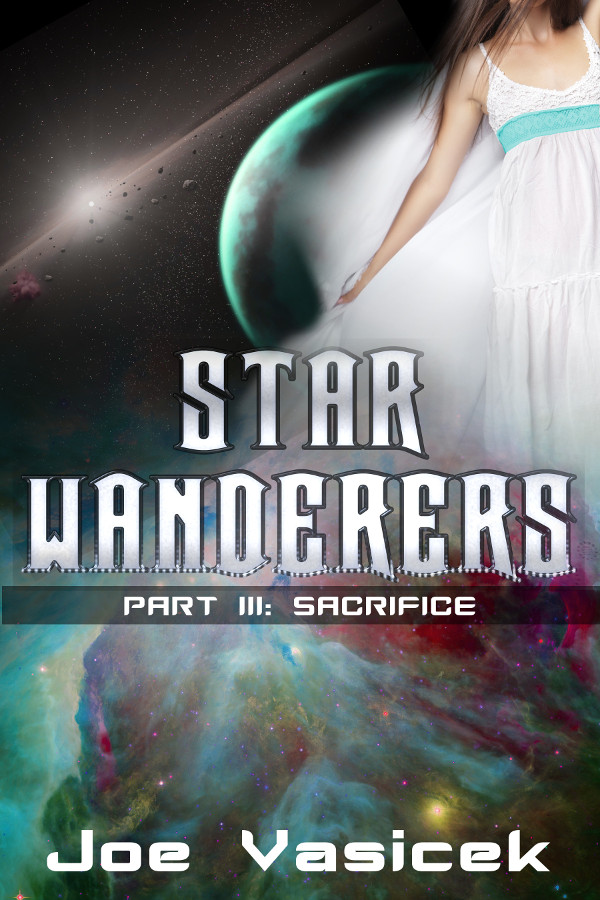
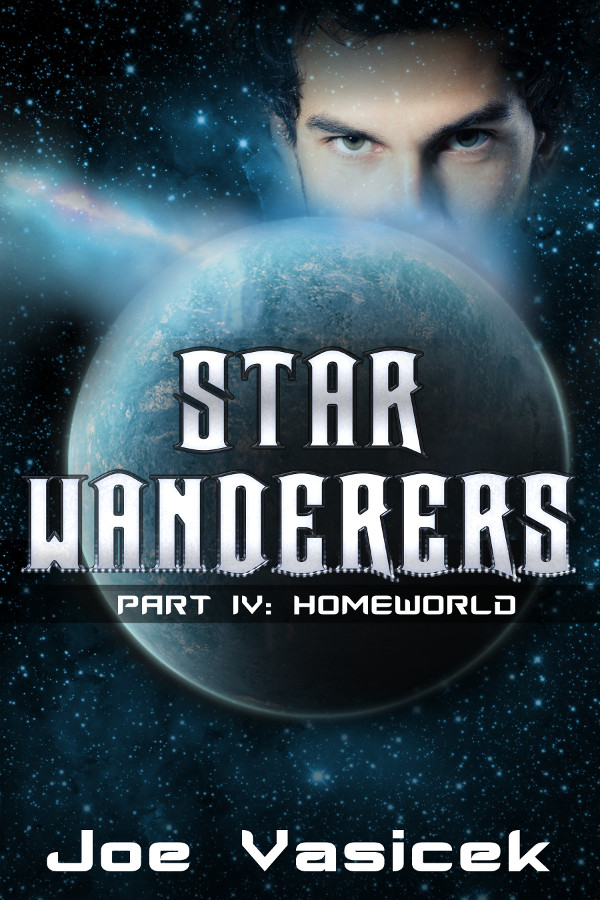
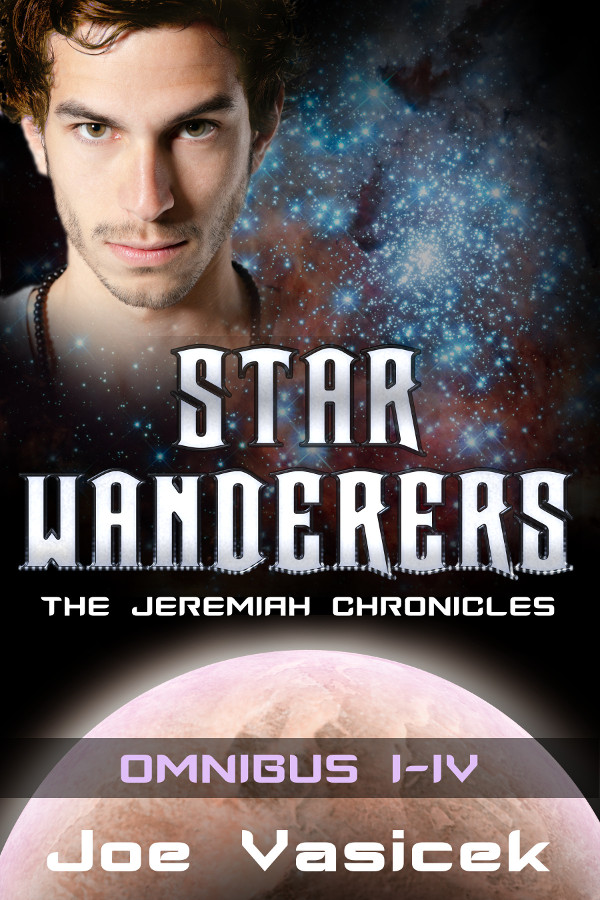
A couple of weeks ago, I mentioned that I was getting some new cover art for the Star Wanderers books. Well, the art for the first half of the series is in–check it out!

SW-II (cover)SW-III (cover)SW-IV (cover)SW I-IV (cover)

A big thanks to Libbie Hawker, who did the cover art. I’m really pleased with how they’ve come out so far. We’ve been working on the proofs for the next four books, and they’re going to be really awesome as well!

I’ll reformat the ebooks and upload them to Amazon and the other retailers tomorrow. It’s probably going to take all day, but they should be up soon.

In other news, I finished the first draft of Comrades in Hope! The final word count clocked in at a little over 41,000, pushing it from novella-length into short novel territory. I’m fairly pleased with how it turned out, though it probably needs some work before it’s ready to go out. If all goes well, I’ll be publishing it before the end of June–a tight schedule, to be sure, but not an impossible one to keep. I’m totally immersed in the Sons of the Starfarers series right now, so it’s going to be really awesome when the first three books launch!

That’s just about it. A big thanks to everyone who picked up a copy of Star Wanderers: Outworlder on Amazon today! The book hit #203 in the Free Kindle Store, due in large part to an ad on Kindle Books and Tips. Needless to say, I am really shocked.

Take care, and thanks for reading!

G is for Genre

Are there certain genres that indie writers should write in if they want to be successful? Are there other genres that they should avoid?

This is one of those pieces of common wisdom that really irks me, and not just because I write in a genre (science fiction) that isn’t as mainstream or popular as others. I think it’s a myth that you have to write in a “hot” genre in order to have success, especially if you’re an indie author. Here’s why:

1. You don’t have to be a bestseller to be an indie success.

This is something that Hugh Howie repeats all the time: that the true success stories in self-publishing aren’t the mega bestsellers like him or Bella Andre or H.M. Ward or Amanda Hocking, but the thousands and thousands of little guys who are carving out a comfortable space for themselves in this new world of publishing. You don’t have to be a huge bestseller to make a living as an indie writer–you can do quite well for yourself with a small but dedicated fan base.

I’m sure there are some people whose personal definition of success includes the kind of fame and recognition that comes along with being a bestseller. That’s fine–everyone has to define what ‘success’ means for themselves, based on their own personal goals and dreams. But being a bestseller is definitely not the baseline, at least for an indie writer.

2. Ebooks and epublishing have opened exciting new opportunities for niche genres.

Before epublishing, you needed a fairly extensive infrastructure to bring a book to market. Besides designing the book, you had to pay for printing, pay for shipping, pay for distribution and marketing to bookstores, pay for returns and remainders … the list goes on and on. Consequently, it was harder for niche genres to really get a foothold.

With ebooks, the economics of publishing have been flipped on their head. The marginal cost of producing another ebook is zero–digital content can be copied endlessly at virtually no cost. Shipping costs are also zero, and global distribution is as easy as uploading the book to Amazon’s servers–again, at zero cost.

Because of this, there’s room now for niche genres with much smaller readerships to actually turn a profit. And that’s what we’re seeing–an explosion of all sorts of niche, specialty, and experimental new genres. Books no longer have to be just like the Latest Big Thing (only different) in order to earn back their costs. There’s room for everyone in the new world of publishing.

3. It’s better to write what you love than to write what you think will sell.

The two aren’t always mutually exclusive, of course. Maybe you love a variety of genres, so that you’d be equally satisfied writing romance as you would writing something more niche like Amish vampire steampunk. But if all you’re doing is chasing the money, chances are that your heart won’t be in it nearly as much as it would if you were writing what you love. And if your heart isn’t in it, you won’t be able to bring that creative passion to the project that readers really love.

When I wrote Star Wanderers, I was following my passion. It was a science fiction story unlike any I’d either written or read, but I followed it where it took me without worrying whether it would sell. The genre description that best fits that series would probably be romantic frontier space opera–definitely a niche. But because I was passionate about it, the books were able to find readers who share that passion and touch them in ways that other books hadn’t. And guess what? Those are my best selling books.

There is a business side to publishing, but there is also an artistic side. You’ve got to be true to both. If your inner artist thrives on the challenge of chasing the market, great–go for it. But if doing that feels like you’re being unfaithful to your creative vision, you’ll probably write a better book if you strive to be authentic. And ultimately, I think that authenticity has a lot more to do with a book’s success than the genre it’s written in.

Readers are far, far more diverse than we give them credit. So long as you can write well and tell a good story, you can find success no matter which genre you write in.

D is for Discoverability

If there’s one thing that indie writers like to talk about when they talk shop, it’s “discoverability”–how to make their books stand out so that readers can discover them. You don’t have to spend much time on author blogs or writing forums to find some pretty intense discussions about this topic. For those of us trying to make a living at this gig, it’s something we constantly obsess about.

So what’s the best way to boost your discoverability? What works, and what doesn’t? If I had the answers to those questions, I could probably make a lot more money writing “how-to” books! However, here are a couple of books I’ve found that do an excellent job answering this question.

The Secrets to Ebook Publishing Success is an excellent resource for ebook marketing ideas that won’t cost you an arm and a leg. The book won’t cost you, either–it’s available on Smashwords for free. The author, Mark Coker, is the founder and CEO of Smashwords, and he wrote this book to help Smashwords authors succeed. Definitely worth giving a read.

Let’s Get Visible is the other book on discoverability that I’d recommend. For this book, David Gaughran collaborated with a number of other indie writers from KBoards to figure out the best ways to work with Amazon’s algorithms. It’s an excellent book that explains some of the best practices for free giveaways, price pulsing, and choosing keywords and categories.

Those are the two books I’d recommend. There are other good ones I’m sure, but there are also a lot of scammy marketing books that are just out there to take your money. These ones aren’t scam books at all. Without getting any benefit from the authors of these books for saying it, I can vouch from experience that their advice is pretty solid.

So what’s worked for me personally? I can point to a few things:

  • Writing in a series. If your books are grouped together by series, then readers who enjoy one of those books are more likely to try out another. They’re less likely to read one book and forget about it because all of the books are connected. In this way, each of your books helps readers to discover the others.
  • Give some books away. Readers love free books. They’re a lot more likely to try out a book by an unknown writer if it’s free than if it costs any money at all–even as little as $.99. I know a lot of writers don’t like giving away their books for free, but if you’ve got ten other books that readers go on to buy after reading the first one, it’s worth a lot more than having eleven full-price books that no one ever buys.
  • Make the first book in a series permanently free. That’s what I did for Star Wanderers, and the strategy has worked extremely well. Before that, I had a couple of short stories and non-series books that were perma-free, but none of them gave my other books much traction. But with Star Wanderers, it’s easy to see that the first book leads to the second book, the second book leads to the third book, etc.
  • Don’t let your price become an obstacle to new readers. The principle behind perma-free + series that makes it work is the sales funnel, where you try to spread some of your books as widely as you can in order to funnel people to your other books. But if your first book is free and all the other books are priced so high that price becomes an obstacle, readers are bound to get irked and drop out. I’ll say more about this in P is for Pricing, but one thing I’ve learned is that it really helps if you’ve got a lot of low-priced books that readers can move on to after picking up your free stuff and before moving on to the higher priced stuff.
  • Write and publish lots of books. It wasn’t until I had maybe fifteen books out that I started to notice that my entire catalog was working together. When my Star Wanderers books sold well, I saw more sales of my other books too. When you have enough books out, they work together to sell each other. I wouldn’t be surprised to find that on average, one person with fifteen books out sells more than fifteen people with one book each.
  • Book blurb, cover, metadata. That’s the trifecta–if you don’t hit all three of those, nothing else you do may ultimately matter.

And of course, there’s the most important thing of all: write a damn good book. If your book sucks, all the discoverability in the world isn’t going to save it.

When you’re an indie writer, it often feels as if publishing a book is like tossing a message in a bottle out into a churning sea. You have no idea where your book is going to end up, and the marketplace is as wide and as menacing as a stormy ocean. Lots of books sink to the bottom of that ocean, where no one ever finds them. But plenty of other books stay afloat, selling a copy here or a copy there–just enough to stay up at the surface. And eventually, the winds of the marketplace cast it up on a distant shore, where it’s discovered by a fan.

But here, the analogy breaks down. Because unlike a beachcomber who finds a message in a bottle, a fan doesn’t have to wait for your next book to come to them–they can go out and find them directly. So the more books you have out there, the greater the likelihood that they’ll eventually be discovered. And if they’re out in the marketplace for long enough–out where the potential fans can discover them–then eventually they will grow into their natural audience.

That’s been my experience, at least. There are a lot of other things that I’m experimenting with now, but these are the things that I know work for sure–at least for me.

C is for Cover Art

They say not to judge a book by its cover, but the truth is we all do. In fact, the cover probably sells a book more than the book blurb does. Whether in print or in digital format, it’s the first part of the book that readers see, and often makes the difference between “meh” and “hmm, what is this? I want to find out more!”

So how do you do cover art when you’re an indie? Is it better to make your own, or hire a designer? If you do hire a designer, how much can you expect to pay?

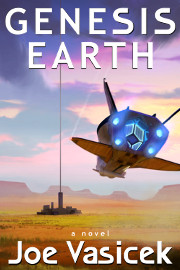
Honestly, when I started out, I think I invested a little too much into my covers. The first novel I published was Genesis Earth:

thumb (Genesis Earth)The cover art is gorgeous, and from an artistic view I’m very, very happy with it, but it took a long time for the book to earn that money back–far longer than the expense really justified. I would love it if all of my books could have awesome covers like this, but when you’re first starting, not every project justifies that sort of expense.

The thing to keep in mind when you do covers as an indie is that you can always change them. When you first start out and you don’t know how well a book is going to do, there’s nothing wrong with doing it on a shoestring budget and reinvesting those earnings later. There is a bit of a feedback loop, where a bad cover will hold a book back, but it’s not that hard to make a cover that’s not great, but acceptable.

Case in point, check out the first cover I did for Star Wanderers: Outworlder (Part I):

Star Wanderers I (thumb)The cost for this art was $0. I made it myself, using freeware fonts and public domain space art from NASA. It’s not nearly as gorgeous as the cover for Genesis Earth, but it says “space!” in a sci-fi sort of way, and that’s what I was going for. And even with a mediocre cover, this was the book that really started to take off.

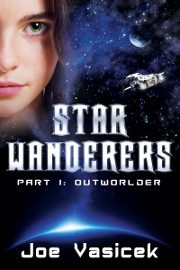
Of course, as soon as those books were earning enough, I made plans to reinvest that money in proper cover art. Here is the new cover for Outworlder:

SW-I alt (thumb)I’m working with a cover designer right now to redo all the other ones in the series along a similar vein. In the next couple of weeks, expect to see some cover reveals!

In general, I’ve found that there are three approaches to cover art: doing it completely yourself, hiring a cover designer to make an cover from stock art, and hiring an illustrator to paint an original illustration. The last is probably the most expensive, though it does depend on the illustrator–you can find good illustrators on sites like Deviantart whose rates are quite reasonable. But the quality varies a lot.

Besides the art itself, a key part of the cover is the typography. One thing I’ve learned from working with cover designers is that they can do amazing things just with the fonts and font effects for your title. That’s probably the biggest benefit of going with a cover designer as opposed to an illustrator.

In fact, if you can afford to commission an original illustration, you can probably find a cover designer who will give you a deal on the typography. It is something you can learn yourself, but the difference between you and a cover designer is often the difference between acceptable and awesome.

Like anything with self-publishing, cover design is something you can learn–perhaps something you can excel at–but you probably can’t excel at that and everything else at the same time. What I’ve found is that I’m okay at doing my own cover art, but not awesome. From here on out, I expect I’ll be hiring cover designers.

At the same time, my books are earning enough that I can justify that expense. If I were first starting out, I’d probably DIY it or barter with other writers who do their own covers. A cover isn’t static–you can always change it later.

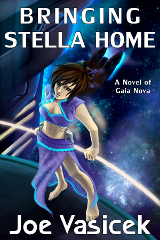
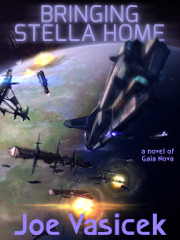
Case in point, check out the covers for Bringing Stella Home:

thumb (Bringing Stella Home)thumb 2 (Bringing Stella Home)

I got a good deal on the illustration for the first cover, but frankly, it’s not that great. The second cover was more expensive, but I’m much happier with it. What I’m probably going to do next is find a cover designer who can redo the title/author typography, since I did that myself and it kind of shows.

So that’s been my experience with cover art. It’s important to get it right, but you do have to work to find the best solution that works for your budget. Fortunately, when you’re an indie, your cover is something you can always upgrade.

B is for Book Blurb

Perhaps the most important part of your book’s sales page, on Amazon or any other retailer, is the book description. More than anything else (except perhaps the cover), this is what sells your book. If done right, it will interest the reader enough to download a sample or buy the book outright. If not, they probably won’t even finish reading it before they click to the next page.

So how do you write a knockout book blurb? Honestly, I wish I knew. I don’t think mine are bad, but I’m sure there’s room for improvement, and if they seem really awesome to me now it’s probably because my blurb writing skills haven’t risen to the next level. I tend to tinker with my blurbs until I get sick of them, then I do all I can to avoid looking at them until it’s time for a revamp.

That said, it’s not like you’re writing a novel. Just the opposite, in fact. If you try to cram your whole book in the blurb, chances are that you’re doing it wrong. You’re not trying to summarize the story or convey information, you’re trying to spark enough interest to convince the reader to try out your book. The hardest part is figuring out what to mention and what to keep out. Once you know that, the rest is fairly easy–fun, even.

There’s a video I watch whenever I have a blurb to write, because it helps me to channel the kind of voice I’m looking for. It features the top five voice-over artists in the United States riding a limo together, and it’s both hilarious and awesome. Watch!

For some reason, that video always kicks the blurb-writing part of my brain into high gear. But that makes sense–a good book blurb is a lot like a good movie trailer. Both of them spark a compelling interest in the reader/viewer, and neither of them gets bogged down in too many details (or worse, spoilers) about the book/movie.

At LTUE 2013, Howard Tayler gave a presentation in which he listed four key elements of a book blurb. They are:

  1. Inciting Incident
  2. Character Action
  3. Conflict
  4. Hook

Whenever I write a book blurb, I try to keep those four things in mind. As an example, here’s the blurb to Star Wanderers: Outworlder (Part I):

HE WANDERS THE STARS IN SEARCH OF A HOME. INSTEAD, HE GOT A GIRL WITHOUT ONE.

When Jeremiah arrived at Megiddo Station, all he wanted was to make some trades and resupply his starship.  He never thought he’d come away with a wife.

Before he knows it, he’s back on his ship, alone with his accidental bride. Since neither of them speak the same language, he has no way to tell her that there’s been a terrible mistake. And because of the deadly famine ravaging her home, there’s no going back.  She’s entirely at his mercy, and that terrifies him more than anything.

Jeremiah isn’t ready to take responsibility for anyone. He’s a star wanderer, roaming the Outworld frontier in search of his fortune. Someday he’ll settle down, but for now, he just wants to drop the girl off at the next port and move on.

As he soon finds out though, she has other plans.

The inciting incident is the accidental marriage which unexpectedly brings the girl into Jeremiah’s life. That introduces the conflict–that there’s a girl on Jeremiah’s space ship, and he doesn’t know what to do about her. The character action is the second to last paragraph, which describes him as a star wanderer out to seek his fortune and not to settle down. And the last part–the zinger at the end about the girl having other plans–is the hook.

It’s not a formula though, and you can’t approach it as such. There’s an art to it that doesn’t always break down so easily. The good news, though, is that it’s a skill that can be learned–a writing skill. If you have the chops to write a novel, then with focused practice you can learn how to write a knockout book blurb, just like you can learn how to write a blog post, or a tweet, or any other piece of writing.

In my opinion, writing a book blurb is a critical skill for any indie writer. No one is going to be more excited about your book than you are, and since that’s such a critical part of writing a good blurb (it’s hard to get people excited about something that you yourself aren’t excited about), it isn’t something you can easily contract out. But since you’re already a writer, it’s definitely something that you can do.

New book coming soon!

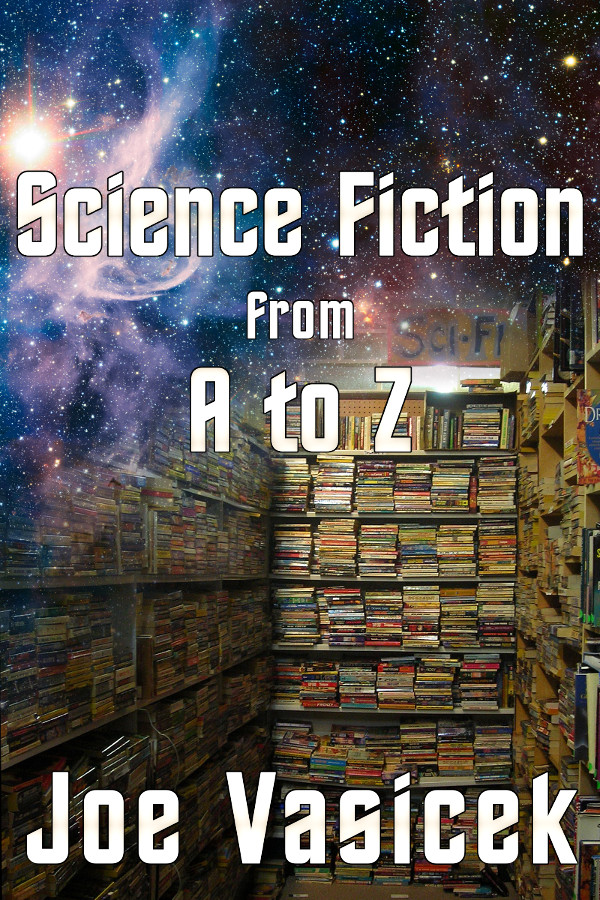
So the A to Z blogging challenge is coming up again this year, and to get ready for it I’ve decided to put together my posts from last year into an ebook! I’ll be releasing it at the end of this week, probably around Friday or so. Here’s the cover:

SFA-Z (cover)

The space art is a picture of the Carina Nebula, taken by the ESO VLT (credit: ESO/T. Preibisch). The bookstore image is one that I took myself, of Pioneer Book, one of my favorite places in Provo. I’ve spent many, many hours happily browsing their Sci-Fi section. 😀

The book is basically an exploration of some of my favorite Sci-Fi genre tropes, starting with A is for Alien and ending with Z is for Zenith. This is basically a blog-to-book sort of thing, like what I did with Journey to Jordan. The original blog posts are still up, though, so if you want to read through them online, you can find them here.

In the meantime, I’m hard at work on Sons of the Starfarers and should have Brothers in Exile ready to publish in May. If all goes well, I’ll publish them in six week intervals, so you’ll get Comrades in Hope at the end of June and Strangers in Flight at the beginning of August, with the first omnibus sometime in September. That’s the plan, anyway–we’ll see how well it holds.

I’m also working to get new cover art for all the Star Wanderers books. I’ve found someone to work on them, and she says she can get them done quickly, so we’ll see how that goes. The print versions for the omnibuses may take a bit longer, but they should be out by the summer at the latest.

That’s just about it. Better get back to prepping Science Fiction from A to Z for publication–lots of work left to do!