Trope Tuesday: Wicked Cultured

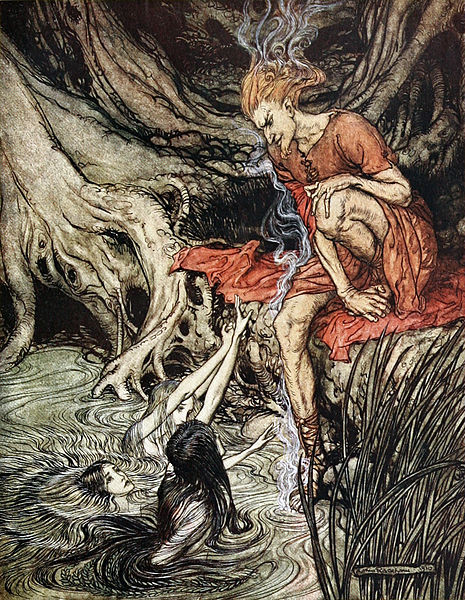
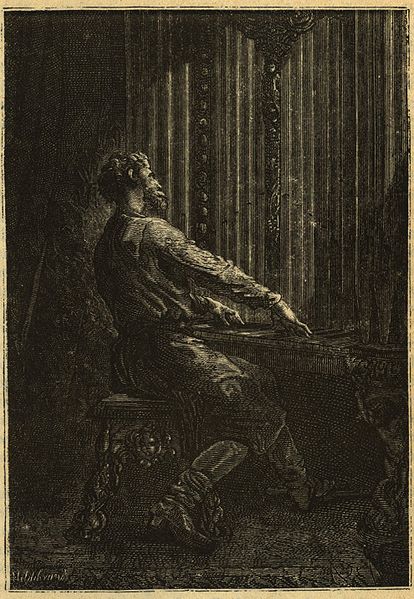
What Captain Nemo does in his spare time, when he isn’t terrorizing the world of maritime shipping.

This week’s Trope Tuesday series post is by request from a reader.

Evil villains aren’t always grotesque, brutish, foaming-at-the-mouth barbarians.  Quite often, they are wealthy and aristocratic, with exquisitely refined tastes and an extraordinary degree of eloquence.  It isn’t just that evil is cool (though it may overlap with this), or that the barbarians have finally developed a fashion sense–it’s that the more refined and cultured a character is, the more evil they are as well.

This happens a lot more often than you might think.  Magneto (X-men), Lucius Malfoy (Harry Potter), Hannibal Lector (Silence of the Lambs), Ganondorf (Zelda), Captain Nemo (20,000 Leagues Under the Sea), the Godfather (the Godfather), Kane (Command & Conquer), President Shinra (Final Fantasy VII), the Merovingian (The Matrix Reloaded), Grand Admiral Thrawn (Star Wars: Heir to the Empire and The Thrawn Trilogy), Khan (Star Trek II: The Wrath of Khan), Vetinari (Discworld), Captain Hook (Peter Pan), the Phantom (Phantom of the Opera) and every James Bond villain ever all fall squarely into this trope.

So why does this happen?  I can think of a few reasons, though I’m sure there are others.

First, it hearkens back to the age-old romanticism vs. enlightenment debate.  This is especially true of the fantasy genre, which tends to hearken back to a medieval golden age before the modern, industrial world, when life was simpler and people tended to live in picturesque rural villages instead of dense urban cities.  If your hero is a farmboy in a world of knights and wizards, or a barbarian hero who strikes first and asks questions never, chances are that anyone with a sense of refinement or culture is going to find themselves on the wrong side of the story.

Second, it hearkens back to the mad scientist and the cautionary tale of science gone horribly wrong.  As you might expect, this is much more common in science fiction, especially the classic dystopian stuff. The more scientific and enlightened a character, the more cultured they tend to be as well.  In stories where science is bad, then, it should come as no surprise that these characters are also evil.

Another good reason to use this trope is to indicate that the villains are members of the Empire.  Culture tends to happen when people of diverse talents and backgrounds are brought together, and the best way to bring them together is through conquest.  Just look at the Romans.  Almost every empire throughout history, no matter how brutal, has always produced an increase in some degree of culture.  Even the Mongols gave way to Kublai Khan and the Silk Road.  So in stories where the Evil Empire comes into play, having your villains be cultured can be a good way to show that.

The biggest reason for this trope, though, is that it makes the villains more complex and interesting.  If being evil always meant living in a cave and eating raw meat, then every story would read like a badly written RPG, where the heroes keep grinding until all their stats are at 9999 or higher.  And honestly, you have to admit that there’s something a little bit eerie about that guy who gets totally absorbed when playing the organ.

I haven’t played with this trope in a major way yet, but it does come into play a bit in Desert Stars, though only in a minor way.  In Bringing Stella Home and Heart of the Nebula (forthcoming), Lars is pretty much the opposite of this (the Gentleman and a Scholar trope, though he did drop out of college).  Probably the best example would be Heloise from Star Wanderers: Fidelity (Part II).  She’s wealthy, fashionable, and decorates her apartment with wallscreen monitors that cycle through artistic photographs of deep space nebulae.  She’s also one of the more dangerous female characters I think I’ve written.  Who knows–maybe she’ll show up in another story before too long.

Back in Georgia

Hey, just a quick post to let you guys know how I’m doing.

I made it out to the village yesterday, met my new host family and got more or less settled.  Due to some mixups, I ended up in Sairme (WAY up in the mountains) before making it down to Baghdati, but everything worked out well and I got to see some beautiful Georgian scenery at the same time.

My new host family is great!  It’s a 35 year old guy and his mom, living on a farm in a village with all their uncles and cousins and stuff pretty close by.  The guy, Dato, is way cool–he does IT at the school, farms his mom’s place, and otherwise just hangs out in the village.  We played nardi last night–I actually beat him on the first go, then he slaughtered me twice.  Then his aunt played him and things got really entertaining.

The house is WAY different from the apartment where I was living before.  Much more spacious.  It’s a couple hundred years old, though, so the wires are attached on the outsides of the walls and stuff.  We’ve also got chickens all over the place.  I’ll be sure to post some pictures, probably in a week or two.

I think I’ve hit it off pretty well with the family.  They’re impressed that I already know a bit of Kartuli, especially the aunt.  Things got a little tense when I turned down the wine and told them I can’t drink because my religion forbids it, but I don’t think it will be too much of a problem (though this being Georgia, you never know).

The mom is an awesome cook.  This morning, she made one of the best breakfasts I’ve ever had in my life.  The house is old but comfortable, I’ve got all the space and privacy I need, there’s a lot more nature out here in the village–I think I’m really going to like it here.  What’s more, Kutaisi is only a short half-hour marshrutka ride away.

After I’m through here, I’ll walk up to my old host family’s place and drop off some gifts: specifically, some RAM for their broken down computer.  Then I’ll head over to my old school, say hi to my old coteachers, run downtown to pick some stuff up, then head back out to the village.  Tomorrow, I’ll meet up with a friend of mine to get some stuff for camping, then head out the next day to go backpacking in Borjomi or Tusheti.  That’s the plan at least.

Oh, and about the trip to Ani: I tried to get down to Kars, but couldn’t find a bus.  I ended up in Akhaltsikhe, the Georgian border town, but the only way out was to catch a taxi to the crossing ($$$), catch a taxi on the other side to the Turkish town on the other side, and from there to catch a bus down to Kars (about 140 km).  I was traveling alone, didn’t know any Turkish, it was about mid-afternoon and I didn’t have a backup plan, so I ended up aborting and headed back to Tbilisi.

Oh well–it happens.  I’ll try again, though, probably in a few weeks.  This time, we’ll meet up in Georgia, where I actually know how to  get around.

In other news, I bought three author copies each of Genesis Earth, Bringing Stella Home, and Desert Stars before I left the US.  They’re signed and numbered, and if you want to buy one of them, just shoot me an email (joseph [dot] vasicek [at] gmail [dot] com).  The #1 copies are already sold, but the #2 and #3 copies of each book are still available.  You can buy them from me at the current Amazon paperback price, and I’ll have my parents ship them out to you.

That’s all for now.  Take care, and I’ll see you guys around!

Trope Tuesday: The Vamp

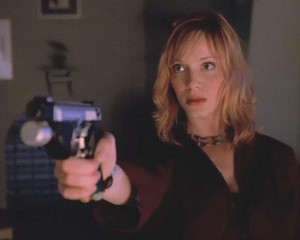
Also known as the temptress or the seductress, the vamp is one of the more dangerous characters the hero meets on his journey.  A devastating beauty who is as evil as she is sexy, she uses her feminine wiles to exploit men’s flaws to her own advantage.  If the hero falls for her, he will be destroyed.

Unlike the femme fatale, her more neutral counterpart, she is completely evil and cannot be redeemed.  This is because her role in the story demands it.  She generally makes her first appearance in the initiation phase of the hero’s journey, after the hero sets out on the adventure but before he masters the unfamiliar world.  In many cases, she represents a leave your quest test or a secret test of character.

Joseph Campbell thought this character was so important that he dedicated an entire phase of the monomyth to her:

When it suddenly dawns on us…that everything we think or do is necessarily tainted with the odor of the flesh, then, not uncommonly, there is experienced a moment of revulsion: life, the acts of life, the organs of life, woman in particular as the great symbol of life, become intolerable to the pure, the pure, pure soul. The seeker of the life beyond life must press beyond (the woman), surpass the temptations of her call, and soar to the immaculate ether beyond.

As such, the vamp represents the more carnal elements of the hero’s nature, which he must reject or overcome in order to be transformed.  Confronting her is an important part of the story because it gives him an opportunity to recognize his flaws and master them.  It isn’t easy, though–the vamp is an extremely deceptive character, and often plays tricks like the wounded gazelle gambit to confuse the hero and gain his sympathy.

While often a female character, there are a few male examples of this character.  Mr. Wickham from Pride and Prejudice is one of the more obvious ones.  Basically, the vamp can be of any gender, so long as s/he is someone the main character finds sexually enticing.  Because of the traditionally male-centric nature of the hero’s journey, however, she’s almost always female.

Also, I think it’s important to add that it’s not just the vamp’s sexiness that makes her evil, it’s the way that she uses it to manipulate and undermine the hero.  If she starts out evil but has a heel-face turn later in the story, she doesn’t fulfill this trope.  Likewise, if falling for her wouldn’t make the hero fail, then she doesn’t fulfill the trope either.

I’ve played with this trope a little bit in my own work, but not in a big way yet.  Heloise from Star Wanderers: Fidelity (Part II) probably fits this trope the best, though her appearance is fairly brief.  Tamu from Bringing Stella Home might appear superficially to be one, but she’s actually more of a fair weather mentor for Stella (and has good reasons for choosing the life of a Hameji consort).  And of course, Mira from Desert Stars doesn’t fit this trope at all, seeing how much she changes by the end.

Trope Tuesday: The Trickster

After the hero crosses the threshold of adventure and finally sets out on his journey, he passes through a long phase that Campbell called “the road of trials.” This is often where the meat of the story happens, but it doesn’t fit squarely into any one trope because of all the possible directions where the story can go.  For that reason, I think it’s more useful to think in terms of who the hero meets, not what the hero does.

The Trickster is often (though not always) one of the first characters the hero encounters upon entering the lands of adventure.  He is almost always male, though sometimes he can change shapes and even sexes (for example, Loki, who turned into a mare and conceived Odin’s horse).  His role in the story, though, can range from mentor (Merlin, Yoda, Mary Poppins) to bad guy (the Joker, the Homonculi, Grand Admiral Thrawn) to the hero himself (Prometheus, Bugs Bunny, Bilbo Baggins).

Obviously, the Trickster is a very slippery character.  You can tell who he is, though, by whether he meets these two basic criteria:

  • completely unpredictable
  • not beholden to any authority

In this way, the Trickster often stands in stark contrast to the people of the ordinary world that the hero left behind.  Which makes sense–having just crossed the threshold of adventure, the hero needs to leave his old mentality behind and be exposed to new experiences and ideas.  For that reason, the Trickster’s antics often serve to teach the hero an Aesop, helping him to learn and grow.

That doesn’t mean that the Trickser is harmless.  Quite the contrary–he’s a dirty, lying cheat, capable of taking any disguise and throwing the victims of his pranks into any moral quandary just for laughs.  He’s not necessarily a jerkass–he may even be more of an ally than an enemy–but he definitely is not to be trusted.

Like most things associated with the hero’s journey, the amazing thing is just how prevalent this trope is.  It’s even cropped up in some of my own work.  For example, in Bringing Stella Home, Ilya Ayvazyan is a trickster of the playful hacker variety.  In Star Wanderers, Samson is a blithe spirit who doesn’t necessarily have Jeremiah’s best interests at heart…though his girlfriend (the one at Alpha Oriana) is a lot more sinister.  I’m not sure if anyone fits this trope in Desert Stars, but you could probably make a case for Lena or Amina–or better yet, Ibrahim.

Of all the major character archetypes, though, the Trickster is the one I feel like I know the least about.  If you have anything else to add, I would like to hear it!

Alright, hit me up…

I’m just about ready to release Star Wanderers: Part II–the story’s been revised and proofread, the cover art is finished, the formatting is ready to go–all that’s left is figuring out the book blurb.  Which is where I could use your help!

Here’s what I’ve got so far.  What do you think?

IS FIDELITY WORTH THE PRICE OF FREEDOM? CAN LOVE TAKE ROOT BEYOND THE STARS?

Oriana Station: a bustling frontier settlement between the Outworlds and the Coreward Stars. A popular port-of-call for free traders and independent starfarers alike—and the latest target in the aggressively expansionist plans of the Gaian Empire.

Life was simple for Jeremiah and Noemi before they arrived. Though neither of them speak the same language, they’ve reached an understanding of each other that goes beyond words. But when the colonial authorities make them into second-class citizens of a fractured empire, even that might not be enough.

Their newfound friends in the immigrant community can only do so much. With Noemi and her people depending on him, Jeremiah must find a way back to the Outworlds—before they lose everything that they came for.

I’m going with the family on vacation at the end of the week, but if all goes well, I should have it released before then. Newsletter subscribers will be able to download it for free on Smashwords for the first two weeks, and I’ll make Part I available for free while pricing Part II at $2.99.  When Part III comes out, I’ll drop the price to $.99.

In other news, I typeset and formatted Bringing Stella Home for CreateSpace this morning, and ordered the proof just a few hours ago.  With luck, it should come in the mail by the end of the week.  This is the third book I’m releasing in print, and the last one for the rest of this year.  I’ll be sure to post pics and links for where to get it once it’s ready.

In still other news, the Mars landing was totally worth staying up for last night.  A truly awesome moment for the whole human race.  And yes, I’ve been using this excuse all day.

Hey, at least I got the blurb done! :p

Stars of Blood and Glory 2.0 is finished!

On Tuesday, I finished the second draft of my latest writing project, Stars of Blood and Glory!  Here are the basic stats:

words: 78,746
pages: 372
chapters: 20, epilogue, and prologue
start date: 3 July 2012
end date: 24 July 2012

Also, this is probably really dorky, but I made a logo for the title:

They say to use only Courier or Times New Roman in your manuscript, but whatever.  I think it looks pretty cool.

This was a lightning-fast revision, compared with the ones I did for Bringing Stella Home and Desert Stars.  Part of that is because I want to try and follow Heinlein’s rules more closely.  I recently looked back at how I’ve spent my writing time over the past three years, and found out that as much as 3/4ths of it was tied up in revisions, not in producing new material.  Yeah…that’s something that needs to change.

For this draft, I resisted the urge to do a line-by-line edit, and instead focused on rearranging the scenes in their proper order and inserting new ones that were essential to the story but missing from the first draft.  That’s probably why it only took three weeks to finish.

I don’t think there are any glaring holes in the story, but if my first readers find any, I’ll probably do another scene rearranging draft much like this one.  If they give me the green light, though, I’ll do a quick pass to fix any errors and send it off to my editor to start the publication process.

Two things about Stars of Blood and Glory have really surprised me: first, how little time it’s taken to write it (two months for the first draft, a little less than one for this one), and second, how short it is.  Even with five viewpoint characters, it’s less than 80k (Bringing Stella Home was 110k).  The pacing feels right, though, so that’s probably its natural length–it’s just that I seem to be writing shorter and shorter novels lately instead of longer ones.  Maybe it has something to do with all those David Gemmell novels I love to read.

There’s more I could say, but I don’t want to bore you guys too much.  Besides, you probably want me to move on to the next one.

My next writing project is Star Wanderers: Part II, which should take me about a week to revise and another week or two to finalize and publish.  If any of you want to help me proofread the final draft, let me know–I’m willing to exchange services and/or give you a free copy.

In the meantime, I’d better get back to writing.

New blurbs and an interview

First of all, I recently did an interview with Elizabeth Baxter on her blog, Small Blonde Hippy. In it, I discuss Star Wanderers, Stars of Blood and Glory, and a bit about my path to becoming an indie author.  You can find it here–go check it out!

Second, in preparation for the new ebook versions of my novels which I plan to release soon, I’ve been going over some of the old blurbs and updating them.  It’s harder than you might expect!  I think the new ones are getting better, but I’d appreciate some feedback before I post them.  What do you think?

For Genesis Earth:

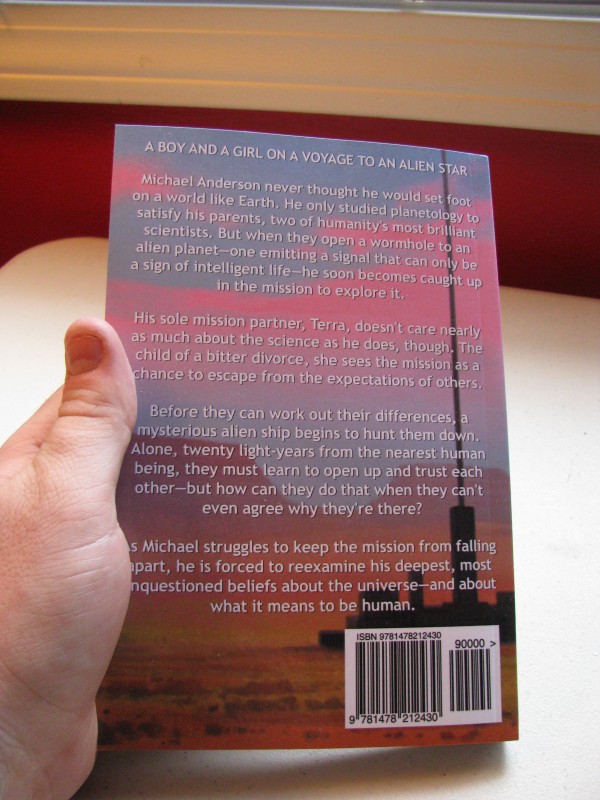
A BOY AND A GIRL ON A VOYAGE TO AN ALIEN STAR.

Michael Anderson never thought he would set foot on a world like Earth. He only studied planetology to satisfy his parents, two of humanity’s most brilliant scientists. But when they open a wormhole to an alien planet—one emitting a signal that can only be a sign of intelligent life—he soon becomes caught up in the mission to explore it.

His sole mission partner, Terra, doesn’t care nearly as much about the science as he does, though. The child of a bitter divorce, she sees the mission as a chance to escape from the expectations of others.

Before they can work out their differences, a mysterious alien ship begins to hunt them down. Alone, twenty light-years from the nearest human being, they must learn to open up and trust each other—but how can they do that when they can’t even agree why they’re there?

As Michael struggles to keep the mission from falling apart, he is forced to reexamine his deepest, most unquestioned beliefs about the universe—and about what it means to be human.

For Bringing Stella Home:

HE’LL GO TO THE ENDS OF THE GALAXY TO SAVE HIS BROTHER AND SISTER.

The New Gaian Empire is crumbling. An undefeatable enemy from the outer reaches of space is sweeping across the frontier stars, slagging worlds and sowing chaos. No one dares to stand up to them—no one, that is, except James McCoy.

As the youngest son of a merchanter family, James never thought he would get caught up in the Imperial wars. But when his home world falls to the barbarian Hameji, his brother and sister, Ben and Stella, are taken away as prisoners and slaves. With the rest of the galaxy thrown into chaos, only James has the determination to rescue them—even if it means losing everything in the process.

For Sholpan:

SHE’D RATHER DIE THAN BE A SLAVE TO THE CONQUERORS OF HER HOME WORLD.

Stella McCoy never thought she’d fall prisoner to the barbarian Hameji. The oldest daughter of a working class family, all she wanted was to finish her apprenticeship and start a career an astrogator. But when the Hameji conquer her home world with their starfaring battle fleets, she is forced against her will to become a concubine to one of their highest ranking warlords.

Stella would rather die than spend the rest of her life as a concubine. Fortunately, as she looks for a chance to escape, she starts to make friends in high places. But in the dangerous world of harem politics, with new friends come new enemies—ones that have the power to destroy her.

One of the changes I plan to make is to insert the blurb immediately before the first chapter.  I’ve heard that a lot of ebook readers are downloading so many free books and samples that it often takes months before they get around to reading them. This parallels my own experience, so I figure it’s a good idea to have something in the beginning to remind readers what the book is and why they picked it up.

Other than that, no big changes except fixing typos and formatting errors.  I’m not the kind of writer who makes sweeping changes to a published story based on reviews, one-star or otherwise.

In other news, I’m almost finished with the second draft of Stars of Blood and Glory.  This has been a surprisingly fast revision, but then again, that might be because I haven’t sent it out yet to my first readers.  Based on their feedback, I’ll probably do another draft before putting it in the publishing queue.

Star Wanderers is going to be my main focus until the end of the year, though.  I’ve gotten a lot of excellent feedback on Part II, and should start the revisions in the next couple of days.  With luck, I’ll have it published by mid-July.  Part III is going to take a little more time, but I’m pretty confident I’ll have it up by October at the latest.

For that to happen, though, I need to get back to writing.  So long!

Yay for Kobo Writing Life!

So after a month of waiting, Kobo’s publishing platform, Writing Life, is finally up!  I just finished uploading all of my titles (except my short stories–I’ll just continue to distribute through Smashwords for now). Genesis Earth is already available, and the others should be up soon.

For those of you who are readers, this means that you’ll be able to find my books on Kobo almost as soon as they go up on Amazon.  The formatting will (hopefully) be cleaner, since I’ll have direct control.  Prices will generally be the same as on other platforms, but when I change the price on Amazon, I’ll change it simultaneously on Kobo, too–no waiting for weeks on end for the price to drop.

For those of you who are writers, I’ll be sure to keep you updated with thoughts on my experience.  So far, it looks pretty good: the royalty rates are better than Amazon (70% for titles priced $1.99 – $12.99, 45% for all other titles), the publishing process is faster, and the upload formats (.epub, .doc, .docx, .mobi, and .odt) are generally more flexible.  Downsides include a higher minimum threshold for direct deposit ($100 or every 6 months), fewer category choices, and what appears to be a forced 2:3 aspect ratio for cover art.

Besides that–oh, look, Bringing Stella Home and Journey to Jordan just went up too!  Man, that’s fast!  And it looks like the aspect ratios went back to 3:4, so I won’t have to redo the covers.  That’s a relief!  So yeah, I’ll be sure to keep you updated.

Also, in preparing my books for upload to Kobo, I discovered some pretty egregious formatting errors for the Barnes & Noble copies of Bringing Stella Home and Sholpan.  I’m not sure what happened–probably it had something to do with an older version of Calibre or Open Office, since I was overseas at the time and only had access to my netbook.  So yeah, if you downloaded one of the broken copies, just shoot me an email and I’ll send you the updated epub version, no questions asked.

In general, I need to revamp my publishing process.  Currently, it resembles jumping through a ring of fire while juggling half a dozen angry poodles.  Open Office, Mobipocket, Notepad, Calibre, KindleGen, DOS prompts, and Kindle for PC–yeah, I’d better get on that.  If you have any suggestions for free/open source software that does .mobi and .epub, please let me know.

In other news, I finished my first pass through Stars of Blood and Glory, and should be finished with draft 2.0 by the end of the week.  After that, it’s back to Star Home and Star Wanderers.

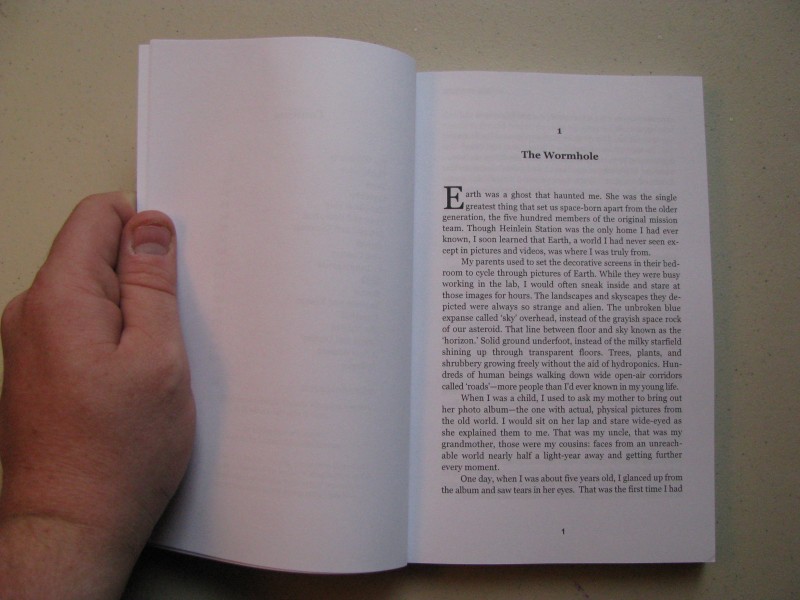
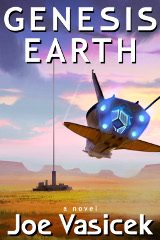
The print edition of Genesis Earth is in!

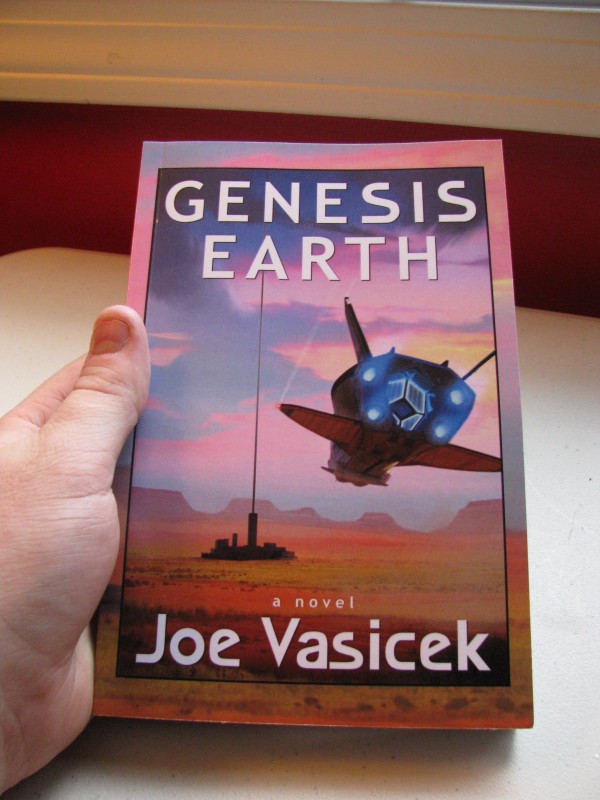
The proof for the print edition of my first novel, Genesis Earth, just came in the mail–and it looks AWESOME!  Check it out!

Front cover.
Back cover.
Page 1, Chapter 1.

Holy crap, it is so cool to have a book in my hands THAT I ACTUALLY WROTE.  So cool!

I approved the proof a couple of hours ago.  It’s currently up for sale on CreateSpace (where I get a higher royalty), but it should also be up on Amazon in 5-7 business days.  I haven’t opted for the extended distribution, which means that those are the only places where it’s going to be available for a while.  I might opt in a little later, but I haven’t made a decision just yet.

Next step: put out print editions for Bringing Stella Home and Desert Stars.  Those should be coming soon, probably by mid-August.

Man, this is so much fun!

Rivers and orphans and rivers, oh my!

So one of my goals this summer is to release POD (print-on-demand) editions for the three novels I currently have up as ebooks (Genesis Earth, Bringing Stella Home, and Desert Stars).  I started with Genesis Earth a couple of days ago, and wow!  I had no idea that getting a book ready for print could be so much fun!

I just finished formatting and typesetting the interior today, and it looks pretty awesome!  Drop caps, chapter headings, page numbers, a pleasingly arranged text–there’s something immensely satisfying about paper, an experience that ebooks (as awesome as they are) just don’t quite capture.  If I weren’t a writer, I’d be a typesetter–but because I’m an indie, I can be both!

As with ebooks, the learning curve for print formatting is pretty steep, but I think I’ve got the hang of it.  The guys over at Kindle Boards gave me a lot of helpful advice, and sent me a really awesome POD guide that’s been a lifesaver.  My editor (who’s also trained in typesetting) gave it a once over too, so I think we’re in good shape.

Barring any unforeseen complications, the print version of Genesis Earth should be up in a couple of weeks.  The cover art is more or less done–I just need to revise the blurb, send the PDFs out to CreateSpace, and wait for the proof to come in the mail.

One thing I’m wondering is whether to go with the free ISBN (which will list CreateSpace as the publisher) or to spend $10 and go with my own imprint.  My gut tells me to go with the free option–not because it’s cheap so much as because it’s less complicated–but I wonder if there might be some advantages down the road to taking the other.

ISBNs, imprints, and distribution channels, oh my…I’ll have to save that for another post a little later. 🙂