“Lizzie-99XT” published in Serial Magazine!

It’s another week, and I have another short story out, this time in Serial Magazine! Here’s what the editor has to say about it:

We kick off ISSUE TWELVE with “Lizzie-99XT” by Joe Vasicek. This futuristic sci-fi tale follows a half-human, half-AI space pilot as she travels the galaxy to fight in an interplanetary war. She’s doing all she can to protect the lives down on Earth, but what type of life can this pilot truly have if most of it is spent lightyears away from those she loves?

“Lizzie-99XT” is a hard military SF piece about a starfighter pilot whose consciousness merges with the starfighter’s AI in order to fly it. She’s tasked with saving the world from a horde of alien invaders, but when battles are fought at near-light speeds, everything can change in an instant, and the home that she returns to may not be one that she recognizes.

Basically, it’s a cross between Neon Genesis Evangelion and Joe Haldeman’s The Forever War, except more uplifting. Probably. Also, it’s a short story, not a novel (or an anime series… yet). If that sounds intriguing, pick up a copy and read it today!

2019-07-25 Newsletter Author’s Note

This author’s note originally appeared in the July 25th edition of my author newsletter. To sign up for my newsletter, click here.

So Mrs. Vasicek has been sick with the flu for the past two weeks. She’s getting better, but we’ve both been less than productive, and any semblance of a daily routine has basically been shot. Turns out that having your wife around all day is a very distracting thing. Who would have thought?

All of this has got me thinking about habits and routines: how important they are, how to make them work, and how not to get discouraged. I’ve been self-employed basically since graduating from college nine years ago. I’ve worked a lot of side jobs, but nothing that I’d call a “day job,” at first because there weren’t any (graduating in a major recession is tough), and later on because I wanted to focus on my writing career—which so far, has been working out.

When you’re self-employed, you basically have to make your own daily routine, because there isn’t anyone else to make it for you. A lot of people struggle with this, especially after quitting their day jobs. If you aren’t careful, you’ll find yourself sitting on the floor in your underwear eating peanut butter straight from the jar (not that I have any experience with this, of course). But if you buckle down and push through that phase, you learn a few things.

First, you learn that even the best routines always fall apart at some point. It’s just the nature of the beast. The circumstances of life are always changing, which means that you’ve got to be constantly adapting to them. Hanging on doggedly to a favorite routine just for the routine’s sake is setting yourself up for failure. Goals are a mean to an end, not an end in themselves.

Second, guilt is not a very good positive motivator. It’s helpful to keep you from doing the things you shouldn’t be doing, but it’s a horrible way to get yourself to do the things you should. I’ve known a lot of writers who constantly beat themselves up for not meeting their writing goals, to the point where it’s practically a full-time job. For a while, I’ve been there myself. Not good.

The best way to make yourself more productive is to find ways to make it more enjoyable. Personally, I find that writing is most enjoyable when I’m immersed in the story that I’m trying to tell. Sometimes, the best way to get immersed is to take a break, and sometimes, the best way is just to sit down and write. It takes a while to figure out what works. I’m still trying to figure it out better.

Third, when making a new routine, make sure to keep your eye on the end goal. What good is eating an elephant one bite at a time if you’re eating the wrong elephant? That’s why, when your routine starts to fall apart, it may be better to rethink what you’re trying to accomplish and rebuild it from the ground up, even though it’s easier just to tweak it.

That’s where I’m at right now. I could just push my deadlines back a couple weeks and try to go back to how things were going, but there’s a lot of other business related stuff on my plate that I’ve been neglecting, and I get the impression that the best way to move forward with writing is to prioritize that other stuff and get it out of the way.

Rethinking the blog

It seems that I’m constantly in a state of retooling my writing career, moving from one area to the next a bit like construction projects at a university campus. And every time that I start to retool something else, the blog gets neglected.

Well, it’s time to retool the blog.

A couple of months ago, I tried blogging every day to see how that would work out. Long story short: it didn’t. I found that I either need to focus a ton of energy on the blog, to build a consistent readership, monetize it efficiently, and turn it into its own thing, or else I need to downsize it into something that won’t drain too much energy or resources from all the other things that I’m doing.

I don’t want to get rid of it entirely. I’ve been blogging since 2007, and while I haven’t been consistent about it all through that time, I’m invested enough in it that I don’t want to take it down. The nice thing about blogs, though, is that they wait for you. They’re kind of like hobbies, in that regard.

That makes sense, though, because up to this point I’ve treated this blog as more of a hobby than an actual job. And I’ve never fully integrated the blog itself into my writing/publishing workflow, which is why I’m struggling to justify it now.

When I started the blog in 2007, it was mainly a vehicle to keep in touch with my writing friends (who all had their own blogs too) and encourage each other. Then, when I started publishing, it turned into a platform-building tool—a way to brand myself as an author. But it was never much good for promoting my books.

Later, as my politics began to change, I made the mistake of bringing those politics onto this blog. Then social media began to become really toxic for me, and I decided to pull back. I deleted my Facebook and Twitter, and consciously pared back what I posted to this blog. But politics was what I was interested at the time, so paring that back to avoid damaging my author brand meant that I neglected the blog even more.

In the last two years, I’ve focused a lot more on my email newsletter. At first, it was just a way to notify my readers of new releases. Then, I started doing free and 99¢ sales regularly, and it turned into a way to alert my readers of those. Now, it’s a full-on newsletter, complete with a featured book, a writing update, an author’s note with some personal thoughts and reflections, links to any group promotions I have books in, and a parting quote.

So what’s the point of sharing writing updates and personal reflections here, on the blog, when I’m already doing it on my newsletter? I suppose the blog has two advantages:

  1. It’s a public-facing, searchable platform.
  2. It allows for comments and discussion.

I was talking about this with Mrs. Vasicek today, and she asked if there was any reason why I couldn’t repost the content from my newsletter onto the blog as well. There doesn’t seem to be any harm in it. I don’t think my readers are signing up for exclusive content so much as to keep in touch with my books and my writing. Besides, some readers just don’t do email lists.

Other than that, I’m not sure what I’ll use this blog for. I need to put some thought into it. But if I’m going to downsize it, I need to turn it into a side feature of my online platform, not the main vehicle for that platform itself. That means I need to restructure this site, turning into an author site with a blog on the side, rather than a blog with some book pages on the side.

I’m not going away, though. I’m just retooling. The newsletter will be my main vehicle for sharing updates from now on, though I may do a long-form blog post from time to time. I may also experiment with blogging some of my books, or doing a blog series with the aim of turning it into a book later. If there’s anything else you think might work well, be sure to let me know.

I’m married now!

So last week Future Mrs. Vasicek and I got married! It’s been really amazing so far. Amazing, and surreal. This is the first I’ve been on a computer since the 11th. We honeymooned in a cabin up in the Tetons, about a dozen miles from the edge of civilization, and it feels odd to be back, not the least because I’ve moved into her house now, which is now our house… an actual house. Like, with a yard and stuff. It’s pretty rad.

The reception was amazing, too. I should probably post pictures, seeing as we had a dunk tank in the end. Yes, Mrs. Vasicek got dunked in her actual wedding dress. She didn’t want the guests to get bored during the reception, so we had a dunk tank, and a bounce house, and an ice cream bar, and a live band that was really amazing. I’ve never seen so many people dancing at a wedding reception. The floor was packed.

So we’re married now, which means going through all of our stuff, figuring what to keep and where it should go. That process will probably continue for the next couple of months. I’m also learning a bunch of interesting new things about her, like the fact that she has a pen collection of probably more than 100 pens! Good thing she married a writer.

In any case, it’s going to take a couple of weeks to ease back into writing again. My plan as of now is to spend the rest of June outlining my next WIP, The Stars of Redemption, which will complete the Genesis Earth trilogy. Lots and lots of publishing stuff to do, too, including new print editions of all of my books. Expect to see those in the very near future.

To get back into the swing of things, I will do my best to regularly update this blog. I also plan to send out a newsletter before the end of the week, with a sweet deal for my subscribers.

So much stuff happening. It’s surreal. I’m married to a woman who is perfect for me in every sort of weird, quirky way imaginable. If you’d told me a year ago that this was where I’d be, I wouldn’t have dared believe it. It’s amazing. It’s beautiful. Everything is beautiful. When people cut me off on the road, I don’t even care. My wife gets off work in an hour and ten minutes, and I can hardly wait to see her again. Being a newlywed is the most amazing drug ever.

Post Memorial Day Update

I just got back from Iowa, visiting family. My nephew got baptized over the weekend, so we had a big family get-together, and Future Mrs. Vasicek came with me, so it was her first time spending any significant amount of time with my family.

Overall, it went very well, though the train was delayed for more than six hours in Denver on the way back, so we didn’t arrive home in Provo until nearly 4am. But Future Mrs. Vasicek didn’t break up with me on the train like my last girlfriend, so everything’s pretty good.

When you travel across the country by train, you kind of go into this fuzzy place where you’re not fully awake but never fully asleep either. For that reason, I didn’t get much writing done, since I didn’t trust myself to do good work while I was in that weird state of consciousness.

However, I did get a bunch of publishing stuff done, such as writing and sending out another email newsletter and typesetting Gunslinger to the Stars for print (Future Mrs. Vasicek helped with that as well). I also finished updating my 2019 business plan, and while I expect to keep making changes over the next few months, it’s now in a state that I can share with other people (like my Mom) and say “no, I don’t just sit around all day in my pajamas eating peanut butter straight from the jar.”

It may take a while before this blog gets regularly updated again. Tomorrow, Future Mrs. Vasicek and I are working on the house, so I can’t promise an update. I also really need to get back on track with my writing, which has fallen off a bit in the last few days. Also lots of wedding stuff going on… so much wedding stuff.

So that’s where things stand right now. Lots of stuff going on, all of it very good, but it’s definitely keeping me busy.

Sackett’s Land by Louis L’Amour

I first heard about Louis L’Amour’s Sackett series from a hiking buddy, and I’ve wanted to read them ever since. This is the first one, and it takes place in the late 1600s with the ancestor of the Sackett clan, Barnabas Sackett, as he discovers the untamed wilds of America while on the run from people back in England who want him dead.

Like most of Louis L’Amour’s books, this is a quick, fun read. Lots of action, and never a dull moment. I also really liked the 17th century slang and mannerisms of speech—it felt like L’Amour really hit it on the head.

But the book’s strengths are also the flipside of its weaknesses. There’s a lot of plot and conflict, a decent amount of setting, and a little bit of character… and that’s about it. The story moved a little too fast to create a sense of immersion, and I also found it lacking in emotional resonance. It was a fun read, but I probably won’t remember much of it.

That said, it was a really fun read, and definitely lays the foundation for a very interesting series. The parts that did resonate with me were the ones that reflected my own family history. Several of my ancestors came to Virginia and the Carolinas during the colonial era, and I can imagine that they felt very much like Barnabas Sackett when he saw the blue mountains for the first time and yearned to go beyond them.

Fun stuff, especially you’re into historical fiction and early Americana. I give it 3.5 stars.

Algorithms, social media addictions, and the endless churn of content

In the last 5-6 years, I’ve noticed a shift in most of the media content that I consume. Content has proliferated at an unprecedented rate, and the churn—or the rate at which new content pushes out old content—has become one of the driving factors for those of us trying to make our careers in this way.

We see it on YouTube, where three or four adpocalypses have massacred various channels, and where copystrikes have become part of the game. YouTubers who don’t put up content every day, like Tim Pool or Pewdiepie, quickly lose views and subscribers even when they do put up new content.

We see it in video games, where companies like Paradox are now making the bulk of their money on DLCs, some of which make the vanilla version almost unplayable. Back in the 90s, a game was a game was a game. You could get expansion packs for some of them, but that was just bonus content, not a core part of the gaming experience, or the business model.

It’s a huge issue in journalism, where the news cycle has accelerated so much that weeks feel like months, and months feel like years now. Remember the Kavanaugh hearings? That was less than a year ago. The Covington kids controversy happened this year. Everyone is in such a race to break the story that the quality of journalism has fallen considerably, but by the time the corrections come out, the news cycle has already moved on. Fake news indeed.

The churn has also become a major thing in the indie publishing scene. For the last few years, the established wisdom (if there is any) is that you need to publish a new book about every other month—preferably every other week—to keep your entire catalog from falling into obscurity. There’s a 30-day cliff and a 90-day cliff, at which points the Amazon algorithm stops favoring your books over new ones. And now, to complicate things, AMS ads are taking over from more organic book recommendation methods, like also-boughts. The treadmill is real, and it’s accelerating.

I’ve been thinking a lot about this, and I can think of a few things that may be driving it. I don’t have any statistics or firm arguments to back it up yet, just a couple of hunches, but it’s still worth bringing them up to spark a discussion.

First, social media has taken over our society, not only in public life, but in personal life as well. Now more than ever before, we use Facebook, Twitter, Instagram, Snapchat, and other social media to interact with each other. The problem is that these social media sites are incentivized to get us addicted to them, since we are the product they sell—our data, our time, and our eyeballs. Every like is another dopamine hit. Every outrageous headline is another injection of cortisol.

We have literally become a society of drug addicts. The drugs may be naturally produced by our bodies, but big tech has figured out how to manipulate it like never before. And as addicts, we are always looking for our next hit.

That’s not all, though. There’s a feedback loop between the end-users who consume content, and the algorithms that deliver content recommendations to the end-users. When something new gets hot on social media, the algorithms act as a force multiplier to drive it even further. But because of our addiction, and the fact that we’re constantly looking for the next hit, things can fall off just as quickly as they rise. Hence the churn.

It’s also a function of the massive rate at which content is proliferating across all forms of media. I’m not sure how many millions of English-language books are published any year now, but it’s much, much more than it was back when tradpub was the only real game in town. Same with videos, music, news blogs, etc. With so much new content coming out all the time, and so many people on social media ready to share it, the conditions for churn have never been stronger.

But there’s another, more sinister aspect to all of this, and it has to do with the biases of big tech and Silicon Valley. Yes, there is a feedback loop that governs the algorithm, but it goes both ways: the people who write the algorithm can, within constraints, use it to reprogram all of us, or even society itself.

I don’t think it’s a mistake that the churn is worse on sites that are run by big tech, or worse on content creators who depend on the platforms that big tech provides. The authors experiencing the worst burnout all seem to be exclusive with Amazon and Kindle Unlimited, and news sites that are getting hit the worst now (Vice, Buzzfeed, etc) all depended on clickbait tactics to ride the Facebook algorithm.

There are a few content creators who seem to have escaped the churn. As a general rule, they seem to be scaling back their social media usage and developing more traditional income streams, like subscriptions, sponsorships, and email lists. Steven Crowder, Tim Pool, and Pewdiepie are all examples. A few of them, like Alex Jones, Carl Benjamin, and Paul Joseph Watson, are learning how to swim by getting tossed in the deep end. Big tech has deplatformed them, but they’re learning—and showing to the rest of us—that it’s possible to make your own path, even when all the algorithms conspire against you.

I recently listened to a fascinating interview on the Jordan Peterson podcast, where he talked with Milo Yiannopoulos. Milo fell out of the public sphere when allegations of pedophilia emerged, getting him banned from CPAC in 2018. His career isn’t over, though, and his future prospects look quite bright, especially with the plan he’s been putting together. If he succeeds, big tech and the algorithms will never be able to touch him.

In my post a couple of days ago, I argued that one of the unique advantages of books over other forms of media is that they are timeless. As Kris Rusch puts it, books aren’t like produce—no matter how long they sit on the shelf, they don’t spoil. We are still reading books that were written centuries ago.

If that’s true, then there must be something about books that makes them resilient to churn. In fact, books may be the antidote to churn. That’s basically Jeff VanderMeer’s thesis in Booklife. It’s also worth rereading Program or Be Programmed by Douglas Rushkoff, where he offers some helpful rules to keep social media and the algorithms from completely taking over our lives.

So as indie writers, what’s the best way to deal with all of this? I’m not entirely sure. Back in 2011 when I first started indie publishing, slow-build and long-tail strategies seemed a lot more viable than they do now. But if there is something inherent in books that makes them the antidote to churn, then there has to be a way to take advantage of that.

I’ll let you know when I find it.

WIP excerpt: Edenfall

It’s been a while since I did one of these, so I thought I’d share a quick excerpt from my current WIP. This one is from chapter 2, where Khalil Al-Marikh is introduced. He and Estee are the two major viewpoint characters of this book.

This excerpt hasn’t been edited yet, so any typos or other mistakes will be fixed before I publish the book.

Paradise Found

Lieutenant Khalil Ibn Yusef Al-Marikh tapped his earpiece with one hand and held onto his seat with the other as the lightly armored rover bounced on the uneven, rocky ground. His driver, Private Andre Cernovich, seemed to be in a great hurry to arrive without even knowing their destination. That, or Cernovich was simply joyriding.

“Sergeant Peters, this is Khalil. What do you have for me?”

“We’ve found what looks to be the scientists’ expedition compound two klicks out from the space elevator. Our heat sensors show that it’s inhabited. What do you want us to do?”

On the display screen just below the windshield, a green dot blinked to show the sergeant’s. Corporal Cernovich swerved and headed in that direction.

“Are they armed?” Khalil asked.

“Not from what we can tell. Though they may be armed with bows and arrows like those natives who shot at us on the way in.”

Khalil remembered the look on their shuttle pilot’s face as the arrows had clattered against the cockpit window. His men had proceeded through the brush with caution, though thankfully, the natives hadn’t shown up since.

“Hold your ground and wait for us to join you. We’re about five minutes out.”

“Copy, Kali. We’ll establish a perimeter and await your arrival.”

The connection cut out. Khalil focused his attention forward as the roar of the rover’s engines not quite managed to drown out the sound of the native wildlife. The ground, though rocky like his Martian homeworld, was covered in high grass and patches of thick brush. The mountains, which had appeared red from orbit, weren’t yet visible in the pre-dawn twilight.

There was no denying the alienness of this world. From the large double moons and the strange constellations to the thick, musty scent of the air, the inescapable sense of otherness seemed to permeate everything. It set Khalil on edge almost as much as Cernovich’s driving.

The rover hit an unusually large bump, and the resulting bounce nearly flung his gunner, Private Vance, into the air. A chorus of angry profanity was the predictable result.

“Dammit, Andre, you drive worse than my drunk grandma!”

“Stay frosty,” Khalil ordered, scanning the horizon with his heat sensors. The wheels of the rover cut through the grass like a hot knife through butter, and the dry, dusty air blasted Khalil’s face. The landscape was so full of life, it was difficult to tell which targets were harmless and which posed a potential threat.

As they rounded a large rocky outcropping, a swarm of enormous insects took to the air. Vance immediately opened fire. The crack of laser fire mingled with a shout of surprise, which gave way to whoops of victory as dozens of the bugs exploded in a shower of splattered guts.

“Hold your fire,” Khalil ordered. “It’s just the native wildlife.”

“Damn, Kali. Did you see the size of those things?”

“Get used to it, private.”

He glanced up at the trigger-happy teenage marine. Khalil was barely eighteen Terran years himself, which still put him ahead of most of the soldiers under his command. Any older, and the forty years of crysostasis they’d undertook to get here would have significantly reduced his probability of surviving the voyage. Even the main force, which was still on the outskirts of the system, was staffed almost exclusively by teenagers.

Unlike most of them, though, Khalil had never had the luxury of a childhood. His parents were refugees twice over: first from Iraq, and then from Earth. Khalil had never been to his family’s ancestral homeland, but he did have memories of their Syriac Orthodox Church in Los Angelos burning as the Sharia police looked on.

He drew a sharp breath and put such thoughts from his mind, refocusing on the mission.

“There, Cernovich,” he said, pointing to a spot on the map near Sergeant Peters’s current positon. “Drop us off there.”

“Got it.”

A few minutes later, Cernovich brought the rover to a stop behind a small hill. Khalil checked his rifle and dismounted with Vance and Cernovich. Tensions were high, but none of them said a word as they took up positions in the waist-deep grass and prepared to move out. Khalil checked his earpiece.

“Are you there, Lieutenant?”

Sergeant Peters’s voice sounded uncannily loud in Khalil’s ear, now that they’d left the rover. Even the buzzing of the native insects seemed quieter.

“We’re here, Peters. Where are the others?”

“Spread out to the east of the target, with a good overlook position on the right. Hold your position; we’ll come to you.”

“I copy.”

A few moments later, Sergeant Peters materialized from the shadows with Specialists Mikhailov and Martinek. Green and black streaks of face paint covered their faces, making effective camouflage in the high grass. Peters was the taller one.

“What have we got?” Khalil asked quietly.

“It’s the scientists, all right. The dome gives it away. Gilbert and Baier are in position on our right flanks, with Matheson on our left and Ahiga on the far side of the compound.”

“Good work,” Khalil praised his noncom. “Got a vantage point?”

“Right this way.”

He followed his sergeant into the high grass, switching his goggles from infrared to heat signatures. Almost immediately, he could make out the rest of the platoon. They had spread out over a distance of almost a hundred yards, some of them prone, others creeping forward.

Up ahead, on the other side of the rise, he made out structures. Most of them were made of clay and native mud, and still radiated traces of heat from the previous day. A couple of them were dome-shaped, though, and clearly not made from native material.

“How long have you been monitoring this compound?” Khalil asked quietly.

“Only since we arrived. Should we wait until daylight, or move in now?”

Khalil looked skyward, as if to seek out their eyes in orbit. If they’d deployed their probes first instead of sending out the marines, his men might have had advance notice of this compound. Then again, with a mysterious alien structure towering above what appeared to be an otherwise virgin planet, he couldn’t blame his superior officers for wanting to establish a beachhead first. Speed, not stealth, was their chief advantage now.

“Move in,” he said softly. Peters nodded and made a quick cutting motion with his hand. All around them, the marines moved quietly forward as they began to converge on the compound.

Thoughts on Minimum Viable Product

So I read an article on Draft2Digital’s blog about Minimum Viable Product and what it means for writers, and it got me to thinking about what that means for books in general, and my own books in particular.

From what I’ve managed to gather (and I could be totally wrong), the controversy in the indie writing community over MVP began when the guy who started 20 Books to 50K first started a topic on KBoards, talking about how he’d used the MVP concept to launch a successful career. This rubbed the KBoards groupthink in the wrong way, and they ran him out with torches and pitchforks, so he started his own group. Indie writers have been arguing about it ever since.

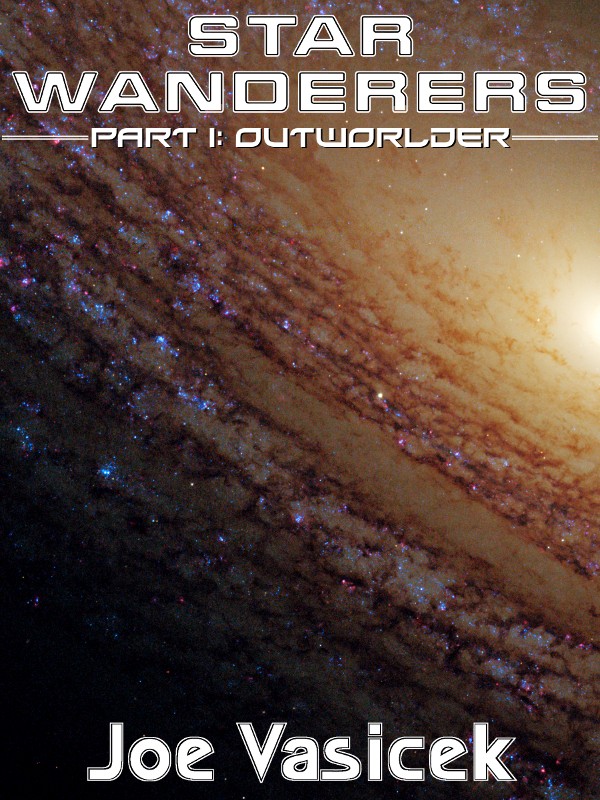
On the one hand, I can’t really criticize the concept, because I kind of followed it myself. When I published my first three books, I sunk a fair amount of money into them, and when I realized it was going to take a long time to earn that back I shifted strategy, publishing the best quality work that I could on a shoestring budget. The result was this:

Ah, the good old days when I was young and stupid (now I’m just stupid). Cover art taken from NASA, which is all in the public domain. Title and subtitle font taken from a free font site, author font cribbed from an old 90s-era Sid Meier’s Alpha Centauri CD-ROM. No gradients or visual effects on the text itself—even the drop shadow is just a mirror image of the text in black, offset diagonally by a few pixels. As if that’s not enough, the aspect ratio is 3:4, which makes me want to grate my teeth.

So that was my minimum viable product at the time. The other novellas had very similar covers, with NASA space art, free fonts, and everything else. I also self-edited most of them, though I did have some editing student friends who volunteered to proofread the later ones. Surprisingly, the books sold. By 2013, they’d earned enough that I could afford to hire out a cover designer, who made the covers the books have today. Needless to say, the quality is much better.

I guess you could say the MVP strategy worked for me, though I’m not so sure it would work as well today. The key point, though, is that once I could afford to upgrade to a better quality product, I did so. The production aspect of a book is stuff like the cover art, copy editing, proofreading, etc. Most of that stuff can be upgraded over time, so if you have to do it on a shoestring budget, it’s not such a big deal.

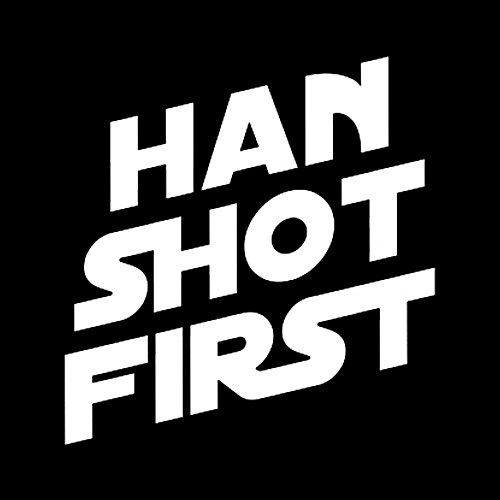
But in my opinion, the writing itself is completely different. Some writers will go back and rewrite their books after they’re published, but I think that’s a horrible idea. What about the readers who enjoyed the first version? It’s okay to fix things like typos, or maybe remove some bad language but changing things so completely that the story itself changes is just wrong. It’s how we end up with memes like this:

A lot of people got pissed at George Lucas for the changes he made to the original Star Wars trilogy, myself included. It’s one thing to update the CGI for the X-wing dogfights, but it’s something else entirely to rewrite the characters. Han shot first, dammit!

So as far as MVP goes, I don’t think it works for writing—at least, not the kind of books that I’m trying to write. Perhaps in some genres, like porn, clickbait, and Buzzfeed articles, it’s better to put as little time and energy into the writing as you can get away with, but for the books I like to read, I want to know that the author did their best work. You can’t produce your best work and simultaneously aim for what’s minimally viable.

Of course, as the Draft2Digital blog post points out, that doesn’t mean that you should write slowly and slog through endless revisions. Sometimes the best books are written quickly, in a single draft. One of the great enduring myths is that there’s a correlation between how good a book is and how long it takes to write it, and another enduring myth is that revisions always make a book better.

I know there are some indies out there who have had great success by reading the one-star reviews and rewriting their books accordingly. To which I say: you shouldn’t use paying customers as beta testers like that.

Some media formats, like blogs, TV, or magazines, are designed to be ephemeral or to be changed or updated over time. Books are not. As Stephen King put it in On Writing, when we write a book, we are acting as time travelers, packaging up our stories and sending them forth, to be recreated in the mind of a reader long after we have written it. Books are unique like that.

So that’s what I think about minimum viable product. It’s a useful way of thinking about all the stuff you can update later, but for the story itself, it’s a horrible idea. Write the best book you can right now, then send it out into the world and write another one. That’s my strategy, at least.